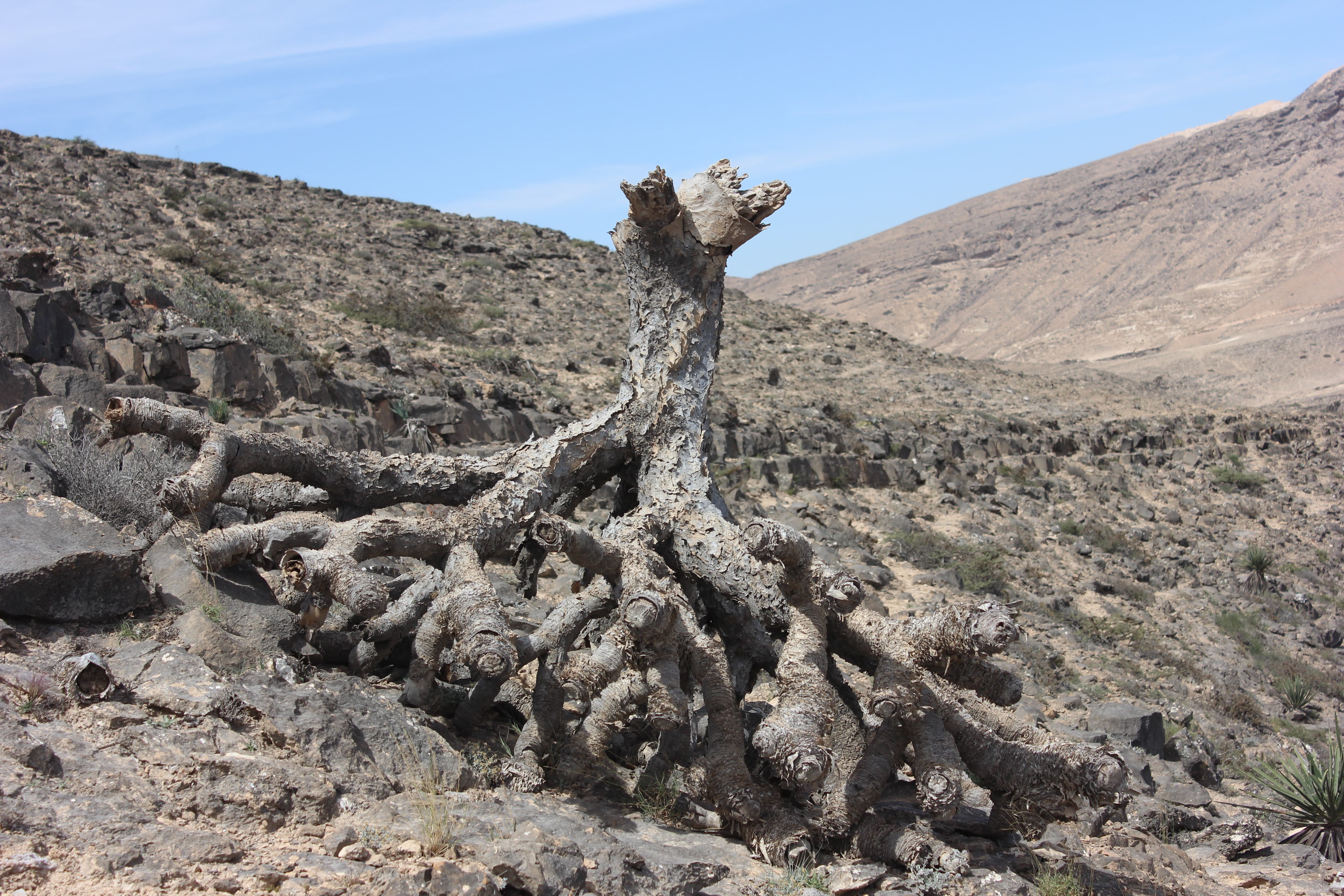
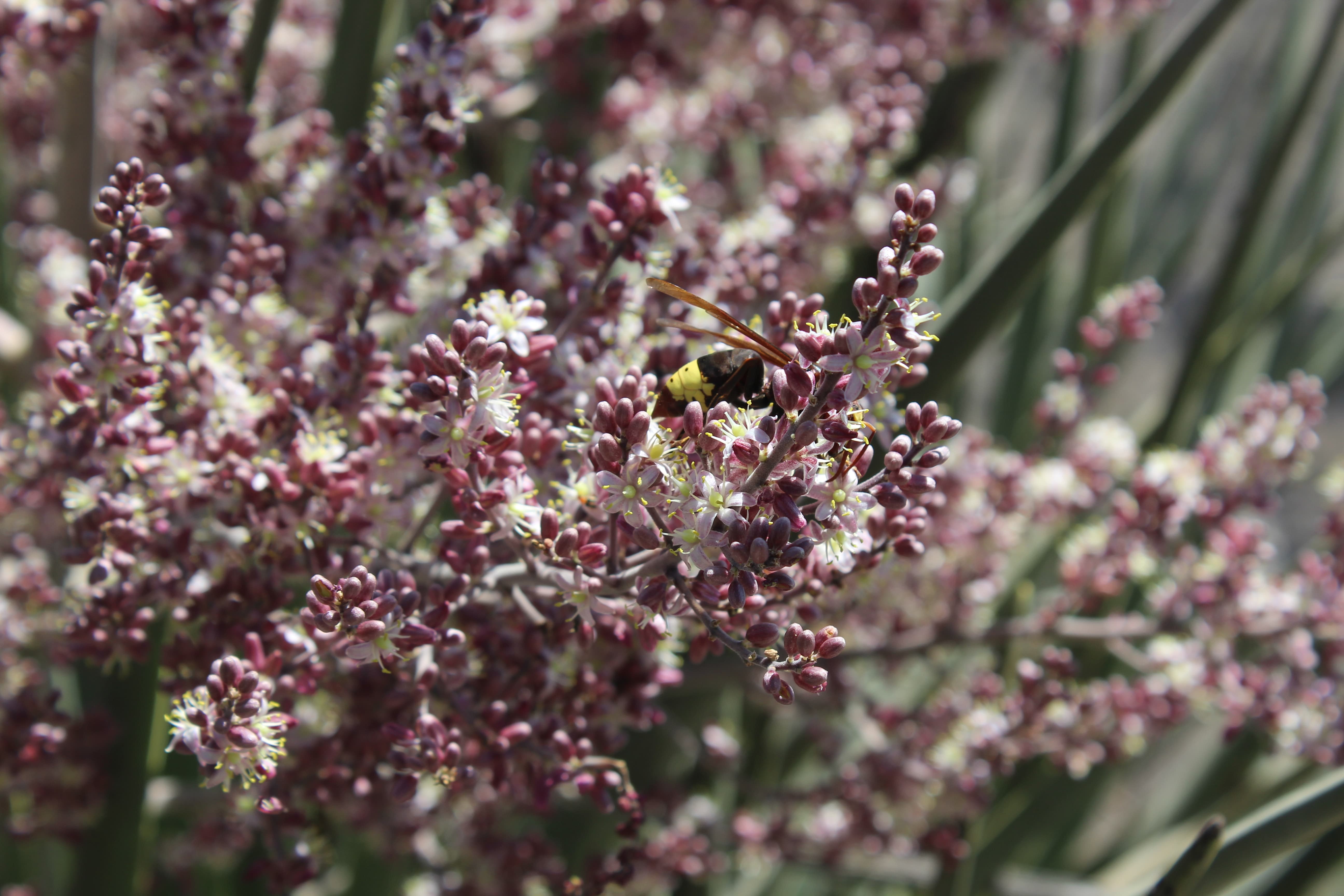
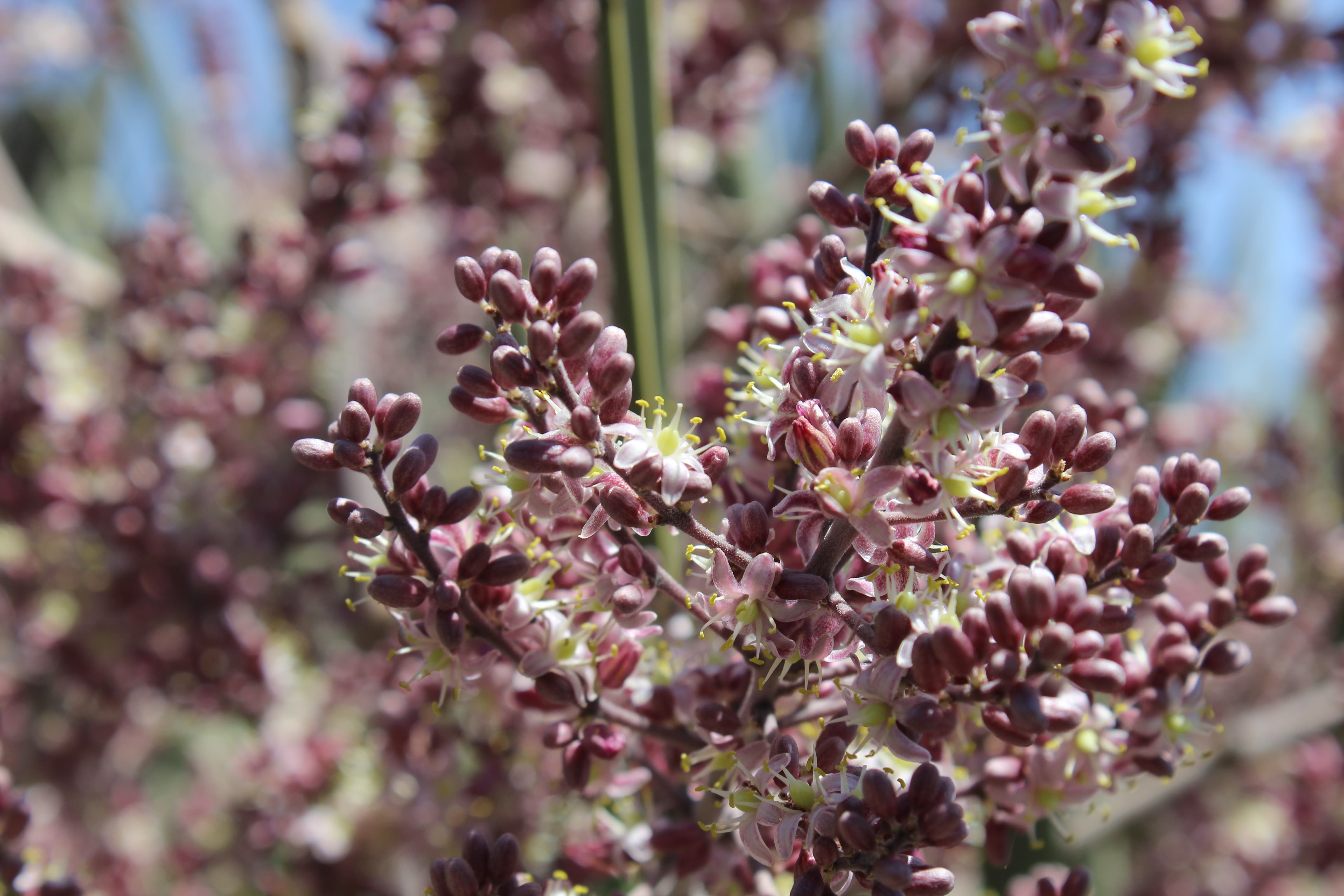
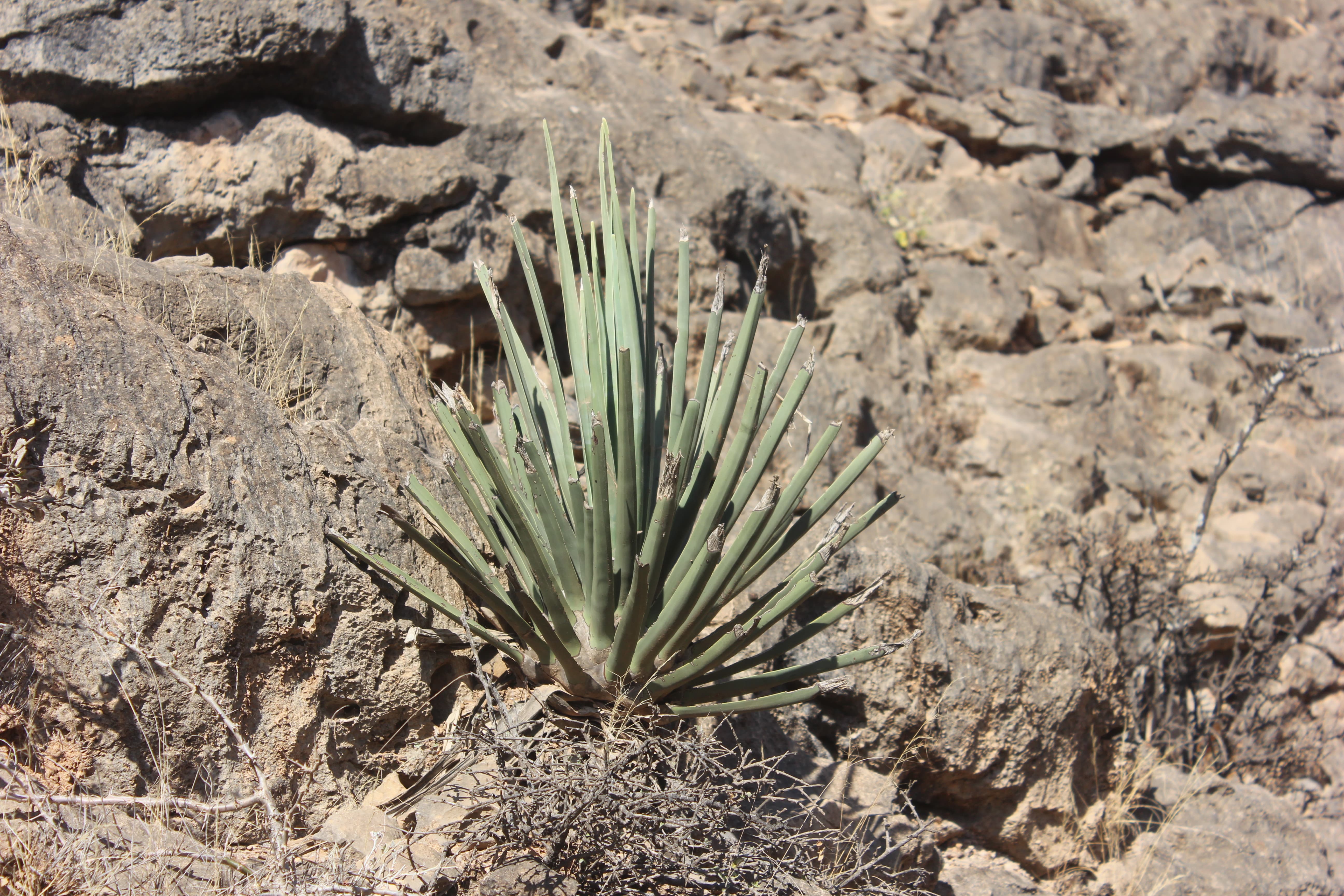
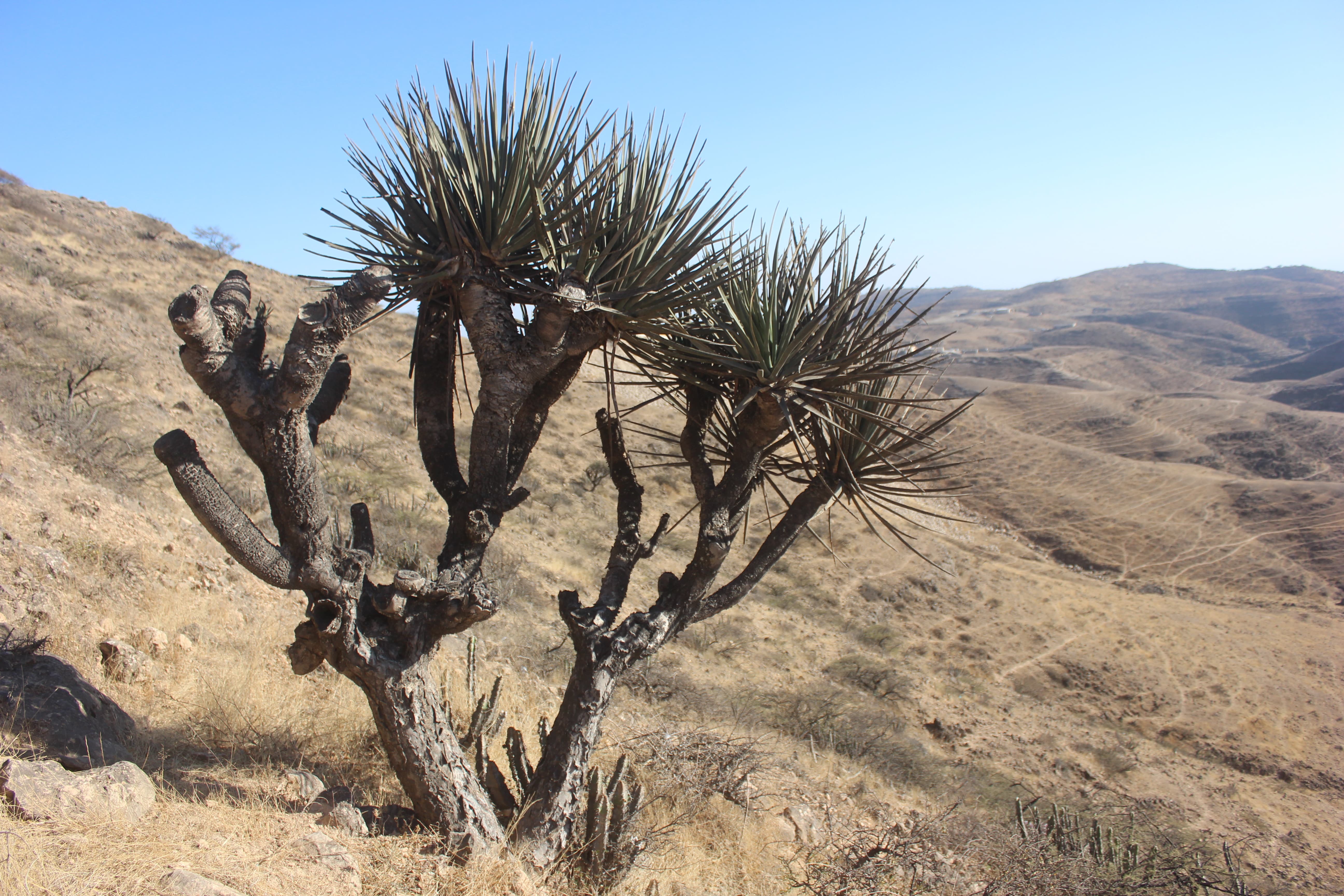
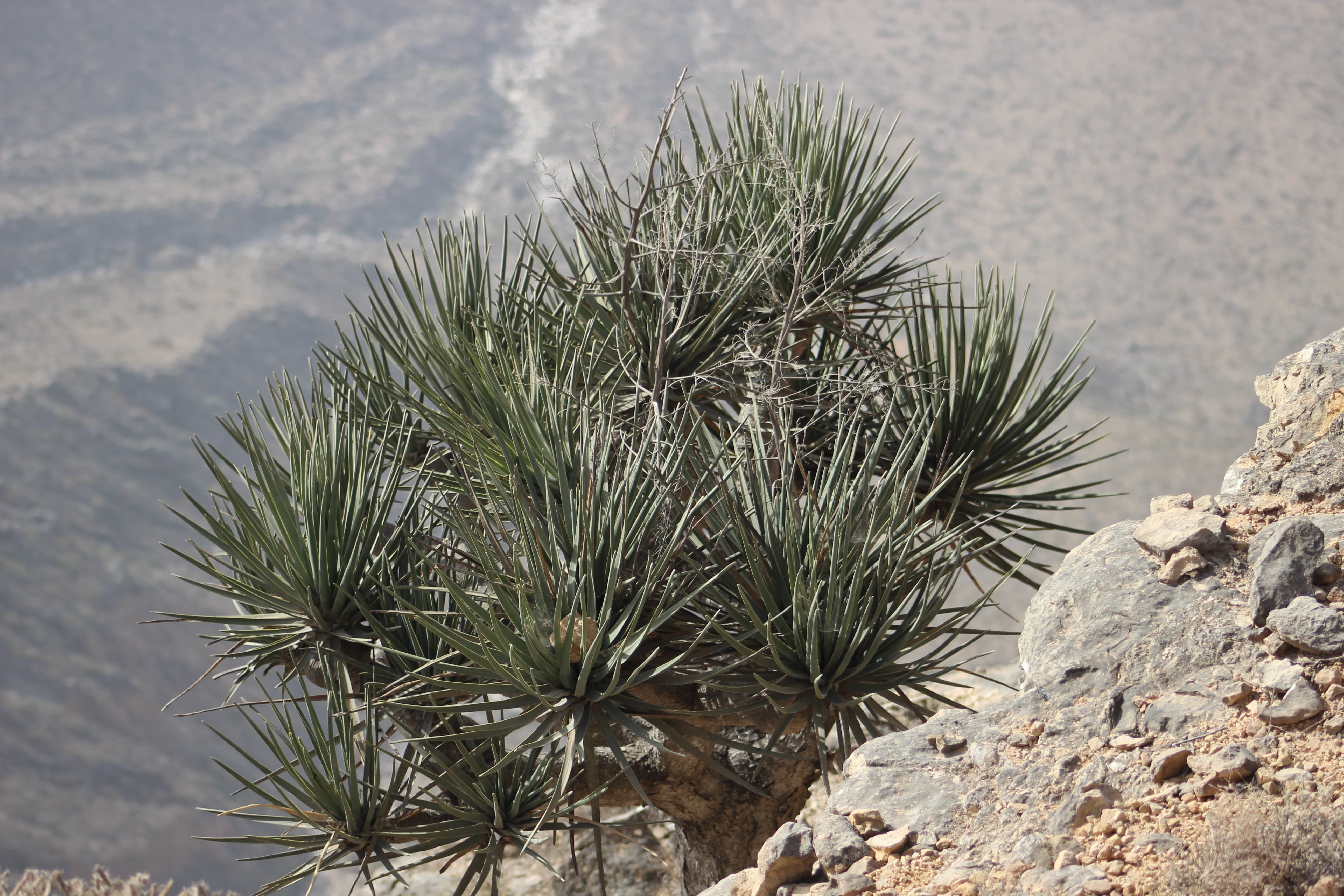
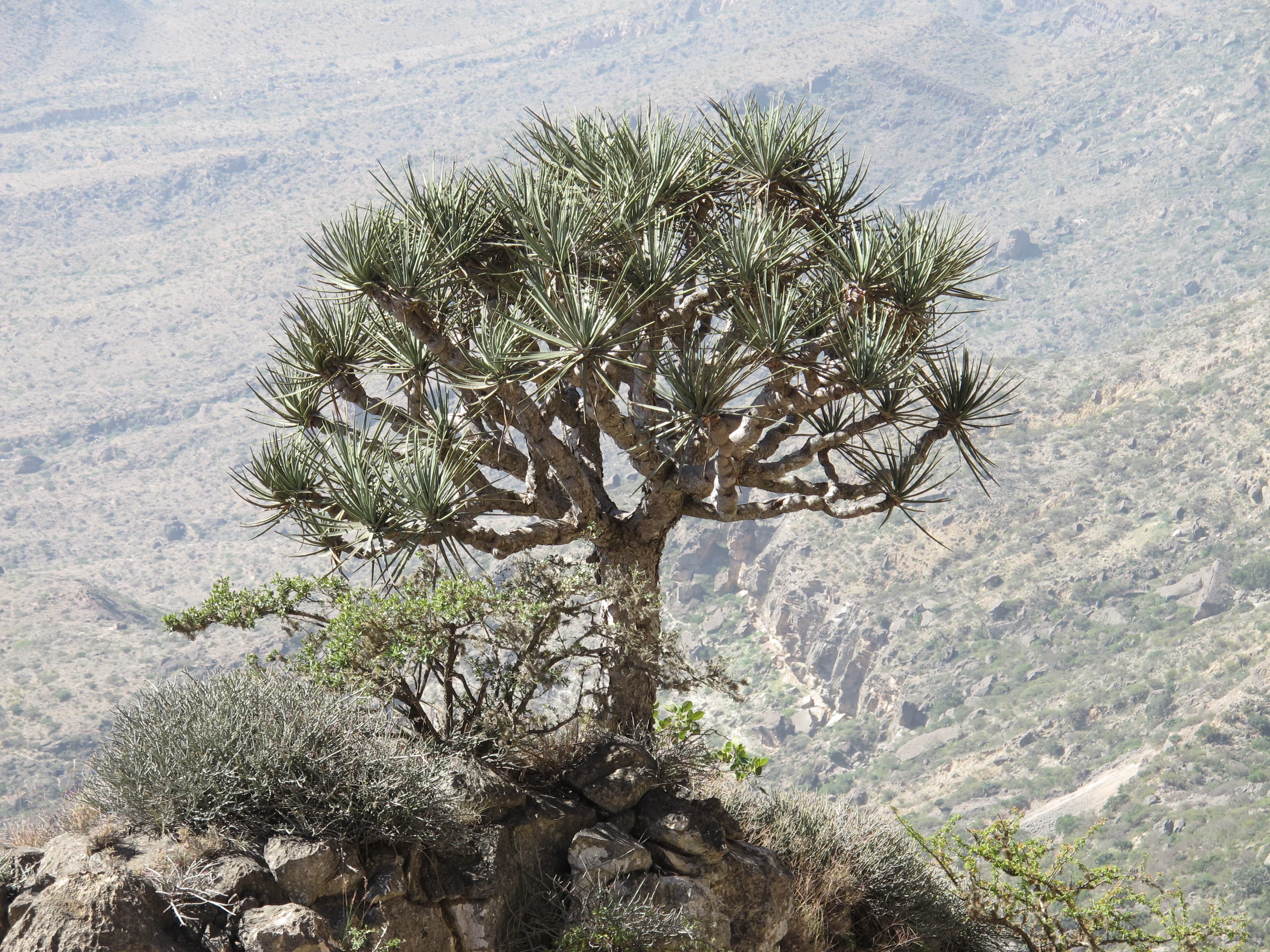
Dracaena_serrulata_2-06082024 © OBG
Dracaena_serrulata_3-06082024 © OBG
Dracaena_serrulata_4-06082024 © OBG
Dracaena_serrulata_5-06082024 © OBG
Dracaena_serrulata_6-06082024 © OBG
Dracaena_serrulata_7-06082024 © OBG
Dracaena_serrulata-06082024 © OBG
A tree ; up to 5 m tall , with a single trunk , forked above . Trunk and branches thick , covered with remnants of hardened leaf-bases . Leaves densely congested at the tips of the branches , sessile , stiff and rigid , long , thin , sessile , glabrous , sword-shaped ; lamina 50-100 cm long x 2-5 cm across , ensiform , flat or concave on the adaxial surface , convex on the abaxial surface , apex acute , margins minutely serrulate or sometimes entire . Inflorescences in large erect branches panicles , up to 1 . 5 m , arising at the ends of the branches . Flowers tiny , c . 4 mm long , pale pink to pink-green ; stamens 6 , inserted on top of the perianth tube ; filaments filiform ; anthers versatile , oblong ; ovary superior , ovoid , 3-locular ; style filiform ; stigma capitate . Fruit berry , 5-6 mm in diameter , fleshy , globose , red when ripe , 1-3-seeded . (Ref . Flora of Oman ; vol . 4) .
No Data
Regional Endemic (RE) - Endangered (EN A4abcd) - National Assessment
Frequent
الوصف غير متاح حاليًا
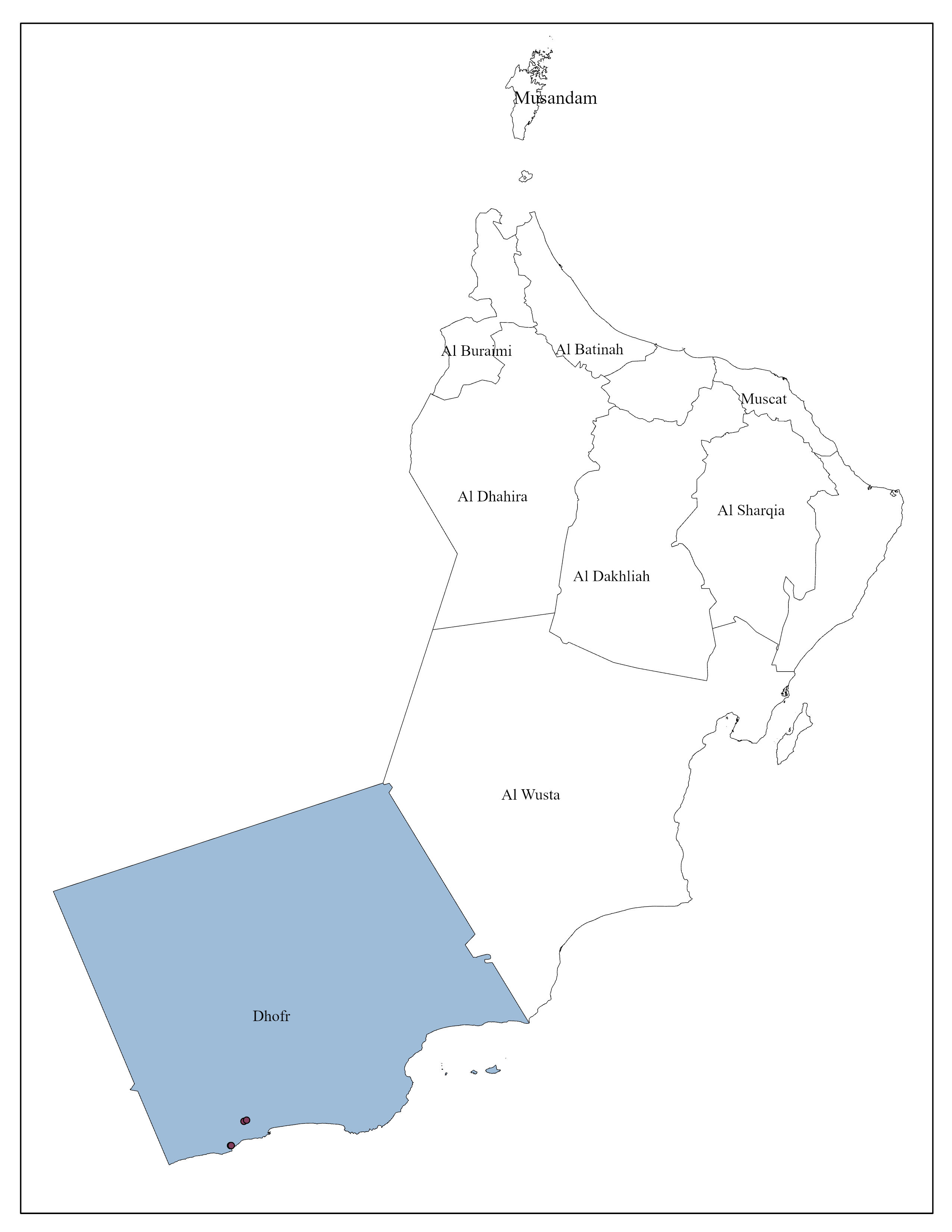
Dracaena neoserrulata Idrees & Z.Yong Zhang
This tree is propagated by seeds. Steps to follow: • Sow collected seeds in seed tray filled with a ratio of 3 peat moss: 1 compost, 5 cm apart. • Irrigate the seed tray three times a week. • Germination commences from 4–72 days onward. Seed germination of this species is around 36%.
maintenanceAr.Item1
Arabian Dragon Tree
Yemen Dragon Tree
In Omani studies: Miller & Morris (1988) wrote that: "This unusual and distinctive tree is restricted largely to the highest, dry plateaux at the back of the monsoon mountains [J: ohufi], a high and dry area where the monsoon rains do not reach, and where consequently the herds of goats used to be taken to graze out of the monsoon area during the rains. Cattle too at this time were brought here during the period of midday heat to escape the biting flies of the kutn, the monsoon-affected high plateaux at the back of the grasslands. The Dracaena grows here commonly in association with such species as Acacia etbaica and Grewia erythraea. Its stiff leaves [J: ser ot: sera - the same word as that used to describe boat sails] are the source of the fibre for which this tree was most valued locally. The resin of related species, on
...

Ghazanfar, S. (2018). Flora of the Sultanate of Oman, vol.4: Hydrocharitaceae – Orchidaceae. Meise, National Botanic Garden of Belgium (Scripta Botanica Begica, Vol. 56). ISBN 9789492663153 ISSN 0779-2387. *https://en.wikipedia.org *https://casabio.org *https://www.etymonline.com *POWO (2023). ""Plants of the World Online. Facilitated by the Royal Botanic Gardens, Kew. Published on the Internet; http://www.plantsoftheworldonline.org
