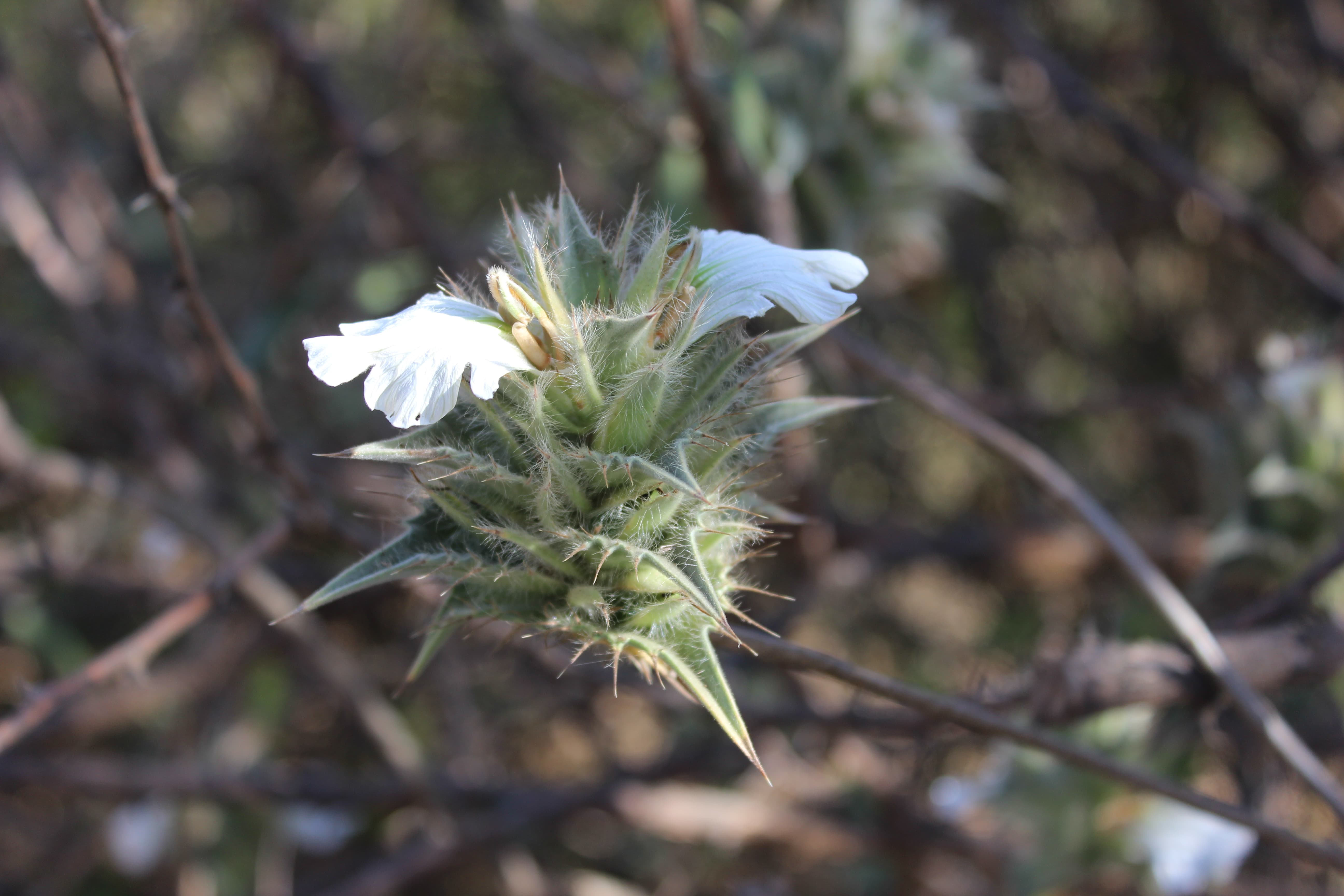
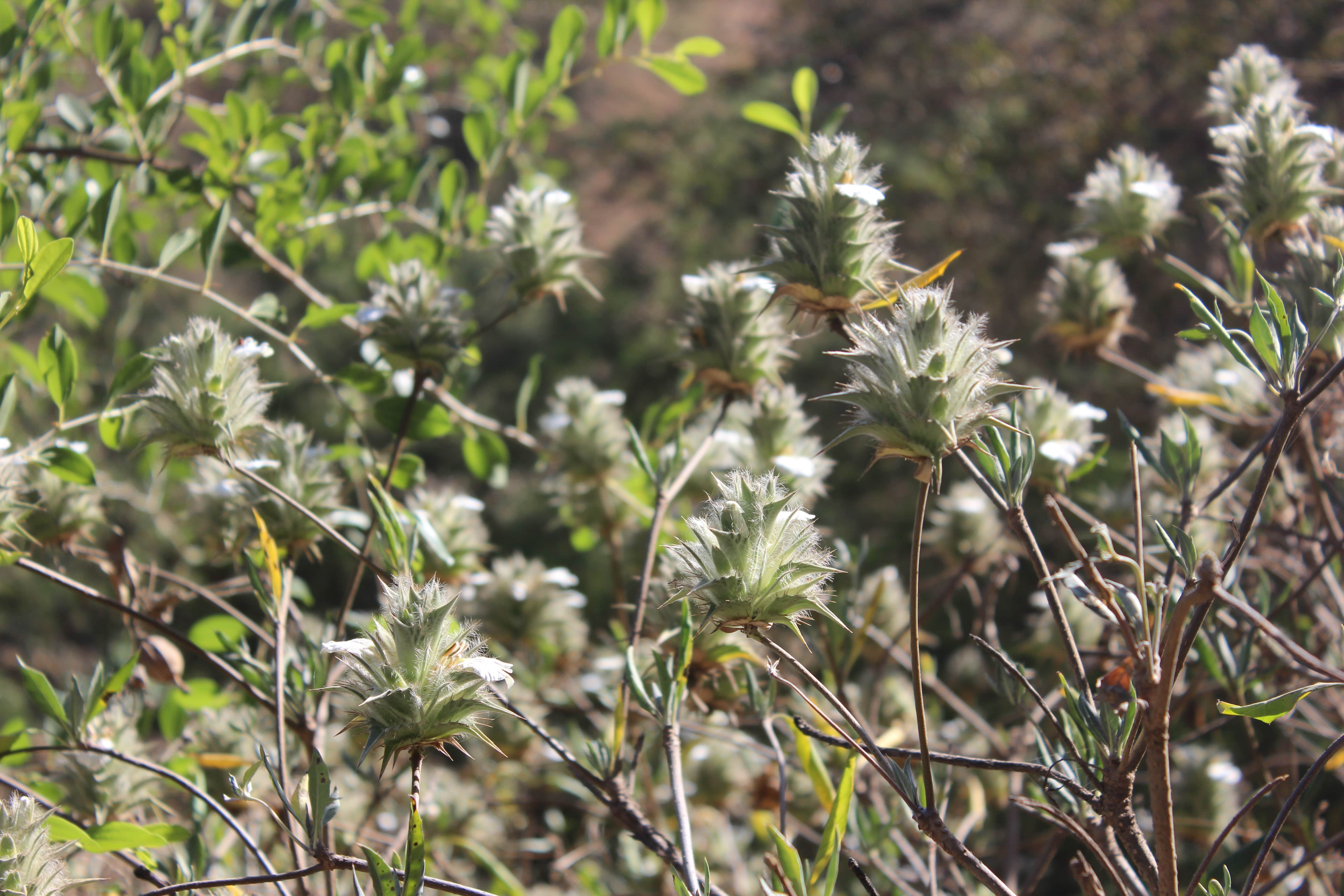
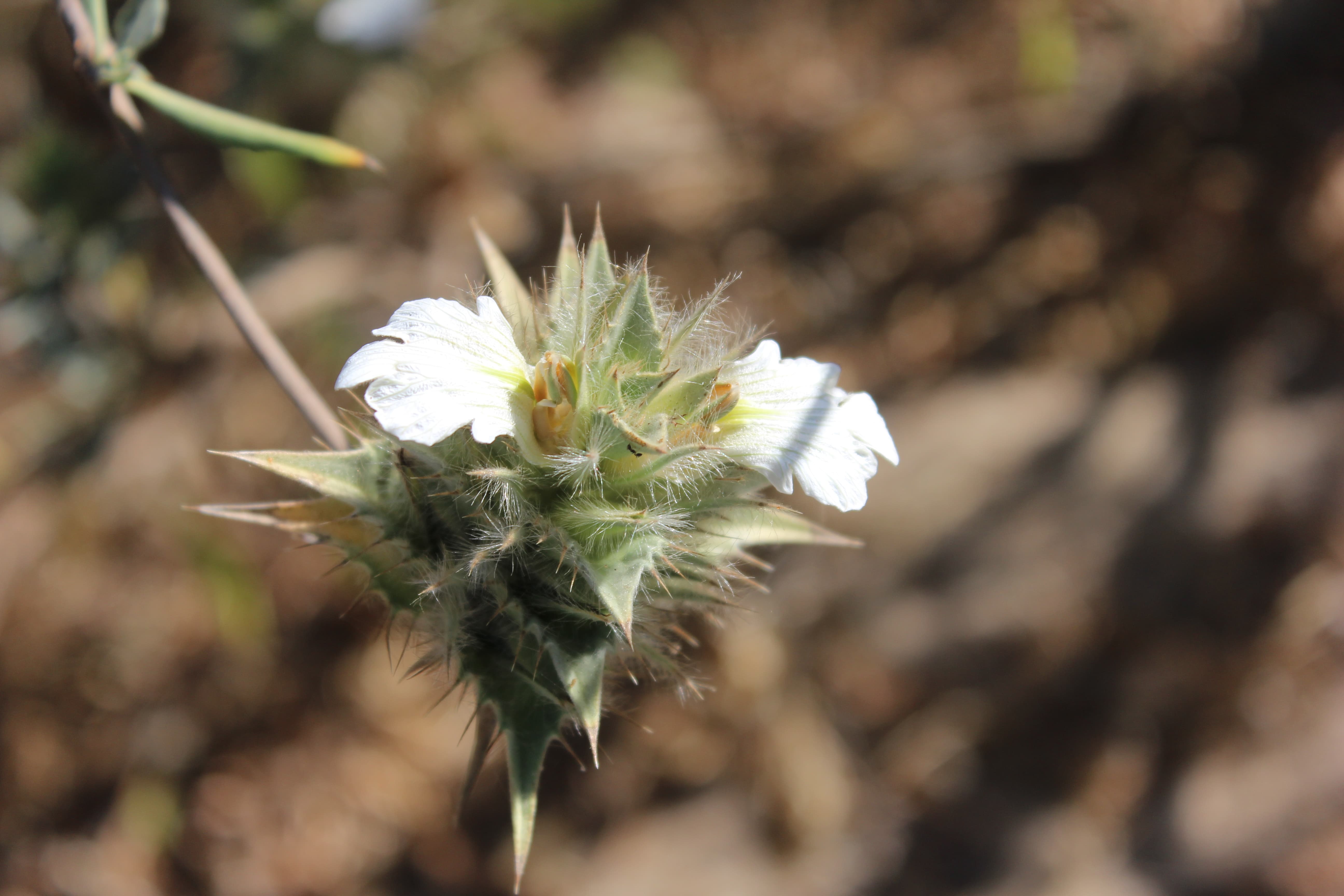
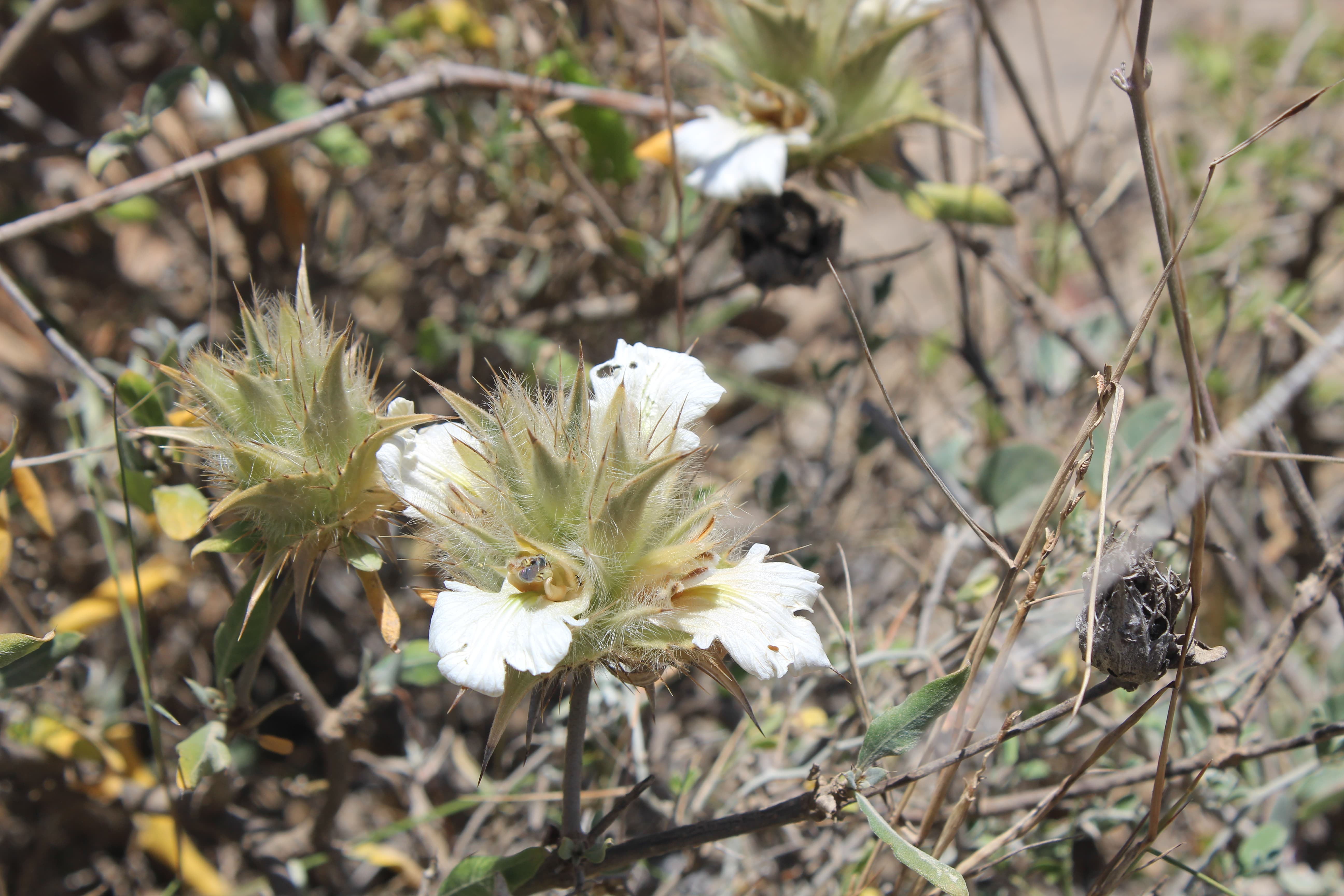
Blepharis_dhofarensis_2-06082024 © OBG
Blepharis_dhofarensis_3-06082024 © OBG
Blepharis_dhofarensis_4-06082024 © OBG
Blepharis_dhofarensis_5-06082024 © OBG
Blepharis_dhofarensis_6-06082024 © OBG
Blepharis_dhofarensis_7-06082024 © OBG
Blepharis_dhofarensis-06082024 © OBG
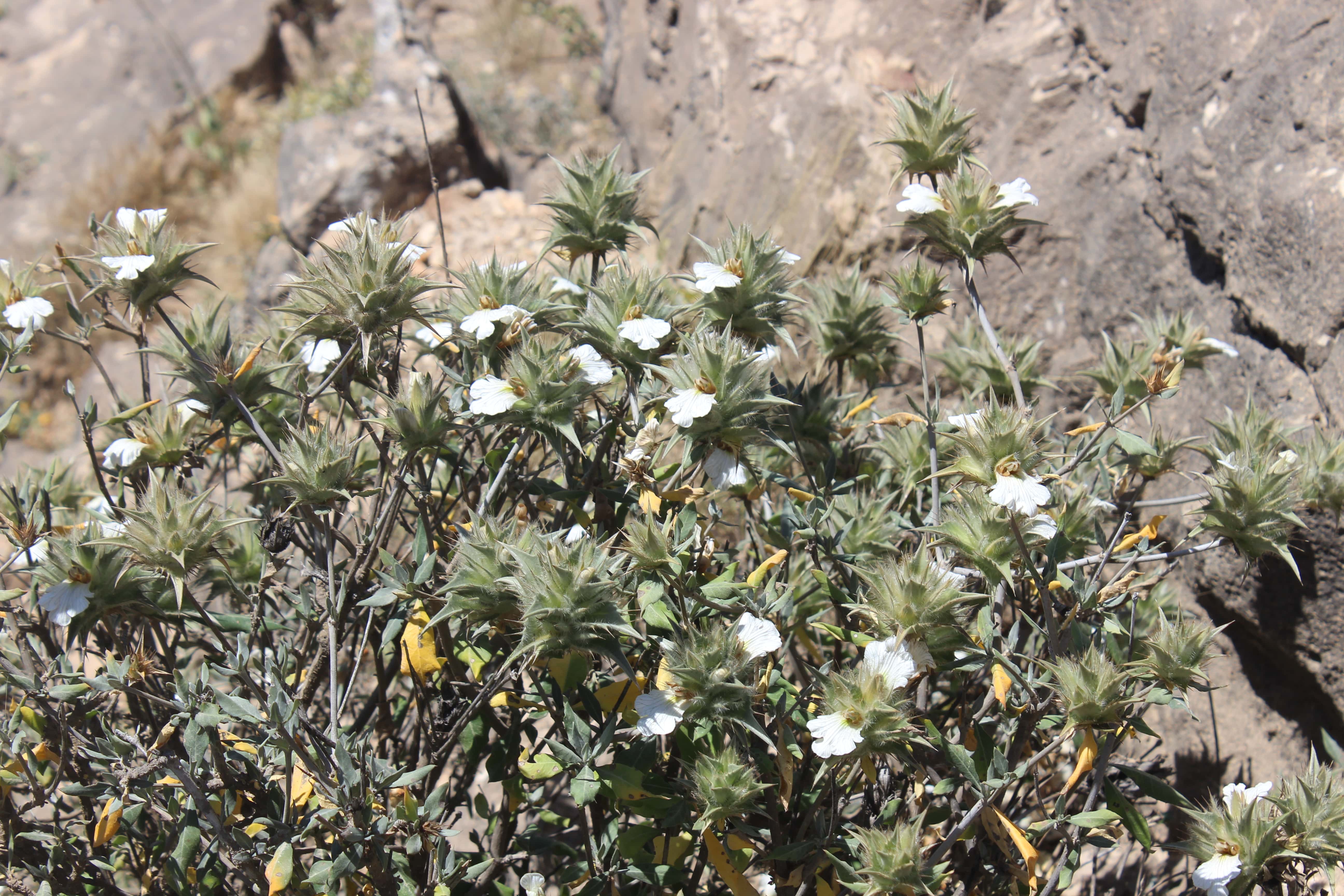
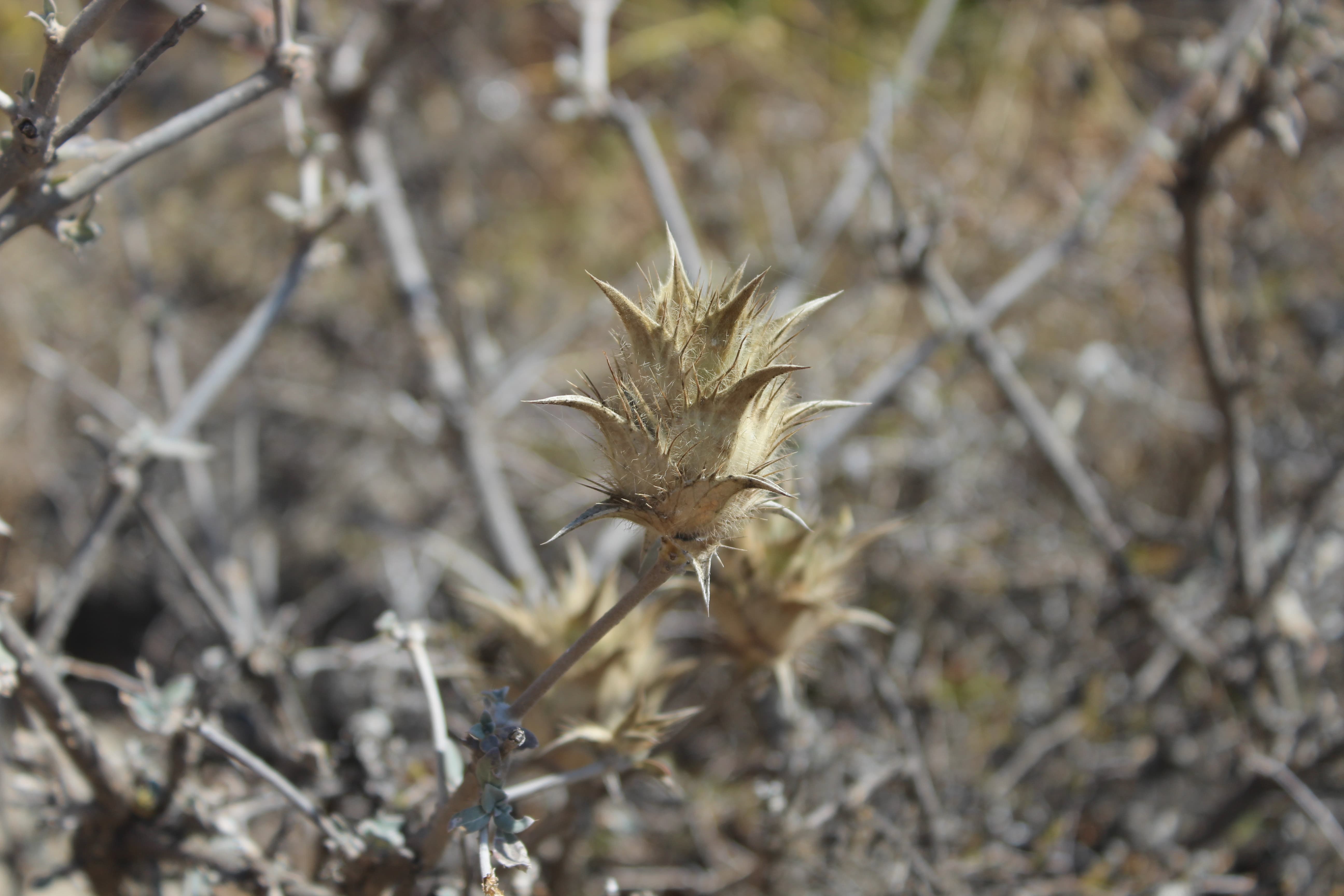
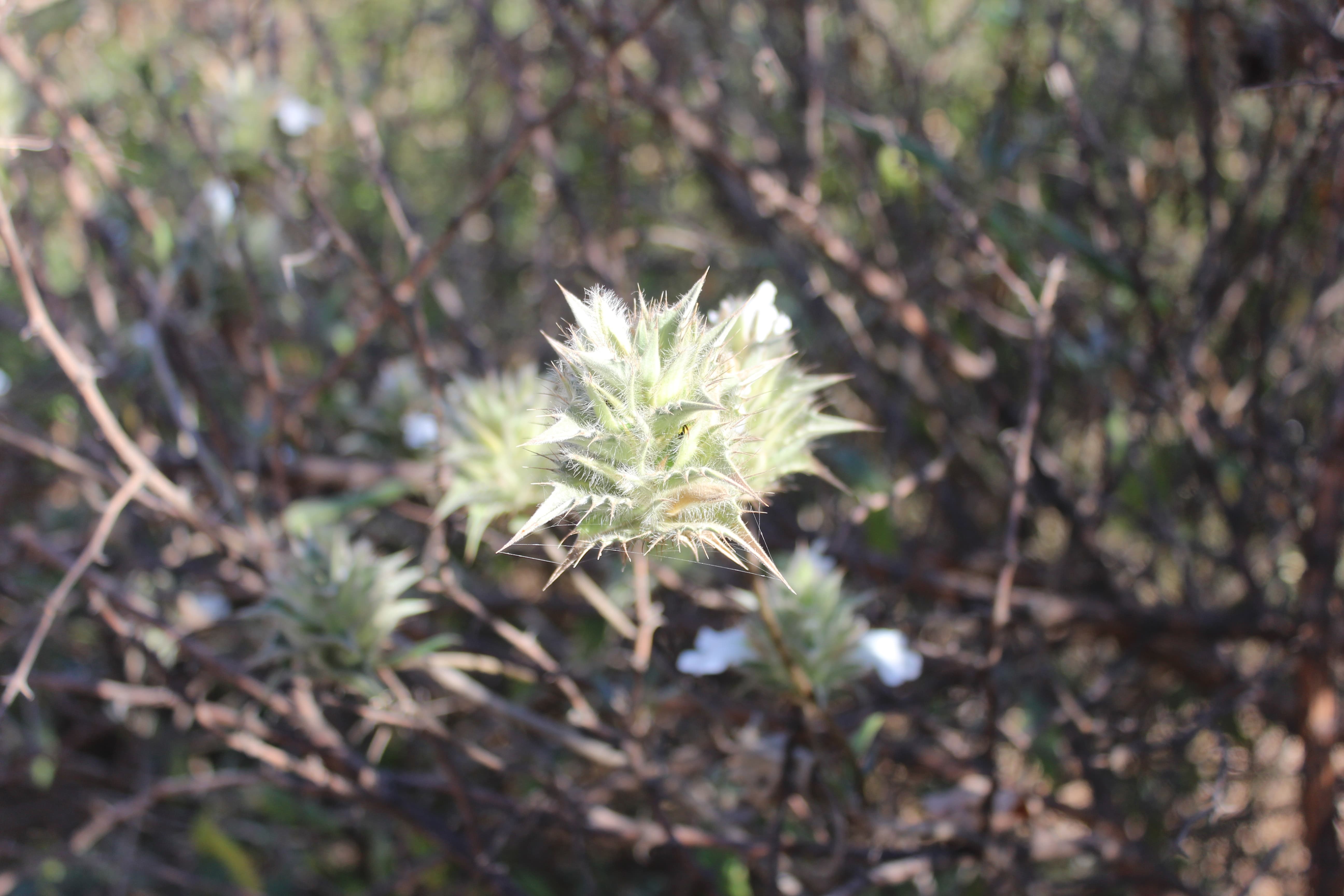
A large shrub or small spindly tree ; up to 5 m tall . Stems much branched ; older wood grey with prominent lenticels , young wood reddish brown , thinly covered with appressed hairs . Leaves opposite or arranged in whorls of four , 5–18 × 1–4 . 5 cm , narrowly elliptic , margins with a few weak spinules , apex spinulose , base sessile or attenuating into a short petiole bearing pair of spinules at the base . Inflorescences emerge from a large cluster of spiny bracts ; peduncle 6–15 cm ; bracts and bracteoles in the inflorescence obovate to rhomboid , spiny towards the apex , tip spiny , sericeous ; lower bracts sterile ; bracteoles 2 per bract . Flowers 8–10 , white ; calyx of 4 unequal lobes sericeous ; dorsal ± 32 × 10 mm , apex with 2 weak spines ; ventral similar to dorsal lobe , ending in one weak spine ; lateral ±16 × 6 mm , ovate ; corolla white , 1-lipped , 40–45 mm , unequally 5-lobed , the central lobe largest ; tube
...

No Data
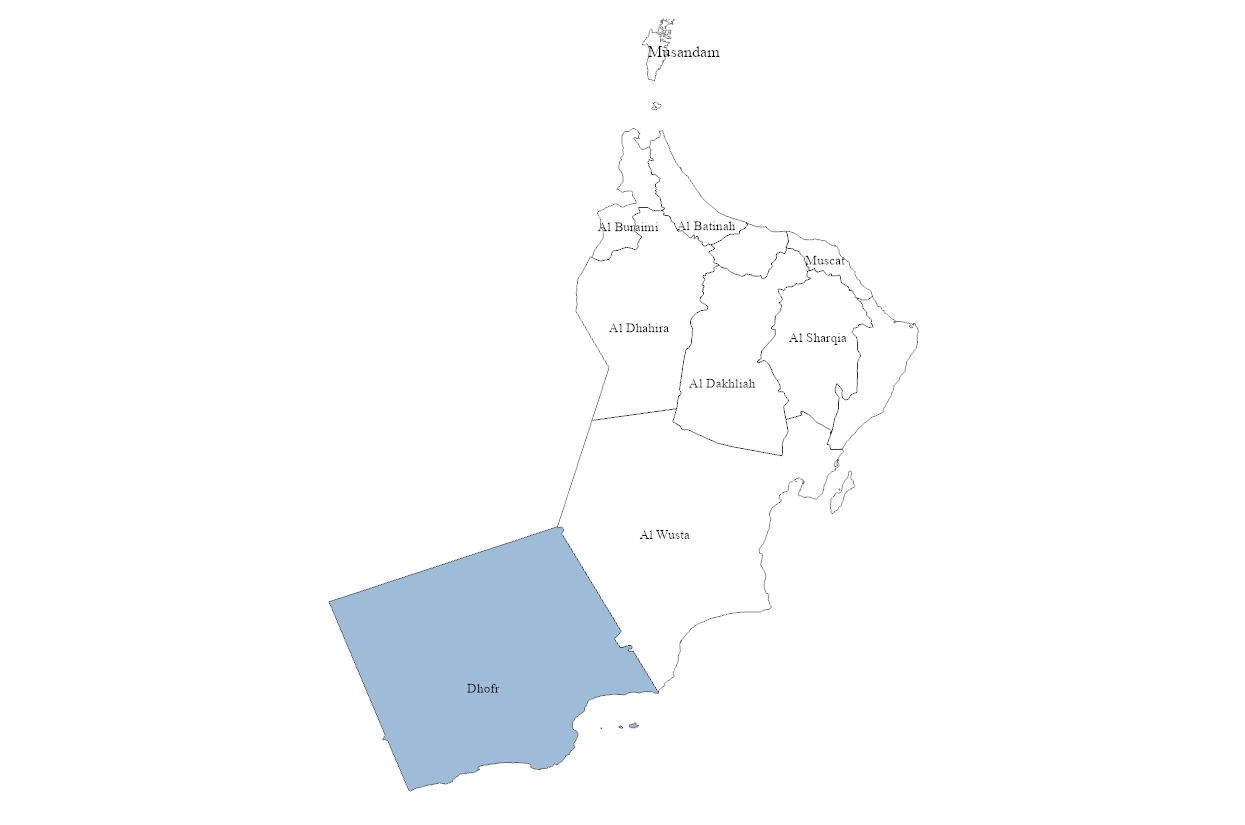
Near Endemic (NE) - Vulnerable (VU B1b(ii , iii)) - Global Assessment
Frequent
الوصف غير متاح حاليًا
Not available
No data
maintenanceAr.Item1
Dhofari Lizard Thorn
In Omani studies: Miller & Morris (1988) wrote that: "The main importance of this tree in Dhofar was as fodder plant. The prickly fruit heads, called J: asker, contain many large, green seeds called J: bizam which are regarded as the very best fodder for camels, especially milch camels, producing copious quantities of sweet and rich milk. These fruit grow at the very tip of the long slim branches, where they are accessible to the camels who come to these steep-sided valleys to browse after the end of the monsoon. The leaves are also appreciated by the camels - hence the common phrase J: yit tegelif xir b- ayzob which means - 'the she-camel is browsing (literally: stripping the leaves from) Blepharis dhofarensis and Ormocarpum dhofarense'. The root glf, 'to strip leaves', is the base of the word megelif, which is an alternative name given to this and many other
...
*Ghazanfar, S. (2015). Flora of the Sultanate of Oman, vol.3: Loganiaceae – Asteraceae. Meise, National Botanic Garden of Belgium (Scripta Botanica Begica, Vol. 25). ISBN 9789082352511 ISSN 0779-2387. *https://en.wikipedia.org *Pickering, H. Patzelt, A. (2008). Field Guide to the Wild Plants of Oman. Kew publishing, Royal Botanic Garden, Kew. ISBN 9781842461778. *Patzelt, A. (2015). Oman Plant Red Data Book. Published by Diwan of Royal Court, Sultanate of Oman. Oman Botanic Garden Publication No. 1. ISBN 978-99969-50-10-0. *Miller, A., Morris, M. (1988). Plants of Dhofar, the Southern Region of Oman: Traditional, Economic, and Medicinal Uses. Published by Office of the Adviser for Conservation of the Environment, Diwan of Royal Court, Sultanate of Oman; ISBN 10: 0715708082 ISSN 13: 9780715708088. *Patzelt, A. (2015). Oman Plant Red Data Book. Published by Diwan of Royal Court, Sultanate of Oman. Oman Botanic Garden Publication No. 1. ISBN 978-99969-50-10-0. *POWO (2023). ""Plants of the World Online. Facilitated
...
