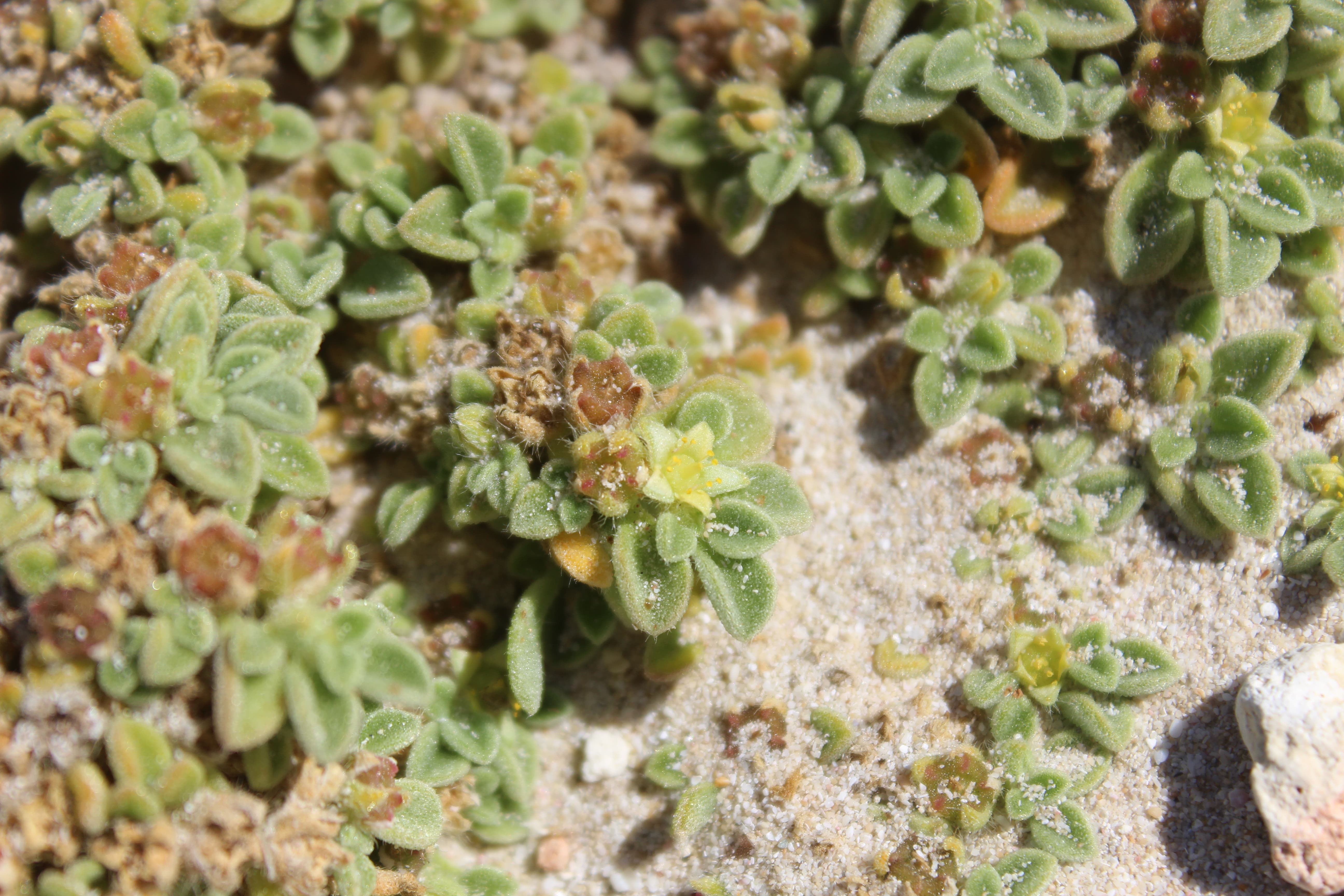
Aizoon_canariense_2-06082024 © OBG
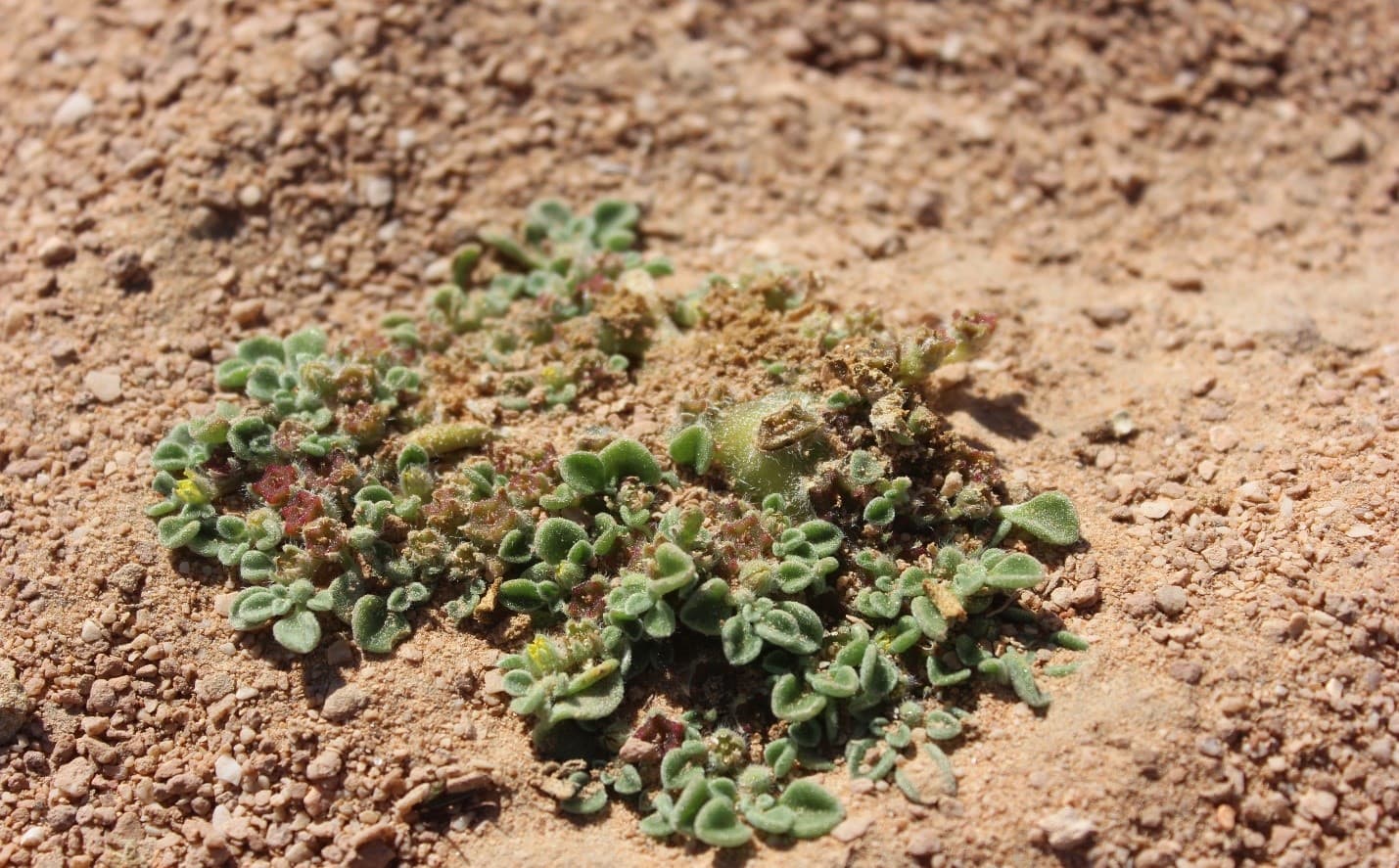
Aizoon_canariense_3-06082024 © OBG
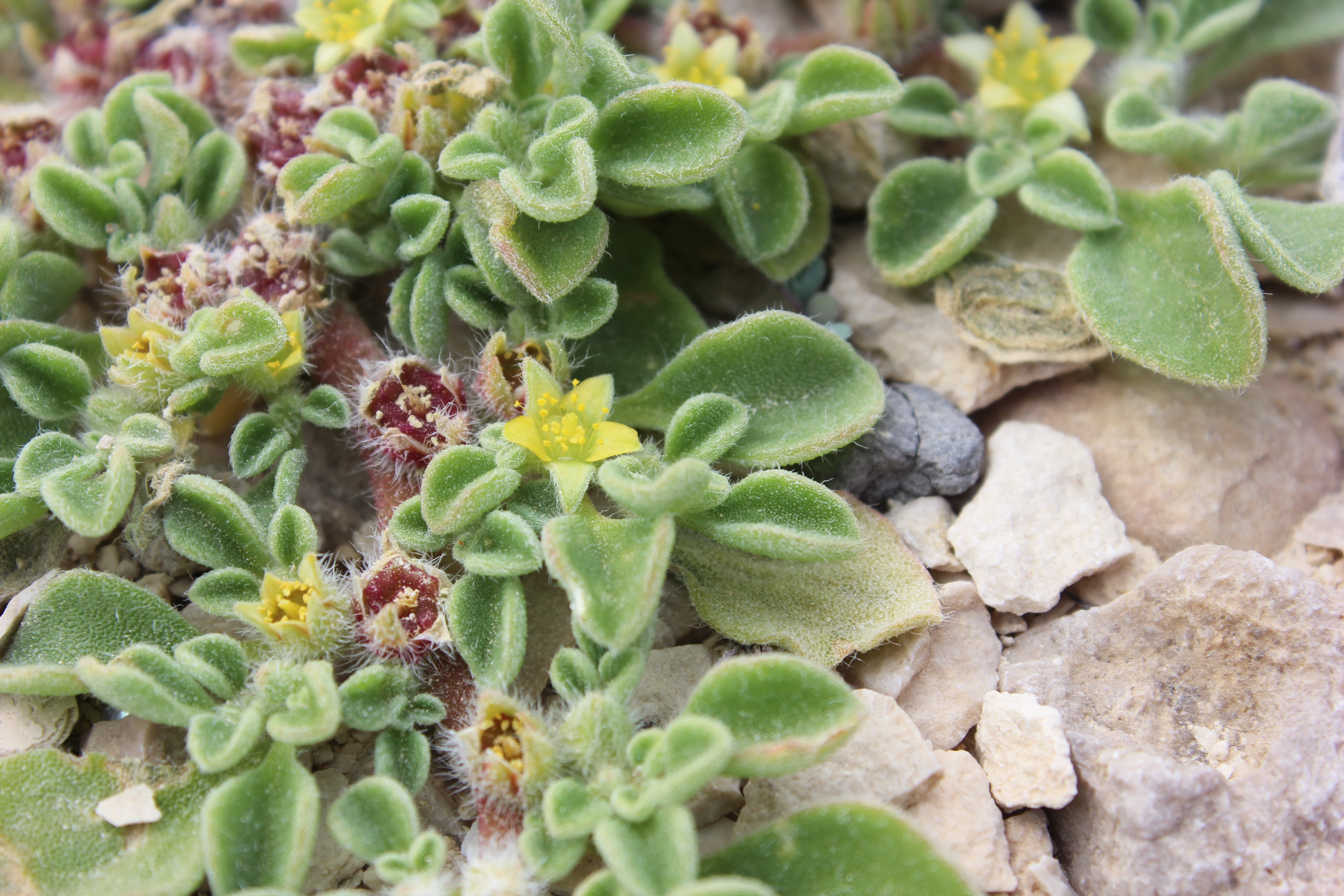
Aizoon_canariense_4-06082024 © OBG
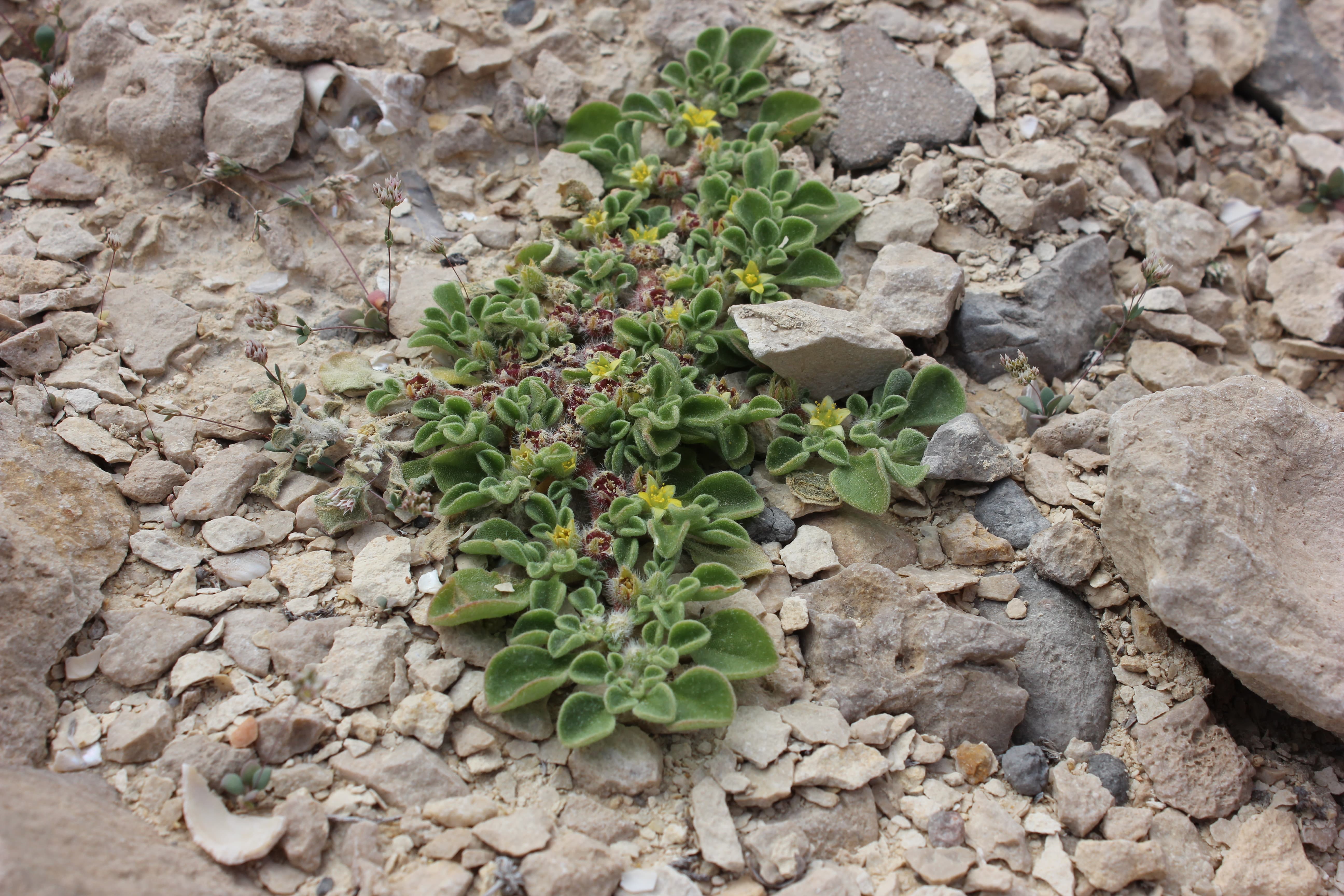
Aizoon_canariense_5-06082024 © OBG
Aizoon_canariense_6-06082024 © OBG
Aizoon_canariense_7-06082024 © OBG
Aizoon_canariense-06082024 © OBG
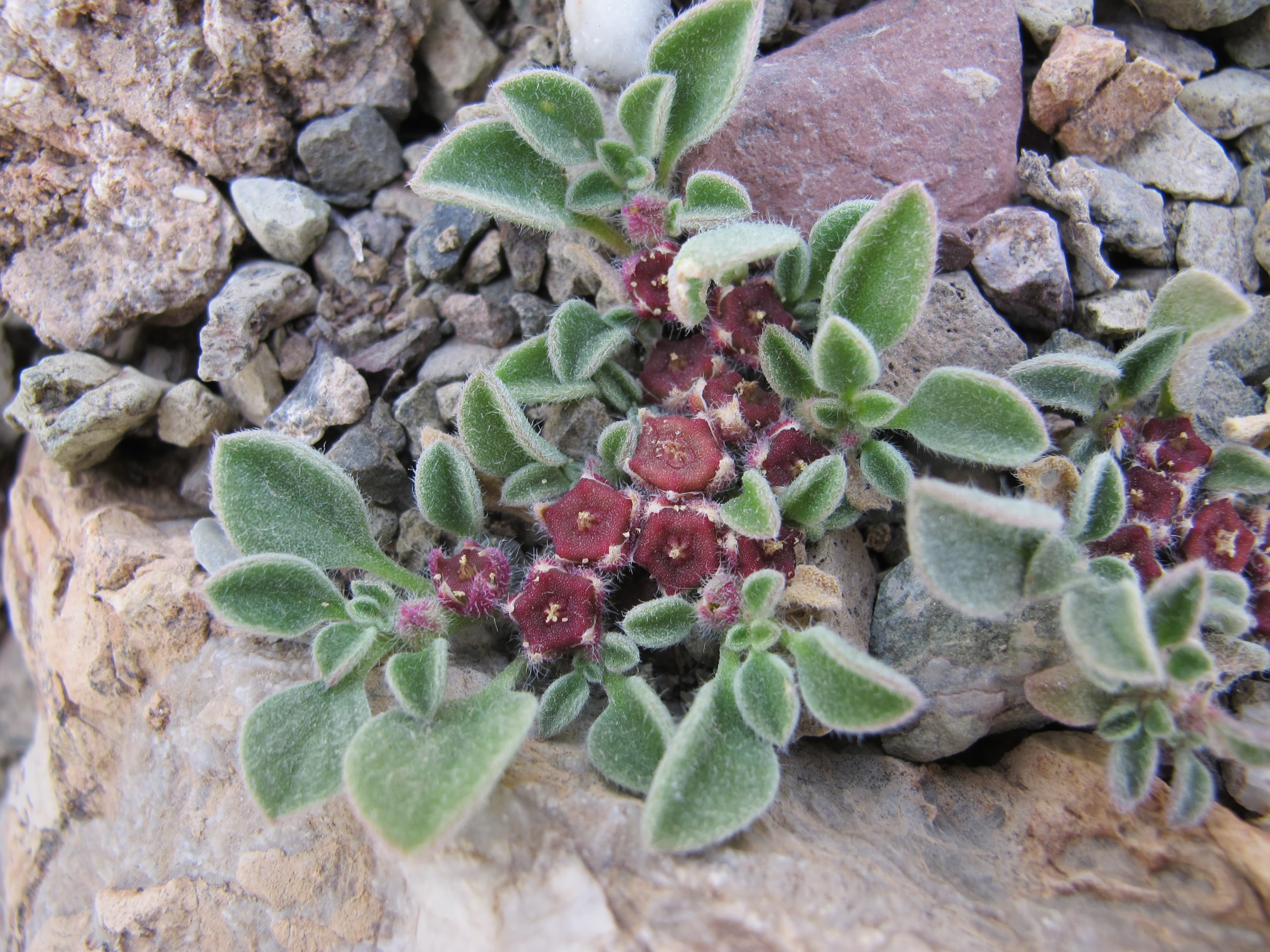
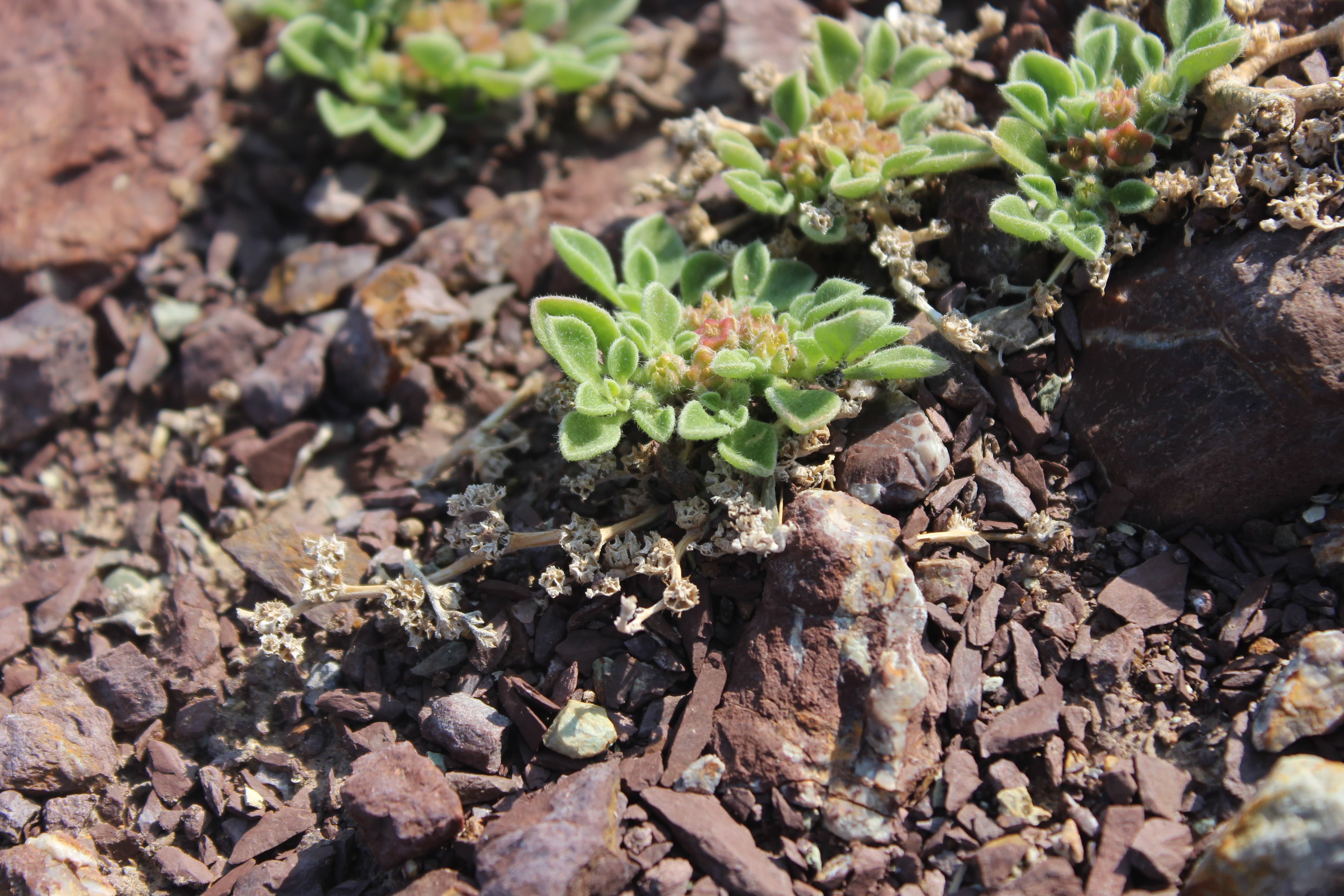
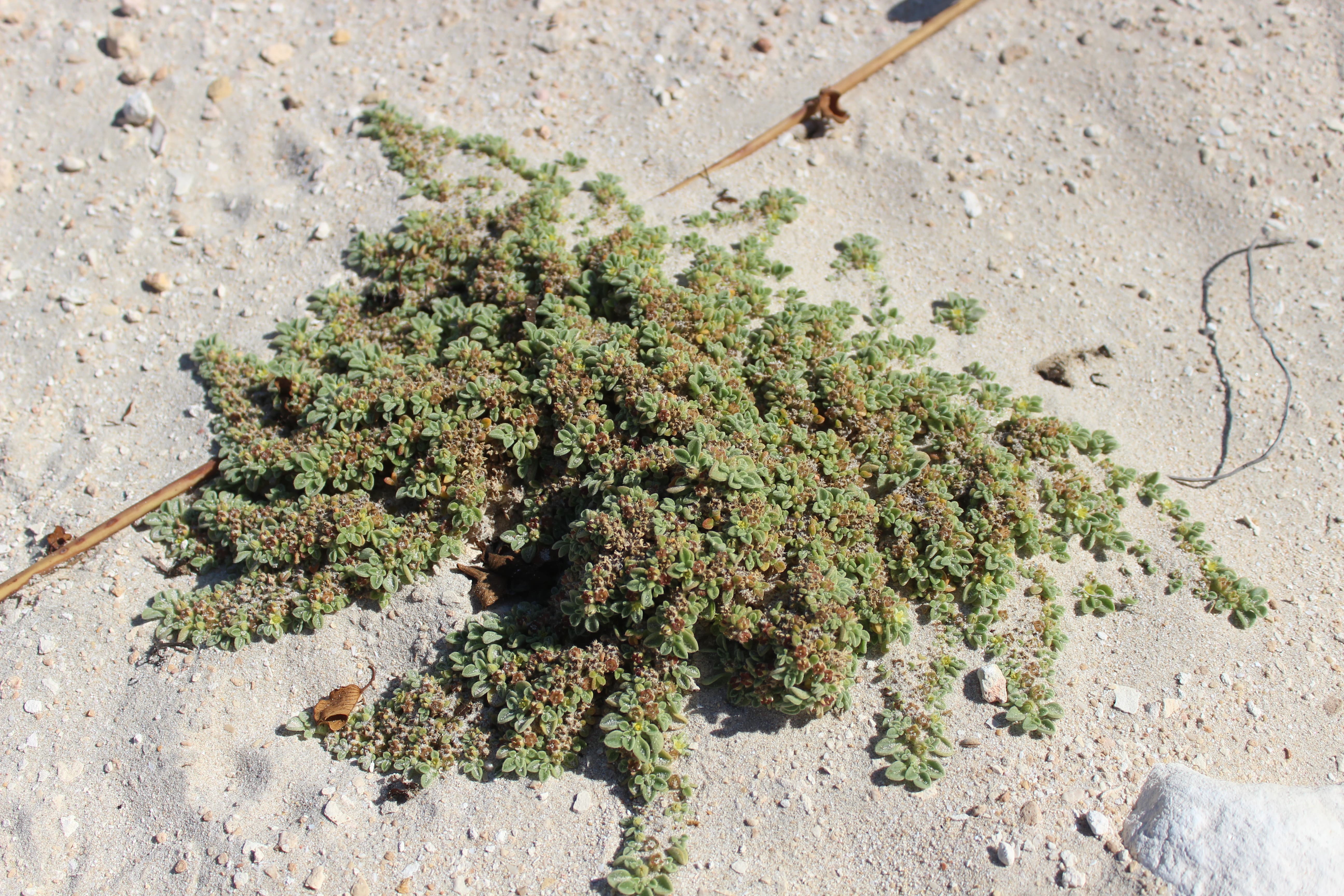
Annual or short-lived woody perennial herb ; up to 20 cm high , densely to thinly pilose . Stems prostrate , with zig-zagging branches radiating out from the centre . Leaves alternate or subopposite , 10–30 x 5–11 mm , fleshy , bright green , spatulate , apex rounded to subacuminate , base attenuating into the petiole , margin entire ; petiole 5–14 mm . Inflorescences borne in forks of branches , solitary , sessile . Flowers tiny , greenish or yellowish with a yellow centre , up to 4 mm wide ; sepals 3–5 mm , 5-lobed , with a white-hyaline margin , pubes- cent ; petals absent ; stamens many , arranged in groups (5 bundles) . Fruit capsule , c . 5 mm in diameter , 5-angled , star-shaped , flattened at the top , valves not recurving on dehiscence , red or pink . Seeds many , reniform , concentrically ridged . (Ref . Flora of Oman ; vol . 1) .
No Data
Not Evaluated (NE)
Common
الوصف غير متاح حاليًا
Aizoon canariense var. denudata Sond.
Aizoon procumbens Crantz
Aizoon spathulatum Eckl. & Zeyh.
Veslingia cauliflora Moench
Veslingia heisteri Fabr. ex Willd.
Glinus chrystallinus Forssk.
No data
maintenanceAr.Item1
Purslane-Leaved Aizoon
Canary Iceplant
The whole plant is eaten fresh during the rainy season. Also, a good browse for livestock. (Ref. Oman Botanic Garden). In Omani studies: Patzelt (2015) wrote that: "Both the leaves and the seeds of the purslane-leaved aizoon are eaten, with the leaves being used as a green salad or for porridge and soup. In some countries, Bedouins grind and cook purslane-leaved aizoon seeds as a gruel. This species is also known to be used as fodder for domestic animals". (Ref. Photographic Field Guide to the Plants of the Western Hajar Mountains; 2015).
*Ghazanfar, S. (2003). Flora of the Sultanate of Oman, vol.1: Piperaceae – Primulaceae. Meise, National Botanic Garden of Belgium (Scripta Botanica Begica, Vol. 25). ISBN 90-72619-55-2 ISSN 0779-2387. *https://en.wikipedia.org *https://worldofsucculents.com *https://www.etymonline.com *Miller, A.G. & Cope, T.A. (1996). Flora of the Arabian Peninsula and Socotra 1: 1-586. Edinburgh university press. ISBN 0748604758. *Pickering, H. Patzelt, A. (2008). Field Guide to the Wild Plants of Oman. Kew publishing, Royal Botanic Garden, Kew. ISBN 9781842461778. *Patzelt, A. (2015). Photographic Field Guide to the Plants of the Western Hajar Mountains, Sultanate of Oman: with a complete checklist of vascular plant species. Sultan Qaboos University – Academic Publication and Outreach Department. P.O Pox (17) Postal Code (123), Muscat, Al khoudh, Sultanate of Oman. *POWO (2023). ""Plants of the World Online. Facilitated by the Royal Botanic Gardens, Kew. Published on the Internet; http://www.plantsoftheworldonline.org
