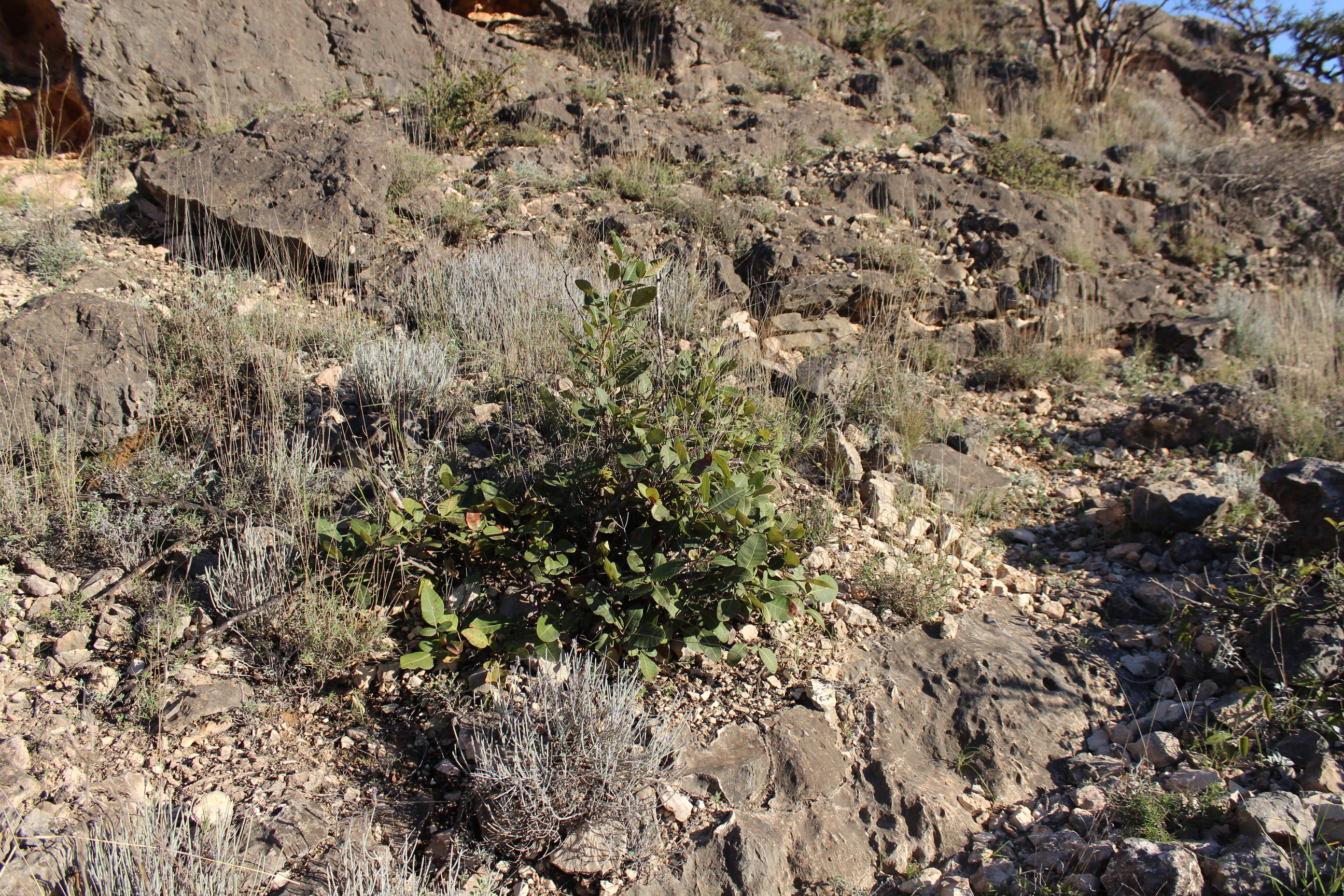
Searsia_somalensis_2 © OBG
Searsia_somalensis_3 © OBG
Searsia_somalensis_4 © OBG
Searsia_somalensis_5 © OBG
Searsia_somalensis_6 © OBG
Searsia_somalensis_7 © OBG
Searsia_somalensis_8 © OBG
Searsia_somalensis_9 © OBG
Searsia_somalensis © OBG
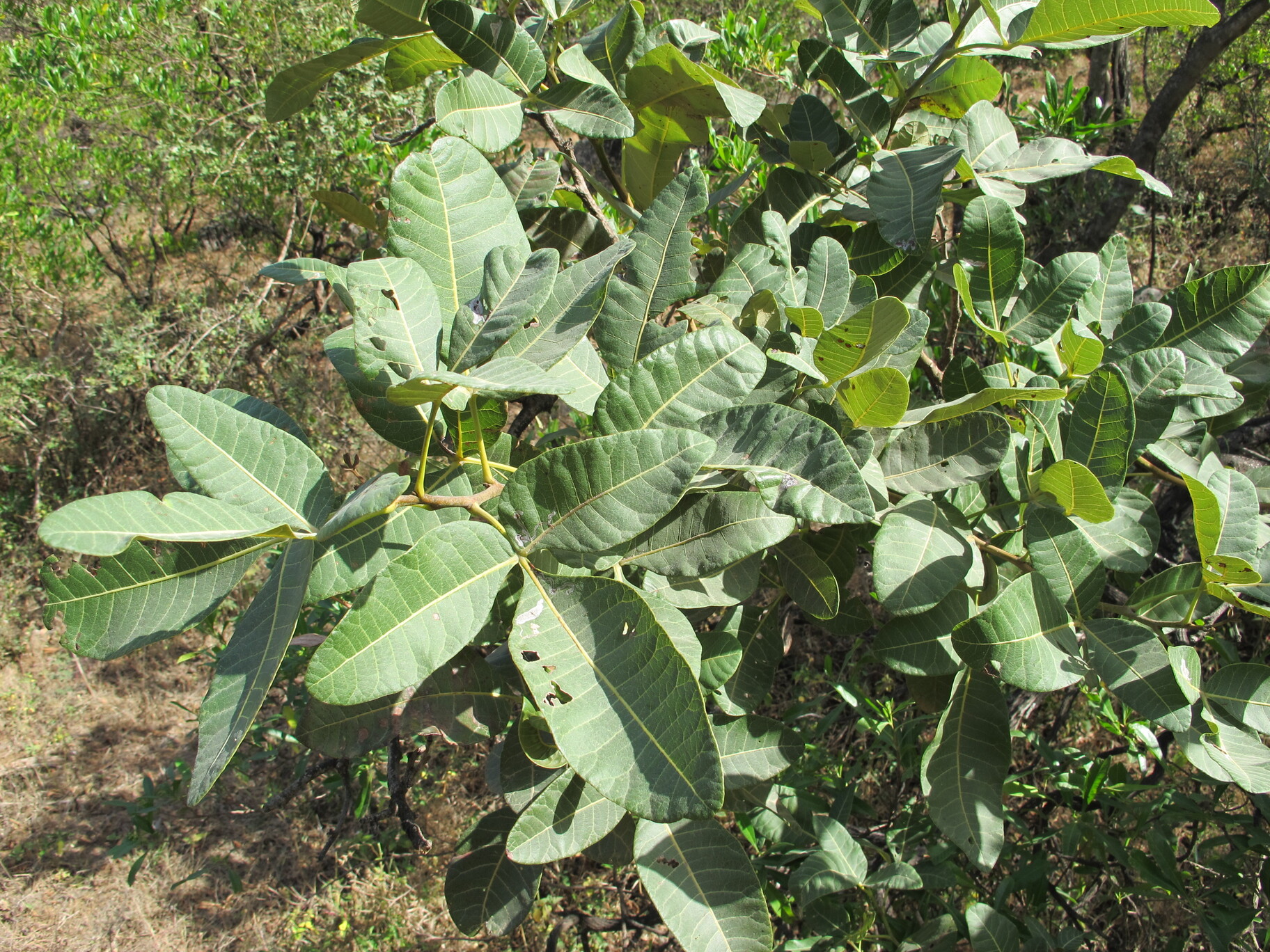
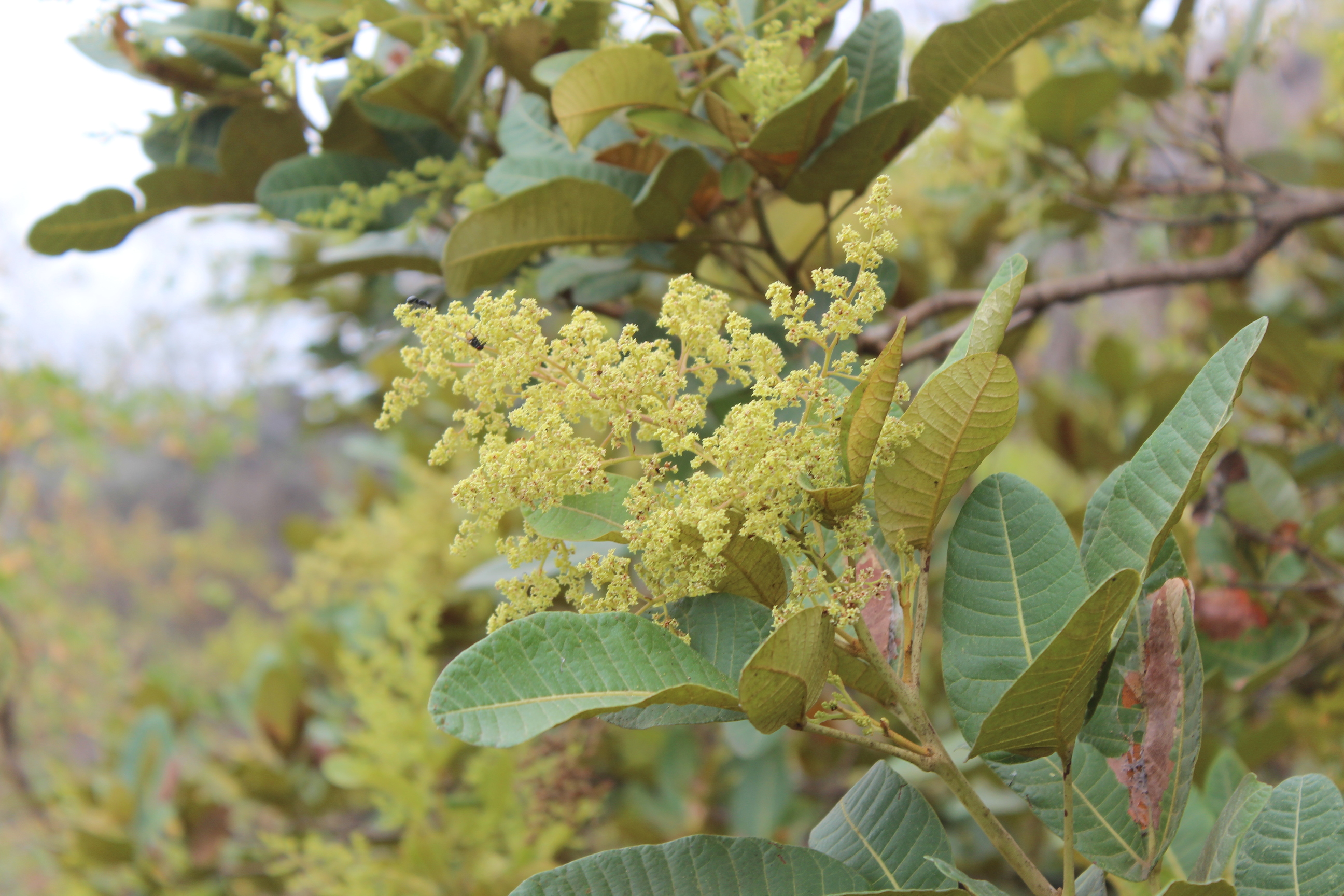
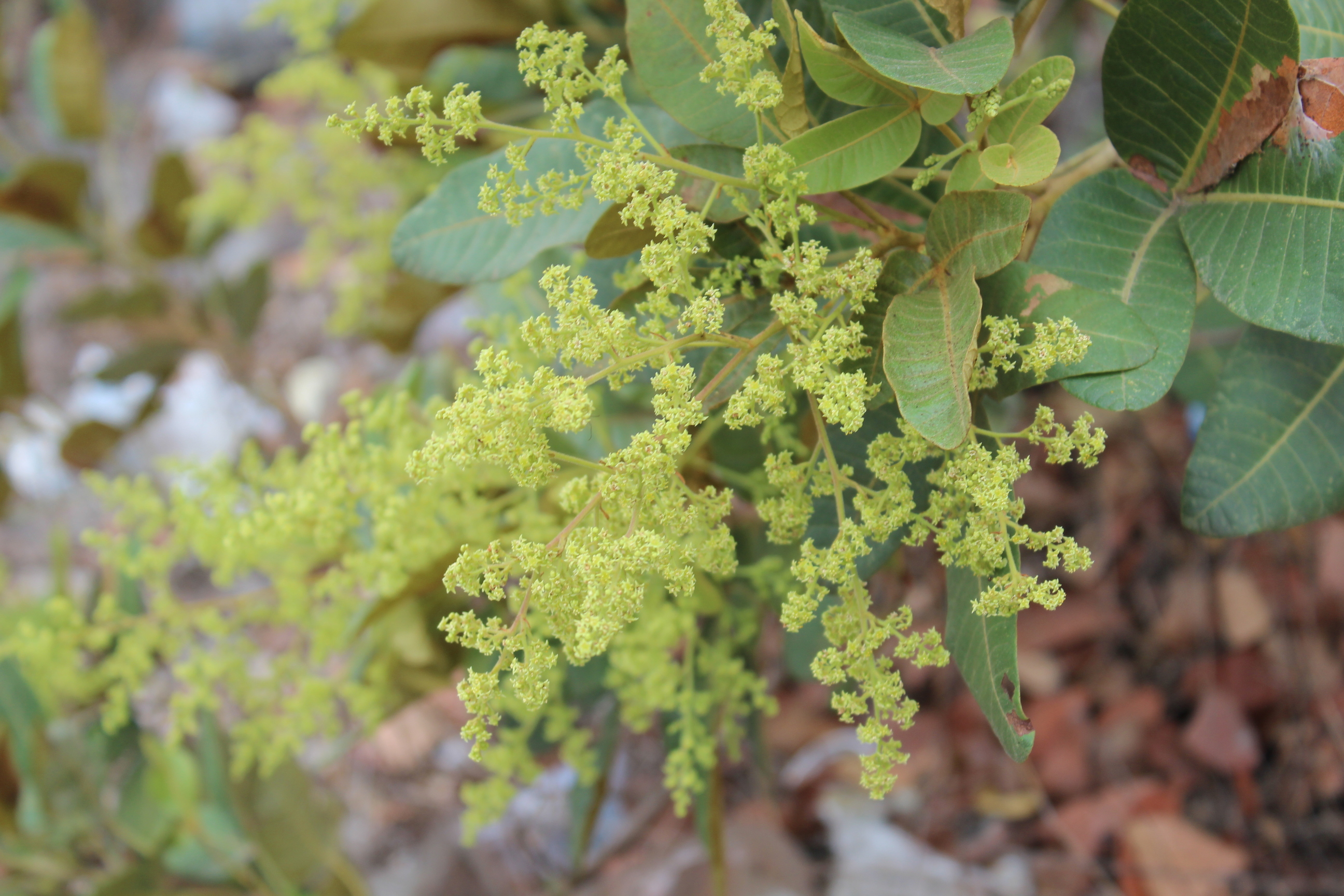
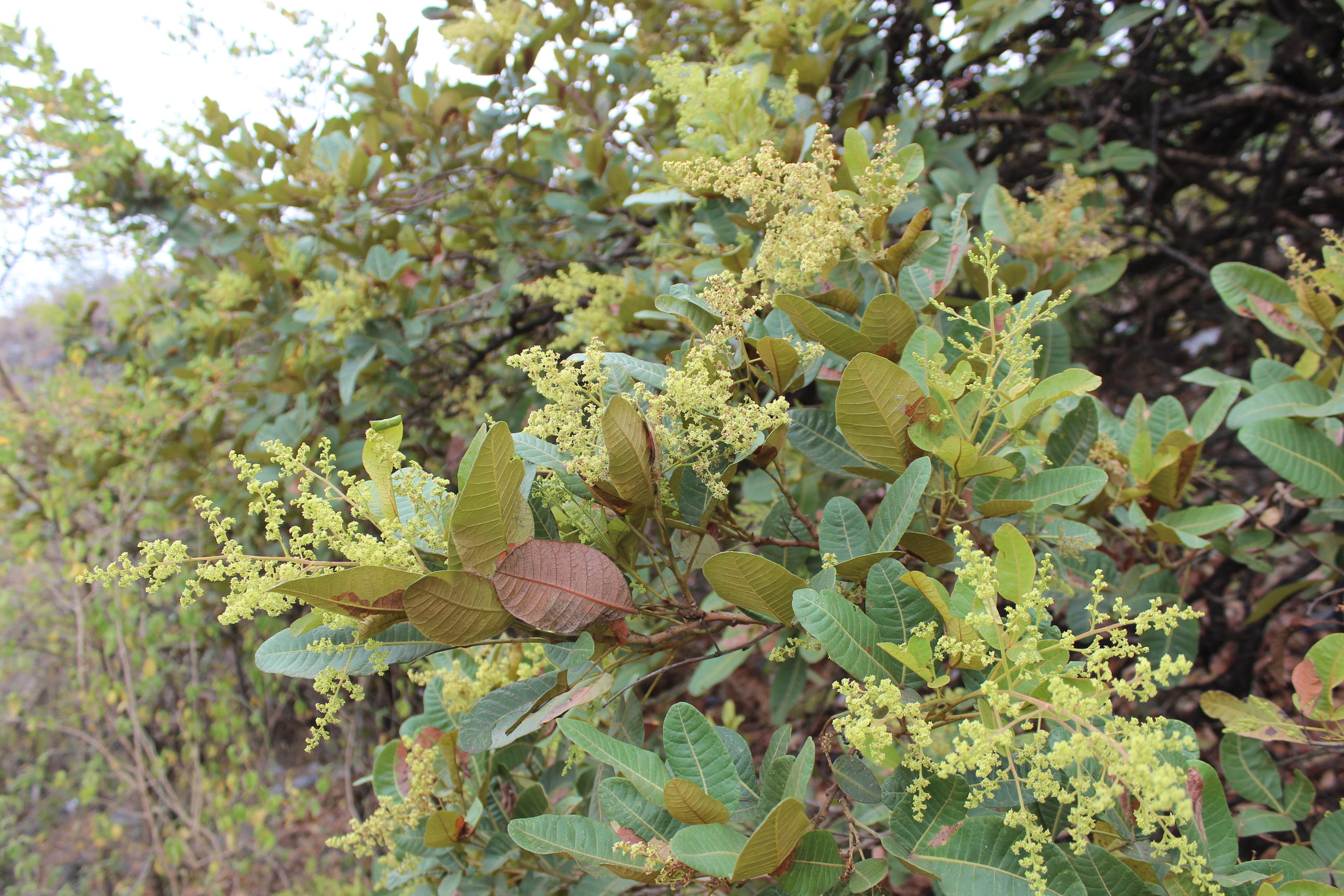
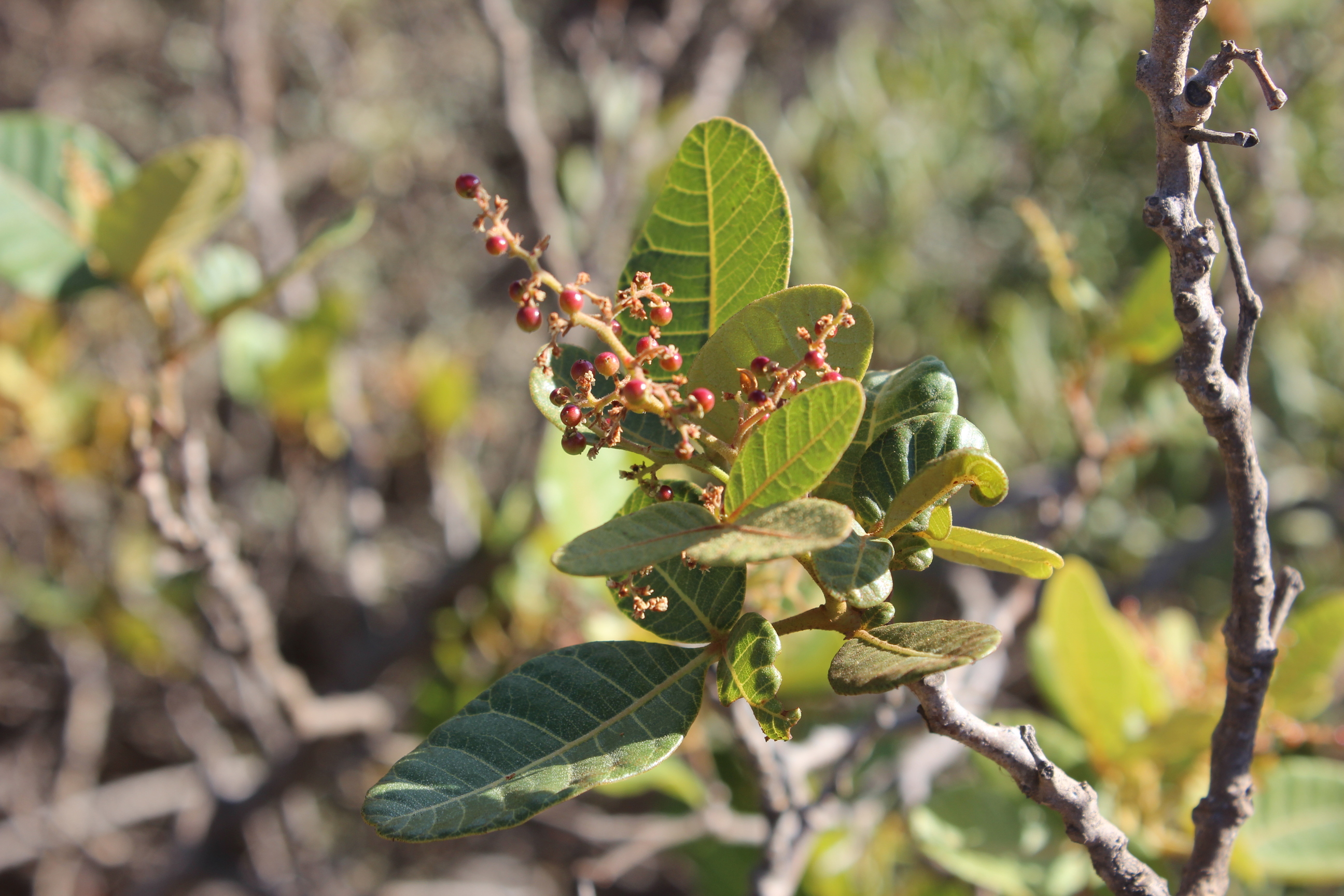
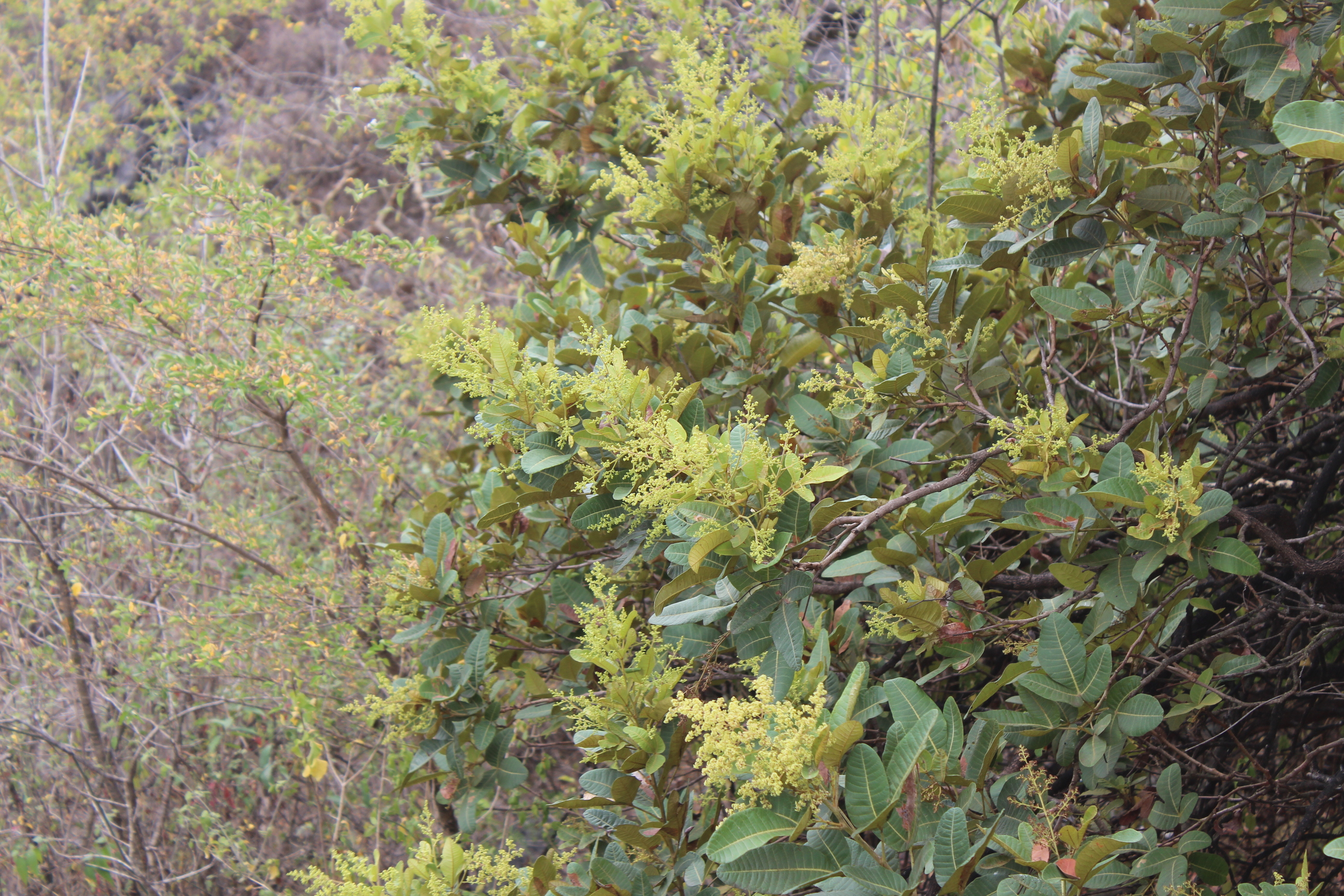
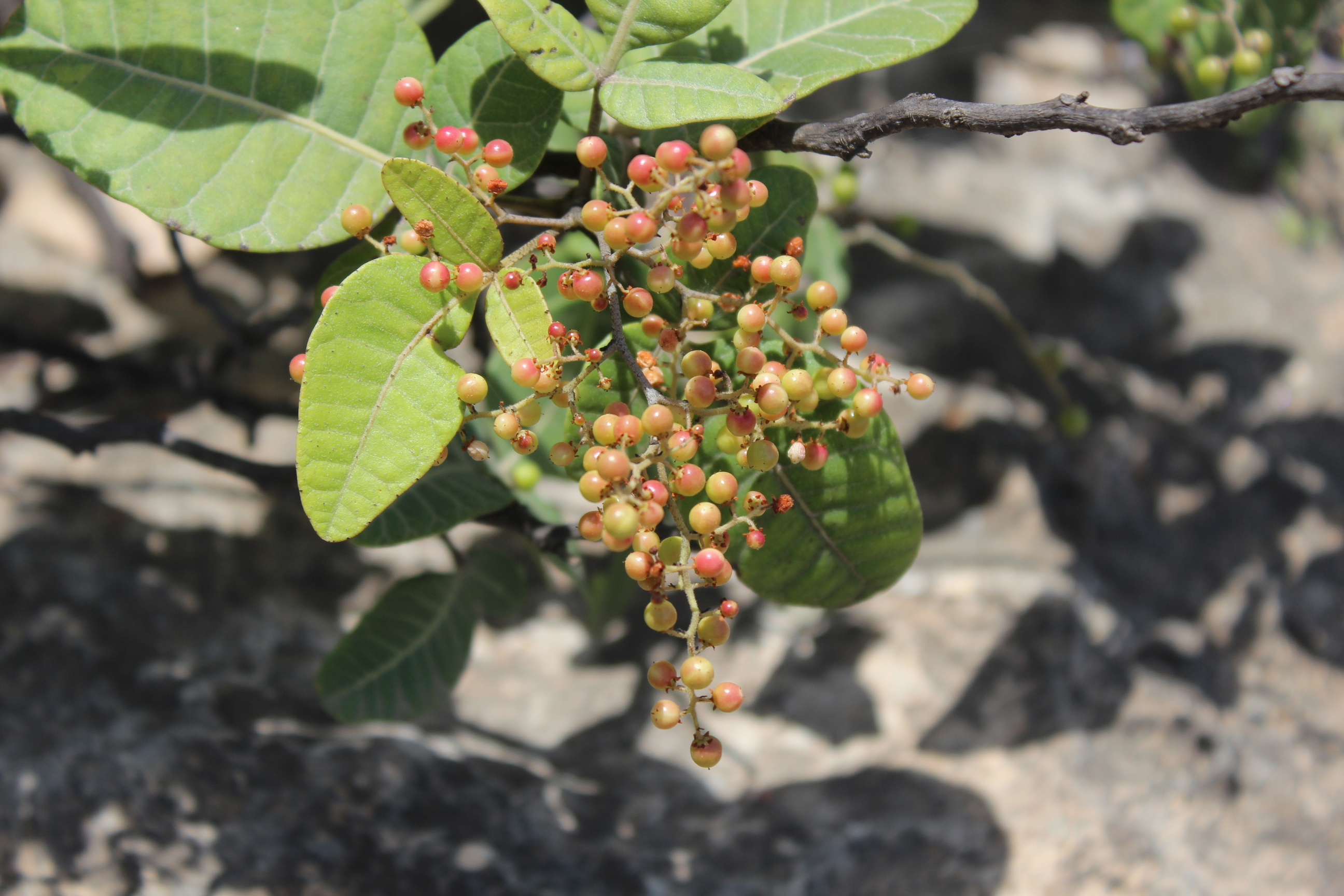
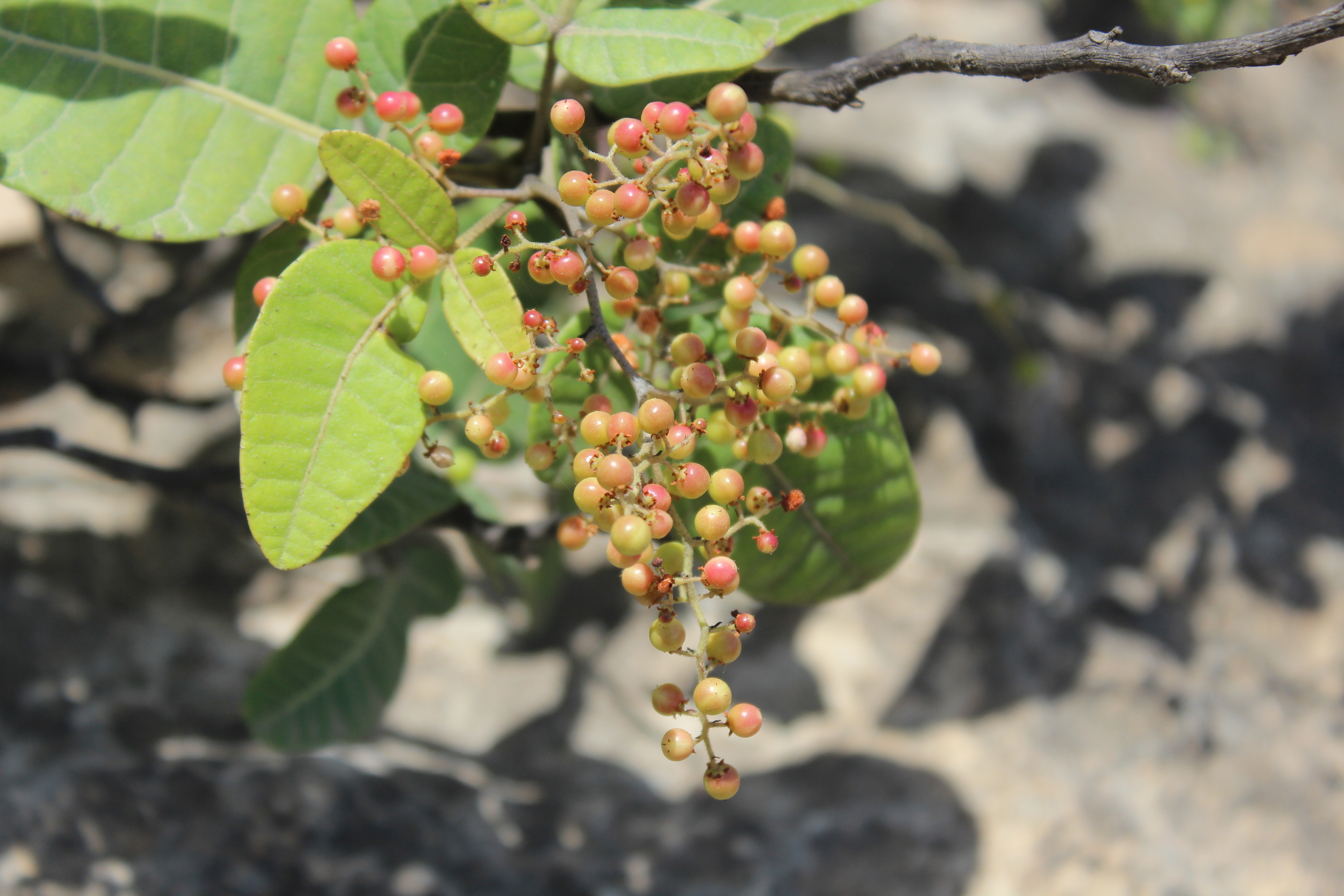
Dioecious . Shrub or small tree ; up to 10 m tall . Stems much branched ; bark grey-white , minutely pubescent in young stems . Leaves alternate , 3-foliolate ; leaflets sessile , 5-13(-15) x 2-5 . 5(-8) cm , oblong-obovate to elliptic-oblong , the terminal leaflet largest , apex obtuse , base cuneate , unequal , margin entire , undulate , leaflets green above and glabrous , yellowish-green beneath and densely covered with appressed hairs ; petiole 2 . 5-4 cm , densely pubescent . Inflorescences in axillary and terminal thyrsoid panicles up to 13 cm long ; pedicel 3-4 mm , pubescent ; bracts lanceolate . Flowers yellow to cream ; calyx 5-lobed , lobes 1 mm , glabrous ; petals 1 . 5-2 mm , oblong-ovate , pale yellow to cream ; disk basal to ovary , flat , shallowly 10-lobed at the margins . Male flowers: stamens 5 , exserted from the corolla ; Femal flowers with 5 rudimentary stamens ; ovary globose , 1-celled . Fruit drupe , 5-6 mm in diameter , subglobose , greenish-red at maturity , glabrous , 1-seeded . (Ref . Flora of Oman ; vol . 2) .
No Data
Not Evaluated (NE)
Common
الوصف غير متاح حاليًا
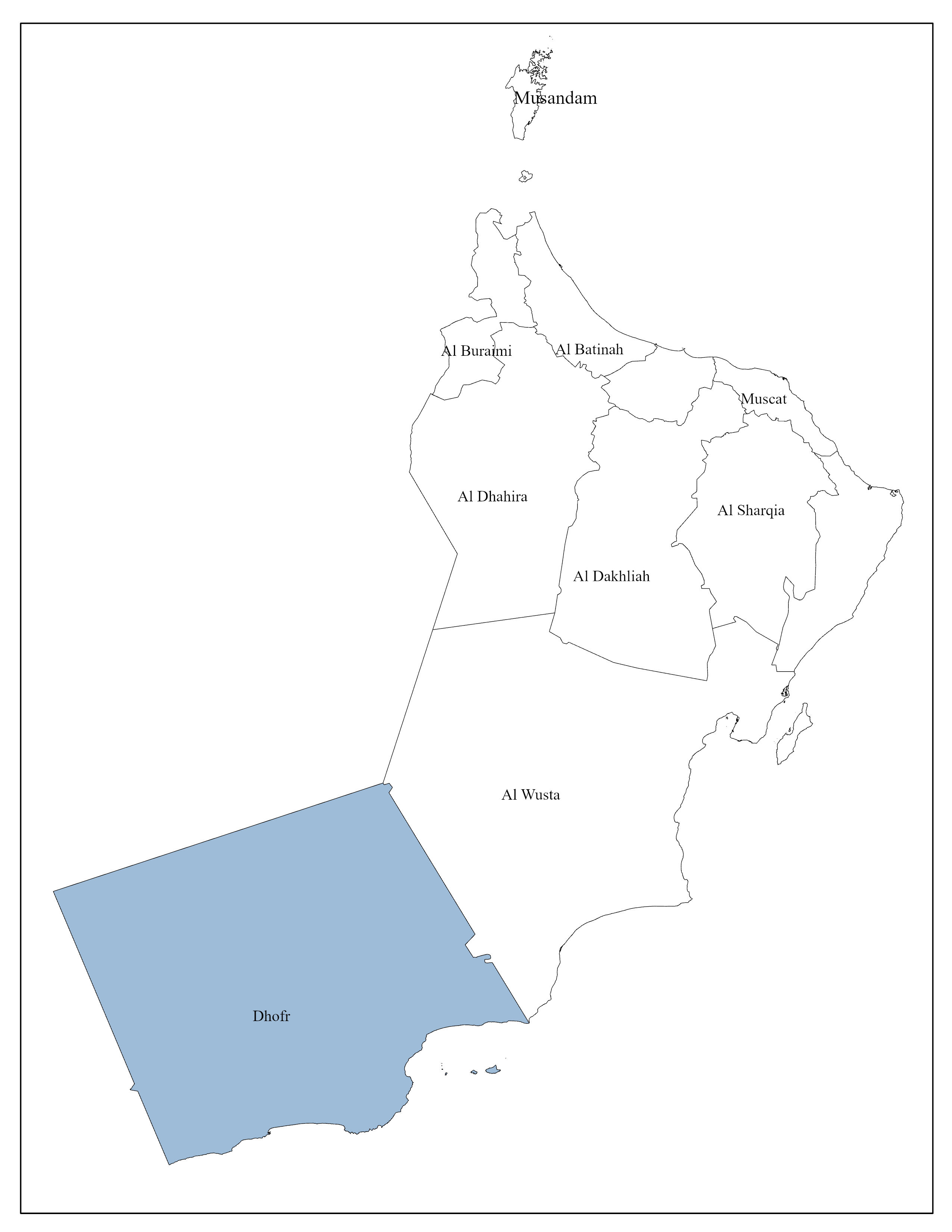
Rhus somalensis Engl.
No data
maintenanceAr.Item1
Somalia Rhus
In Omani studies: Miller & Morris (1988) wrote that: "Rhus somalensis produces great quantities of tiny berries, which in their green, unripe form were especially beloved of women, in particular pregnant women. These berries are called J: zerf. As well as being eaten raw, the berries were also roasted over the fire, producing a sort of tiny popcorn less sharp in taste than the raw fruit. In earlier and hungrier times large quantites of this food were collected and eaten. When ripened and red, the berries are sweet and delicious. Night time collecting of the berries was generally avoided since this shrub is one of the favourite haunts of the very hairy caterpillar called mshayrir, which causes severe itching and reddening of the skin. The leaves of the shrub remain green throughout most of the year, and are therefore useful as a livestock fodder to mix with other feedstuffs, such
...

*Ghazanfar, S. (2007). Flora of the Sultanate of Oman, vol.2: Crassulaceae – Apiaceae. Meise, National Botanic Garden of Belgium (Scripta Botanica Begica, Vol. 36). ISBN 9789072619747 ISSN 0779-2387. *https://en.wikipedia.org *https://pza.sanbi.org *Miller, A., Morris, M. (1988). Plants of Dhofar, the Southern Region of Oman: Traditional, Economic, and Medicinal Uses. Published by Office of the Adviser for Conservation of the Environment, Diwan of Royal Court, Sultanate of Oman; ISBN 10: 0715708082 ISSN 13: 9780715708088. *Patzelt, A. (2015). Oman Plant Red Data Book. Published by Diwan of Royal Court, Sultanate of Oman. Oman Botanic Garden Publication No. 1. ISBN 978-99969-50-10-0. *POWO (2023). ""Plants of the World Online. Facilitated by the Royal Botanic Gardens, Kew. Published on the Internet; http://www.plantsoftheworldonline.org
