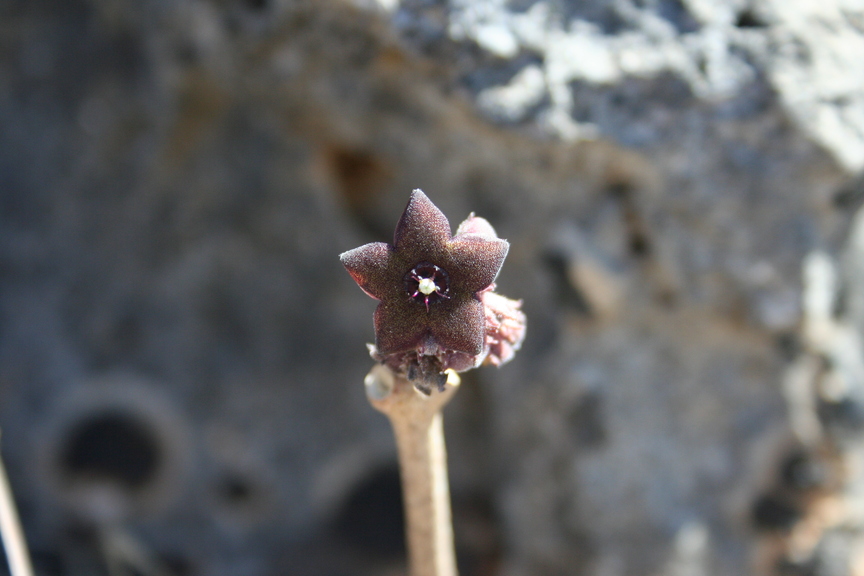
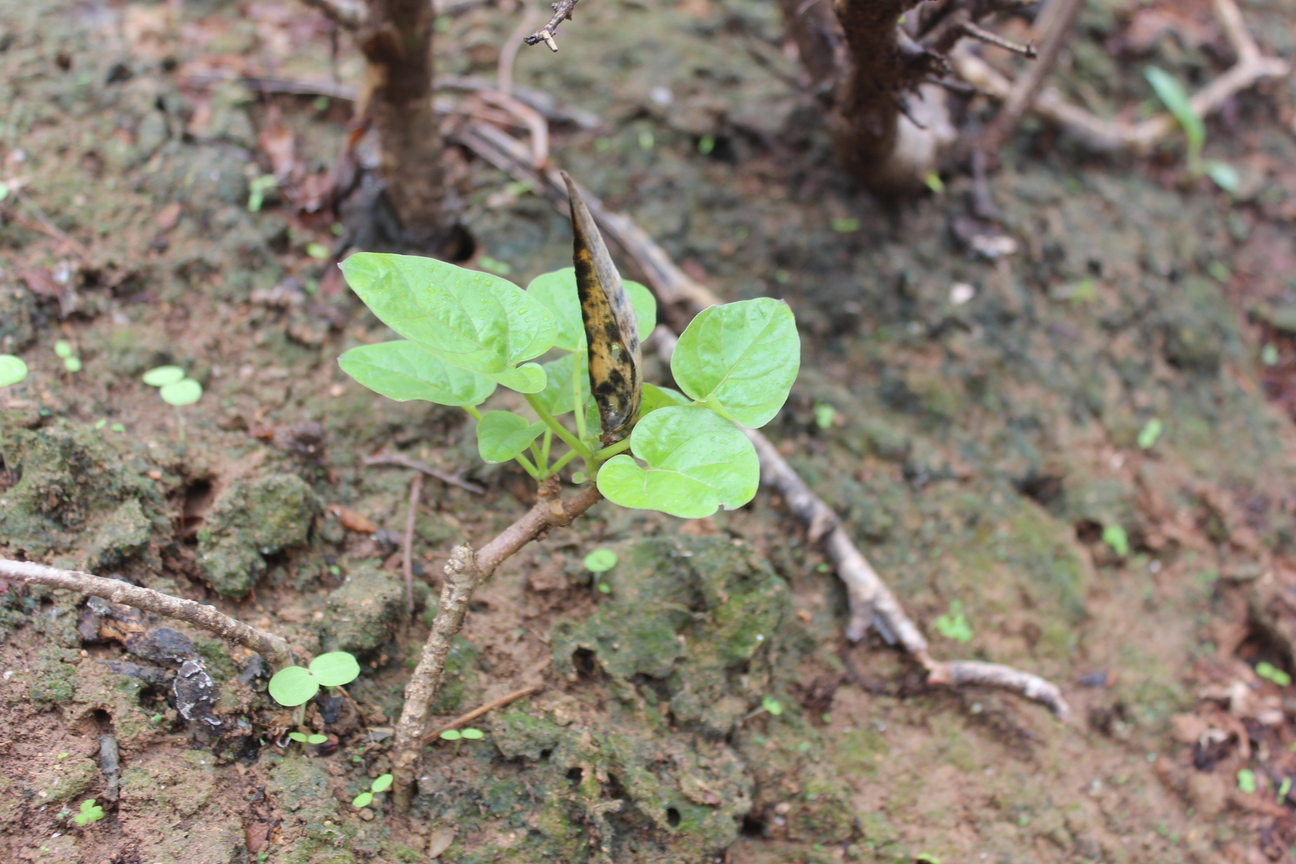
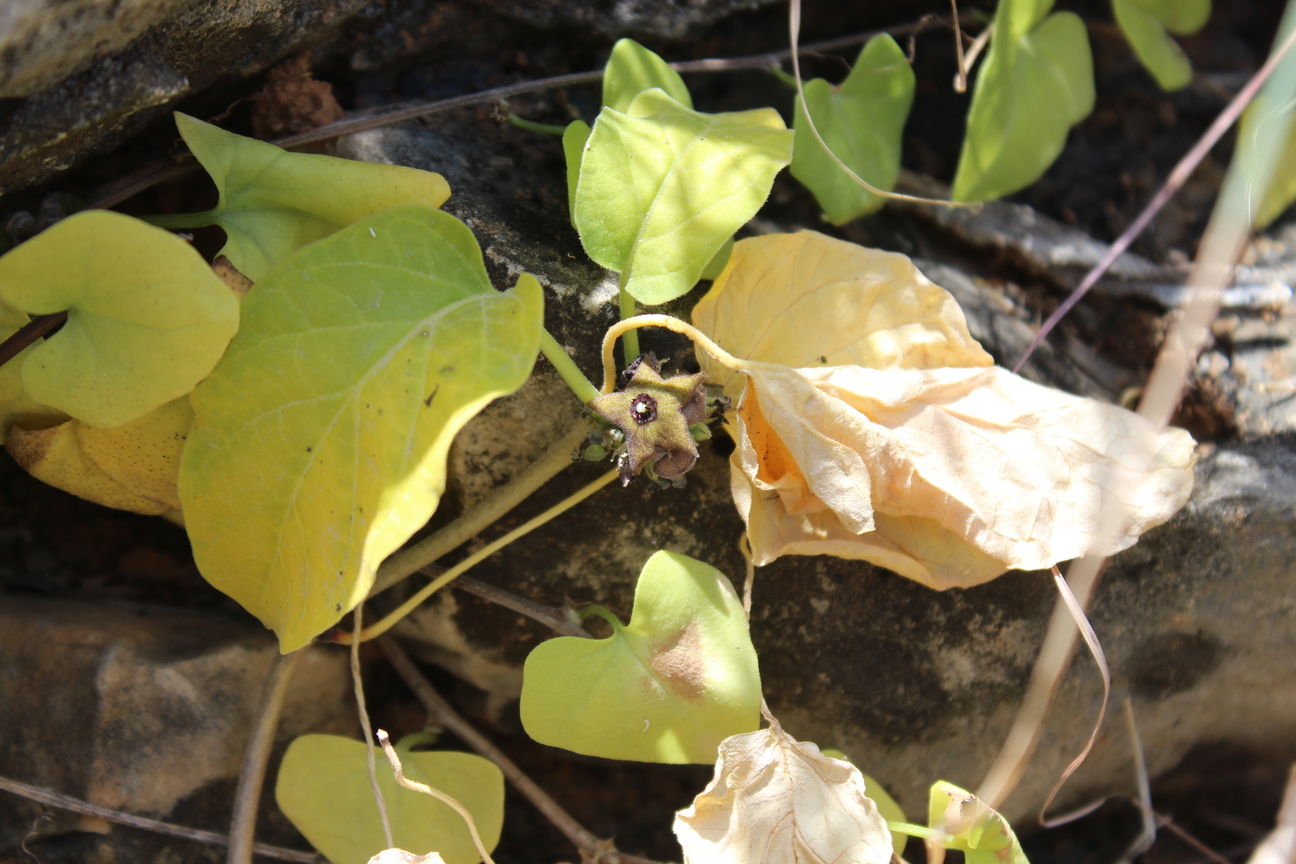
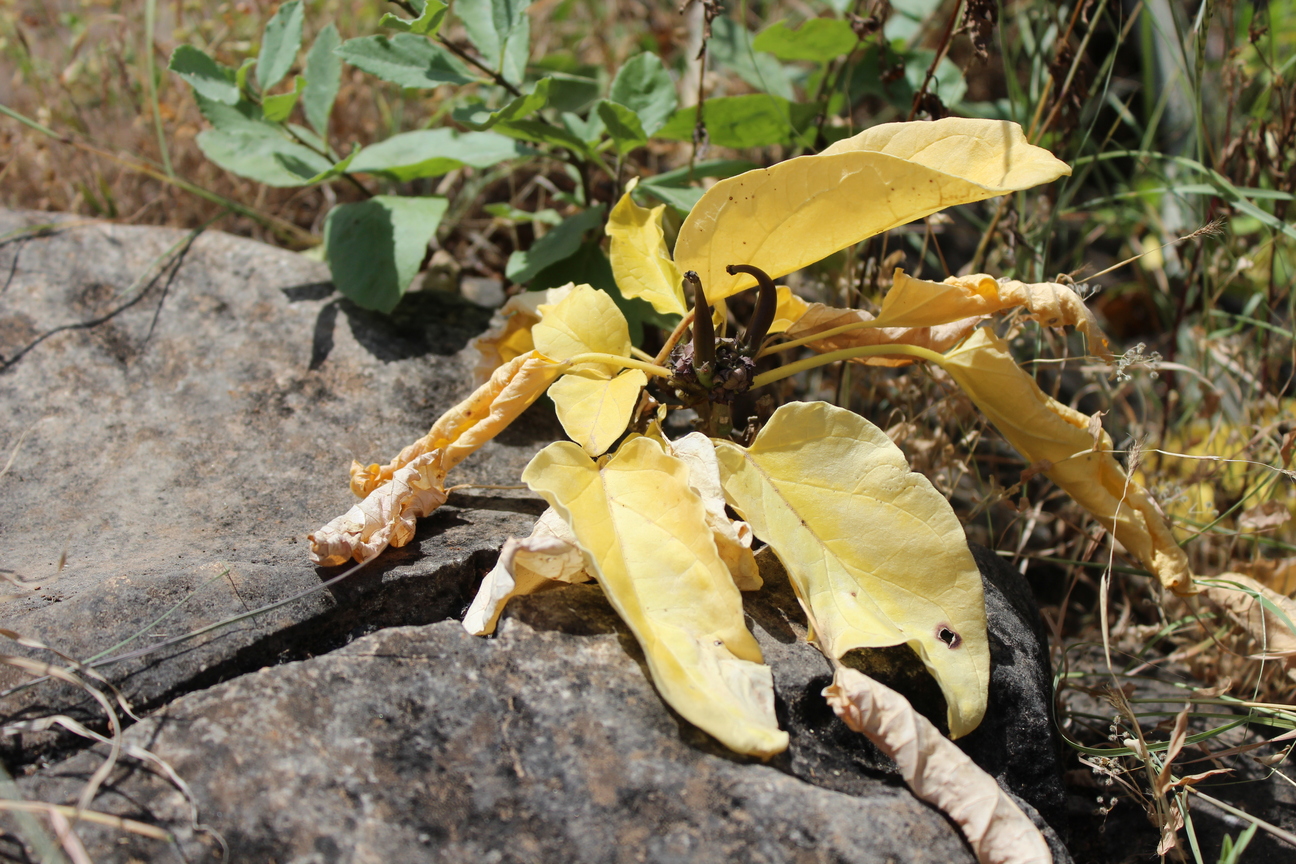
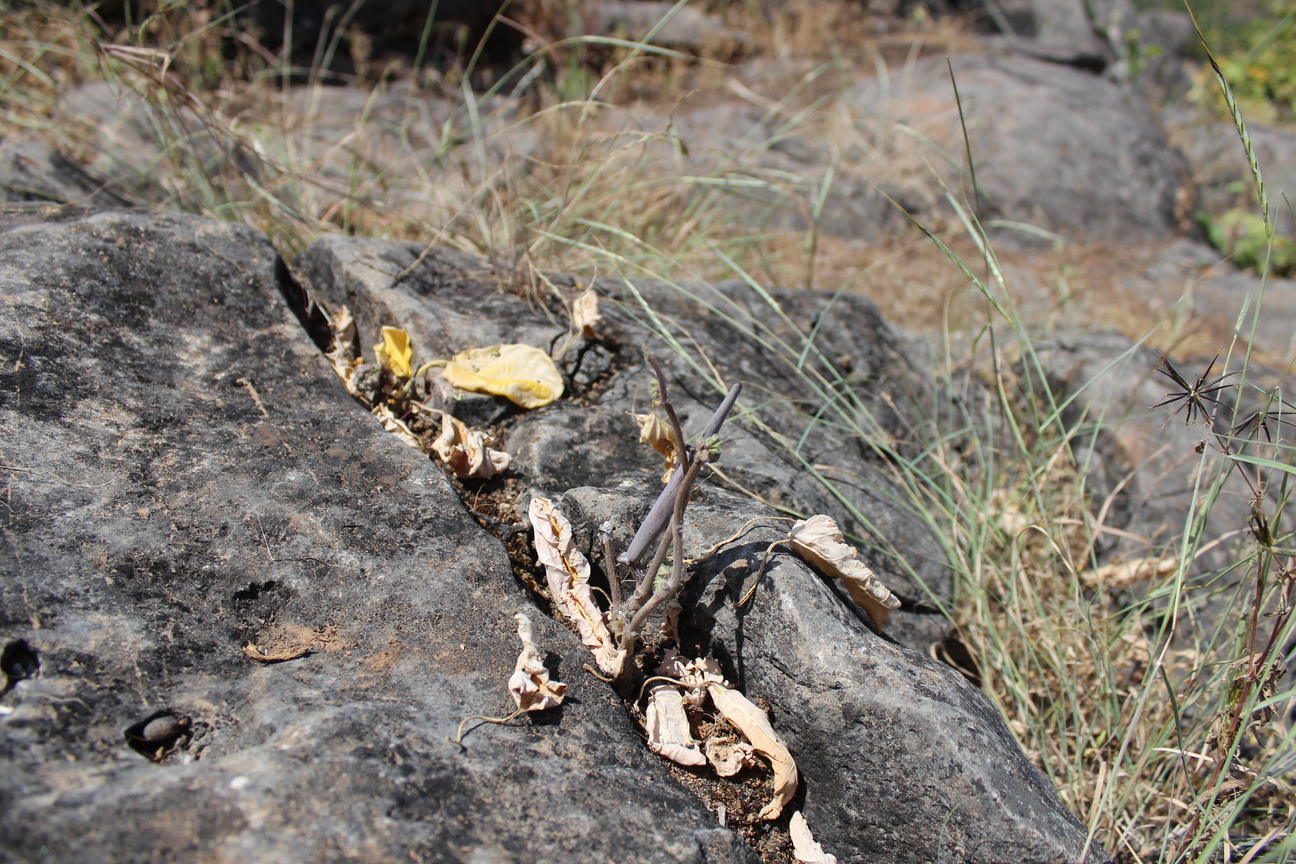
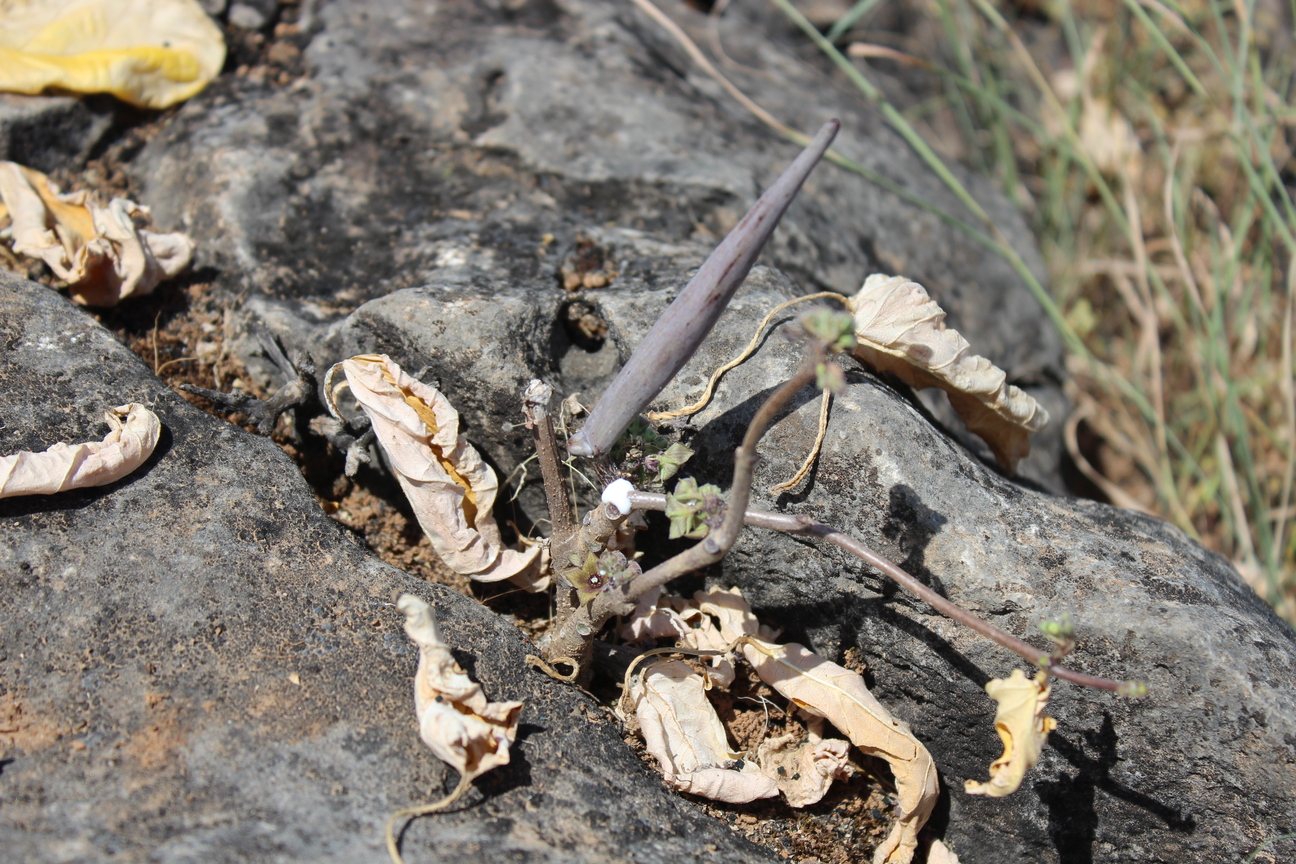
Cibirhiza_dhofarensis_10 © OBG
Cibirhiza_dhofarensis_2 © OBG
Cibirhiza_dhofarensis_3 © OBG
Cibirhiza_dhofarensis_4 © OBG
Cibirhiza_dhofarensis_5 © OBG
Cibirhiza_dhofarensis_6 © OBG
Cibirhiza_dhofarensis_7 © OBG
Cibirhiza_dhofarensis_8 © OBG
Cibirhiza_dhofarensis_9 © OBG
Cibirhiza_dhofarensis © OBG
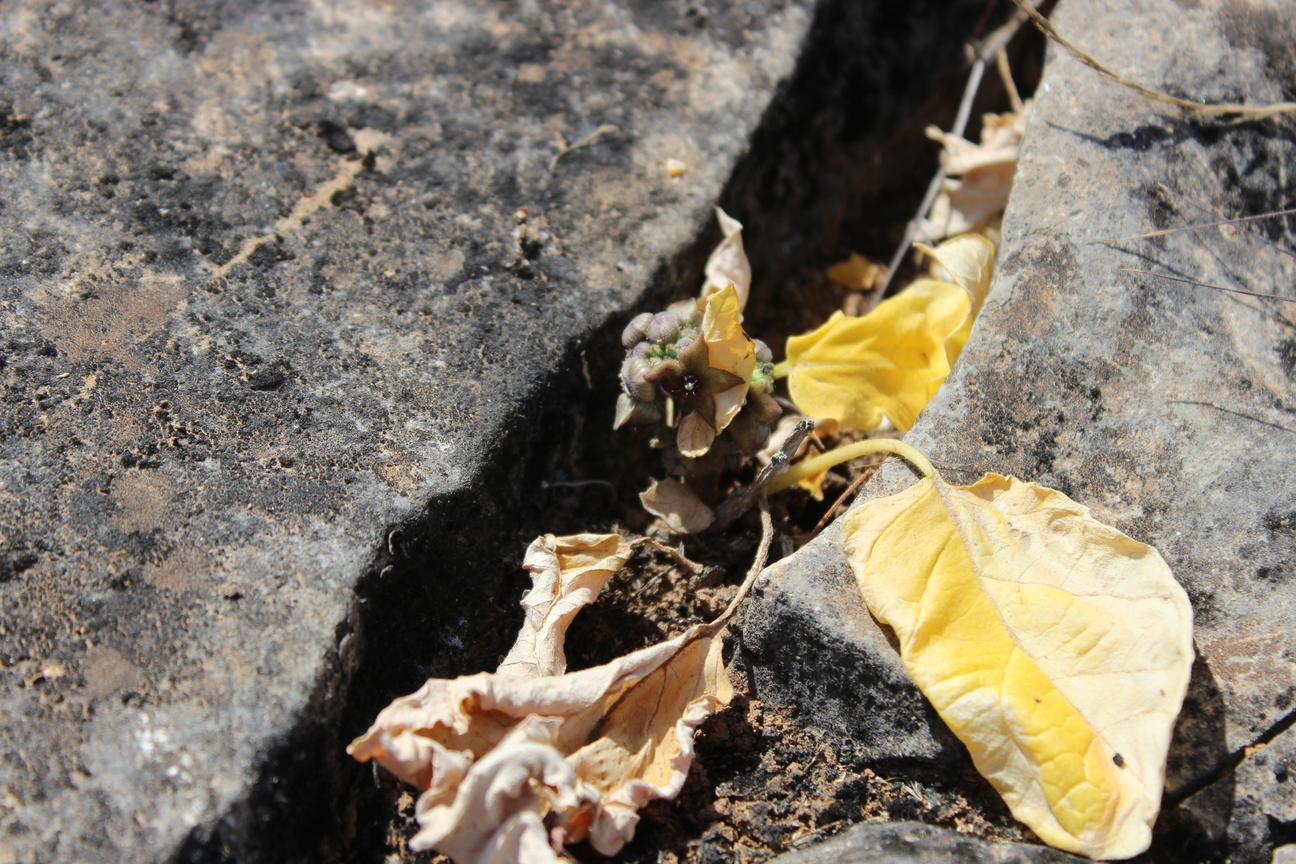
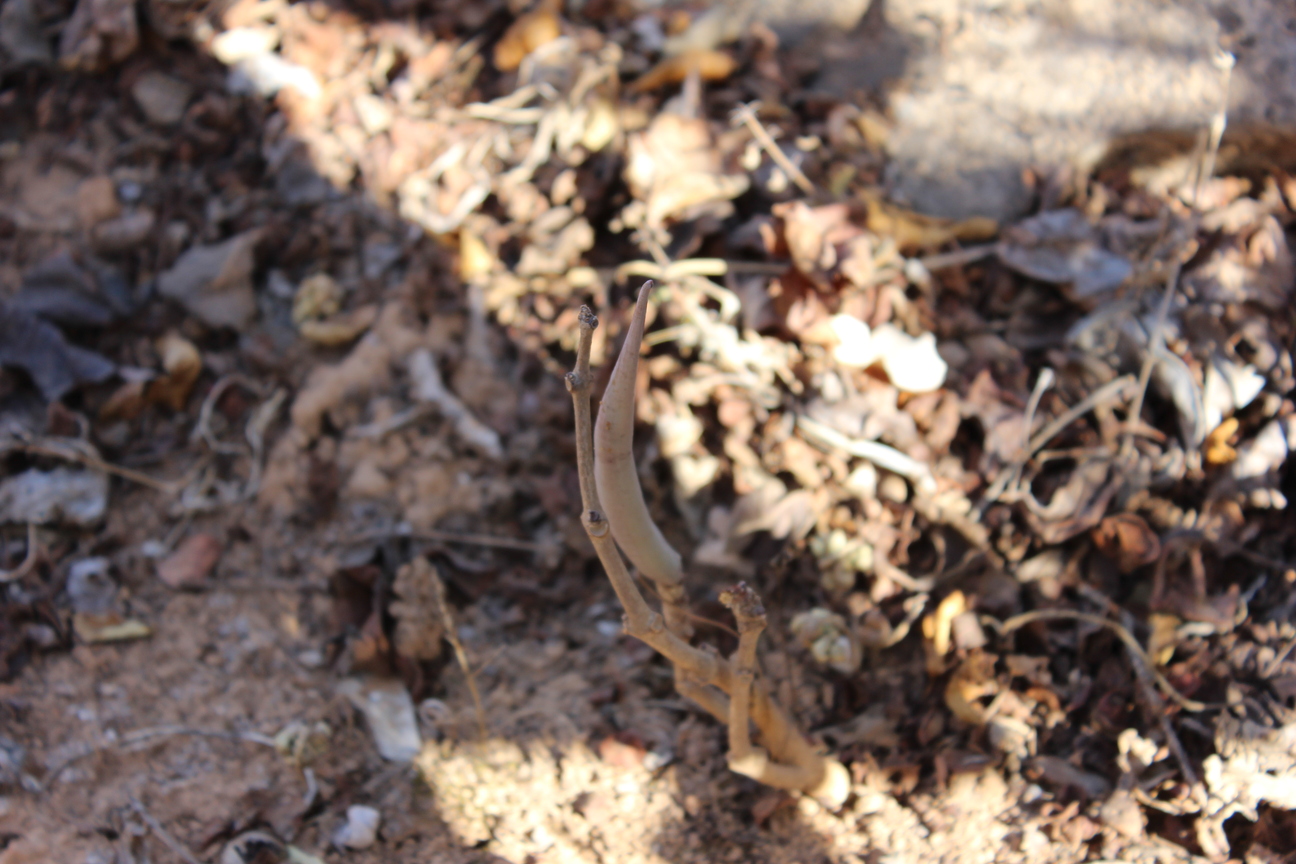
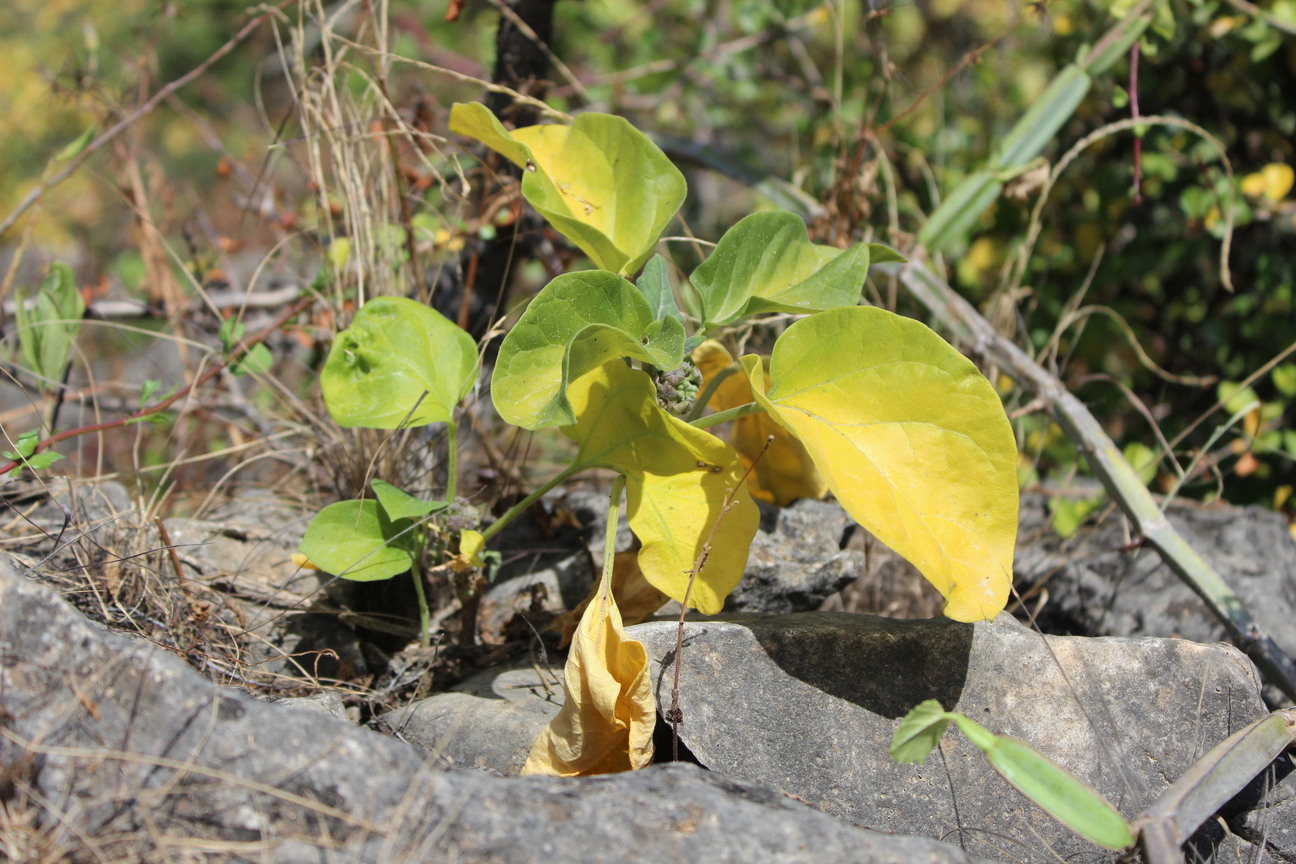
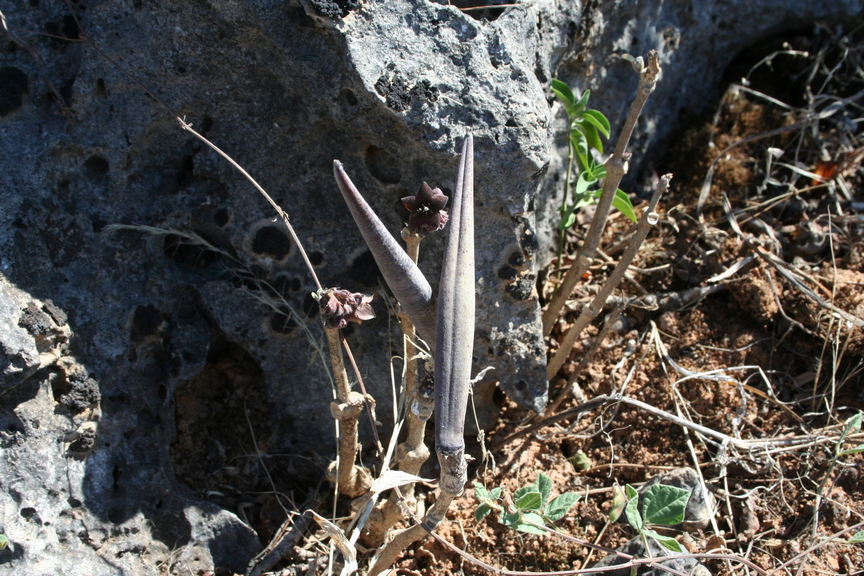
Prostrate or scrambling herb or shrub ; up to 1 . 5 m long , with a large swollen underground tuber . Stems trailing or sometimes twining , with milky sap . Leaves opposite , 4−15 x 2−10 cm , ovate to ovate-oblong , apex acute , base cordate to truncate , margins entire , somewhat undulate , densely pubescent below , thinly pubescent above ; petiole 1−6 cm long , thinly woolly . Inflorescences in axillary clusters , 15-25-flowered . Flowers fleshy , greenish to brownish or purplish with dark purple spots ; calyx 5-lobed to the base ; lobes 2 . 5−3 mm , linear-ovate , crisp pubescent ; corolla rotate , 5-lobed , 12−14 mm across ; lobes fleshy , spreading , 4−5 mm , triangular-ovate , greenish to brownish or purplish with dark purple spots , puberulous above , short tomentose below ; corona white , 3 mm across , in two series: outer lobes united into a 5-sided disc appressed to the surface of the corolla , an upward and inwardly pointing tooth arising from each lobe , lobes marked by a groove running from the margin
...

No Data
Near Endemic (NE) - Vulnerable (VU B1b(iii , v)) - Global Assessment
Not Common
الوصف غير متاح حاليًا
Not available
No data
maintenanceAr.Item1
Not known
In Omani studies: Miller & Morris (1988) wrote that: "Cibirhiza dhofarensis is mainly to be found in the rocky and stony areas of Dhofar, extending from the coast up into the monsoon mountains. Sometimes the tuber is quite inaccessible, so deeply down under the rocks does it grow, and then only the leaves can be gathered. Bunches of the vivid green leaves can frequently be seen after rain growing luxuriantly from holes and cracks in huge slabs of rock, the roots well protected deep down out of reach of even the most digigent digger. These large leaves are deliciously sweet, and were collected and eaten raw, or were cooked as a vegetable. The flowers, and later the pod-like fruits, are also edible - indeed no part of the plant was not eaten. Under suitable conditions, the tuber can grow to an impressive size, like a large sweet potato, but in
...
*Ghazanfar, S. (2015). Flora of the Sultanate of Oman, vol.3: Loganiaceae – Asteraceae. Meise, National Botanic Garden of Belgium (Scripta Botanica Begica, Vol. 25). ISBN 9789082352511 ISSN 0779-2387.*https://en.wikipedia.org *https://paulshirleysucculents.wordpress.com *ttp://www.bihrmann.com *Miller, A., Morris, M. (1988). Plants of Dhofar, the Southern Region of Oman: Traditional, Economic, and Medicinal Uses. Published by Office of the Adviser for Conservation of the Environment, Diwan of Royal Court, Sultanate of Oman; ISBN 10: 0715708082 ISSN 13: 9780715708088. *Patzelt, A. (2015). Oman Plant Red Data Book. Published by Diwan of Royal Court, Sultanate of Oman. Oman Botanic Garden Publication No. 1. ISBN 978-99969-50-10-0. *POWO (2023). ""Plants of the World Online. Facilitated by the Royal Botanic Gardens, Kew. Published on the Internet; http://www.plantsoftheworldonline.org
