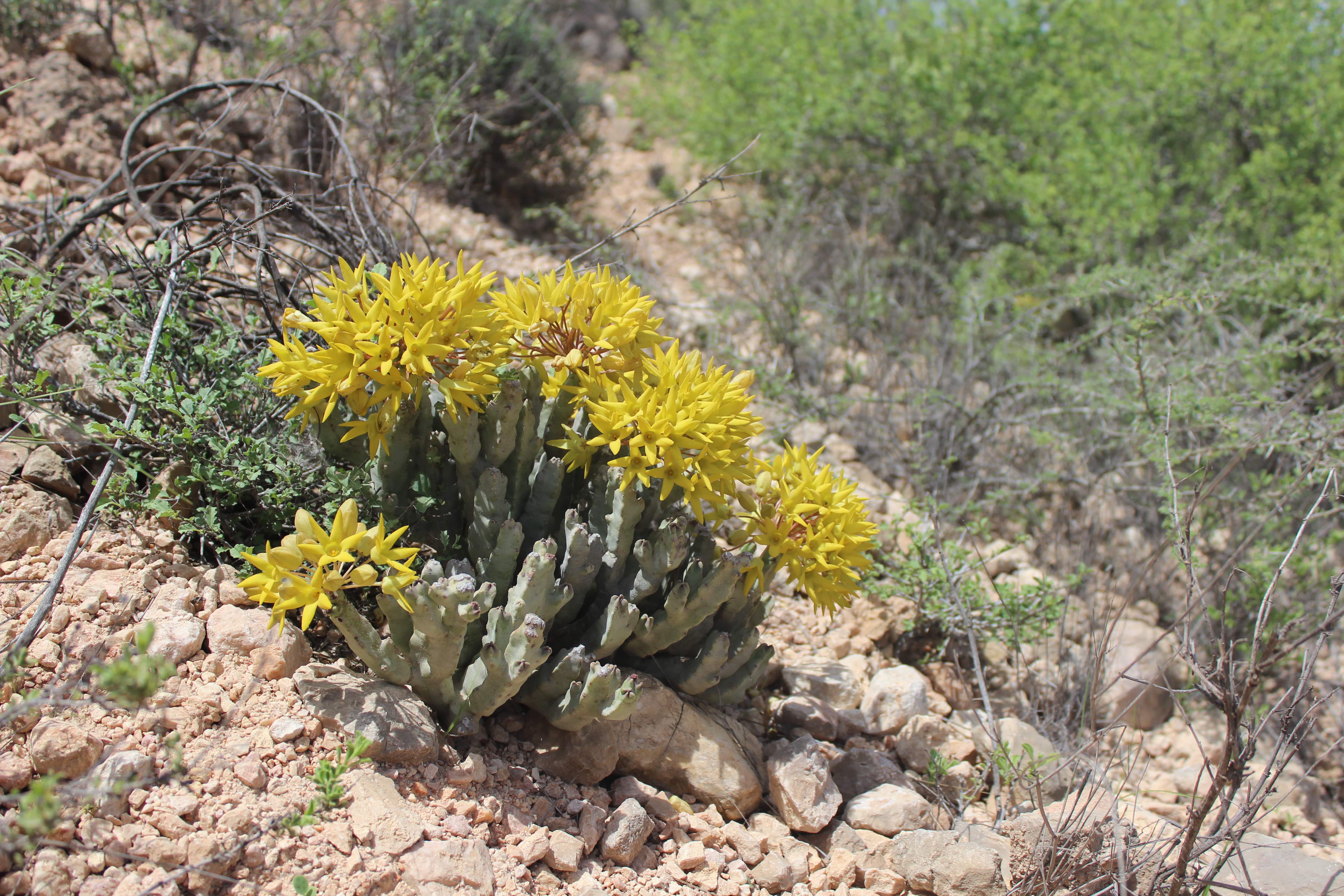
Desmidorchis_flava_2-06082024 © OBG
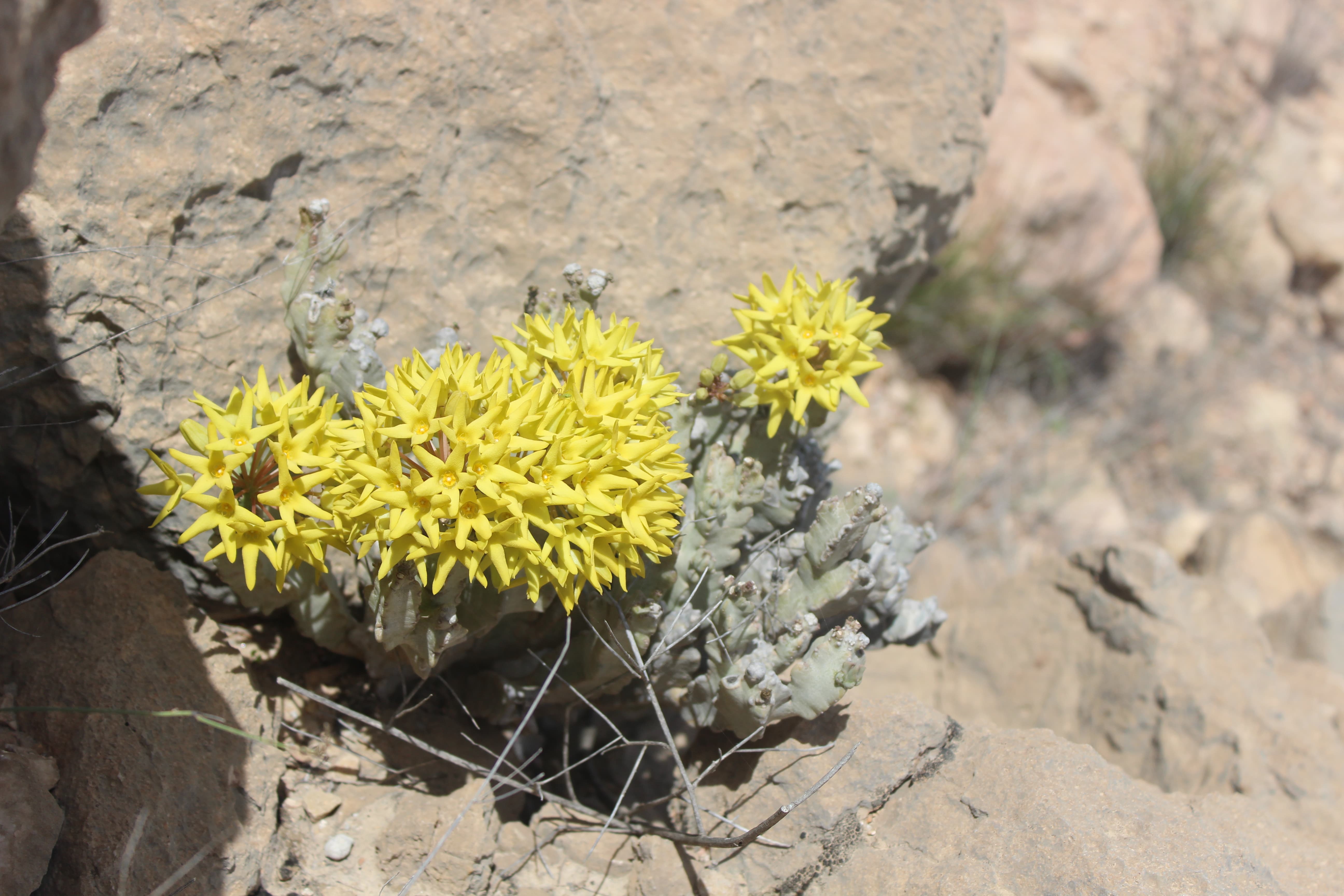
Desmidorchis_flava_3-06082024 © OBG
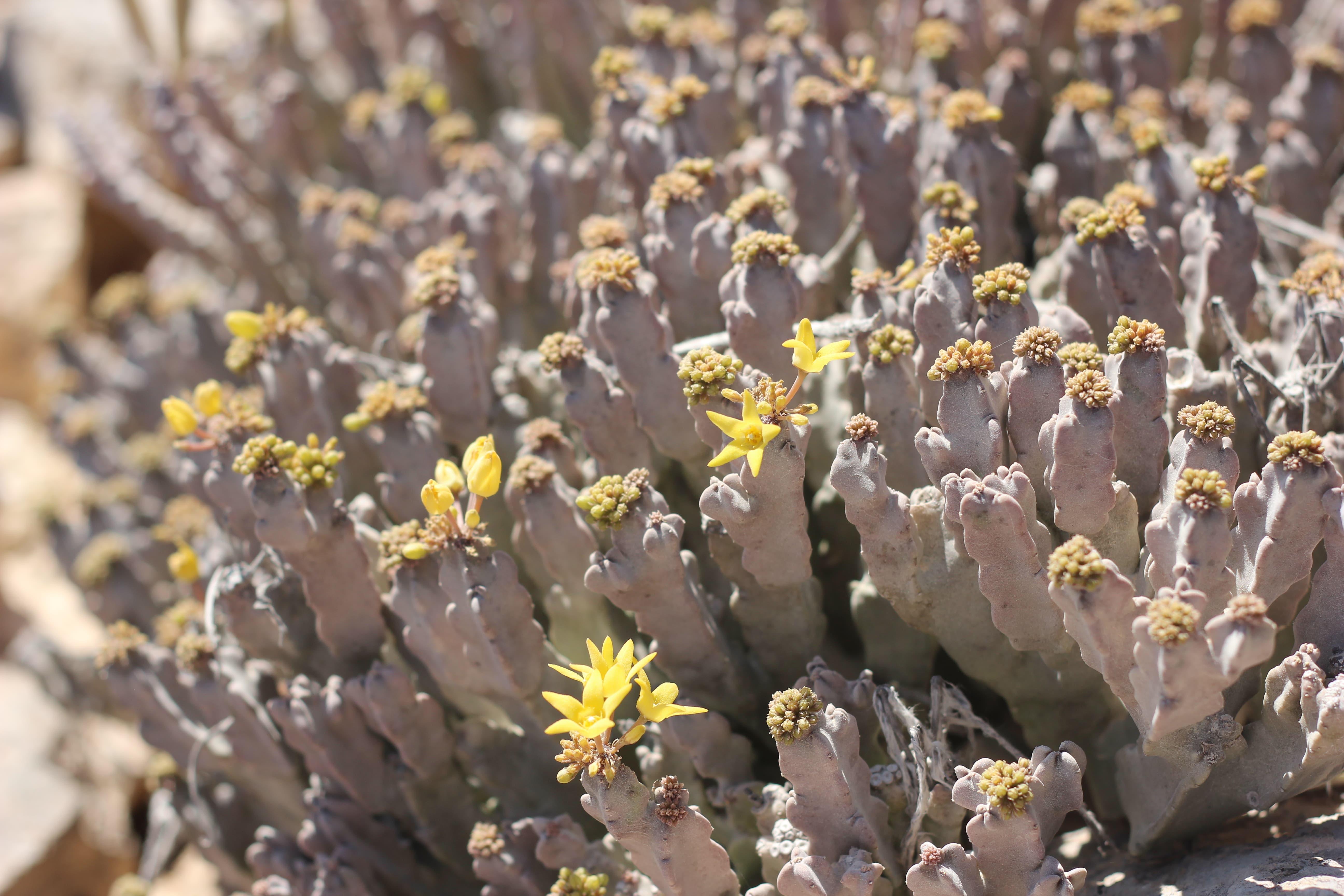
Desmidorchis_flava_4-06082024 © OBG
Desmidorchis_flava_5-06082024 © OBG
Desmidorchis_flava_6-06082024 © OBG
Desmidorchis_flava_7-06082024 © OBG
Desmidorchis_flava-06082024 © OBG
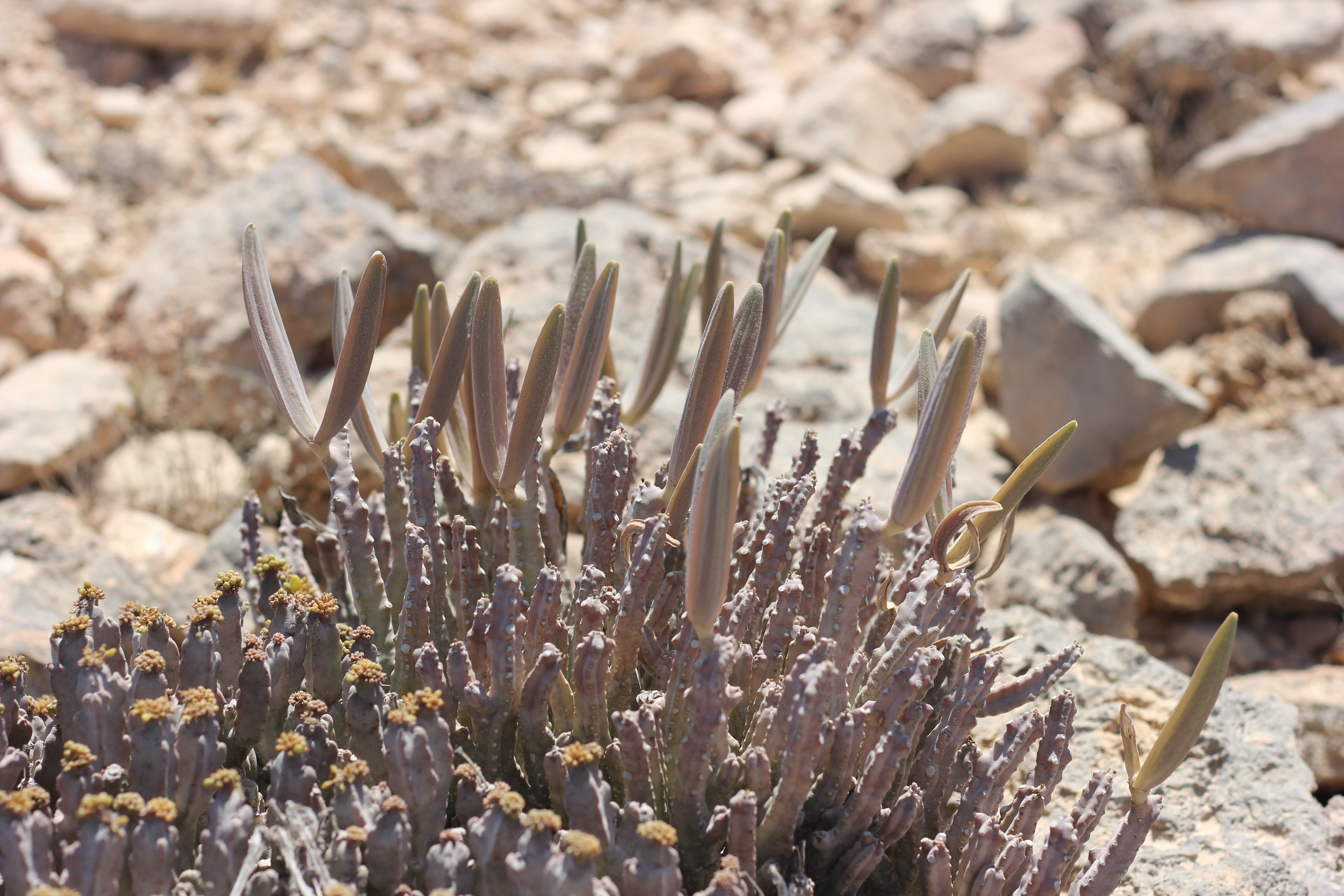
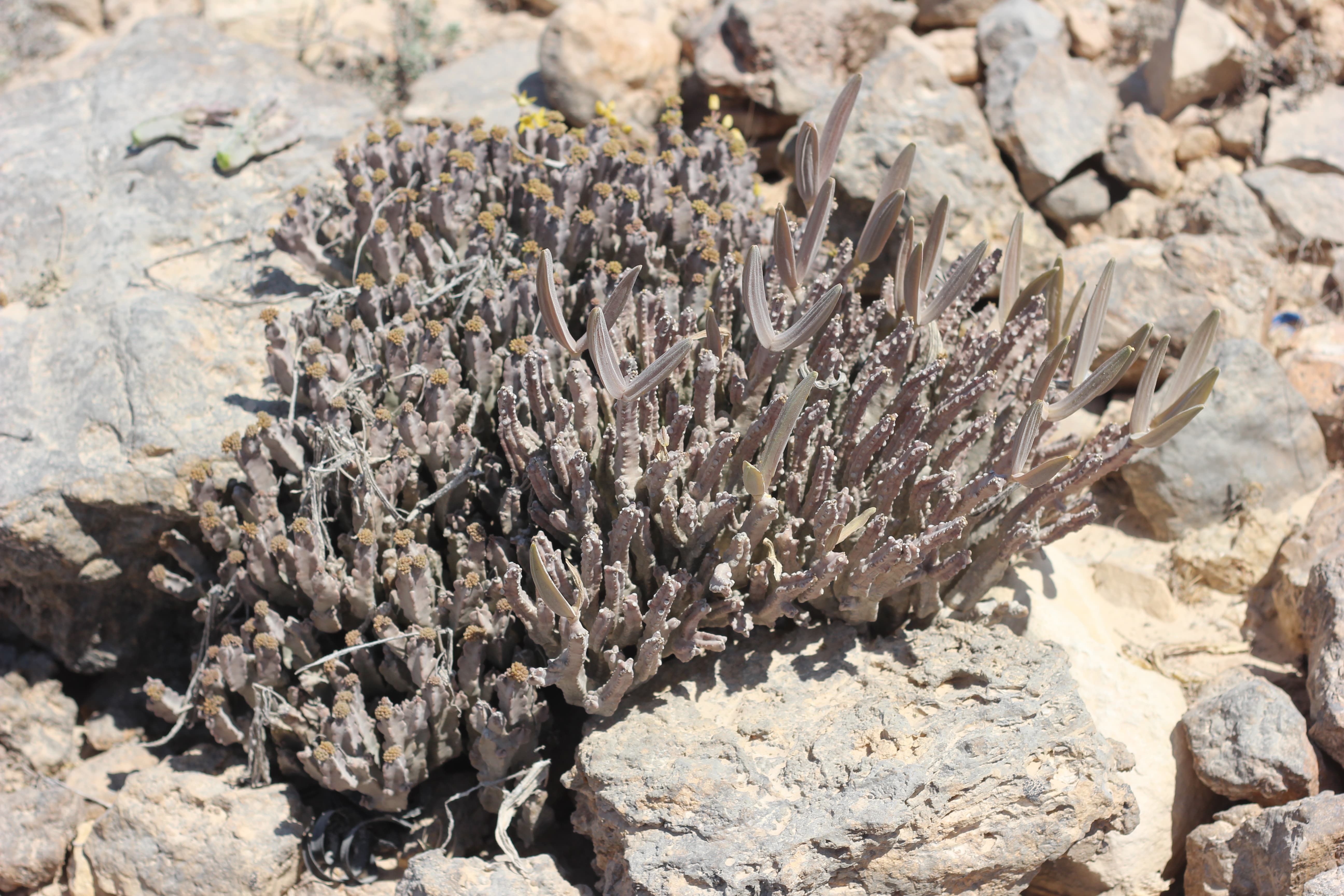
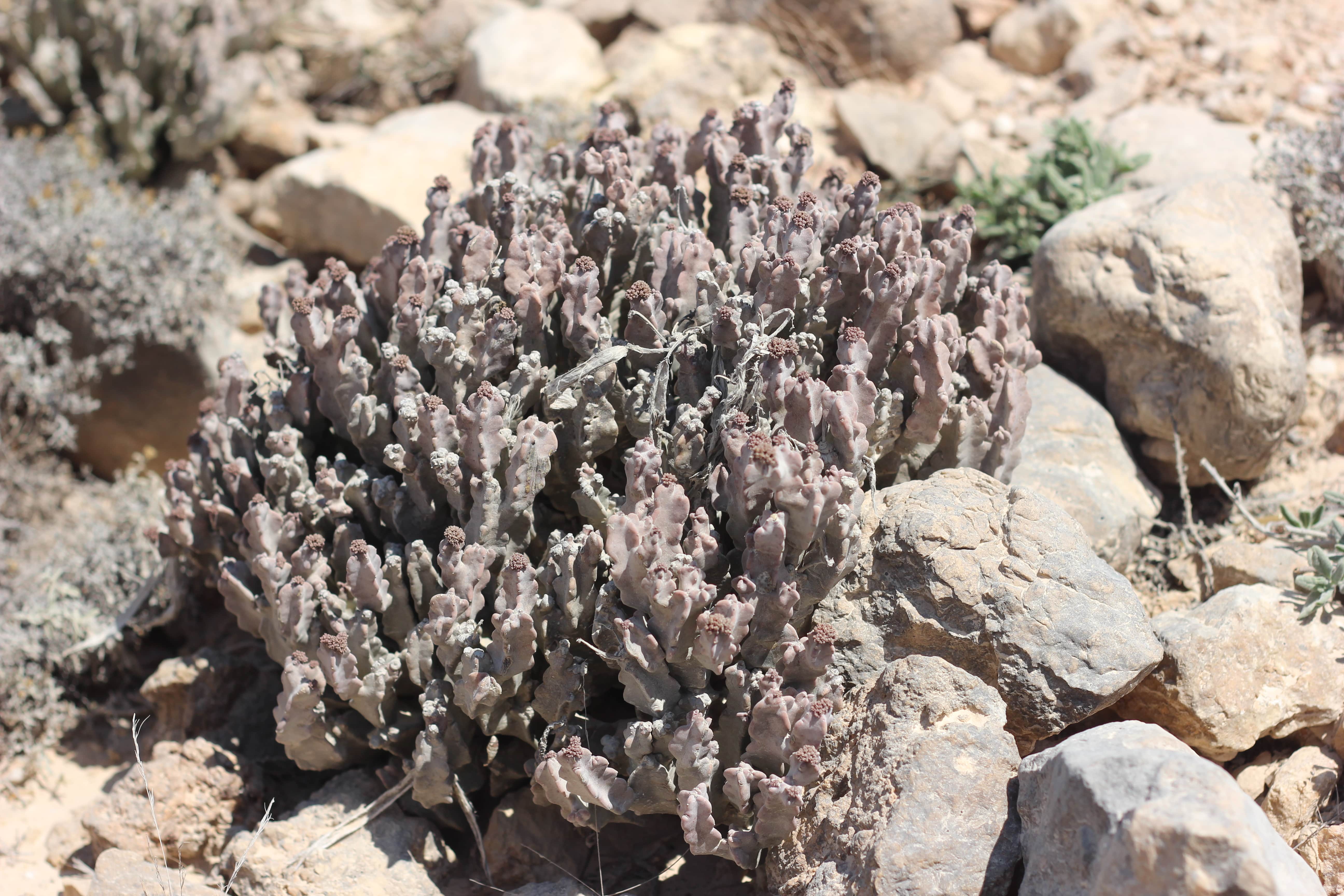
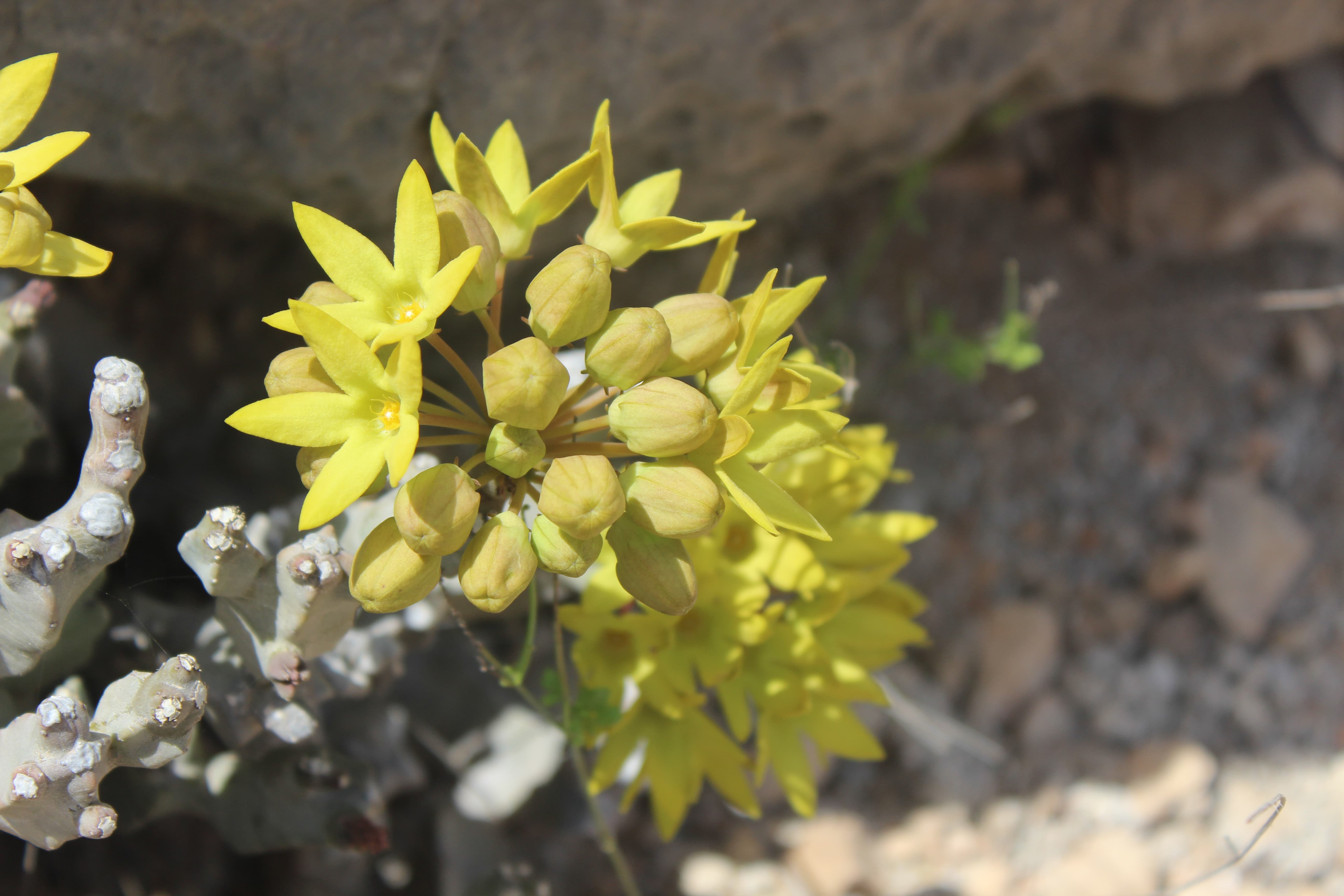
Clump-forming succulent perennial herb , up to 30 cm in height . Stems branching from the base , grey-green to purple-brown , 4-angled in cross-section , 15−20 mm across , angles irregularly triangular with often prominent white scars on the tips . Leaves absent . Inflorescences in apical umbellate , in clusters of 15 to 30 flowers ; pedicels 10−20 mm . Flowers bright yellow , unpleasantly strong smelling ; calyx 5-lobed almost to base , lobes 2−3 mm , narrowly triangular ; corolla bright to pale yellow , cup-shaped at base , 5-lobed ; lobes spreading , 10−13 mm , narrowly triangular ; corona in 2 series: outer corona lobes erect , bifid to the base with 2 narrow segments 3 mm long ; inner lobes obtuse ; pollinia solitary in each anther locule , ascending . Fruits follicles , 9−10 cm , paired , erect , narrowly ovoid , acute , glabrous , large , brown when mature . Seeds brown , with a tuft of white hairs at the tip . (Ref . Flora of Oman ; vol . 3) .
No Data
Regional Endemic (RE) - Vulnerable (VU C2a(i)) - National Assessment
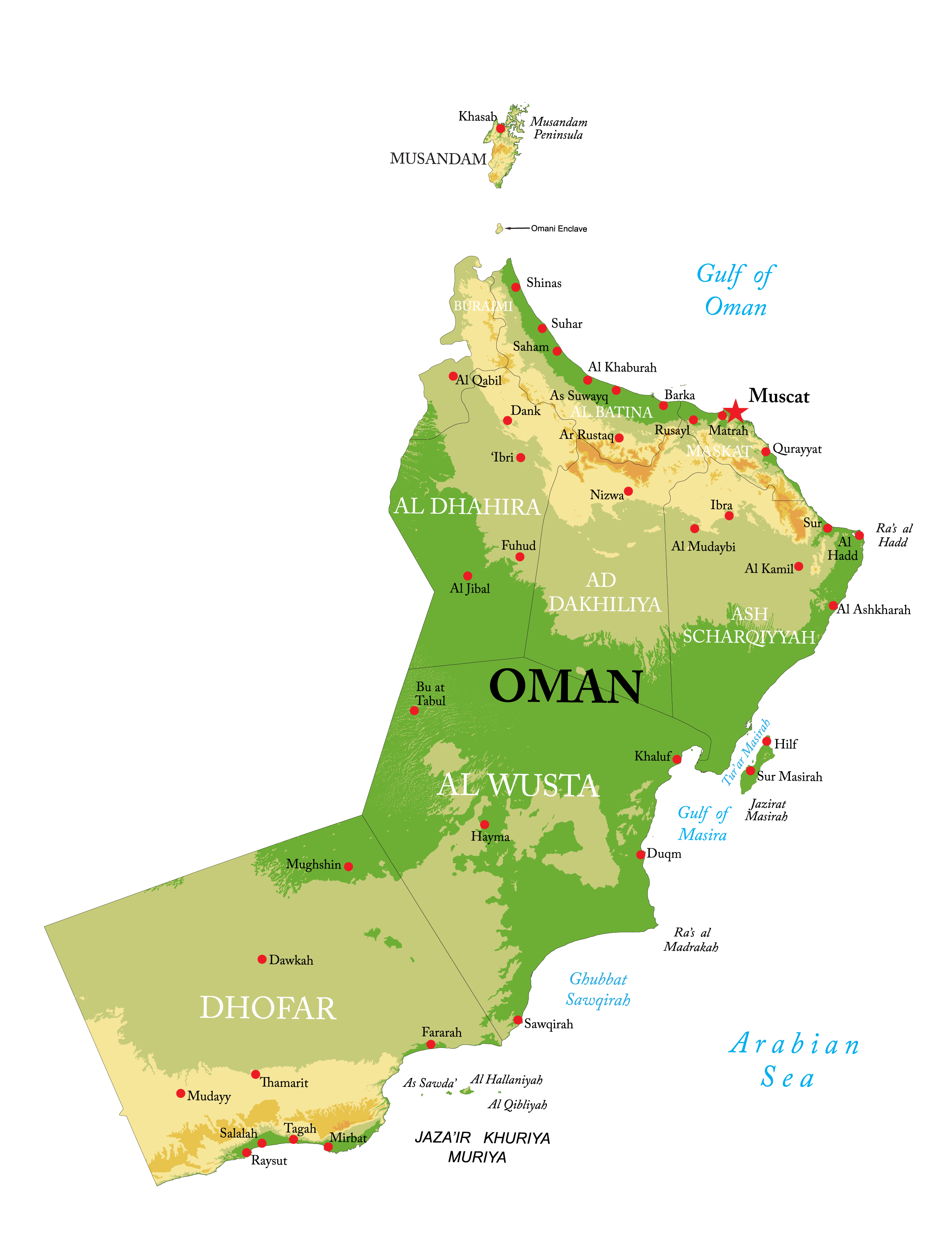
Not Common in Southern Oman ; Rare in Central & Northern Oman
الوصف غير متاح حاليًا
Caralluma flava N.E.Br.
Ceropegia flava (N.E.Br.) Bruyns
Crenulluma flava (N.E.Br.) Plowes
No data
maintenanceAr.Item1
Not known
Known as a useful treatment for diabetic and blood pressure in northern Oman. (Ref. Oman Botanic Garden). In Omani studies: Miller & Morris (1988) wrote that: "After rain, the whole plant burgeons, swells and turns a pale green. At this time the whole plant is edible, though it becomes increasingly bitter towards the bottom of the stem. When it flowers, the flowers too are edible, and called J: tegbaneh. They have a distinctive flavour with a sweet aftertaste, and are also thirst quenching. Later the plant produced podded fruit, called J: kurun, that is, 'horns', which are produced in great profusion and are delicious when young and tender [J: rguz], though quickly become tough. The pods are longer and thinner than those of C. quadarngula. The name durú‘ el-kébeh means 'dugs of the bitch'. (Ref. Plants of Dhofar). In addition, Ghazanfar (2015) mentioned that: "The whole plant is edible, but
...

*Ghazanfar, S. (2015). Flora of the Sultanate of Oman, vol.3: Loganiaceae – Asteraceae. Meise, National Botanic Garden of Belgium (Scripta Botanica Begica, Vol. 25). ISBN 9789082352511 ISSN 0779-2387. *Miller, A., Morris, M. (1988). Plants of Dhofar, the Southern Region of Oman: Traditional, Economic, and Medicinal Uses. Published by Office of the Adviser for Conservation of the Environment, Diwan of Royal Court, Sultanate of Oman; ISBN 10: 0715708082 ISSN 13: 9780715708088. *https://en.wikipedia.org *http://oro.open.ac.uk *Patzelt, A. (2015). Oman Plant Red Data Book. Published by Diwan of Royal Court, Sultanate of Oman. Oman Botanic Garden Publication No. 1. ISBN 978-99969-50-10-0. *Patzelt, A. (2015). Photographic Field Guide to the Plants of the Western Hajar Mountains, Sultanate of Oman: with a complete checklist of vascular plant species. Sultan Qaboos University – Academic Publication and Outreach Department. P.O Pox (17) Postal Code (123), Muscat, Al khoudh, Sultanate of Oman. *POWO (2023). ""Plants of the World Online.
...
