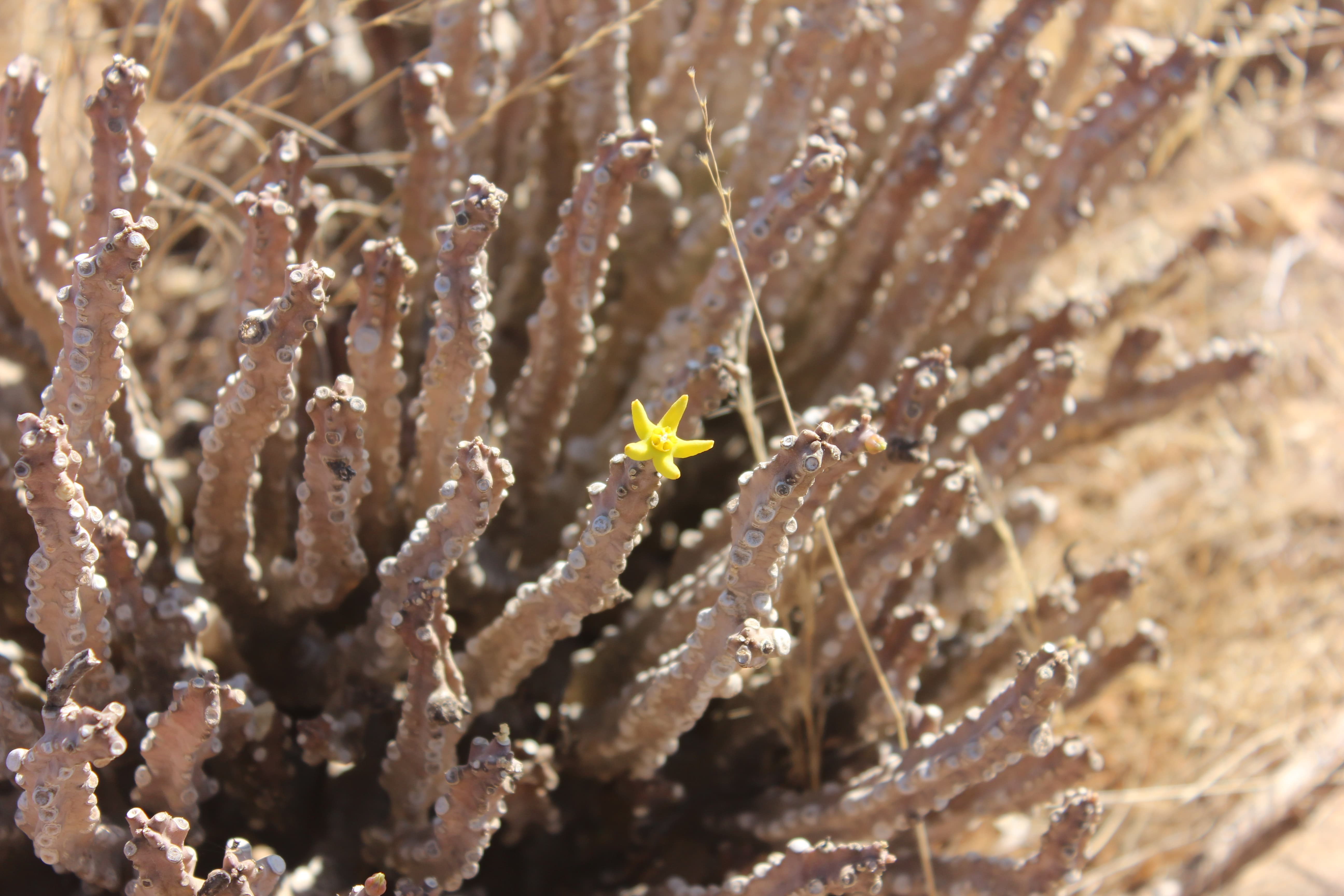
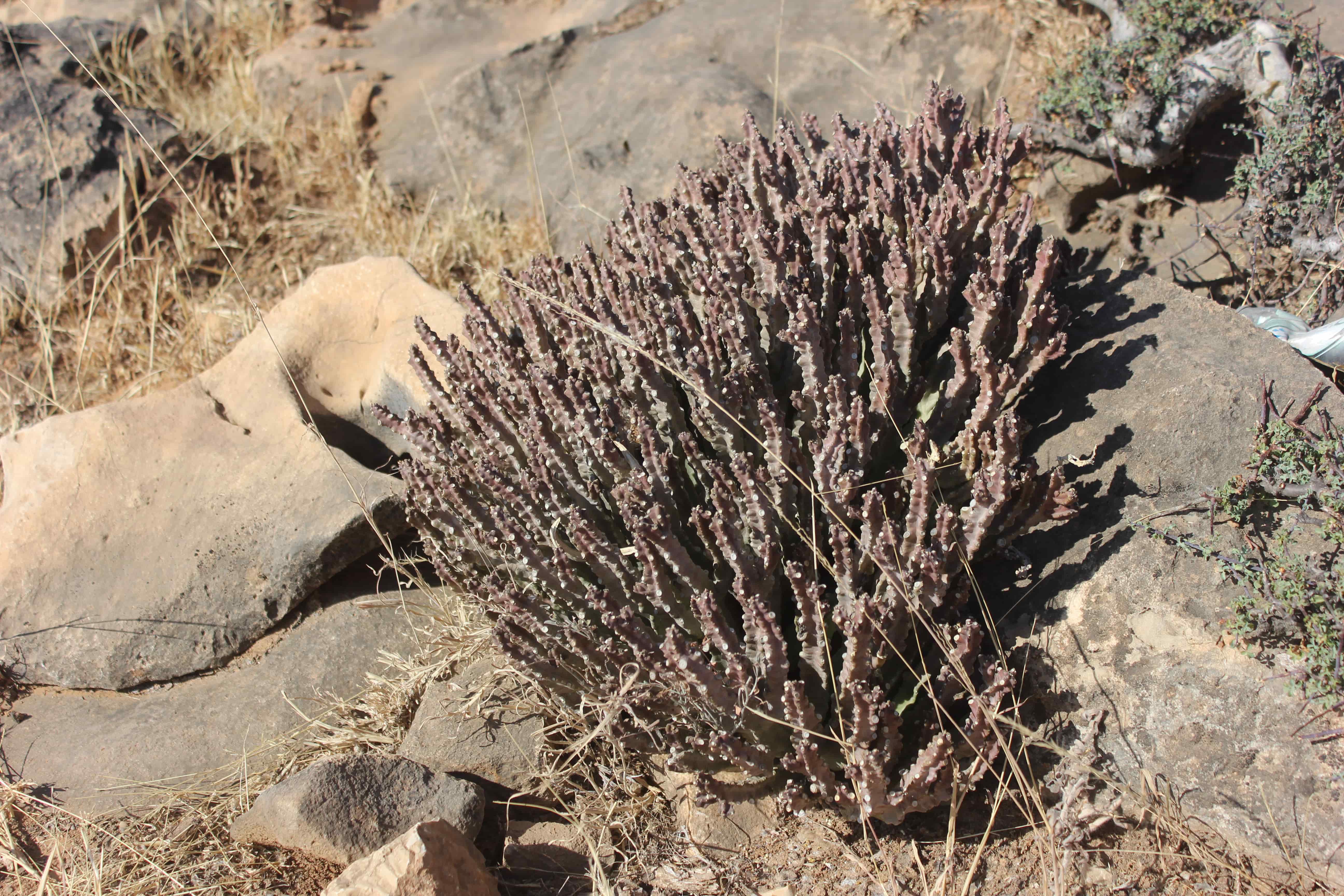
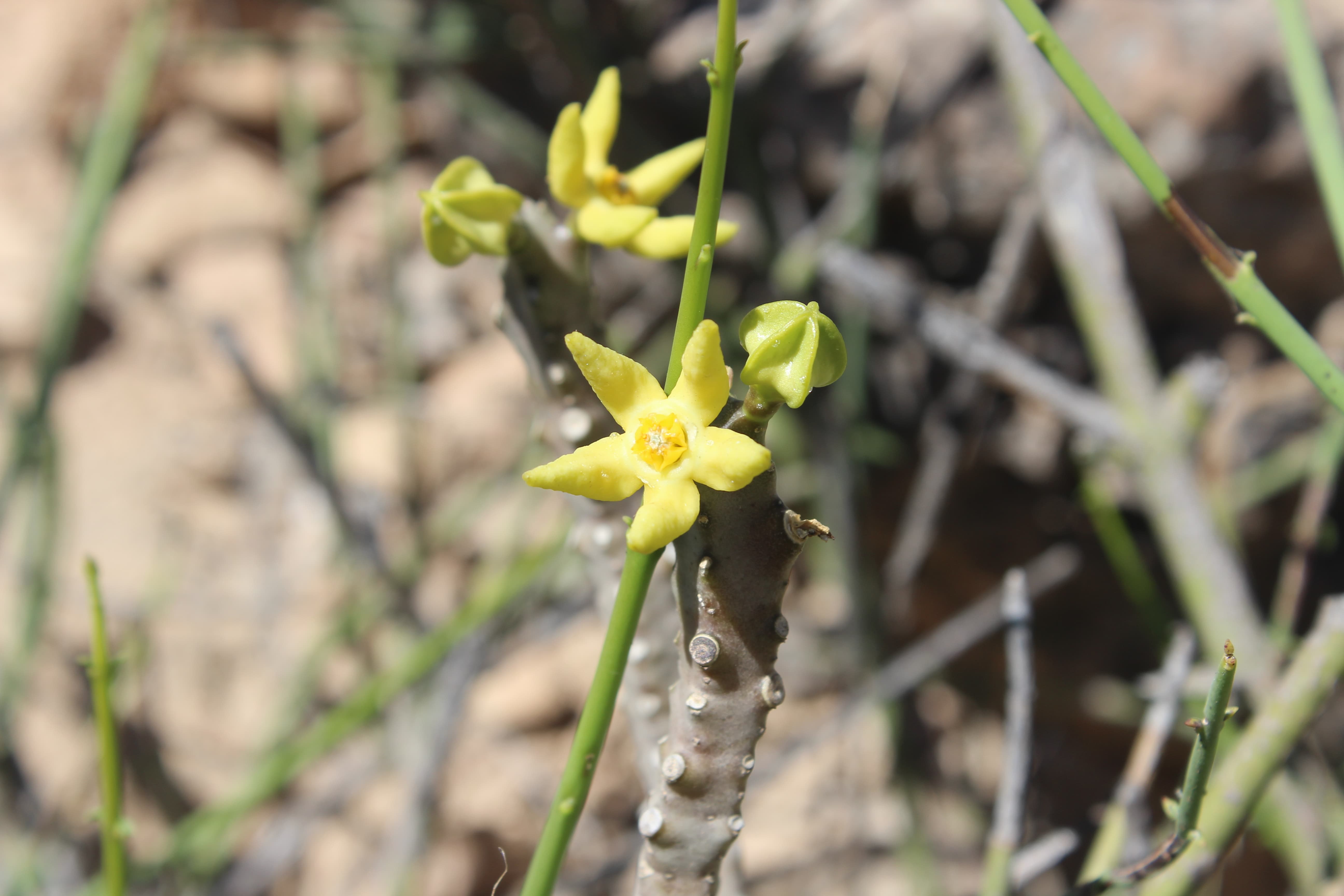
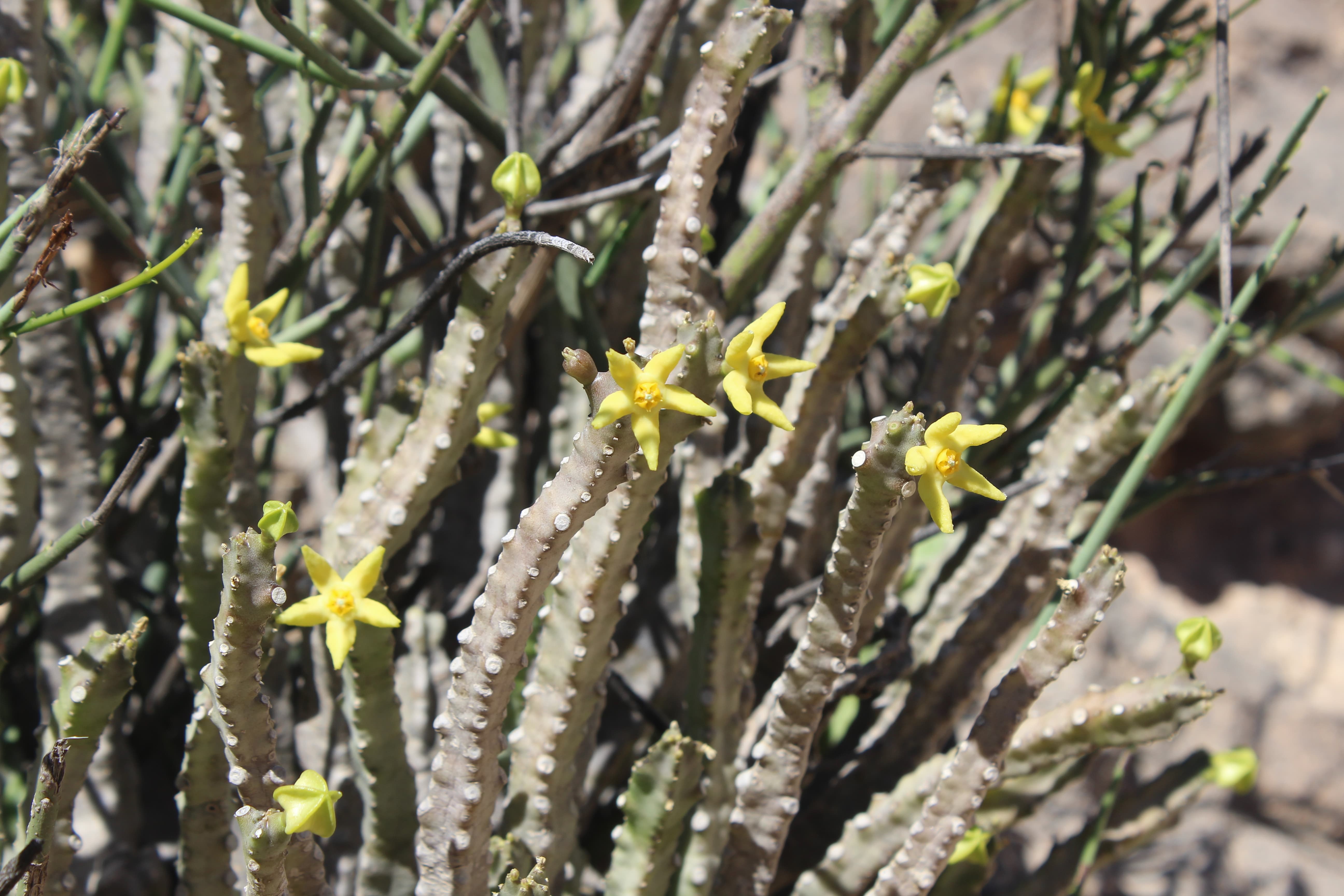
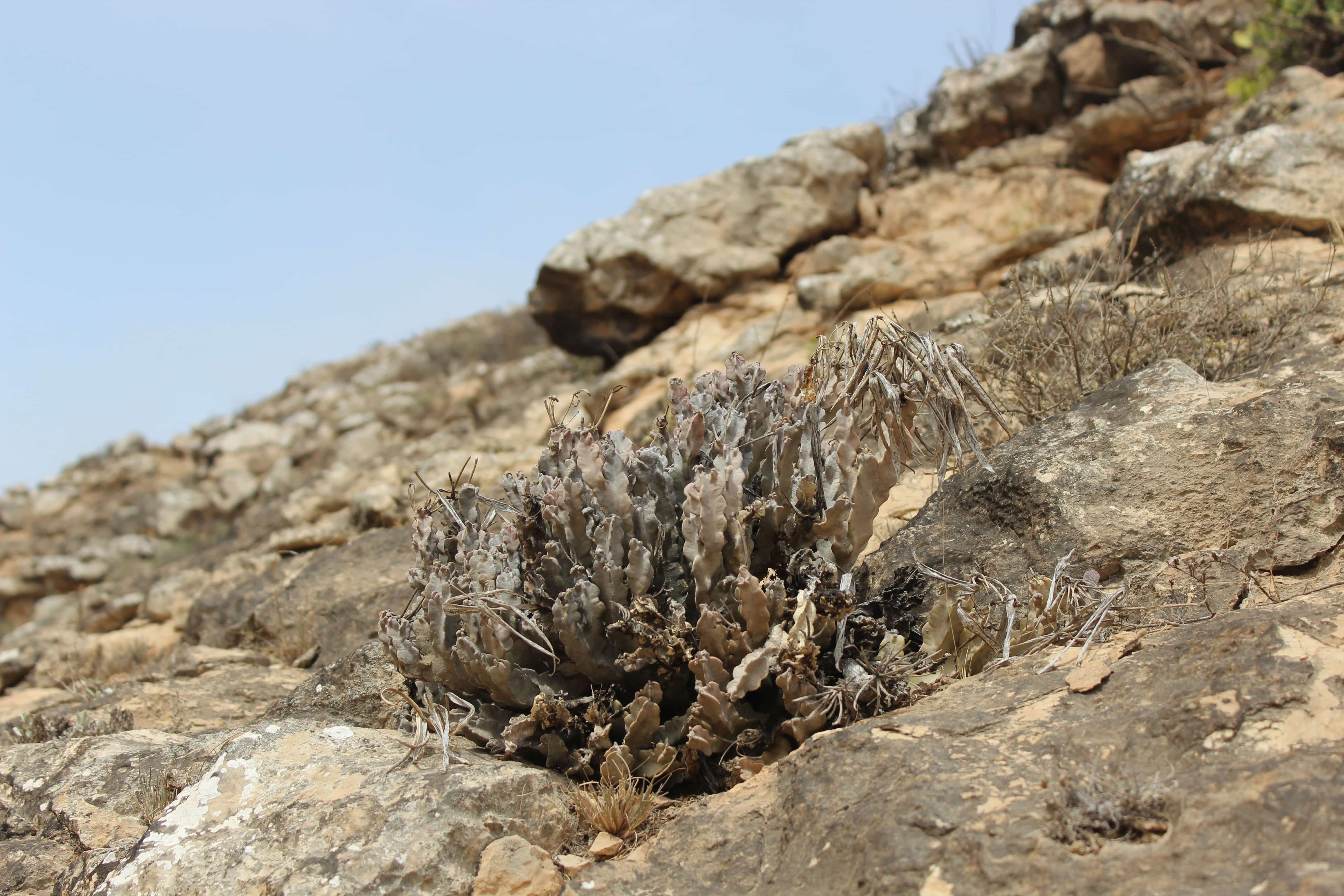
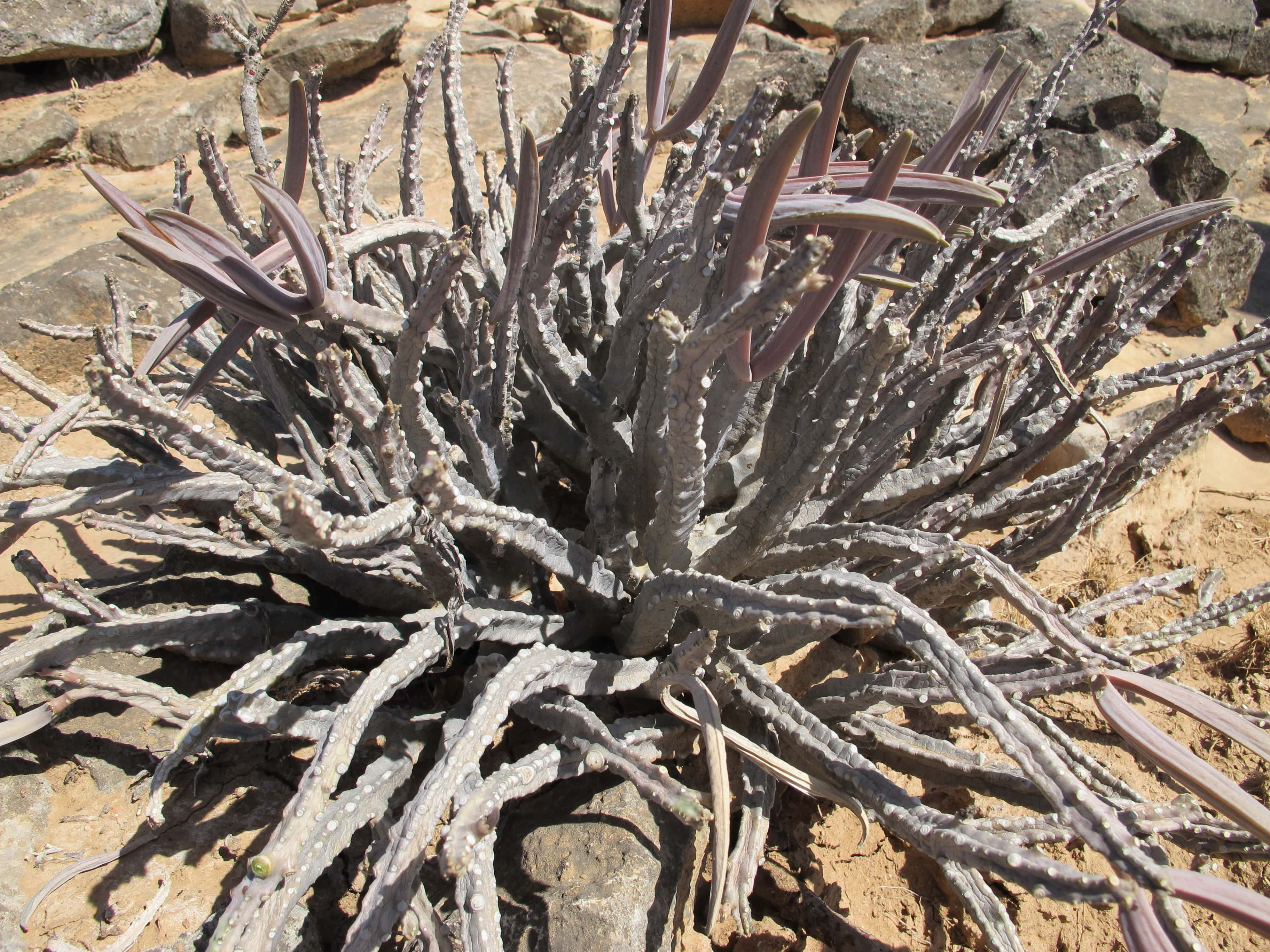
Monolluma_quadrangula_2-06082024 © OBG
Monolluma_quadrangula_3-06082024 © OBG
Monolluma_quadrangula_4-06082024 © OBG
Monolluma_quadrangula_5-06082024 © OBG
Monolluma_quadrangula_6-06082024 © OBG
Monolluma_quadrangula-06082024 © OBG
Succulent perennial herb ; up to 50 cm high , forming clumps . Stems erect , succulent , branching from the base , 4-angled in cross-section , with prominent white callus-like scars along the ridges , grey-green or green . Leaves absent . Inflorescences 1−3 , at the tips of stems ; pedicels ± 5 mm . Flowers pale yellow , 12−15 mm across , fragrant ; calyx 5-lobed almost to base , lobes ± 2 mm , narrowly triangular ; corolla pale yellow , 5-lobed ; lobes erect , 10−11 mm , ovate-triangular , margins reflexed ; corona dark yellow: outer corona absent ; inner corona of 5 , 3-lobed segments attached to the staminal column , lateral lobes erect , central lobe incumbent over the staminal column ; pollinia solitary in each anther locule , ascending . Fruit follicles , paired , erect , 8−10 cm , narrowly ovoid , acute , smooth , green , glabrous , many-seeded . Seeds c . 8 x 4 . 5 mm , ovate-oblong , flattened , pale brown with a tuft of white hairs at the tip . (Ref . Flora of Oman ; vol . 3) .
No Data
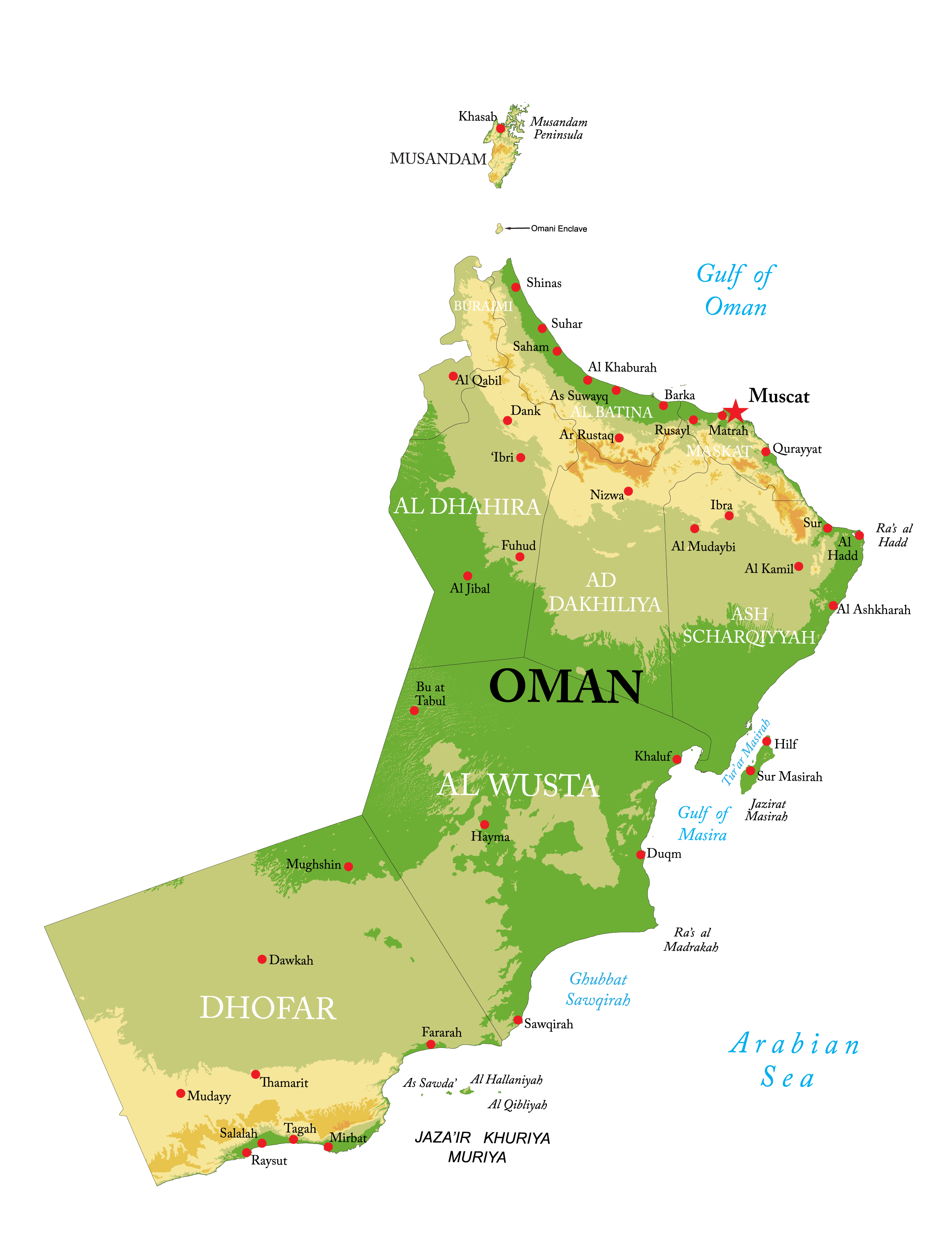
Regional Endemic (RE) - Near Threatened (NT) - National Assessment
Frequent
الوصف غير متاح حاليًا
Caralluma quadrangula (Forssk.) N.E.Br.
Ceropegia quadrangula (Forssk.) Bruyns
Echidnopsis quadrangula (Forssk.) Deflers
Stapelia quadrangula Forssk.
No data
maintenanceAr.Item1
Not known
In Omani studies: Miller & Morris (1988) wrote that: "C. quadrangula is found in higher, drier areas than C. flava. Its taste is more bitter and astrigent than that of C. flava, and for this reason it was more popular with most people, even though eaten in any quantity it often brought on attacks of diarrhoea. As with other carallumas the whole plant is edible - stems, flowers [J: tegbaneh] and pods [J: kurun], the surprisingly large flowering heads in particular having a fresh delicious flavour. Herders would collect quantities of the tips and take them back to the settlements as a welcome variation to the basic milk diet". (Ref. Plants of Dhofar). In Oman Plant Red Data Book, Patzelt (2015) wrote that: "The plant, including flowers and seed pods, is eaten after the rains". (Ref. Oman Plant Red Data Book; 2015).
*Ghazanfar, S. (2015). Flora of the Sultanate of Oman, vol.3: Loganiaceae – Asteraceae. Meise, National Botanic Garden of Belgium (Scripta Botanica Begica, Vol. 25). ISBN 9789082352511 ISSN 0779-2387. *https://www.etymonline.com *Miller, A., Morris, M. (1988). Plants of Dhofar, the Southern Region of Oman: Traditional, Economic, and Medicinal Uses. Published by Office of the Adviser for Conservation of the Environment, Diwan of Royal Court, Sultanate of Oman; ISBN 10: 0715708082 ISSN 13: 9780715708088. *Patzelt, A. (2015). Oman Plant Red Data Book. Published by Diwan of Royal Court, Sultanate of Oman. Oman Botanic Garden Publication No. 1. ISBN 978-99969-50-10-0. *Pickering, H. Patzelt, A. (2008). Field Guide to the Wild Plants of Oman. Kew publishing, Royal Botanic Garden, Kew. ISBN 9781842461778. *POWO (2023). ""Plants of the World Online. Facilitated by the Royal Botanic Gardens, Kew. Published on the Internet; http://www.plantsoftheworldonline.org
