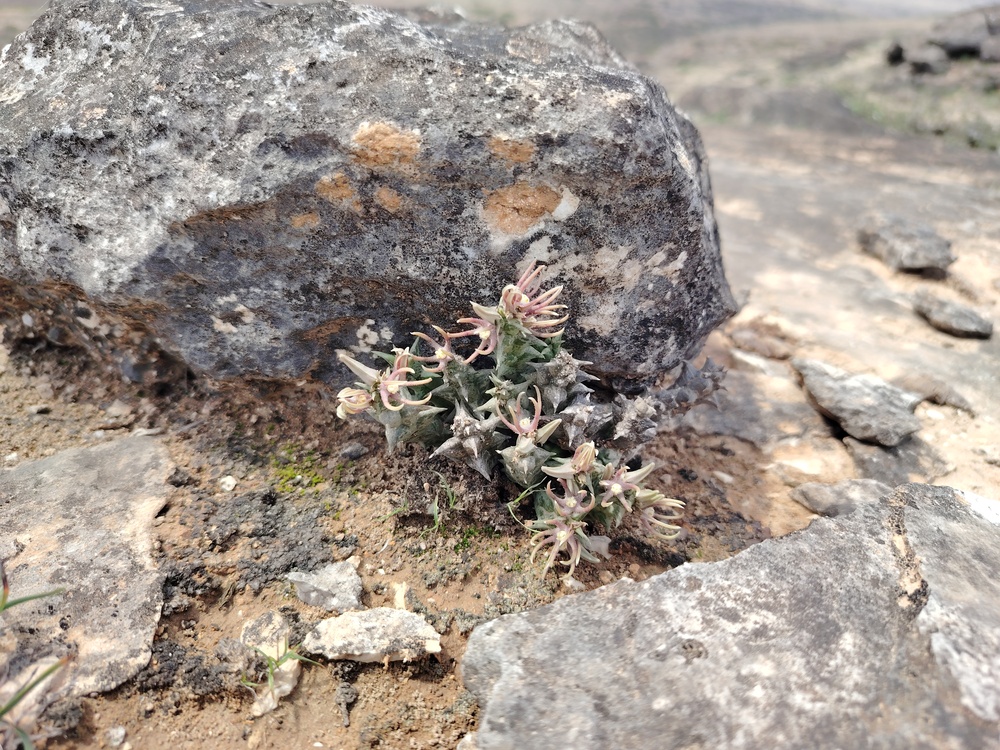
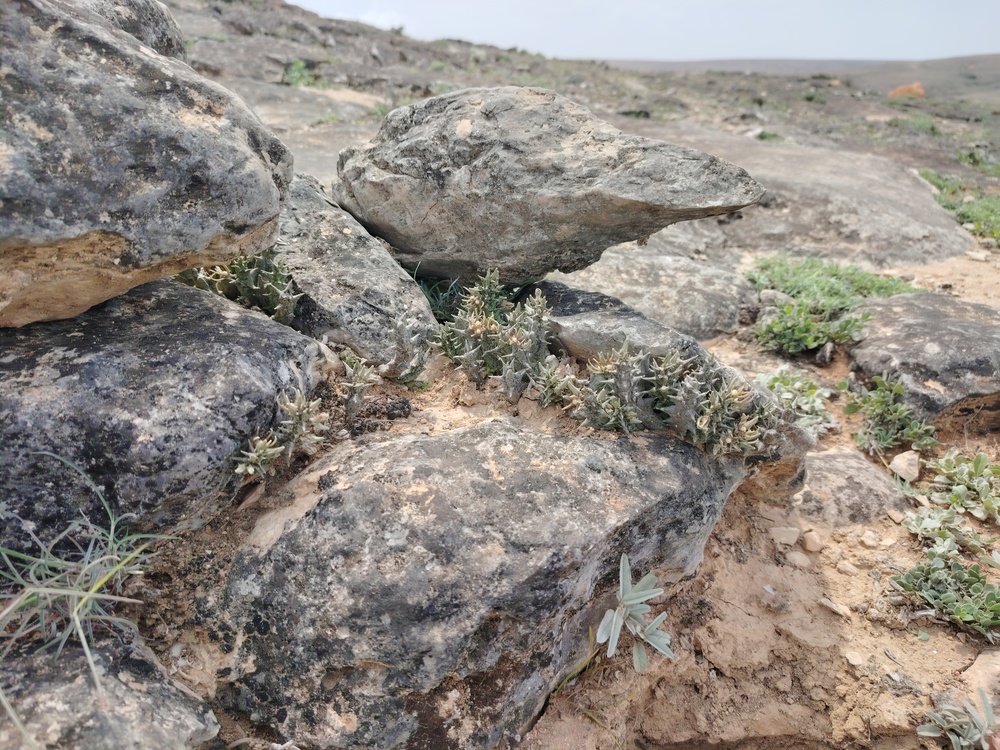
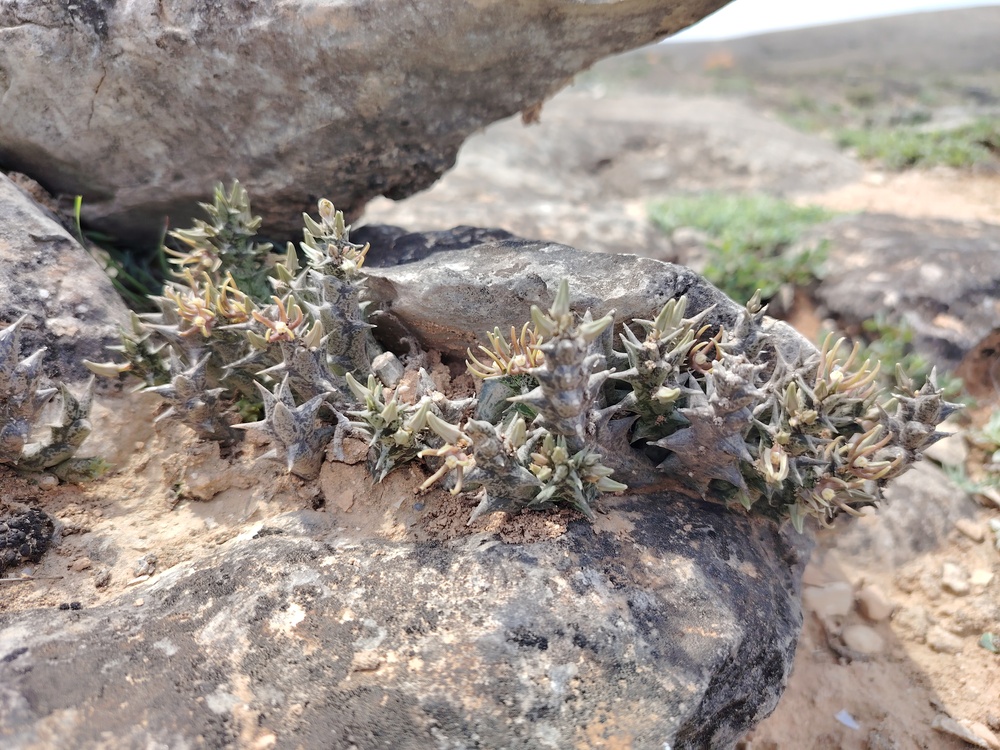
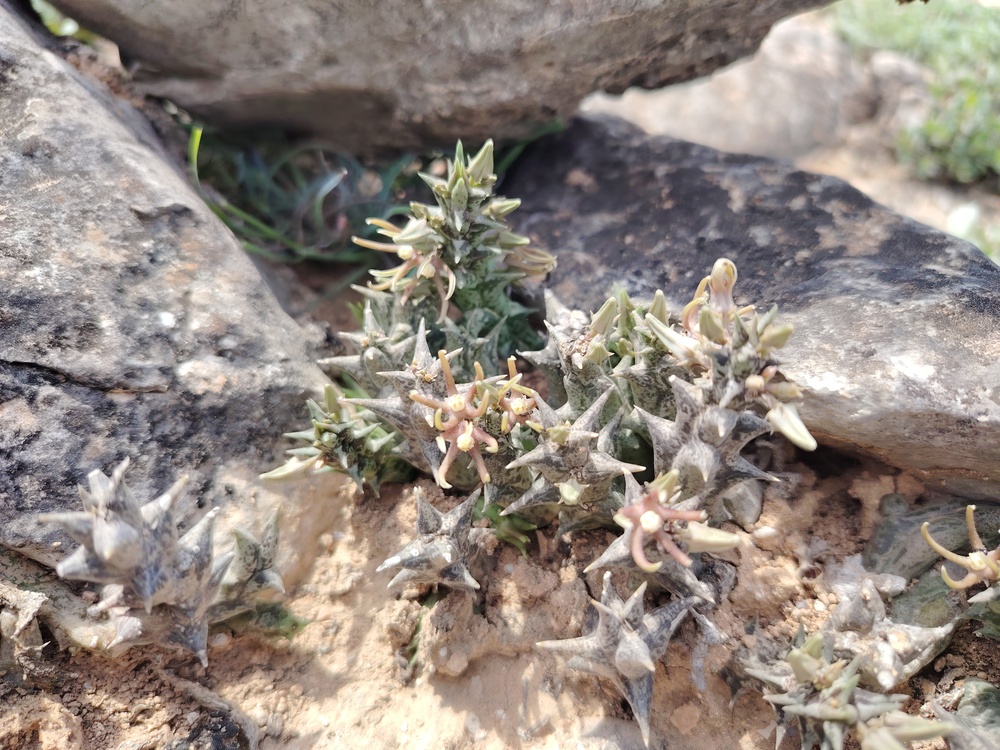
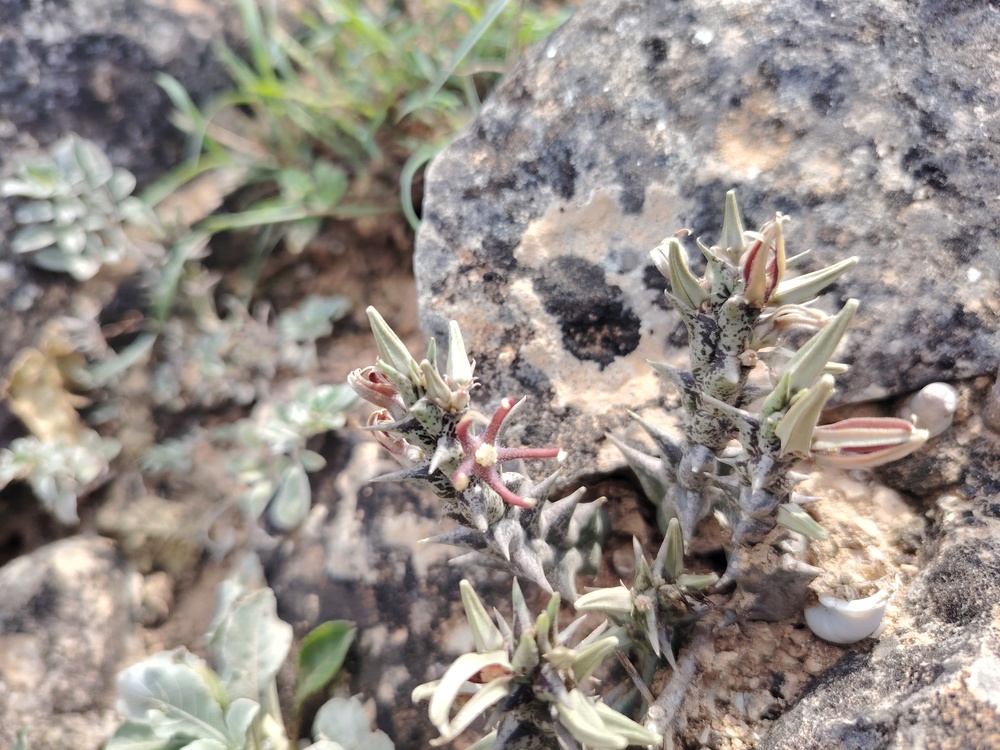
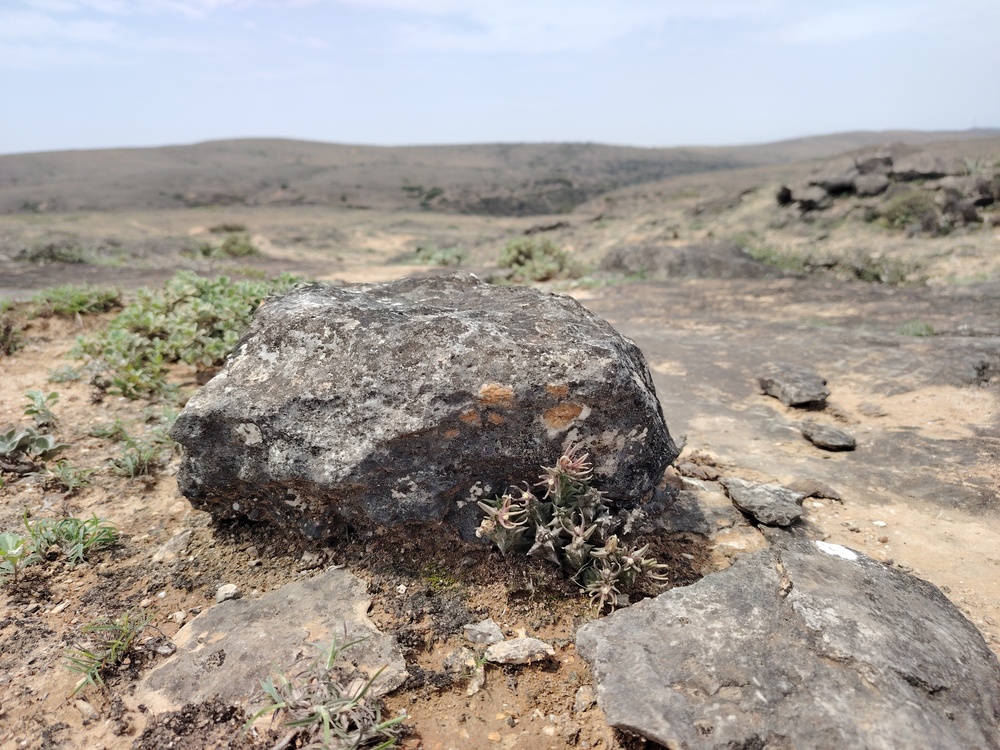
Orbea_luntii_2 © OBG
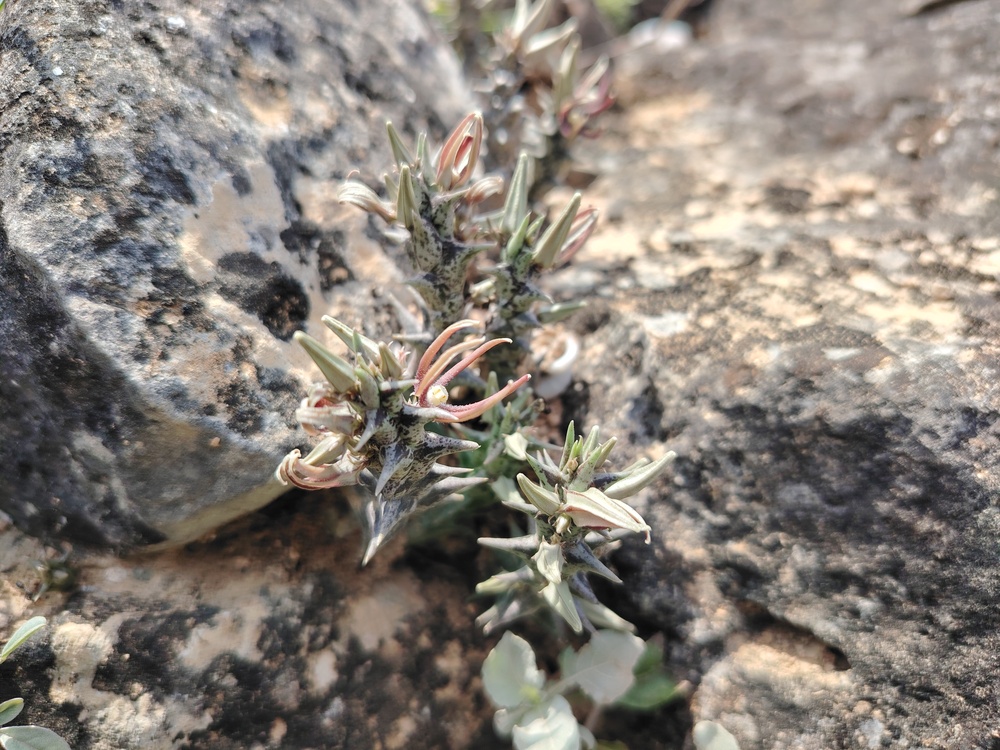
Orbea_luntii_3 © OBG
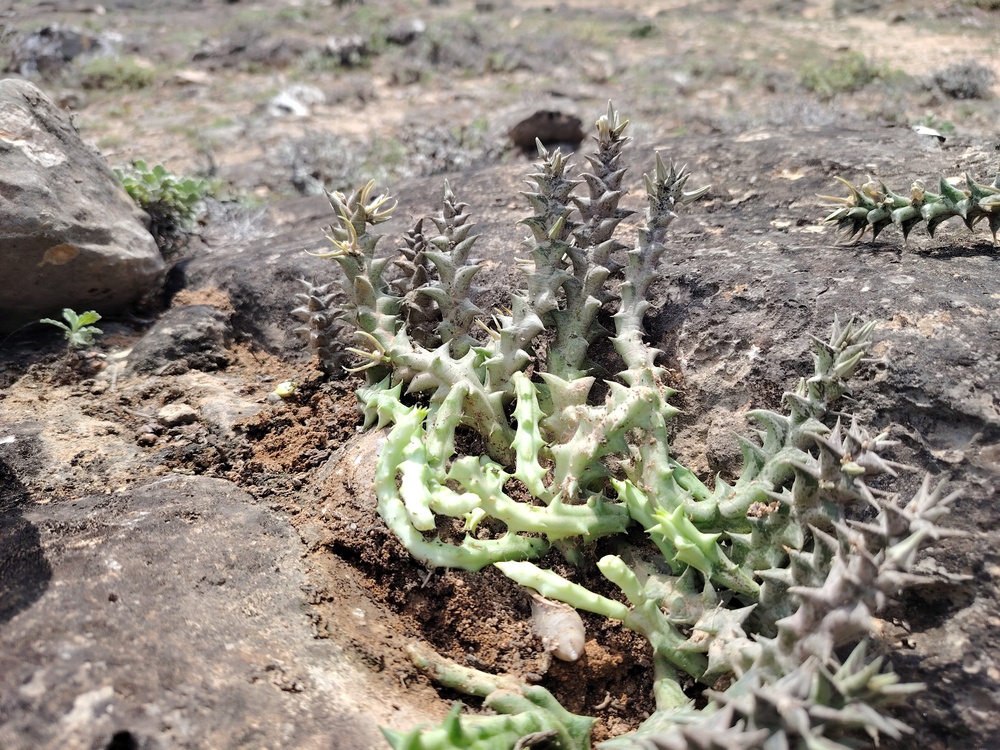
Orbea_luntii_4 © OBG
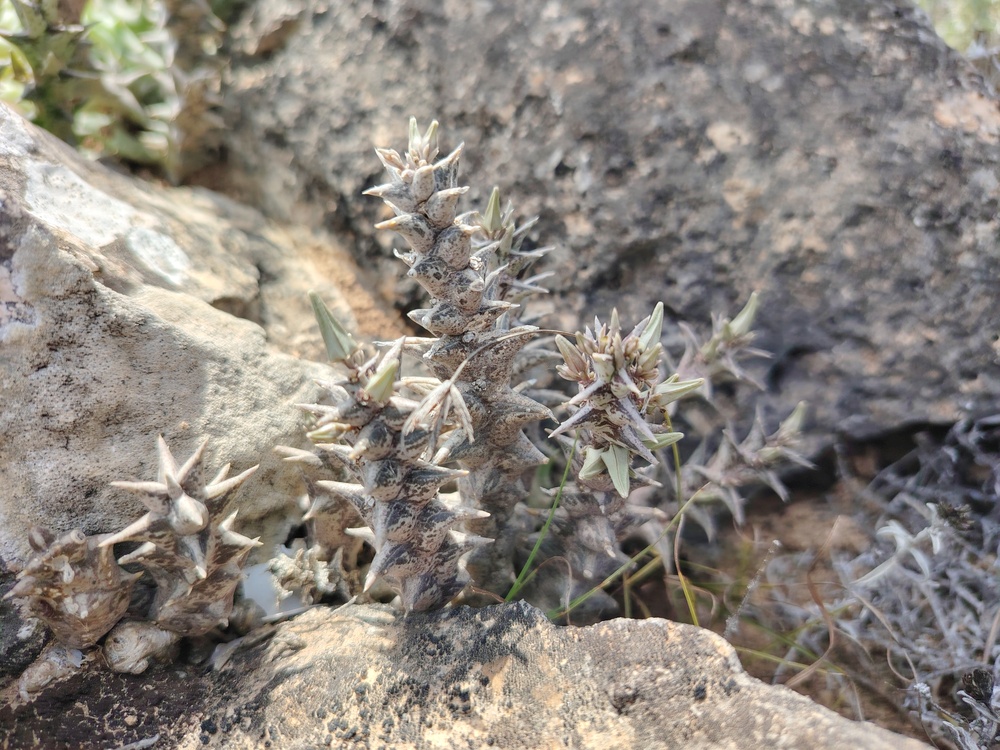
Orbea_luntii_5 © OBG
Orbea_luntii_6 © OBG
Orbea_luntii_7 © OBG
Orbea_luntii_8 © OBG
Orbea_luntii_9 © OBG
Orbea_luntii © OBG
Perennial succulent herb ; up to 15 cm high , forming small clumps . Stems decumbent to ascending , simple or with few branches , 4-angled with soft conical spines on the angles 3−10 mm long , joined at the bases , glabrous , green marked with purple markings . Leaves absent . Inflorescences 1−2 , near or at the tips of branches ; pedicels 10−12 mm , ascending to erect . Flowers greenish-yellow below the middle , purple-red above and along the margins ; calyx 5-lobed almost to base , lobes 2−4 mm , lanceolate , acute ; corolla 5-lobed to base ; lobes ascending to connivent , 16−17 mm , narrowly lanceolate , margin strongly revolute and touching each other , greenish-yellow below the middle , purple-red above and along the margins , glabrous to minutely puberulous ; corona ± 4 mm long , in two series ; outer lobes forming a pouch , with apex of lobes spreading slightly ; inner lobes flattened , emarginate , adpressed to backs of anthers and exceeding to meet in centre ; staminal column purple ; pollinia ovoid .
...

No Data
Near Endemic (NE) - Endangered (EN B1b(ii , iii)) - Global Assessment
Very Rare
الوصف غير متاح حاليًا
Angolluma luntii (N.E.Br.) Plowes
Caralluma luntii N.E.Br.
Ceropegia luntii (N.E.Br.) Bruyns
Pachycymbium luntii (N.E.Br.) M.G.Gilbert
No data
maintenanceAr.Item1
Lunt Carrion Flower
In Omani studies: Miller & Morris (1988) wrote that: "C. luntii, (J: er 'awiiyan, DA: ra'wiyon), occurs much less frequently than Caralluma flava and C. quadrangula, which are common. A passing herder, would snap off the greener tips and nibble them with relish, but these plants don not occur in sufficient quantities to have ever been of real nutritional significance. The whole plant is edible - flowers, pods and stem". (Ref. Plants of Dhofar).
*Ghazanfar, S. (2015). Flora of the Sultanate of Oman, vol.3: Loganiaceae – Asteraceae. Meise, National Botanic Garden of Belgium (Scripta Botanica Begica, Vol. 25). ISBN 9789082352511 ISSN 0779-2387. *https://en.wikipedia.org *https://pza.sanbi.org *Miller, A., Morris, M. (1988). Plants of Dhofar, the Southern Region of Oman: Traditional, Economic, and Medicinal Uses. Published by Office of the Adviser for Conservation of the Environment, Diwan of Royal Court, Sultanate of Oman; ISBN 10: 0715708082 ISSN 13: 9780715708088. *Patzelt, A. (2015). Oman Plant Red Data Book. Published by Diwan of Royal Court, Sultanate of Oman. Oman Botanic Garden Publication No. 1. ISBN 978-99969-50-10-0. *POWO (2023). ""Plants of the World Online. Facilitated by the Royal Botanic Gardens, Kew. Published on the Internet; http://www.plantsoftheworldonline.org
