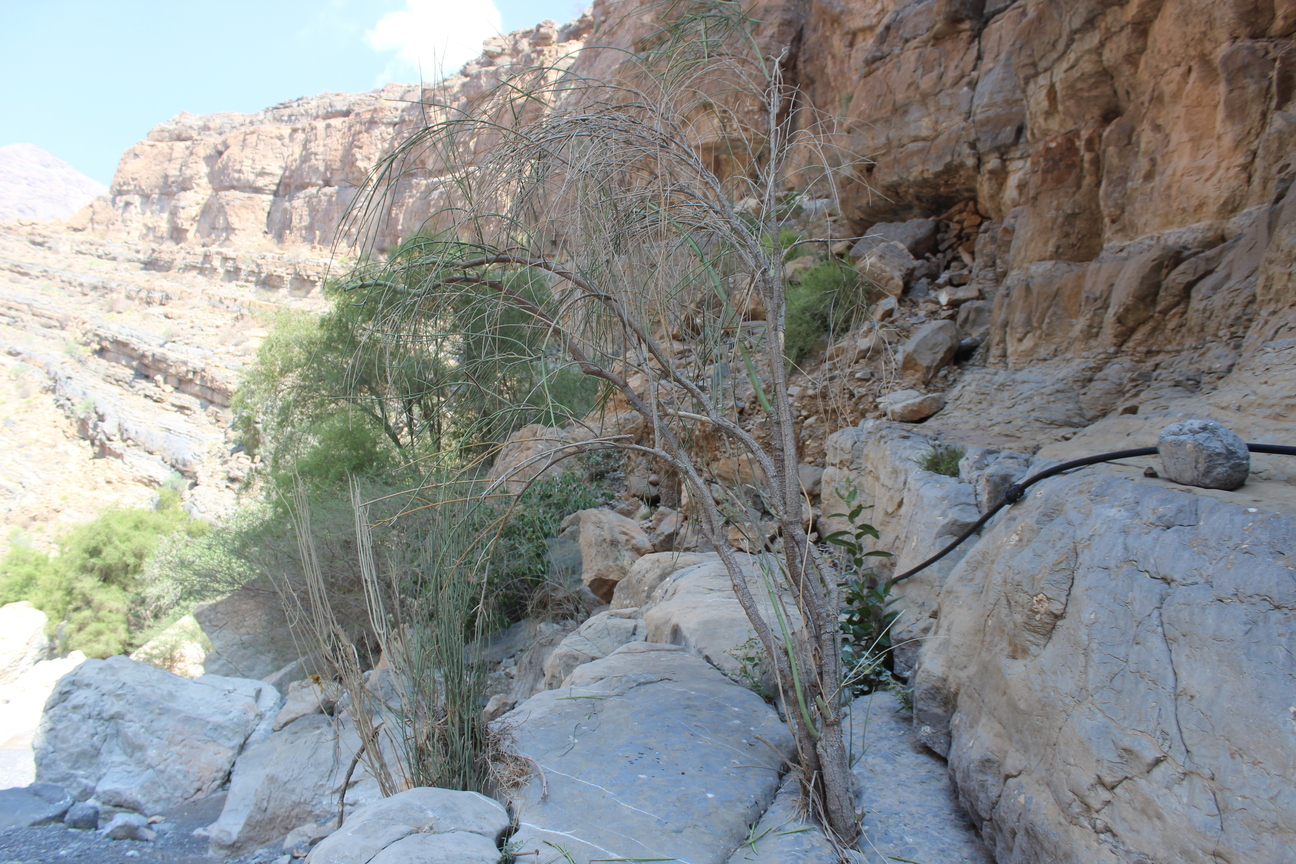
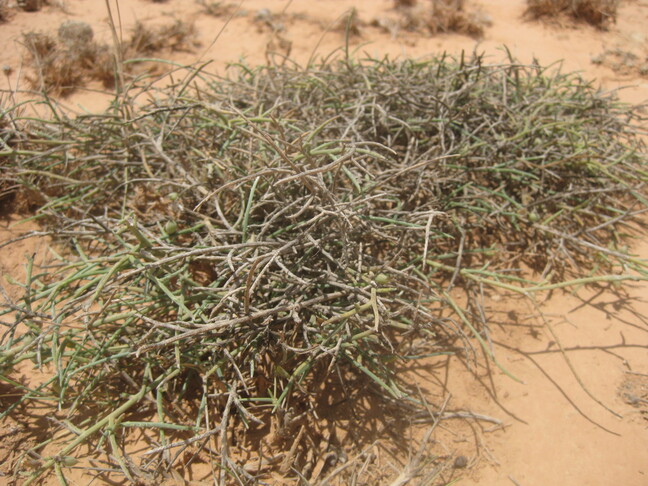
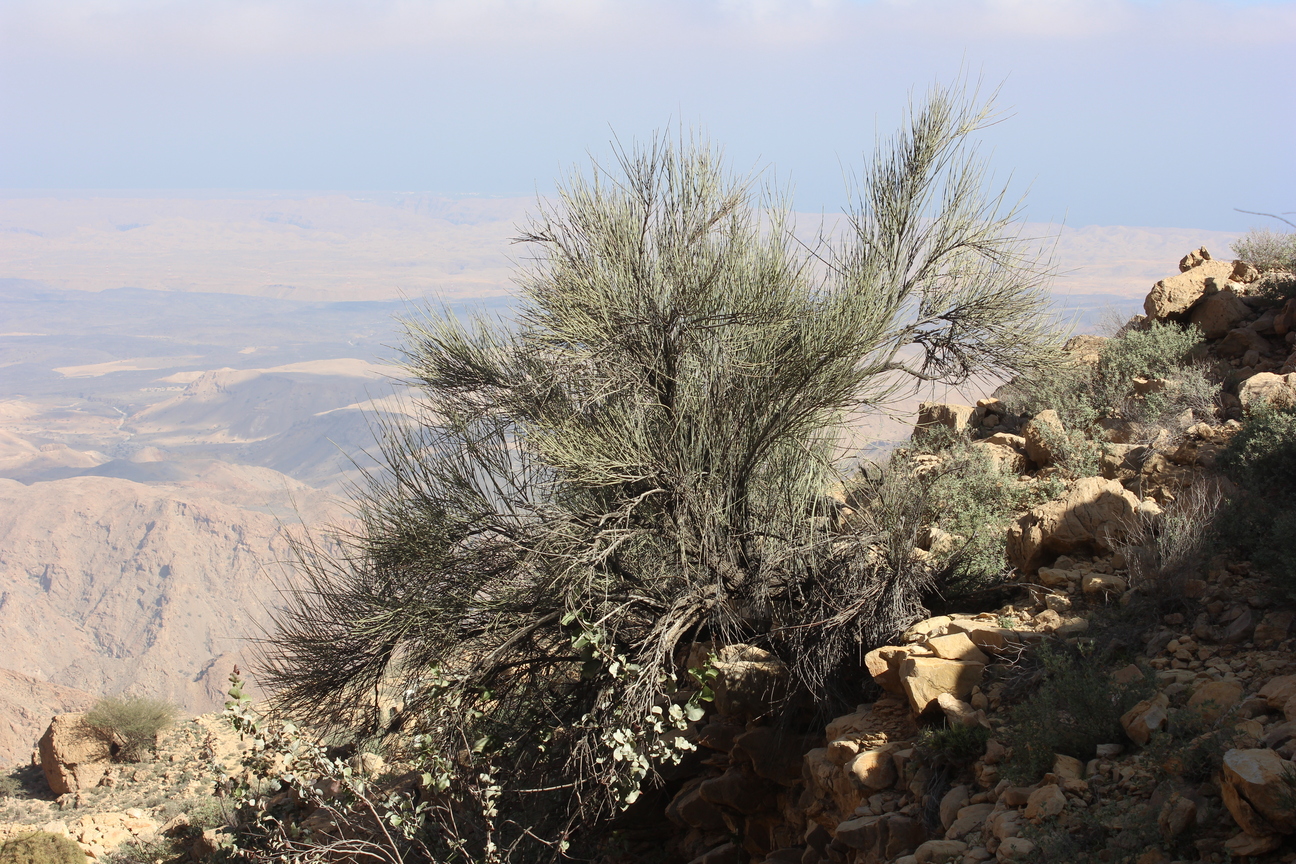
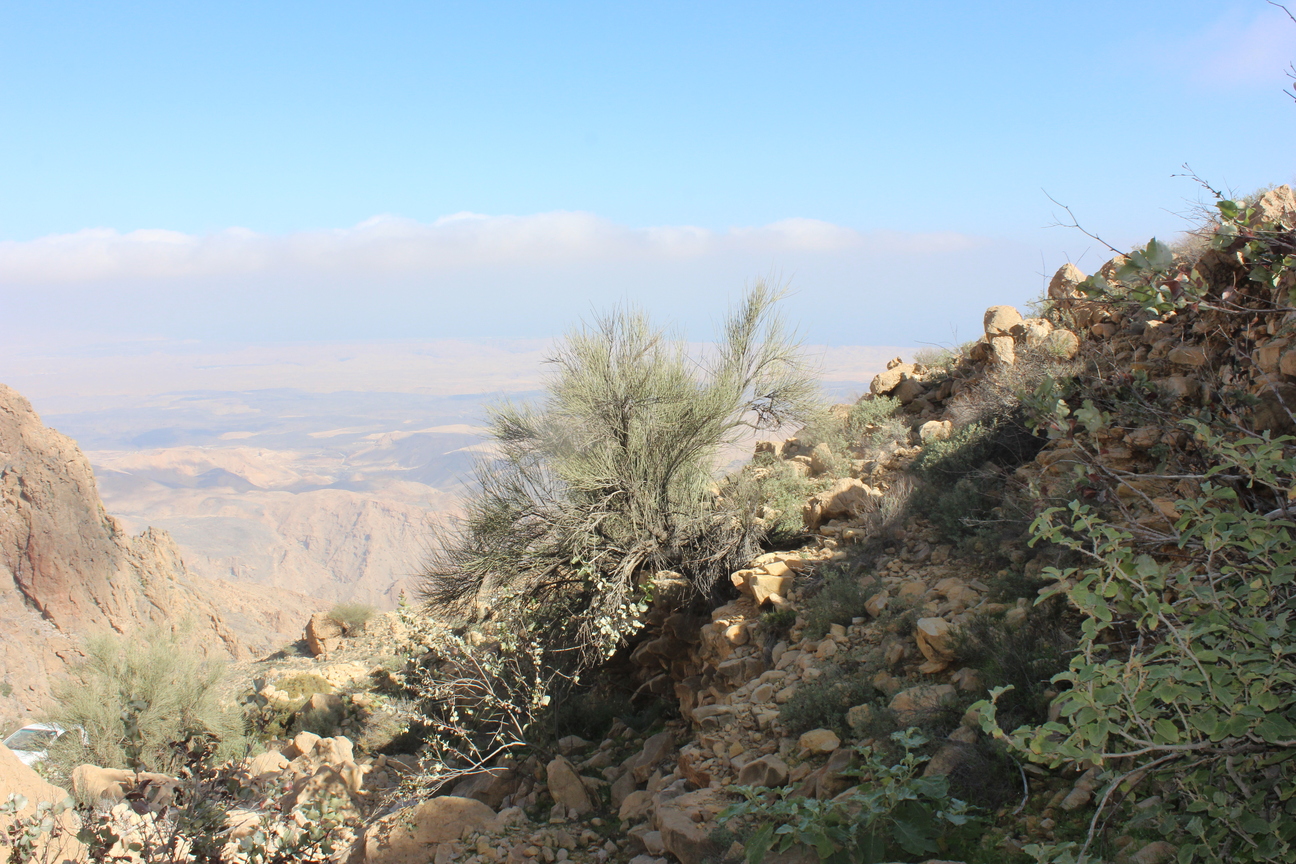
Periploca_aphylla_2 © OBG
Periploca_aphylla_3 © OBG
Periploca_aphylla_4 © OBG
Periploca_aphylla_5 © OBG
Periploca_aphylla_6 © OBG
Periploca_aphylla_7 © OBG
Periploca_aphylla © OBG
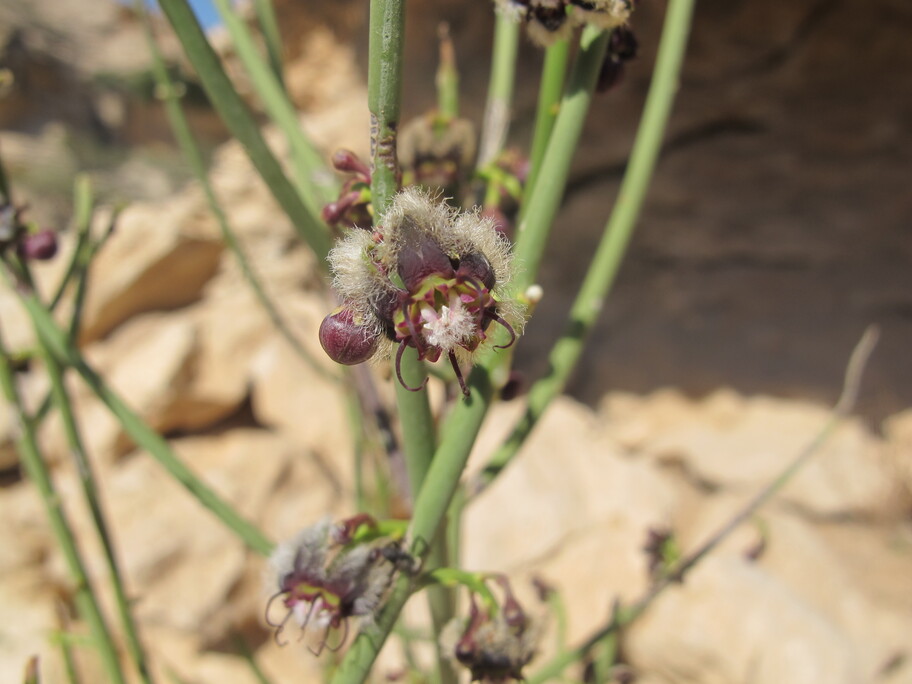
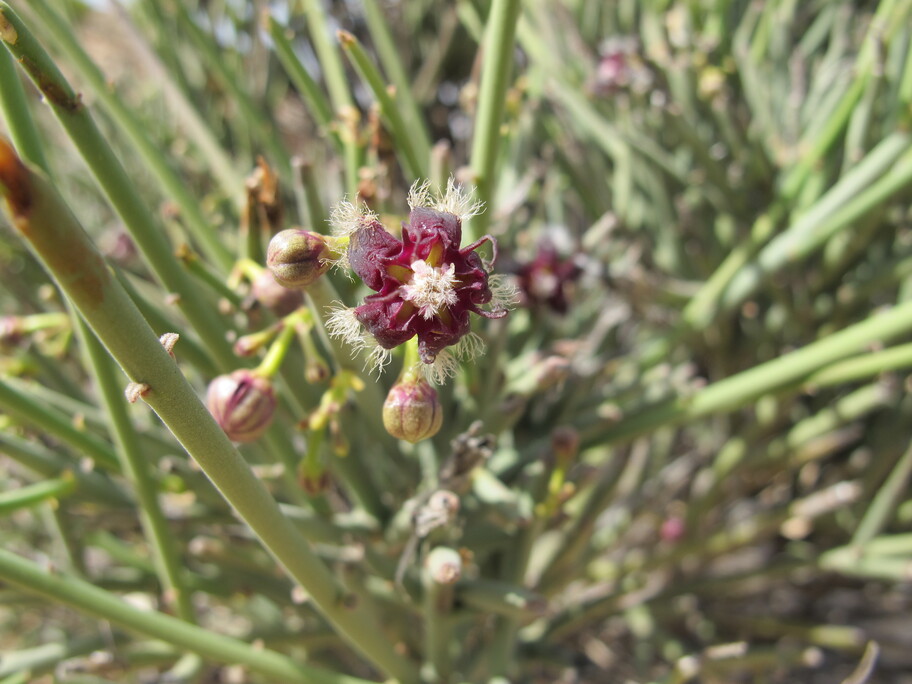
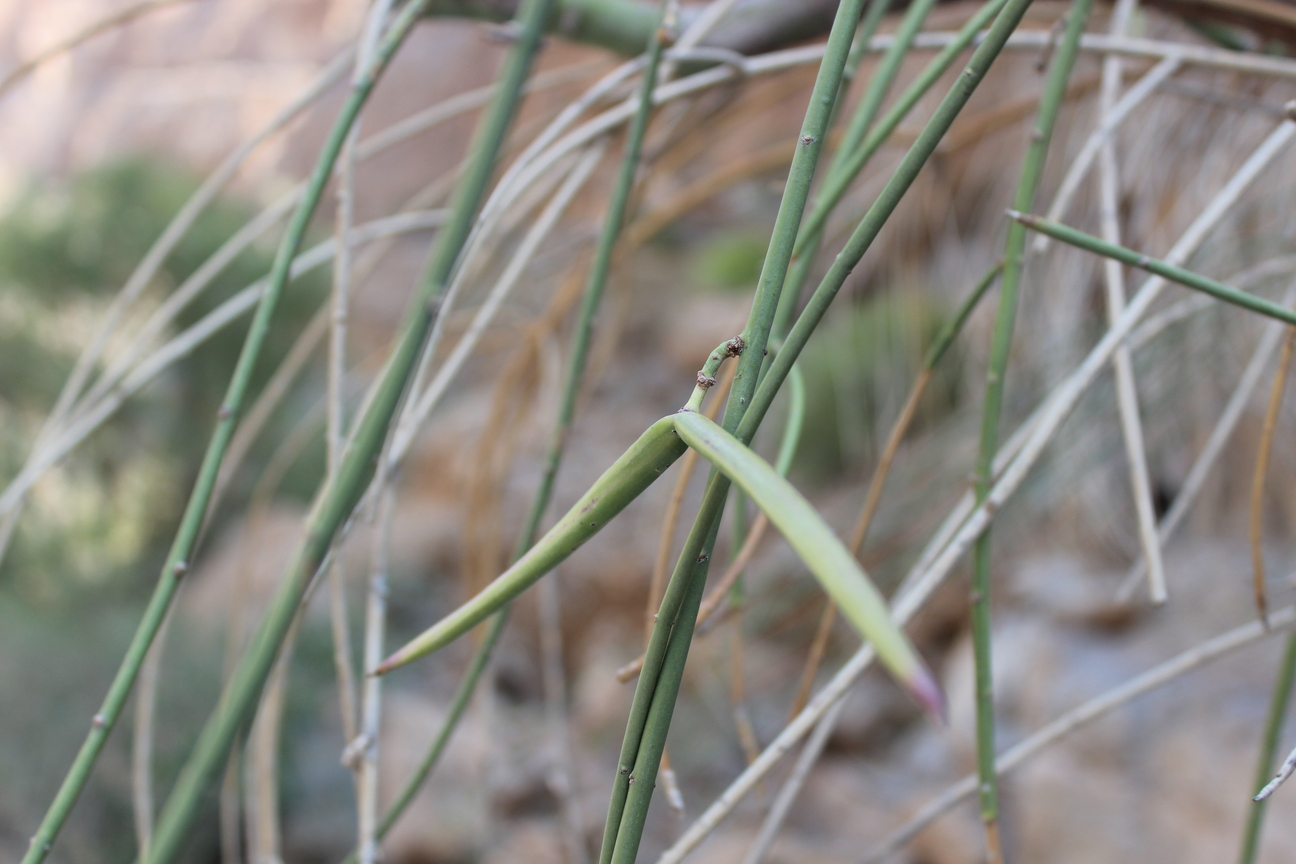
Perennial twining herb ; up to 4 m tall or more , with milky sap . Stems twining , grey-green , pubescent-tomentose . Leaves opposite , 40−85 x 20−75 mm , grey-green , boroadly ovate , apex acute , base cordate , margins entire , pubescent to glabrous or ciliate ; petiole 25−50 mm , tomentose . Inflorescences in pedunculate , axillary umbellate cymes ; peduncles (2)4–11(20) cm long , glabrous or pubescent ; pedicel 2−2 . 5 cm . Flowers sweet-scented , greenish-yellow ; calyx 5-lobed ; lobes 2−3 mm , triangular , acute , tomentose ; corolla greenish-yellow , 5-lobed to about half , lobes 6−7 mm , elliptic-lanceolate , ciliate , spreading ; corona white , in two series: the outer arising at the base of the staminal column , 5-lobed , membranous ; the inner of 5 fleshy lobes , attached to base of staminal column , horn-like above , incurved , spurred below ; stamens united to form a column , white ; pollinia single in each anther loculus . Fruit follicles , 35−50 mm , paired , erect , narrow ovoid with an acute tip . Seeds flattened with a white tuft of hairs at the tip .
...

No Data
Not Evaluated (NE)
Frequent
الوصف غير متاح حاليًا
Asclepias daemia Forssk.
Doemia forsskalii Schult.
No data
maintenanceAr.Item1
Trellis-vine
In Omani studies: Miller & Morris (1988) wrote that: "The stems and shoots of P. tomentosa and P. daemia were used to loosen the hair from hides so that it could be scraped off before the hide was tanned. P. daemia was used in much the same way as P. tomentosa in Dhofar, and the two plants are not differentiated in name". (Ref. Plants of Dhofar). In addition, Ghazanfar (2015) mentioned that: "The species has been used traditionally to loosen hair on hides for tanning. The latex, if rubbed over skin or eyes can cause inflammation and pain, and if ingested can cause stomach cramps and diarrhoea". (Ref. Flora of Oman; vol.3).
*Ghazanfar, S. (2015). Flora of the Sultanate of Oman, vol.3: Loganiaceae – Asteraceae. Meise, National Botanic Garden of Belgium (Scripta Botanica Begica, Vol. 25). ISBN 9789082352511 ISSN 0779-2387. *https://en.wikipedia.org *https://oneflora.in *https://casabio.org *Miller, A., Morris, M. (1988). Plants of Dhofar, the Southern Region of Oman: Traditional, Economic, and Medicinal Uses. Published by Office of the Adviser for Conservation of the Environment, Diwan of Royal Court, Sultanate of Oman; ISBN 10: 0715708082 ISSN 13: 9780715708088. *POWO (2023). ""Plants of the World Online. Facilitated by the Royal Botanic Gardens, Kew. Published on the Internet; http://www.plantsoftheworldonline.org
