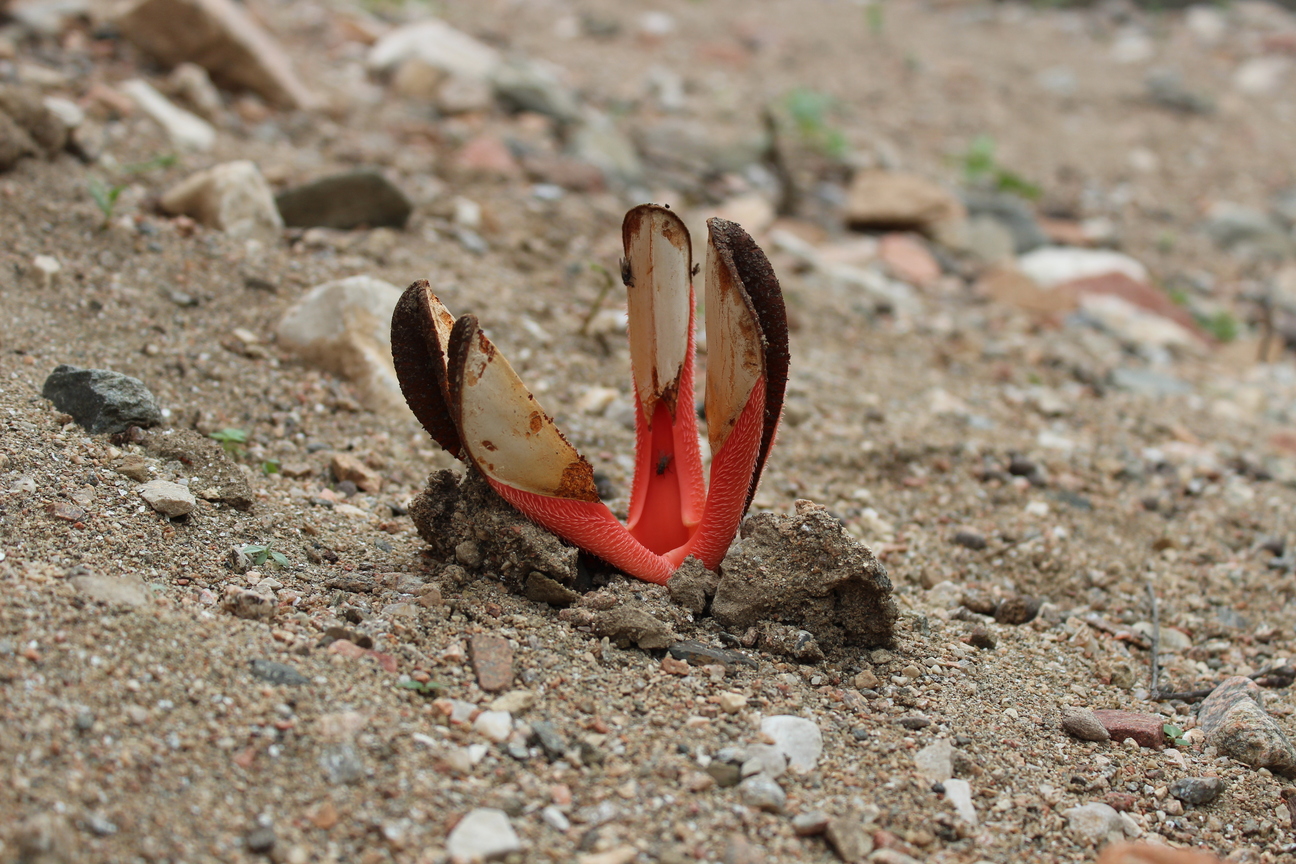
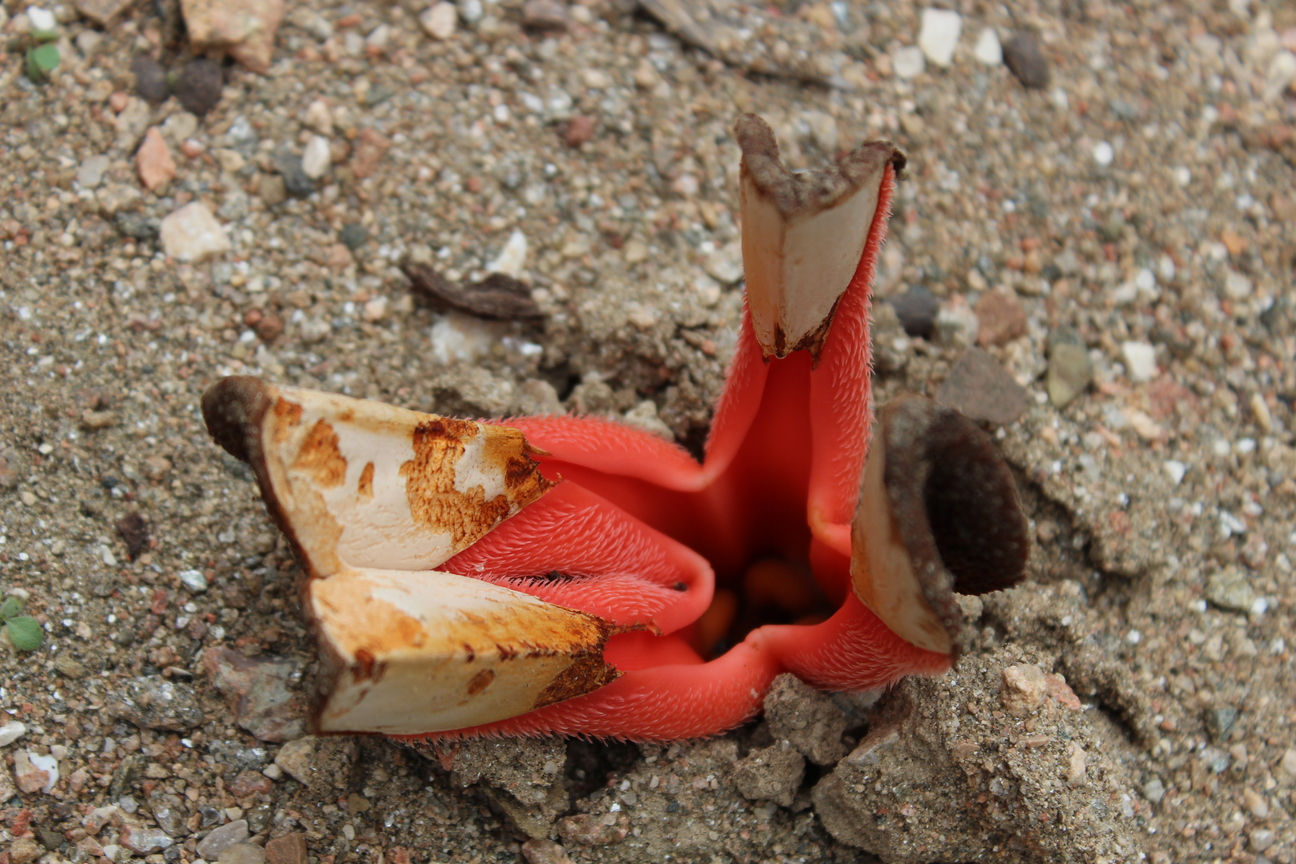
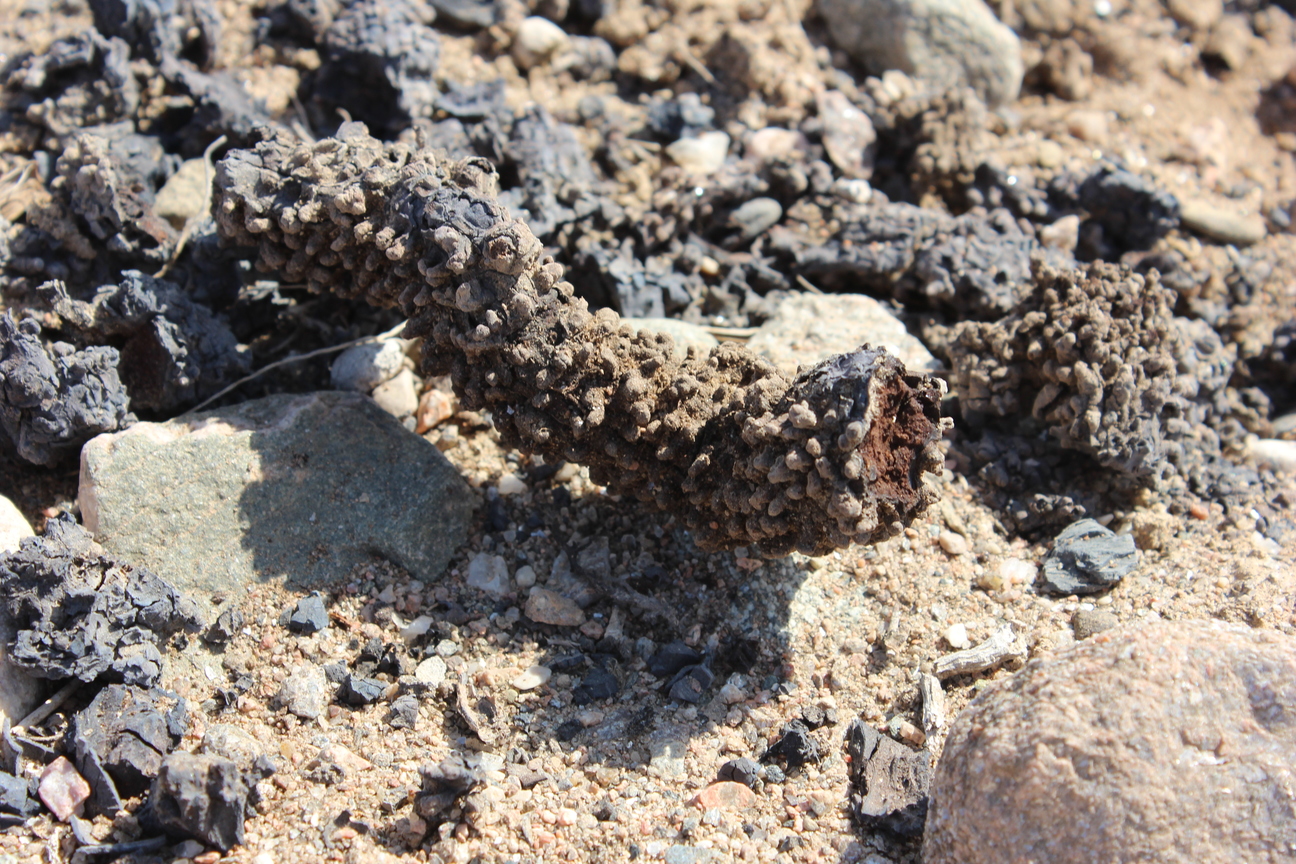
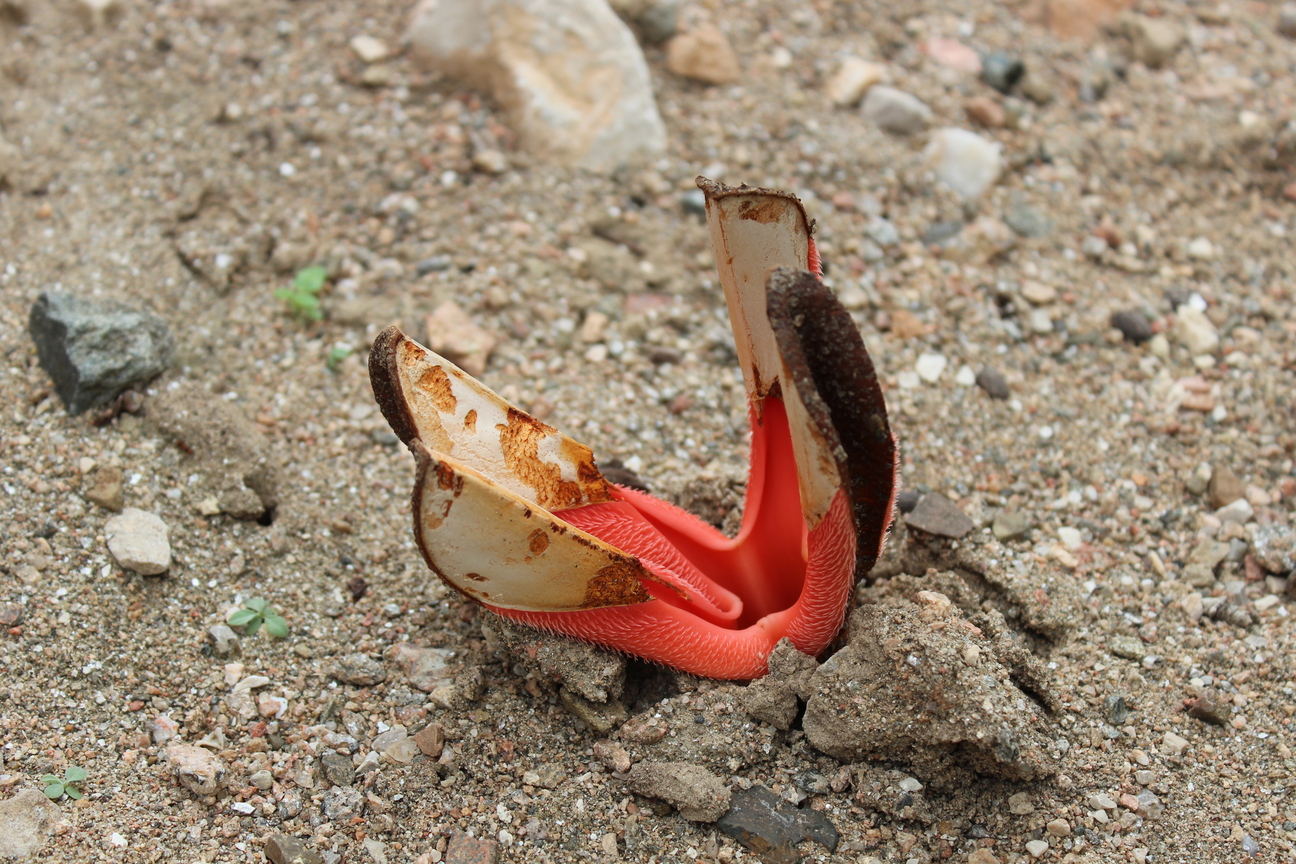
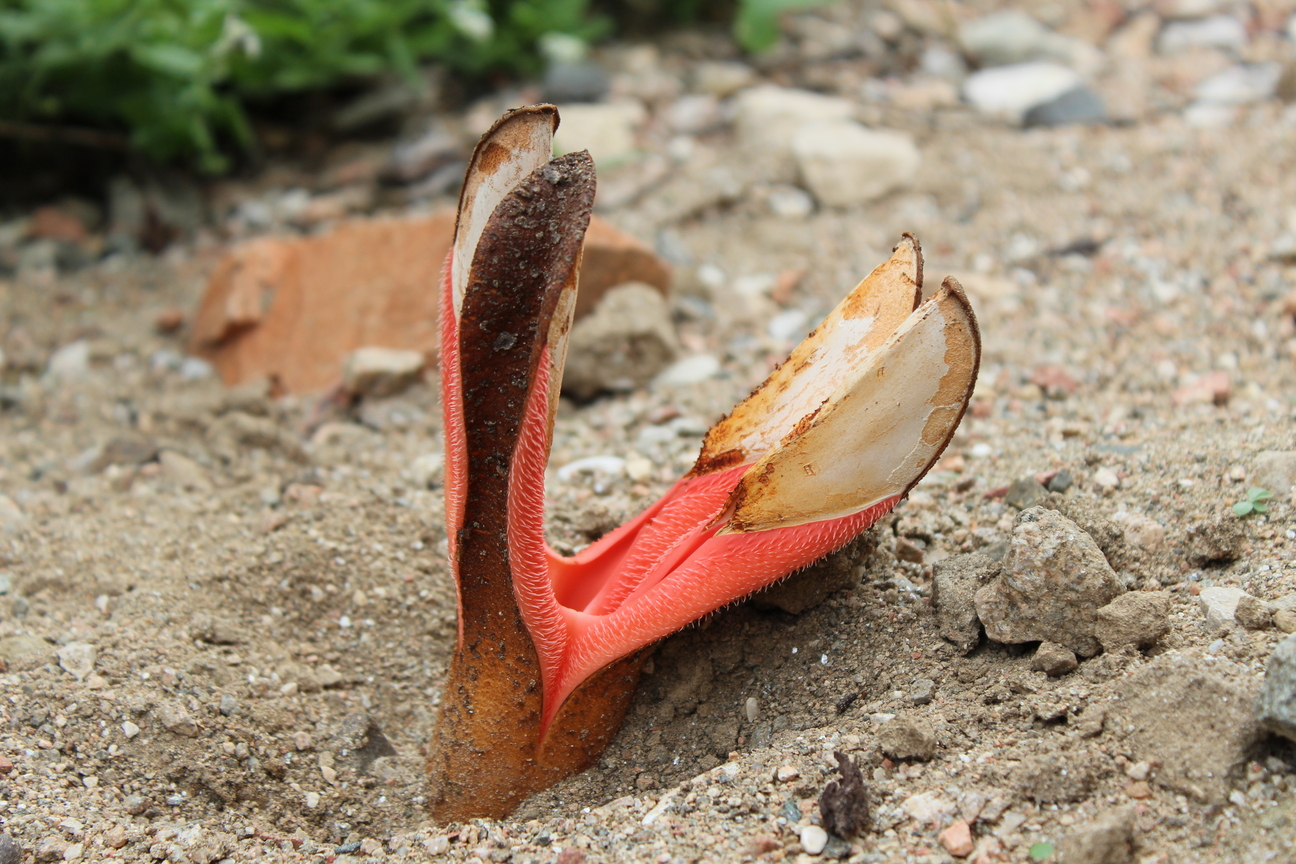
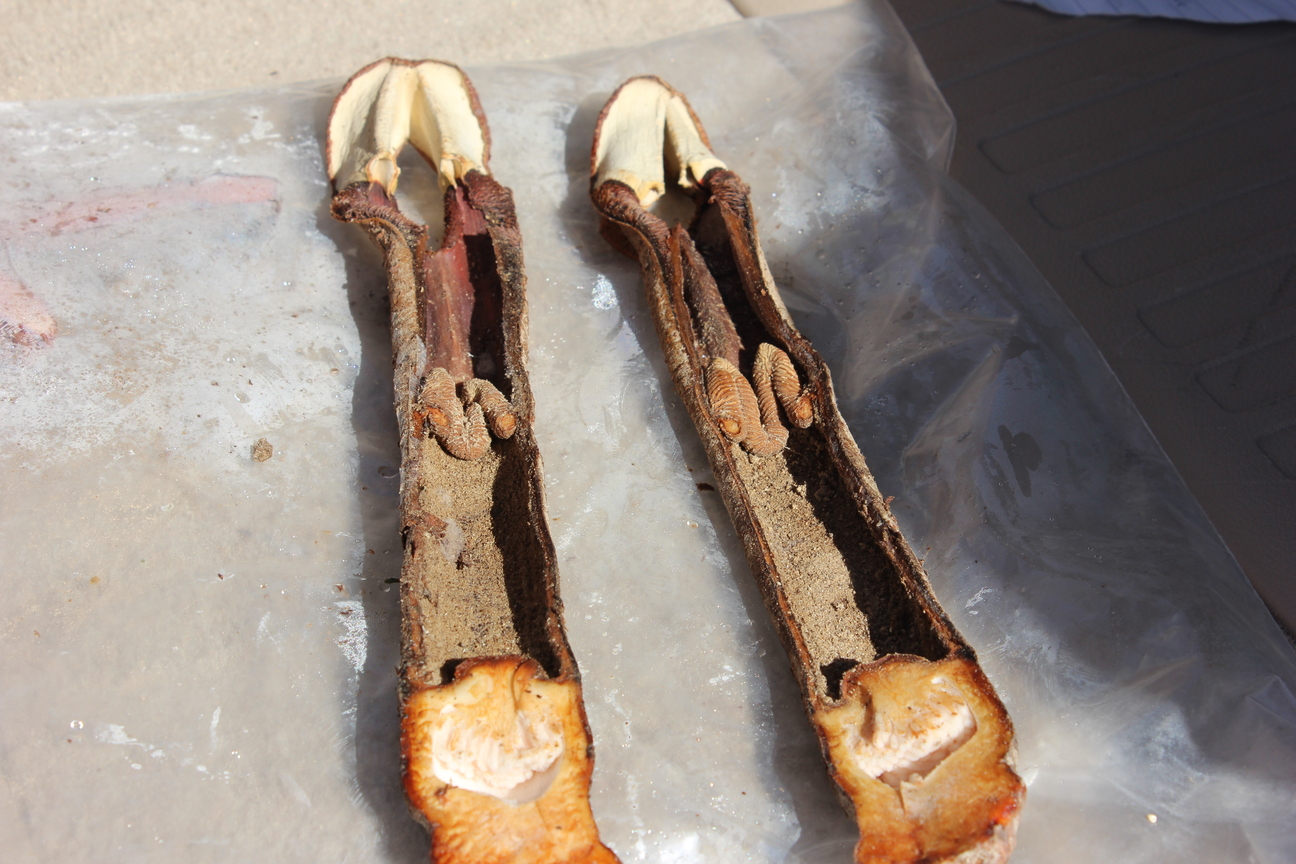
Hydnora_arabica_10 © OBG
Hydnora_arabica_2 © OBG
Hydnora_arabica_3 © OBG
Hydnora_arabica_4 © OBG
Hydnora_arabica_5 © OBG
Hydnora_arabica_6 © OBG
Hydnora_arabica_7 © OBG
Hydnora_arabica_8 © OBG
Hydnora_arabica_9 © OBG
Hydnora_arabica © OBG
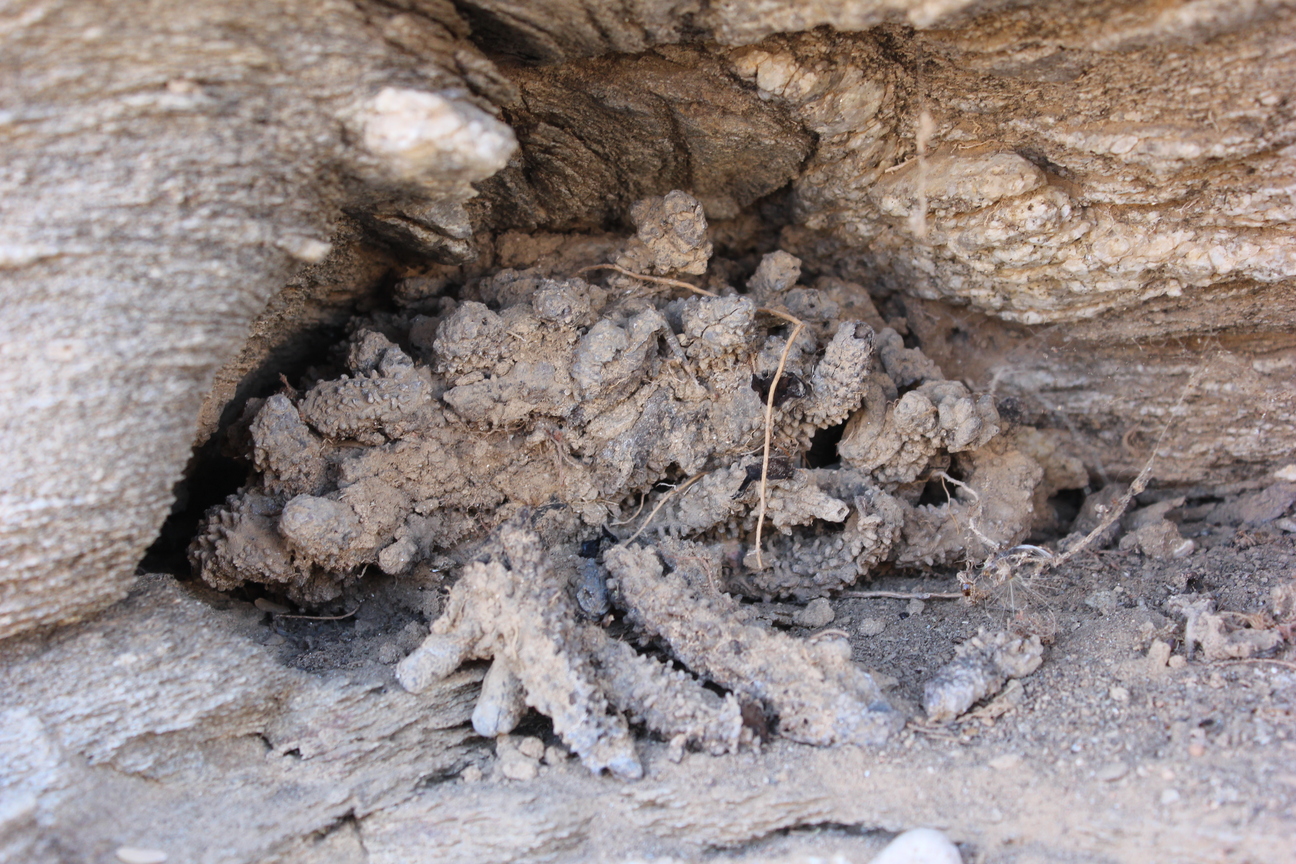
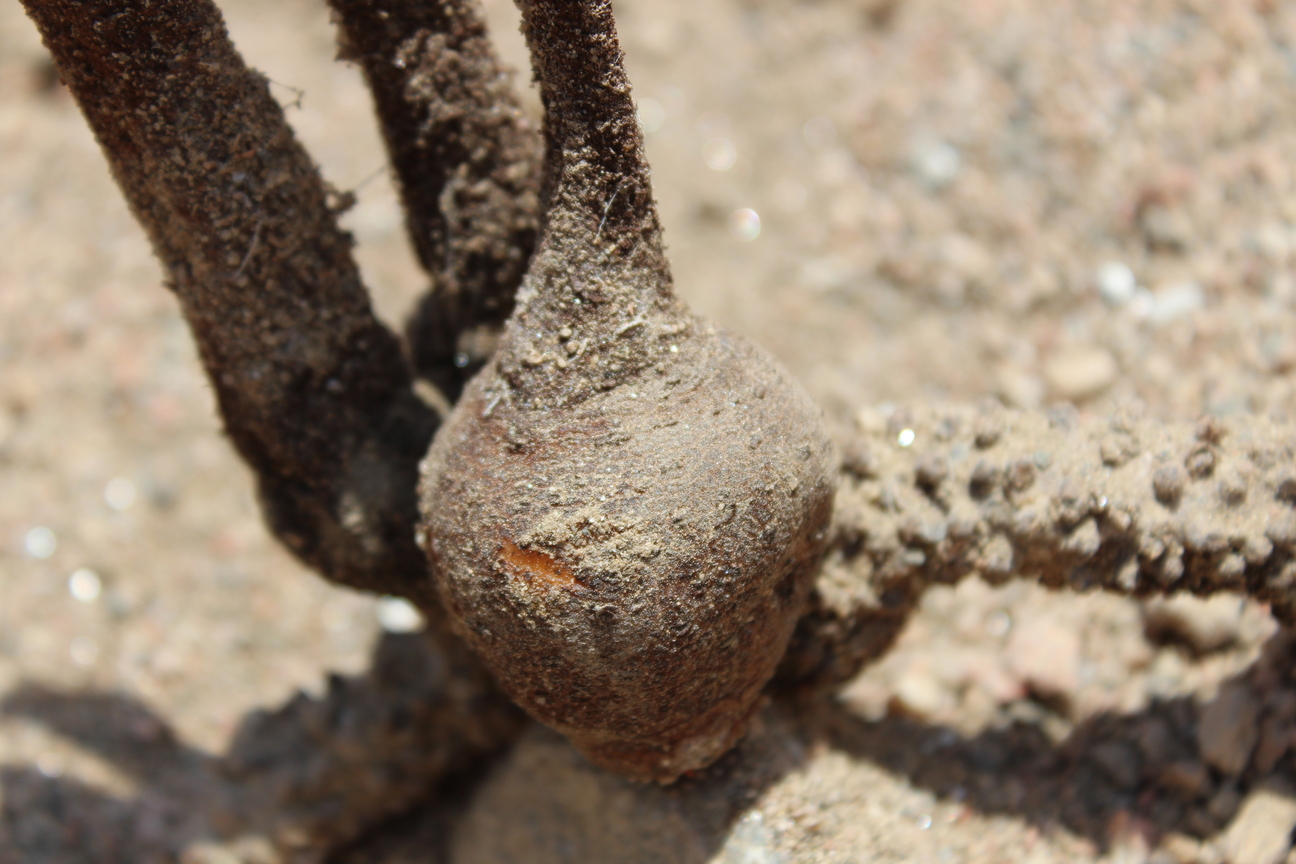
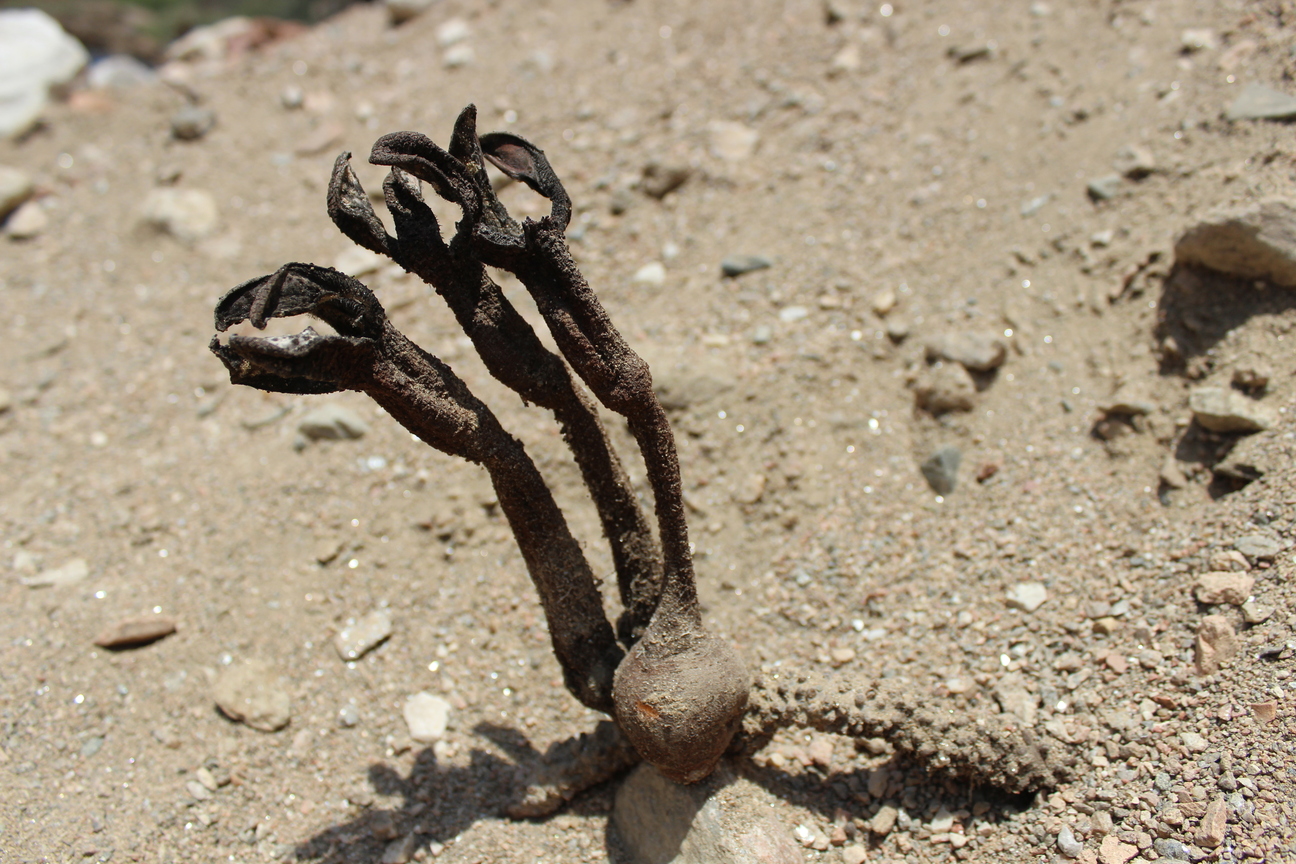
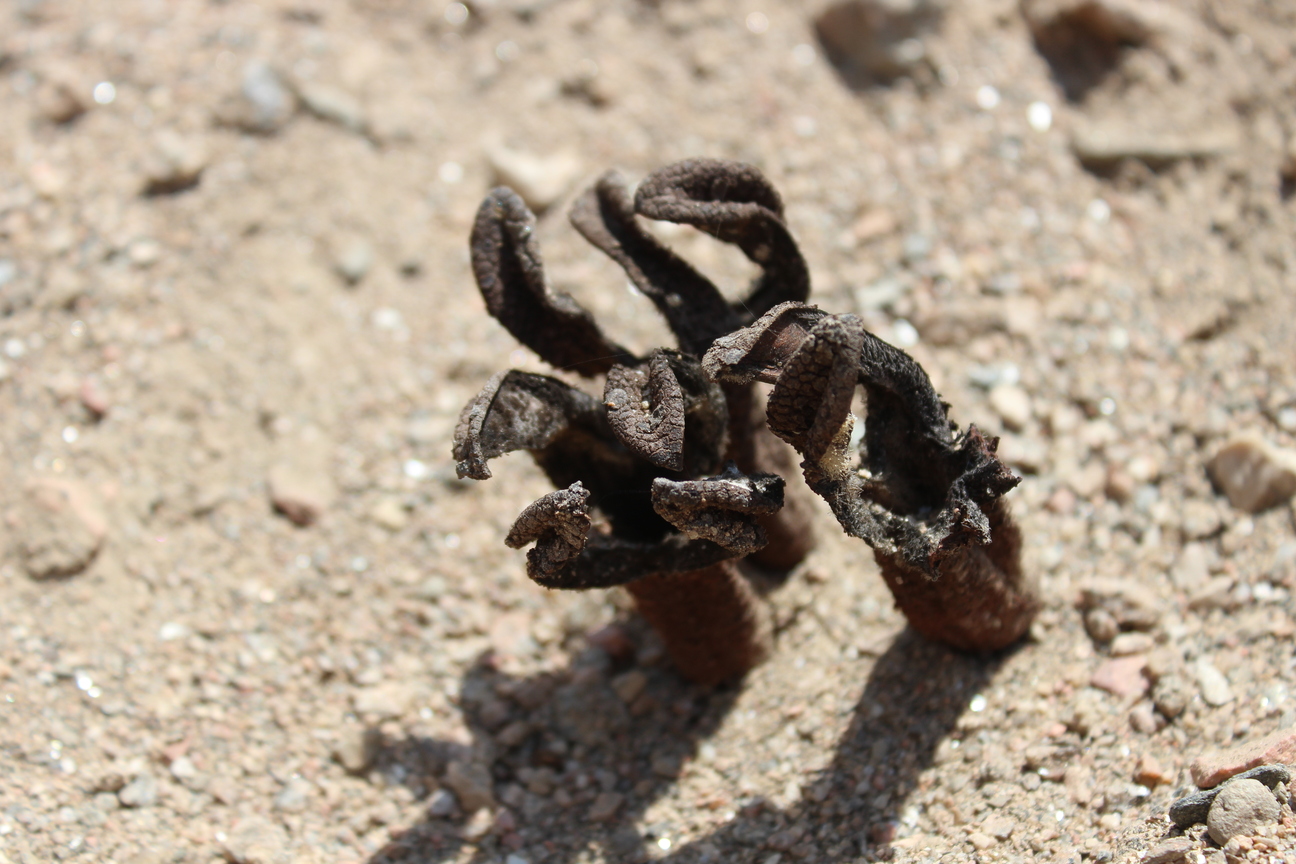
Herbaceous perennial root holoparasite ; up to 1 . 5 cm with a subterranean stem and fleshy roots . Stem creeping , covered with warty tubercles , attached to roots of Acacia trees . Leaves absent . Inflorescences solitary , 4-merous . Flowers bisexual , bright red , pale orange or pink within , appearing above the ground , unpleasant to smell . Fruit subglobose , thick-walled , ripening below the ground , many-seeded . (Ref . Flora of Oman ; vol . 2) .
No Data
Regional Endemic (RE)
Frequent
الوصف غير متاح حاليًا
Not available
No data
maintenanceAr.Item1
Not known
Miller & Morris (1988) wrote that: "The shoots that appear above ground are called J: nexeror, 'beaks, nose' or, in the Mahri languages hayden, that is 'ears'. The whole shoot is edible, but the 'flower heads' are the part preferred. They have a strong ammoniac smell and taste rather like a very green cheese. Once the shoots have dried out and died back, the underground fruit swells, often to the size of a large potato. Once matured it becomes rather like a ripe fig inside, and is deliciously sweet. The whole root system was also used in other ways. It was dug up and then crushed and pounded to a rough paste which was used to treat a smelly, tainted or crushed leather milk skin. The paste was smeared all over the bag which was then rubbed, rolled and kneaded over a hard flat surface until every trace of dirt
...

*Ghazanfar, S. (2007). Flora of the Sultanate of Oman, vol.2: Crassulaceae – Apiaceae. Meise, National Botanic Garden of Belgium (Scripta Botanica Begica, Vol. 36). ISBN 9789072619747 ISSN 0779-2387. *Miller, A., Morris, M. (1988). Plants of Dhofar, the Southern Region of Oman: Traditional, Economic, and Medicinal Uses. Published by Office of the Adviser for Conservation of the Environment, Diwan of Royal Court, Sultanate of Oman; ISBN 10: 0715708082 ISSN 13: 9780715708088. *Richardson, N. Dorr, M. (2003). The Craft Heritage of Oman; vol. 1. Published by Motivate publishing. ISBN 1-86063-1576. *https://en.wikipedia.org *Gledhill, D. (2008). The Names of Plants. Fourth Edition. Cambridge University Press, UK. ISBN 978-0-521-86645-3 ISSN 978-0-521-68553-5. *Bolin, J. Lupton, D. Musselman, L. 2018. Hydnora arabica (Aristolochiaceae), a new species from the Arabian Peninsula and a key to Hydnora. Phytotaxa 338 (1): 099–108. https://doi.org/10.11646/phytotaxa.338.1.8. *Miller, A.G. & Cope, T.A. (1996). Flora of the Arabian Peninsula and Socotra 1: 1-586. Edinburgh university
...
