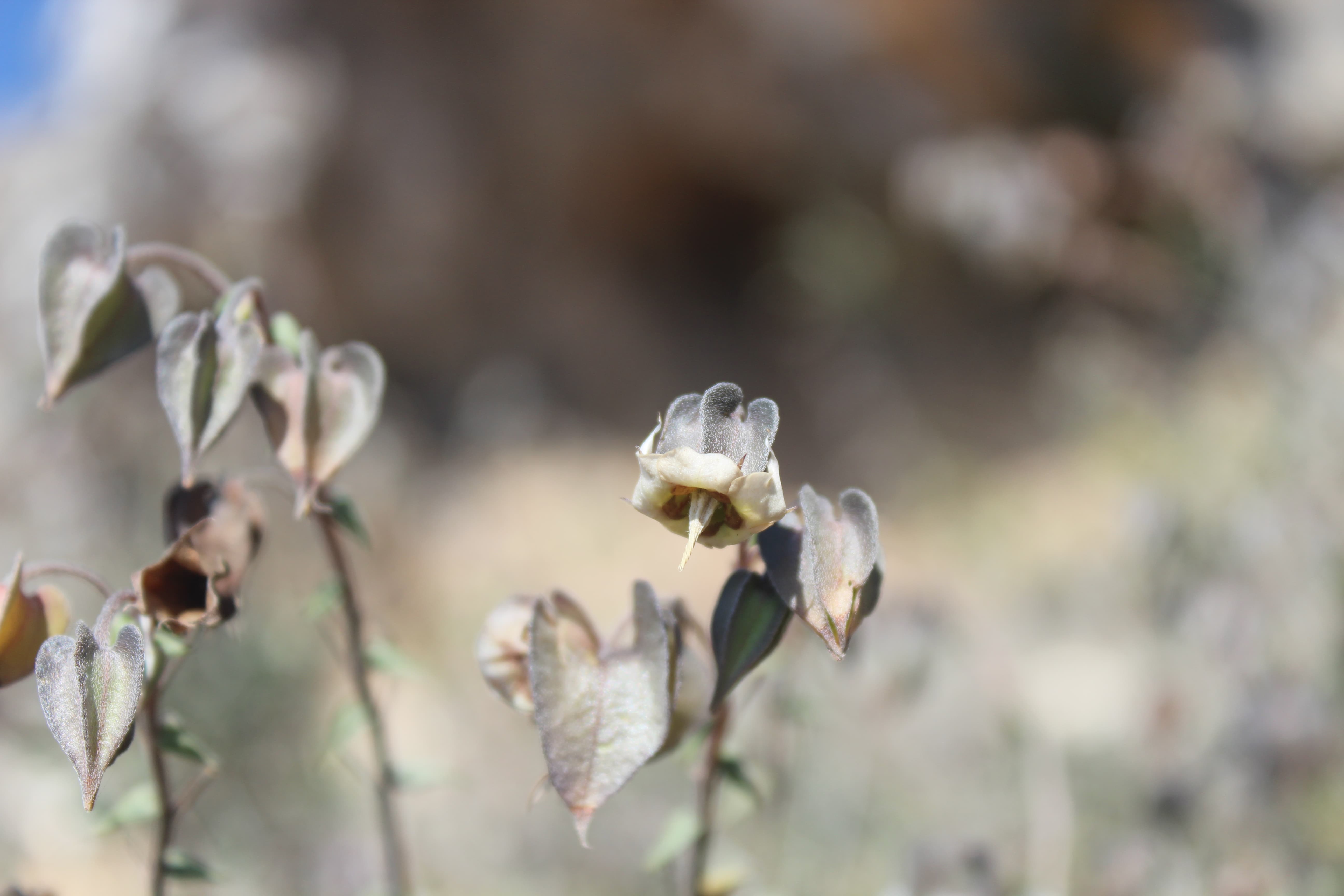
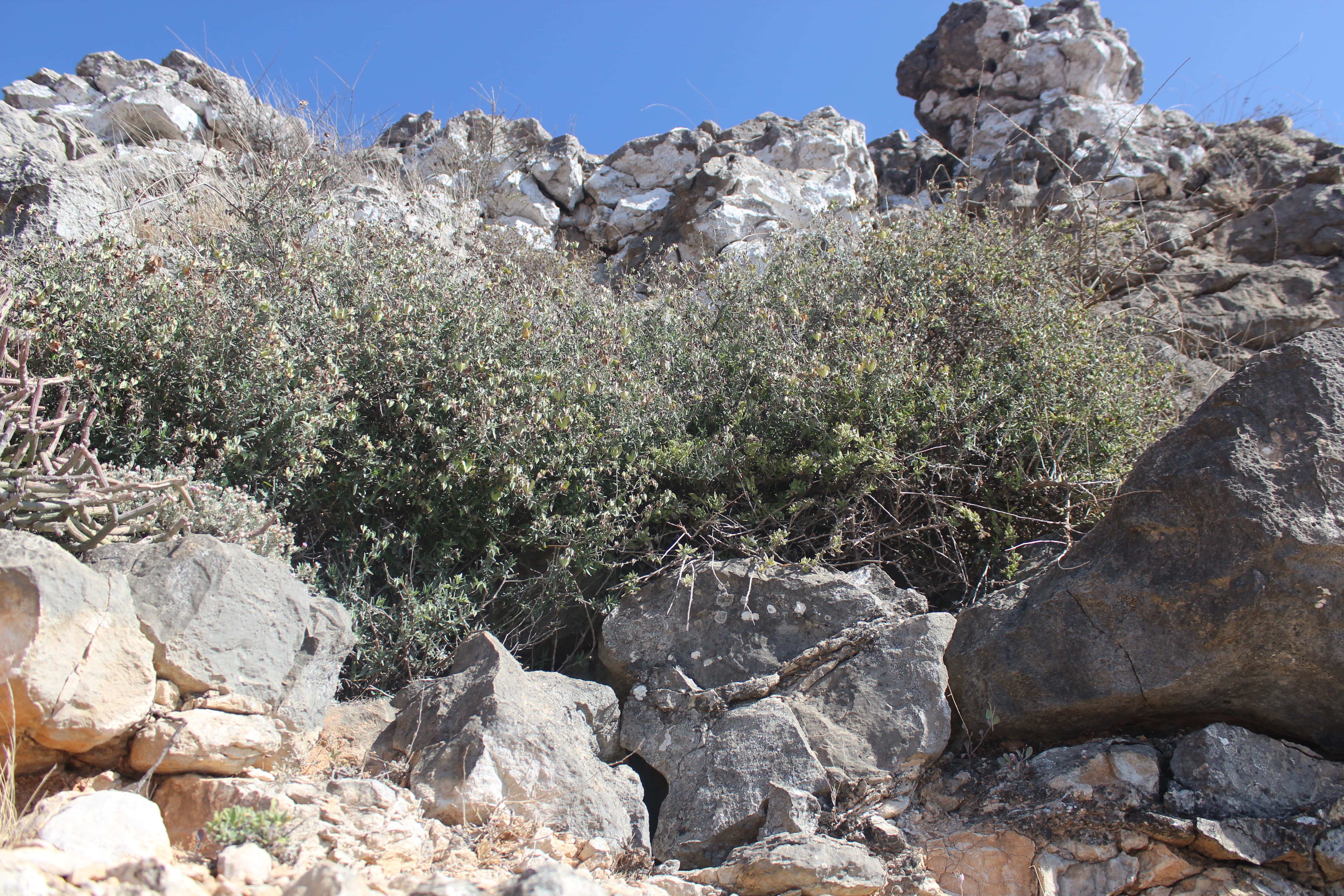
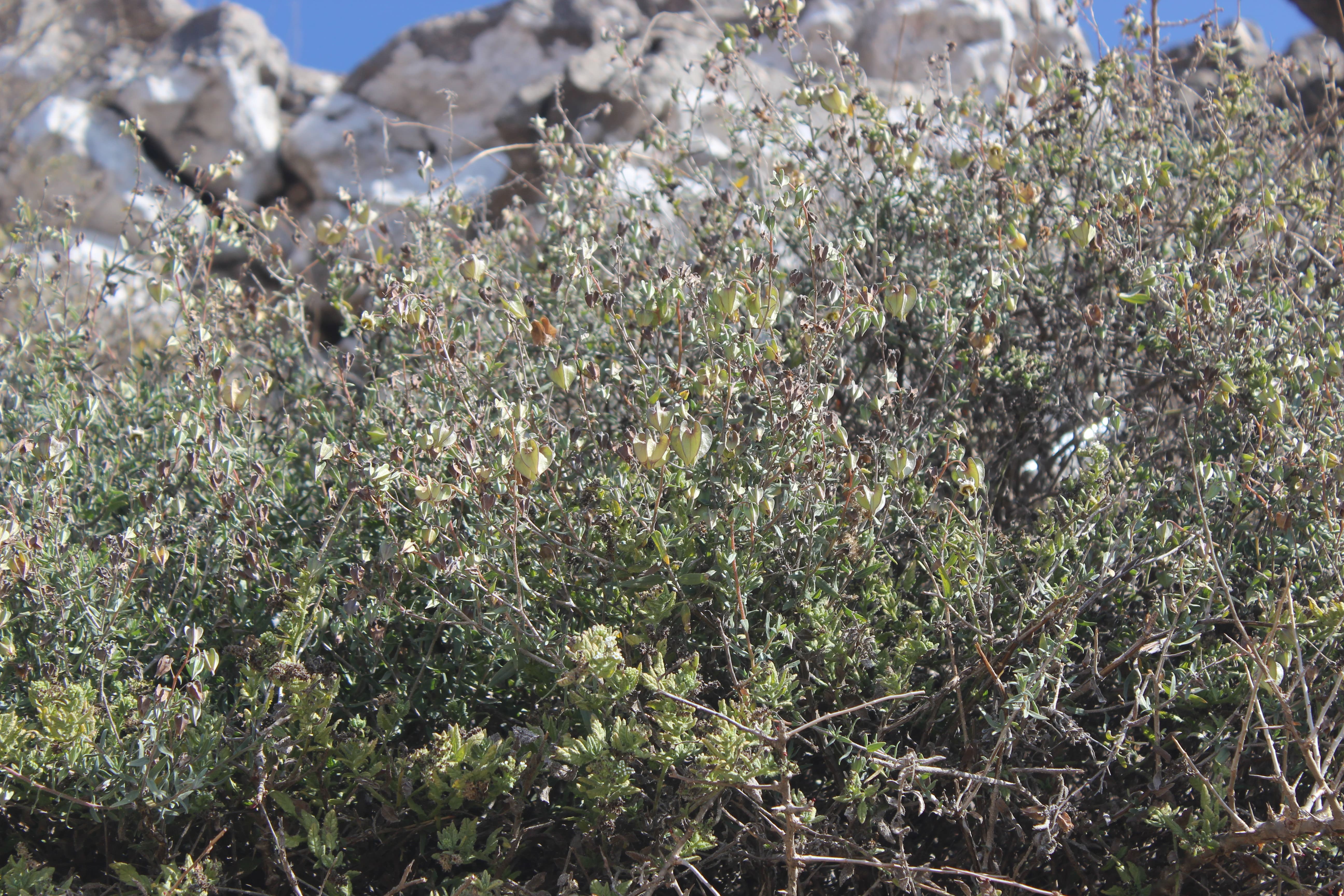
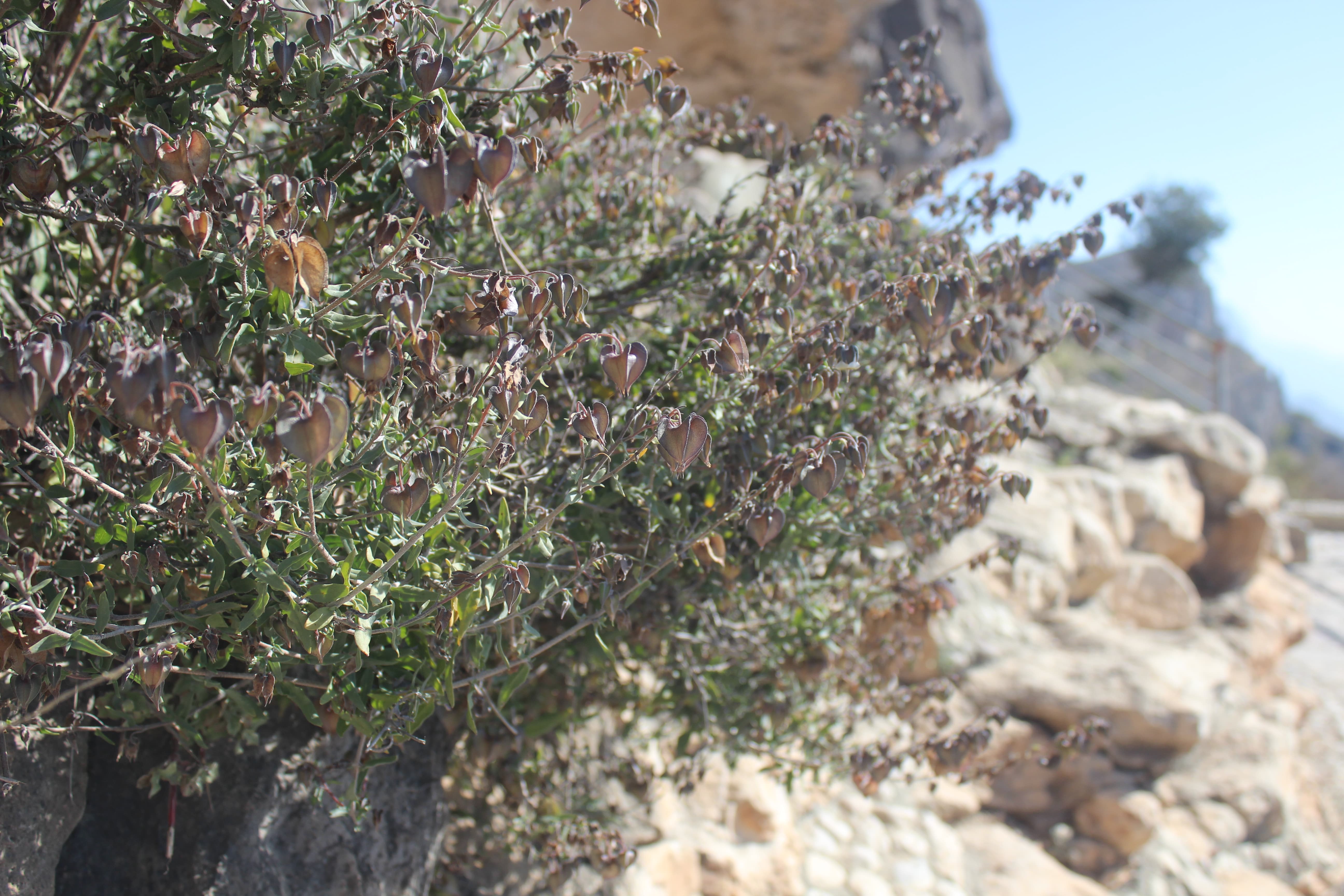
Trichodesma_hildebrandtii_10 © OBG
Trichodesma_hildebrandtii_2 © OBG
Trichodesma_hildebrandtii_3 © OBG
Trichodesma_hildebrandtii_4 © OBG
Trichodesma_hildebrandtii_5 © OBG
Trichodesma_hildebrandtii_6 © OBG
Trichodesma_hildebrandtii_7 © OBG
Trichodesma_hildebrandtii_8 © OBG
Trichodesma_hildebrandtii_9 © OBG
Trichodesma_hildebrandtii © OBG
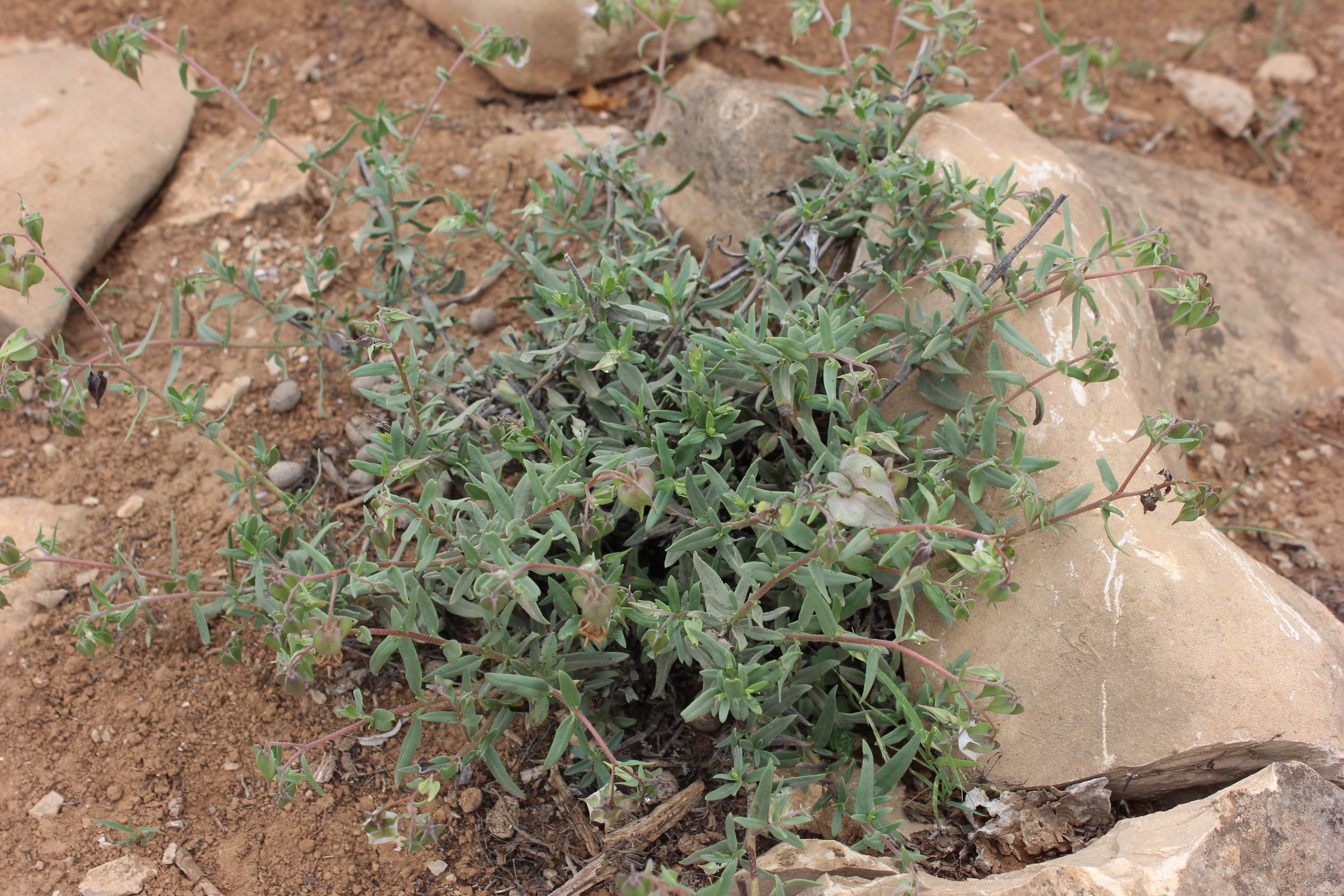
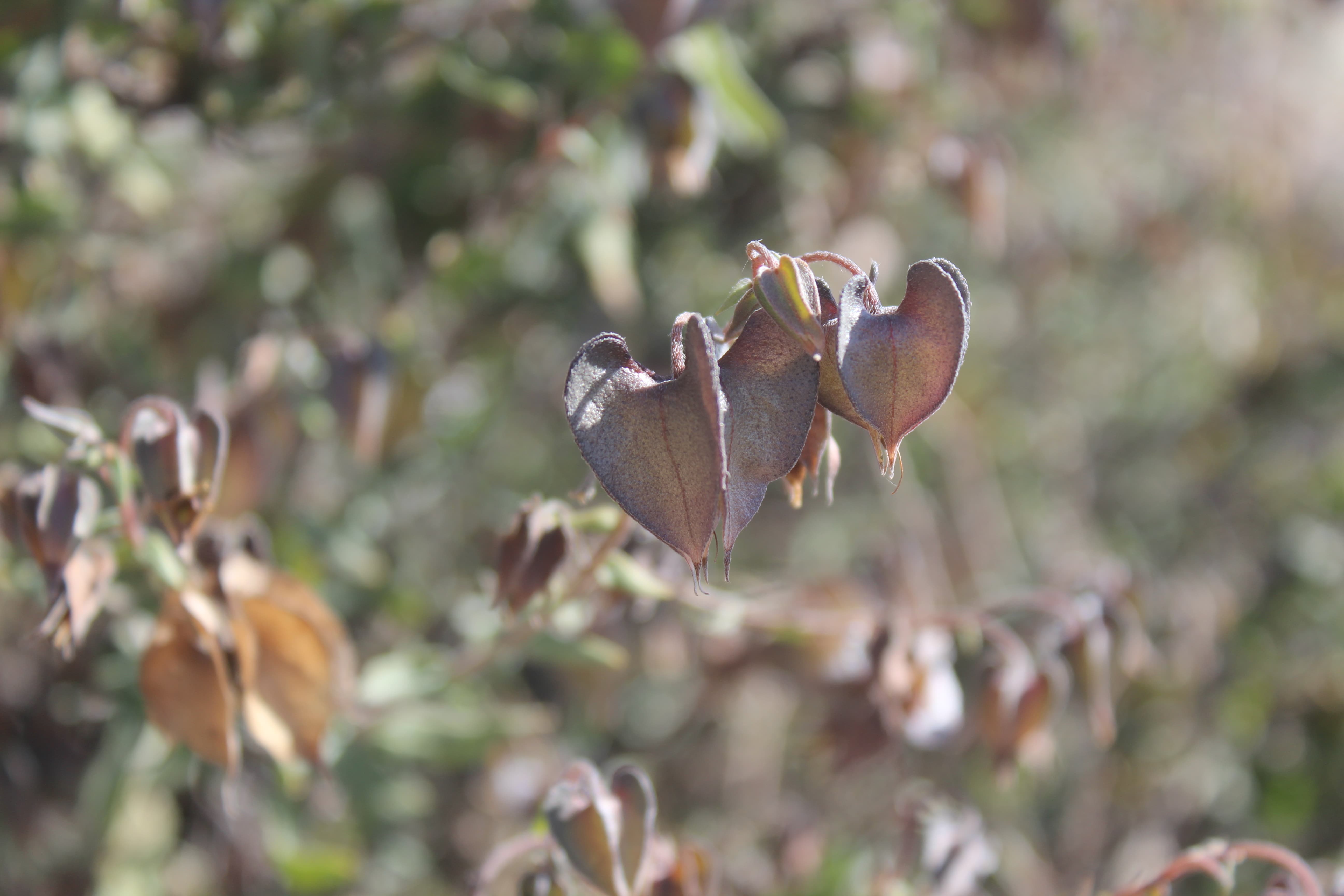
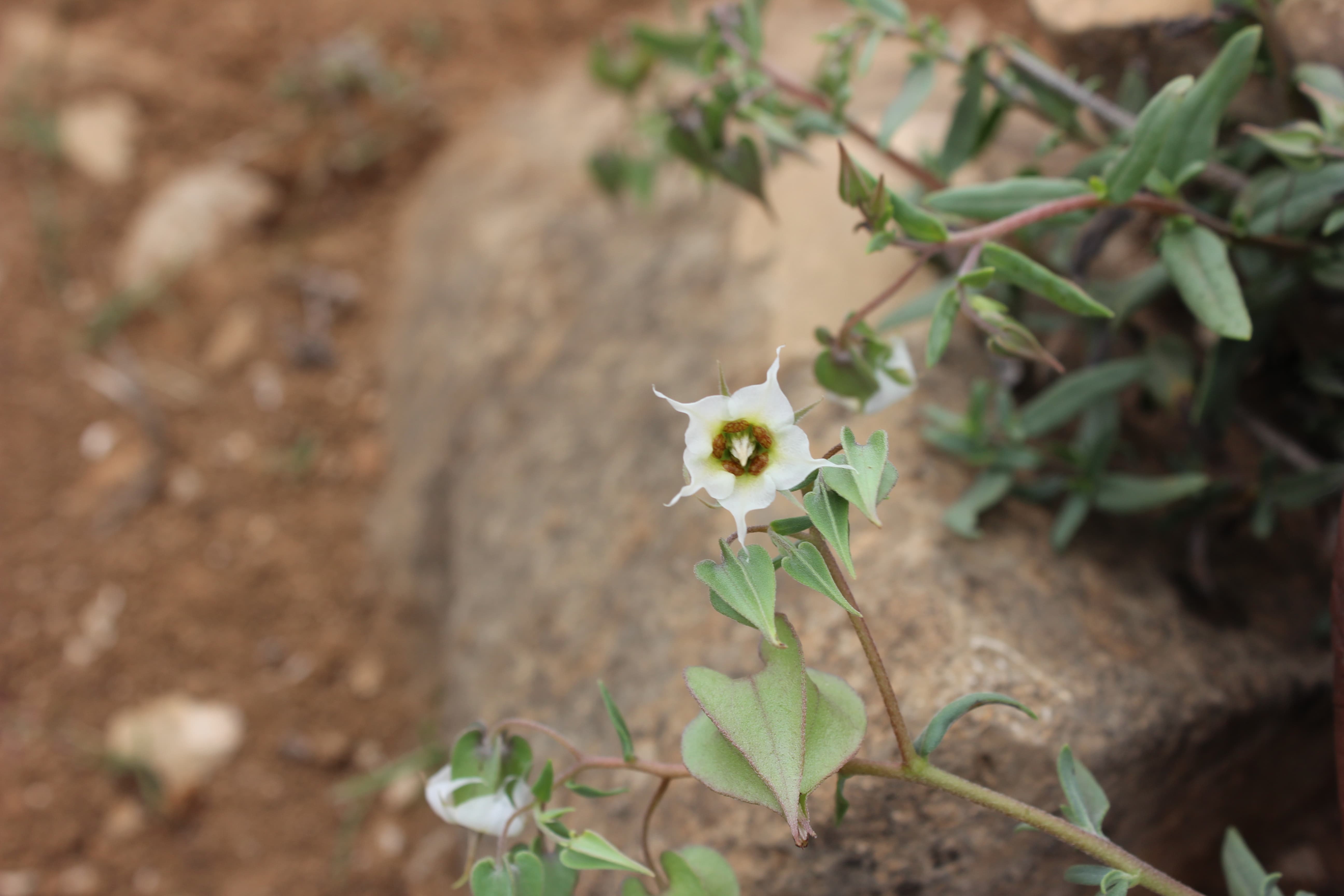
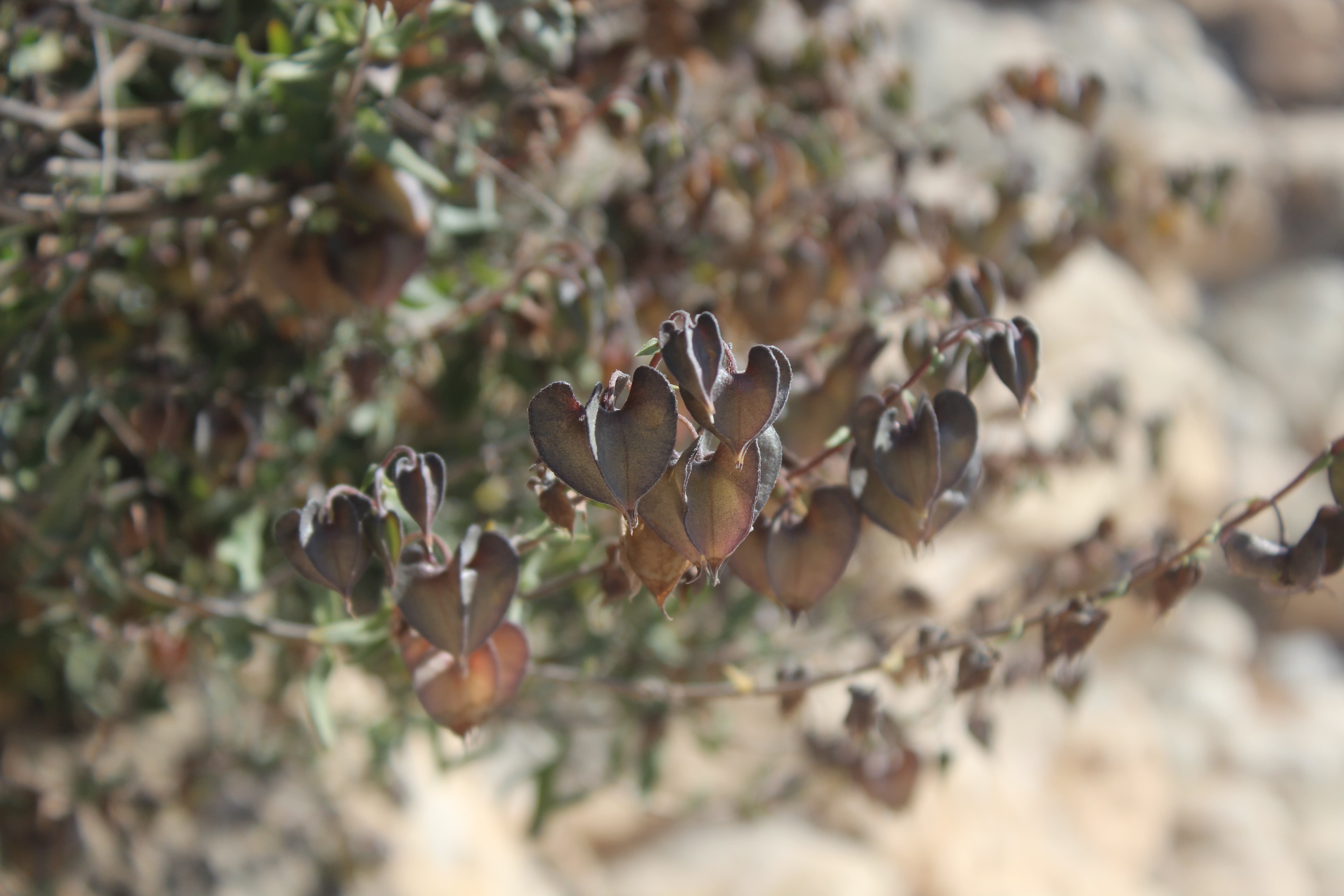
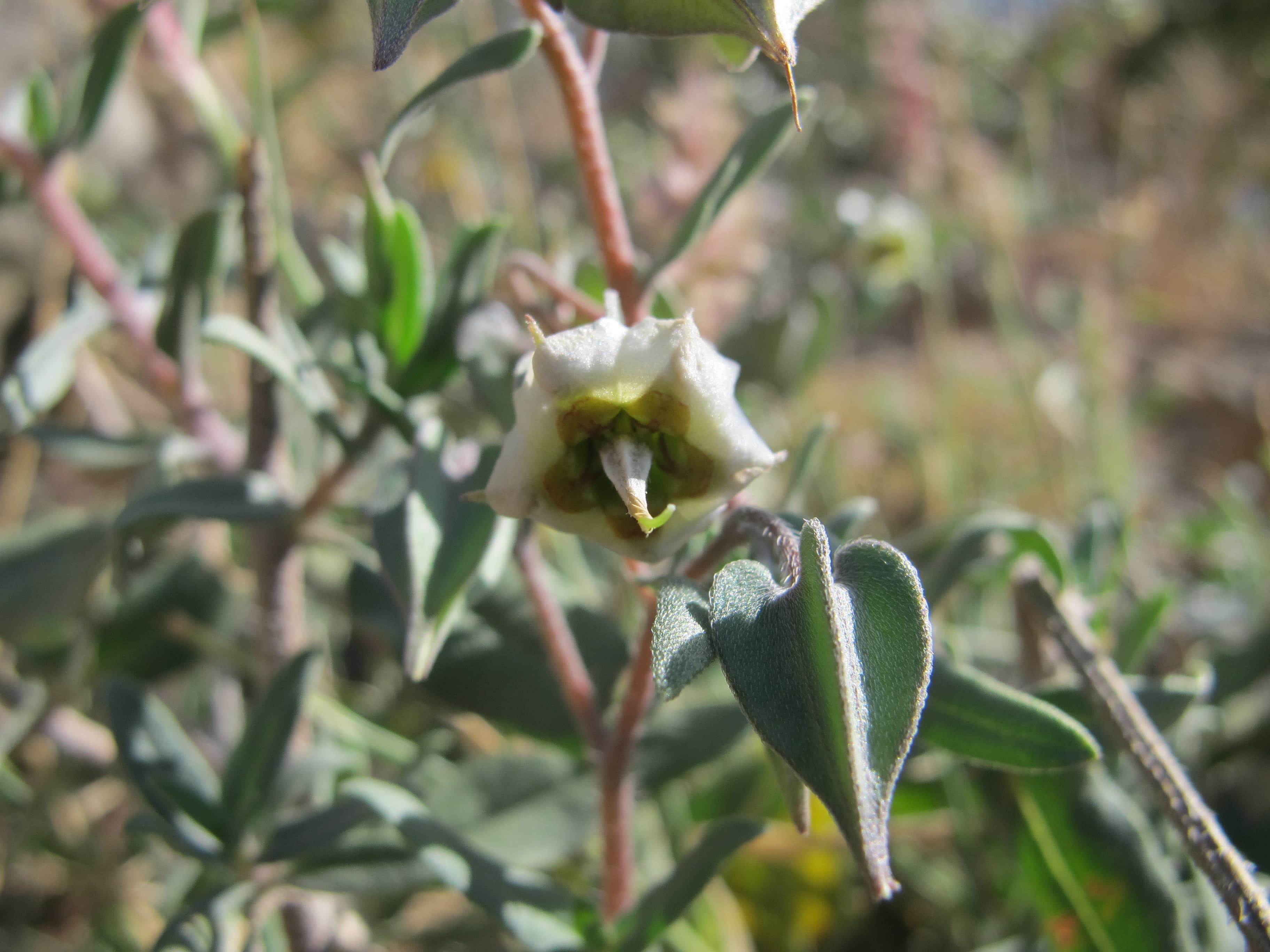
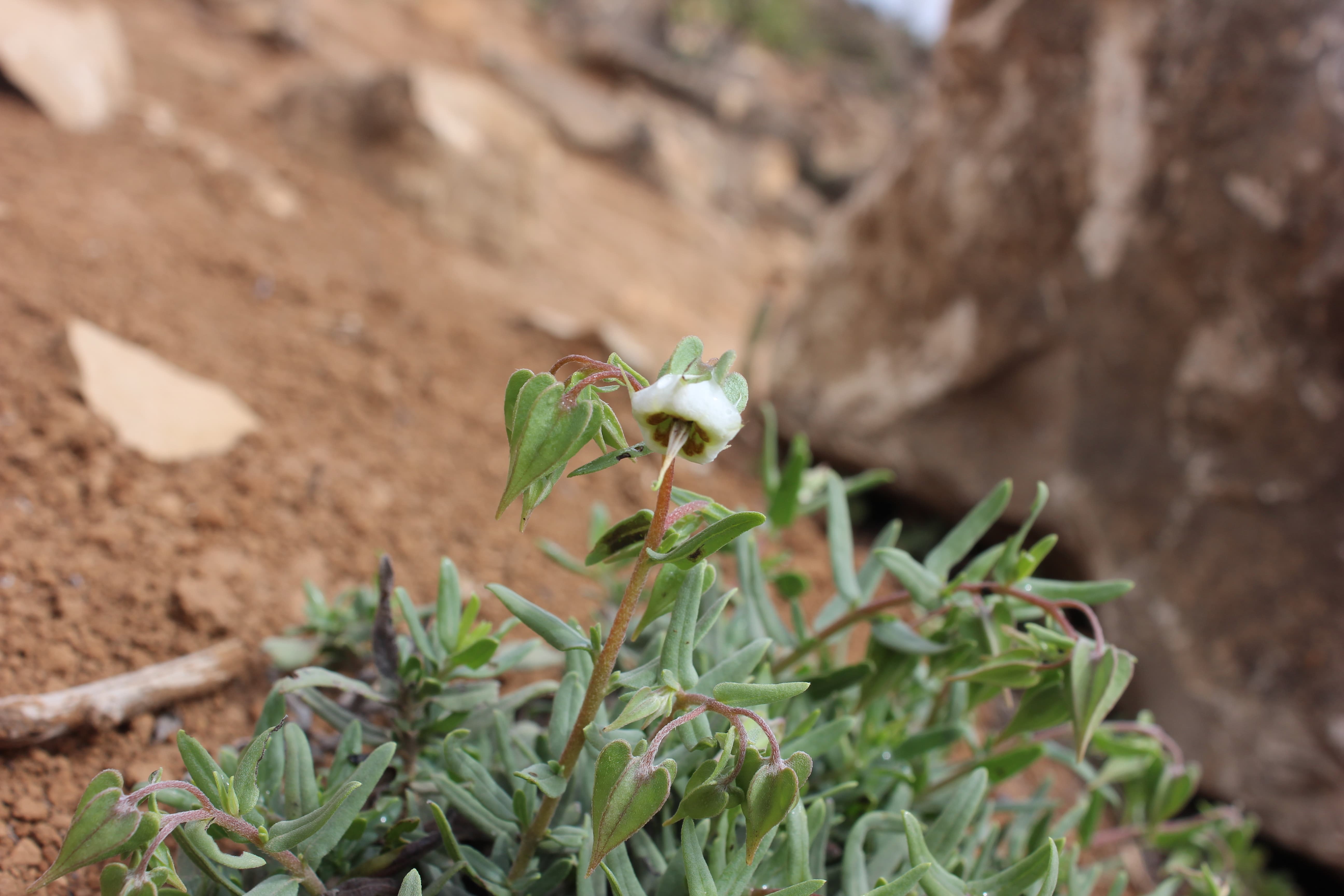
Woody base perennial herb ; up to 50 cm tall , covered in white bristles . Stems branched , erect , greyish-green , covered with white tubercule-based hairs and short hairs ; older stems with a flaking bark . Leaves opposite , 15–65 × 5–25 mm , ovate to oblong-ovate , base rounded to cuneate , apex acute or obtuse , margins entire , adpressed tubercule-based hairy ; petiole up to 5 mm . Inflorescences in lax few-flowered cymes , nodding ; pedicels 10–15 mm . Flowers white with yellow and brown blotches in the centre , face downwards ; calyx ± 10 mm , 5-lobed to base , lobes ovate , acuminate , base deeply cordate , enlarging in fruit up to 30 mm , spreading or adpressed hairy ; corolla white with yellow-brown blotches at throat , tubular , tube 8 mm , 5-lobed above with spreading lobes ; lobes ovate , acuminate ; stamens 5 , attached in the corolla tube , anthers ± 10 mm long ending in narrow hairy appendages , exserted from the corolla and twisted around each other ; style gynobasic .
...

No Data
Not Evaluated (NE)
Frequent
الوصف غير متاح حاليًا
Boraginodes hildebrandtii (Gürke) Kuntze
No data
maintenanceAr.Item1
Not known
In Omani studies: Miller & Morris (1988) wrote that: "Whole plants of T. hildebrandtii were collected and pounded down to a paste which was used to treat cases of mastitis in both women and livestock. The use of a paste made from T. hildebrandtii was said to be of the more successful cures". (Ref. Plants of Dhofar). In addition, Pickering & Patzelt (2008) mentioned that: "Traditionally used to treat mastitis in animals and women". (Ref. Field Guide to the Wild Plants of Oman; 2008).
*Ghazanfar, S. (2015). Flora of the Sultanate of Oman, vol.3: Loganiaceae – Asteraceae. Meise, National Botanic Garden of Belgium (Scripta Botanica Begica, Vol. 25). ISBN 9789082352511 ISSN 0779-2387. *https://en.wikipedia.org *Miller, A., Morris, M. (1988). Plants of Dhofar, the Southern Region of Oman: Traditional, Economic, and Medicinal Uses. Published by Office of the Adviser for Conservation of the Environment, Diwan of Royal Court, Sultanate of Oman; ISBN 10: 0715708082 ISSN 13: 9780715708088. *Pickering, H. Patzelt, A. (2008). Field Guide to the Wild Plants of Oman. Kew publishing, Royal Botanic Garden, Kew. ISBN 9781842461778. *POWO (2023). ""Plants of the World Online. Facilitated by the Royal Botanic Gardens, Kew. Published on the Internet; http://www.plantsoftheworldonline.org
