علم تشكل النبات
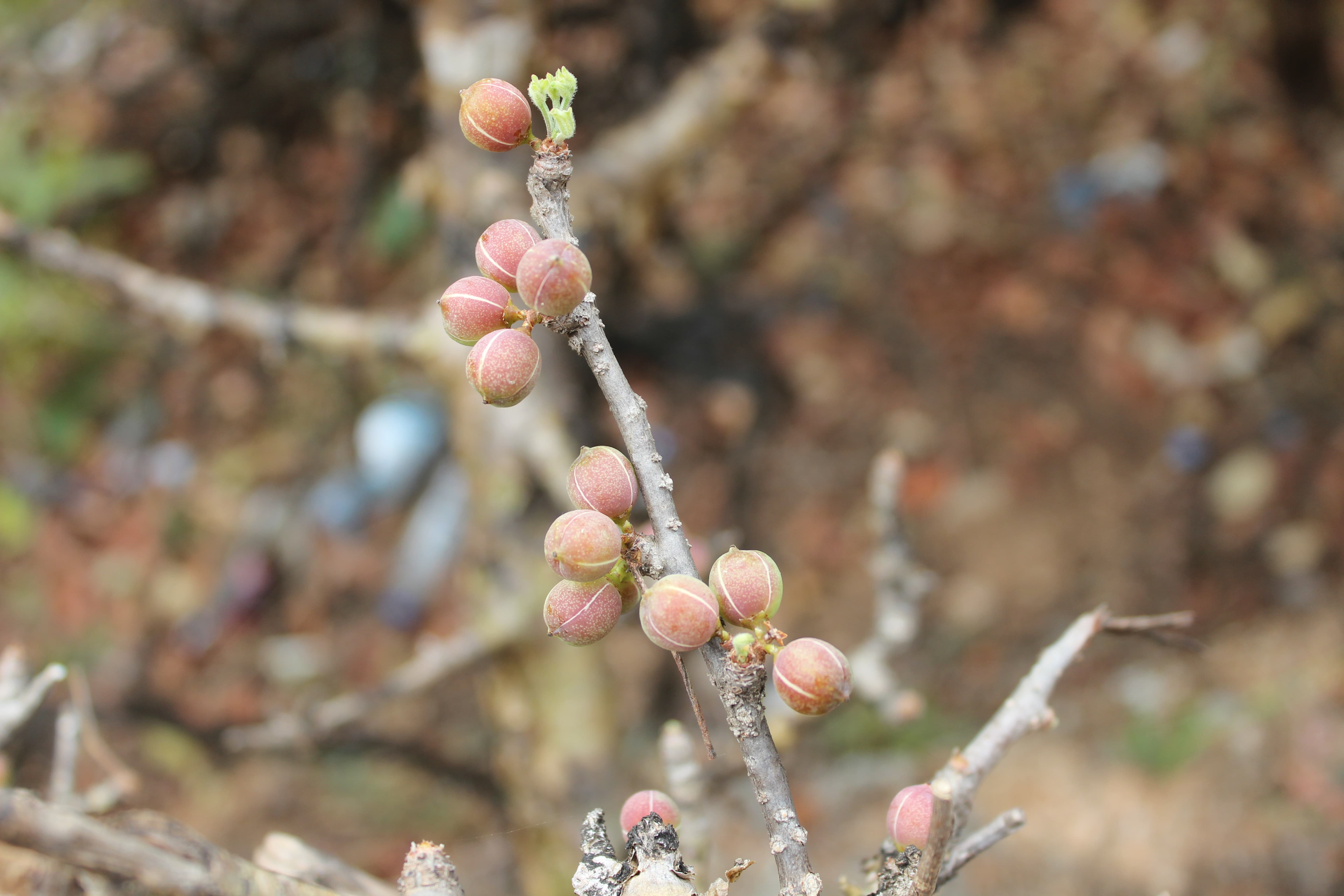
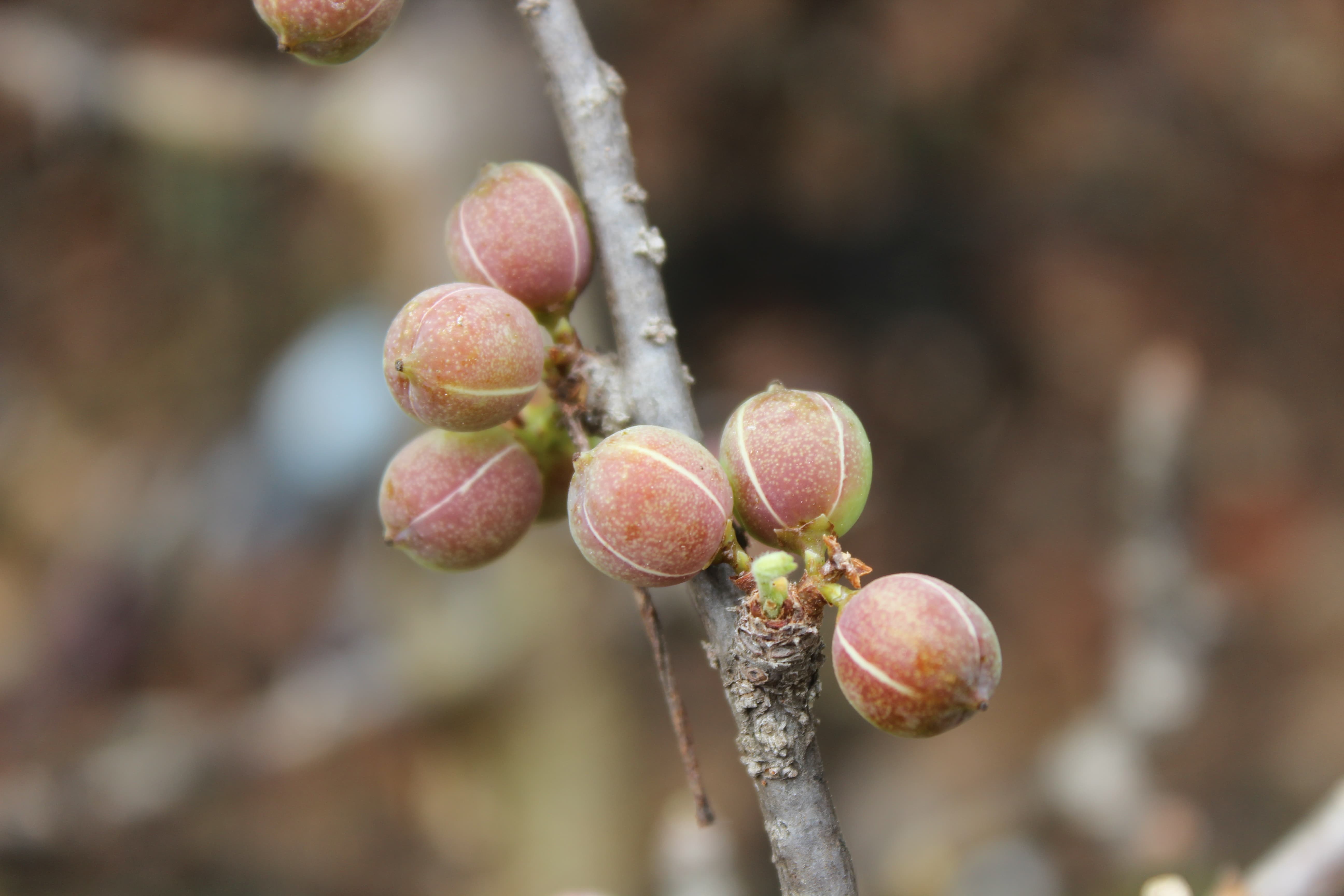
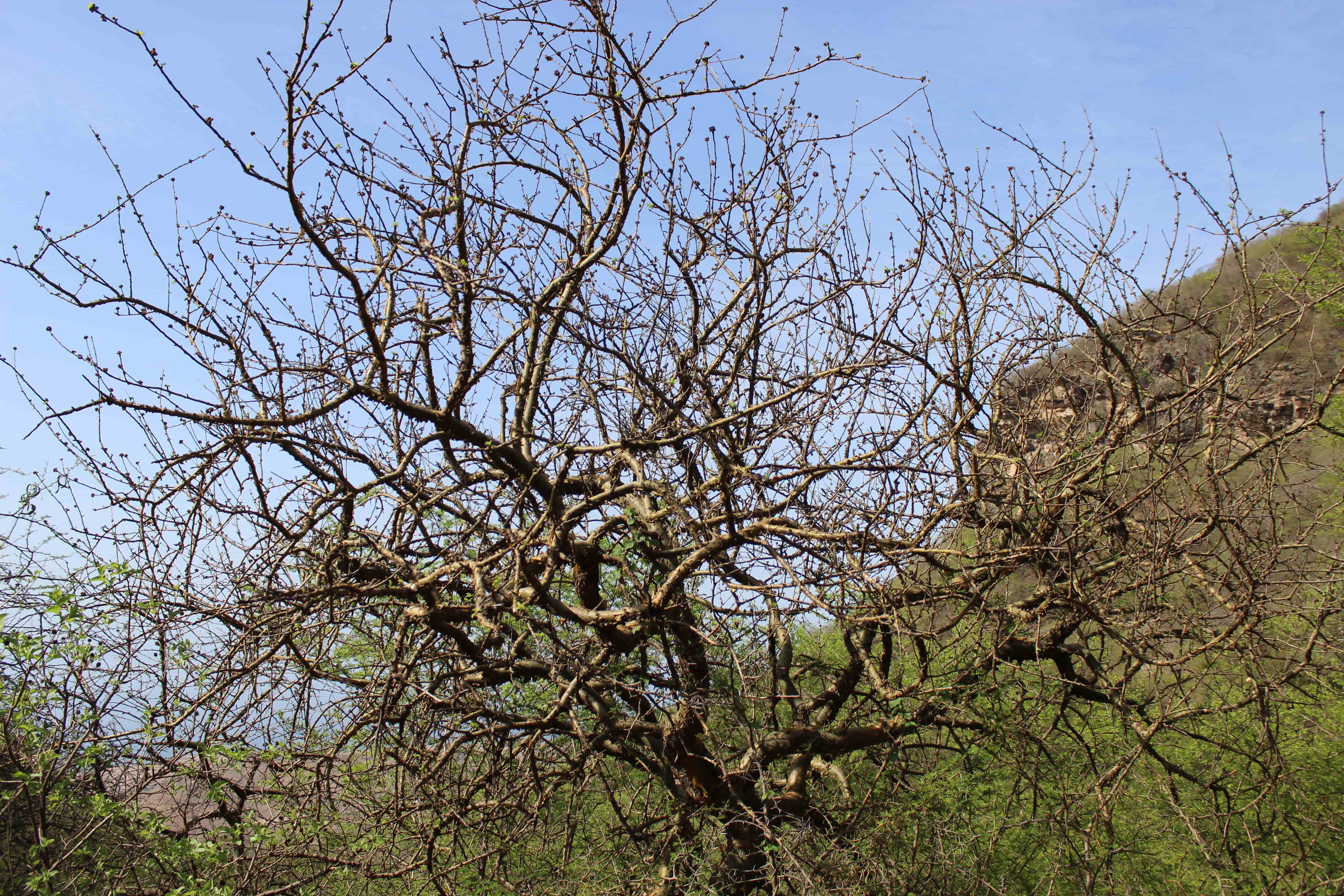
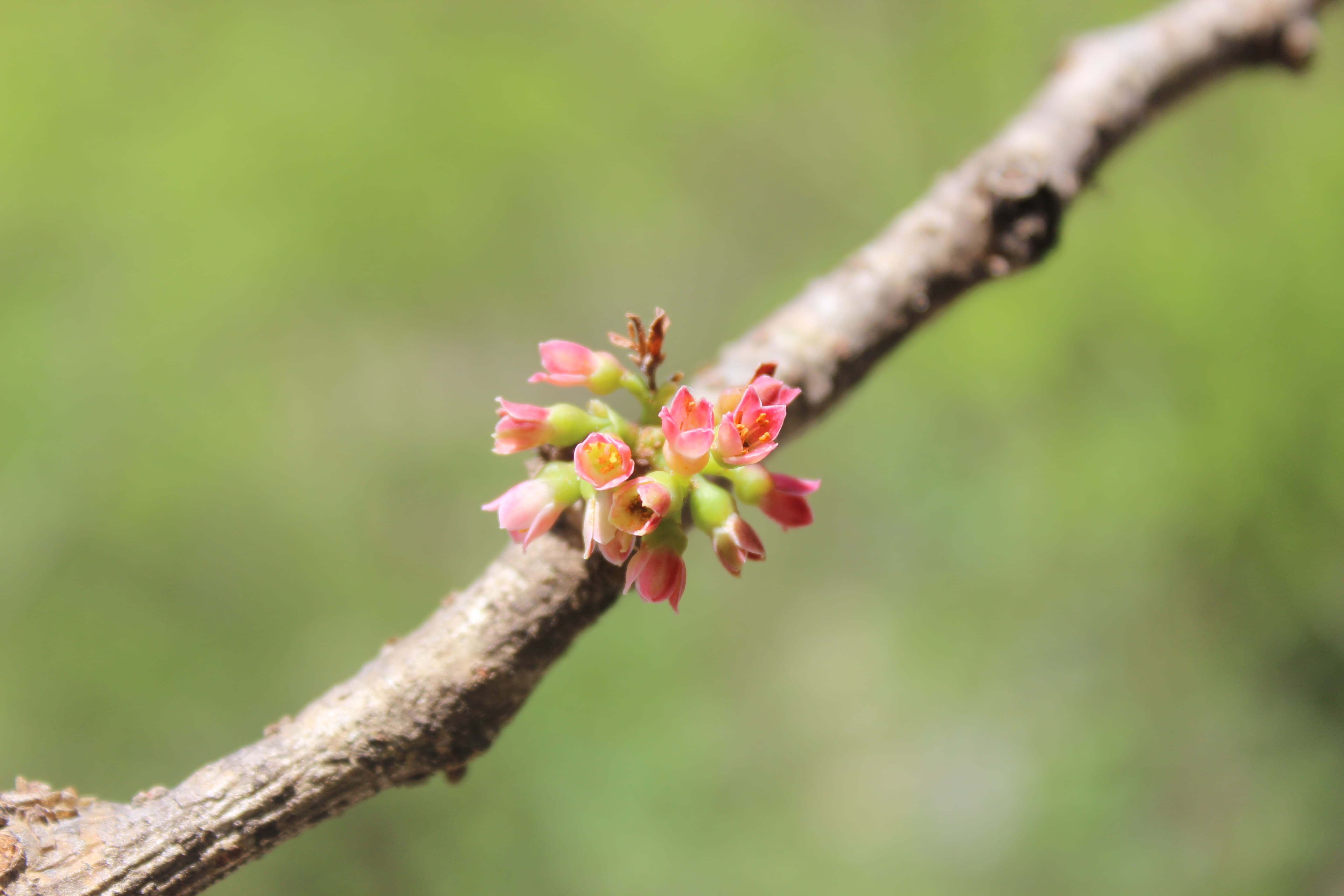
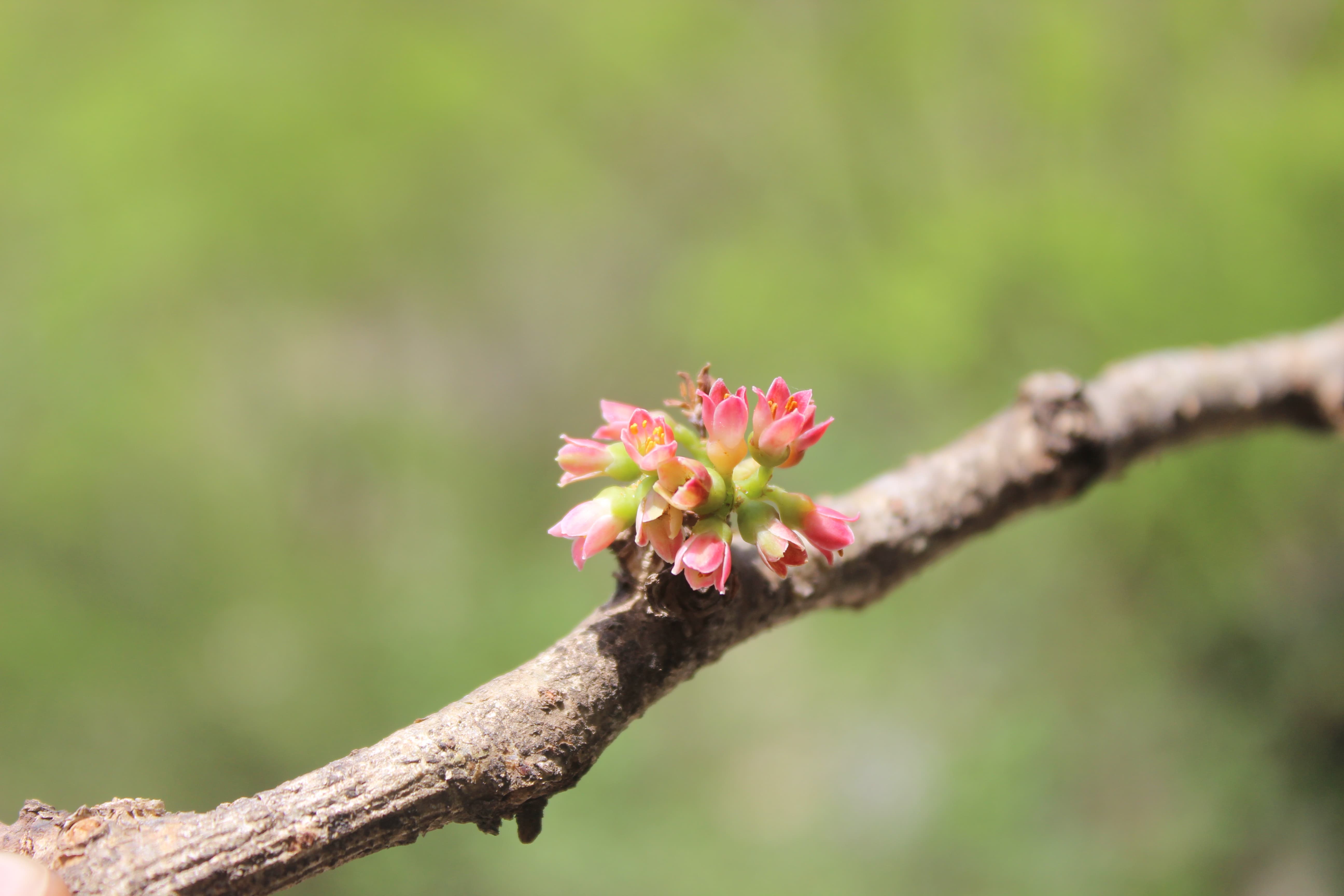
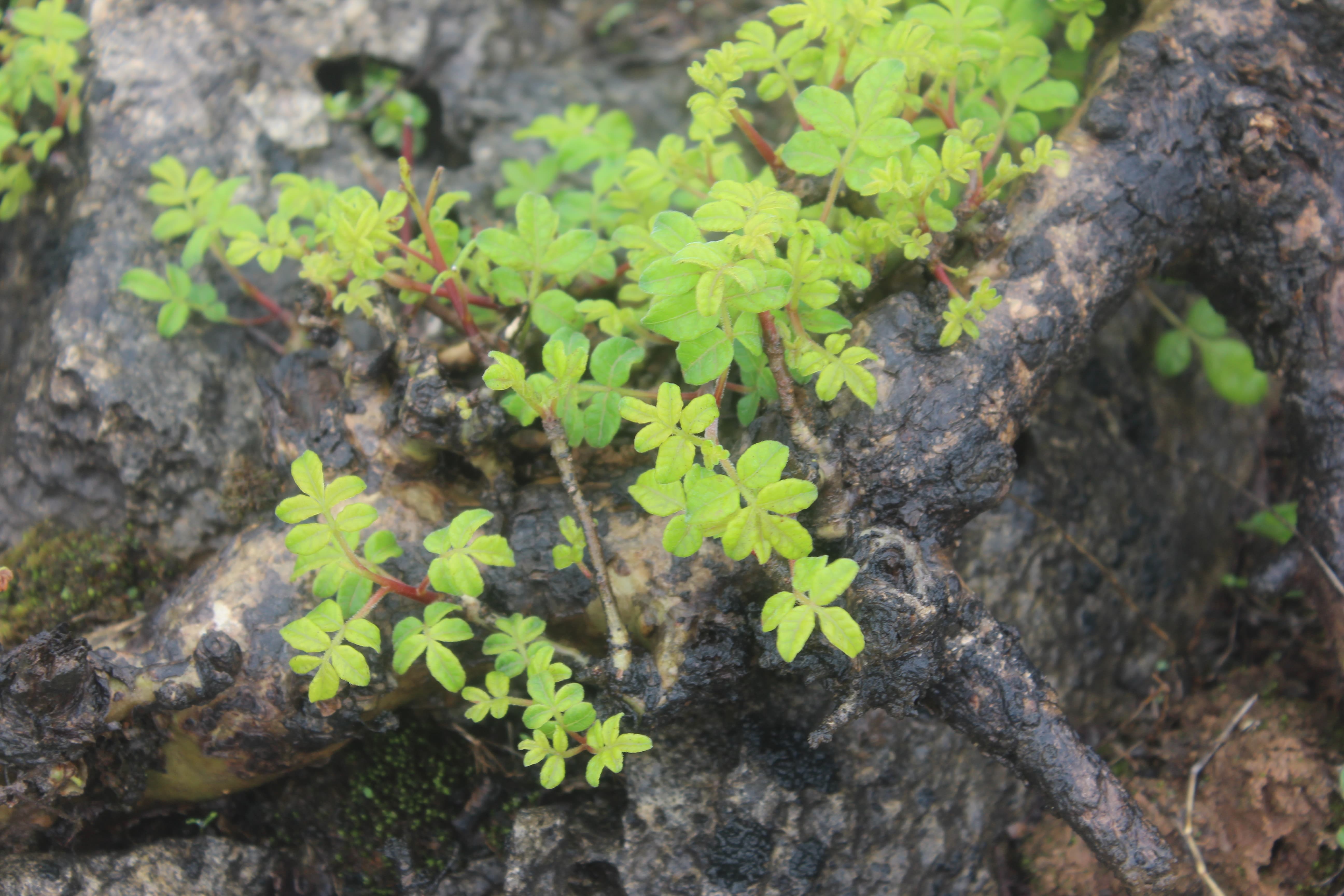
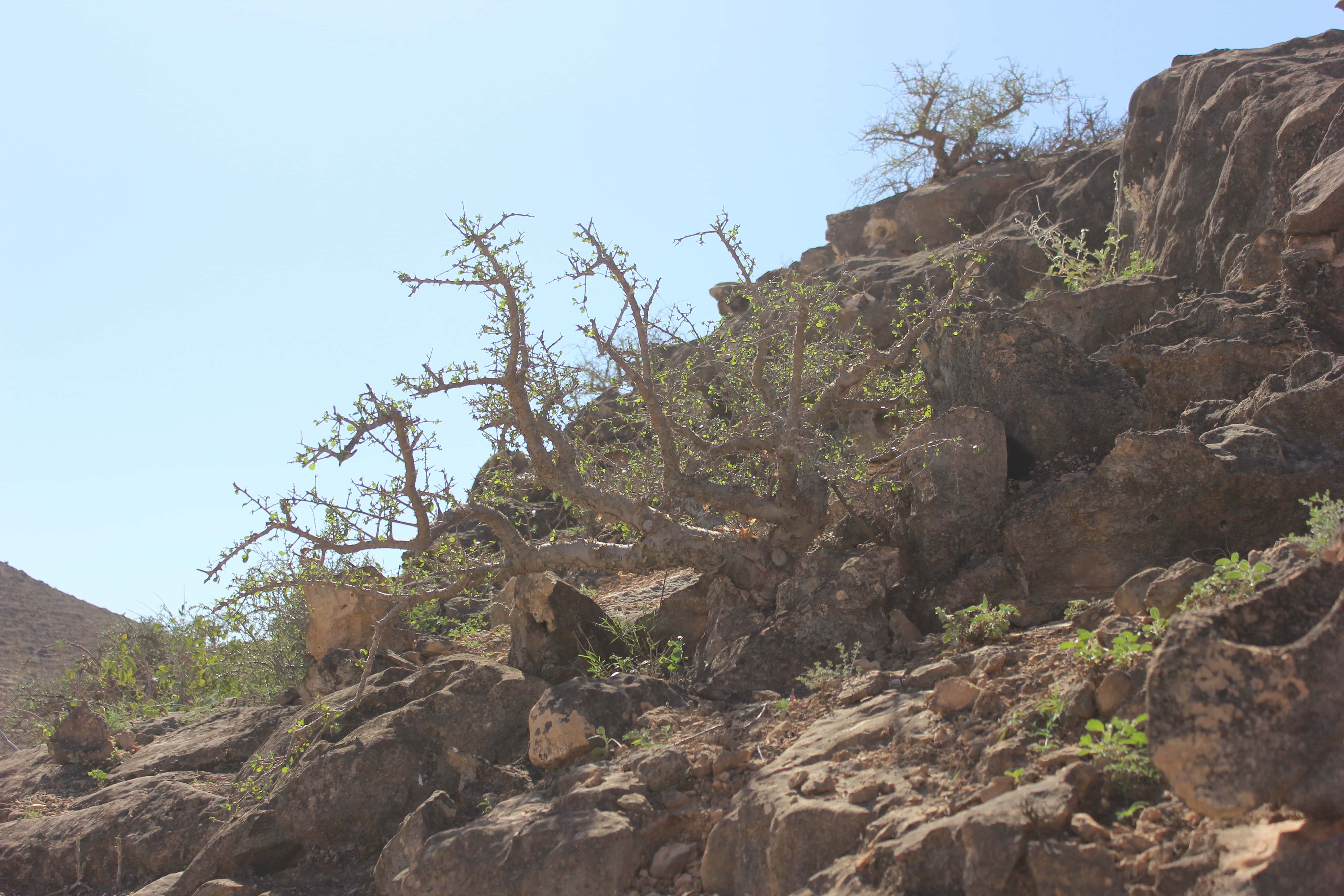
Dioecious large shrub or tree ; up to 4 m tall with peeling bark and fragrant resin when cut . Stems rarely spiny , exuding a very odoriferous resin . Leaves alternate , or in fascicles on short lateral shoots , 3-5(-9)-foliolate ; leaflets 5-40 × 3-35 mm , ovate to broadly oblong-obovate , tips obtuse to retuse , base rounded , margin entire or sinuate , thinly or densely hairy with crisped hairs , nerves prominent beneath . Inflorescences subsessile , in few-flowered clusters , borne on side shoots among the leaves ; pedicel 1 mm . Flowers bright red , small ; male flowers: calyx 1 mm , shallowly 4-lobed ; corolla 3 mm , 4-lobed , lobes oblong ; stamens 8 , equal ; female flowers: calyx and corolla same as in the male flowers ; stamens rudimentary ; ovary with 2 fertile locules . Fruit drupe , 6-8 × 5-6 mm , ovoid , tip acute , almost sessile , greenish-red turns dull red when mature , with four longitudinal white stripes , 1-seeded , splitting into 2-4 valves . Seeds 4–7 . 5 × 3–5 mm ,
...
with a 4-lobed pseudaril , orange , lobes wide and extending almost to the top . (Ref . Flora of Oman ; vol . 2) .

الوضع البيئي الحالي
Near Threatened - Global Assessment
التوزيع الجغرافي والبيئي
الوصف غير متاح حاليًا
المرادفات
Balsamea gileadensis (L.) Oken
Balsamodendrum gileadense (L.) Kunth ex DC.
Amyris gileadensis L.
العناية بالنبات
maintenanceAr.Item1
maintenanceAr.Item3
الاستخدامات
In Omani studies: Miller & Morris (1988) wrote that: "A young sapling could be pulled up, the bark of the root peeled, and then the underbark chewed, rather like sugar cane, for its sweet juice. However, the liquid provided by the root of this species of commiphora is not as sweet or as copious as that of Commiphora habessinica. The fruit [J: ferir] are four-sectioned and edible once fully ripened and a dark red. When ripe, they were regarded as being a great thirst-quencher, and were an important food source at the end of summer when other wild foods were scarce. Indeed, adults remember squabbling over these fruit when, as children, they were out for the day herding goats or young calves, and remember the fruit being collected to be taken back and shared out among the settlements. The leaves provide a good fodder, especially for camels, and are said
...
to increase lactation in the females. The wood nearset to the heartwood was cut in slivers, and stored against future need [J: temdit]. This was a very important medicament, but was also used as a yellow-green dye for the coarse unbleached cotton material imported from abroad, called derg. The dried bark preparation was put to steep in water which was then brought to the boil until a good colour had been achieved. The material was then lowered in, weighted down and left until the required depth of colour had been reached. The dye was not stable, however, and the colour faded at each washing. Women in their constant search for ways in which to lighten and beautify the skin made a cosmetic dye from the underbark which they collected, crushed and left to macerate until a good yellow colour had been obtained. They would paint their skin with this dye, both to lighten the colour of the skin and to soften and cleanse it. The underbark was also added to small quantities of tea to colour it a good dark red colour and to perfume it, or was made into a tisane as a substitute for tea by those who could not afford, or indeed did not like, the imported tea. Medicinally, the dried underbark preparation was very important in the treatment of wounds, as a disinfectant and antiseptic. Large suppurating wounds, or fractures where the bone had pierced the skin, were packed with a powder made from the bark which had been first scorched lightly at the fire and then pounded to a fine powder. A lotion prepared from the ground bark was also used to soothe and treat many irritating skin conditions, such as chapped skin, sores, eczema, impetigo, shingles and other skin eruptions. The bites resulting from attack by wild dogs and wolves [J: ayleb, kises] were treated with this temdit. Sometimes these bites could be extremely deep and nasty, the attackers going for the throat or genitalia of the terrified livestock, but a paste made of the pounded inner bark, mixed with some of the injured animal's urine and boiled until it had thickened to a paste, was often successful in preventing these wounds from becoming infected. The same powdered wood, mixed with water to make a lotion, was used to wash the body of a woman in prolonged labour, and also to wash the newborn baby. This lotion as used too for post-partum cleansing and purification, as well as for washing after the completion of the menstrual cycle. The dead wood of the tree made good charcoal which burns slowly and with a good heat, and was in much demand for cooking and bread baking, as it imparts no unpleasant flavour to the cooked food as do some woods. As building material for animal compounds and human shelters this commiphora species lacked the deterrent nature of the other species, C. habessinica, which is very prickly and can be used to make a quite impenetrable barrier to weather and to undesirable visitors, both human and animal, and indeed was often used to make the 'door' [J: sidad] which the inhabitants of the earlier circular dug-out houses [J: esterit] used to pull after them once they were inside and wanted to shut the house for the night or for privacy. The dried bark of this species [J: kizfot eskof], as well as providing a cosmetic and material dye, was also pounded down to be taken with tobacco snuff, or as a substitute for tobacco. The resin [J: emlox] is dark red, and when fresh could be used as a depilatory. The new growing tips were crushed and rubbed over the body and under the armpits as an effective deodorant. The driolet of sap which oozes from a snapped twig was placed on an itchy insect bite or any part of the skin causing irritation, to soothe and cool the inflamed skin tissue. During the rainy season this remedy is of no little importance, as biting insects proliferate during this period, and clouds of them settle over anyone who ventures into the more thickly wooded parts of the mountains. The crushed twigs were also used to rub [J: fhoz] a leather container which had become offensively smelly or tainted, to disinfect it and make it smell pleasant, to make it more supple and also to prevent the milk, water or buuer that was stored in it from becoming contaminated. Leaves were collected and dried [J: hilet] and made into a tisane, which has a delicious perfume. This tree can, like C. habessinica, be cut and transplanted. To achieve this, a 'female' of the species was sought out, a tree which was growing vigorously at the end of the dry season, and was cut down near the base of the trunk and taken to the new site where it was buried in a prepared hole to await the rains of the monsoon season. In this species too, the cut stump of the parent tree also regrows and resprouts in time. The dead wood was also of great importance: - once termites had eaten the bark, the inner heartwood [J: kerfid] was collected and stored in a safe, dry place. This wood made the most excellent firewood, burning with a great heat, a steady flame, and little smoke. However, it produces a lot of sparks, so care had to be exercised when cooking with it. This firewood catches easily, and stays alight even in bad, wet and misty weather conditions, and was therefore important during the wet season in particular, and caves would be progressively filled with the kerfid firewood gathered over the dry months as a store to last through the rainy season. The bark of the tree burns black when on the fire, whereas that of C. habessinica turns white, so the two woods can be easily distinguished when burning. This tree is one of the first whose leaves dry out once the monsoon mists have rolled away, and because of this was formerly used as the signal to the herders of camels and goats who had moved out of the monsoon zone for the duration of the rains, that the ground was drying out and they could soon return to enjoy the lush vegetation that the rains had produced. (Ref. Plants of Dhofar). In addition, Ghazanfar (2007) mentioned that: "The inner wood (drier and powdered) has been used in traditional medicine for wounds, skin irritations, bites and for post-partum cleansing and purification; dye obtained from the bark has been used as a dye for cloth; the ripe fruit is edible". (Ref. Flora of Oman, vol. 2). Furthermore, Pickering & Patzelt (2008) stated that: "Fruit is edible and said to be a thirst quencher. The heartwood was used as a yellow dye. Dried bark reported to be a disinfectant for large wound". (Ref. Field Guide to the Wild Plants of Oman; 2008).
المراجع
*Ghazanfar, S. (2007). Flora of the Sultanate of Oman, vol.2: Crassulaceae – Apiaceae. Meise, National Botanic Garden of Belgium (Scripta Botanica Begica, Vol. 36). ISBN 9789072619747 ISSN 0779-2387. *https://en.wikipedia.org *http://www.bihrmann.com *Miller, A., Morris, M. (1988). Plants of Dhofar, the Southern Region of Oman: Traditional, Economic, and Medicinal Uses. Published by Office of the Adviser for Conservation of the Environment, Diwan of Royal Court, Sultanate of Oman; ISBN 10: 0715708082 ISSN 13: 9780715708088. *Pickering, H. Patzelt, A. (2008). Field Guide to the Wild Plants of Oman. Kew publishing, Royal Botanic Garden, Kew. ISBN 9781842461778. *POWO (2023). ""Plants of the World Online. Facilitated by the Royal Botanic Gardens, Kew. Published on the Internet; http://www.plantsoftheworldonline.org