
Shrub ; up to 70 cm tall . Stems branched , virgate , spine-tipped , leafless for most of the year . Leaves 4-15x1-2 mm , alternate , simple , linear-obovate to linear-elliptic , glabrous , falling soon . Inflorescences in terminal and axillary racemes , sessile . Flowers dioecious ; sepals 4 , free , unequal , densely stellate-hairy outside ; petals 4 , shortly clawed , unequal , cream ; male flowers: stamens 4 , anthers apiculate , gynoecium absent ; female flowers: ovary supported on a gynophore c . 5mm long , 2-locular . Fruits capsule , subglobose , covered with stiff glands , persisting on the stems throughout the year , l-3(-4)-seeded . Seeds reniform , embedded in an orange pulp . (Ref . Flora of Oman ; vol . 1) .
No Data
Near Endemic (NE) - Near Threatened (NT) - Global Assessment
Frequent
الوصف غير متاح حاليًا
Dhofaria macleishii A.G. Miller
No data
maintenanceAr.Item1
McLeish Caper
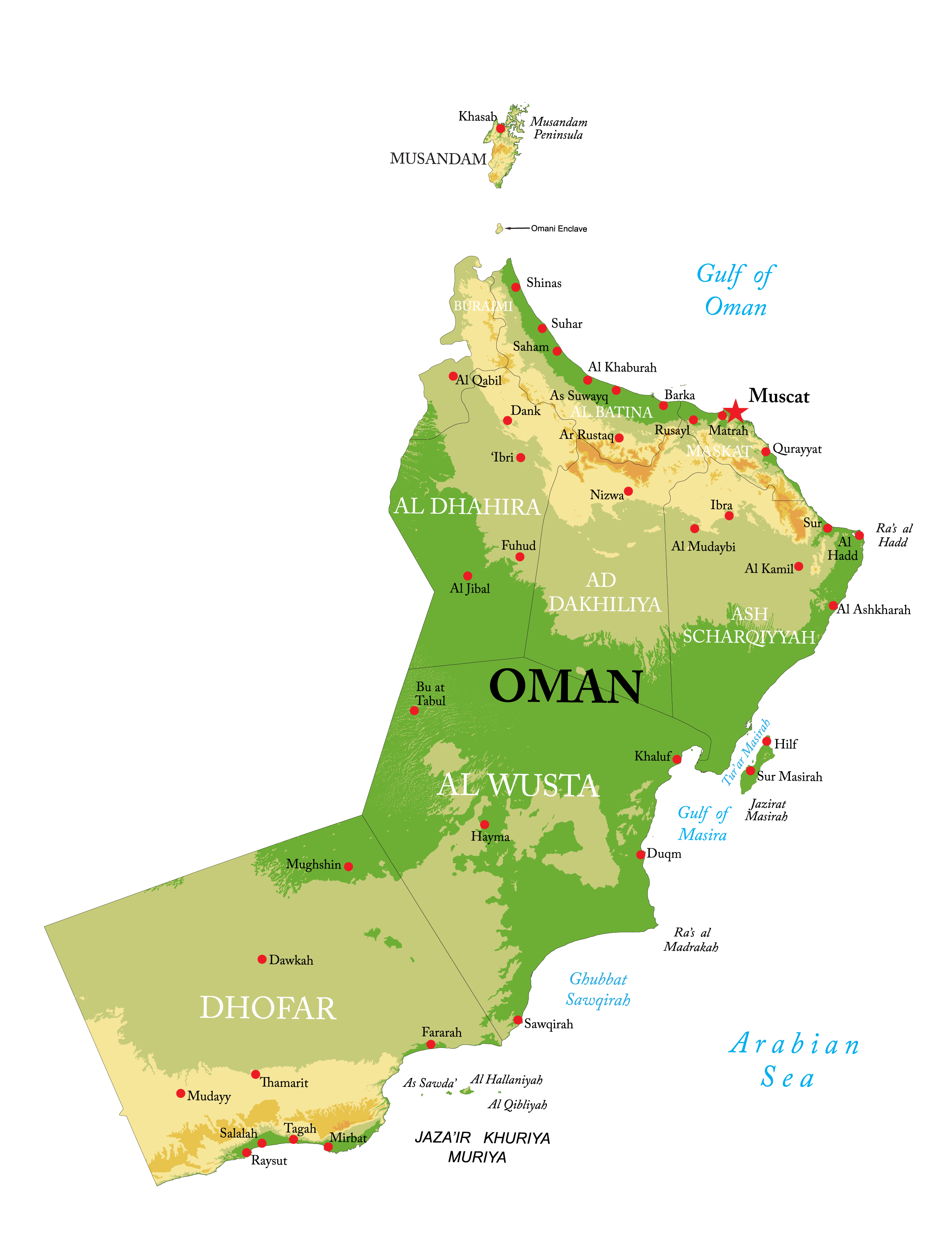
In Omani studies: Miller & Morris (1988) wrote that: "Dhofaria macleishii grows mainly in the northward draining wadis that lead down to the Neged, and has no local value medicinally or as a fooder, though hungry camels nibble at the new growth wich is slightly less hard and spiky than the mature. It is very similar in appearance to Cocculus balfourii, and it seems that the two plants are not differentiated locally. Both species known J: ḥerúm éderī, which means 'plant from far away, unknown plant', the word diri in Jibbali meaning 'stranger' or 'someone from far away'. C. balfourii also occurs in the coastal plains, unlike Dhofaria macleishii, but it too is not a common plant, and its fruit, like those of D. macleishii, are inedible. Although one might have expected the prickly material provided by both species to have made either bush useful as pen-building material, neither apparently
...

*Ghazanfar, S. (2003). Flora of the Sultanate of Oman, vol.1: Piperaceae – Primulaceae. Meise, National Botanic Garden of Belgium (Scripta Botanica Begica, Vol. 25). ISBN 90-72619-55-2 ISSN 0779-2387. *Miller, A., Morris, M. (1988). Plants of Dhofar, the Southern Region of Oman: Traditional, Economic, and Medicinal Uses. Published by Office of the Adviser for Conservation of the Environment, Diwan of Royal Court, Sultanate of Oman; ISBN 10: 0715708082 ISSN 13: 9780715708088. *https://en.wikipedia.org *Gledhill, D. (2008). The Names of Plants. Fourth Edition. Cambridge University Press. ISBN 978-0-521-86645-3 ISSN 978-0-521-68553-5. *Miller, A. (1988). Studies in the flora of Arabia. XXII. Dhofaria, a new genus of Capparaceae from Oman. Notes from the Royal Botanic Garden, Edinburgh 45(1): 55. *Miller, A.G. & Cope, T.A. (1996). Flora of the Arabian Peninsula and Socotra 1: 1-586. Edinburgh university press. ISBN 0748604758. *Patzelt, A. (2015). Oman Plant Red Data Book. Published by Diwan of Royal Court, Sultanate of
...
