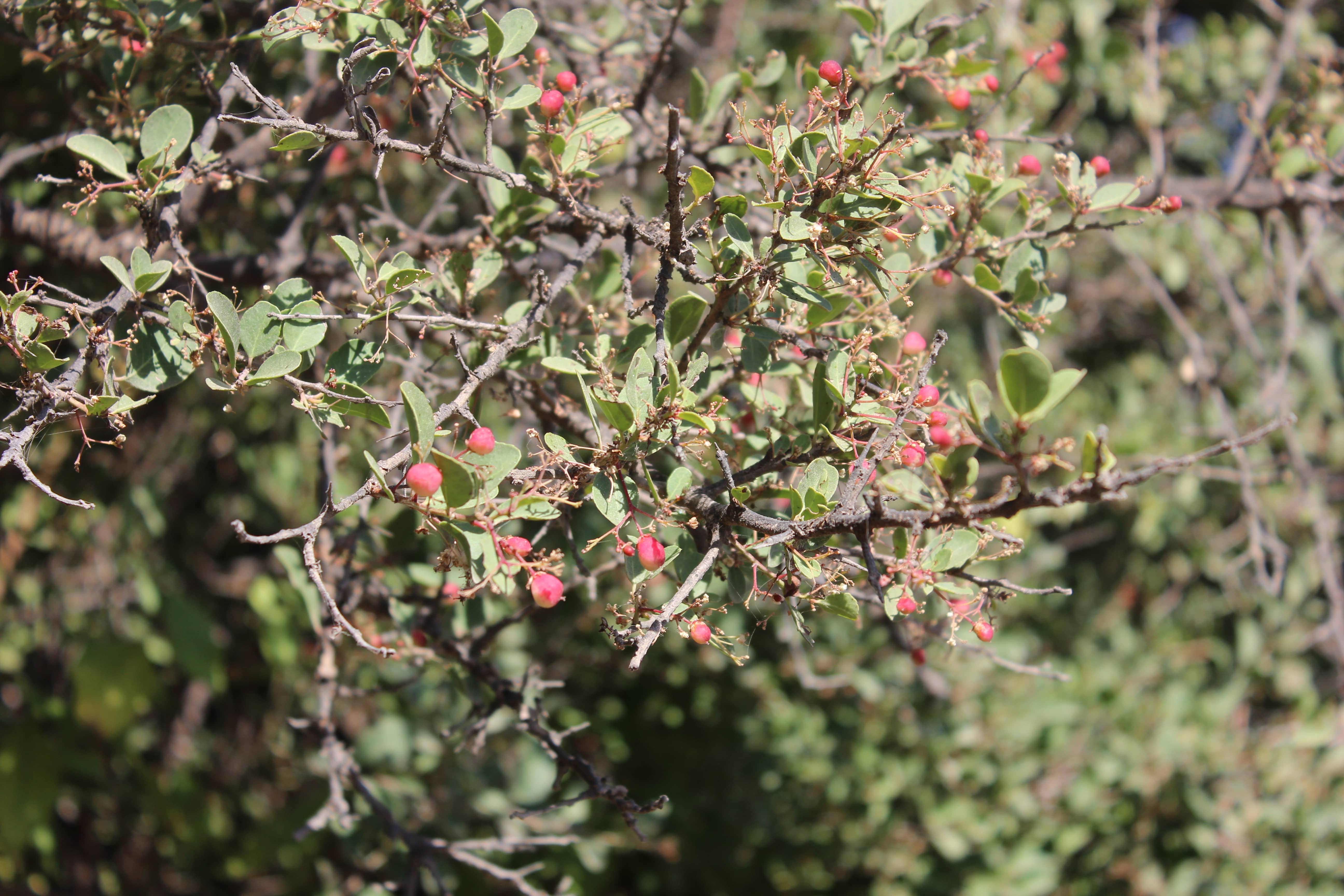
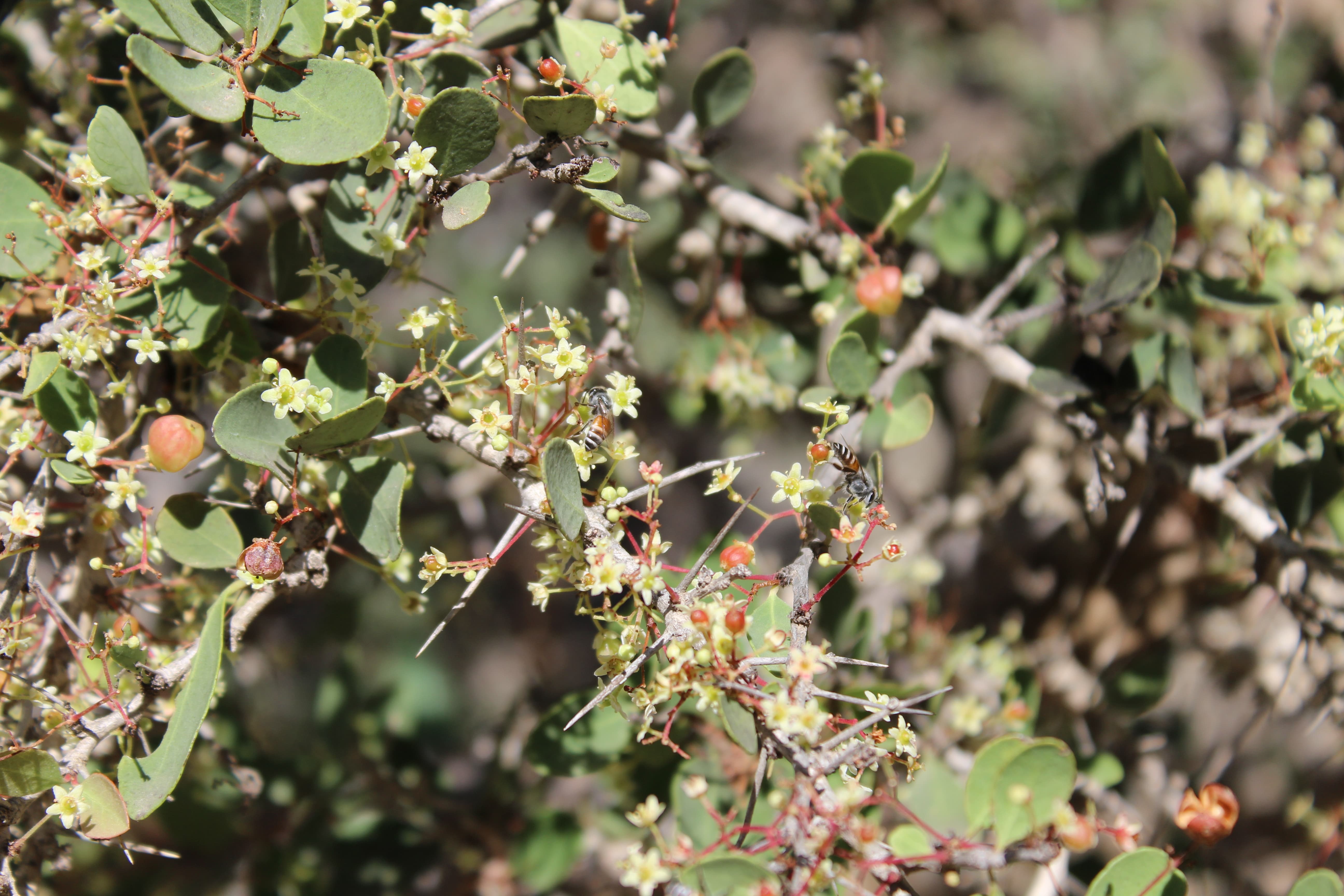
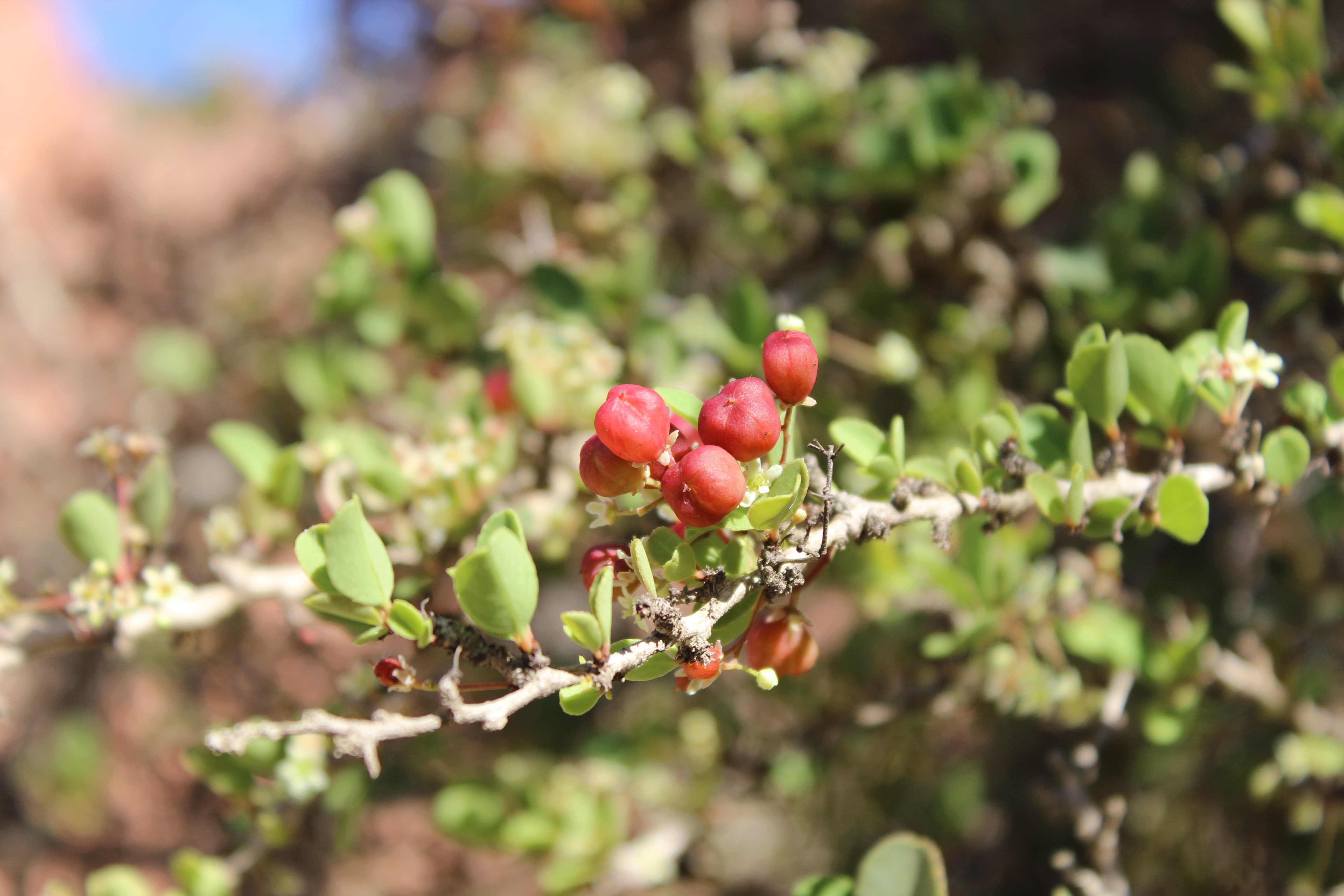
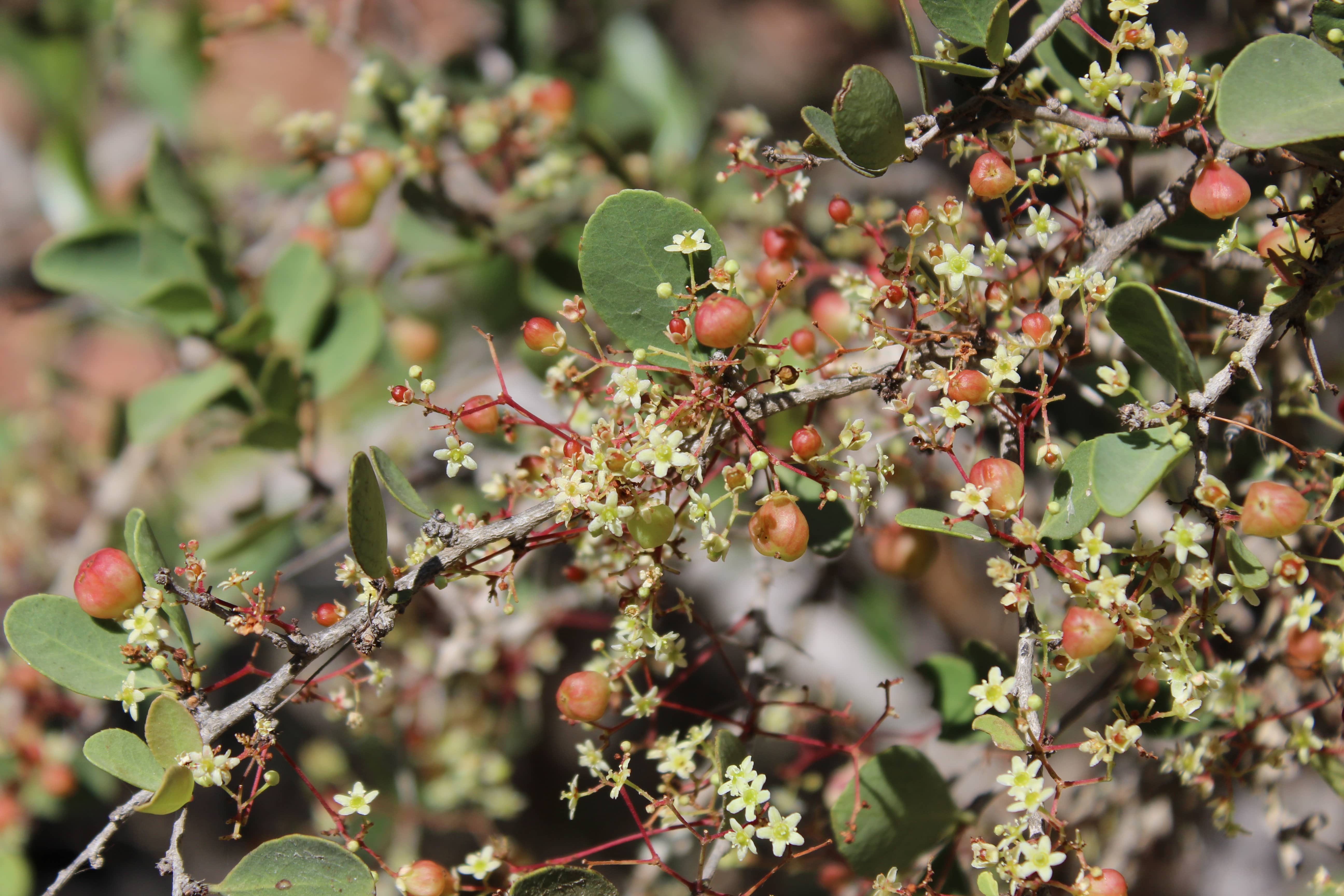
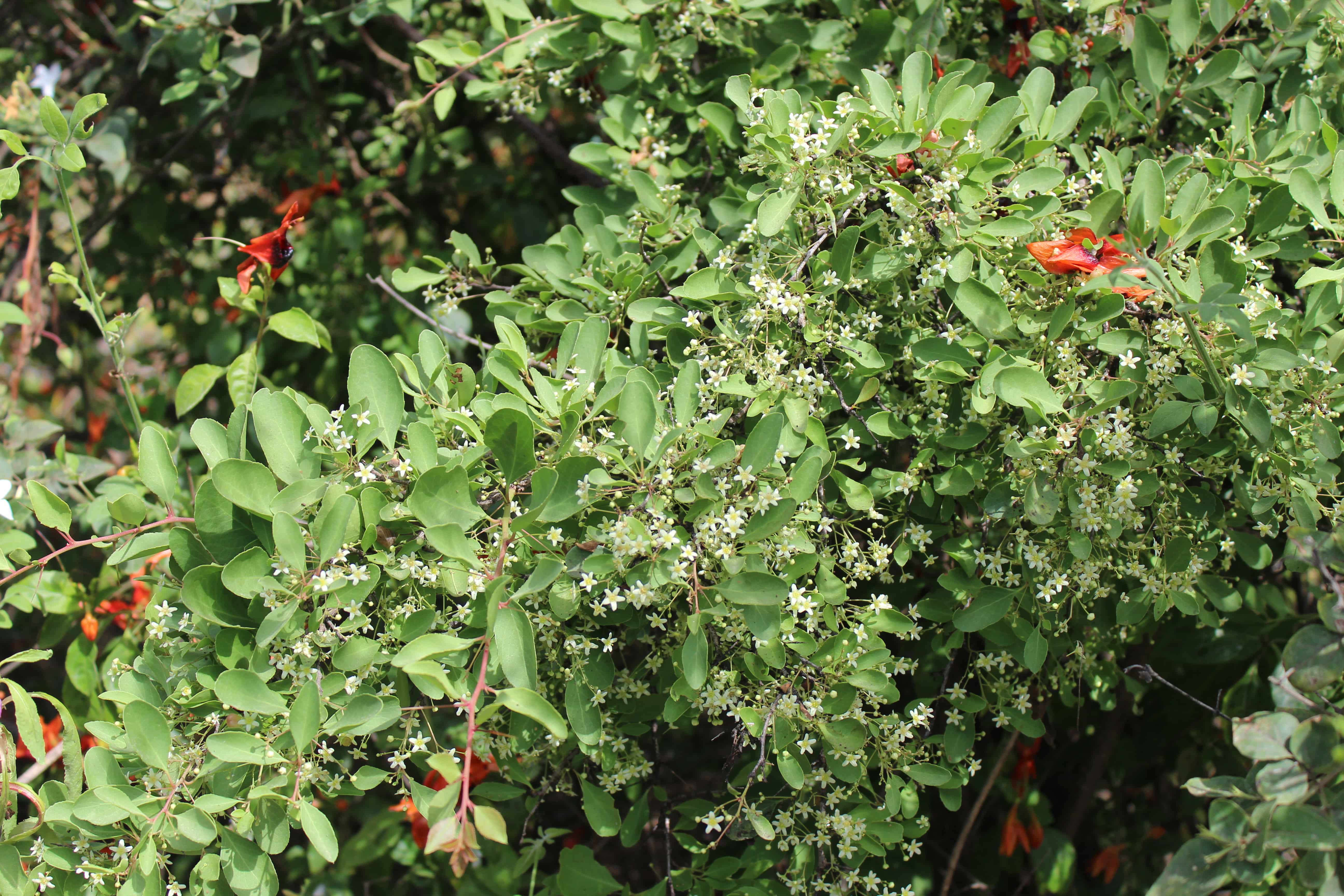
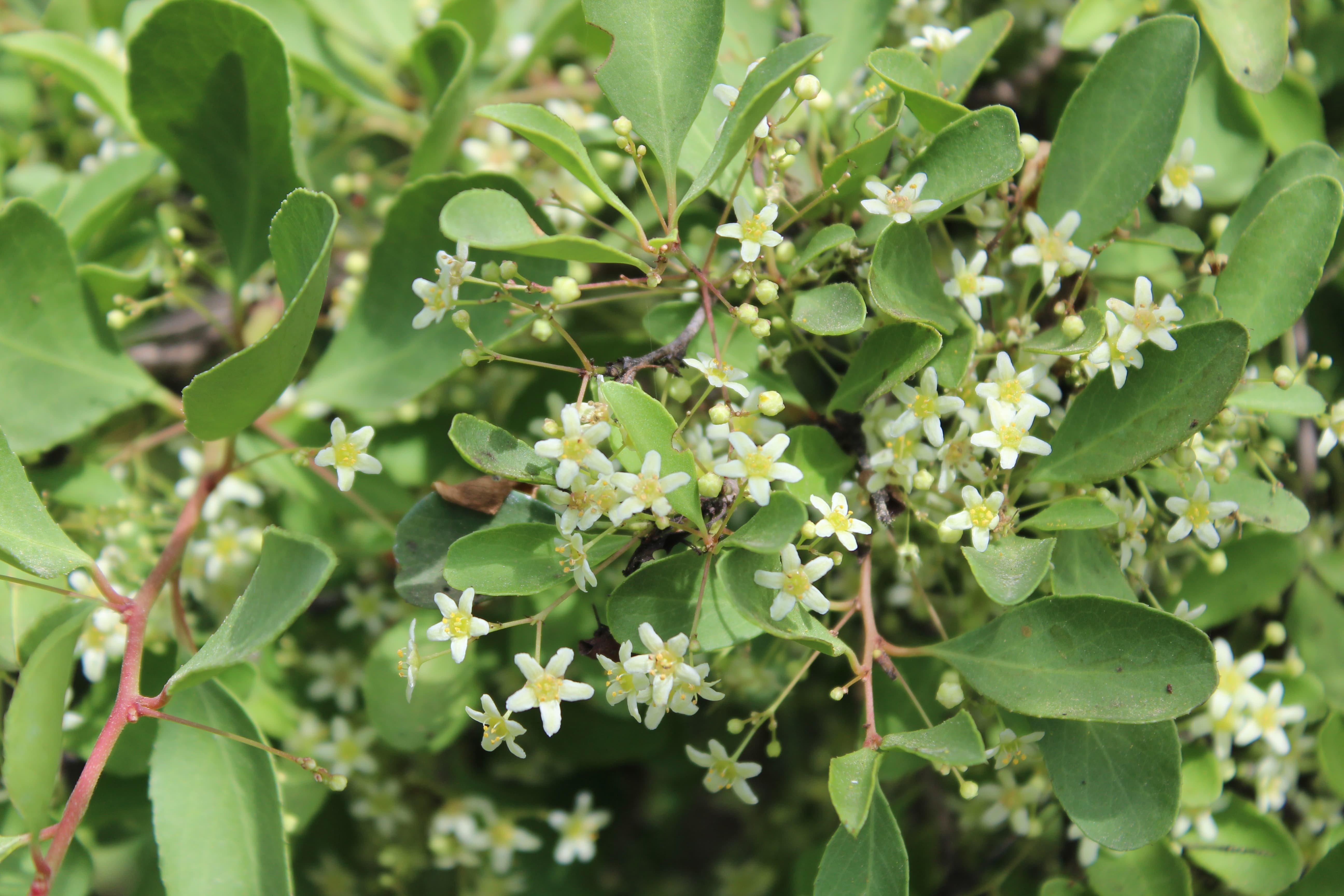
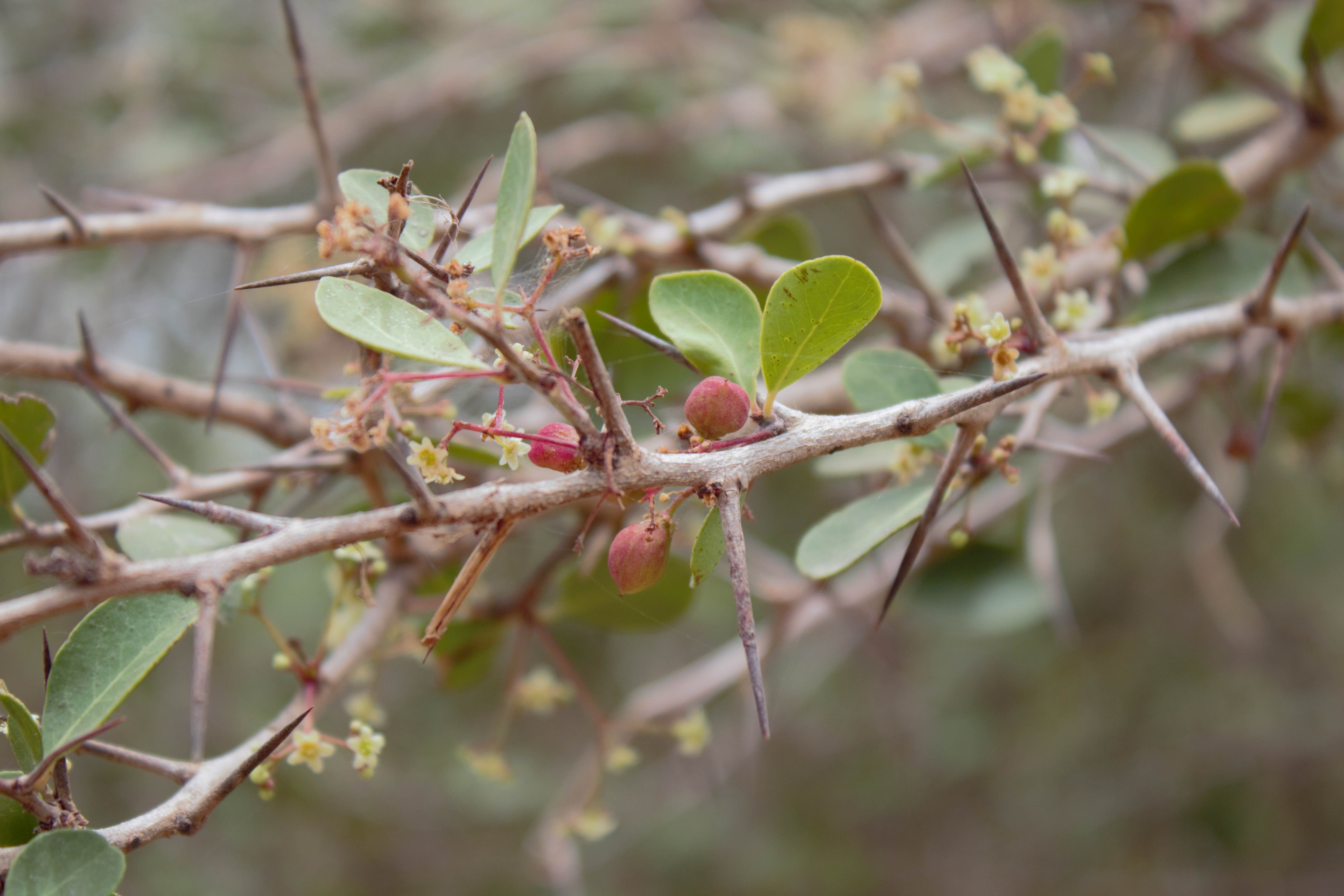
Gymnosporia_dhofarensis_2-06082024 © OBG
Gymnosporia_dhofarensis_3-06082024 © OBG
Gymnosporia_dhofarensis_4-06082024 © OBG
Gymnosporia_dhofarensis_5-06082024 © OBG
Gymnosporia_dhofarensis_6-06082024 © OBG
Gymnosporia_dhofarensis_7-06082024 © OBG
Gymnosporia_dhofarensis-06082024 © OBG
An intricately branched shrub or small tree ; up to 3 m high , with spiny stems , often forming a thicket . Stems and branches grey-brown , spiny , rough ; spines 0 . 5-5 cm . Leaves alternate , or clustered on short shoots , 1-5 x 0 . 5-3 cm , dark green , elliptic to ovate to broadly ovate , apex acute to obtuse to retuse , base cuneate with entire , or very slightly serrated margins , glabrous . Inflorescences in delicate cymes , either solitary or clustered ; pedicel ± 3 mm . Flowers small , ± 1 cm across , white or creamy , mildly fragrant , unisexual or bisexual ; calyx (4-)5 ; corolla free ; stamens (4-)5 , inserted at the base of a disc , in the female flowers reduced to staminodes ; ovary superior , 2-3-locular with 2 ovules in each loculus ; styles simple ; stigma 2-3-branched . Fruit capsule , 6-8 x 8-9 mm , broadly oblong to triangular , red-purple , triangular , glabrous , splitting by (2-)3 valves , 1-3-seeded . Seeds c . 3 . 5 x 3 mm , brown , smooth , with a
...

No Data
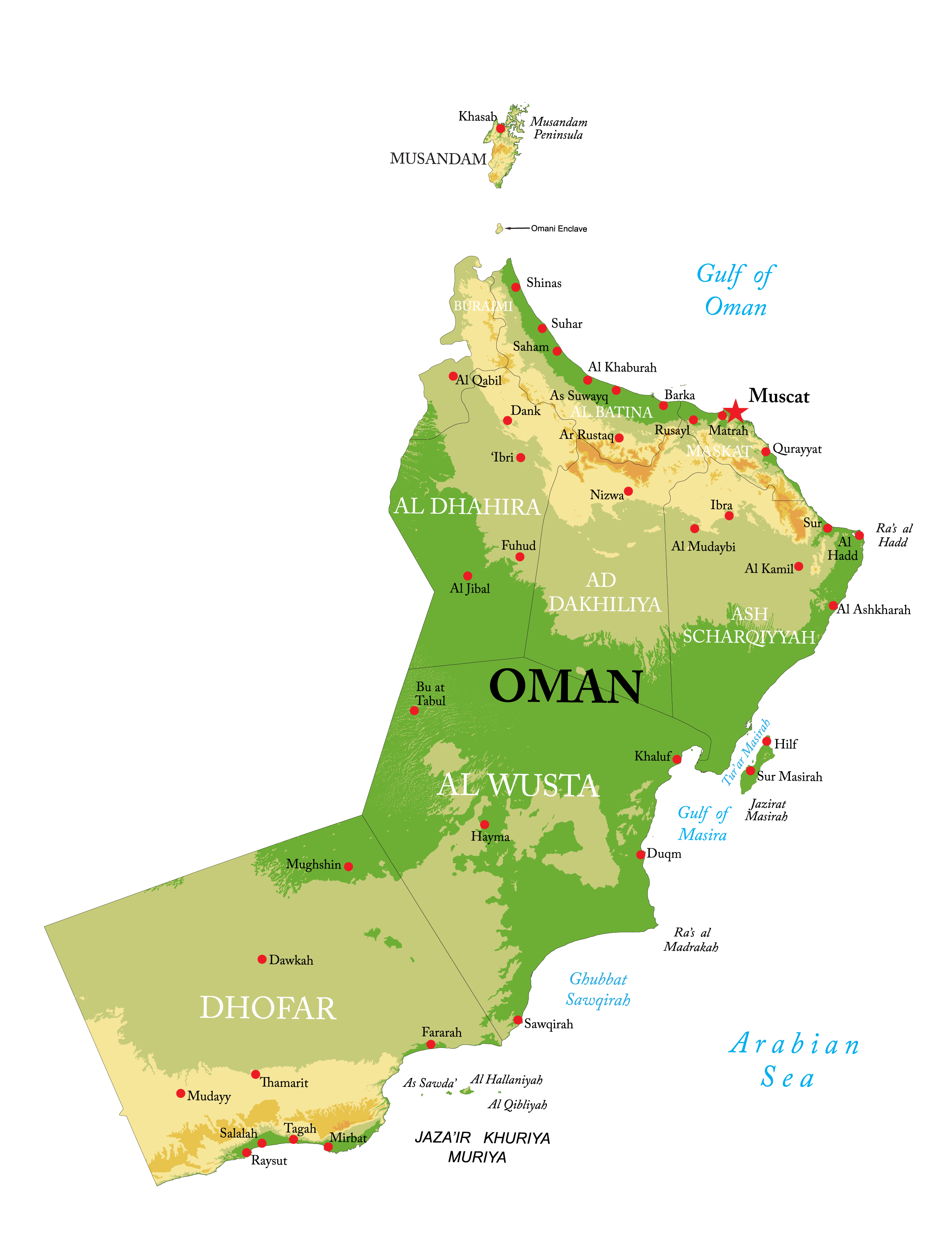
Near Endemic (NE) - Least Concern (LC) - Global Assessment
Common
الوصف غير متاح حاليًا
Maytenus dhofarensis Sebsebe
No data
maintenanceAr.Item1
Dhofari Spikethorn
Dhofari Maytenus
Miller & Morris (1988) wrote that: "Maytenus dhofarensis and M. senegalensis are not differentiated in local expertise, and are both called :" sérbiť, any apparent differences in appearance between the two species being explained by pointing out that different habitats and soils must be expected to produce variations within a species. These shrubs grow widely throughout Dhofar, in the drier areas as well as in the monsoon area, and more rarely on the fringes of the monsoon zone, on the high plateaux which are affected by the wind-borne mists and cloud blown from the sea. Maytenus species are regarded as being a favoured haunt of snakes, so are approached with caution. The thorns are really vicious, being considered to cause more pain and difficulty of extraction than any other thorn in Dhofar. However, the thorns are also an effective deterrent, and this has meant that cut branches were traditionally popular
...
*Ghazanfar, S. (2007). Flora of the Sultanate of Oman, vol.2: Crassulaceae – Apiaceae. Meise, National Botanic Garden of Belgium (Scripta Botanica Begica, Vol. 36). ISBN 9789072619747 ISSN 0779-2387. *https://en.wikipedia.org *http://pza.sanbi.org *Miller, A., Morris, M. (1988). Plants of Dhofar, the Southern Region of Oman: Traditional, Economic, and Medicinal Uses. Published by Office of the Adviser for Conservation of the Environment, Diwan of Royal Court, Sultanate of Oman; ISBN 10: 0715708082 ISSN 13: 9780715708088. *Patzelt, A. (2015). Oman Plant Red Data Book. Published by Diwan of Royal Court, Sultanate of Oman. Oman Botanic Garden Publication No. 1. ISBN 978-99969-50-10-0. *POWO (2022). ""Plants of the World Online. Facilitated by the Royal Botanic Gardens, Kew. Published on the Internet; http://www.plantsoftheworldonline.org
