علم تشكل النبات
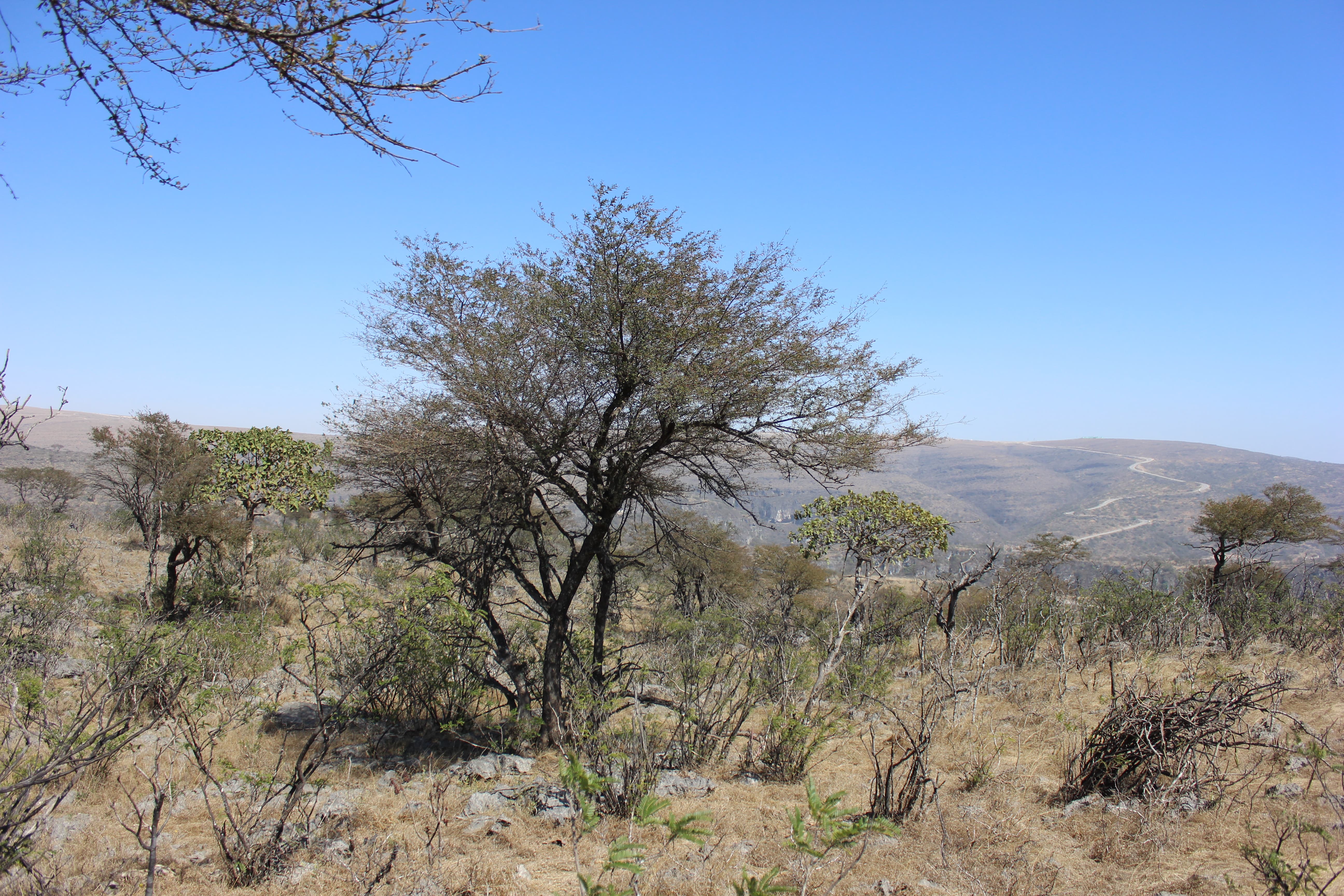
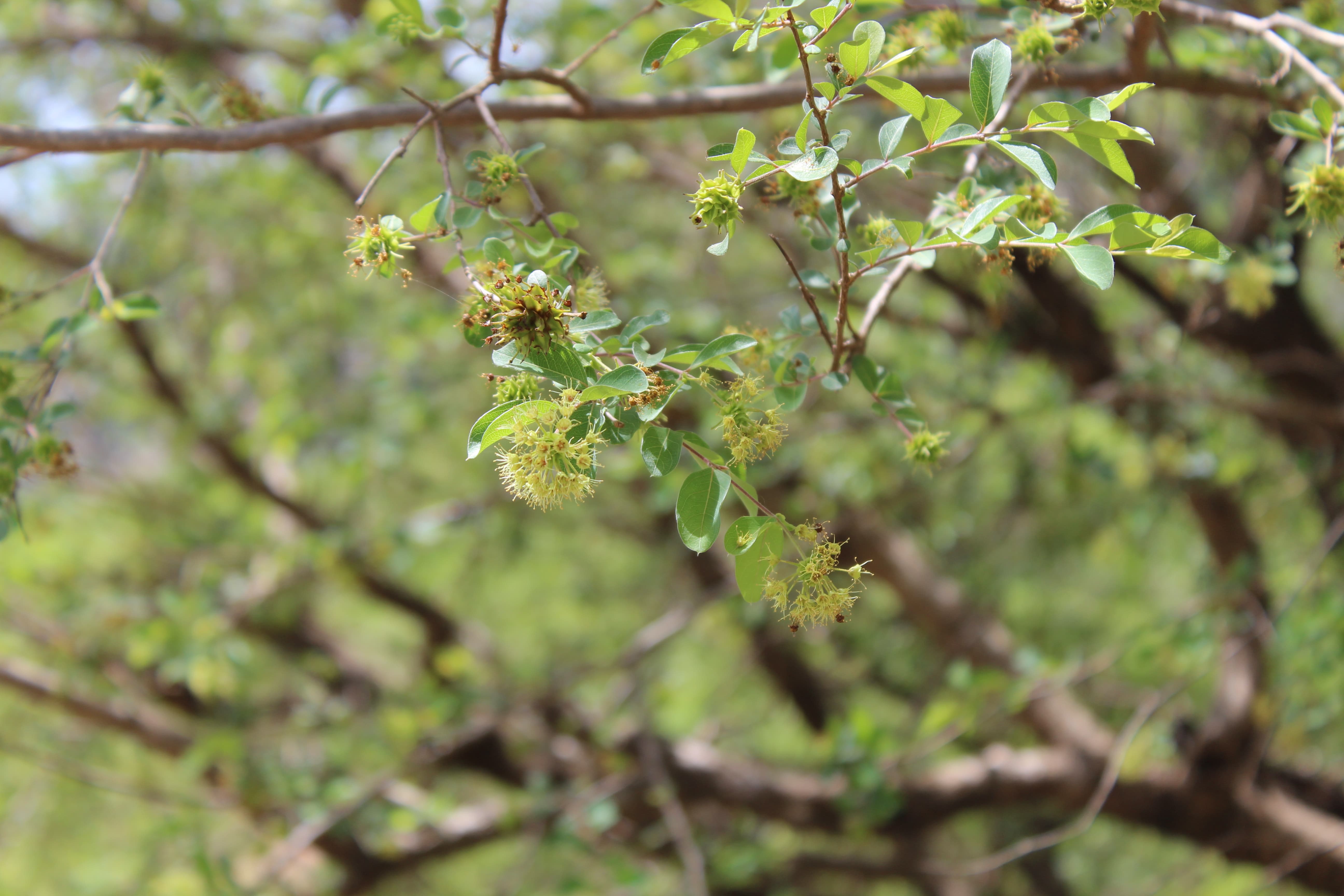
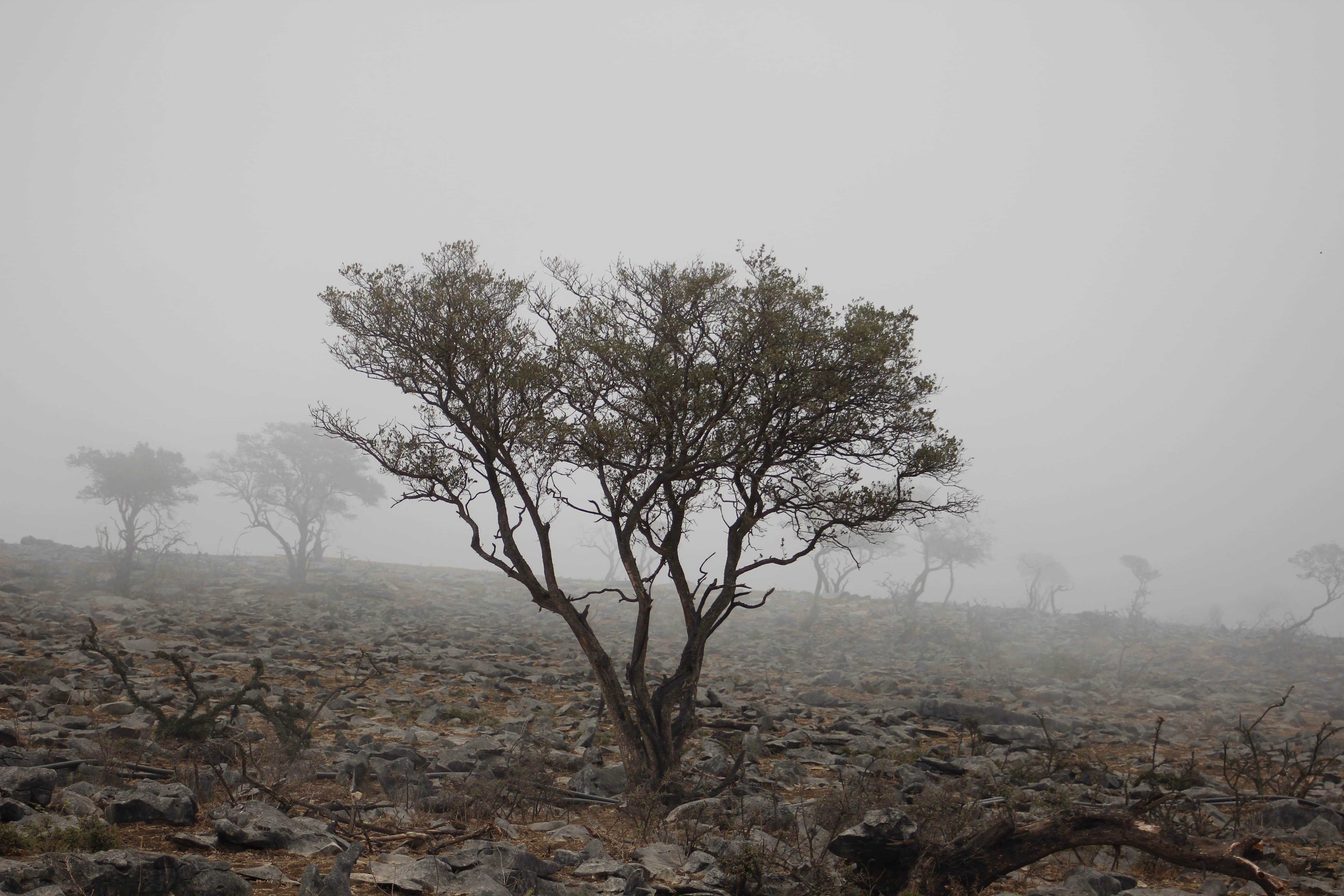
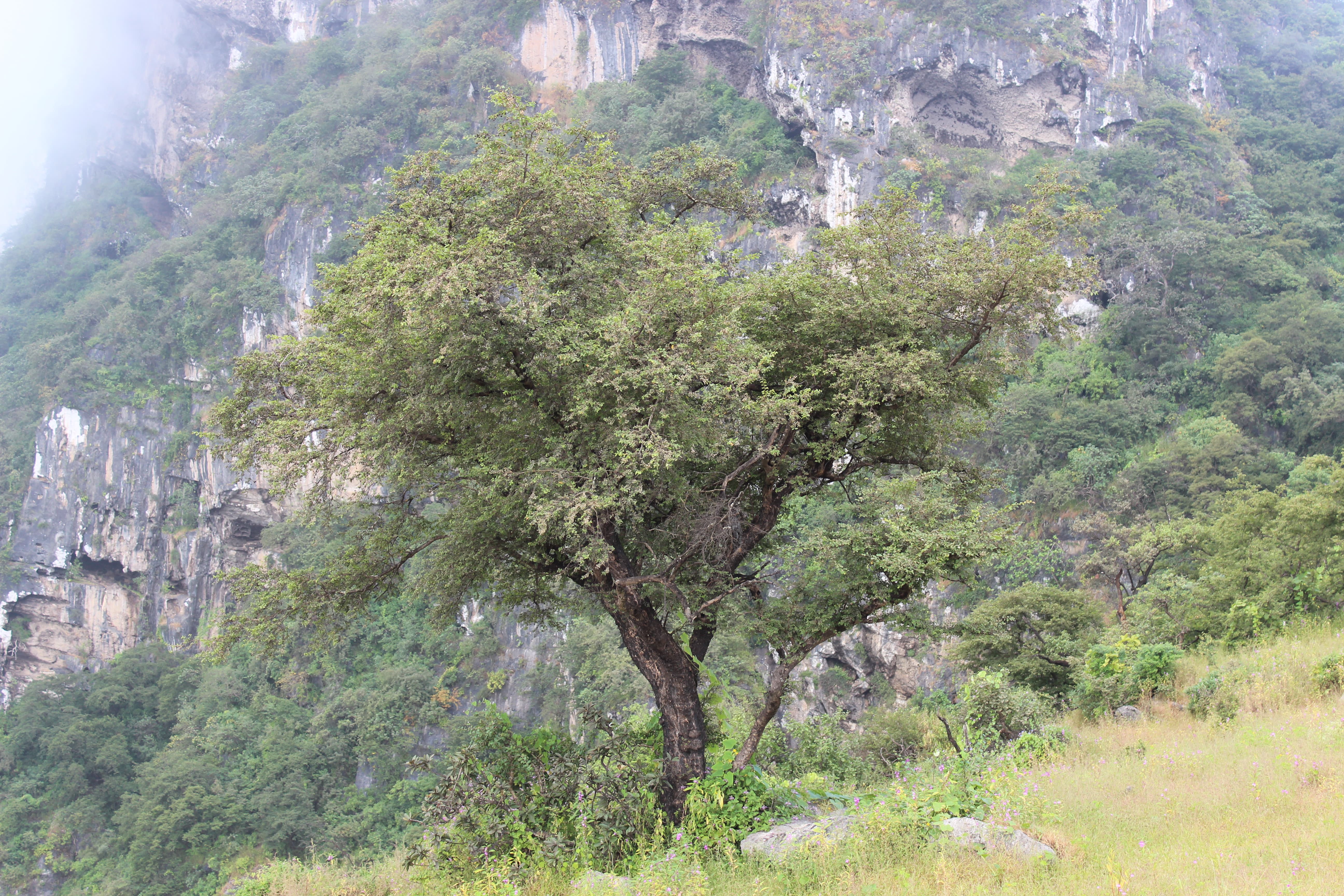
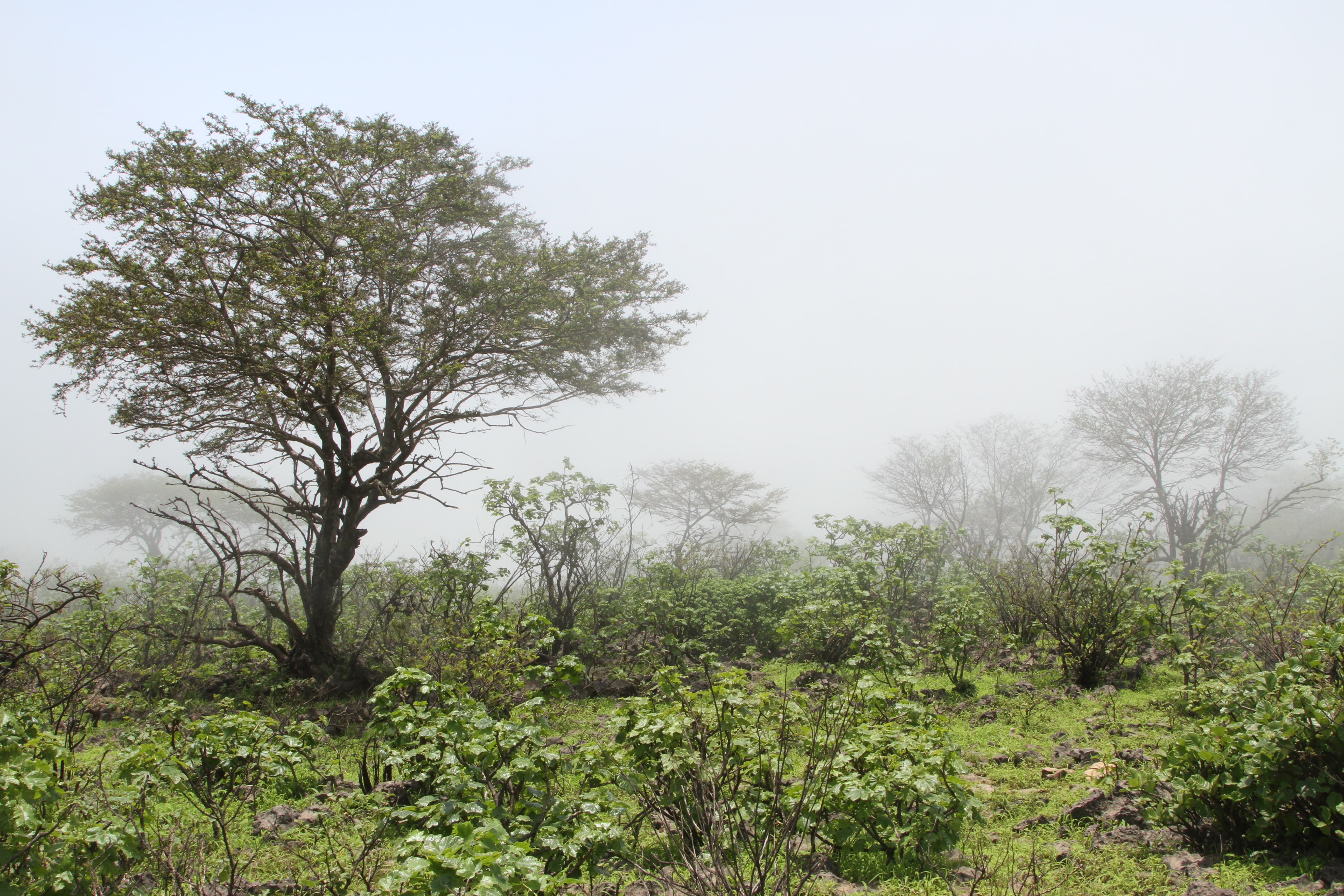
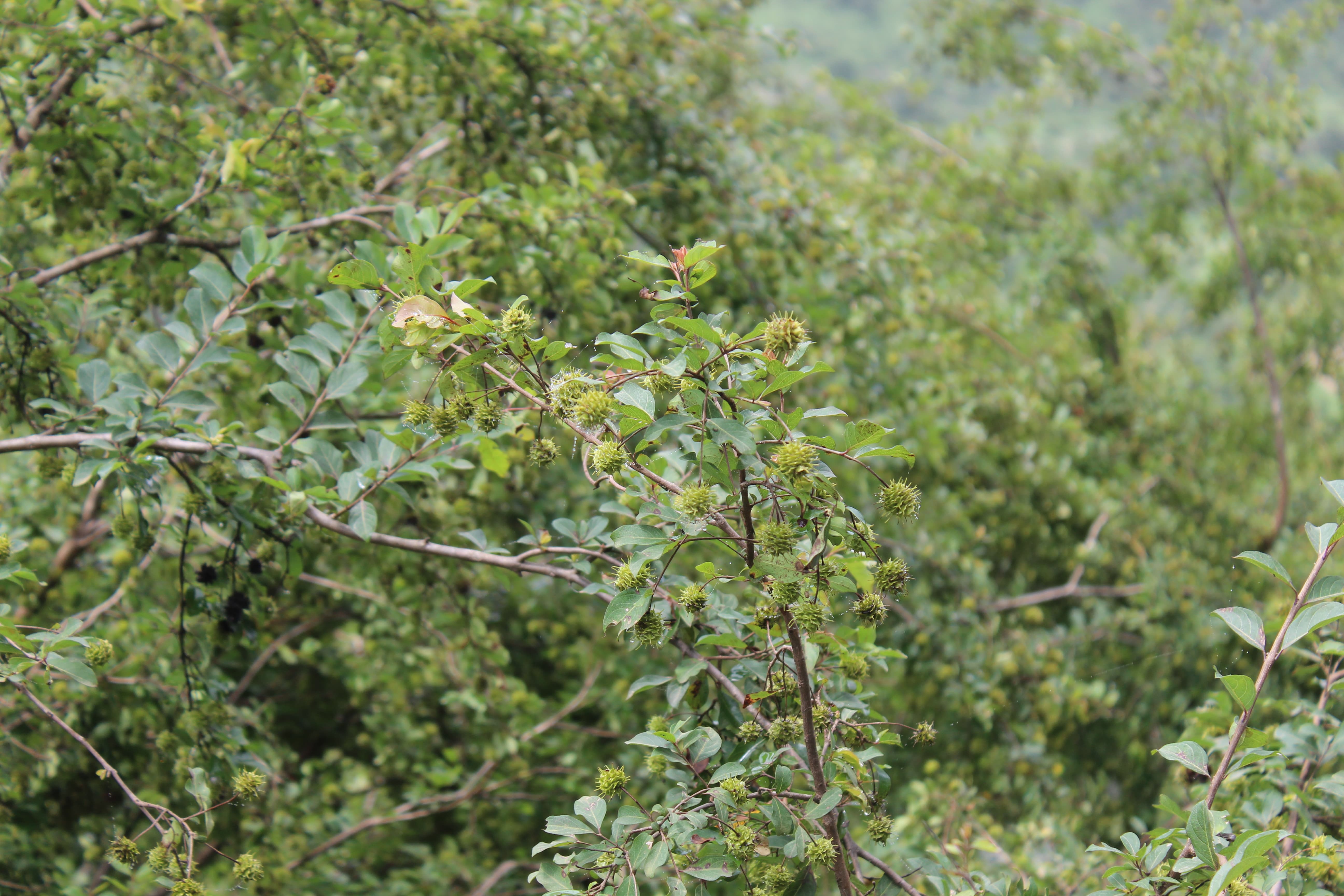
Deciduous tree ; up to 10-12 m tall , with a rounded , spreading crown and rough , grey- brown , fissured bark . Stems with reddish , finely hairy young branches . Leaves opposite to subopposite , 15-55 x 7-30 mm , bluish-green , elliptic to obovate , apex acute , margin entire , base attenuating into a short petiole 3-4 mm , young leaves hairy . Inflorescences in dense globose heads ± 1 . 5 cm across , borne at the end of short axillary branches ; peduncles 2-3 cm . Flowers yellow , sessile , subtended by a short c . 1 mm long bract ; calyx ± 3 . 5 mm , tubular , expanded above to form a shallowly 5-lobed cup ; petals absent ; stamens 10 , exserted ; filaments filiforml anthers cordate ; ovary inferior , 1-locular , with 2 pendulous ovules ; style simple , filiform . Fruit numerous , forming cone-shaped heads , 1 . 5-2 . 5 cm in diameter , yellow-brown tinged red . Seeds many , winged . (Ref . Flora of Oman ; vol . 2) .
الوضع البيئي الحالي
Near Endemic (NE) - Vulnerable (VU A4abcd) - Global Assessment
التوزيع الجغرافي والبيئي
الوصف غير متاح حاليًا
المرادفات
Anogeissus dhofarica A.J.Scott
العناية بالنبات
maintenanceAr.Item1
maintenanceAr.Item3
الاستخدامات
Miller & Morris (1988) wrote that: "This is one of the most important trees in Dhofar, with a wide variety of uses. As a browse it was a species of major significance. It was especially important for the herds of camels, since it comes into leaf at the end of the dry season when alternative fodder for them was scarce. But all livestock thrive on it, and it said to cause them to put on weight in a remarkable way, as well as increasing the milk yield of the milch animals and improving the richness and flavour of their milk. When it came into leaf during the dry season, herders would take their livestock to areas where these trees grew, and set up camp under them or somewhere nearby, to enable their livestock to survive the difficult dry season, and - hardest time of all - the beginning of the
...
rains. To bring the foliage within reach of the livestock, the branches are partially cut through and bent down and, if neccessary, weighed down with stones and rocks at the tip. This did not destroy the tree, since new shoots appear from the cut wood. However, where browsing is heavy and the pressure of hungry livestock too great, as is currently the case in many parts of Dhofar, the tree is frequently cut too severely and given insufficient time to recover, and, in time, is reduced to a low-growing and deformed stump. Livestock coming in to the mountains from the desert regions beyond are said to intially fall ill on eating the foliage of the tree and to take time to get accustomed to this diet. The milk of livestock feeding on this tree has a distinctive odour and is very sweet and rich, but when it forms the main constituent of the diet of livestock it stains their urine a very dark yellow. The leaves were stripped off by the herders to mix with the dried sardine dry-season fodder to make it more appealing to the hungry and thirsty livestock, since the foliage holds its fresh green colour well and all livestock will keenly eat it. The trees are divided in local expertise, as is so often the case in Dhofar, into 'male' and 'female' trees; the male being taller, less rich in foliage and with extremely hards wood; and the 'female' being shorter in stature, stouter, more abundant in foliage and with softer wood. A well-grown specimen with a thick trunk and a good thick foliage canopy under which families and their herds formerly set up home is called in Jibbali orz, and an even more superior specimen, whose foliage fell densely from high arching branches making a sort of 'foliage tent' which provided superb shelter for the family and its animals, is called [J: orz ergelol]. The wood was very important as building material: it was often cut in the smmer season, the side branches removed and then spread out to dry for two or three months, by which time it was said to be safe from insect or termite attack. It was then left out to be soaked through during the three months of wet weather. At the end of the monsoon, it was allowed to dry out again, the bark removed, and the inner wood was then considered well and sufficiently seasoned and ready for use. The dead wood also made excellent charcoal, both for tooth-cleaning and for cooking, and was particularly in demand for the latter. Wood from the stouter branches was used in the manufacture of larger articles, such as the [DA: sirir] or string bed, used mainly in the coastal towns. Ash from the burned wood was mixed with imported tobacco to make It more 'hot' and acrid, or was occasionally used as a substitute for tobacco-snuff on Its own. Fine shavings from the bark were used as a tobacco substitute quite widely, real tobacco being usually expensive and hard to come by. Broader slices cut from the bark were used in the setting of a fracture, being bound round the damaged limb to hold it straight and allow the bone to set, and also, it was believed, to speed the healing process and knitting of the bone. The wood was used in the manufacture of spear shafts, the blacksmith providing the iron head, and arrows were also made from this strong wood. This tree also provided long branches which could be roughly fashioned into the fodder hooks, which were used to hook the branches of various fodder trees down to within reach of livestock, or similarly to pull within reach the branches of fruit-bearing trees at harvest time. The flowers are important as bee forage, producing a reddish coloured dark honey. The fruit are eaten by camels. The leaves were used as a dye to colour the unbleached coarse cotton cloth formerly important into Southern Oman. A yellow dye, produced by drying fresh leaves the powdering them and mixing them to a paste with water, was the favoured pigment used by those who decorated the clay utensils which were universally used before aluminum became easily available. Medicinally, the dried leaves were also used, particularly by women, for their personal hygiene. It was regarded as being purifying and antiseptic, as well as being an invigorating stimulant. Its use was more or less restricted to women, who used it especially as a cleansing douche after childbirth and for washing themselves on completion of the menstrual cycle. A decoction of the dried leaves with added salt was taken by women as an oxytoxic, especially for a retained placenta, although it was also employed if labour was particularly prolonged. This lotion was used too to wash the new born baby. The dried leaves were crushed to a powder and made up into a paste with water which was used in the treatment of wounds and abrasions, and to treat sores in both humans and livestock. A few dried leaves were made into a tisane, which was very popular, but drunk in quantities stained the mouth a reddish brown. Fresh leaves were chewed to a paste which was squeezed through a piece of fine cloth into an infected, damaged or painful eye. Leaves were also partially scorched at the fire until quite dry and crisp, then pulverised and packed into purulent and suppurating wounds, or dusted lightly over a variety of skin lesions and rashes, both in humans and livestock. Chapped skin - around the anus, such as that resulting from infantile diarrhoea, and chafed or reddened skin elsewhere was treated with a paste of chewed leaves. A decoction of dried powdered leaves was taken for colicky pains and to relieve indigestion and flatulence. Dried singed leaves were also taken as snuff, or added to powdered tobacco to make it more 'hot'". (Ref. Plants of Dhofar). In addition, Ghazanfar (2007) metioned that: "An important woodland tree of the escarpment mountains, coming into leaf after the monsoons. Browsed by livestock and to some extent under stress from over-grazing, especially near water-holes where the trees are severely damaged. Wood has been used as building material". (Ref. Flora of Oman; vol.2). Furthermore, Pickering & Patzelt (2008) stated that: "Widely used for building and firewood. An important source of fodder in the dry season". (Ref. Field Guide to the Wild Plants of Oman; 2008). In Oman Plant Red Data Book, Patzelt (2015) wrote that: "One of the most important trees of Dhofar, with a variety of uses. Browsing is of significant importance". (Ref. Oman Plant Red Data Book; 2015).

المراجع
*Ghazanfar, S. (2007). Flora of the Sultanate of Oman, vol.2: Crassulaceae – Apiaceae. Meise, National Botanic Garden of Belgium (Scripta Botanica Begica, Vol. 36). ISBN 9789072619747 ISSN 0779-2387. *https://en.wikipedia.org *Miller, A., Morris, M. (1988). Plants of Dhofar, the Southern Region of Oman: Traditional, Economic, and Medicinal Uses. Published by Office of the Adviser for Conservation of the Environment, Diwan of Royal Court, Sultanate of Oman; ISBN 10: 0715708082 ISSN 13: 9780715708088. *Patzelt, A. (2015). Oman Plant Red Data Book. Published by Diwan of Royal Court, Sultanate of Oman. Oman Botanic Garden Publication No. 1. ISBN 978-99969-50-10-0. *Pickering, H. Patzelt, A. (2008). Field Guide to the Wild Plants of Oman. Kew publishing, Royal Botanic Garden, Kew. ISBN 9781842461778. *POWO (2023). ""Plants of the World Online. Facilitated by the Royal Botanic Gardens, Kew. Published on the Internet; http://www.plantsoftheworldonline.org