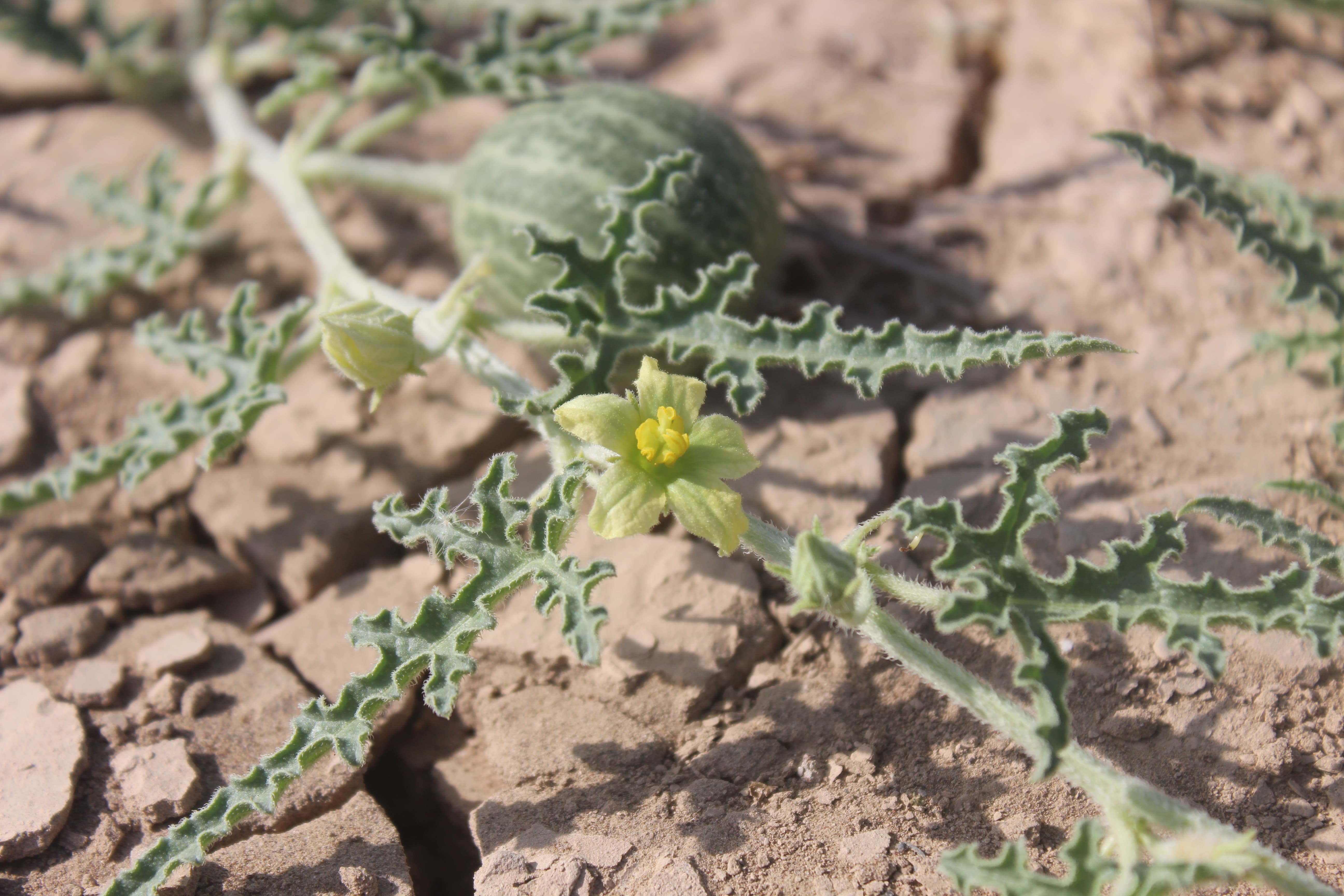
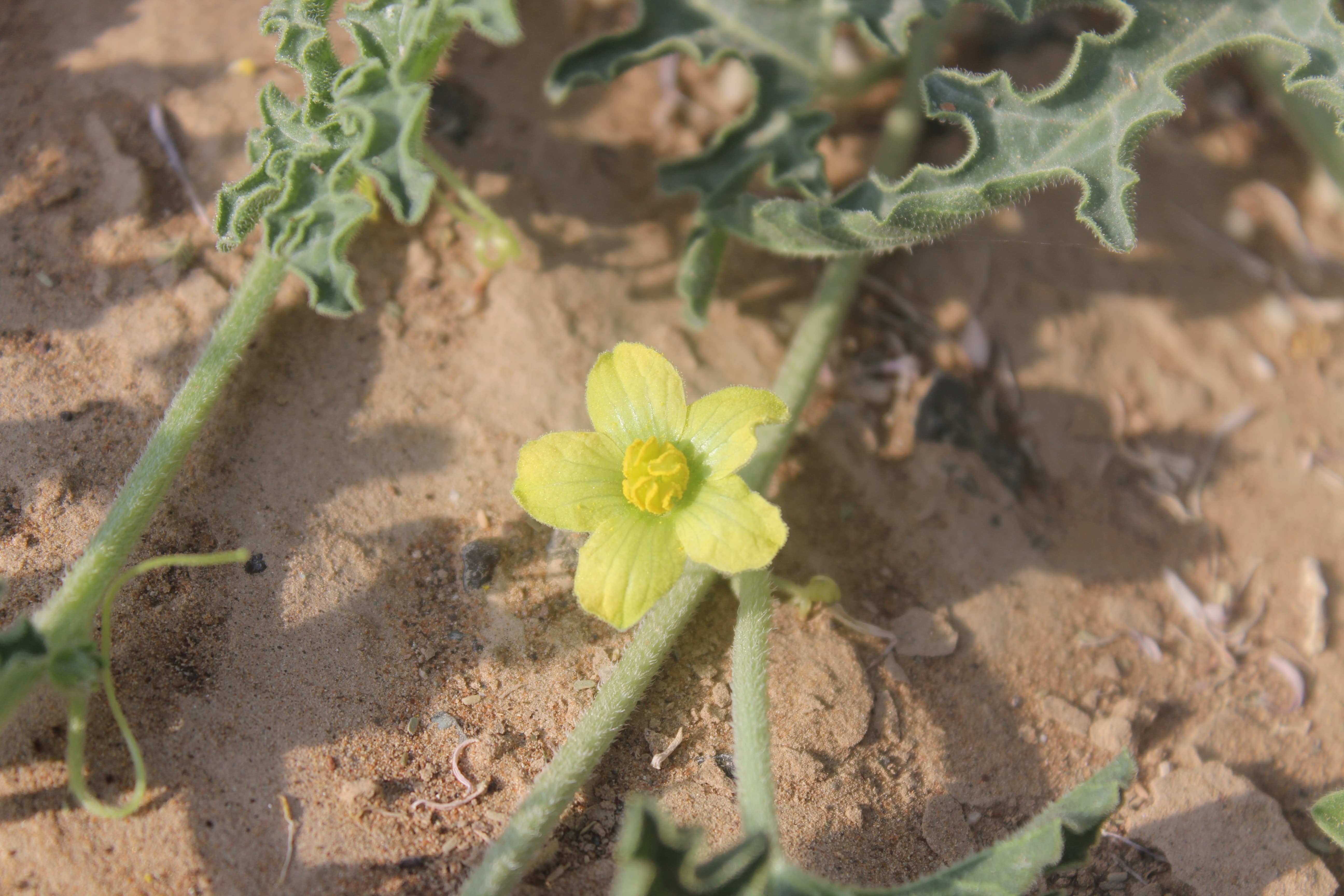
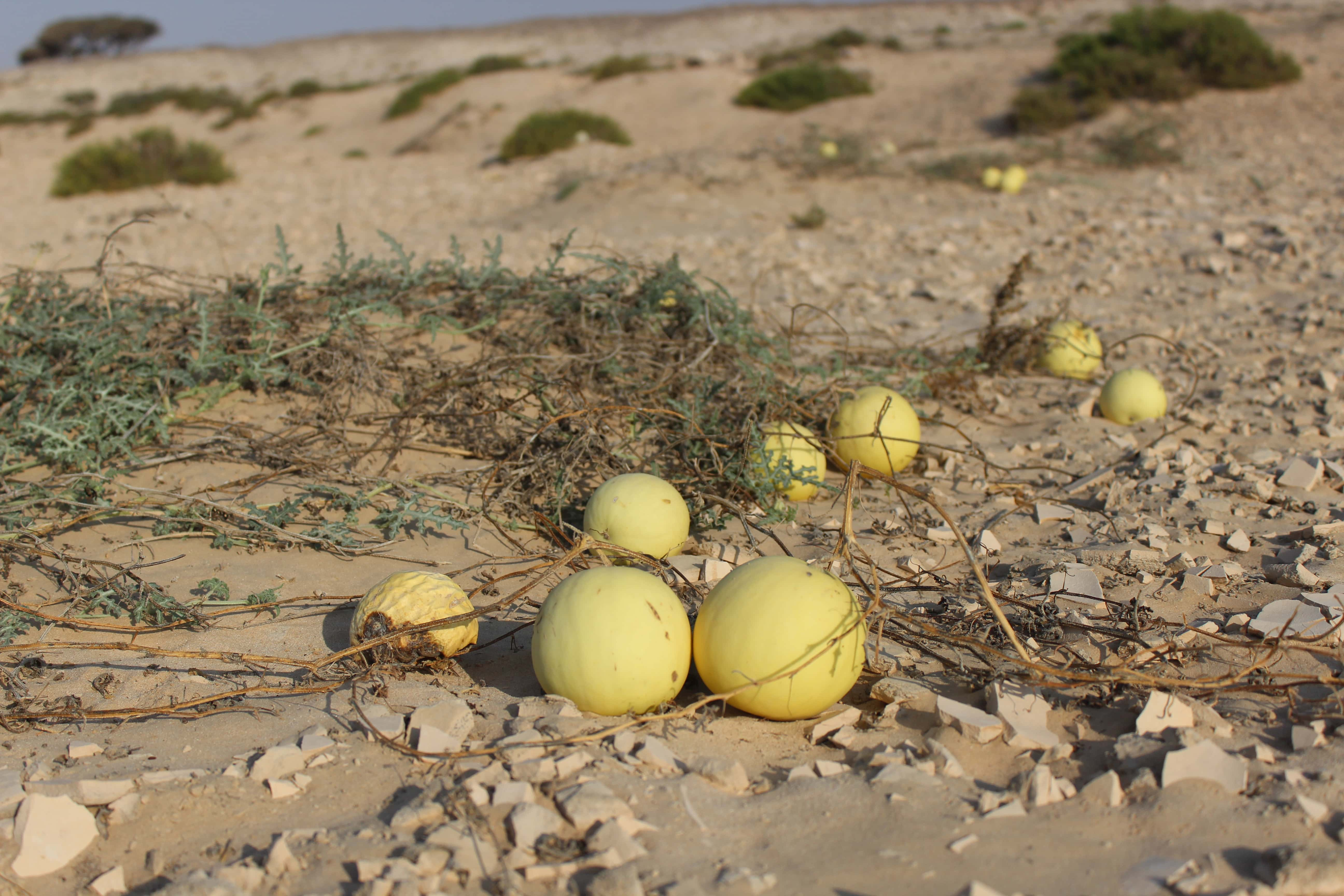
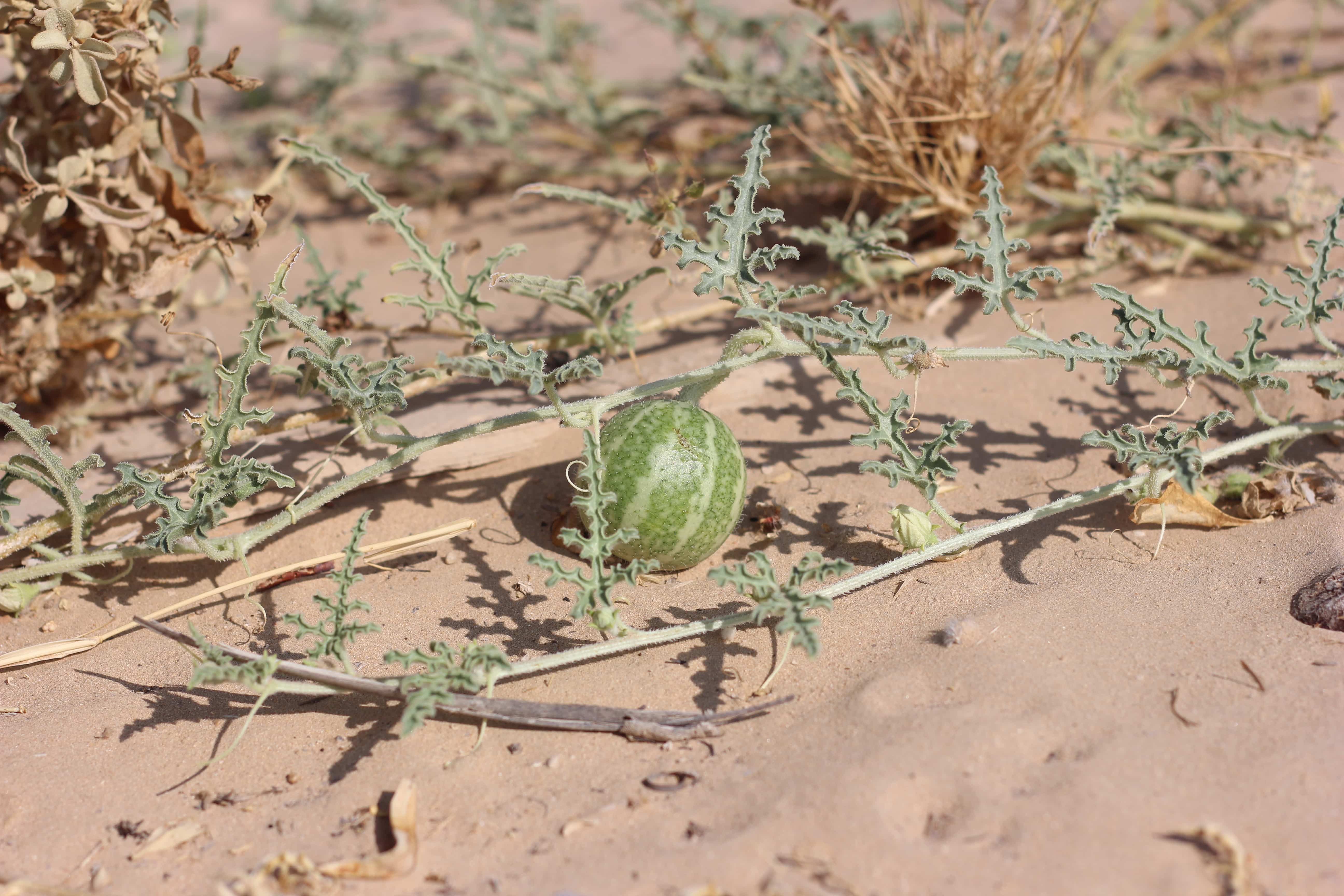
Citrullus_colocynthis_2-06082024 © OBG
Citrullus_colocynthis_3-06082024 © OBG
Citrullus_colocynthis_4-06082024 © OBG
Citrullus_colocynthis_5-06082024 © OBG
Citrullus_colocynthis_6-06082024 © OBG
Citrullus_colocynthis_7-06082024 © OBG
Citrullus_colocynthis-06082024 © OBG
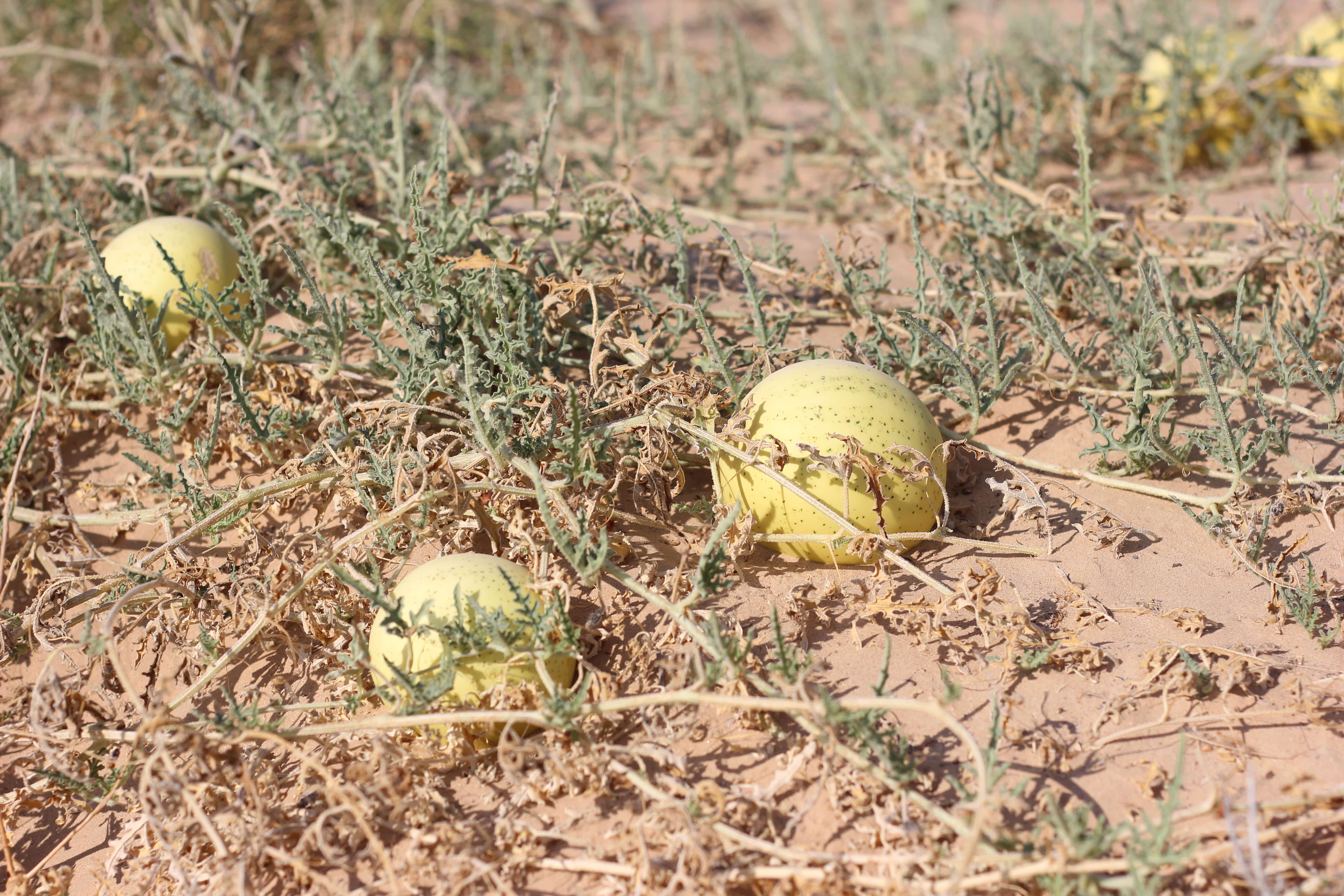
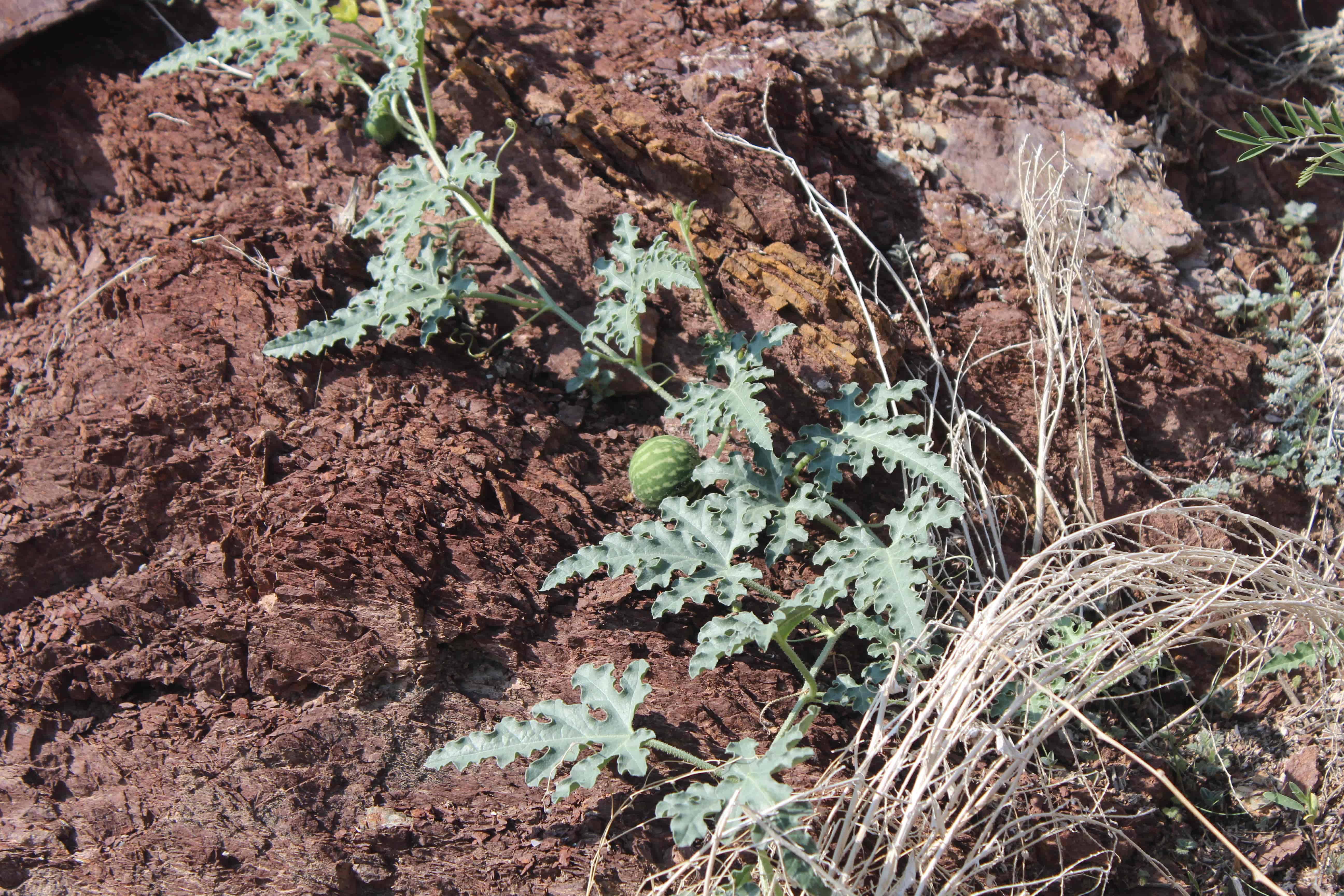
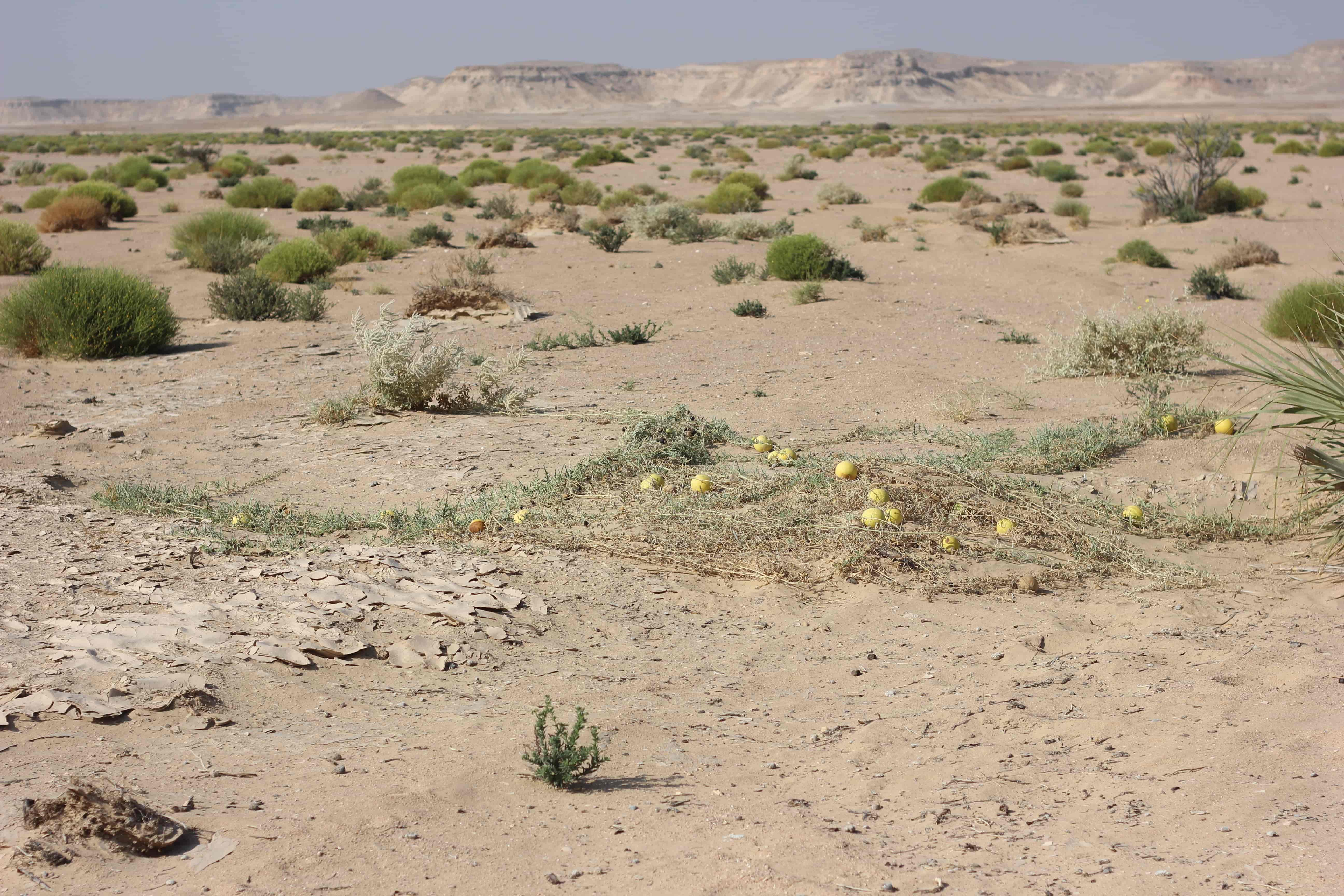
Trailing perennial herb , upt o 3 m or long , with tuberous rootstock , scabrid . Stems angled , prostrate , creeping , up to 2 m long . Leaves alternate , grey/green , triangular in shape , ovate to cordate in outline , deeply 3-5-lobed , apex obtuse to acute , base cordate , margin entire , sinuate , retrorsely hispid or scabrid , petiolate ; tendrils simple , appearing from the leaf nodes . Inflorescences solitary , arising from the leaf axils . Flowers sepals lanceolate ; petals obovate , greenish-yellow . Fruit large , round , smooth , turning from green with yellow stripes to yellow as they ripen ; pulp white , very bitter . Seeds ovate in outline , dark brown , smooth . (Ref . Flora of Oman ; vol . 1) .
No Data
Not Threatened (NE) - Global Assessment
Common
الوصف غير متاح حاليًا
Citrullus colocynthis subsp. insipidus (Pangalo) Fursa
Colocynthis officinalis Schrad.
Colocynthis vulgaris Schrad.
Cucumis colocynthis L.
No data
maintenanceAr.Item1
Desert Squash, Bitter Squash
Colocynth
Colocynth Melon
Bitter Apple
Bitter Cucumber
Vine of Sodom
Wild Gourd
Bitter Paddy Melon
Numerous medicinal properties are claimed, including use as laxative and to relieve the pain of scorpion stings. (Ref. Field guide to the wild Plants of Oman). Well known and used as a purgative in traditional medicine in Arabia since early times; also used as a poultice for bites and stings. (Flora of Oman; vol. 2). The leaves are not liked by livestock, but goats eat the immature fruit hile they are still bright green if there is little else to feed on, or if they are very thirsty. The green fruit were also used to remove the hair from a fresh hide. The fruit were crushed and the paste was rubbed onto the skin side of the hide, which was then buried for the appropriate length of time, according to the age and type of the animal slaughtered. The juice and pulp of an immature fruit has been used as
...

*Ghazanfar, S. (2003). Flora of the Sultanate of Oman, vol.1: Piperaceae – Primulaceae. Meise, National Botanic Garden of Belgium (Scripta Botanica Begica, Vol. 25). ISBN 90-72619-55-2 ISSN 0779-2387. *https://en.wikipedia.org *https://www.merriam-webster.com *Miller, A., Morris, M. (1988). Plants of Dhofar, the Southern Region of Oman: Traditional, Economic, and Medicinal Uses. Published by Office of the Adviser for Conservation of the Environment, Diwan of Royal Court, Sultanate of Oman; ISBN 10: 0715708082 ISSN 13: 9780715708088. *Pickering, H. Patzelt, A. (2008). Field Guide to the Wild Plants of Oman. Kew publishing, Royal Botanic Garden, Kew. ISBN 9781842461778. *POWO (2023). ""Plants of the World Online. Facilitated by the Royal Botanic Gardens, Kew. Published on the Internet; http://www.plantsoftheworldonline.org
