Naturalised
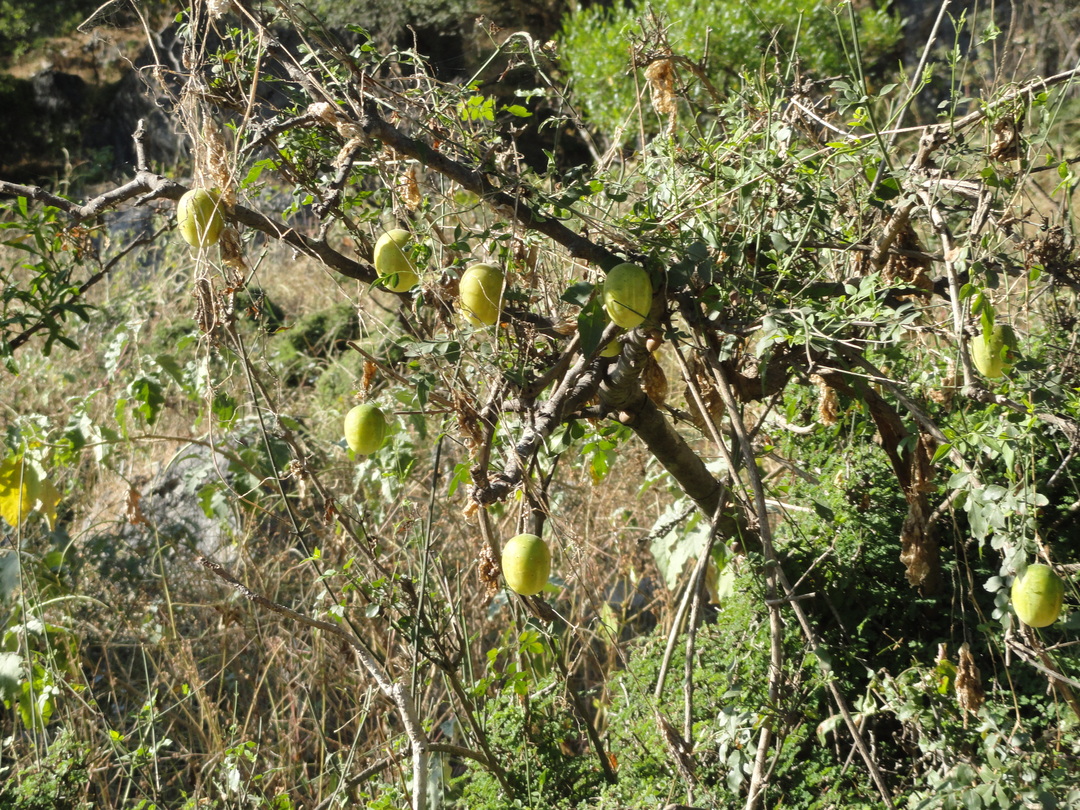
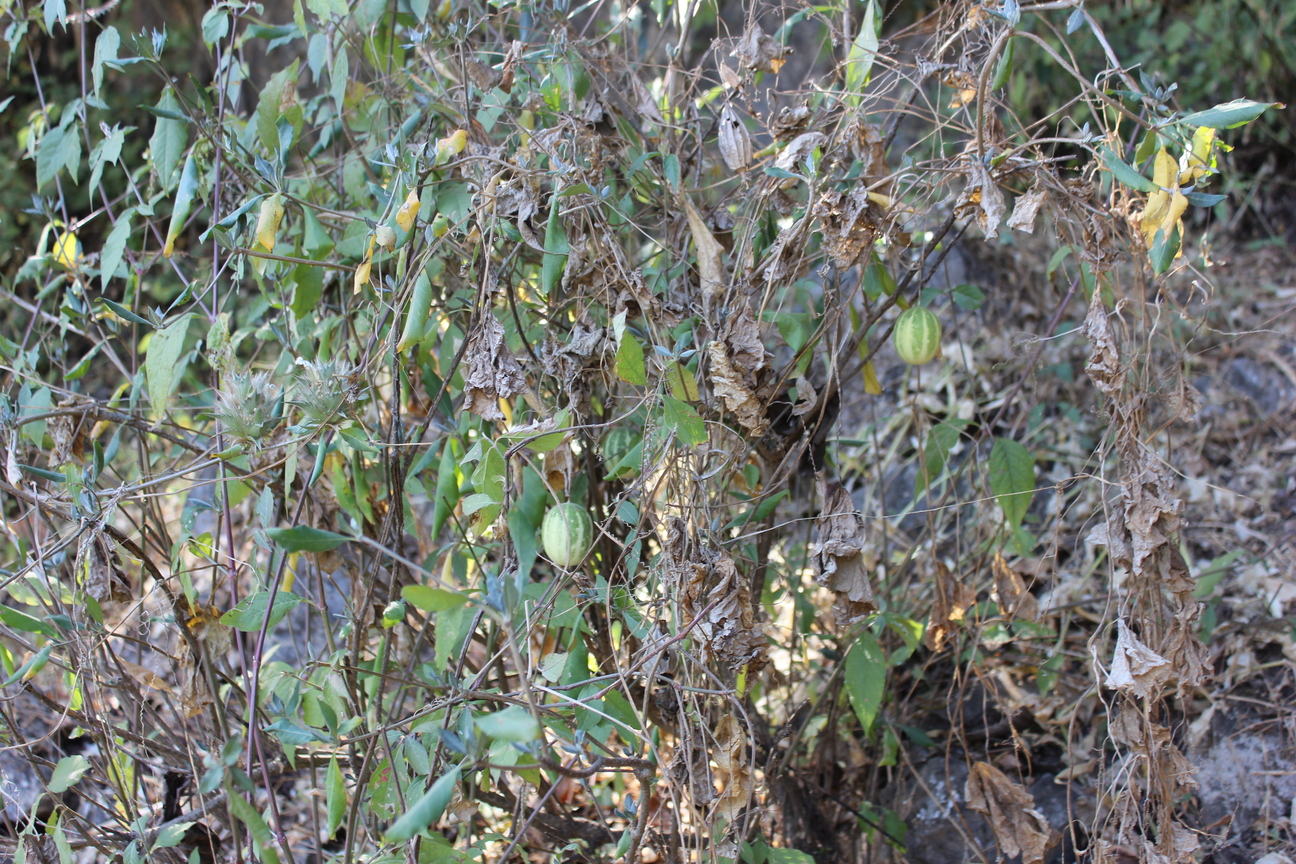
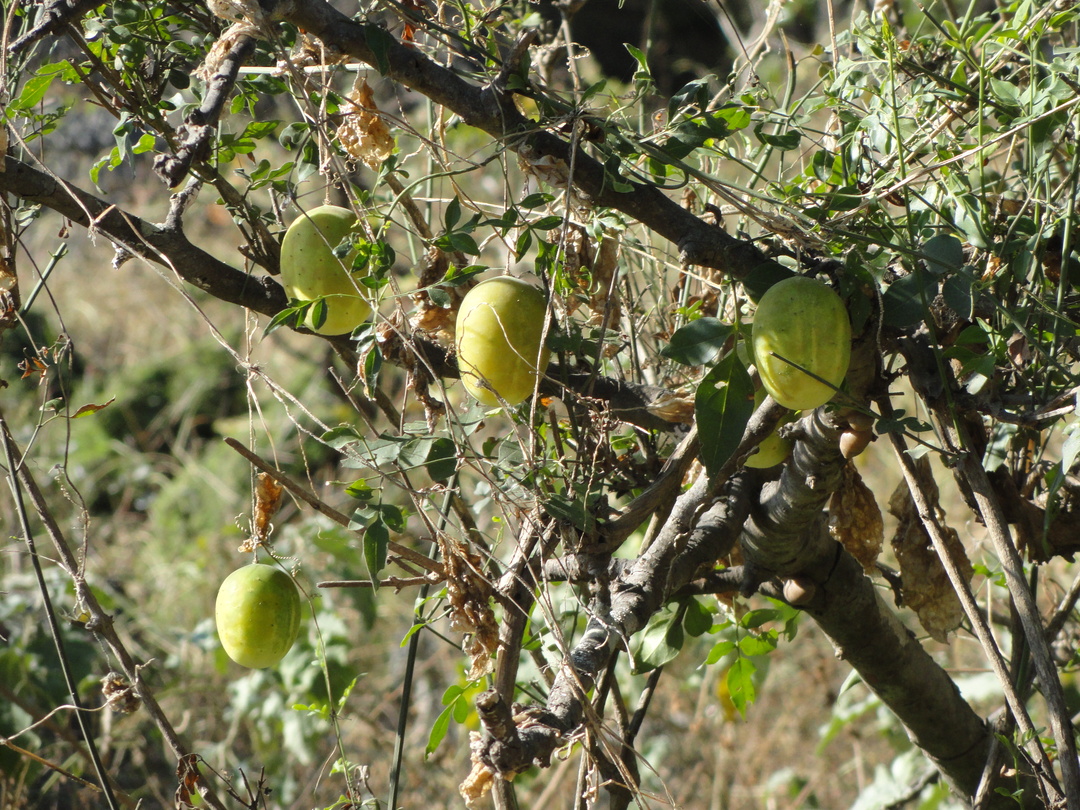
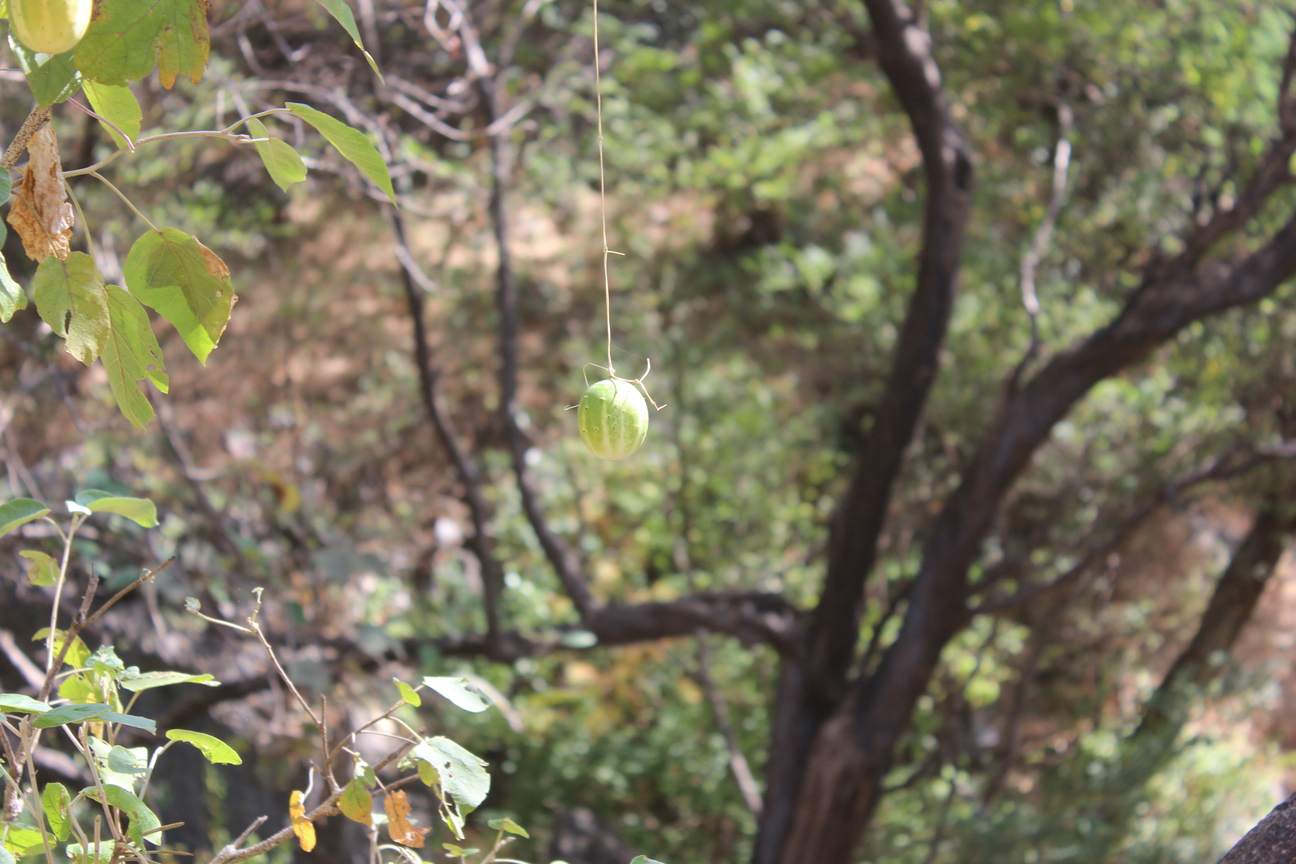
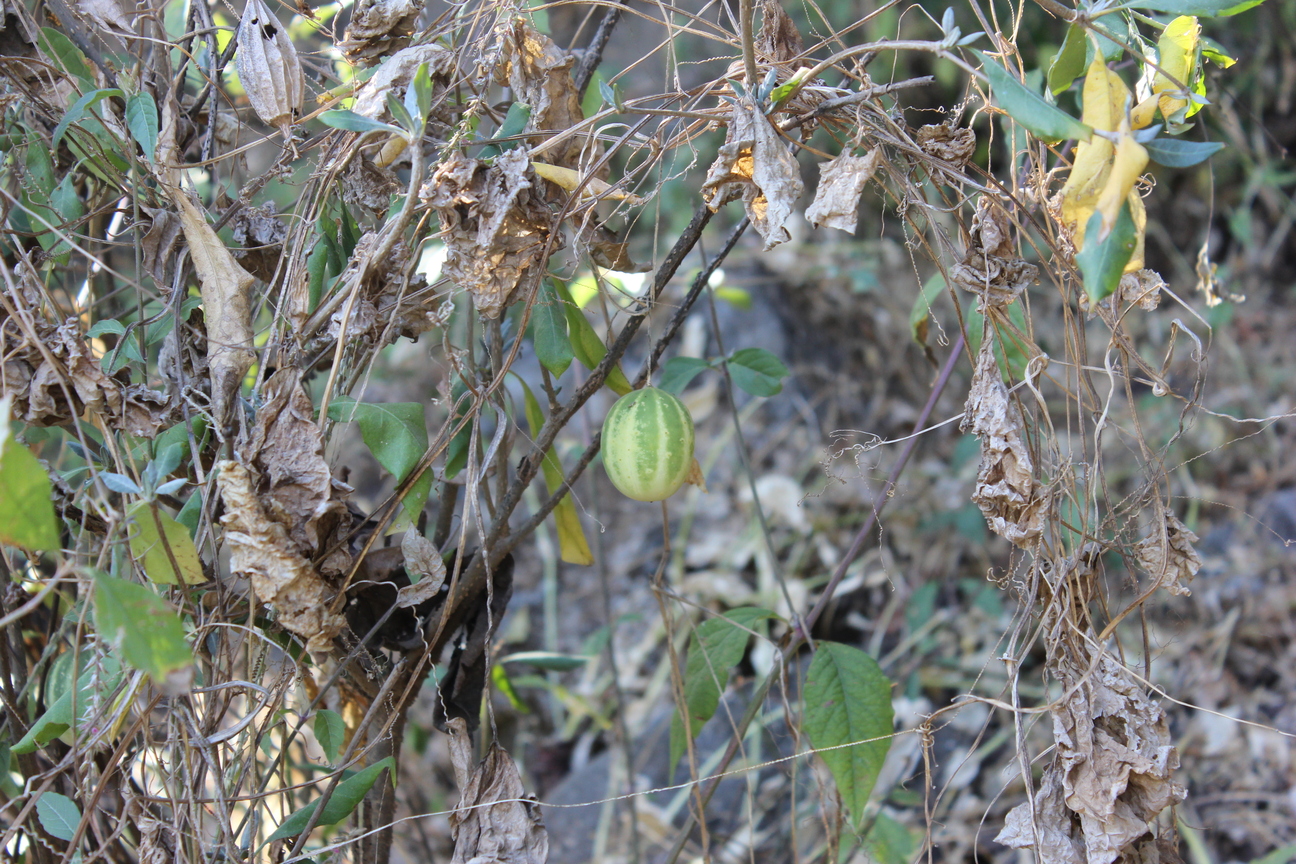
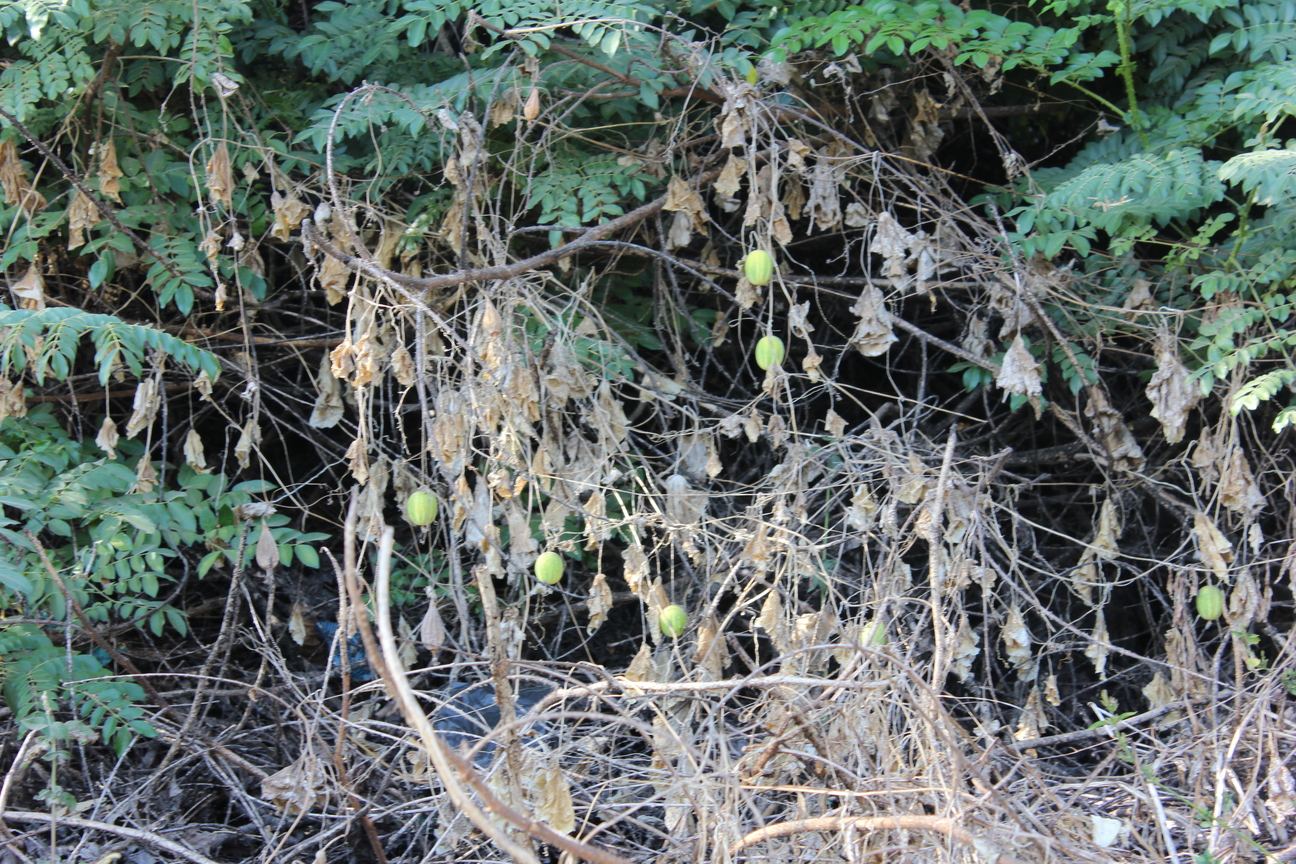
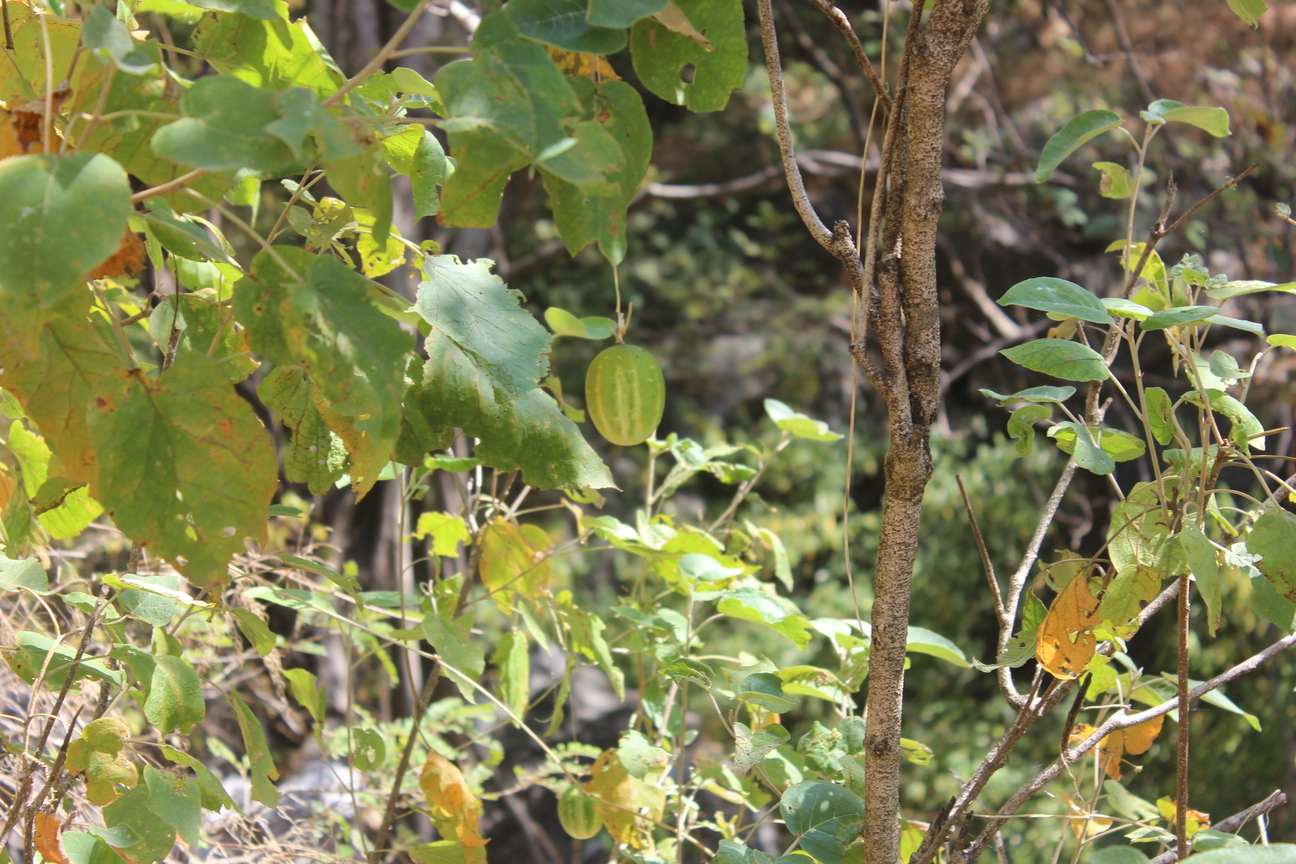
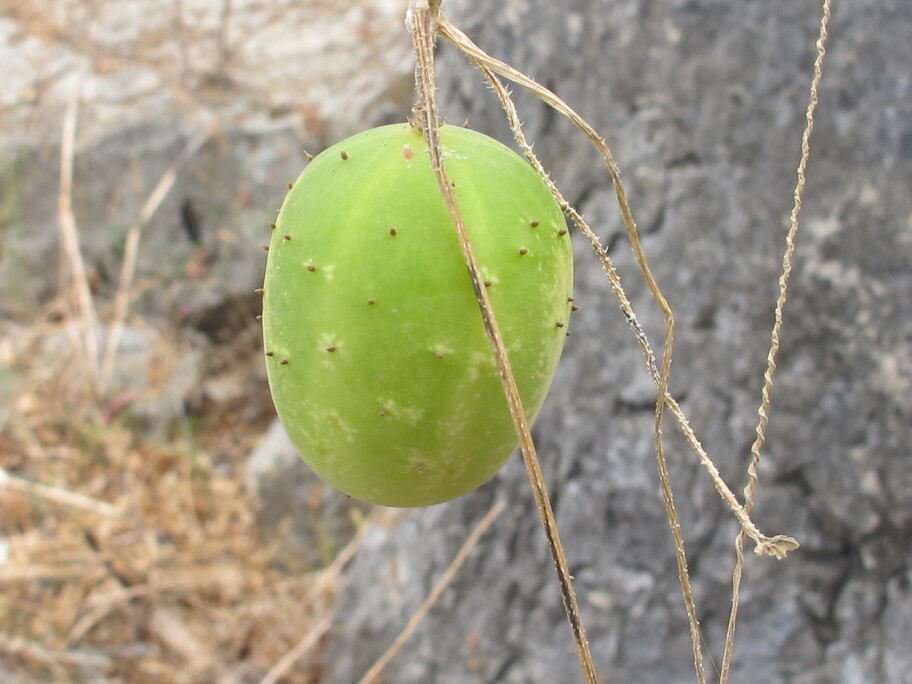
Cucumis_sativus_2 © OBG
Cucumis_sativus_3 © OBG
Cucumis_sativus_4 © OBG
Cucumis_sativus_5 © OBG
Cucumis_sativus_6 © OBG
Cucumis_sativus_7 © OBG
Cucumis_sativus_8 © OBG
Cucumis_sativus © OBG
Annual climbing or spreading herb , growing up to 3 m long . Stems climbing or trailing , ribbed , scabrid . Leaves simple , broadly ovate , base cordate , shallowly 3-8-lobed or angled , margin dentate ; tendrils simple . Inflorescence borne in the axillary leaf nodes , unisexual or bisexual . Flowers bright yellow , bell-shaped ; male flowers 3-5 , in axillary clusters , slender , sepals 5-lobed , petals 5 , fused at the base , obovate ; female flowers usually solitary , sepals and petals same as in the male flowers . Fruit roughly cylindrical to oblong , elongated with tapered ends , green , sparsely covered with short bristles ; mesocarp fleshy , pale green , bitter , many seeded . (Ref . Flora of Oman ; vol . 1) .
No Data
Not Evaluated (NE)
Common
الوصف غير متاح حاليًا
Cucumis esculentus Salisb.
Cucumis rumphii Hassk.
Cucumis sativus subsp. hardwickii (Royle) Banfi & Galasso
No data
maintenanceAr.Item1
Cucumber
Garden Cucumber
Wild Cucumber
Immature Cucumber
The fruit are very juicy, which must have been a major element in their attraction for livestock who, in the days before bore holes were often very thirsty. In herbal medicine the seeds of various cucumber species have long been used as a vermifuge, especially to get rid of tapeworm, and an emulsion of the seeds with water used in catarrhal infections and to treat diseases of the bowel and urinary passages.The flash too has from earliest times been used as a diuretic, and to soften and whiten the skin, its juice being considered to be cooling, healing and soothing to inflamed skin. The fruit are sweet and delicious and being very juicy also slake thirst. They do not keep, and must be eaten fresh, but nevertheless, they were much liked and avidly collected in earlier hungrier and thirstier times (Ref. Plants of Dhofar).
*Ghazanfar, S. (2003). Flora of the Sultanate of Oman, vol.1: Piperaceae – Primulaceae. Meise, National Botanic Garden of Belgium (Scripta Botanica Begica, Vol. 25). ISBN 90-72619-55-2 ISSN 0779-2387. *https://en.wikipedia.org *https://climbers.lsa.umich.edu *Miller, A., Morris, M. (1988). Plants of Dhofar, the Southern Region of Oman: Traditional, Economic, and Medicinal Uses. Published by Office of the Adviser for Conservation of the Environment, Diwan of Royal Court, Sultanate of Oman; ISBN 10: 0715708082 ISSN 13: 9780715708088. *Pickering, H. Patzelt, A. (2008). Field Guide to the Wild Plants of Oman. Kew publishing, Royal Botanic Garden, Kew. ISBN 9781842461778. *Hammer, K. Gebauer, J. Al Khanjari, S. Buerkert, A. (2009). Oman at the cross-roads of inter-regional exchange of cultivated plants. Gene Resour Crop Evol (2009) 56:547-560. Springer Science+Business Media B.V. 2008. DOI 10.1007/s10722-008-9385-z. *Patzelt, A. Pysek, P. Pergl, J. Van Kleunen, M. (2022). Alien flora of Oman: invasion status, taxonomic composition, habitats, origin, and pathways of introduction.
...