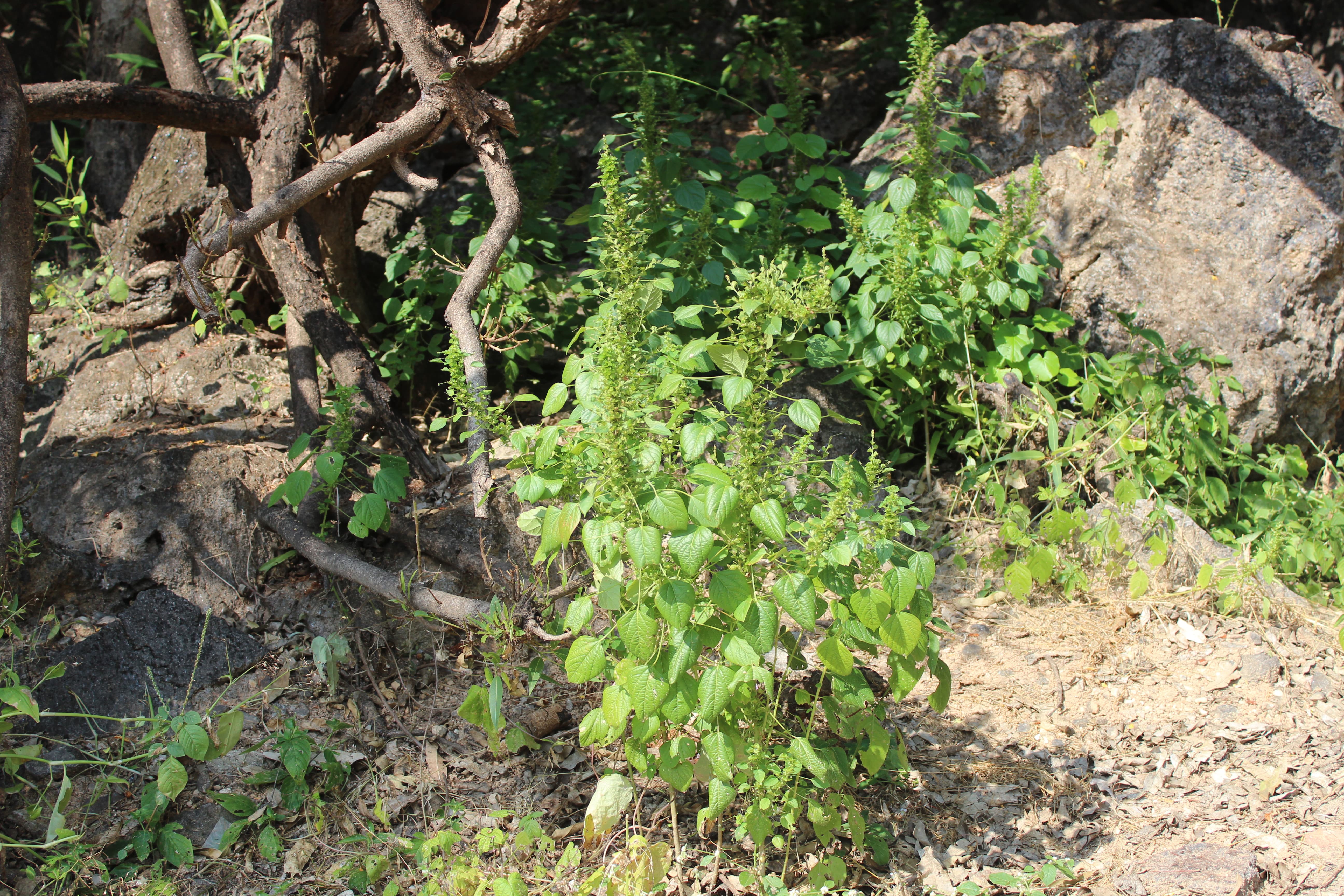
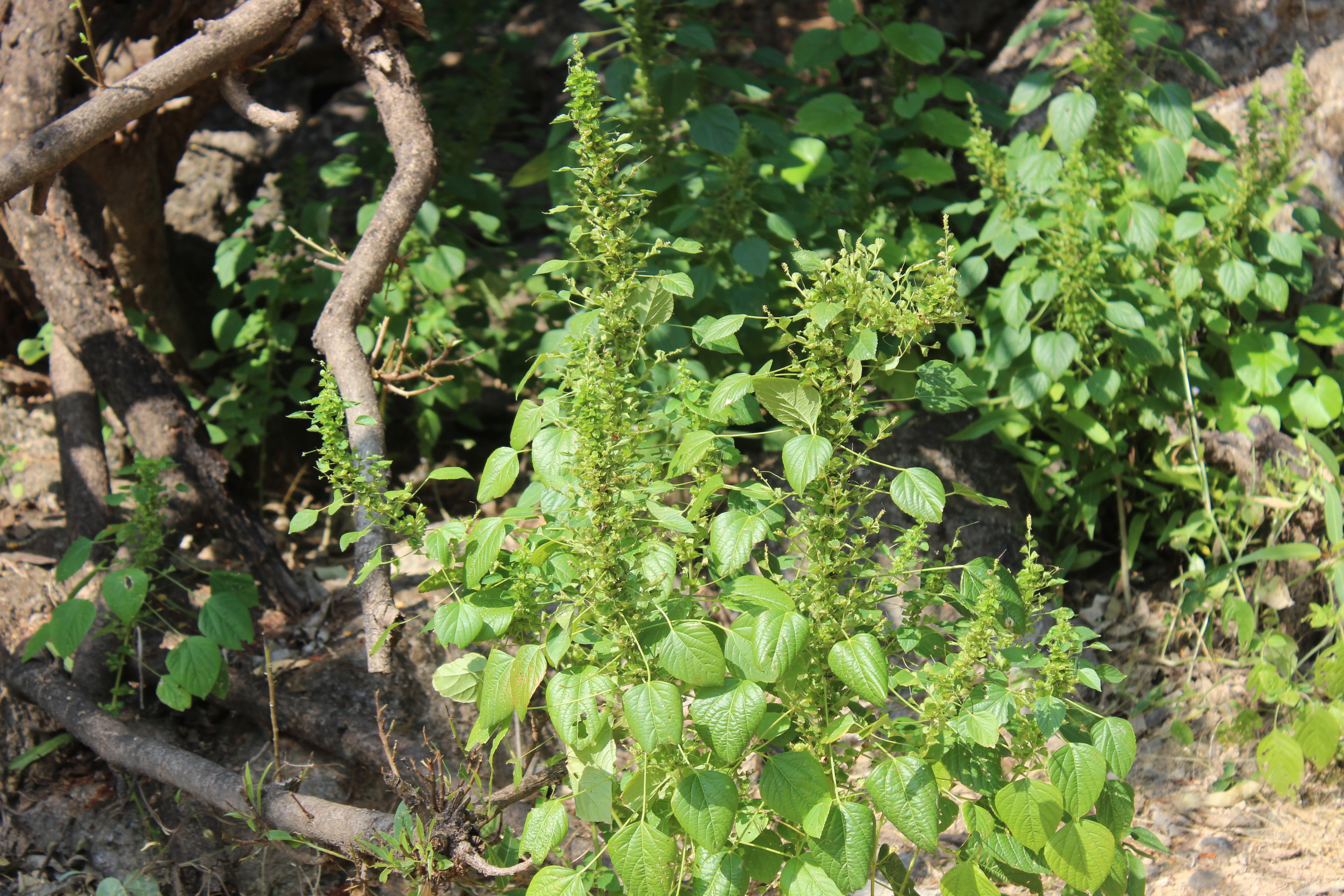
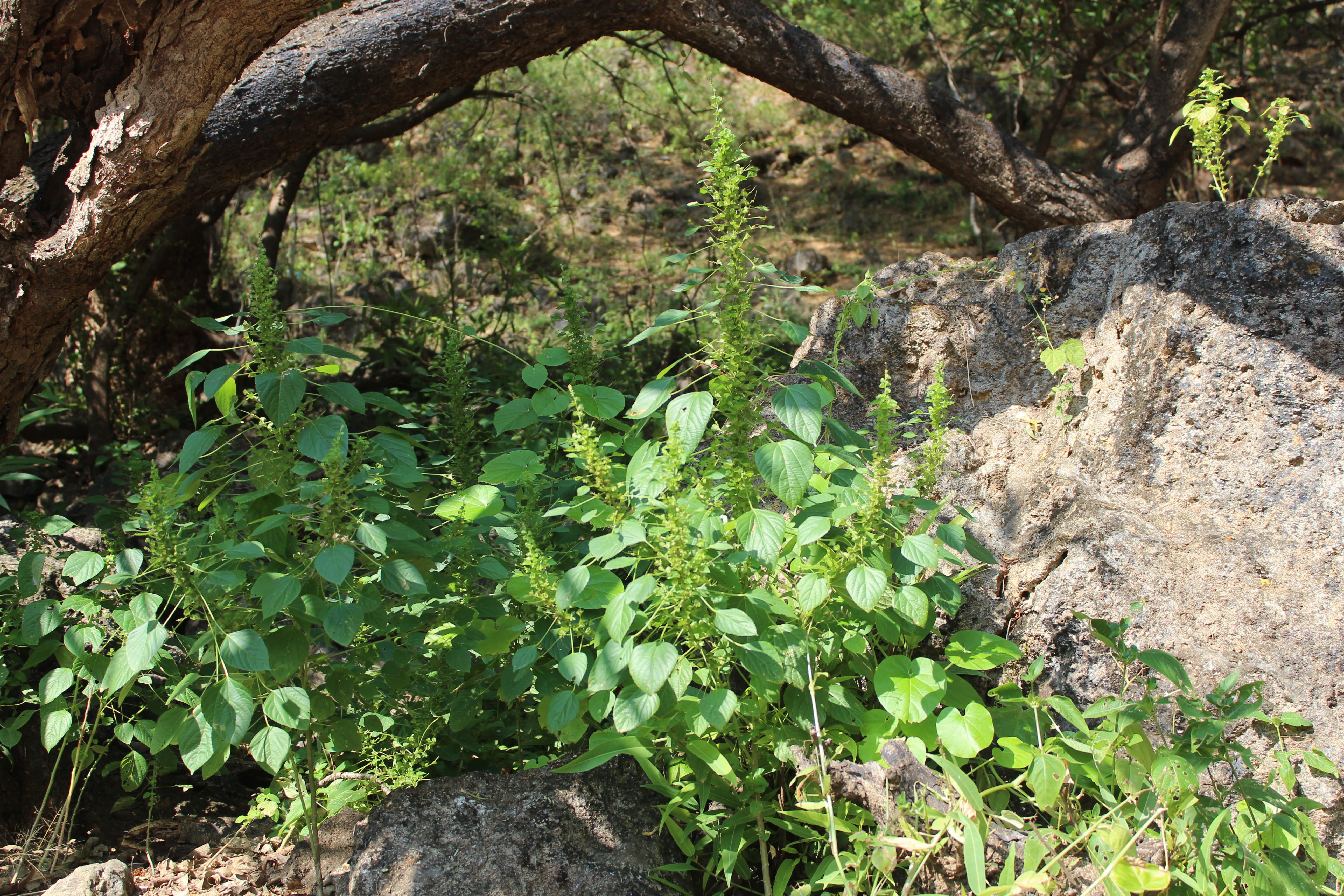
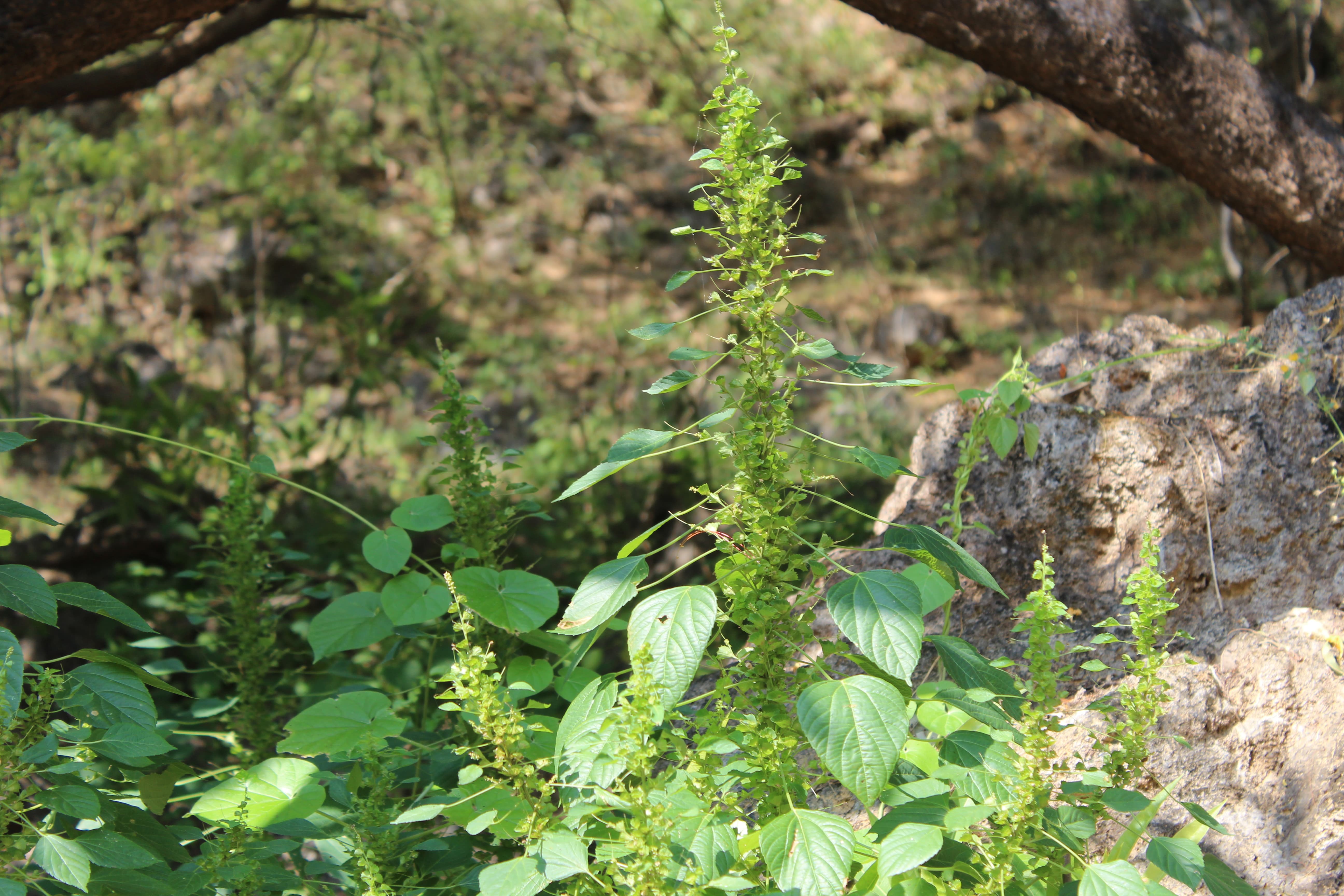
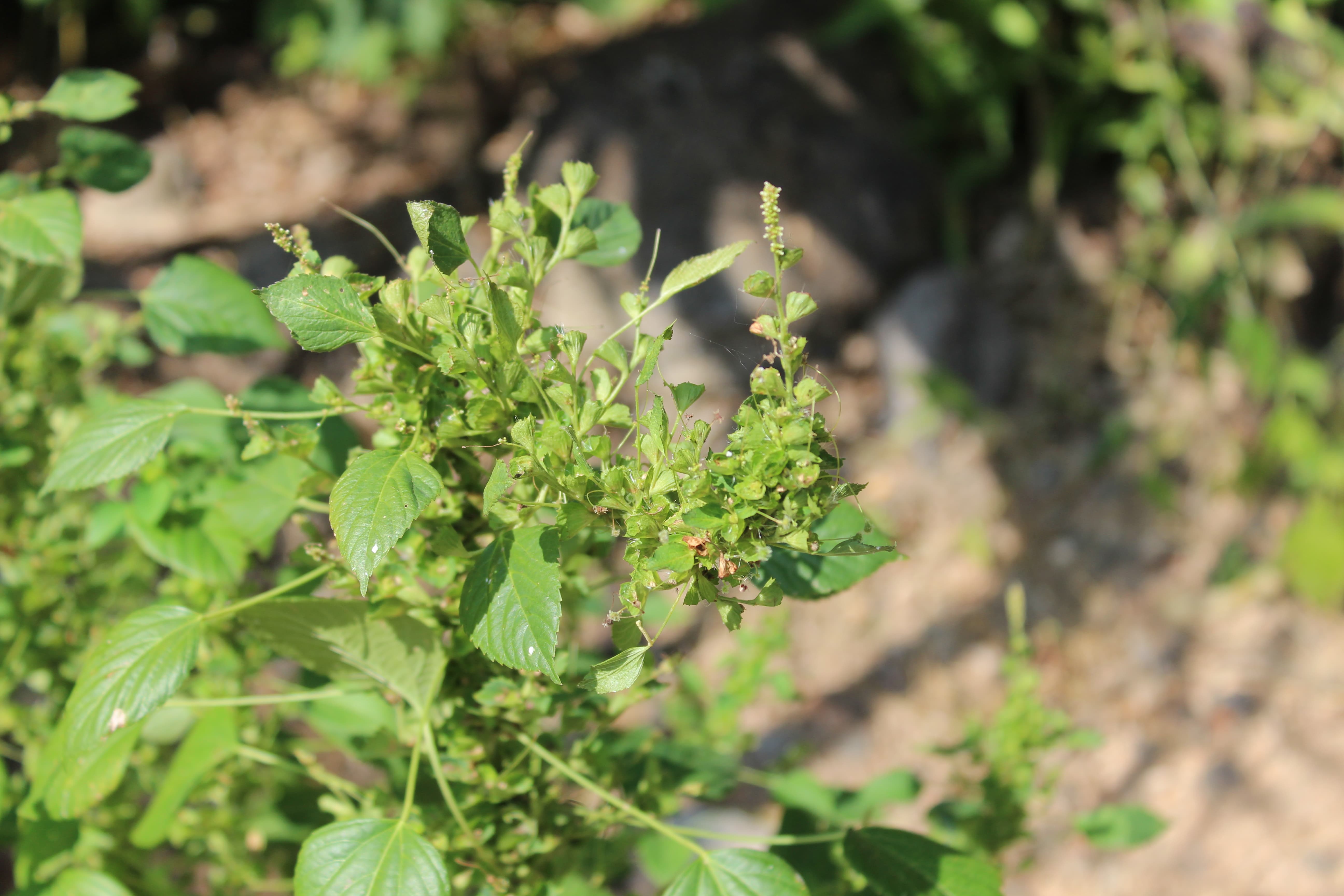
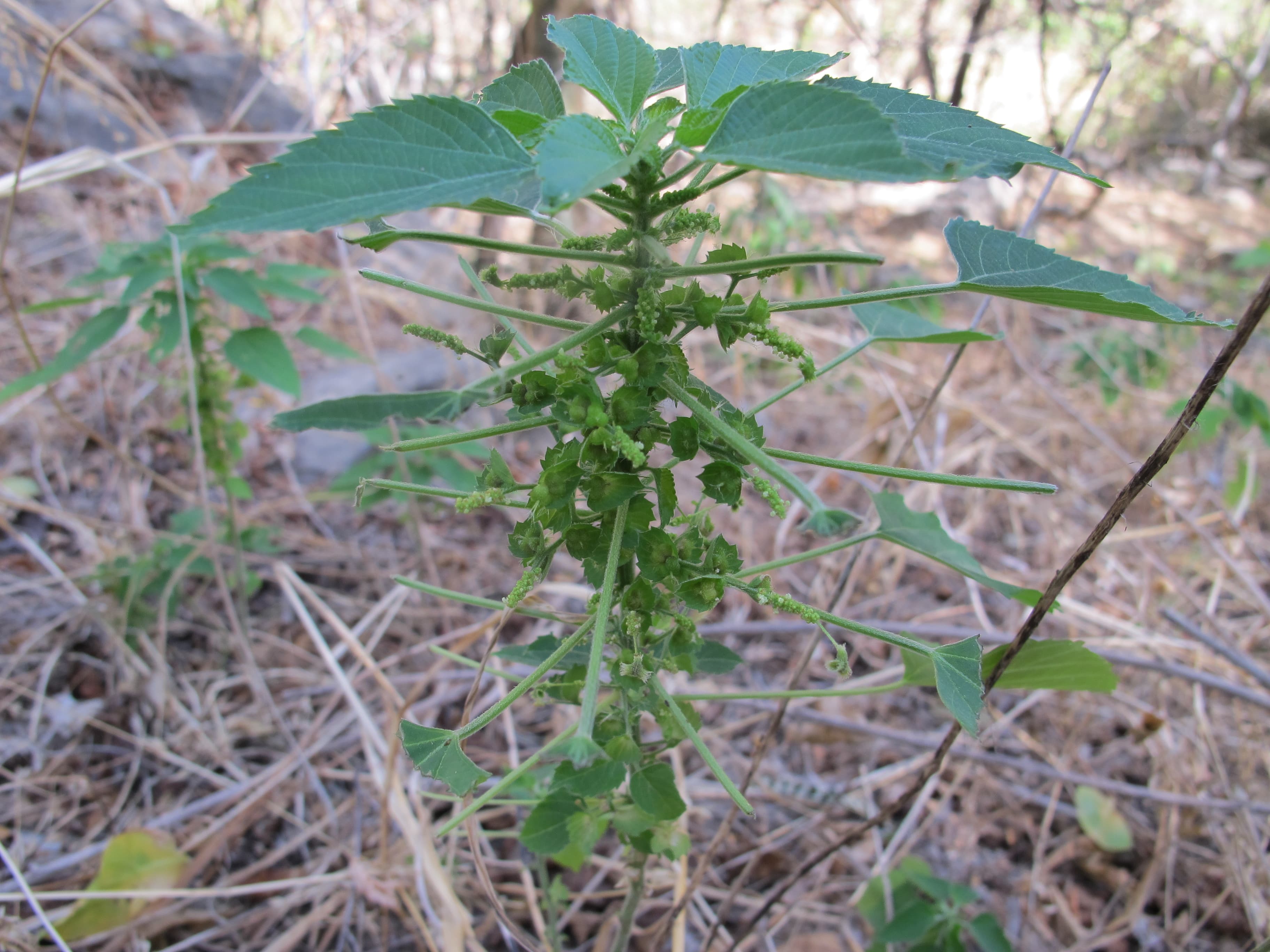
Acalypha_indica_10 © OBG
Acalypha_indica_2 © OBG
Acalypha_indica_3 © OBG
Acalypha_indica_4 © OBG
Acalypha_indica_5 © OBG
Acalypha_indica_6 © OBG
Acalypha_indica_7 © OBG
Acalypha_indica_8 © OBG
Acalypha_indica_9 © OBG
Acalypha_indica © OBG
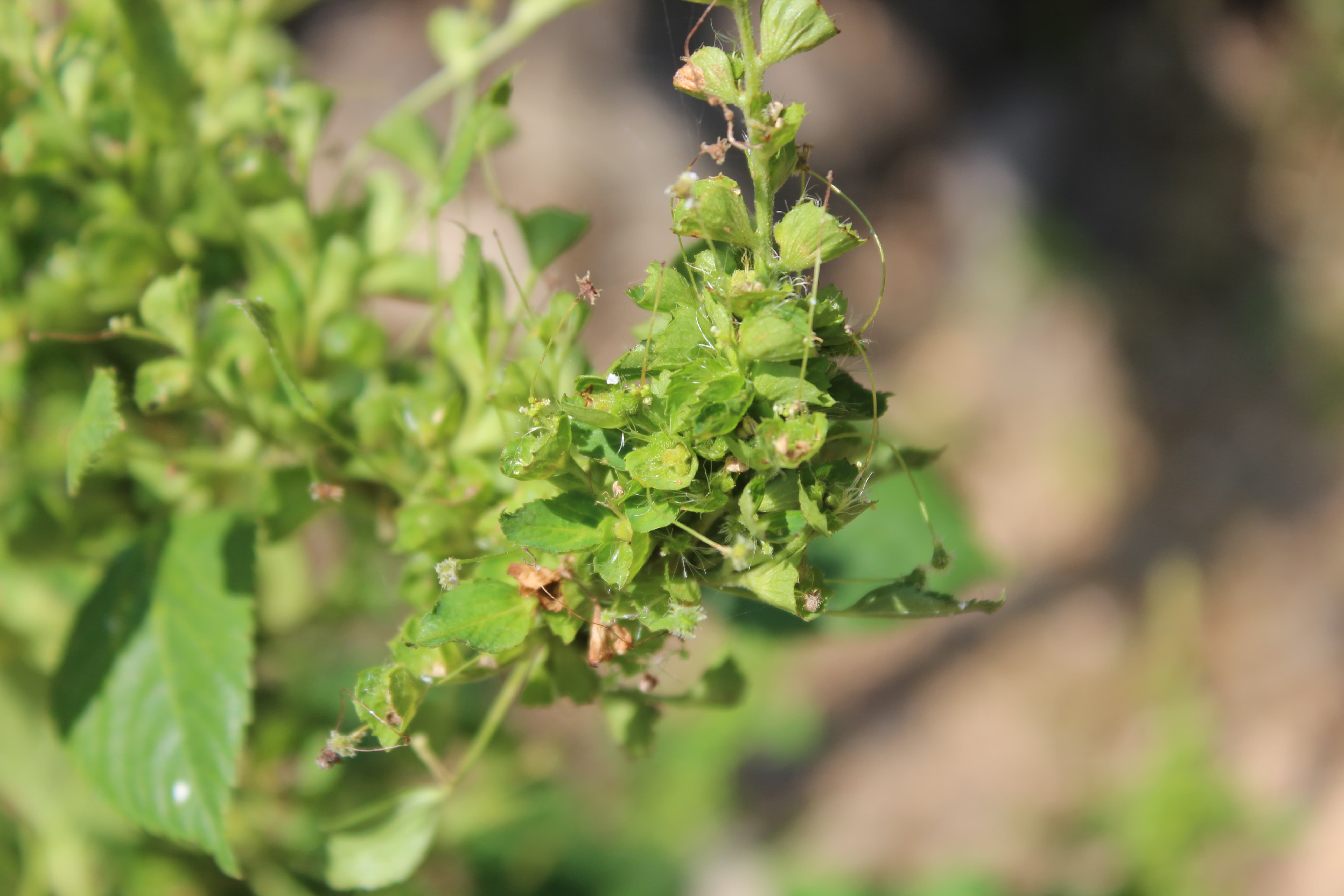
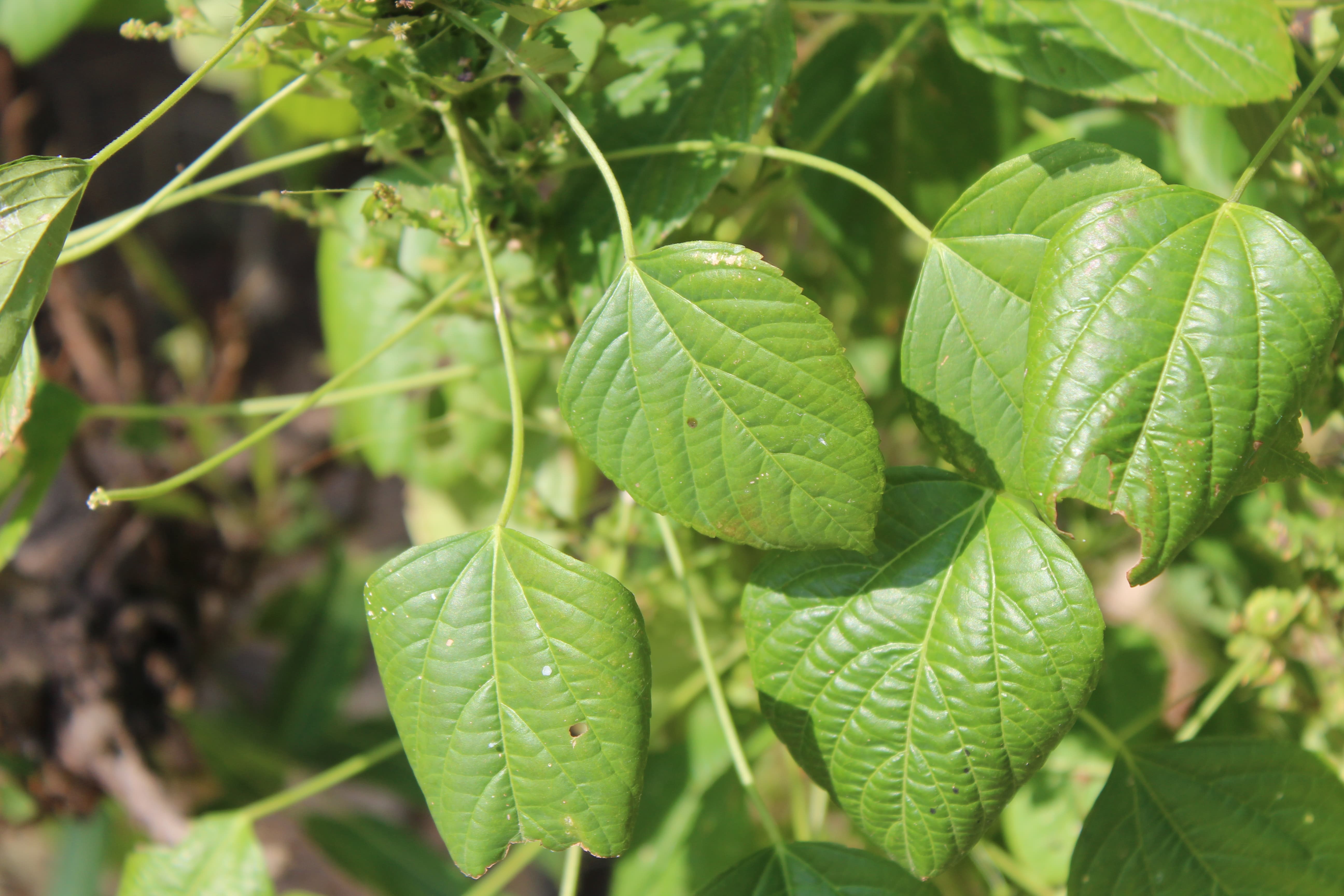
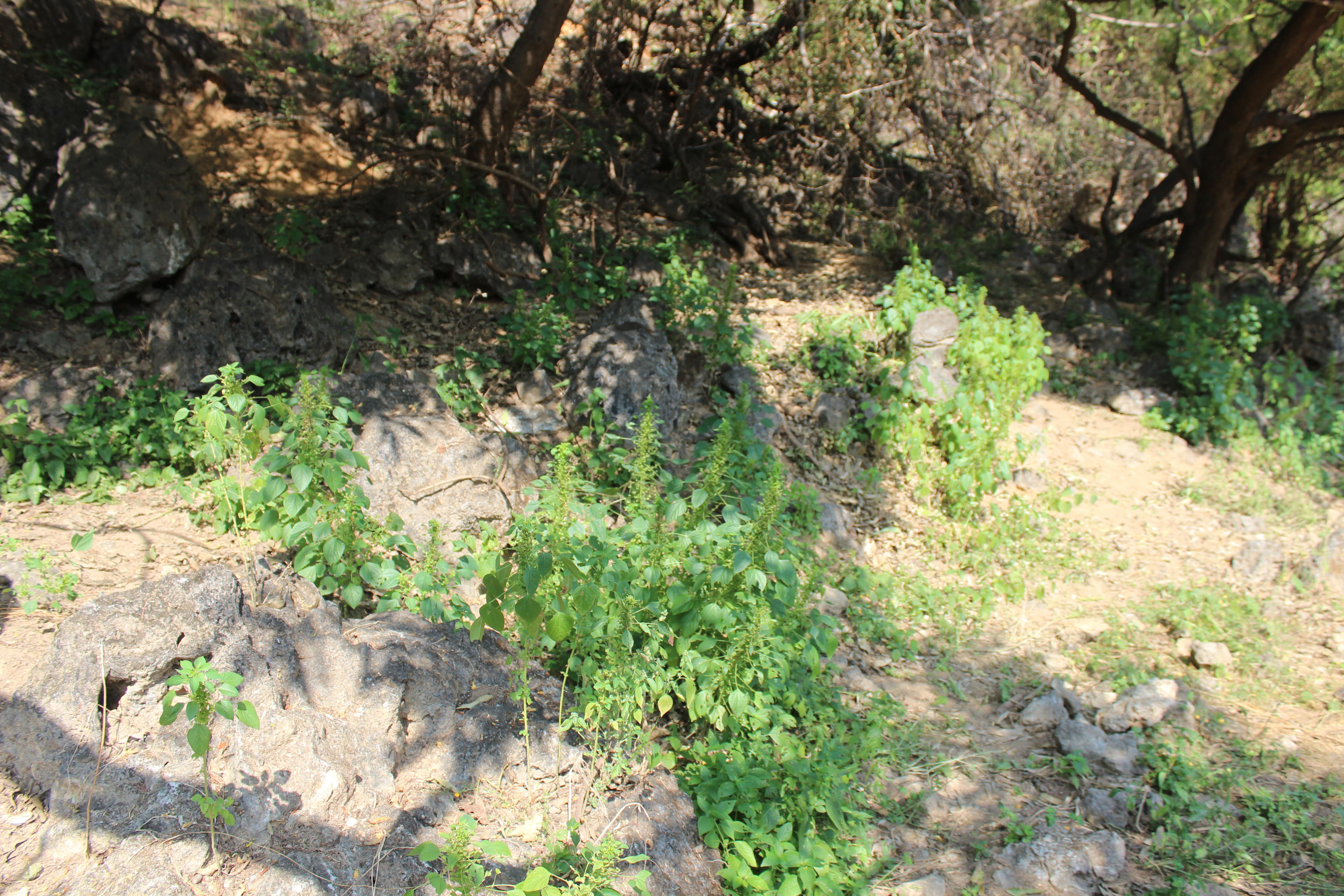
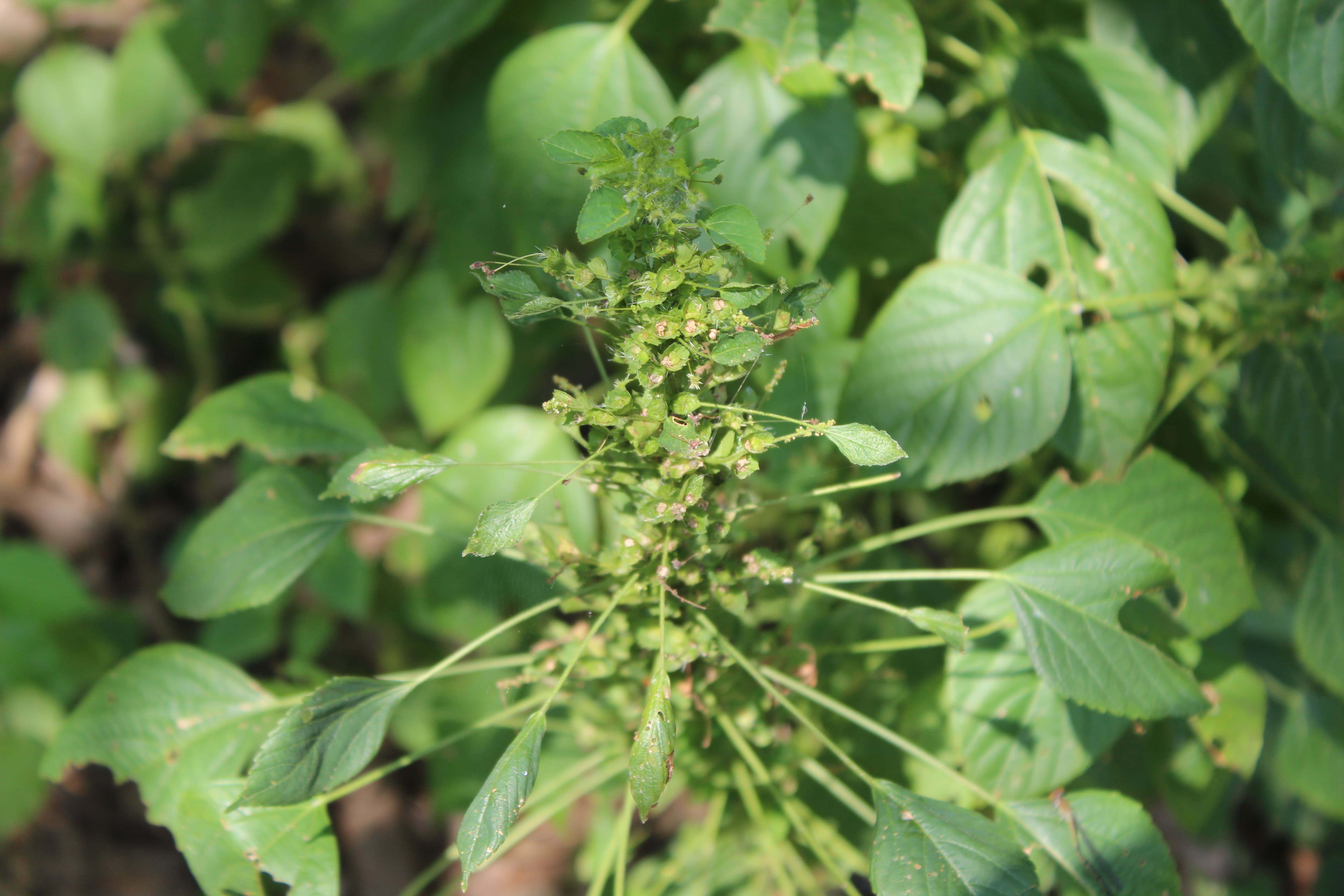
Monoecious . Erect woody annual herb or subshrub ; up to 80 cm tall or more . Stems erect , sparingly to evenly crisped-puberulous or tomentose . Leaves alternate , 2-9 x 1-5 cm , ovate , acute apex , base rounded , margin serrate , glabrescent or sparsely pubescent ; stipules setaceous ; petiole up to 10 cm . Inflorescences catkin-like , in groups of 3-5 , on spikes borne in leaf axils or terminally , up to 10 cm long . Flowers bisexual , small . Male flowers: minute , ± 1 mm , white-green , subsessile or shortly pedicellate ; sepals 4 ; petals absent ; arranged in a slender spike . Female flowers: green , sessile ; sepals 3 , triangular-ovate , ciliate ; petals absent ; in groups of 3-5 subtended and surrounded by a bract with toothed margins . Fruit capsule , 2-3 mm in diameter , 3-lobed , tuberculate and pubescent . Seeds 1 . 3 x 1 mm , ovoid , small , ± smooth , grey or brown , with a flattened linear caruncle . (Ref . Flora of Oman ; vol . 2) .
No Data
Not Evaluated (NE)
Common
الوصف غير متاح حاليًا
Cupamenis indica (L.) Raf.
Ricinocarpus indicus (L.) Kuntze
No data
maintenanceAr.Item1
Indian Acalypha
Poison Bush
Indian Mercury
Indian Copperleaf
Indian Nettle
Three-seeded Mercury
In Omani studies: Miller & Morris (1988) wrote that: "This small plant comes up anywhere near water or after rain. It was formerly gathered in great quantities and taken to be sold in the market. It has an astringent, lemony flavour and was eaten raw, added to sauces and stews, or cooked with a very little water and eaten with buttermilk [J: rob] or a squeeze of lime. Leafy green vegetables were in short supply in Dhofar, so nutritionally, wild plants such as this one were very important as a source of the vitamins and minerals essential to the maintenance of good health. (Ref. Plants of Dhofar). In addition, Ghazanfar (2007) mentioned that: "The whole plant is edible, but is sour to taste". (Ref. Flora of Oman, vol.2). Furthermore, Pickering & Patzelt (2008) stated that: "Has a pleasant lemony flavour, used in cooking. a variety of medicinal uses are reported".
...

*Ghazanfar, S. (2007). Flora of the Sultanate of Oman, vol.2: Crassulaceae – Apiaceae. Meise, National Botanic Garden of Belgium (Scripta Botanica Begica, Vol. 36). ISBN 9789072619747 ISSN 0779-2387. *https://en.wikipedia.org *Miller, A., Morris, M. (1988). Plants of Dhofar, the Southern Region of Oman: Traditional, Economic, and Medicinal Uses. Published by Office of the Adviser for Conservation of the Environment, Diwan of Royal Court, Sultanate of Oman; ISBN 10: 0715708082 ISSN 13: 9780715708088. *Pickering, H. Patzelt, A. (2008). Field Guide to the Wild Plants of Oman. Kew publishing, Royal Botanic Garden, Kew. ISBN 9781842461778. *Patzelt, A., Harrison, T., Knees, S.G. & Hartley, L.A. (2014). Studies in the flora of Arabia: XXXI. New records from the Sultanate of Oman Edinburgh Journal of Botany 71: 161-180. *POWO (2023). ""Plants of the World Online. Facilitated by the Royal Botanic Gardens, Kew. Published on the Internet; http://www.plantsoftheworldonline.org
