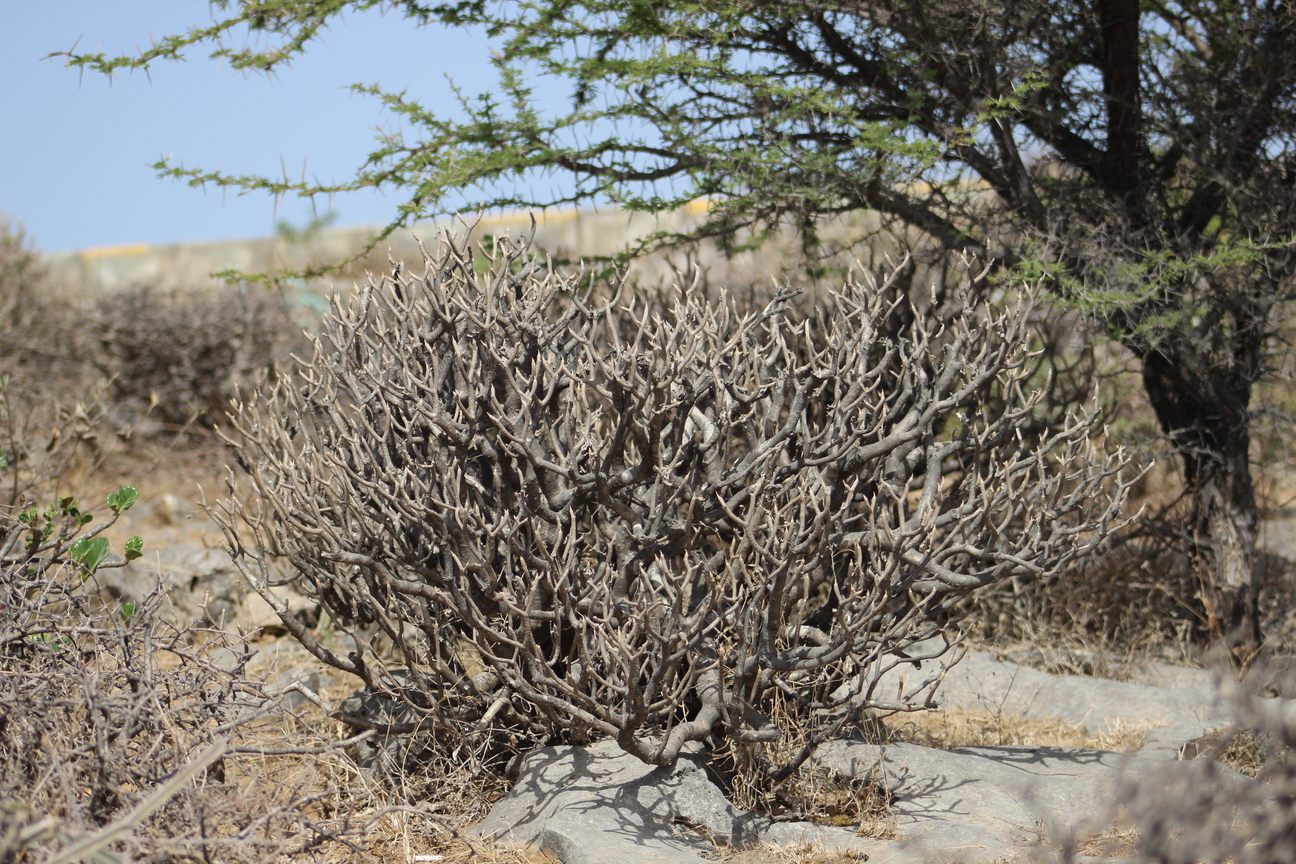
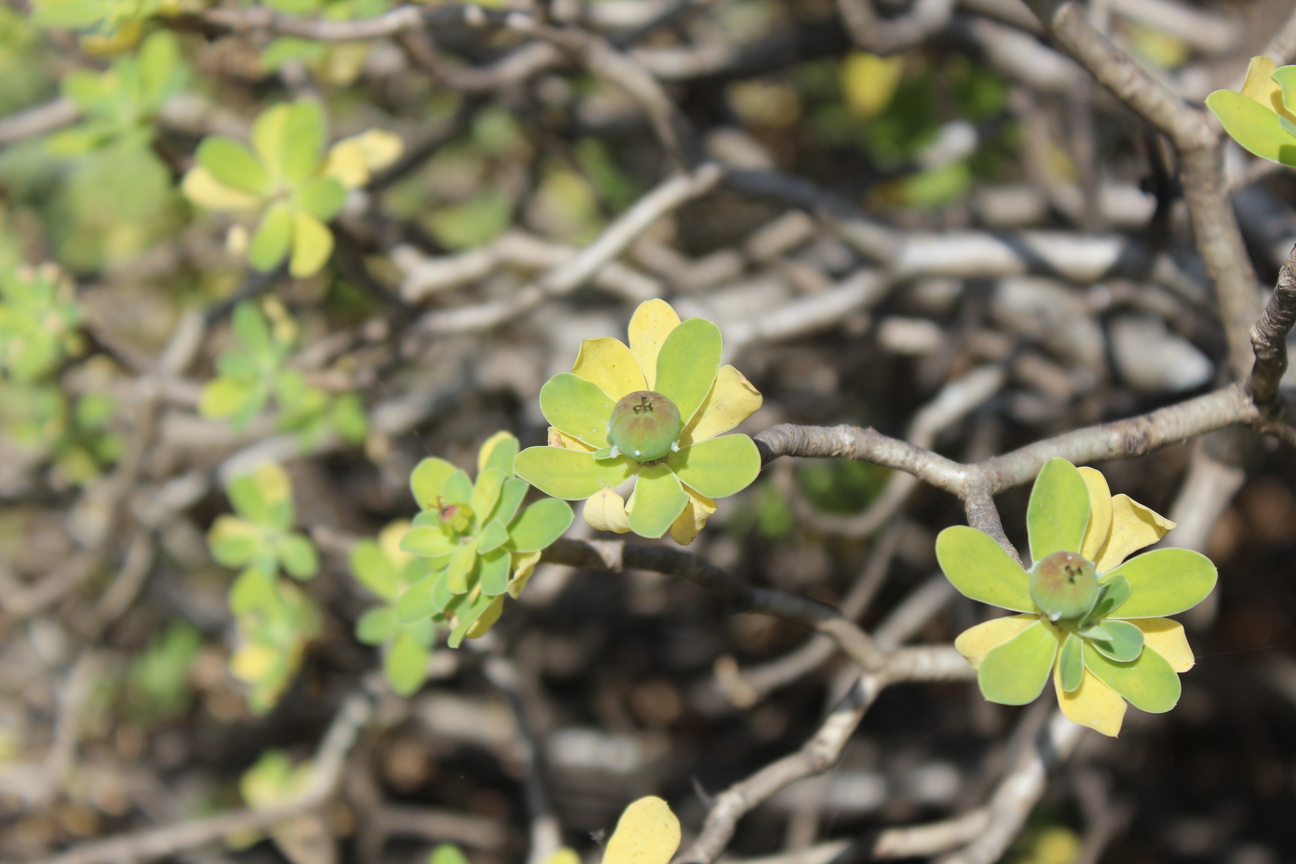
Euphorbia_adenensis_10 © OBG
Euphorbia_adenensis_2 © OBG
Euphorbia_adenensis_3 © OBG
Euphorbia_adenensis_4 © OBG
Euphorbia_adenensis_5 © OBG
Euphorbia_adenensis_6 © OBG
Euphorbia_adenensis_7 © OBG
Euphorbia_adenensis_8 © OBG
Euphorbia_adenensis_9 © OBG
Euphorbia_adenensis © OBG
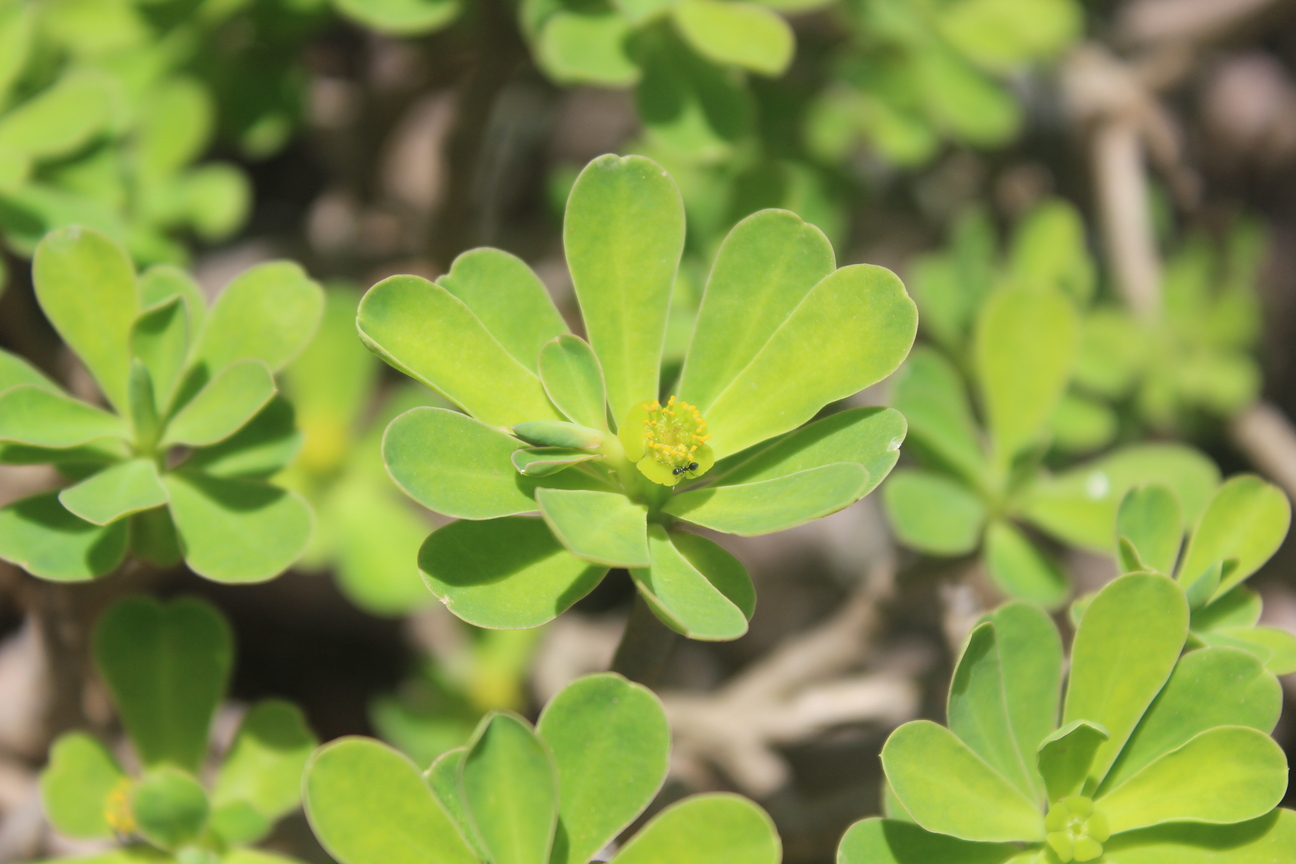
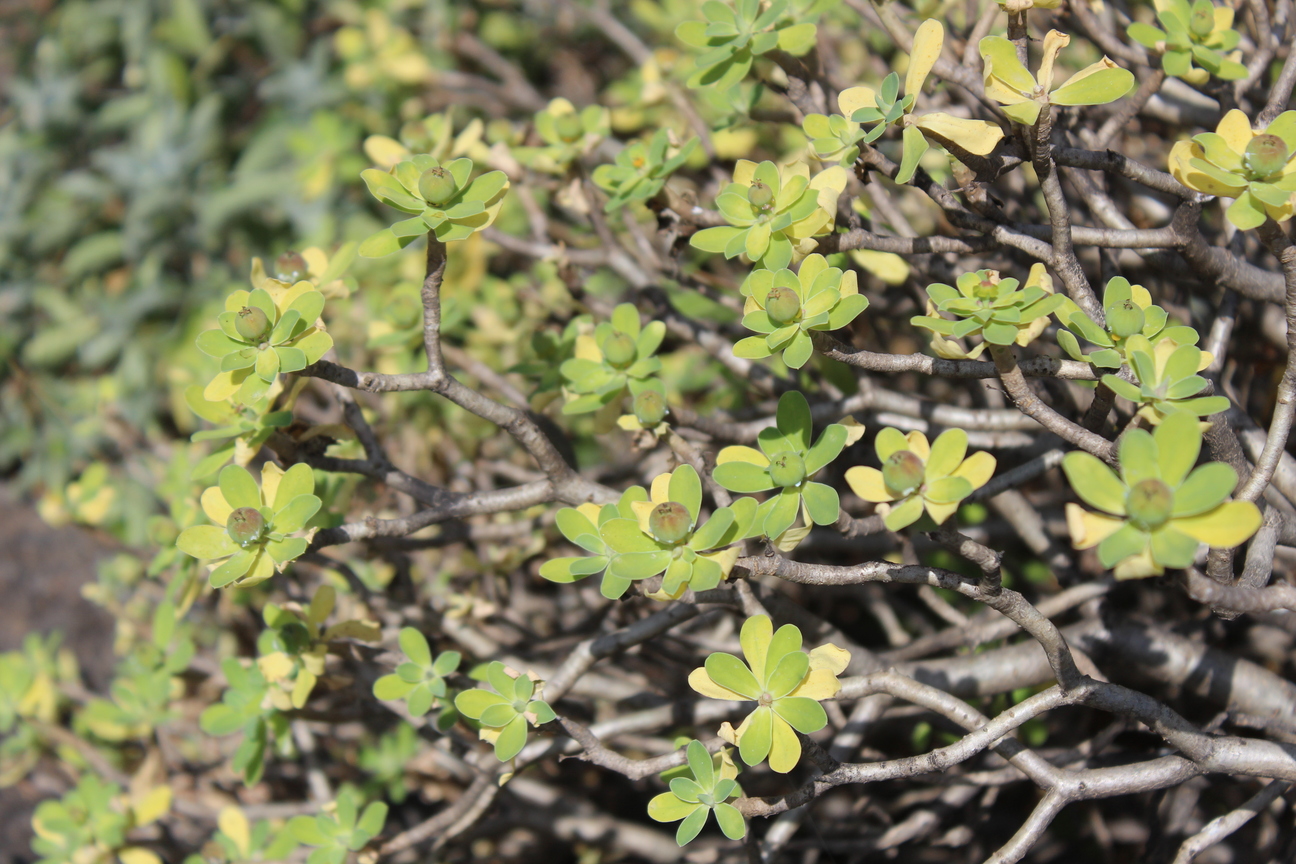
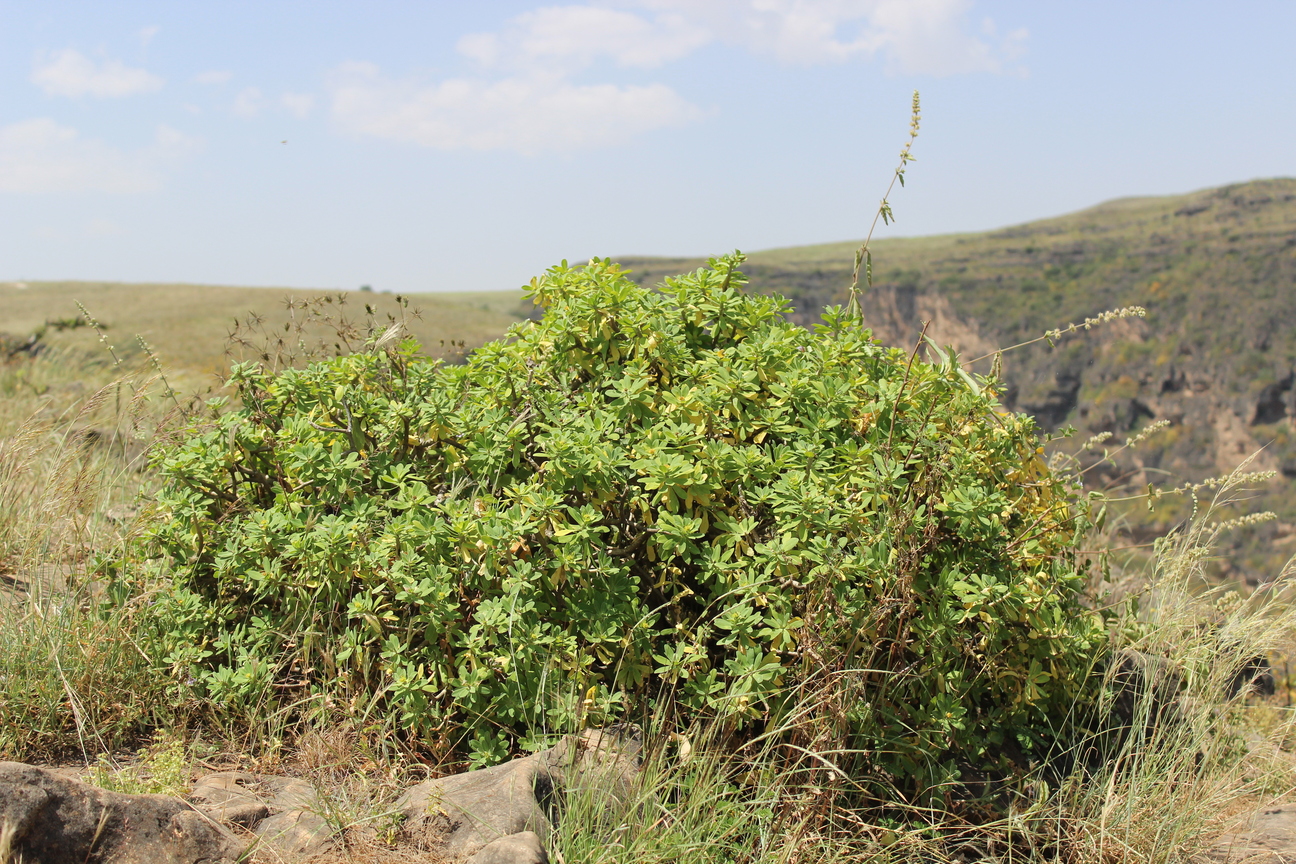
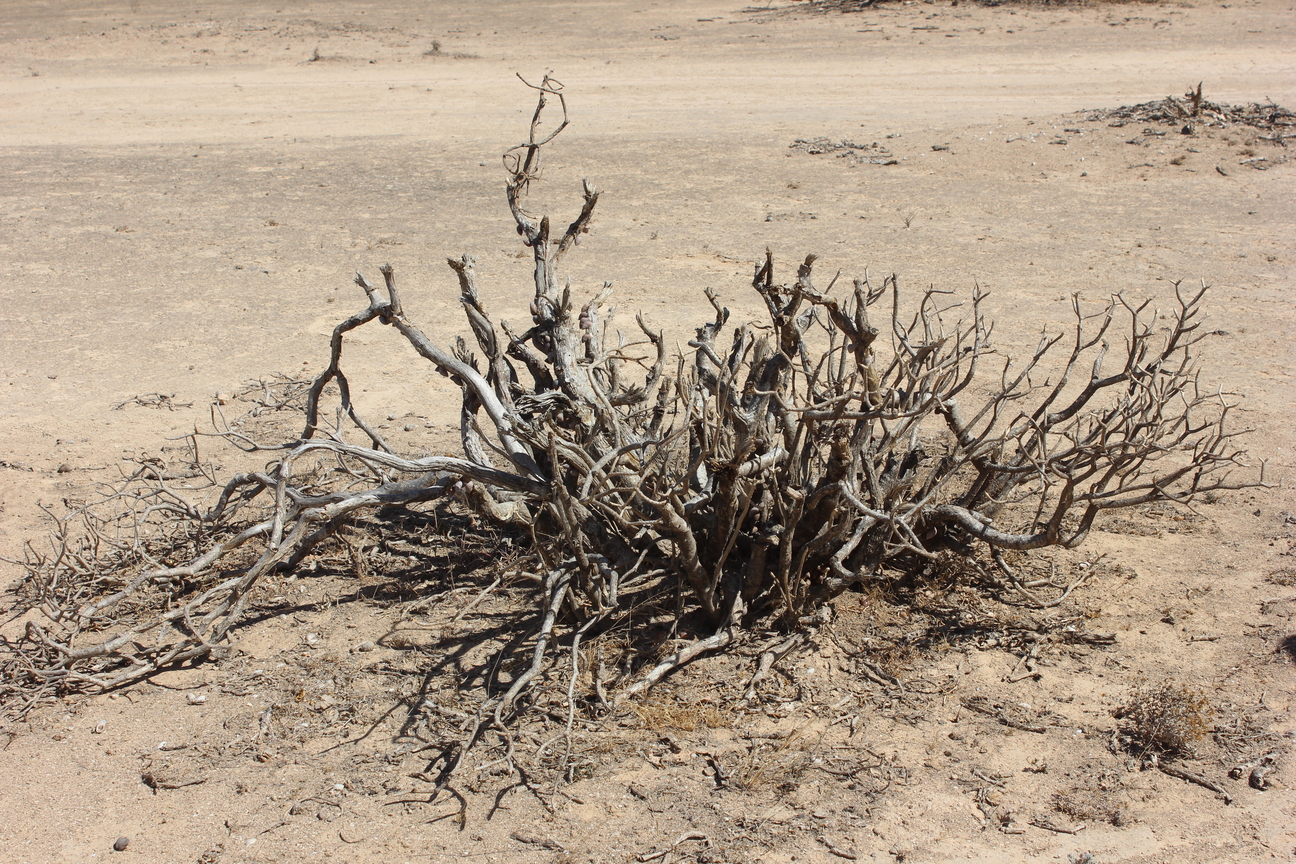
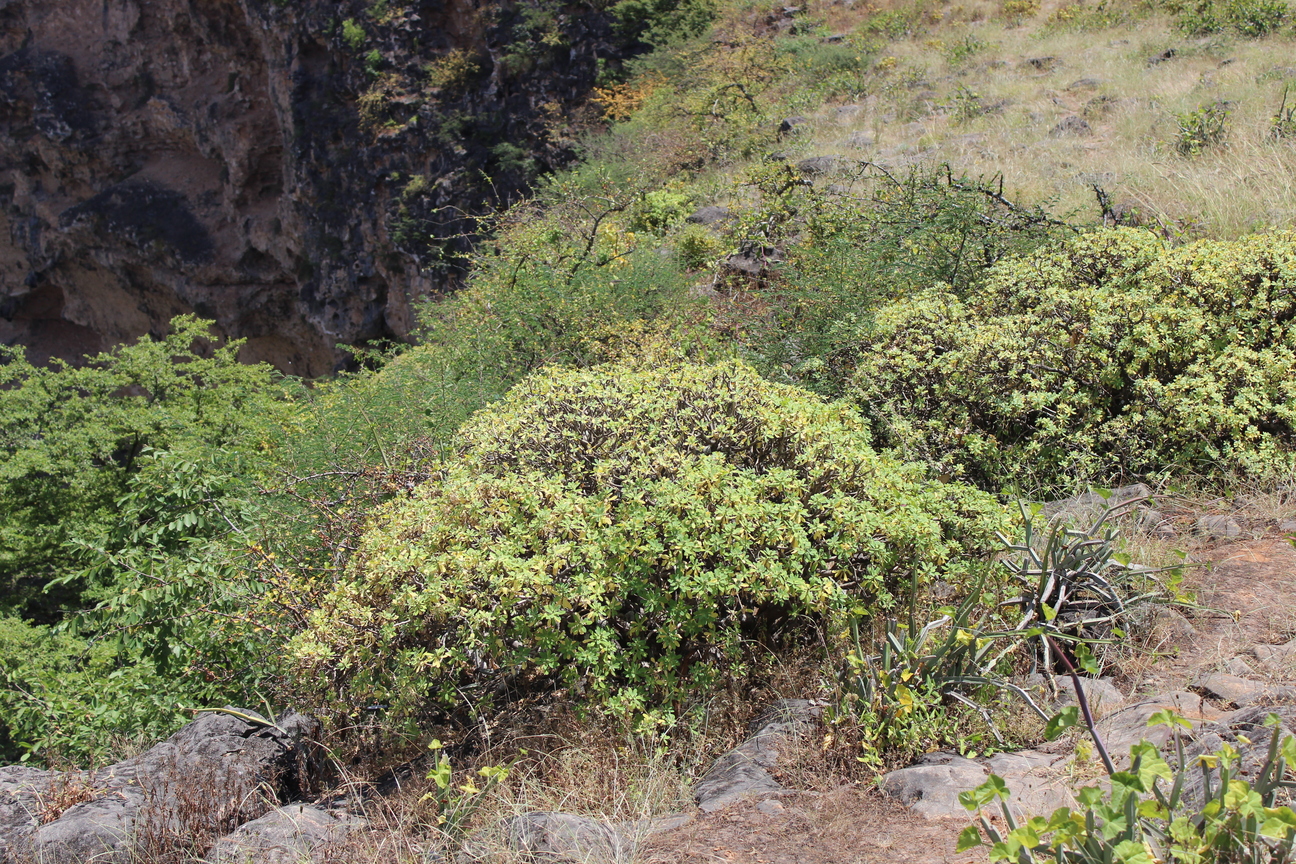
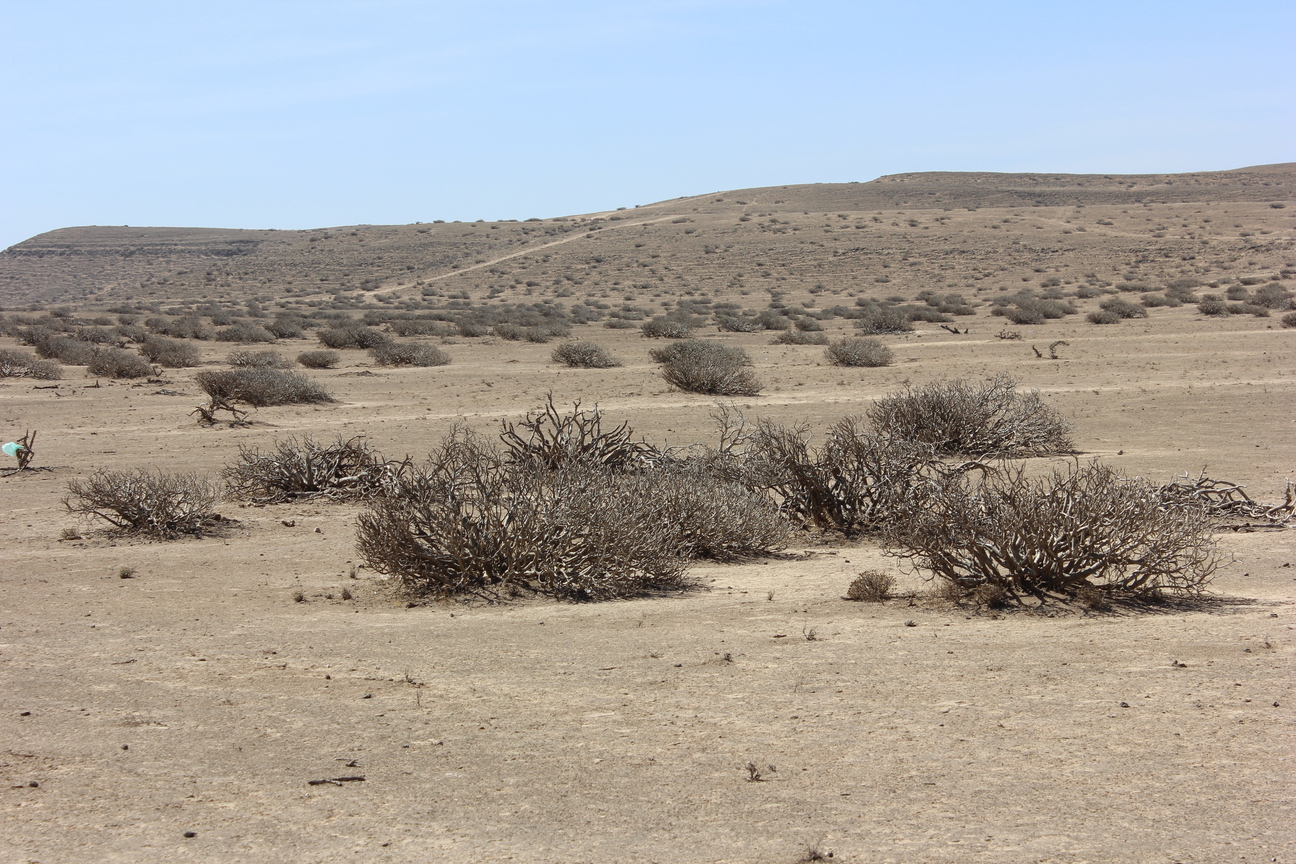
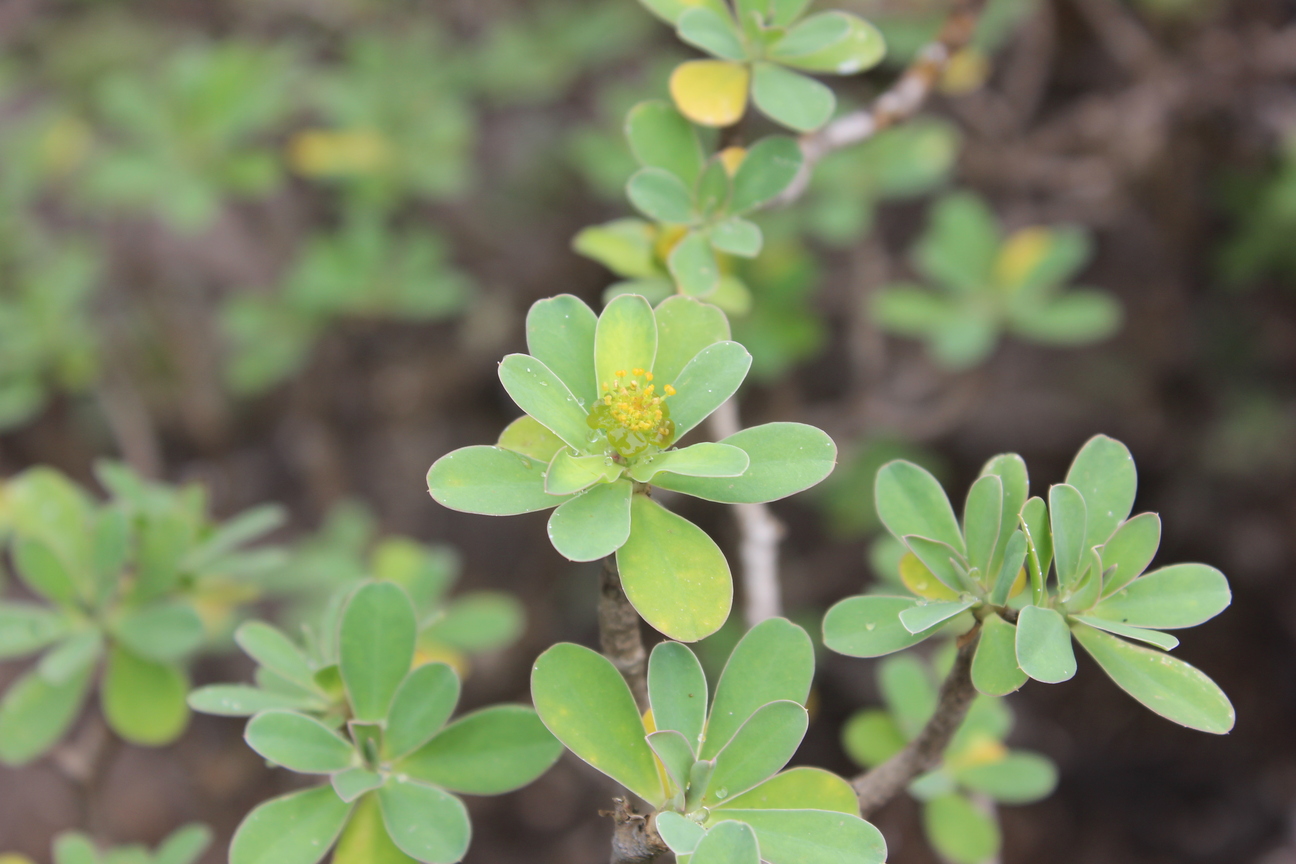
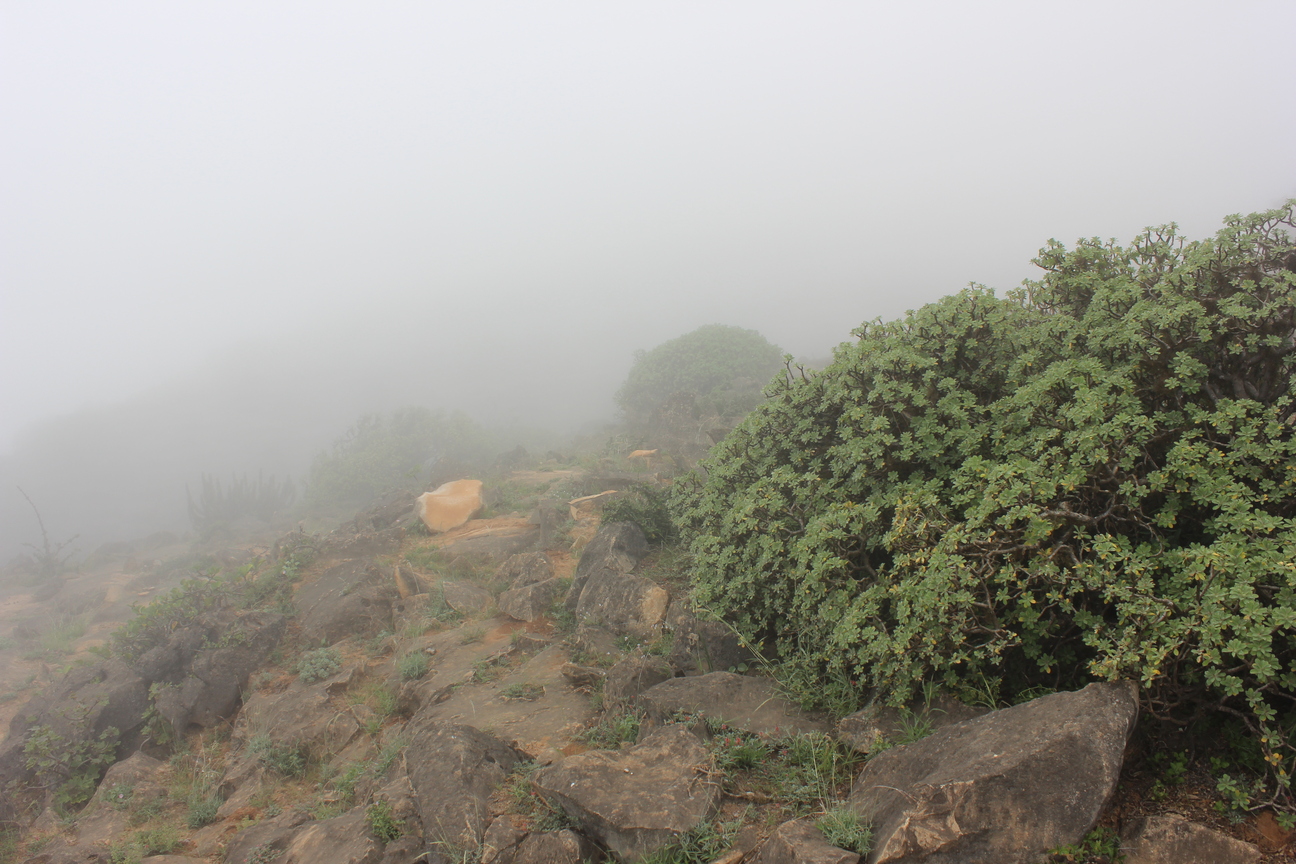
Dome-shaped , deciduous shrub ; up to 1 . 5 m tall , with copious white sap when cut . Stems much branched , soft , bet easily , semi-succulent , without spines ; bark grey , gnarled , glabrous , often bearing leaf scars . Leaves alternate , in terminal rosettes , 1 . 5–2 . 5 cm long , sessile , clustered at the tips of the stems , obovate to elliptical , rounded to minutely apiculate , cuneate base , entire margin , glabrous , bluish-green , slightly fleshy , often with pink margins . Inflorescences solitary , terminal cymes , borne in the centre of the leaves . Flowers cyathia , sessile ; male flowers numerous , reduced to yellow stamens ; female flowers yellow-green . Fruit capsule , 6-7 mm long x c . 9 mm across , subglobose , green , pinkish-reddish-green when ripened , erect , sessile , glabrous . Seeds c . 3 mm long , globose , brown , glabrous . (Ref . Flora of Oman ; vol . 2) .
No Data
Not Evaluated (NE)
Common
الوصف غير متاح حاليًا
Euphorbia balsamifera subsp. adenensis (Deflers) P.R.O.Bally
Tithymalus adenensis (Deflers) Soják
No data
maintenanceAr.Item1
Balsam Spurge
In Omani studies: Miller & Morris (1988) wrote that: "This bush, which forms the dominant vegetation of the high plateaux [J: kutun] that catch the edge of the monsoon moisture as it is blown from the sea, was a plant of great local importance and had many uses. The latex which flows copiously from any part of the plant which is cut or damaged was of prime importance. It is called in Jibbali: sahaz etiskot (the same term as is used to describe the resin of the frankincense) and was collected in containers such as clay pots [J: kahfin] or old water- or milk-skins [J: jiferit], which once filled were tipped into another larger cooking pot. This was put on the fire, and with a little added water, was left to simmer over a low flame until the latex thickened. It was then poured out and left to dry. Before
...

*Ghazanfar, S. (2007). Flora of the Sultanate of Oman, vol.2: Crassulaceae – Apiaceae. Meise, National Botanic Garden of Belgium (Scripta Botanica Begica, Vol. 36). ISBN 9789072619747 ISSN 0779-2387. *https://en.wikipedia.org *https://www.fishbase.in *Miller, A., Morris, M. (1988). Plants of Dhofar, the Southern Region of Oman: Traditional, Economic, and Medicinal Uses. Published by Office of the Adviser for Conservation of the Environment, Diwan of Royal Court, Sultanate of Oman; ISBN 10: 0715708082 ISSN 13: 9780715708088. *Pickering, H. Patzelt, A. (2008). Field Guide to the Wild Plants of Oman. Kew publishing, Royal Botanic Garden, Kew. ISBN 9781842461778. *POWO (2023). ""Plants of the World Online. Facilitated by the Royal Botanic Gardens, Kew. Published on the Internet; http://www.plantsoftheworldonline.org
