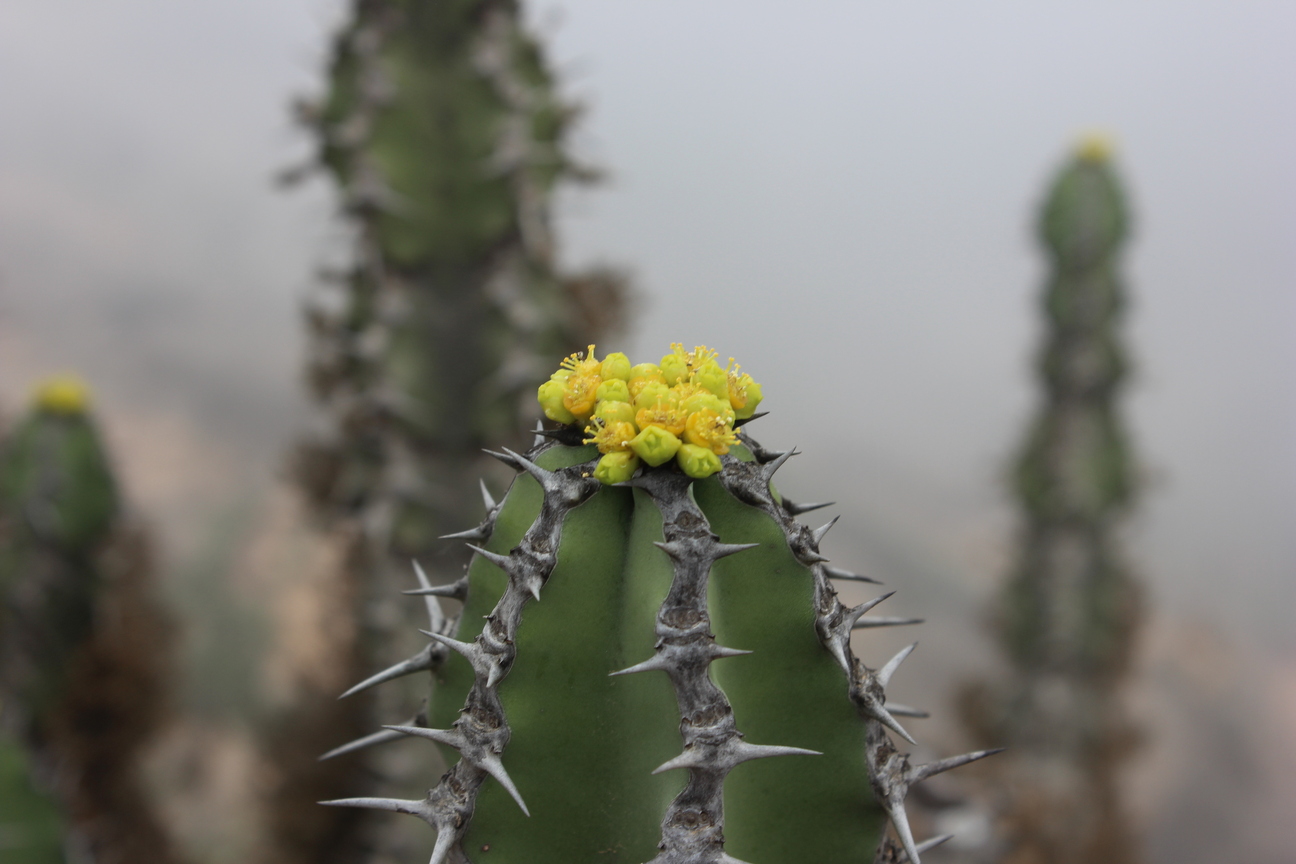
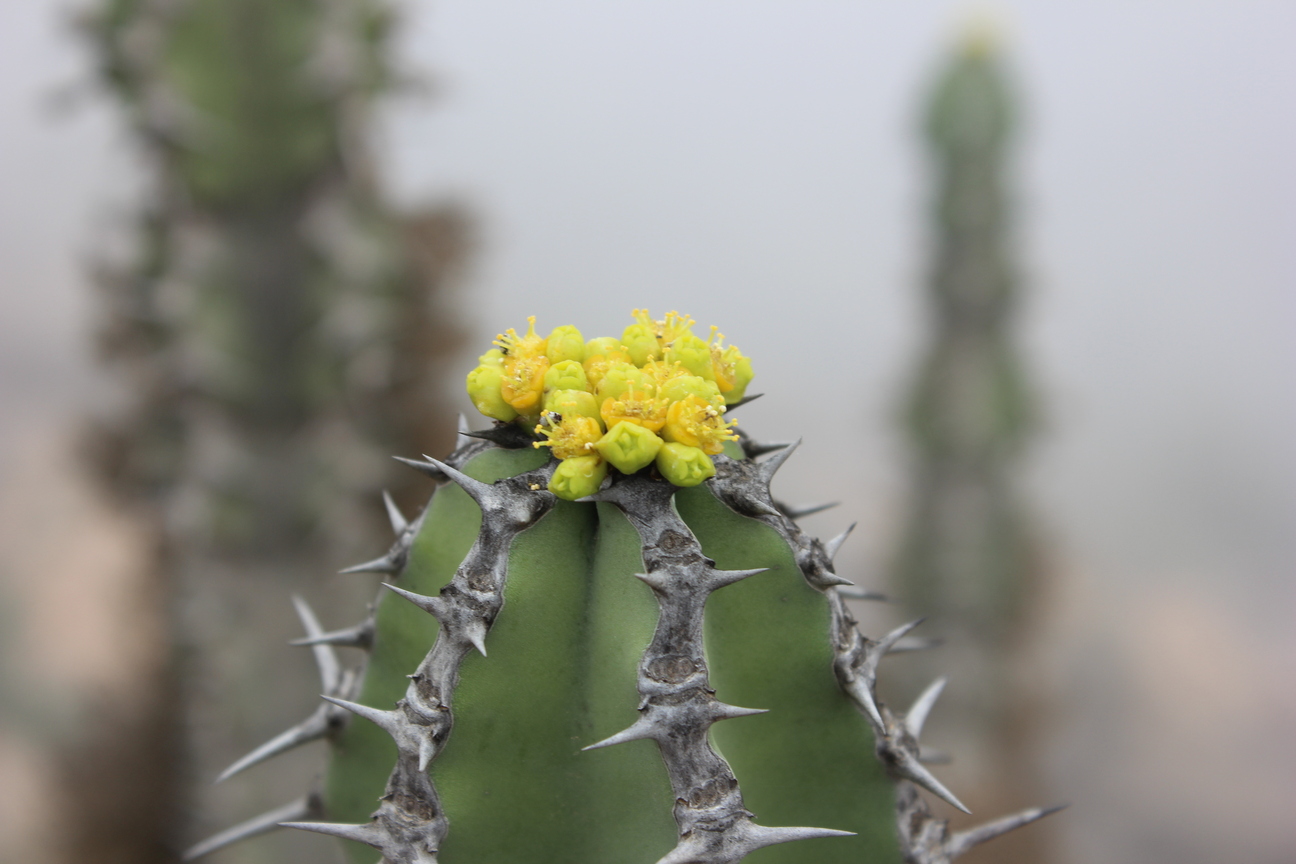
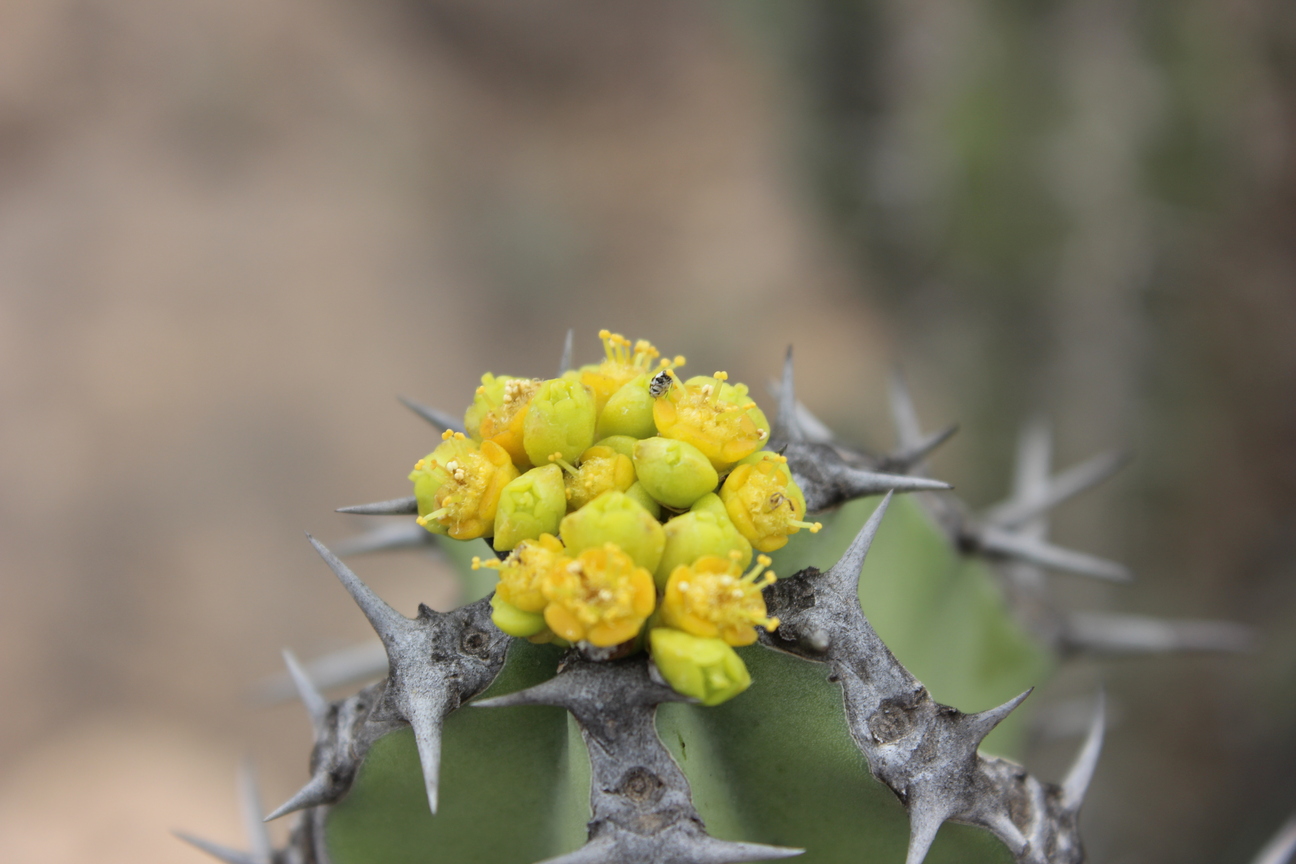
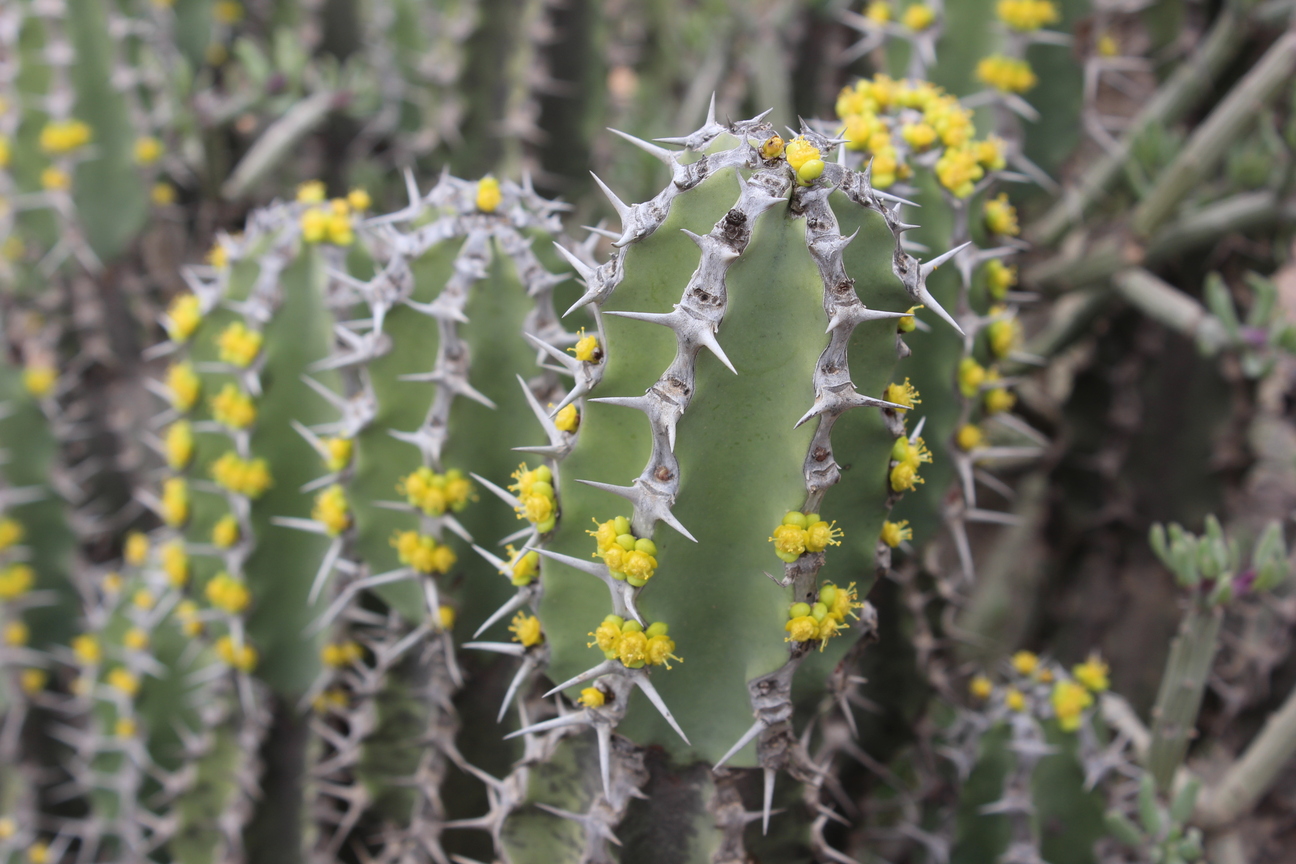
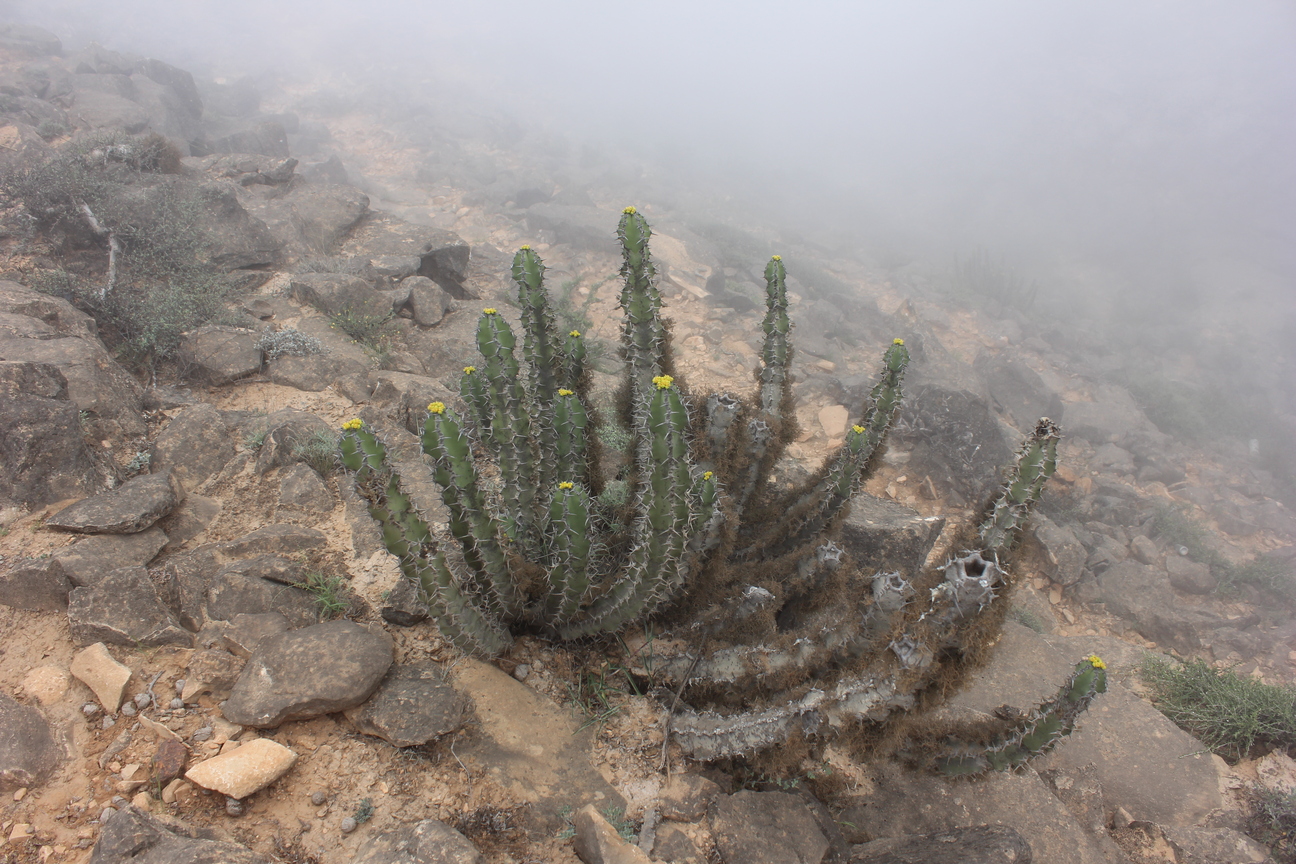
Euphorbia_cactus_2 © OBG
Euphorbia_cactus_3 © OBG
Euphorbia_cactus_4 © OBG
Euphorbia_cactus_5 © OBG
Euphorbia_cactus_6 © OBG
Euphorbia_cactus_7 © OBG
Euphorbia_cactus_8 © OBG
Euphorbia_cactus_9 © OBG
Euphorbia_cactus © OBG
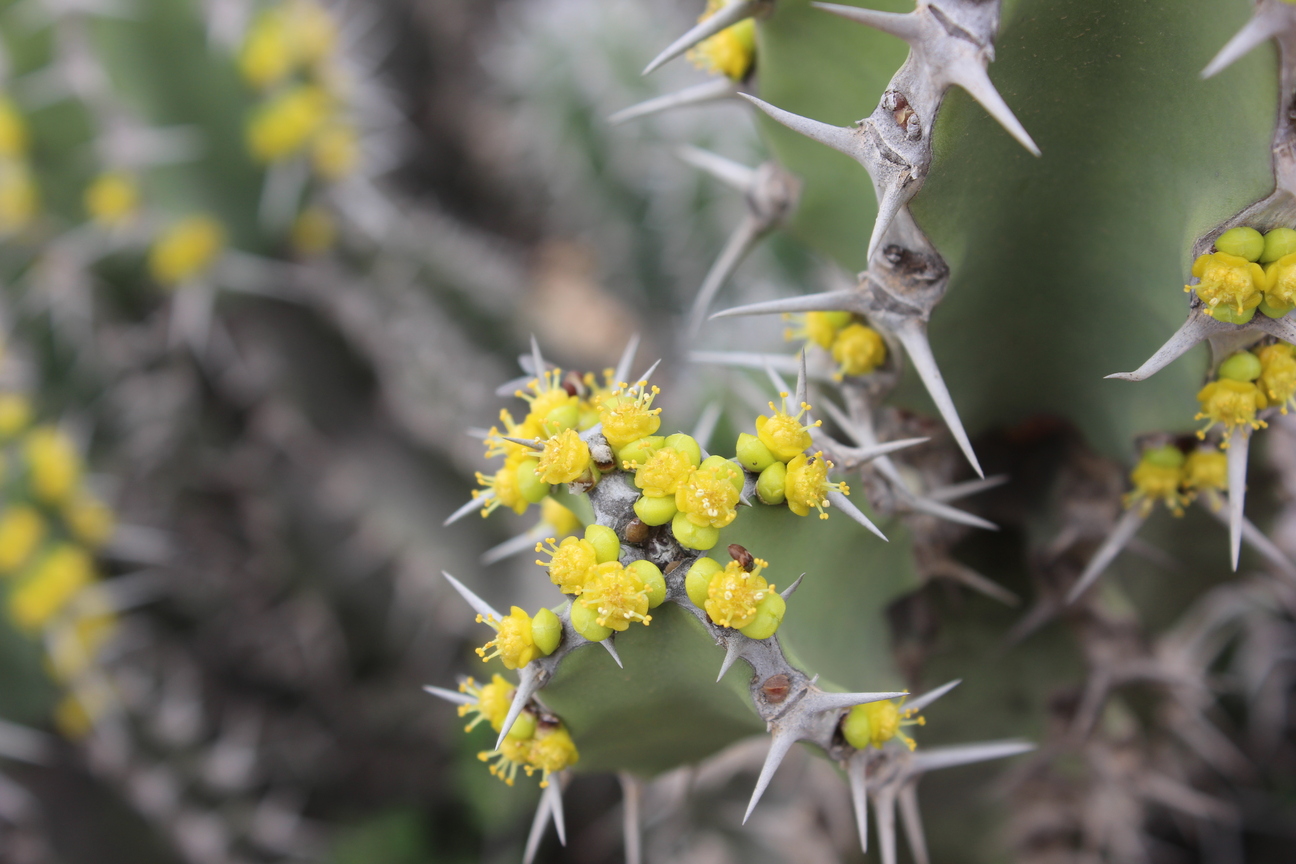
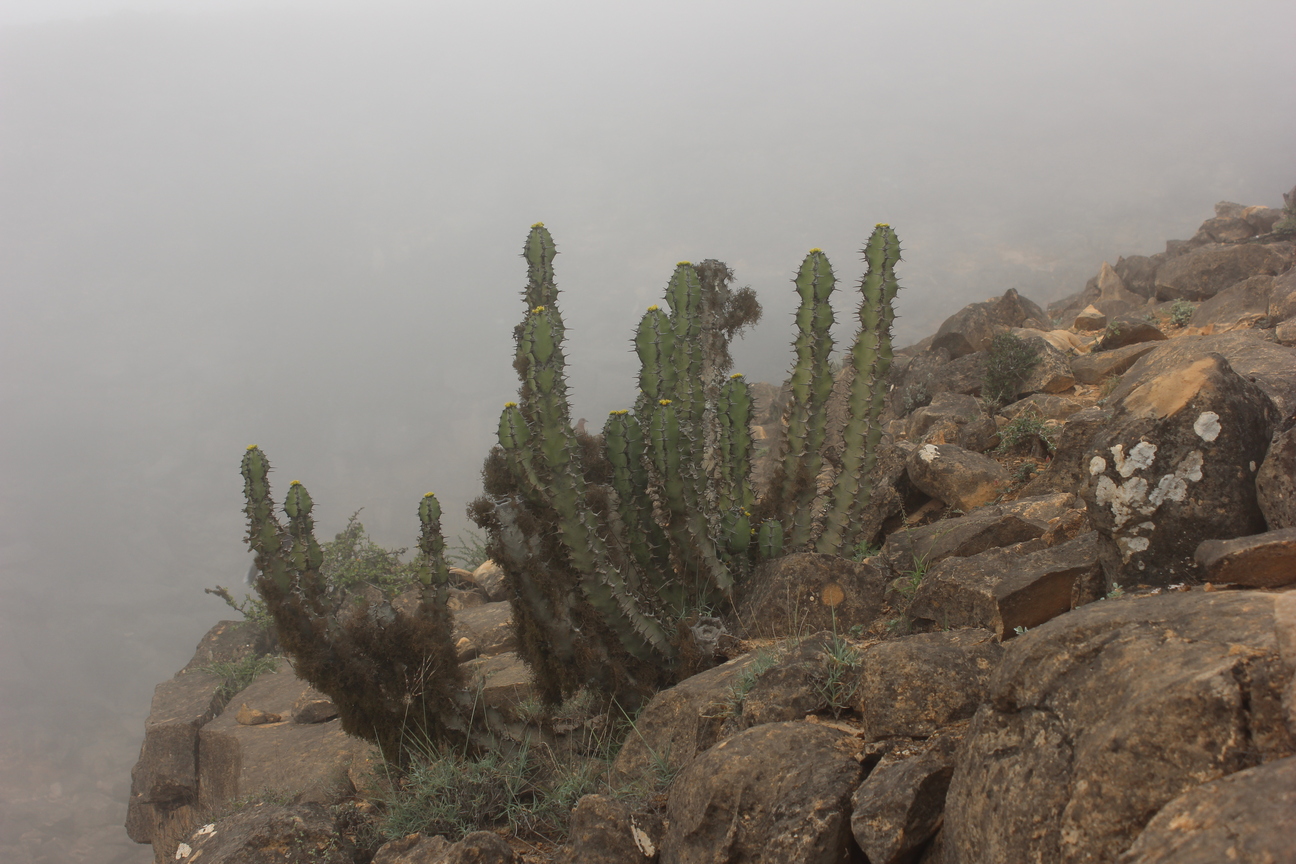
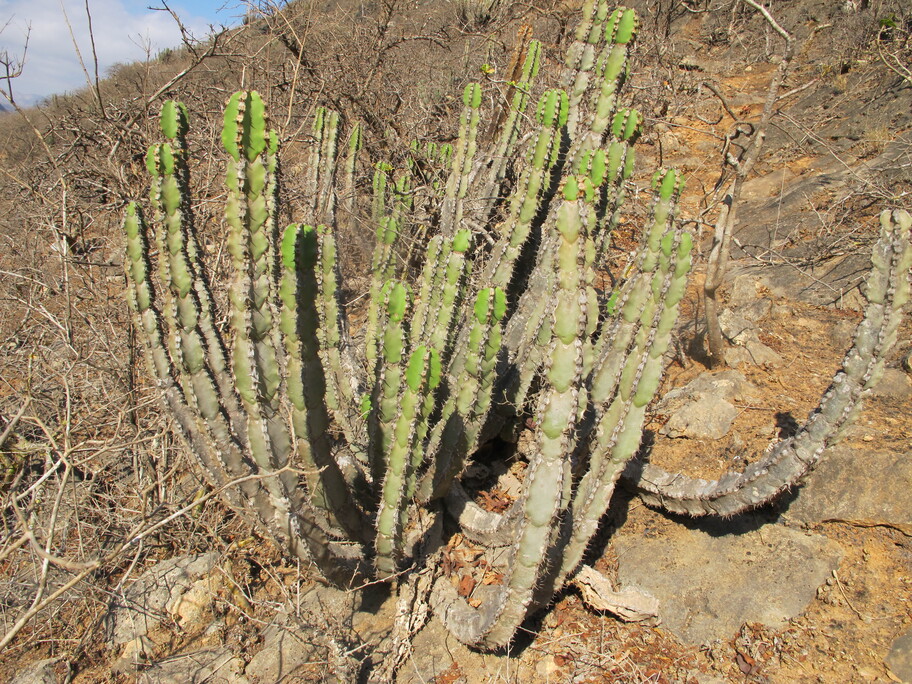
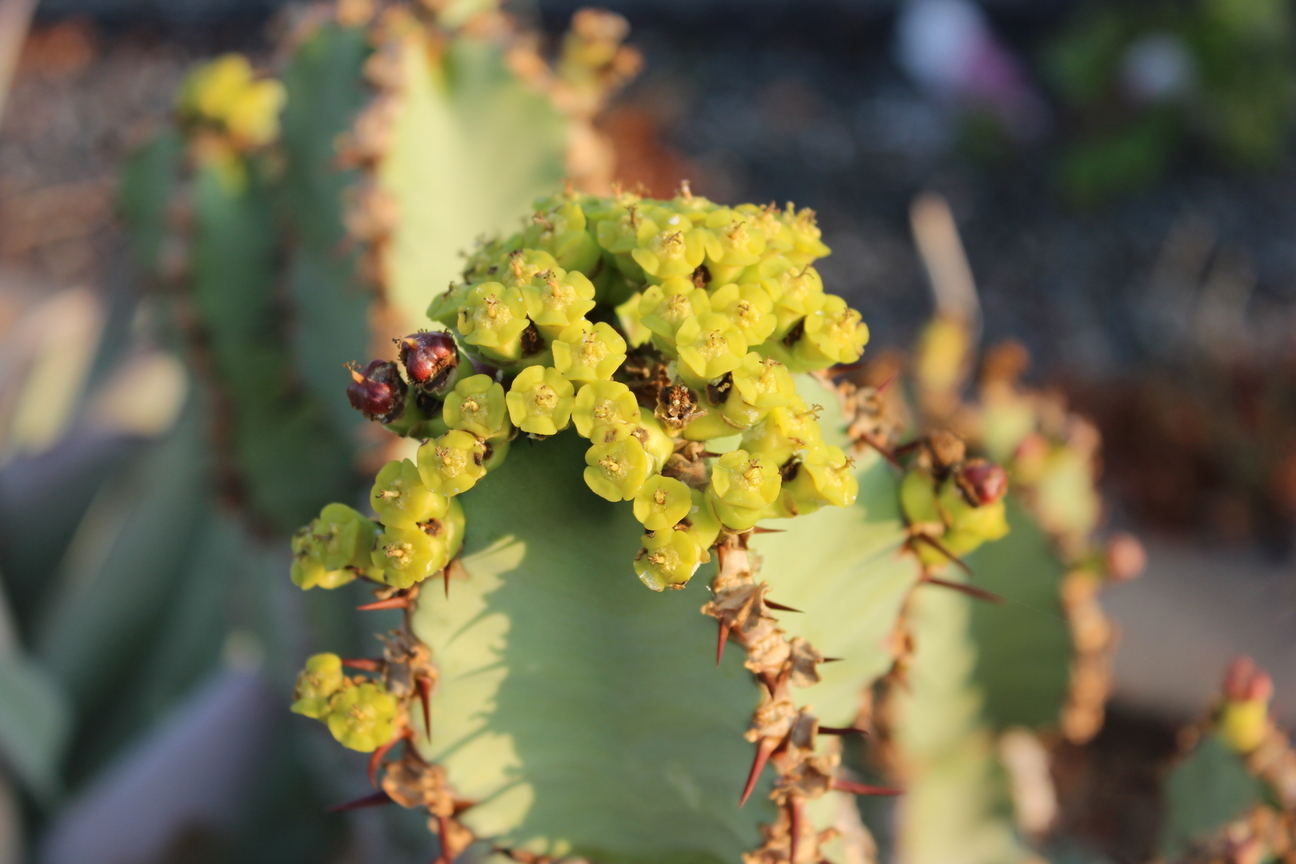
An erect spiny shrub ; up to 1 m tall , with dark green stems . Stems succulent , 1-3 branched from the base , ascending , waisted , strongly 3(-5)-angled , 5-10 cm across , glabrous , zigzagging angles with whitish-brown paired spines along the ridges ; spines stout , 1-2 cm long . Leaves 2-4 x 4-6 mm , ovate , inconspicuous and deciduous . Inflorescences axillary , sessile , in groups of 3 , arranged along the upper part of the ridges on the upper part of stem , the central cyathium male and developing first , the lateral two bisexual ; bracts leaf-like , deciduous ; involucre cup-shaped , 8-9 mm across , c . 5 mm deep . Flowers cyathia , yellow-green ; male flowers numerous , bracteoles fimbriate ; female flowers subsessile ; ovary glabrous ; style arms c . 3 . 5 mm long . Fruit capsule , 7-9(-15) mm in diameter , subglobose , 3-lobed , erect , sessile , glabrous , reddish-brown when mature . Seeds c . 3 mm long , subglobose , grey , glabrous . (Ref . Flora of Oman ; vol . 2) .
No Data
Not Evaluated (NE)
Common
الوصف غير متاح حاليًا
Euphorbia cactus var. tortirama Rauh & Lavranos
No data
maintenanceAr.Item1
Not known
In Omani studies: Miller & Morris (1988) wrote that: "The latex although needing careful handling, was used as a general adhesive. The whole plant was one of the most important drought fodders for camels, in the way Sansevieria was for cattle. The side branches were cut off with a matchet, care being taken not to damage the core of the plant from which new growth would come, and armfuls were carried off to an area of flat rock which had been enclosed by low stone walls to prevent pieces flying around as the pile was chopped and beaten with heavy clubs. The harder woody parts were discarded and the rest fed to the hungry camels. Camels fed on this diet were able to go without water for many days. It was important both in the dry season when other fodder was scarce, and also in the cold winter season when
...

*Ghazanfar, S. (2007). Flora of the Sultanate of Oman, vol.2: Crassulaceae – Apiaceae. Meise, National Botanic Garden of Belgium (Scripta Botanica Begica, Vol. 36). ISBN 9789072619747 ISSN 0779-2387. *https://en.wikipedia.org *Miller, A., Morris, M. (1988). Plants of Dhofar, the Southern Region of Oman: Traditional, Economic, and Medicinal Uses. Published by Office of the Adviser for Conservation of the Environment, Diwan of Royal Court, Sultanate of Oman; ISBN 10: 0715708082 ISSN 13: 9780715708088. *Pickering, H. Patzelt, A. (2008). Field Guide to the Wild Plants of Oman. Kew publishing, Royal Botanic Garden, Kew. ISBN 9781842461778. *POWO (2023). ""Plants of the World Online. Facilitated by the Royal Botanic Gardens, Kew. Published on the Internet; http://www.plantsoftheworldonline.org
