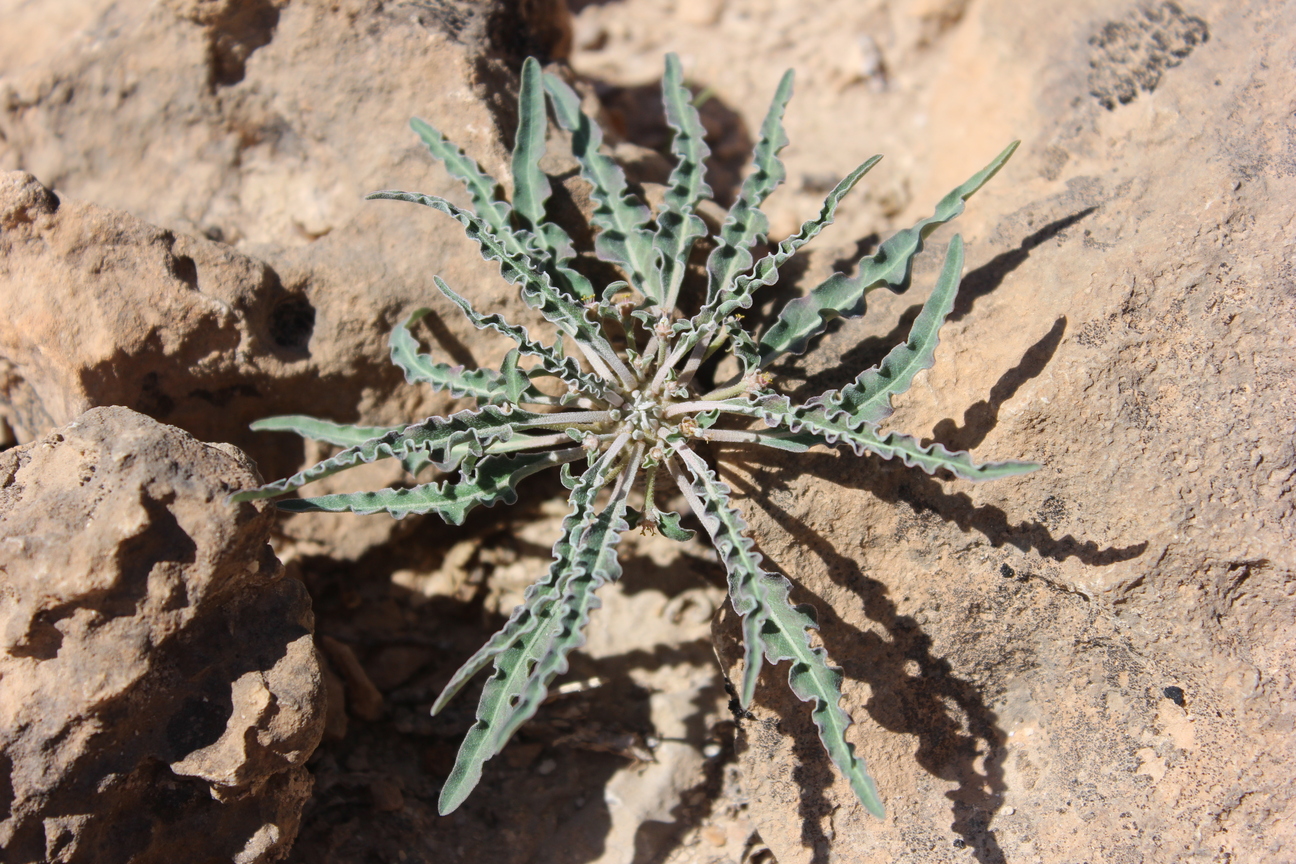
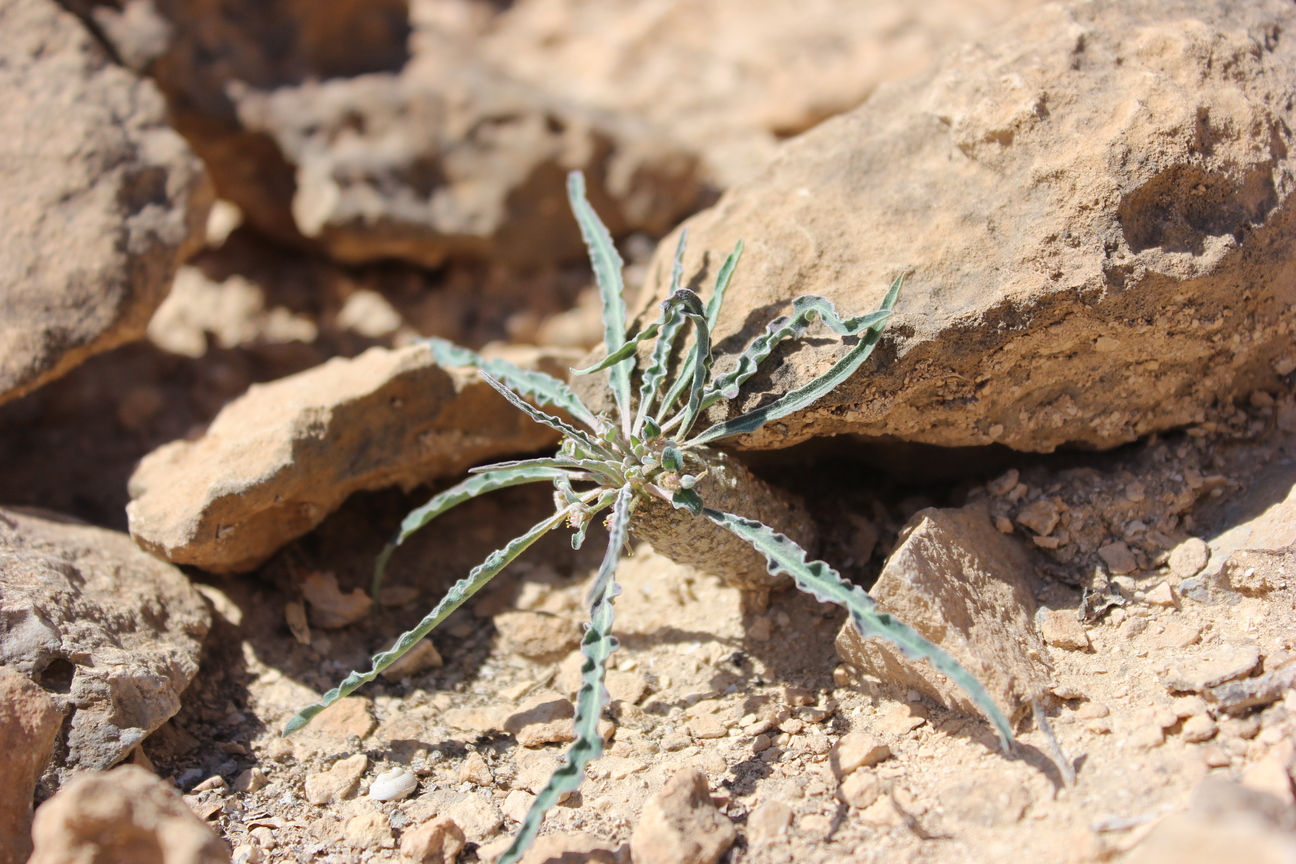
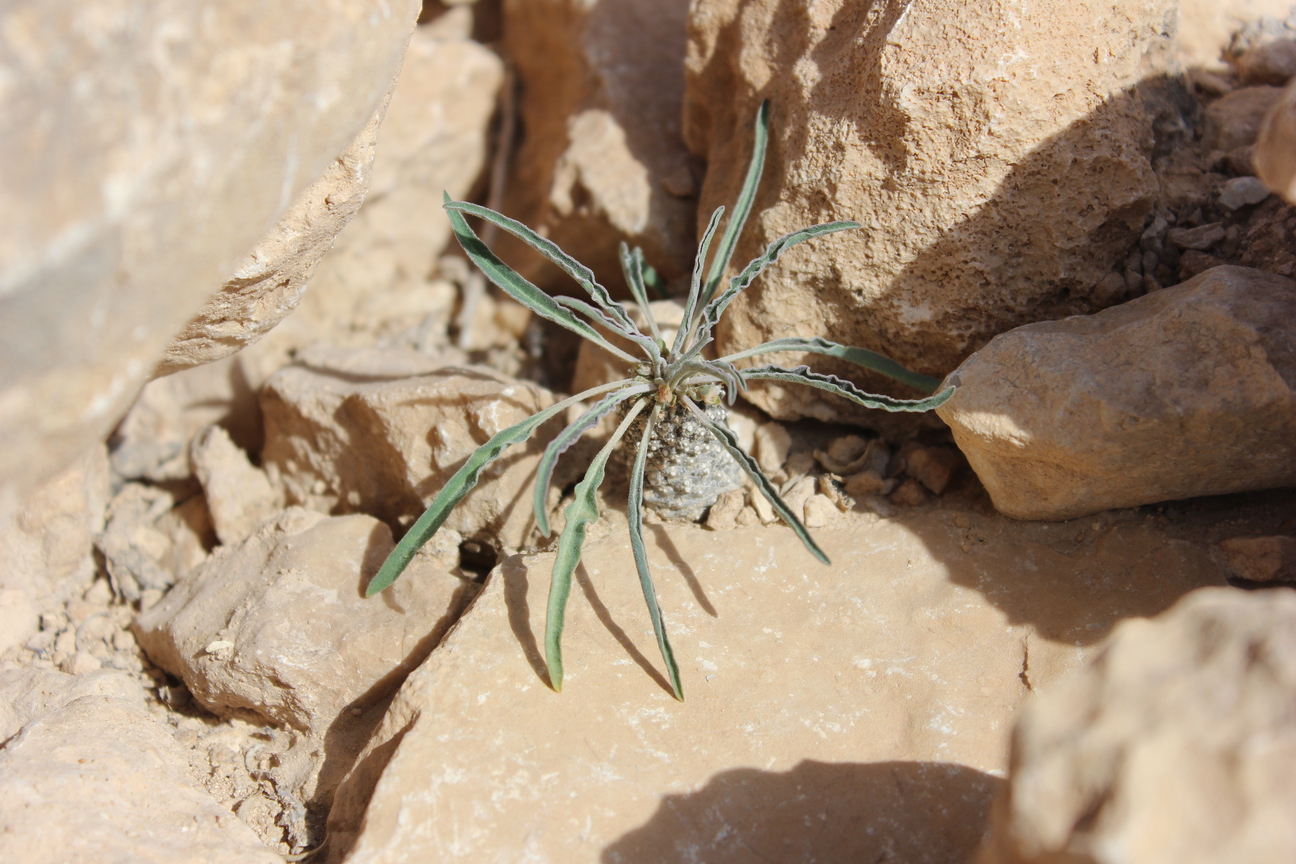
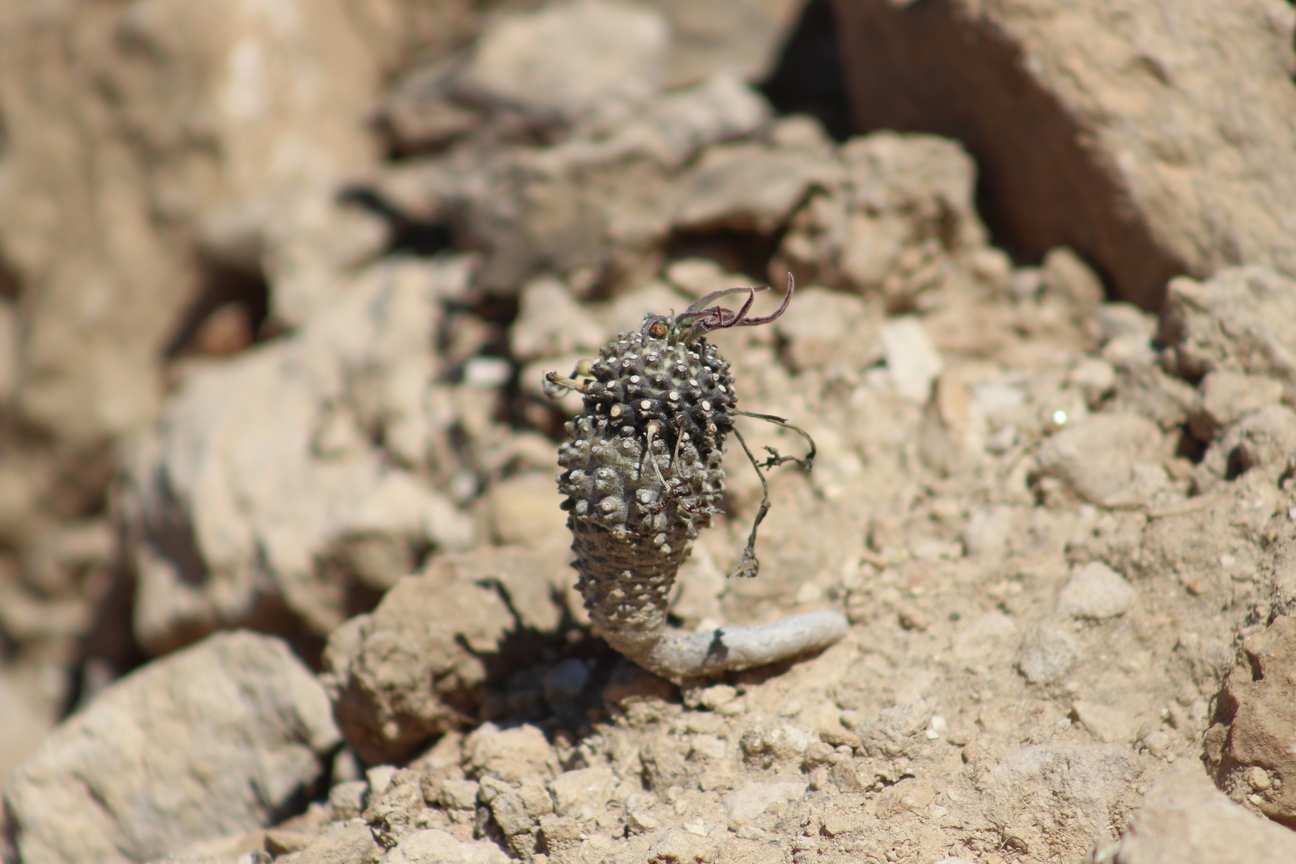
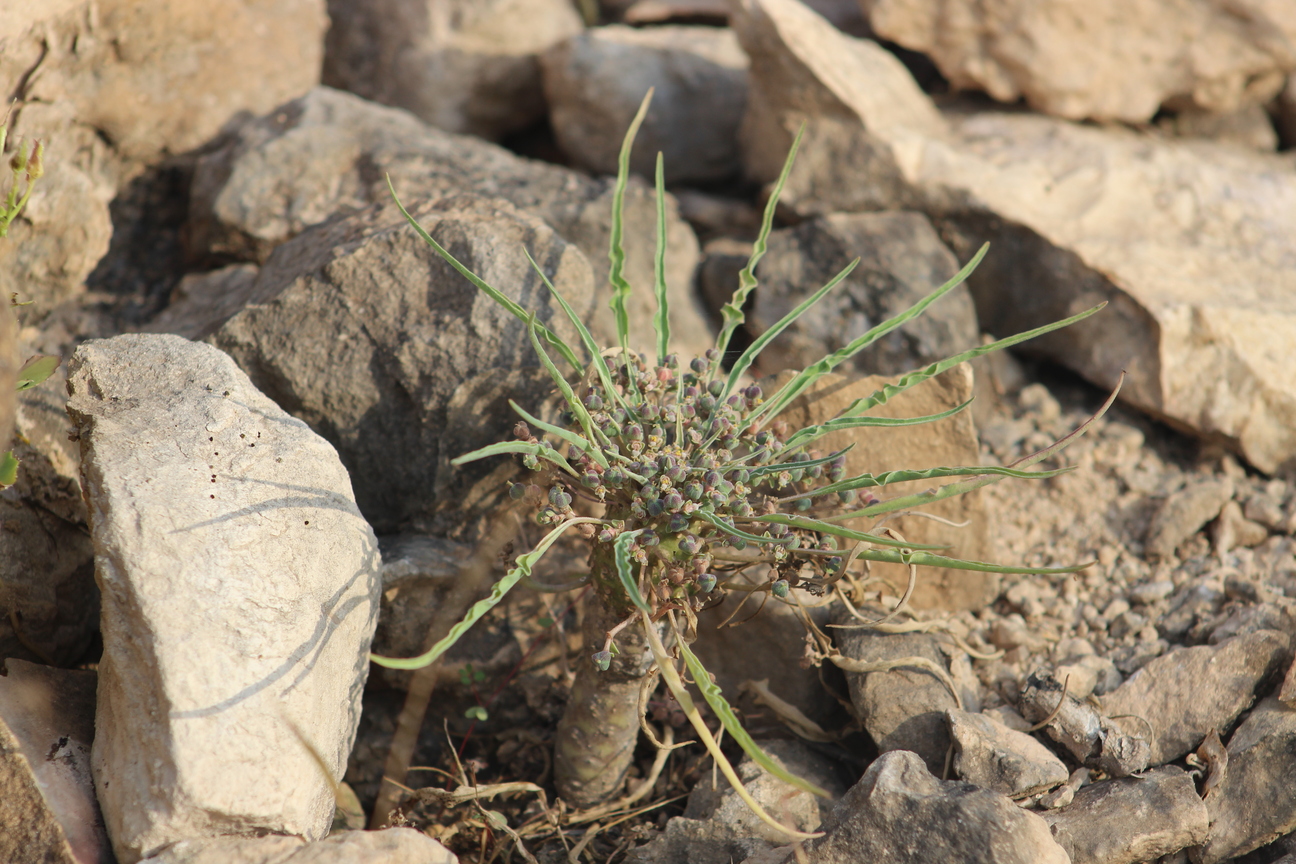
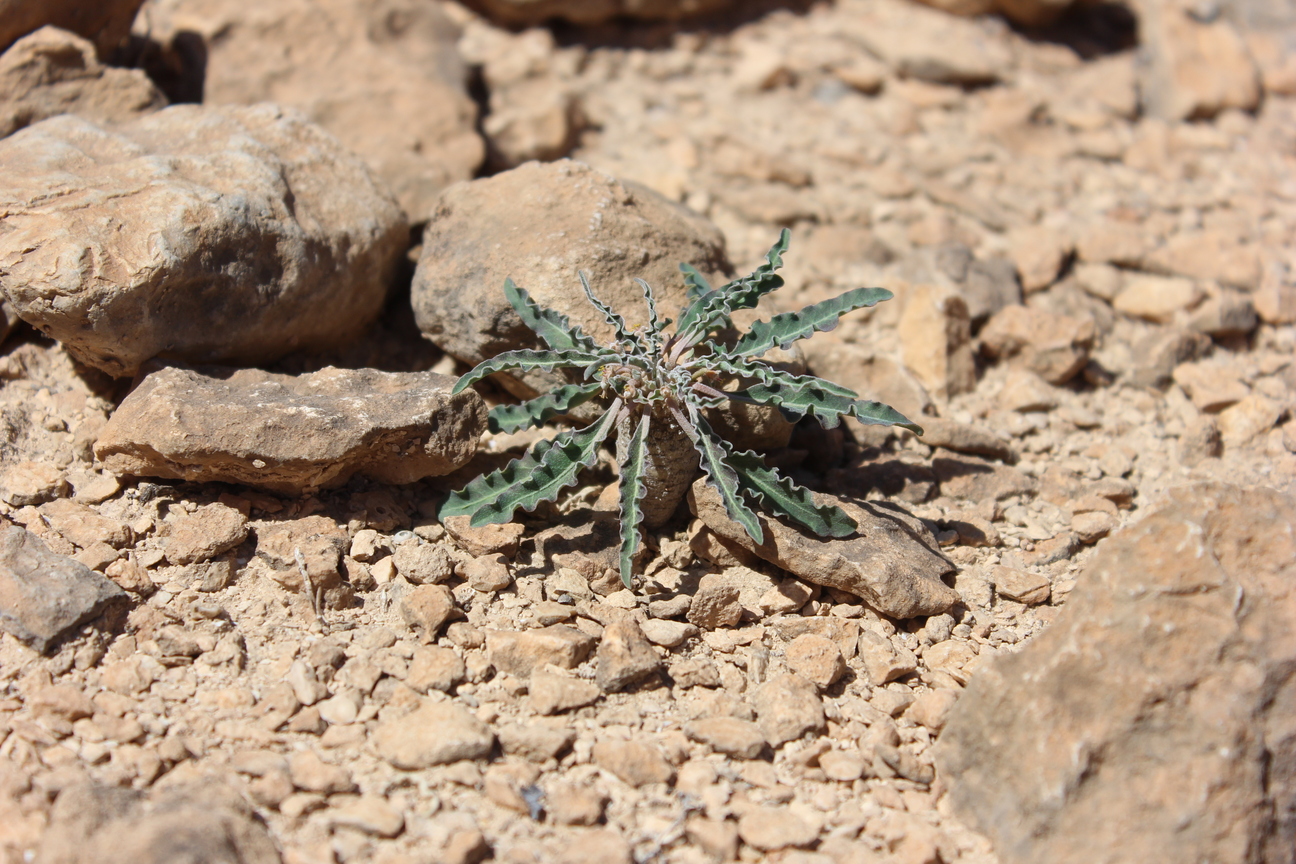
Euphorbia_hadramautica_10 © OBG
Euphorbia_hadramautica_2 © OBG
Euphorbia_hadramautica_3 © OBG
Euphorbia_hadramautica_4 © OBG
Euphorbia_hadramautica_5 © OBG
Euphorbia_hadramautica_6 © OBG
Euphorbia_hadramautica_7 © OBG
Euphorbia_hadramautica_8 © OBG
Euphorbia_hadramautica_9 © OBG
Euphorbia_hadramautica © OBG
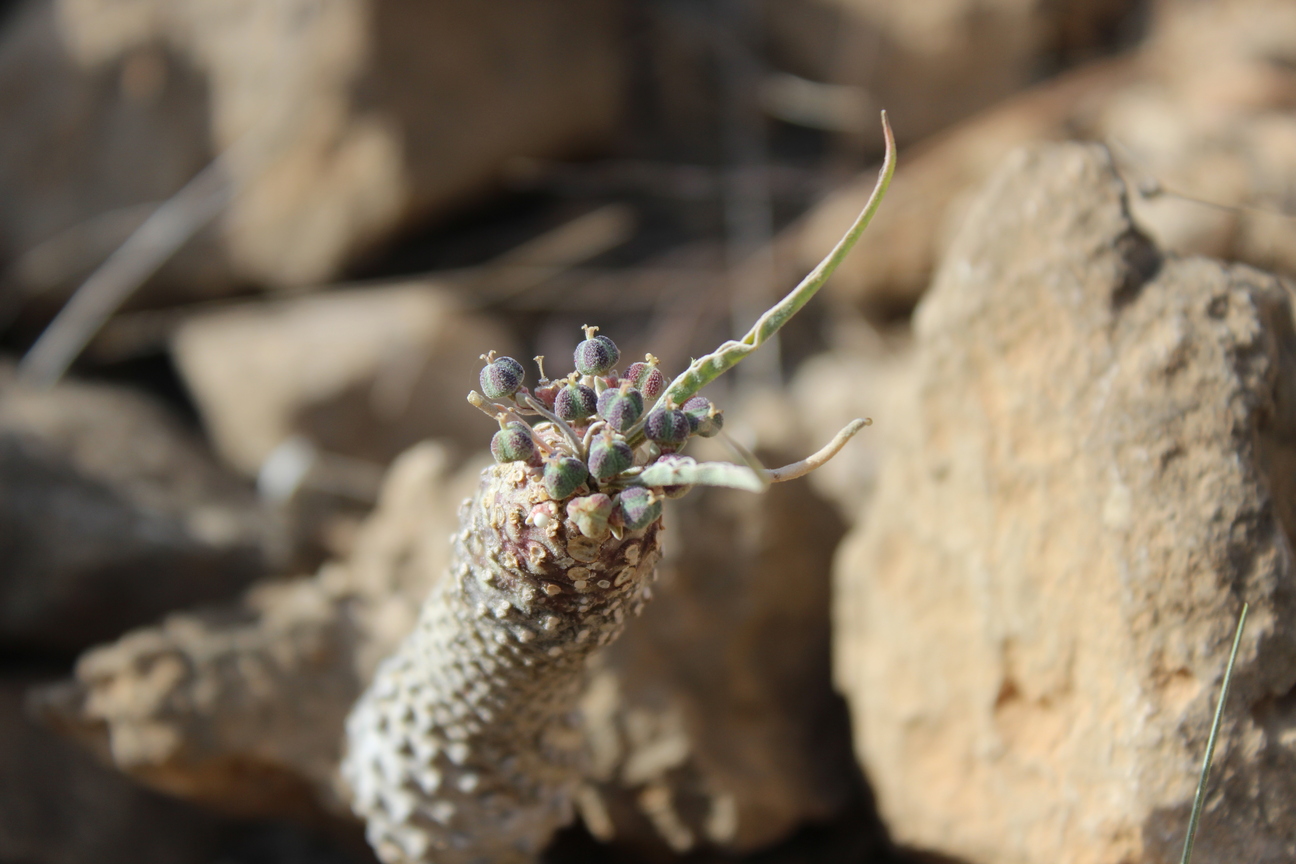
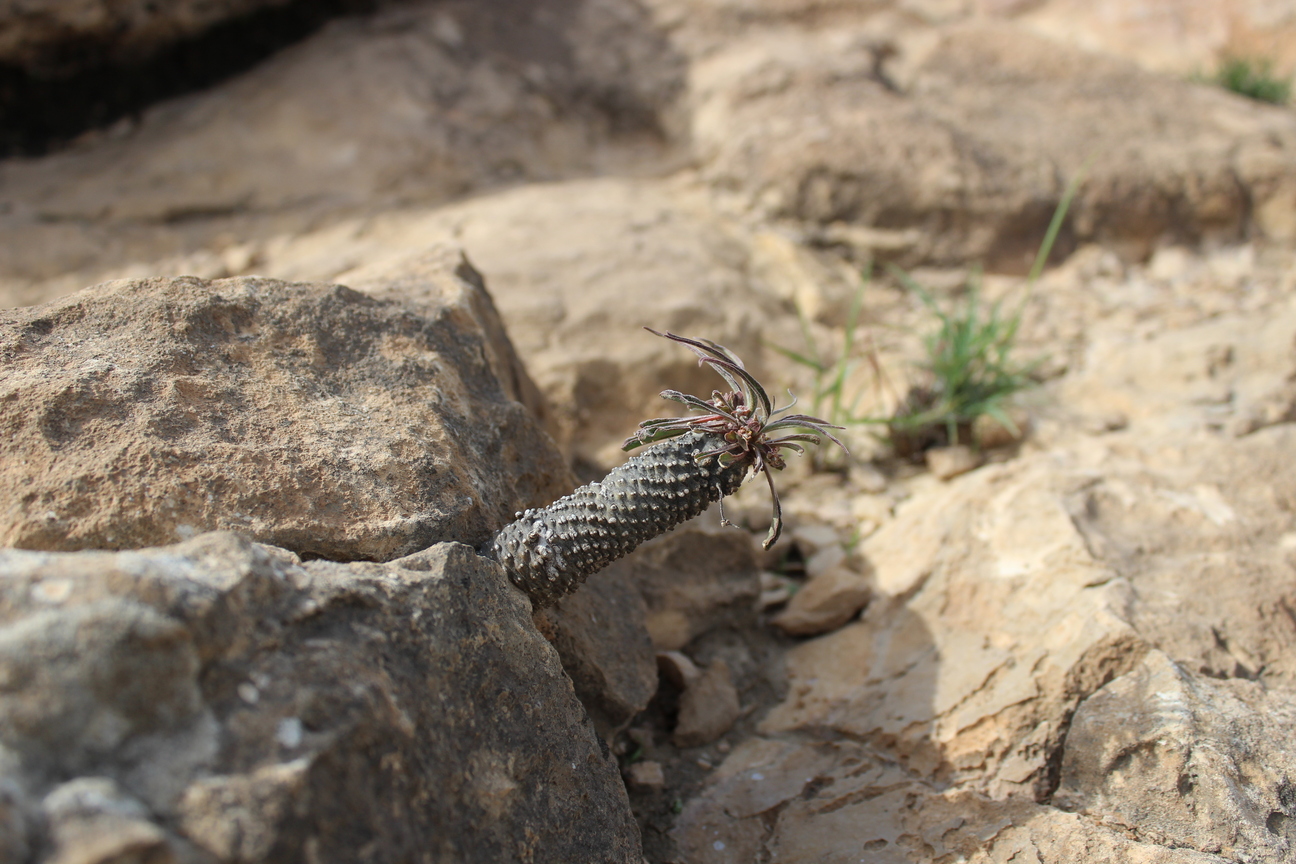
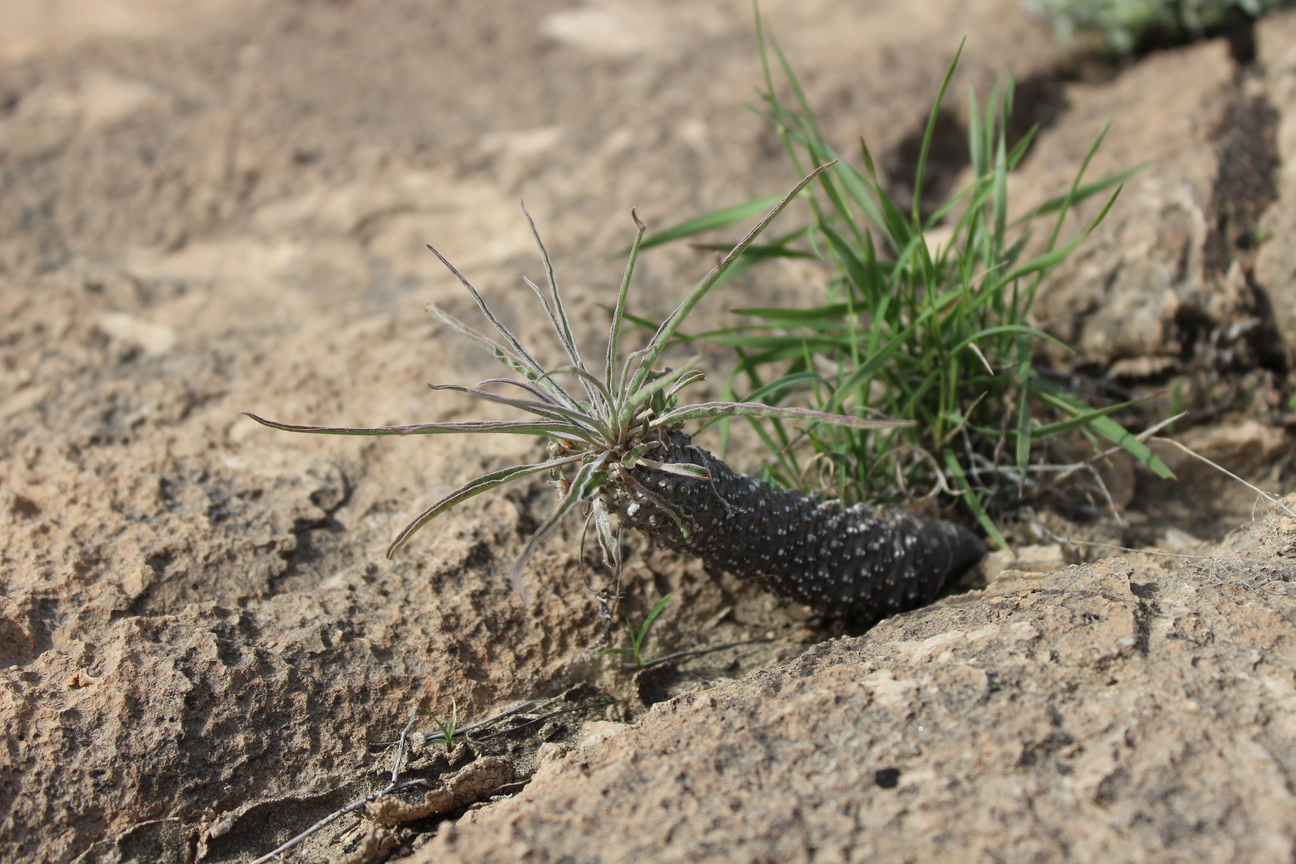
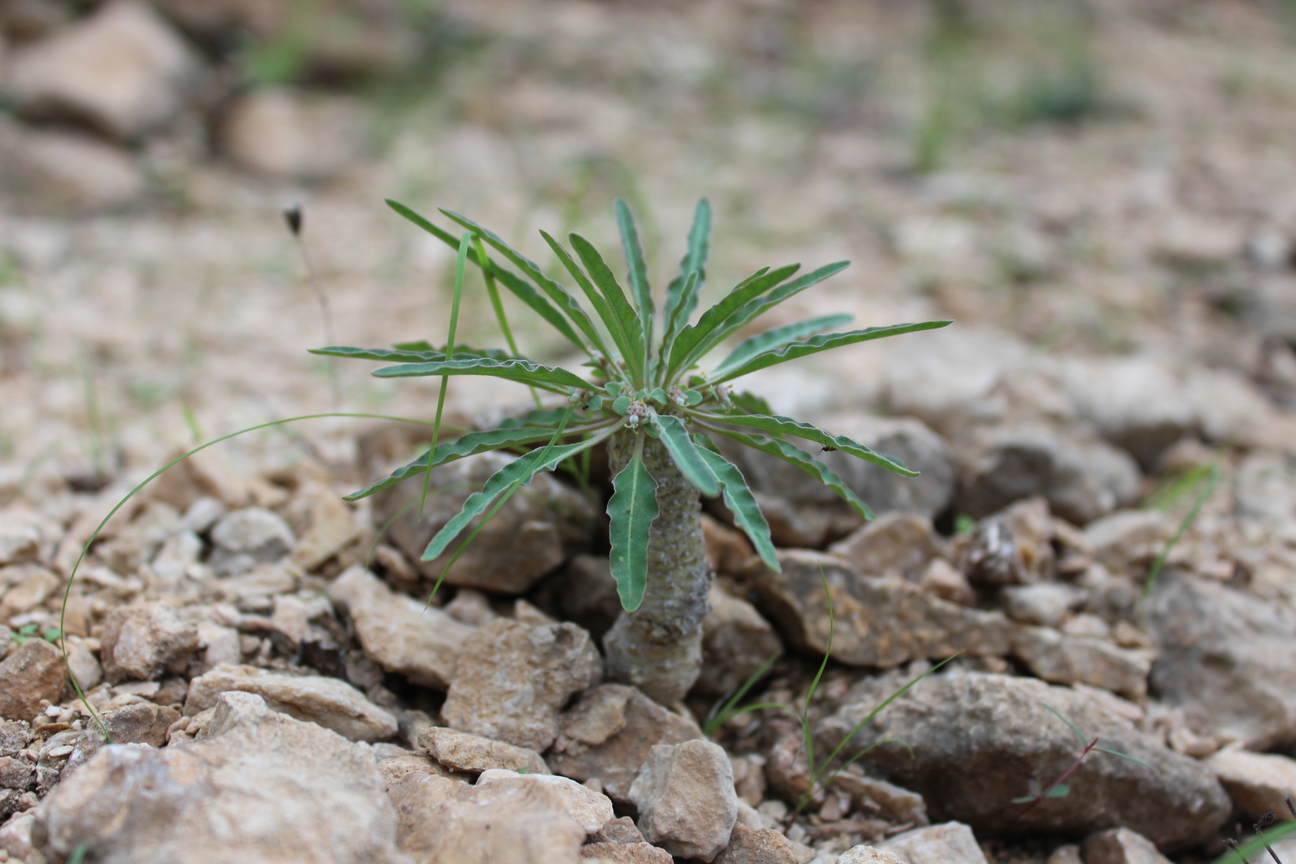
Small succulent perennial herb ; up to 12 cm high , with cylindrical enlarged , fleshy stems . Stems erect to ascending , unbranched , 3-12 cm in diameter , glabrous , bearing leaf scars , exudes white latex when cut . Leaves densely crowded at the top of the stem , 2-10 x 0 . 5-1 . 5 cm , linear-ovate to ovate , tip acuminate or obtuse , base cuneate , with entire wavy margins , glabrous ; petiole 0 . 5-2 cm . Inflorescences in clusters in leaf axils , with round flattened bracts . Flowers cyathia , small , green to pinkish ; male flowers few , bracteoles linear , white-hairy ; female flowers with short pedicels , ovary densely hairy . Fruit capsule , 3-4 mm in diameter , subglobose , obtusely 3-lobed , erect , green , reddish-brown when mature . Seeds 2 x 1 . 5 mm , conical with acute apex , 4-angled , brown , glabrous . (Ref . Flora of Oman ; vol . 2) .
No Data
Not Evaluated (NE)
Not Common
الوصف غير متاح حاليًا
Euphorbia napoides Pax
Euphorbia oblongicaulis Baker
No data
maintenanceAr.Item1
Hadramaut Spurge
In Omani studies: Miller & Morris (1988) wrote that: "The edible species, Dorstenia foetida, is also called [J: kertib], and indeed the two species somewhat resemble one another in appearance. However, E. hadramautica is toxic, and the other is not, so care must be taken when gathering D. foetida for eating. On the whole, they tend to grow in differing habitats, a fact which is reflected in the local terminology which differentiates between the two plants. The toxic euphorbia is distinguished from the edible species by the addition of a term describing the kind of terrain in which it is usually to be found, such as [J: kertib eda'an, or kertib a'adob, or kertib adoneb], that is: 'kertib of the stony plains', 'kertib of the dry rocky foothills', or 'kertib of Wadi Adonib area' and so on, whereas the edible Dorstenia foetida tends to occur in the wetter areas further
...

*Ghazanfar, S. (2007). Flora of the Sultanate of Oman, vol.2: Crassulaceae – Apiaceae. Meise, National Botanic Garden of Belgium (Scripta Botanica Begica, Vol. 36). ISBN 9789072619747 ISSN 0779-2387. *https://en.wikipedia.org *http://www.bihrmann.com *Miller, A., Morris, M. (1988). Plants of Dhofar, the Southern Region of Oman: Traditional, Economic, and Medicinal Uses. Published by Office of the Adviser for Conservation of the Environment, Diwan of Royal Court, Sultanate of Oman; ISBN 10: 0715708082 ISSN 13: 9780715708088. *Pickering, H. Patzelt, A. (2008). Field Guide to the Wild Plants of Oman. Kew publishing, Royal Botanic Garden, Kew. ISBN 9781842461778. *POWO (2023). ""Plants of the World Online. Facilitated by the Royal Botanic Gardens, Kew. Published on the Internet; http://www.plantsoftheworldonline.org
