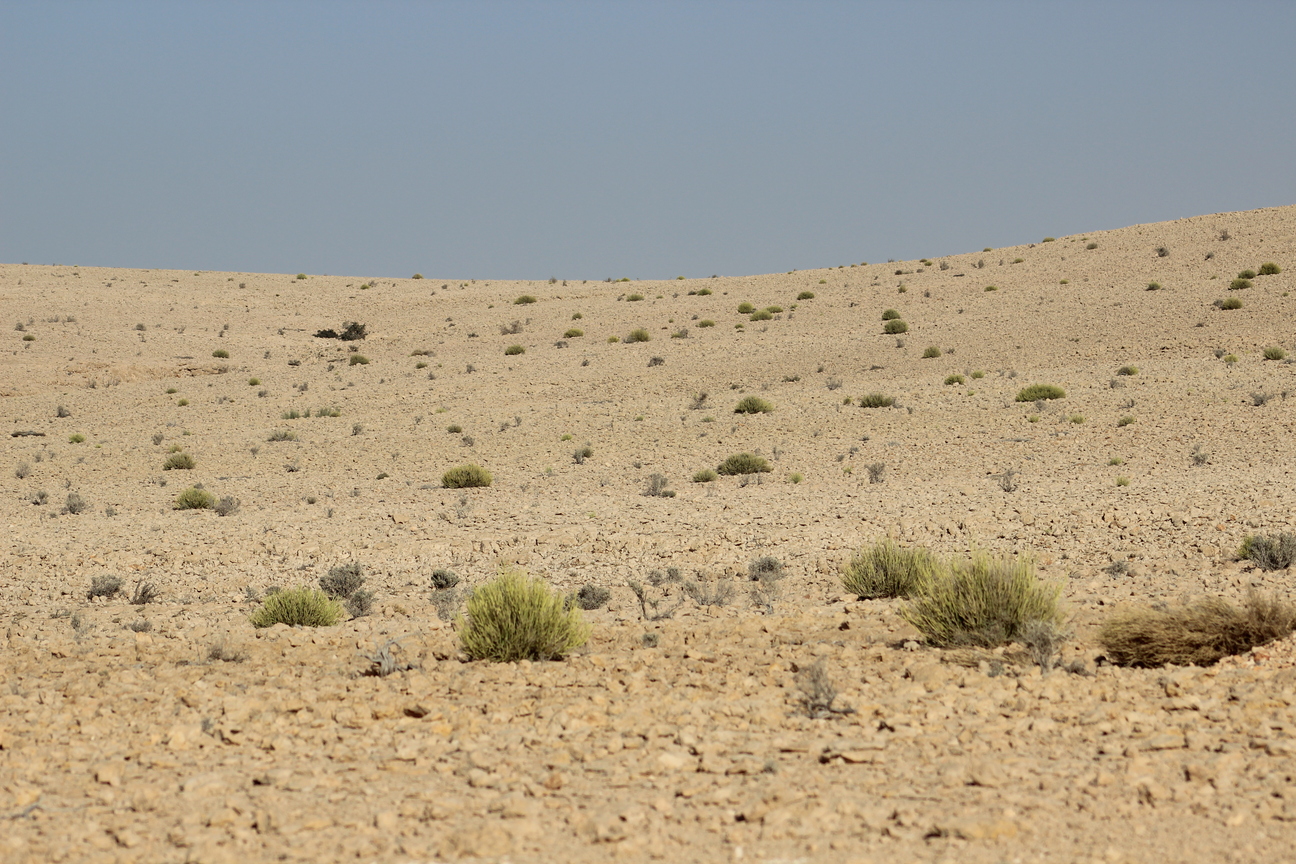
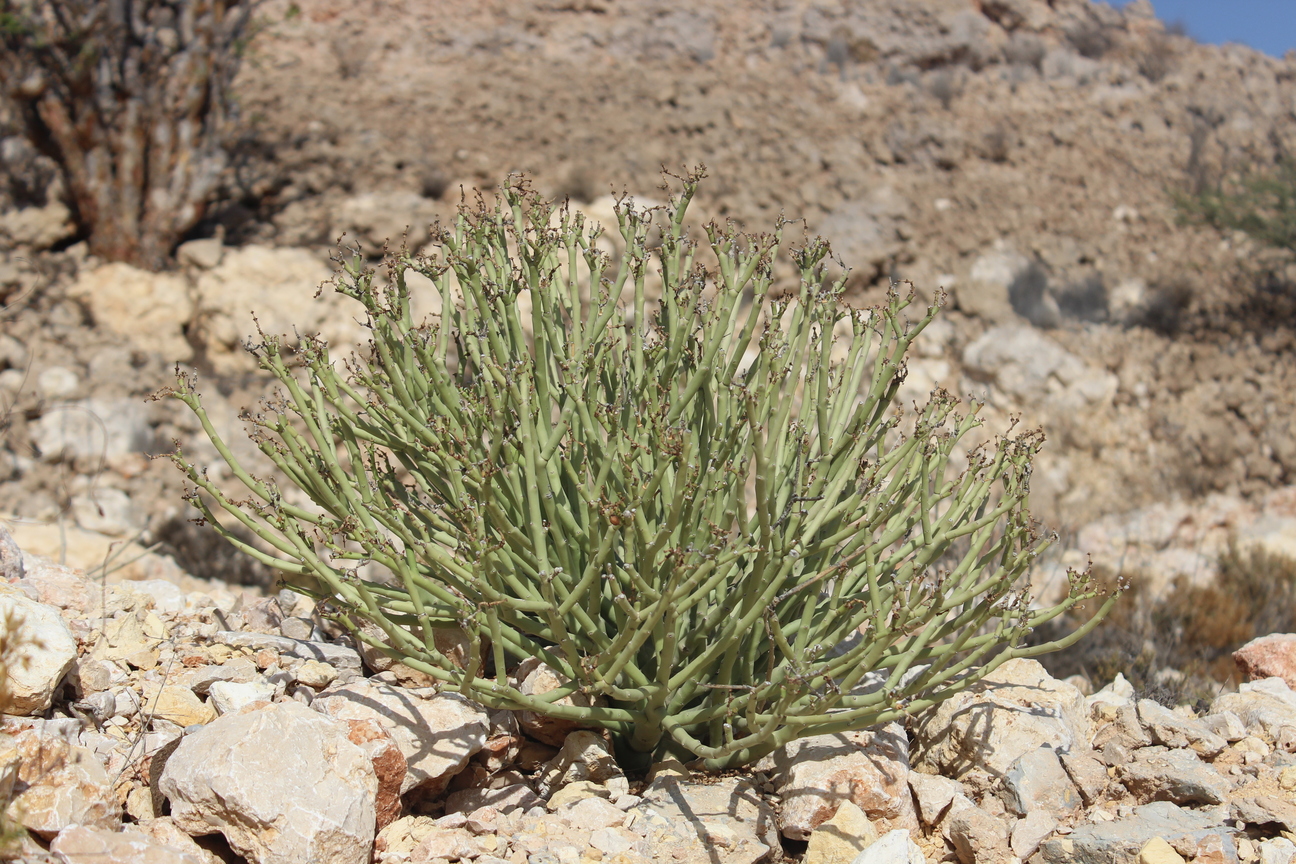
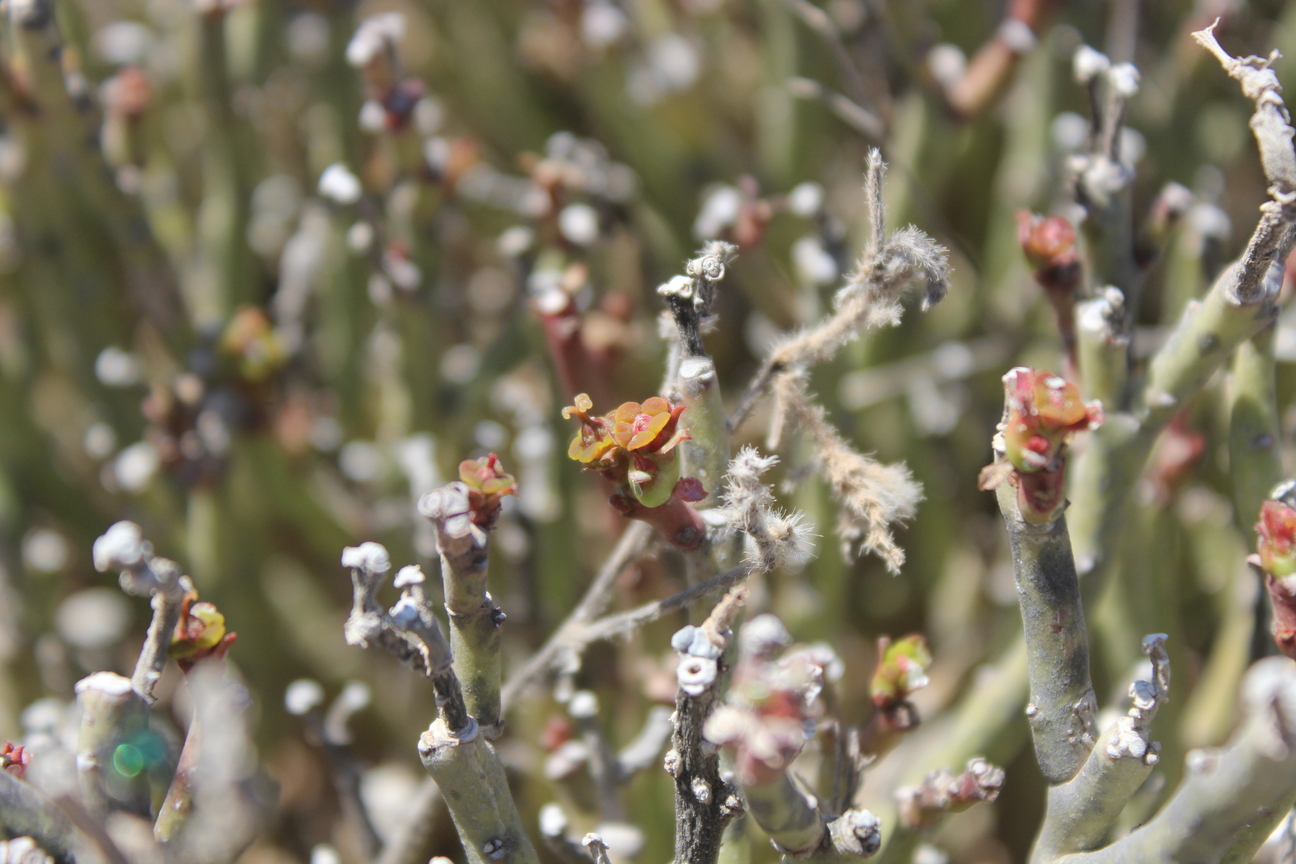
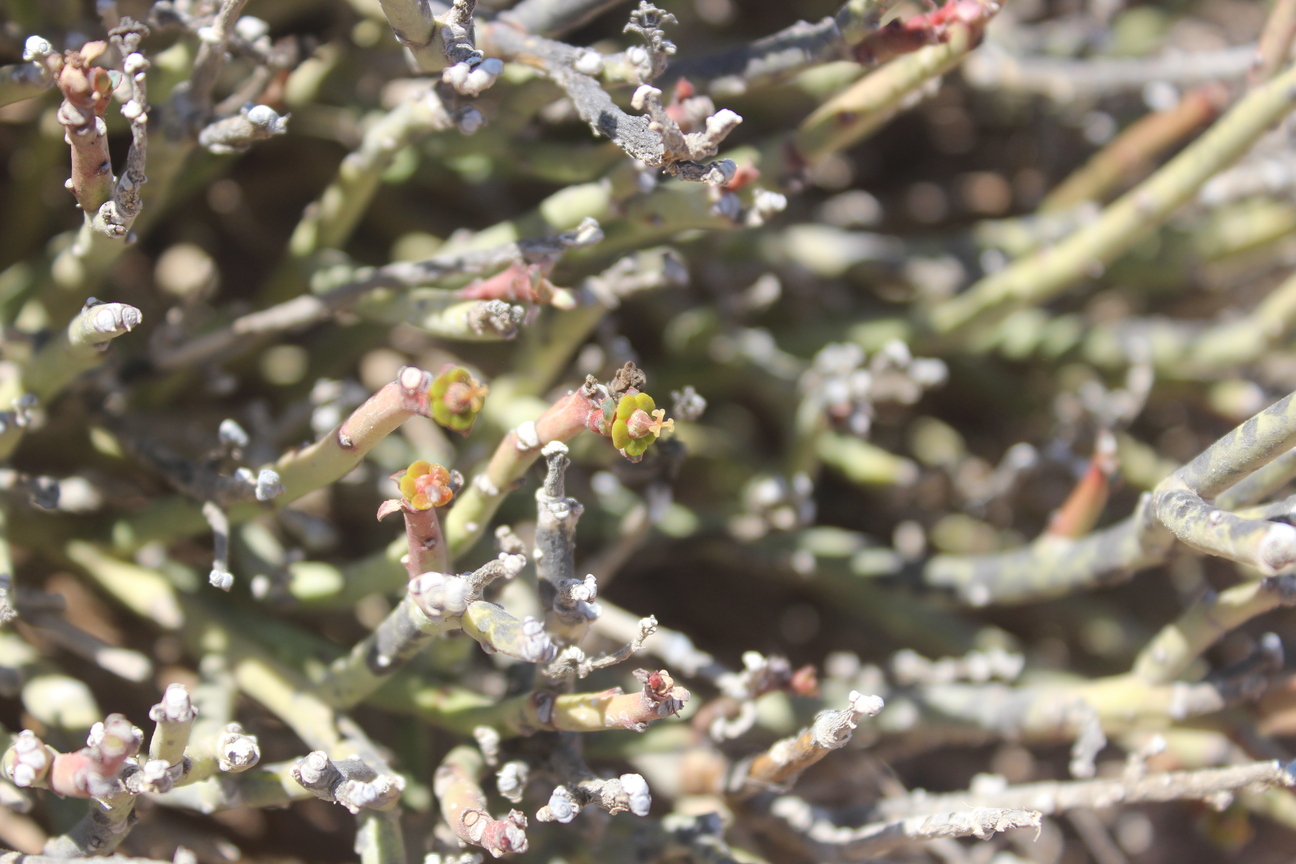
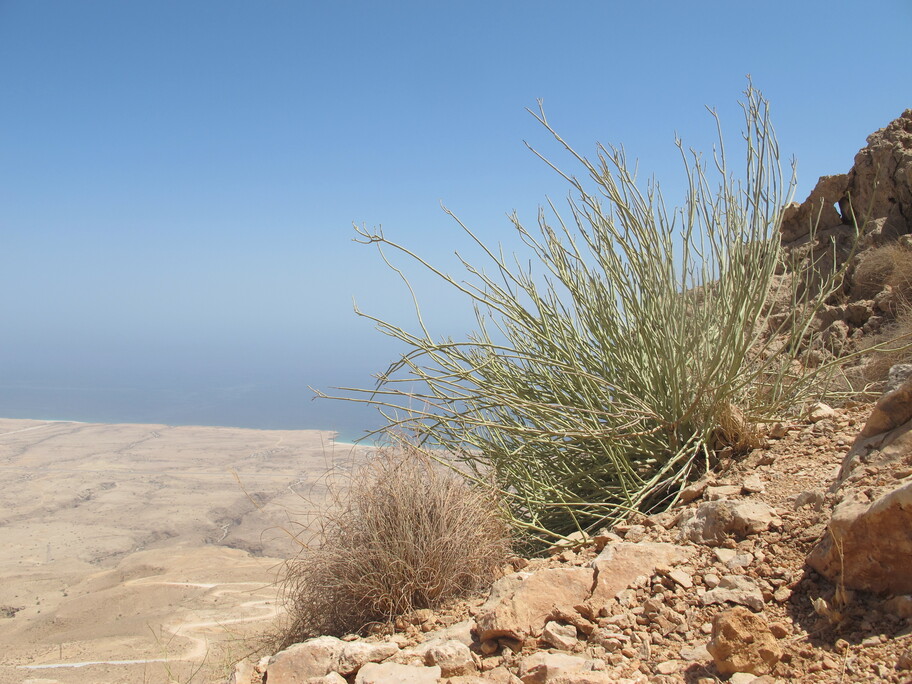
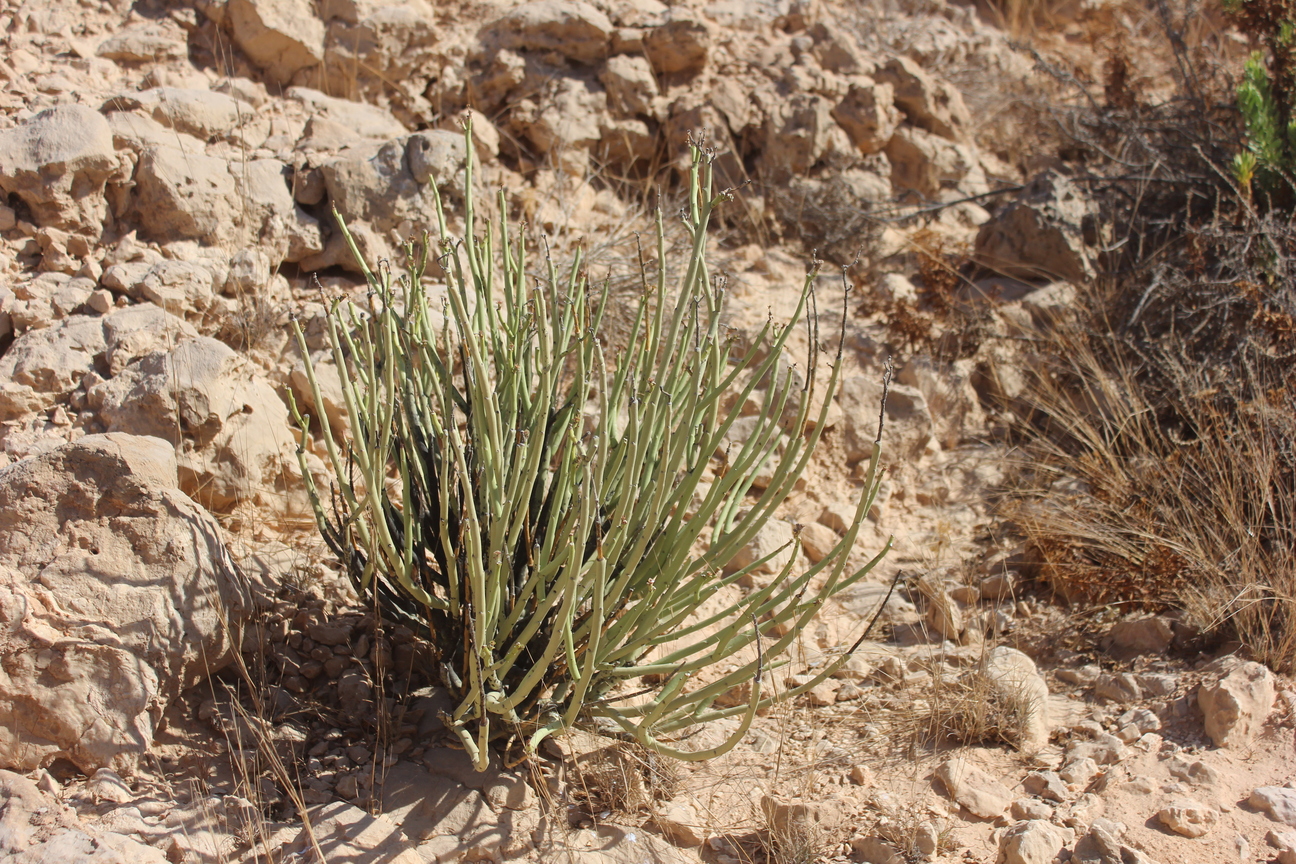
Euphorbia_larica_1 © OBG
Euphorbia_larica_3 © OBG
Euphorbia_larica_4 © OBG
Euphorbia_larica_5 © OBG
Euphorbia_larica_6 © OBG
Euphorbia_larica_7 © OBG
Euphorbia_larica_8 © OBG
Euphorbia_larica_9 © OBG
Euphorbia_larica_�2� © OBG
Euphorbia_larica © OBG
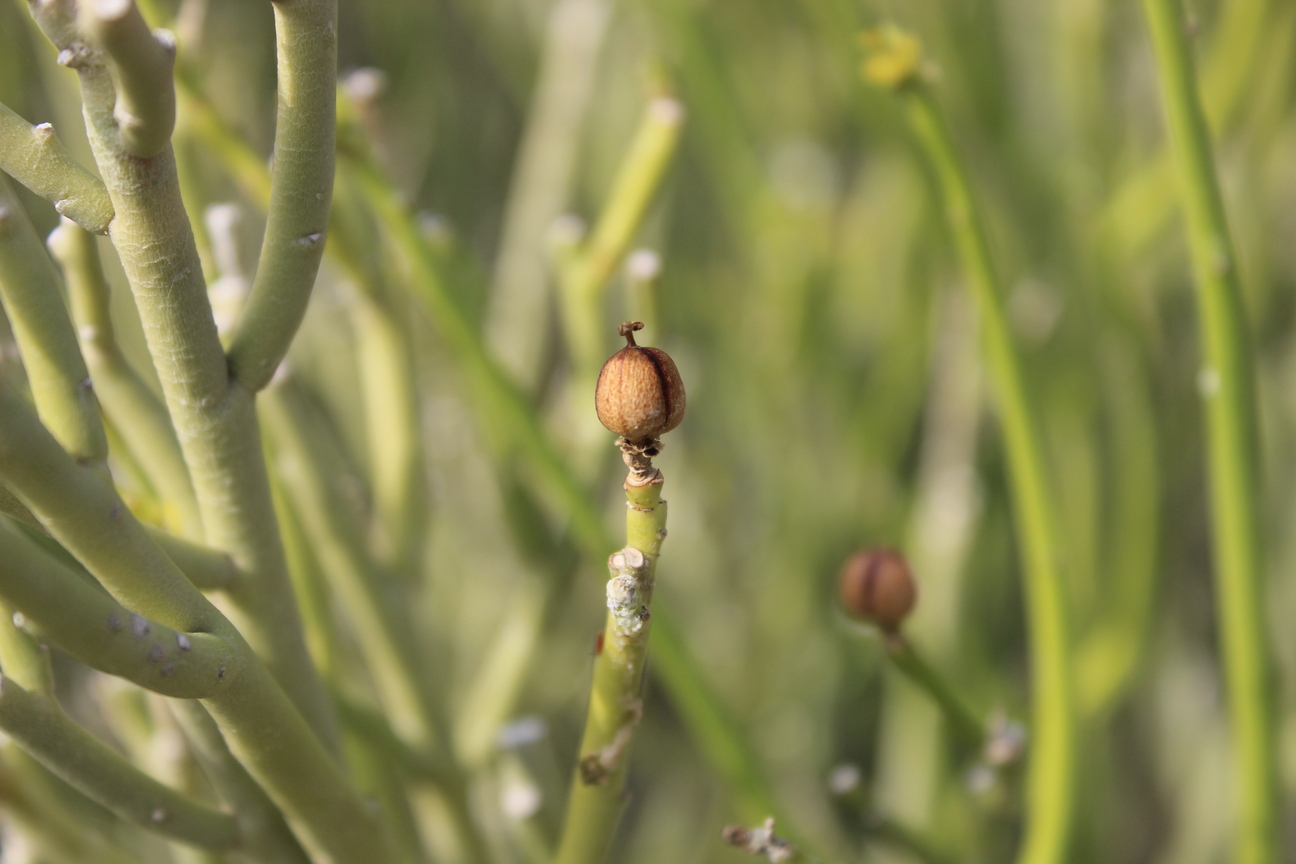
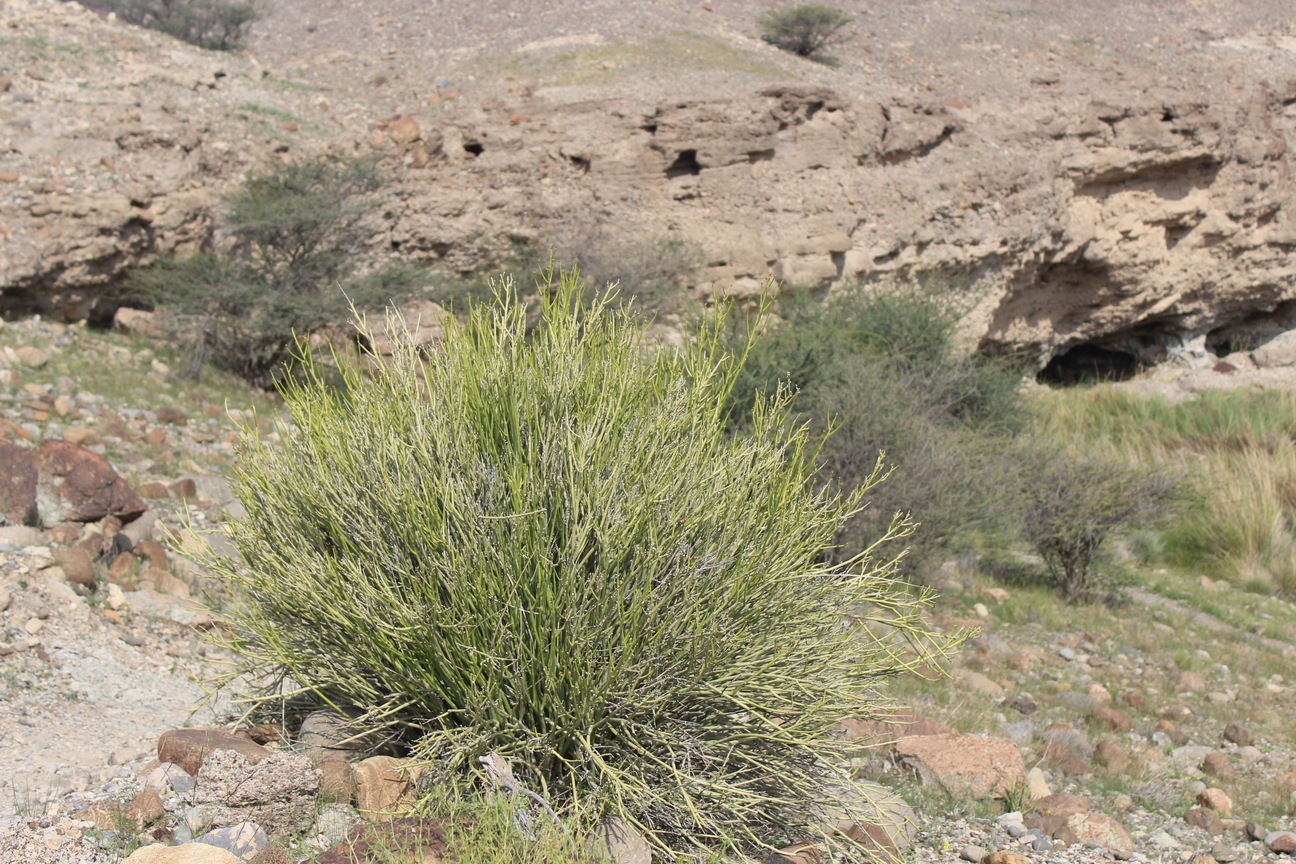
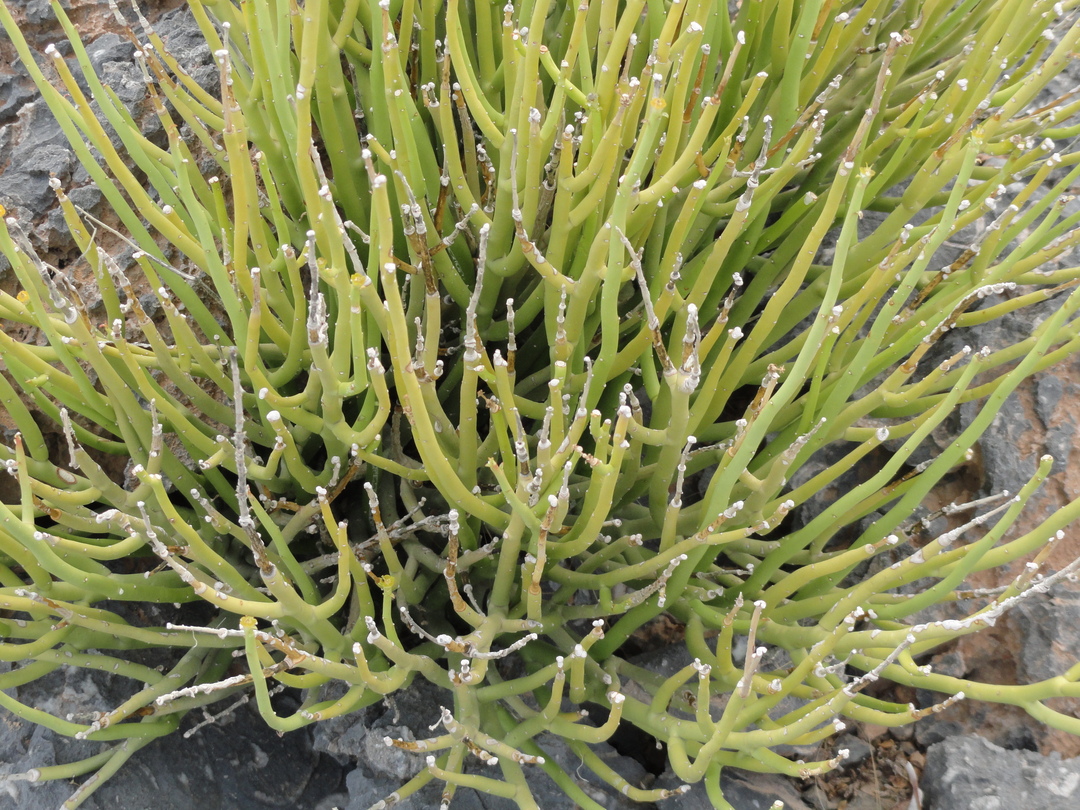
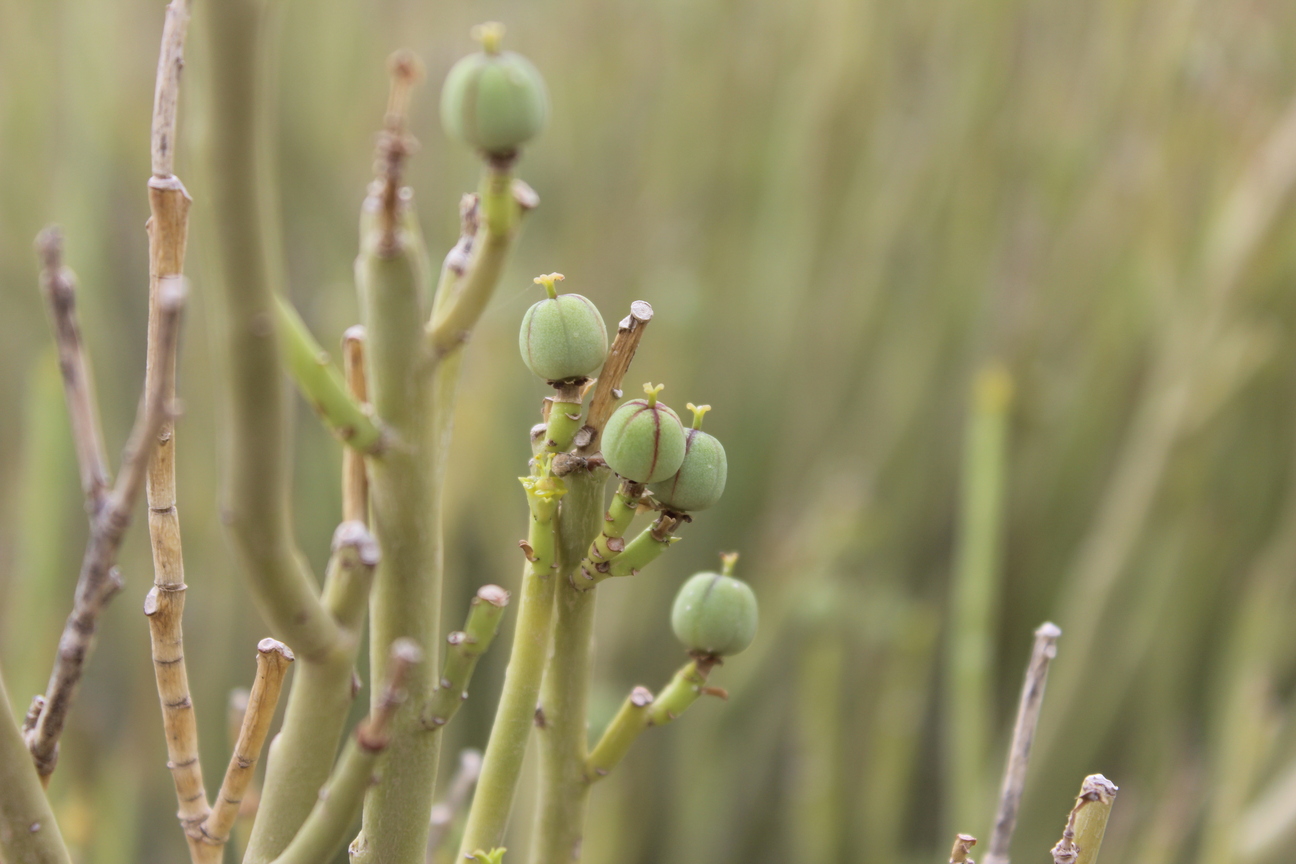
Deciduous . Erect succulent shrub or subshrub ; up to 1 m tall , with leafless yellow-green stems . Stems branched from base , succulent , ascending , glabrous , exude thick white latex if broken ; lower stems woody , brown ; young stems light green . Leaves alternate , 4-5 x 1-1 . 5 mm , obovate , acute tip , attenuate base , entire margin , often reddish , glabrous but with a few hairs , falling soon after formation , leaving the stem leafless . Inflorescences in terminal and upper lateral spikes , cyathia usually in groups of three , the central sessile and the two lateral shortly pedunculate . Flowers cyathia , green-yellow ; male flowers with fimbriate bracts at tip ; female flowers with glabrous ovary ; style c . 1 mm long , 3-lobed . Fruit capsule , 6-8 mm in diameter , subglobose , erect , green with 6 red longitudinal stripes , contain six segments with two seeds each . Seeds 4-4 . 5 mm , oblong-ovoid , slightly rugose , blackish with a white longitudinal stripe and tip . (Ref . Flora of Oman ; vol . 2) .
No Data
Not Evaluated (NE)
Common
الوصف غير متاح حاليًا
Euphorbia masirahensis Ghaz.
Tirucalia larica (Boiss.) P.V.Heath
No data
maintenanceAr.Item1
Not known
In Omani studies: Miller & Morris (1988) wrote that: "E. larica is by many given the same name (J: hebšinút) as that of E. smithii, as well as its other more common name [J: mōt]. This is probably because like that plant its most important use of this plant was in veterinary medicine, as a remedy for the parasitic infestation [J, DA: jerb] that afflicts camels and goats Its other name [J: ba al ejόsόt] means 'possessing much latex', a name occasionally given to other plants which produce copious latex. To gather the latex the many shoots and stems of the plant were slashed at their base, and the latex was allowed to drip into a container or directly ito a holoow scraped out of the earth at the foot of the plant. Being a much smaller plant than E. smithii, and consequently exuding very much less latex per plant
...

*Ghazanfar, S. (2007). Flora of the Sultanate of Oman, vol.2: Crassulaceae – Apiaceae. Meise, National Botanic Garden of Belgium (Scripta Botanica Begica, Vol. 36). ISBN 9789072619747 ISSN 0779-2387. *https://en.wikipedia.org *Gledhill, D. (2008). The Names of Plants. Fourth Edition. Cambridge University Press, UK. ISBN 978-0-521-86645-3 ISSN 978-0-521-68553-5. *Miller, A., Morris, M. (1988). Plants of Dhofar, the Southern Region of Oman: Traditional, Economic, and Medicinal Uses. Published by Office of the Adviser for Conservation of the Environment, Diwan of Royal Court, Sultanate of Oman; ISBN 10: 0715708082 ISSN 13: 9780715708088. *Pickering, H. Patzelt, A. (2008). Field Guide to the Wild Plants of Oman. Kew publishing, Royal Botanic Garden, Kew. ISBN 9781842461778. *Patzelt, A. (2015). Photographic Field Guide to the Plants of the Western Hajar Mountains, Sultanate of Oman: with a complete checklist of vascular plant species. Sultan Qaboos University – Academic Publication and Outreach Department. P.O Pox (17) Postal Code (123), Muscat,
...
