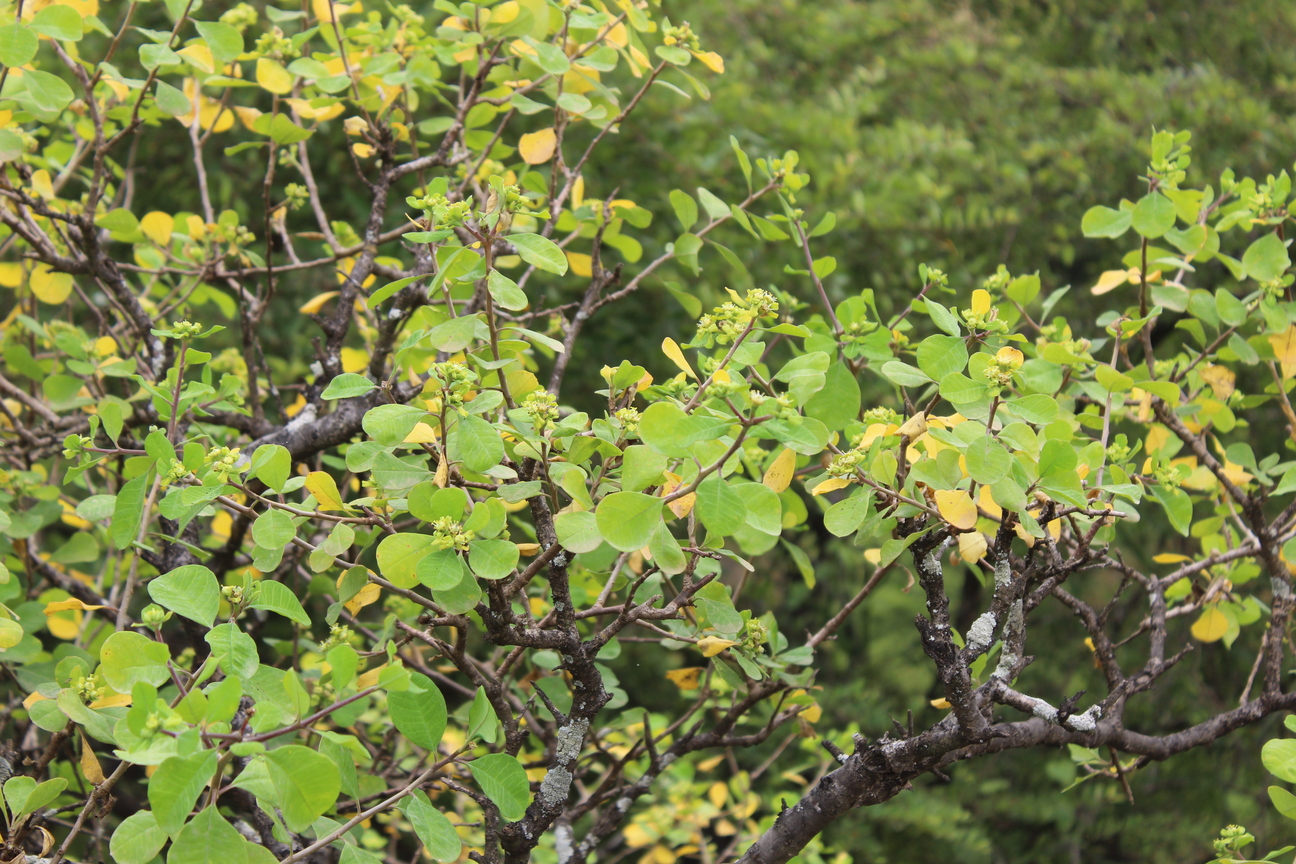
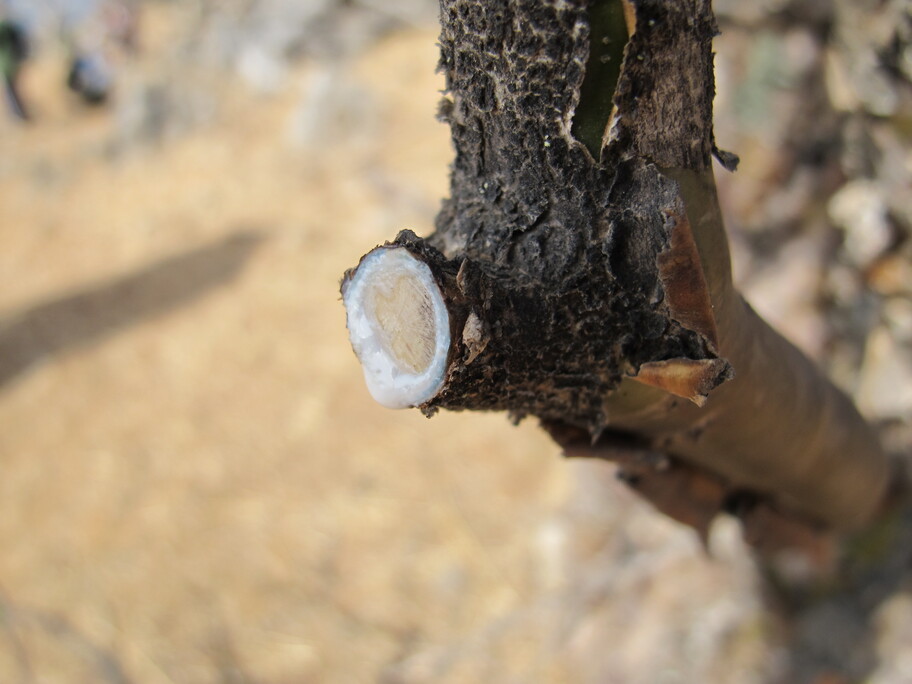
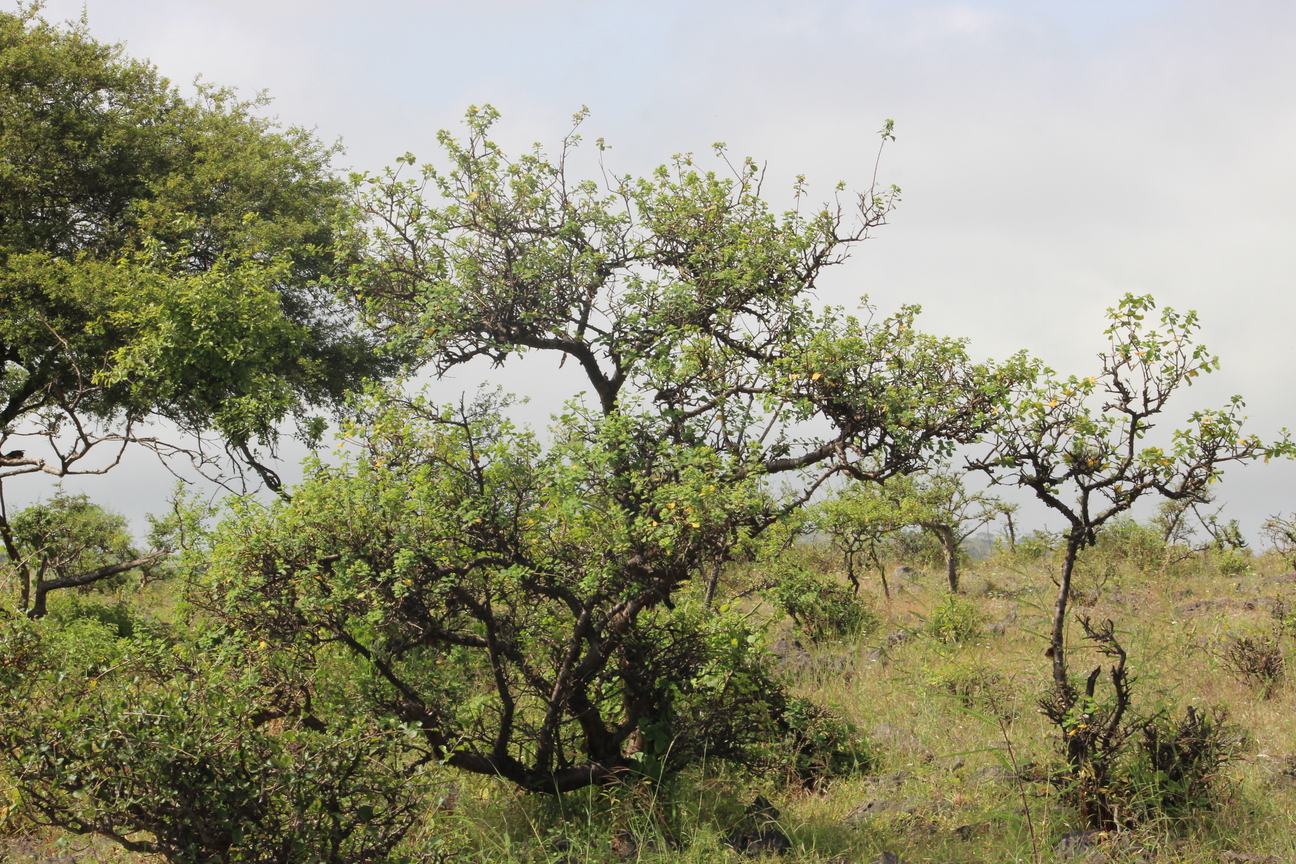
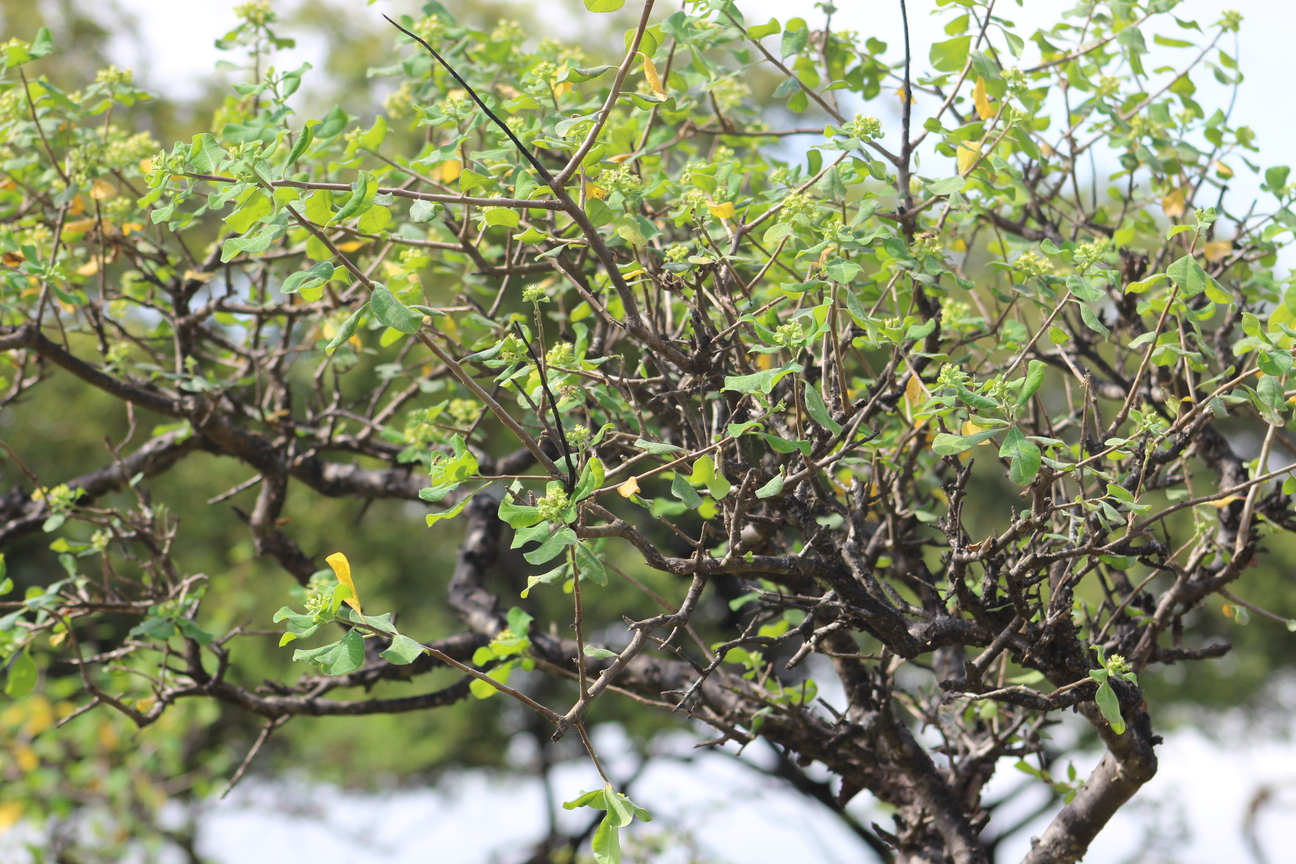
Euphorbia_smithii_10 © OBG
Euphorbia_smithii_2 © OBG
Euphorbia_smithii_3 © OBG
Euphorbia_smithii_4 © OBG
Euphorbia_smithii_5 © OBG
Euphorbia_smithii_6 © OBG
Euphorbia_smithii_7 © OBG
Euphorbia_smithii_8 © OBG
Euphorbia_smithii_9 © OBG
Euphorbia_smithii © OBG
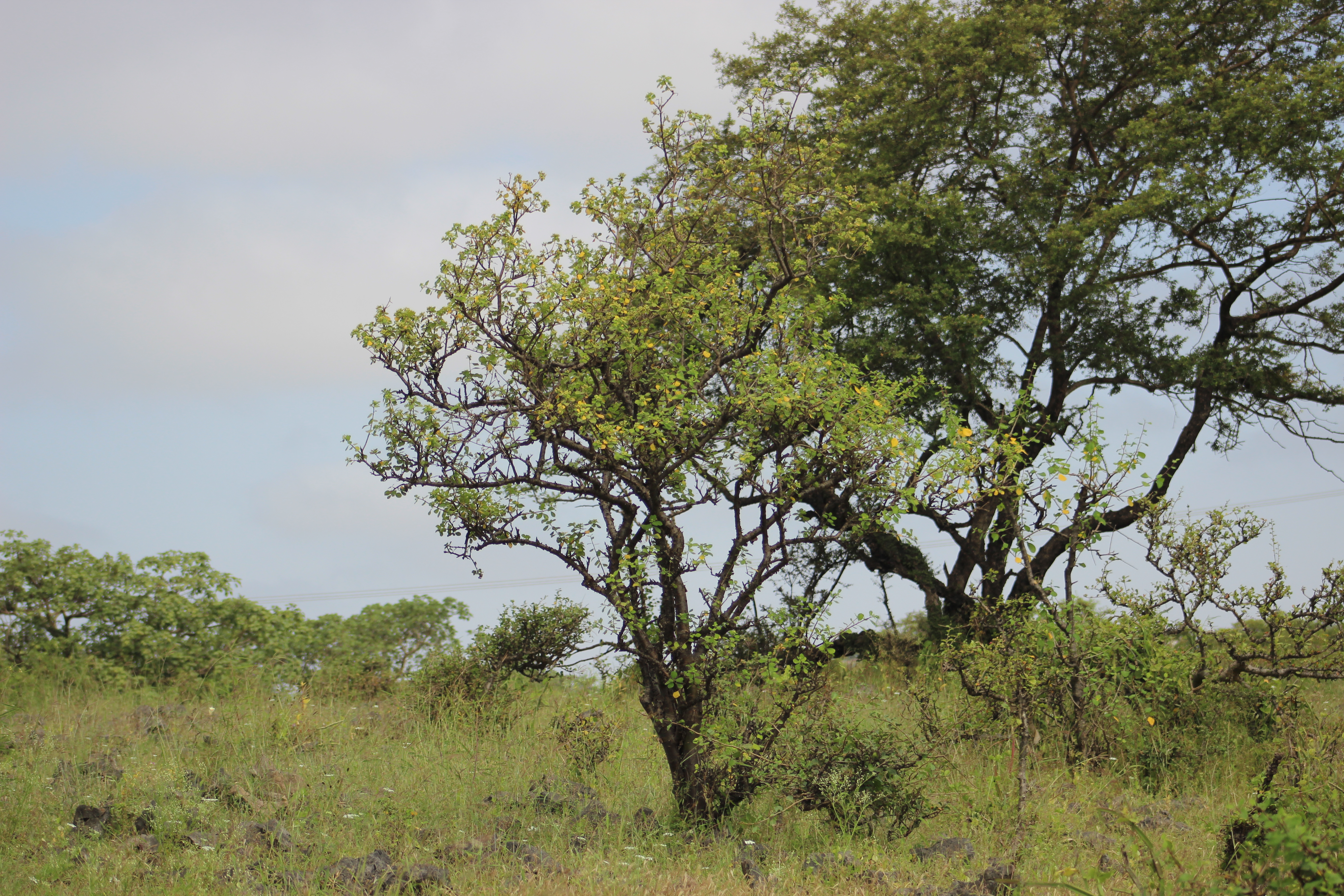
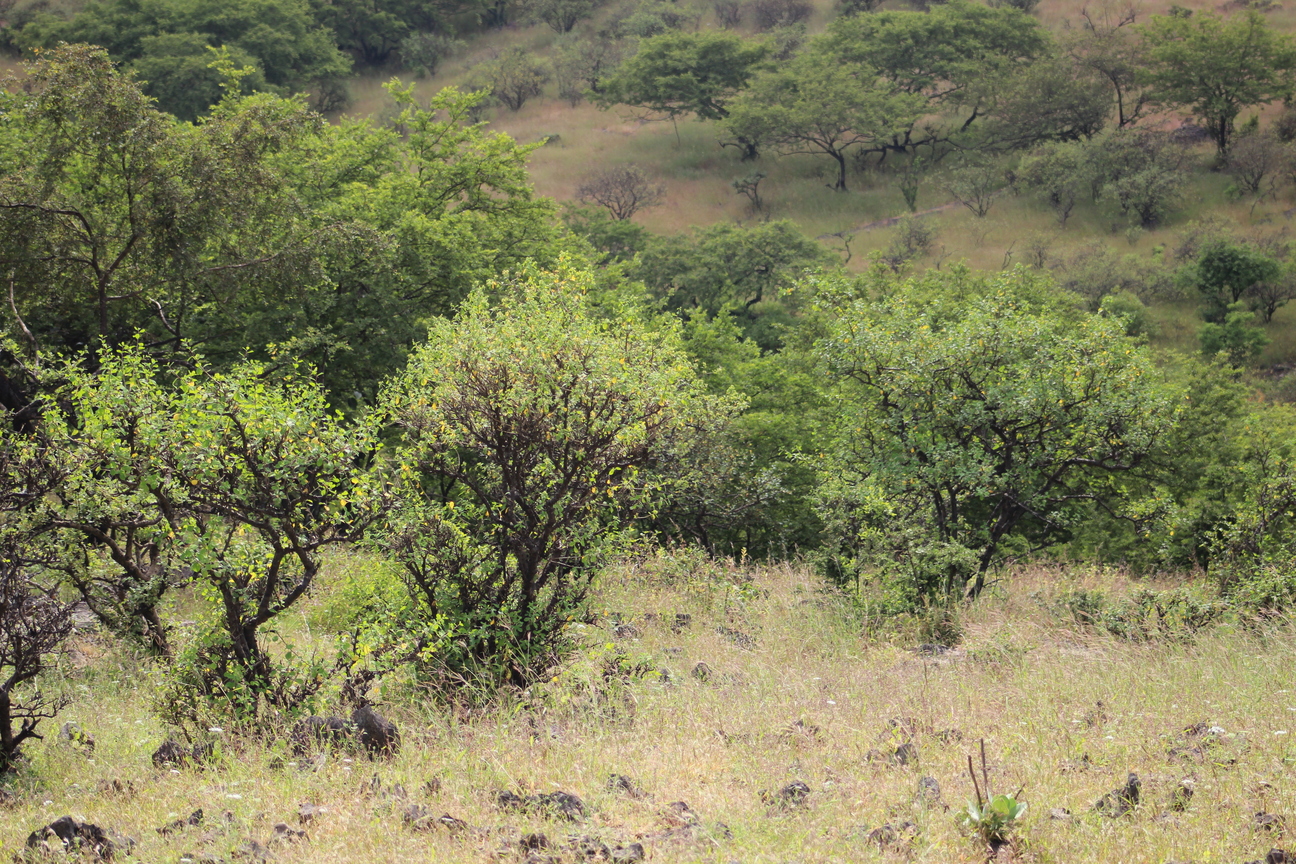
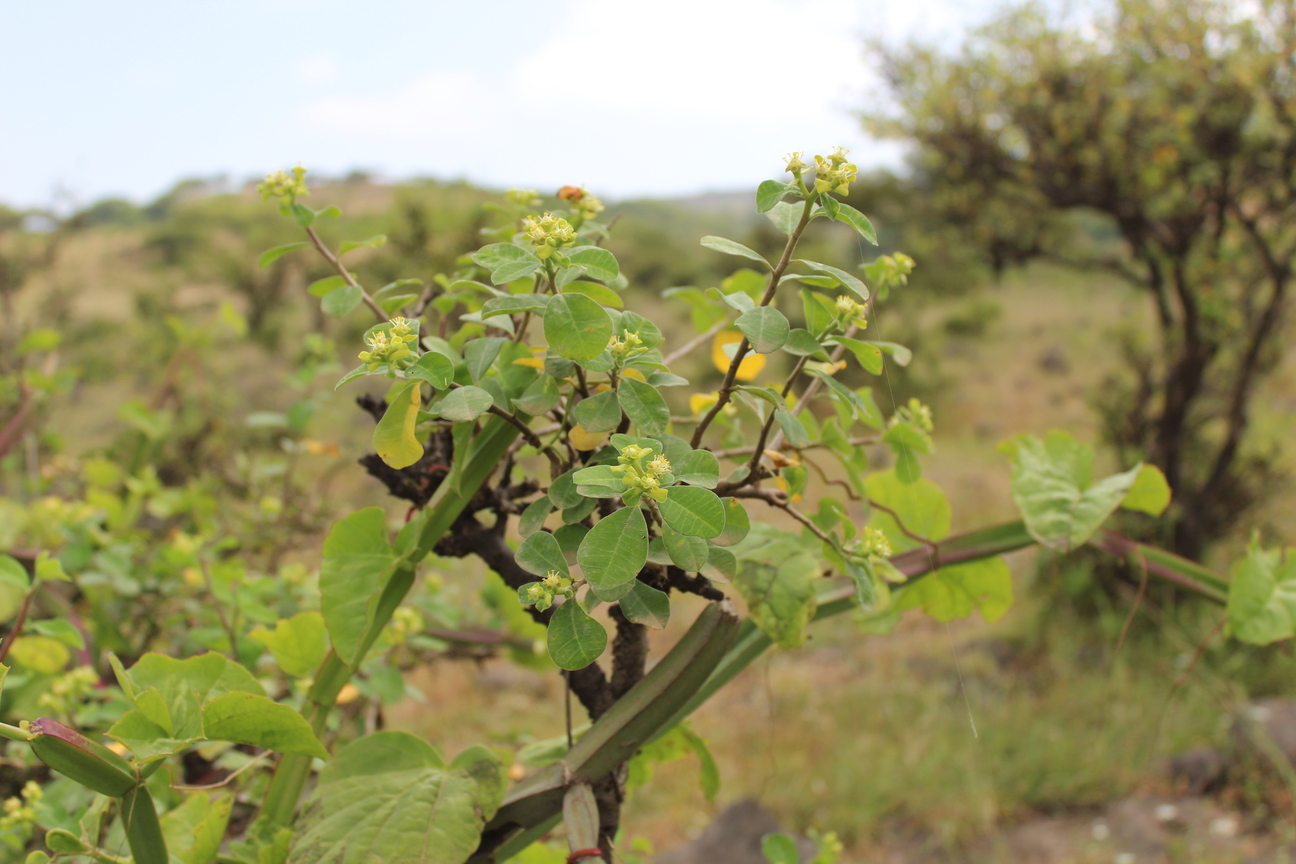
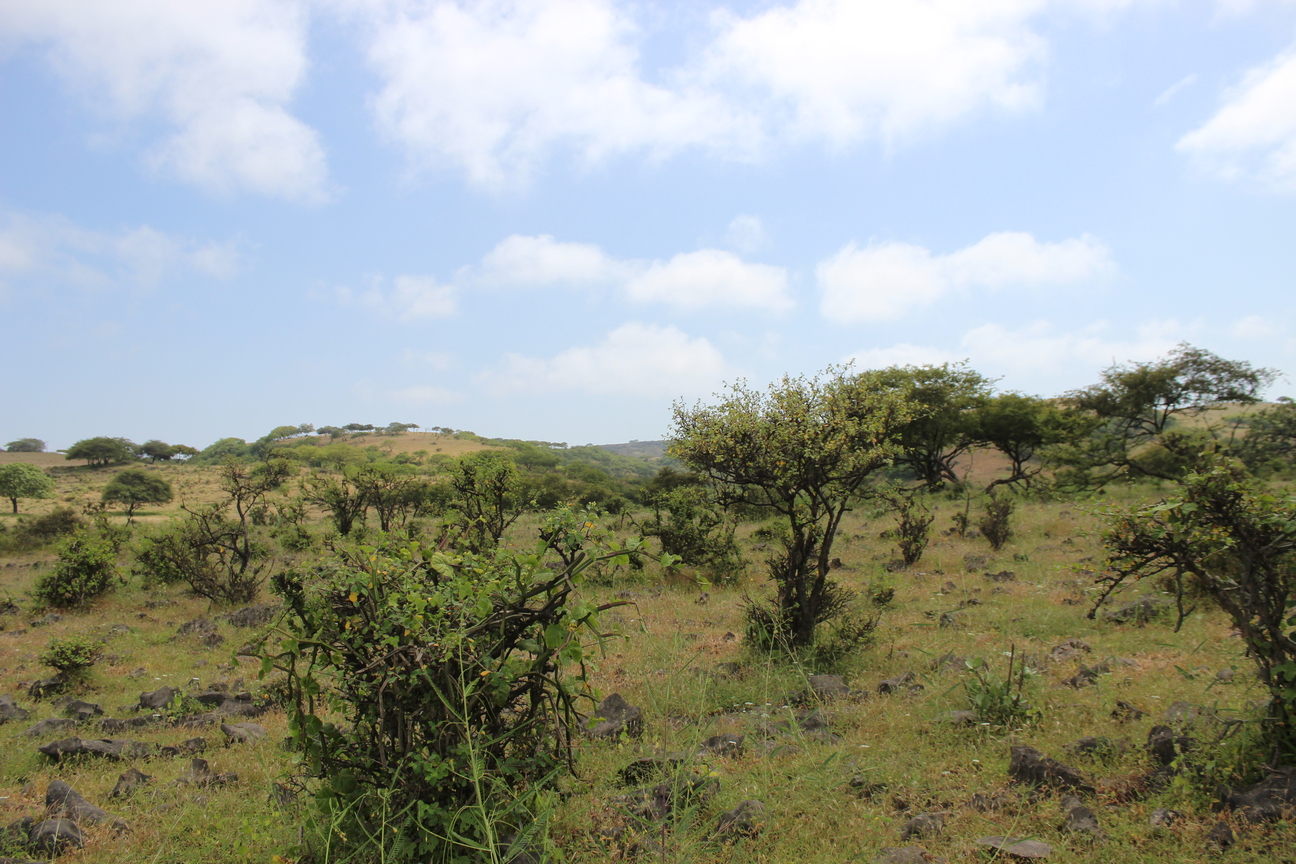
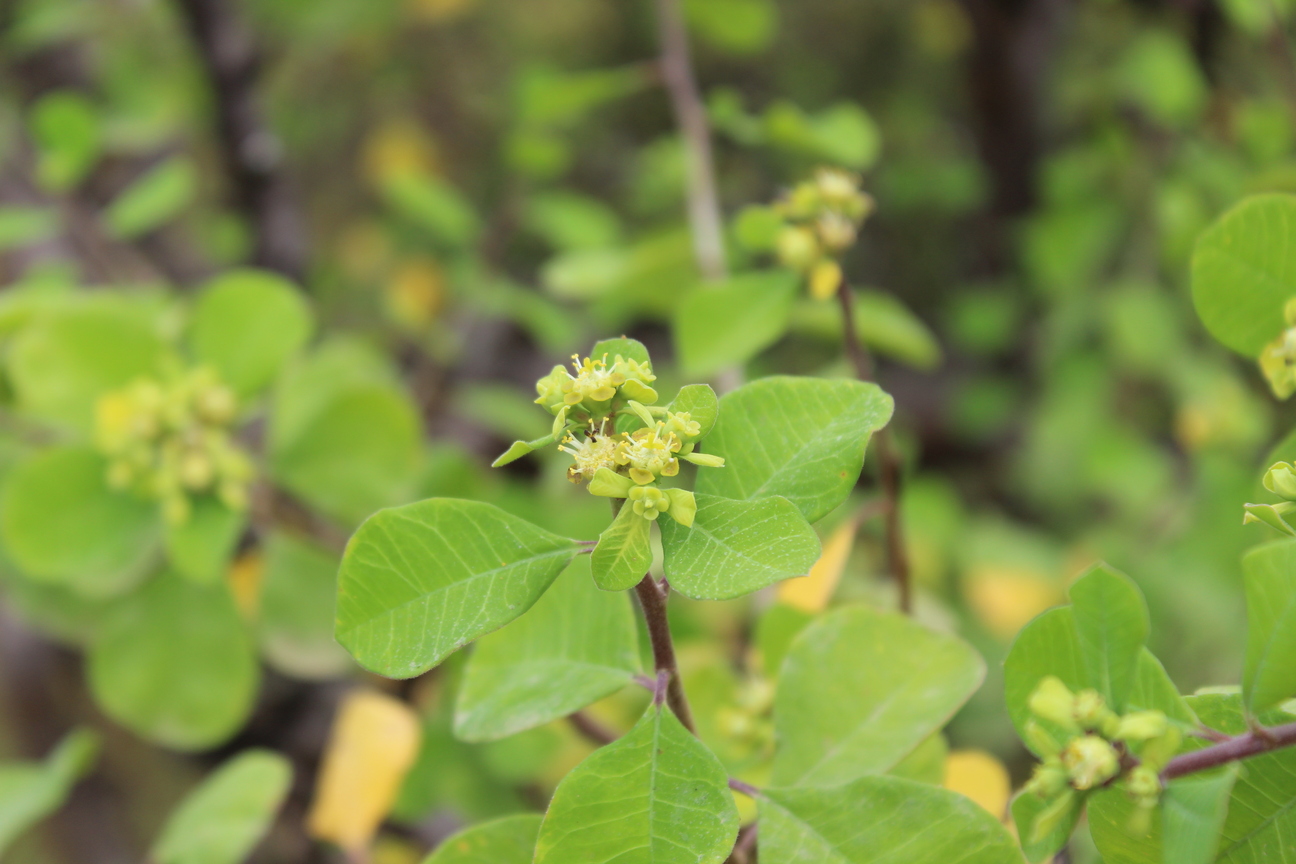
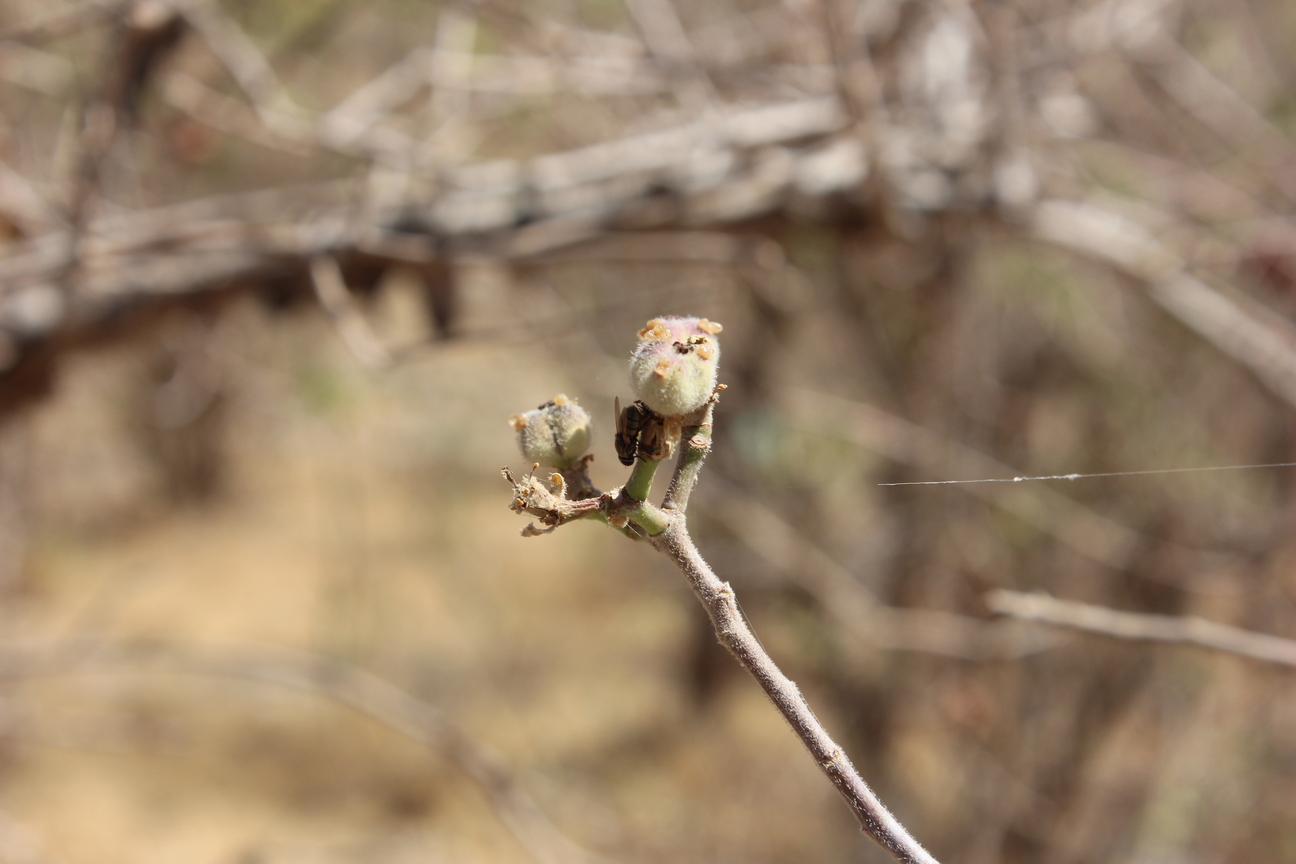
Deciduous . Small tree ; up to 5 m tall , with a single trunk or 2-3 from base , all parts producing copious white latex when cut . Stems erect , branched , reddish tinged , thinly pubescent becoming glabrous ; bark on the older branches peeling , brownish-red . Leaves alternate , 3-7 x 1 . 5-5 cm , obovate , tip rounded to minutely apiculate , base cuneate , margins entire , glabrous with sparse pubescent on the margins and veins , bluish-green above , pale green below . Inflorescences cyathia terminal in groups of three , sessile to shortly pedunculate , white-hairy ; bracts subtending the cyathia ± 1 mm ; involucre cup-shaped , ± 4 mm long . Flowers cyathia , brownish-green ; male flowers numerous , with fimbriate bracteoles ; female flowers with ovary densely white-hairy ; style arms connate at base , 2-lobed at apex . Fruit capsule , 8-9 mm in diameter , subglobose , obtusely 3-lobed , erect , ± sessile , densely white-hairy . Seeds 3-3 . 7 mm across , globose , smooth , brown or grey . (Ref . Flora of Oman ; vol . 2) .
No Data
Near Endemic (NE) - Near Threatened (NT) - Global Assessment
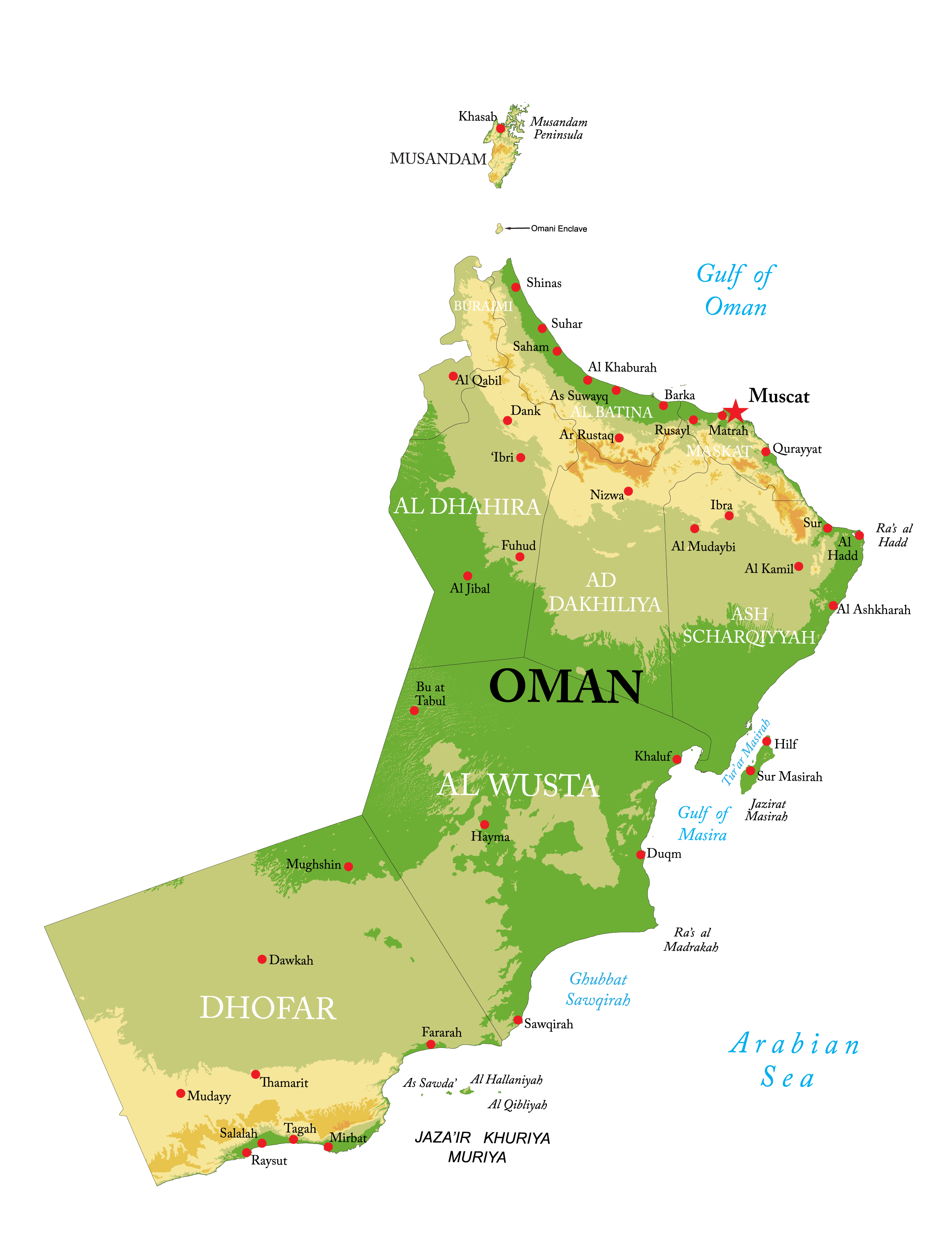
Frequent
الوصف غير متاح حاليًا
Not available
This succulent tree is propagated by stem cuttings. Steps to follow: • For stem cutting propagation, use semi-mature cuttings with at least 5 nodes. • Leave cuttings in shade for one day to dry the cutting area. • For better rooting, use cutting hormone, and plant in long root trainer or pots filled with a ratio of 1 peat moss: 3 perlites: 1 compost. • Leave cutting in a cool shaded area and irrigate once every two weeks. • Stem rooting can vary from 19–75 days, with average rooting percentage around 7%.
maintenanceAr.Item1
Not known
In Omani studies: Miller & Morris (1988) wrote that: "This tree is common in Dhofar in the wet woodlands and scarps and also occurs, though more rarely, in the drier areas on the fringe of the monsoon-affected zone, where it is a much slighter and scrubbier bush. The tree is uually called [J: hebšínút], and the latex [J: hiόk], or [J: sahaz ehebšínút]. Medicinally, the latex was most important in veterinary medicine, being used to treat the extremely infectious and dreaded skin disease, called locally jerb, a kind of parasitic infestation which affects both goats and camels. The latex of this tree is suitable for treating both kinds of livestock. More than one tree had to be tapped to accumulate sufficient latex to treat a single camel, and it was a whole morning's work to collect enough to treat more than one. When enough had been collected, a Jatropha dhofarica
...

*Ghazanfar, S. (2007). Flora of the Sultanate of Oman, vol.2: Crassulaceae – Apiaceae. Meise, National Botanic Garden of Belgium (Scripta Botanica Begica, Vol. 36). ISBN 9789072619747 ISSN 0779-2387. *https://en.wikipedia.org *Gledhill, D. (2008). The Names of Plants. Fourth Edition. Cambridge University Press, UK. ISBN 978-0-521-86645-3 ISSN 978-0-521-68553-5. *Miller, A., Morris, M. (1988). Plants of Dhofar, the Southern Region of Oman: Traditional, Economic, and Medicinal Uses. Published by Office of the Adviser for Conservation of the Environment, Diwan of Royal Court, Sultanate of Oman; ISBN 10: 0715708082 ISSN 13: 9780715708088. *Pickering, H. Patzelt, A. (2008). Field Guide to the Wild Plants of Oman. Kew publishing, Royal Botanic Garden, Kew. ISBN 9781842461778. *Patzelt, A. (2015). Oman Plant Red Data Book. Published by Diwan of Royal Court, Sultanate of Oman. Oman Botanic Garden Publication No. 1. ISBN 978-99969-50-10-0. *POWO (2023). ""Plants of the World Online. Facilitated by the Royal Botanic Gardens, Kew. Published on
...
