علم تشكل النبات
Perennial bushy shrub ; up to 50 cm tall , often woody based . Stems erect to ascending , spreading , whitish-green , densely covered with appressed silvery-grey medifixed hairs . Leaves simply imparipinnate , up to 8 cm long , glaucous , with 3-5 pairs of leaflets ; leaflets 10-32 x 8-25 mm , opposite , broadly ovate to rotund , apex obtuse to rounded with a small mucro , margin entire , base tapering , glabrous above , pubescent below or pubescent on both surfaces . Inflorescences in many-flowered axillary racemes , 0 . 5-8 cm long . Flowers red to pink ; calyx ± 1 mm , lobes triangular ; corolla with standard petal 2-3 mm ; wings red ; keel 5 . 5 mm long , spurred on either side , green ; stamens 10 , the filaments of 9 fused , the other free . Fruit pods not flattened , 15-20 x ± 3 mm , reflexing downwards , curved upwards , beaked , dark brown with white appressed hairs , 1-3-seeded . Seeds 2 . 5 x 2 mm , ellipsoid , smooth , pale brown . (Ref . Flora of Oman ; vol . 2) .
الوضع البيئي الحالي
Not Evaluated (NE)
التوزيع الجغرافي والبيئي
الوصف غير متاح حاليًا
المرادفات
Indigofera caerulea Roxb.
العناية بالنبات
maintenanceAr.Item1
maintenanceAr.Item3
الأسماء المحلية
duger agrib (meaning 'crow's bean') (same name also used for Commelina forskaolii, Vatovaea pseudolablab, Aneilema forskalii and Commelina albescens), ḥόber, ḥόr (Jibbali/Shehri)
hewīr (Dhofari Arabic)
homir (Mehri)
uzlum (Northern Oman)
الاستخدامات
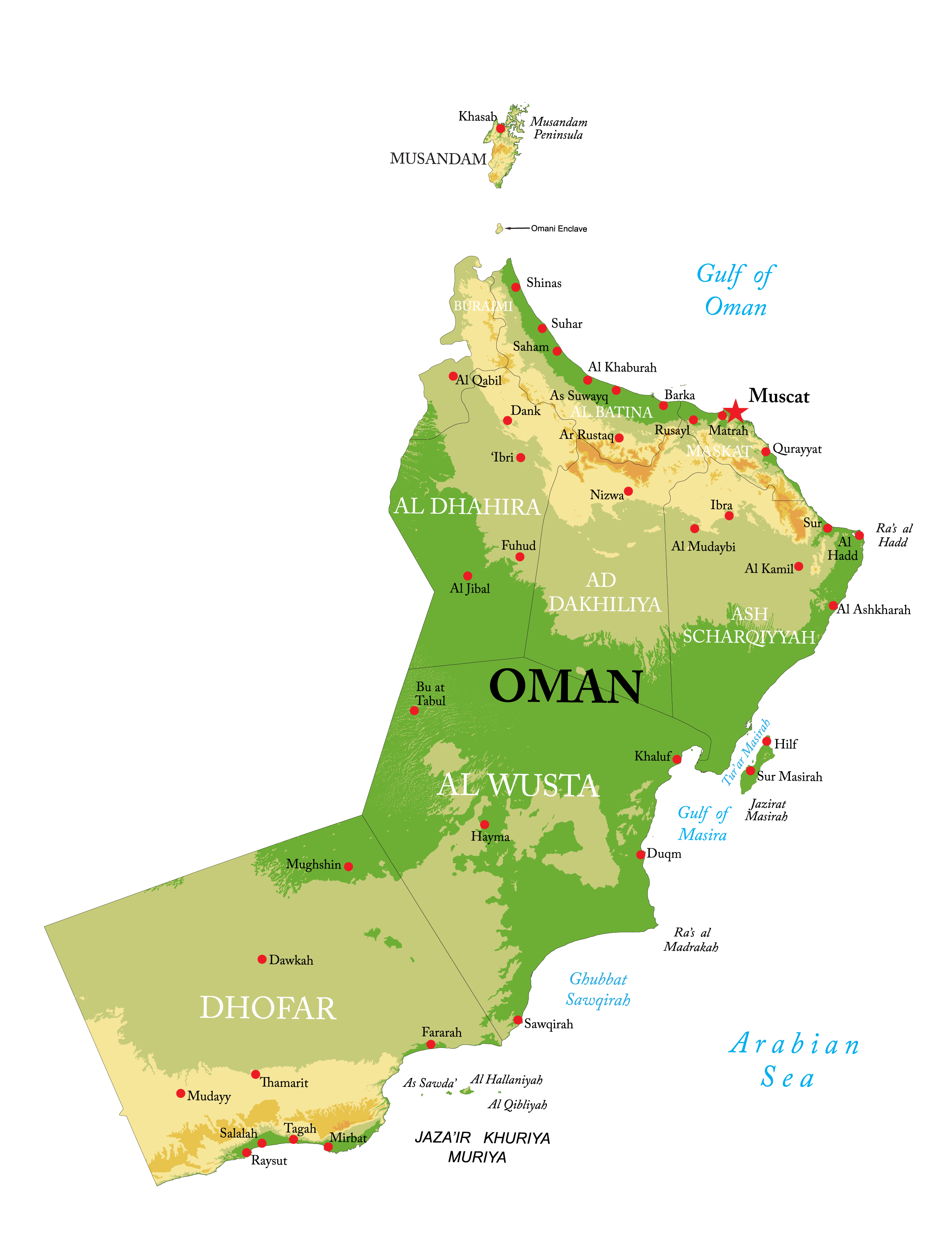
In the Central Desert, the whole plant pounded to a paste which kept on hands as a red dye like henna (Ref. Oman Botanic Garden). Miller & Morris (1988) mentioned that: "Indigofera coerulea [J: hor], a low-growing plant commonly to be found in the lower plains area of Dhofar, was formerly of some importance as a dyeing plant. Many Indigofera varieties have been used as dye plants, especially to make indigo, and in the north of Oman, this plant was one of the species used in the indigo-dyeing industry that once flourished there. However, in Dhofar, there is no record of either the plant having been grown commercially for export or of a local indigo-dyeing industry, at best within living memory: indigo dyeing is a most complicated and skilled procedure, and it is not likely that memories of the process could have been completely effected among members of the older
...
generation. In Dhofar, this plant was cut and used for dyeing, but using a much simpler process than that required to produce indigo: the leafy twigs of the plant were cut, crushed and bruised and then put into a container with enough water just to cover the leafy material - the less water used, the better. The container was then put on the fire and simmered gently for as long as it took for the contents to be transformed into a dark viscous liquid. Once this stage had been reached - which could take a long time - te material to be dyed was lowered into the pot and held under the water by a stone or some other heavy object. The material to be dyed was usually cotton - the thick, unbleached cotton imported mainly from India, which was the basic clothing material for men and women in earlier years in Dhofar - or leather articles such as the fillet for binding the hair. The material was left to soak then brought to the boil and left to soak again, and this process was repeated until the required shade had been achieved. The colour that resulted was a blue-green shade which was not stable, but faded in the sun and at each washing. This dye was also much used to dye fibre from the leaves of the date-palm Phoenix dactylifera a dark violet colour. These dyed strands were then woven decoratively by women into the articles of daily use (such as mats, fans and baskets of various kinds) to provide an attractive contrast to the creamy colour of the undyed material. Older people still remember vats of this dye plant being prepared and bubbling away outside the coastal settlements where most of this fibre weaving industry was carried out. The roasted and ground roots were also used as a dye to deepen the red colour of the dye produced by other plants such as the pods of Acacia nilotica. When red-dyeing plants were not available, these roasted roots were used on their own, producing a dark red-brown colour which, while not as admired as the clear mahogany red produced by other plants, was nevertheless much appreciated. Women also roasted the roots of the plant over a slow fire and crushed them to a powder and mixed them with some form of grease or oil to use as a cosmetic dye - a substitute for the real indigo, which was imported from Yemen, India and the north of Oman. Indigo, as well as being liked for its colour, was also appreciated for its medicinal and prophylactic qualities, protecting the wearer from evil influences and malignant spirits. The roots were used medicinally, being crushed with some of the leaves and used to treat snake bite as an anti-inflammatory. A simliar mixture was applied too to other swellings, such as those of mumps, infected raised glands, and the painful swollen joints of arthritis and rheumatism. An extract of the root and leaves was taken as an oxytoxic with some apparent success, and a paste made of the leaves was also applied to the site of a burn when this was not too severe, or to soothe the pain and inflammation that followed cauterization, or to treat animal bites". (Ref. Plants of Dhofar). Richardson & Dorr (2003) wrote that: "In the past, the Dhofari fish trap was made from the long stems of the indigo plant (Indigofera coerulea), or sometimes from thin acacia branches. Although there are no specific examples of the use of indigo on Dhofari pottery, in the past a deep-blue indigo dye was made from huwir (Indigofera coerulea). Huwir was used to dye cloth, leather and date palm basketry in Dhofar, and older artisans have referred to its occasional use on pottery". (Ref. The Craft Heritage of Oman).

المراجع
*POWO (2022). ""Plants of the World Online. Facilitated by the Royal Botanic Gardens, Kew. Published on the Internet; http://www.plantsoftheworldonline.org *Ghazanfar, S. (2007). Flora of the Sultanate of Oman, vol.2: Crassulaceae – Apiaceae. Meise, National Botanic Garden of Belgium (Scripta Botanica Begica, Vol. 36). ISBN 9789072619747 ISSN 0779-2387. *https://en.wikipedia.org *Gledhill, D. (2008). The Names of Plants. Fourth Edition. Cambridge University Press, UK. ISBN 978-0-521-86645-3 ISSN 978-0-521-68553-5. Miller, A., Morris, M. (1988). Plants of Dhofar, the Southern Region of Oman: Traditional, Economic, and Medicinal Uses. Published by Office of the Adviser for Conservation of the Environment, Diwan of Royal Court, Sultanate of Oman; ISBN 10: 0715708082 ISSN 13: 9780715708088.