علم تشكل النبات
Small tree ; up to 5 m tall , with a flat-topped canopy . Stems single or multi-stemmed ; bark grey-brown-black , fissured ; young branches brown to reddish black , densely pubescent ; spines stipular , paired , 2-8 cm long or smaller to ± 1 cm , straight , sometimes curved , white grey . Leaves small , pinnate , in fascicles with 2-10 pairs of pinnae , often with two sessile glands below lowest pair of pinnae ; leaflets 6-12 pairs , 0 . 5-1 . 5 mm , oblong , densely pubescent . Inflorescences of axillary globose heads , 0 . 8-10 mm across , pedunculate , pubescent . Flowers white ; calyx ± 1 mm , glabrous with hairs on lobes ; corolla ± 2 mm , glabrous with pubescent lobes . Fruit pods , 4-10 x 0 . 5-0 . 7 cm , spirally twisted or contorted , reddish brown , densely pubescent , dehiscent , 5-8-seeded . Seeds 4-5 mm , ovoid , reddish-brown . (Ref . Flora of Oman ; vol . 2) .
الوضع البيئي الحالي
Not Evaluated (NE)
التوزيع الجغرافي والبيئي
الوصف غير متاح حاليًا
المرادفات
Acacia tortilis (Forssk.) Hayne
Acacia perrottetii Steud.
Mimosa tortilis Forssk.
الإكثار
This tree is propagated by seeds. Steps to follow:
•
Pre-treat with water (tap temperature), soaking seeds for 24 hours to get a good result, and scarify seed coat.
•
Sow collected seeds in seed tray filled with a ratio of 3 peat moss: 1 compost, 5 cm apart.
•
Irrigate the seed tray three times a week.
•
Germination commences from 2–21 days. Seed germination of this species is low and average germination is around 41%.
العناية بالنبات
maintenanceAr.Item1
maintenanceAr.Item3
الأسماء المحلية
semer, samur, samr (Northern Oman)
herout, ḥarόź (Mehri and Harsusi)
ḥarόź, ṭulḥ (Jibbali/Shehri)
samra, šayereh (Dhofari Arabic)
الاستخدامات
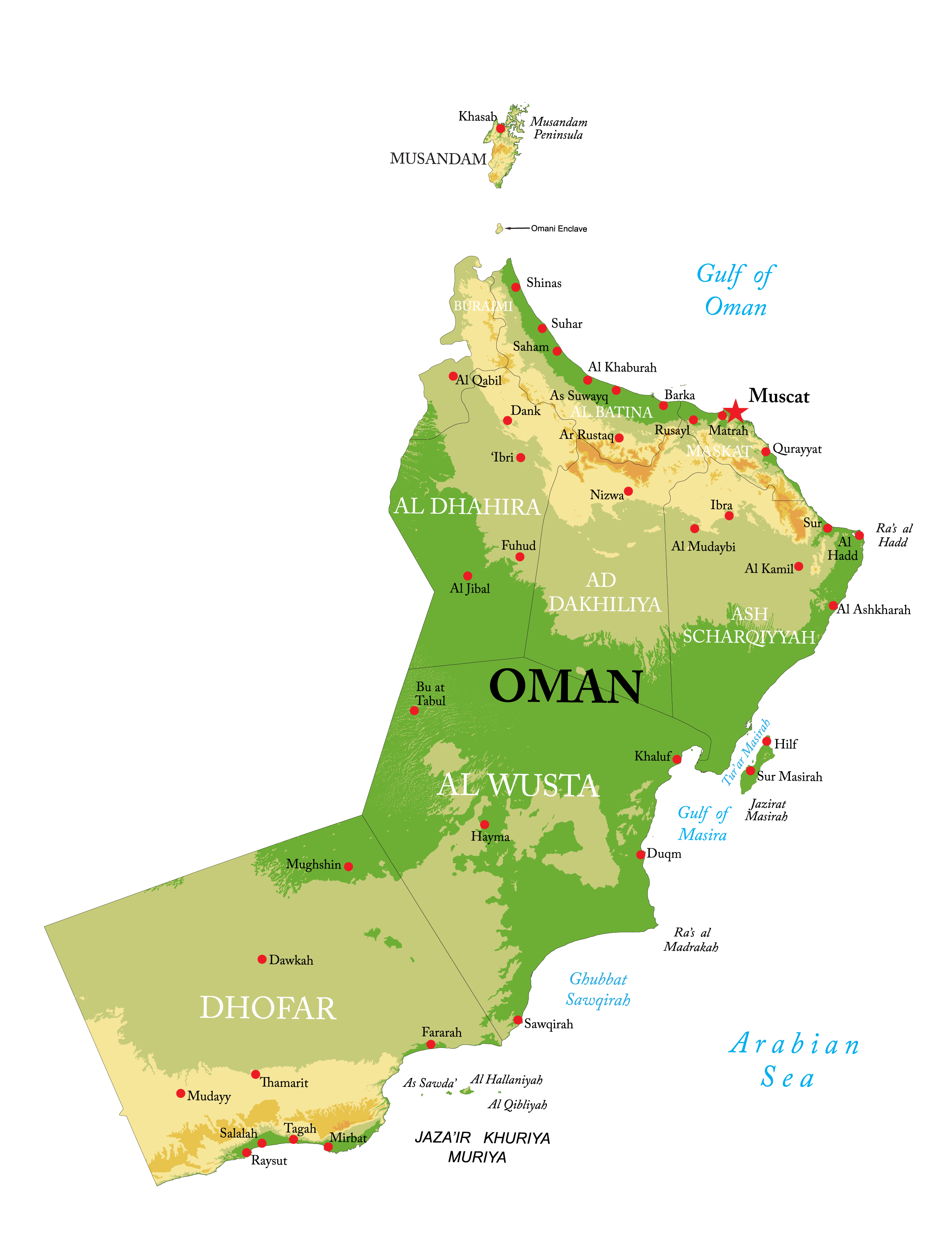
In Omanis studies: Miller & Morris (1988) wrote that: "Acacia tortilis is common in the drier areas of Dhofar, and also grows in the desert areas. In some of these it forms the dominant vegetation, and is the basic browse for the camel and goat herds reared in the drier zones of Dhofar (indeed, the DA name: šayereh just means 'the tree'). Livestock browse it enthusiastically, being especially partial to the curly pods. In the desert areas where trees are scarce, it was formerly forbidden among some tribes to damage or cut this tree in any way whatover - in its most sever form this ban was even extended to the pods which could not be plucked from the tree, but only gathered when they had fallen to the ground. This tree, a vital resource developed an almost mystic and somewhat supernatural charcter. In the more desert areas this tree
...
often provided the only available shelter from the sun, and camp was commonly set up in its shade, the lower branches being propped up off the ground with forked poles [J: misnux, misxirot] to increase the area of shade. The pods were gathered by herders either from where they has fallen to the ground, or by hooking the branches with the fodder hook and weighing them down with rocks to bring them within reach of browsing livestock, or by knocking the fruit off the tree with a fodder staff [J: muxbit]. These were taken back to the herds to feed the milkers or newly parturient, or for the weak and sickly livestock unable to fend for themselves. Goats-feeding on the pods are said to produce the most delicious and copious milk with a distinctive flavour much liked by their herders. Bees are attracted to the plentiful flowers, and wild honey gatherers would observe their flight paths and try to work out where in the beetling cliffd their hives might be. These and the flowers of A. senegal are said to produce the best honey of the drier areas of Dhofar. The tree was also important for firewood. It has very thick bark, and burns slowly but with an intense heat and makes practically no smoke. It used to be gathered not only to sold in the nearby coastal settlements, but also to be taken by boat or baggage camel as far as Salalah, where the household of the governor - an those other larger, extended households of the great merchants - had to provide huge pots of food daily to feed large numbers of visitors and retainers, and no other readily available wood was as economical and effective as the wood of the acacia. It also made good charcoal, which fetched the highest prices at a time when the charcoal industry was economically important and when charcoal was used daily (especially in the towns). The heartwood [J: obbot] of dead branches was sliced and shaved into slivers [J: naft aharoz] which were dried and stored for use as tinder [J: harik]. The lichen that grows on this tree (and on many others in Dhofar) was also collected and sun-dried and stored for the same purpose. The resin produced in reddish lumps by the tree [J: johoz aharoz] is inedible and of no medicinal significance. Medicinally, the new growth was pounded to a paste, added to freshly drawn milk and boiled down to make a poultice used to treat cases of mastitis. Short lengths of thread were twisted from the underbark which were used for emergency repairs and patching, but the threads were neither long enough nor strong enough to have been really important for this. Ash of the dead wood was taken as snuff or used to stretch limited quantities of purchased tobacco-snuff. The wood was not suitable for making utensils as it rots from the inside out, but the thorny and dense branches were much in demand for building enclosure walls, making livestock pens, or for constructing partition walling within the cave complexes to provide separate quarters for the differing livestock (for instance, with goats, the very young kids, the other kids, the mature females, the pregnant, the parturient, and the mature male goat(s) were traditionally penned separately)." (Ref. Plants of Dhofar). In addition, Richardson & Dorr (2003) mentioned that: "Crooks of indigenous samr (Acacia tortilis), qarat (Acacia nilotica) and sidr (Ziziphus spina-christi), obtained from the Omani interior, are used for ribwork (of boat-building industry), together with mit, imported from the Horn of Africa. The frames or ribs are made from local sidr, qarat or samr wood. Hardwood is an important but limited material, used for small items such as camel saddles, tent posts and pegs, spindles, camel sticks and cross-bars for weaving looms. Branches of various species of samr are used as ceiling supports in stone houses, braces for fencing and other small-scale construction. A number of different tanning agents are used in Oman, the most common of which are the dried leaves and pods of indigenous acacia trees (Acacia nilotica, Acacia etbaica or Acacia tortilis)". (Ref. The Craft Heritage of Oman). Furthermore, Ghazanfar (2008) stated that: "Foliage is browsed by all livestock; pods are used for fodder". (Ref. Flora of Oman, vol. 2).

المراجع
*POWO (2022). ""Plants of the World Online. Facilitated by the Royal Botanic Gardens, Kew. Published on the Internet; http://www.plantsoftheworldonline.org *Ghazanfar, S. (2007). Flora of the Sultanate of Oman, vol.2: Crassulaceae – Apiaceae. Meise, National Botanic Garden of Belgium (Scripta Botanica Begica, Vol. 36). ISBN 9789072619747 ISSN 0779-2387. *https://en.wikipedia.org *https://en.wiktionary.org *Miller, A., Morris, M. (1988). Plants of Dhofar, the Southern Region of Oman: Traditional, Economic, and Medicinal Uses. Published by Office of the Adviser for Conservation of the Environment, Diwan of Royal Court, Sultanate of Oman; ISBN 10: 0715708082 ISSN 13: 9780715708088. *Richardson, N. Dorr, M. (2003). The Craft Heritage of Oman; vol. 1. Published by Motivate publishing. ISBN 1-86063-1576. *Pickering, H. Patzelt, A. (2008). Field Guide to the Wild Plants of Oman. Kew publishing, Royal Botanic Garden, Kew. ISBN 9781842461778.