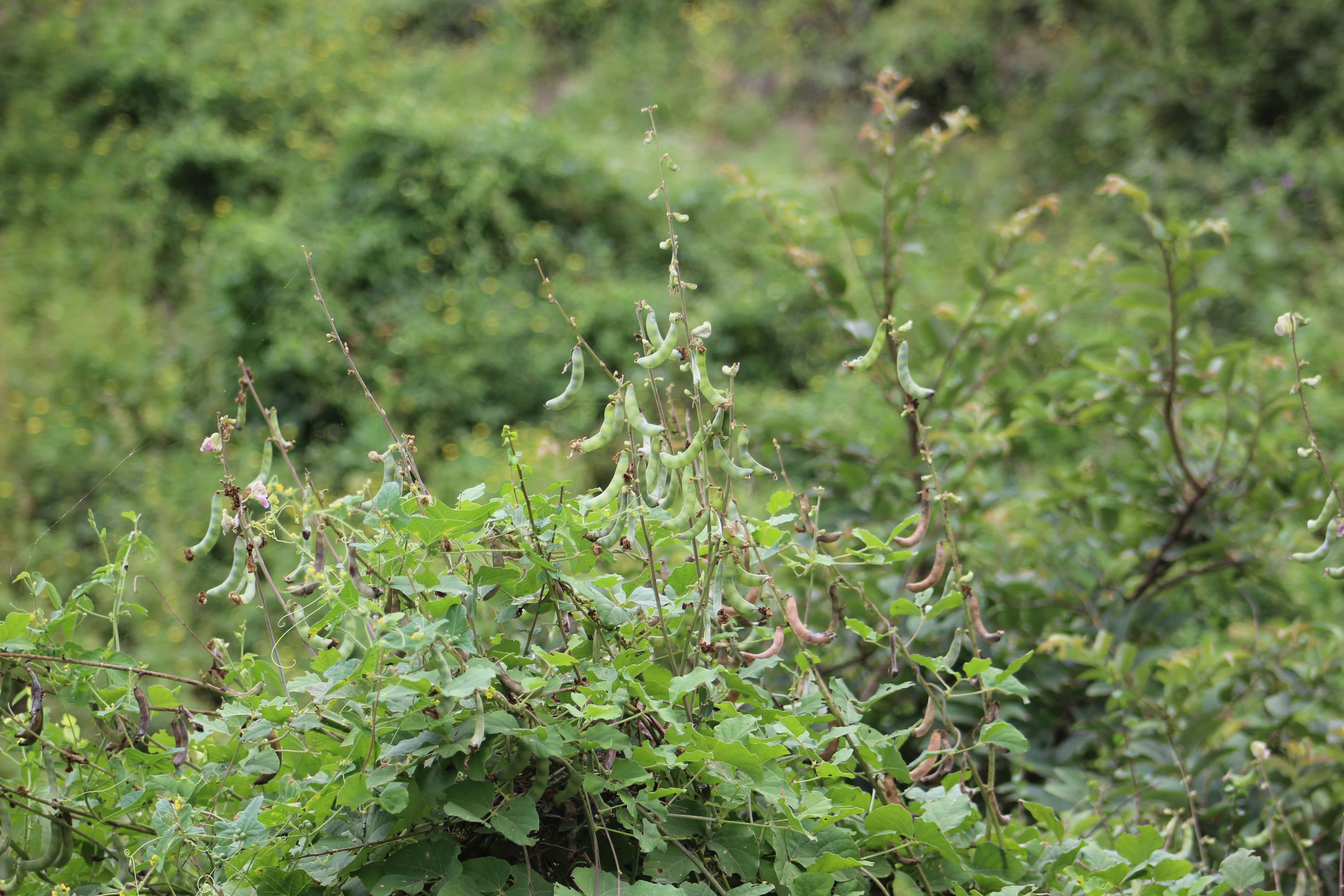
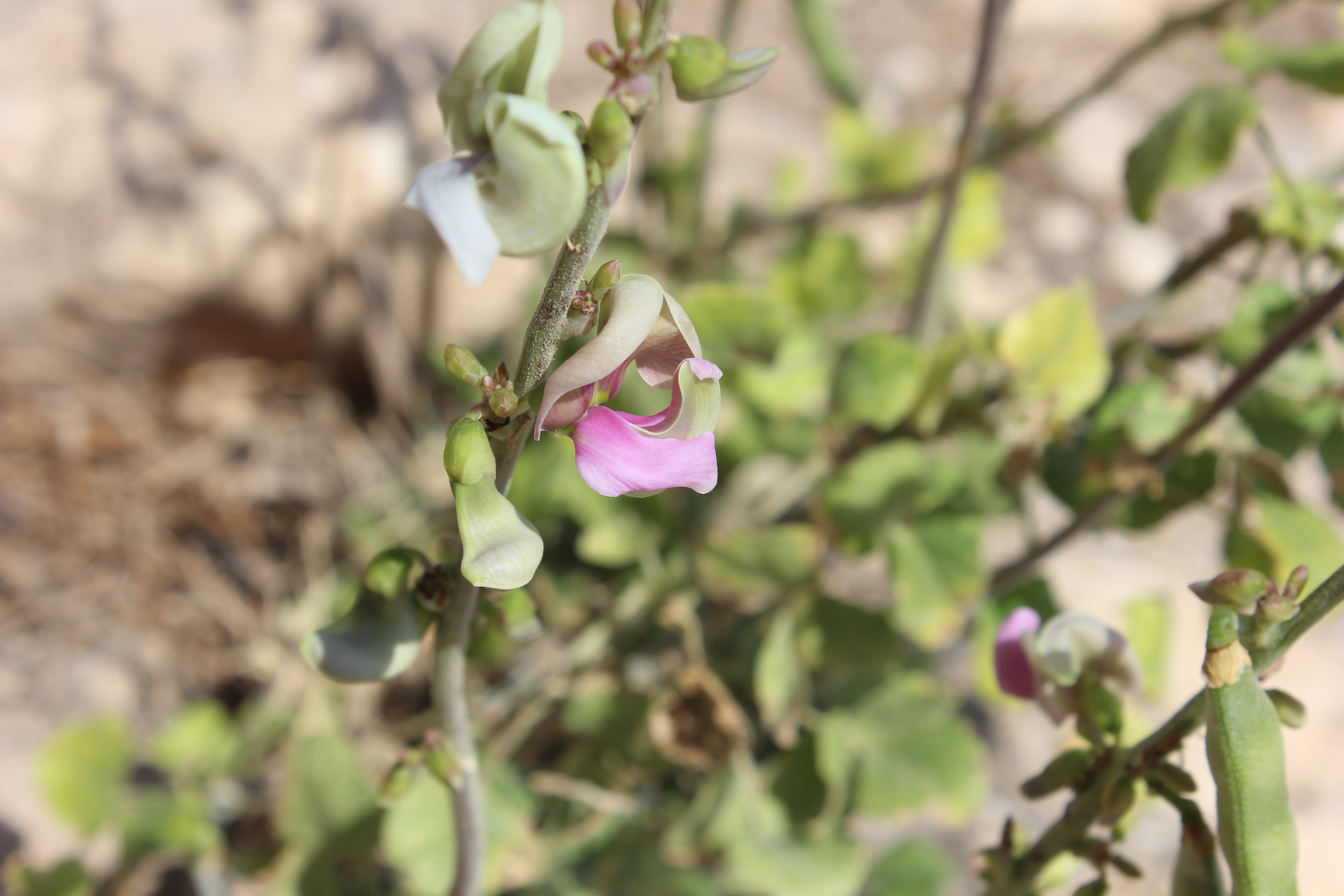
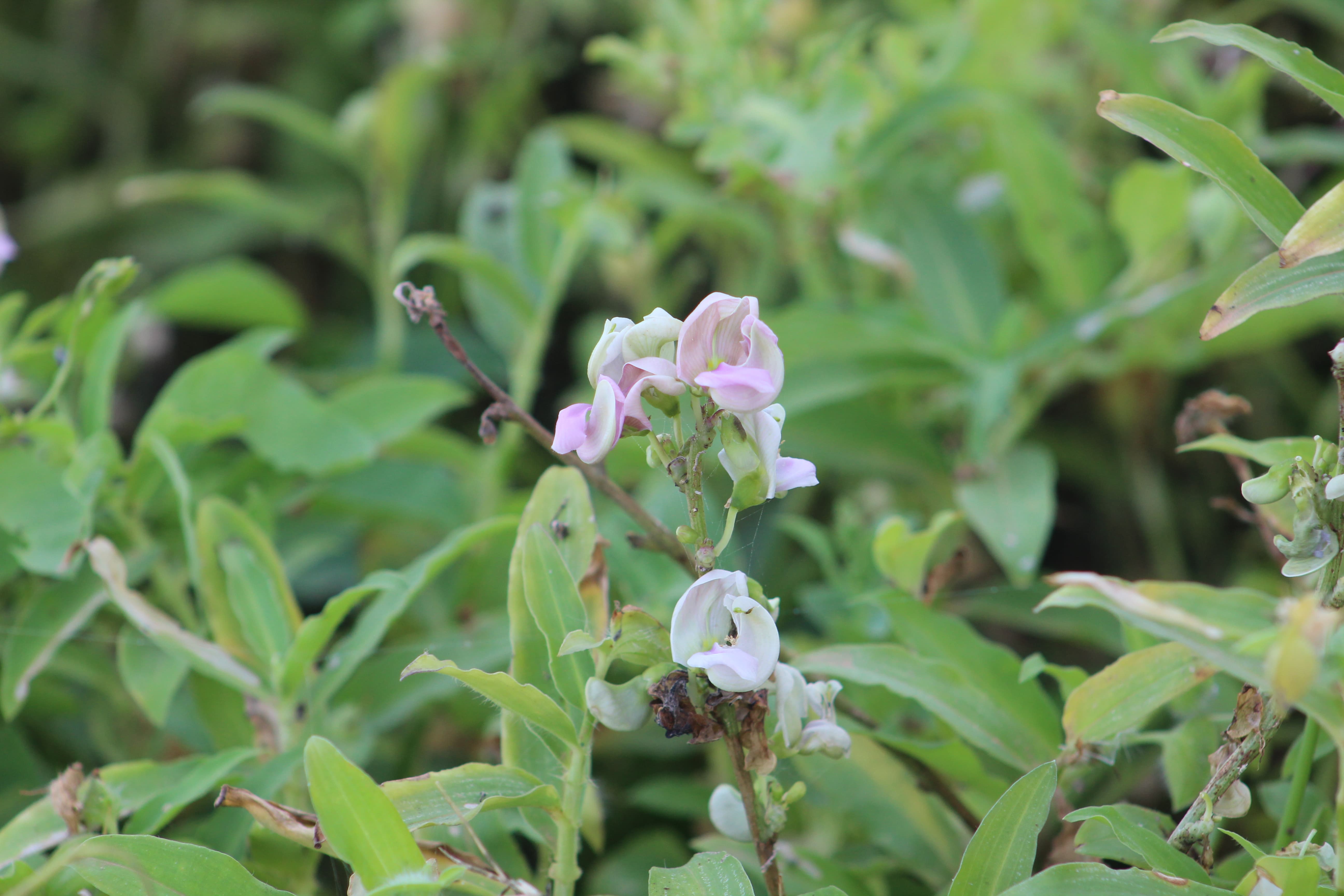
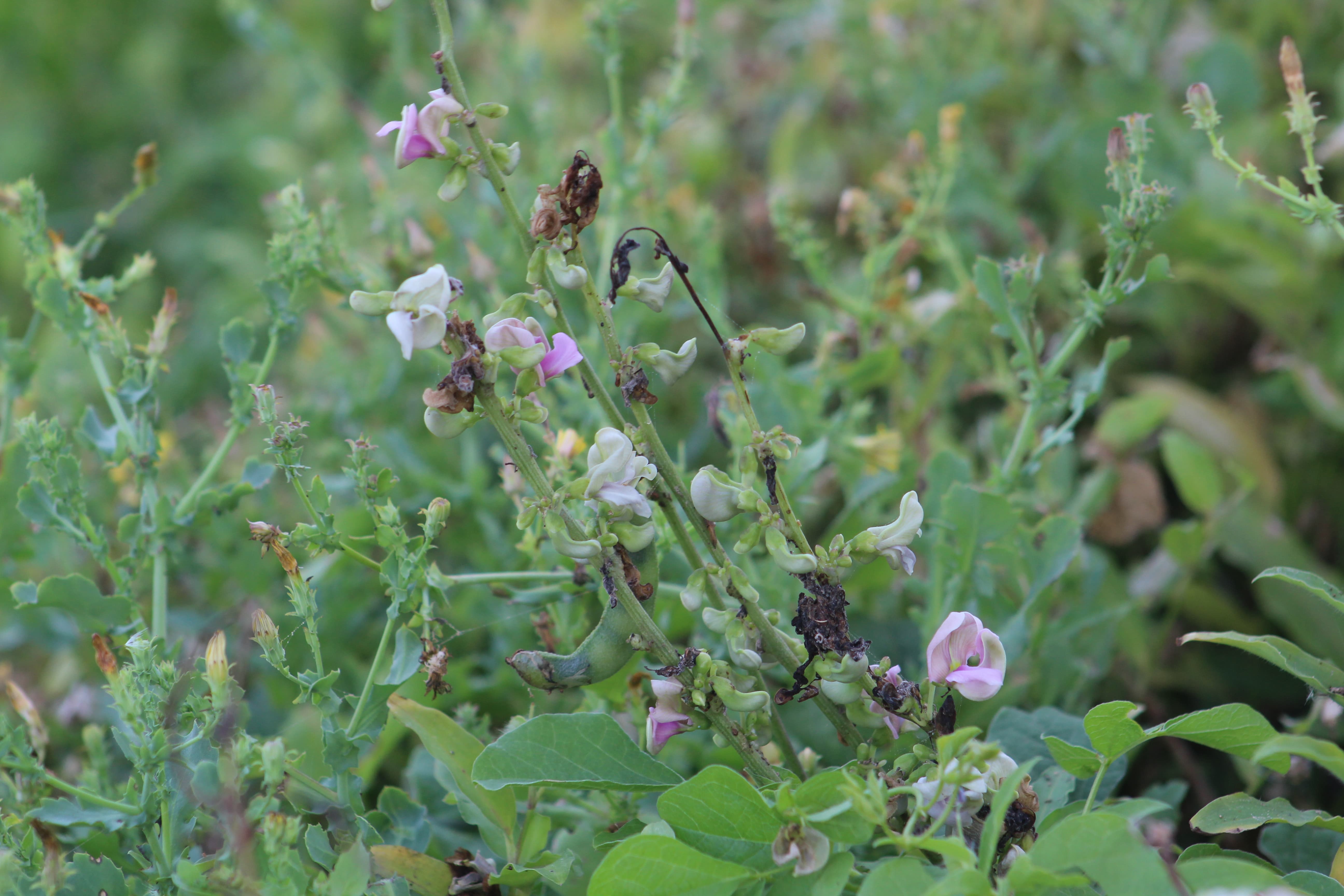
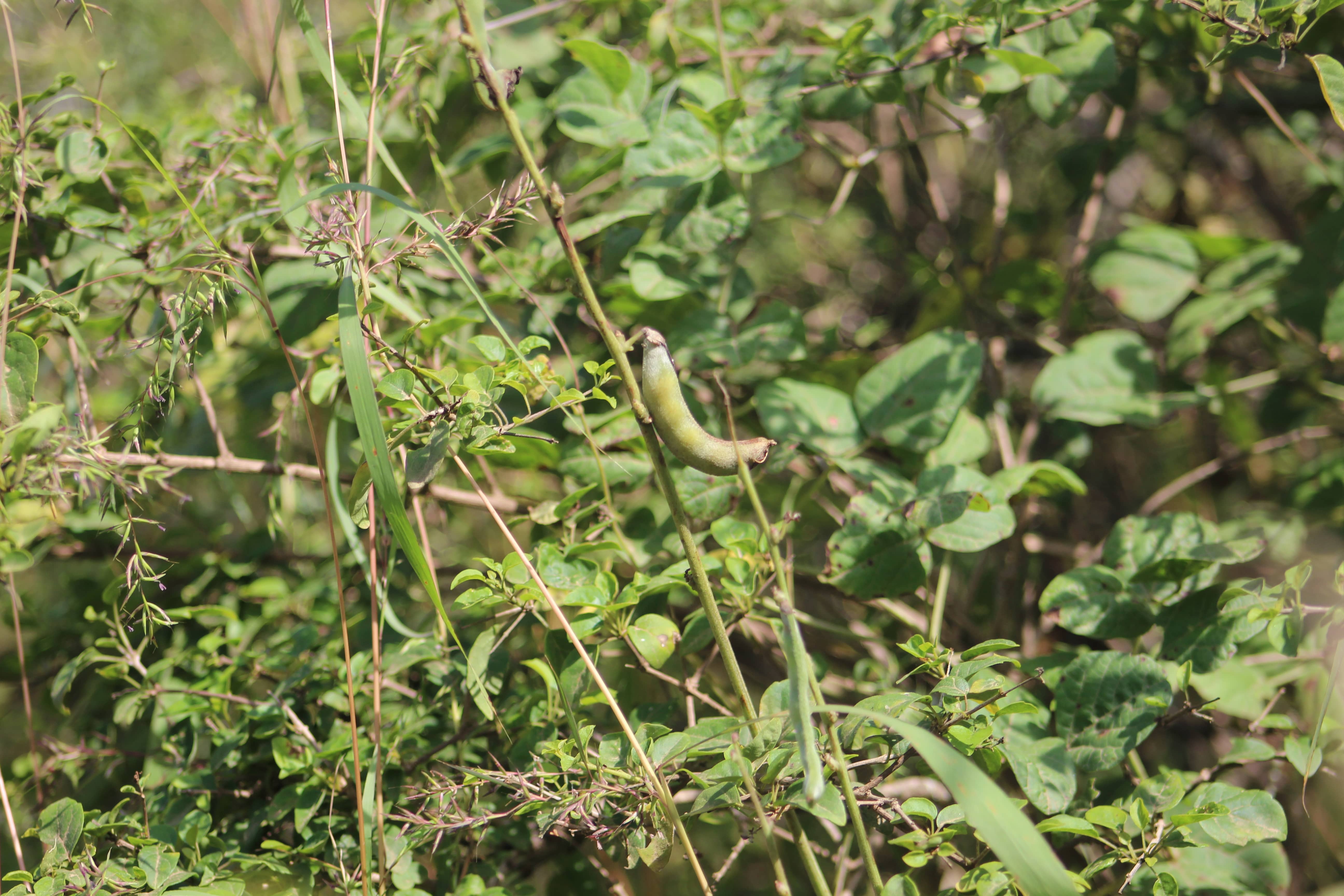
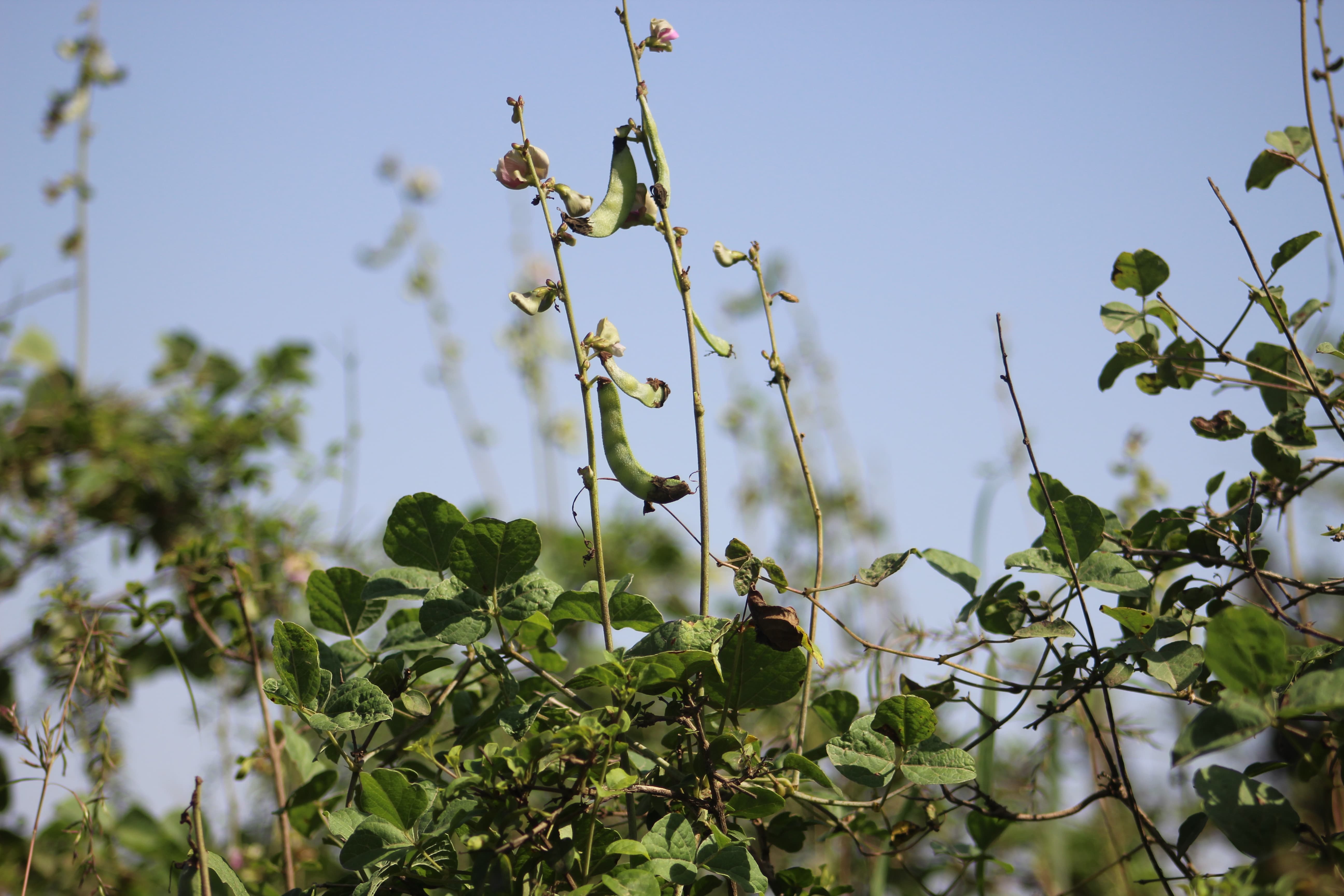
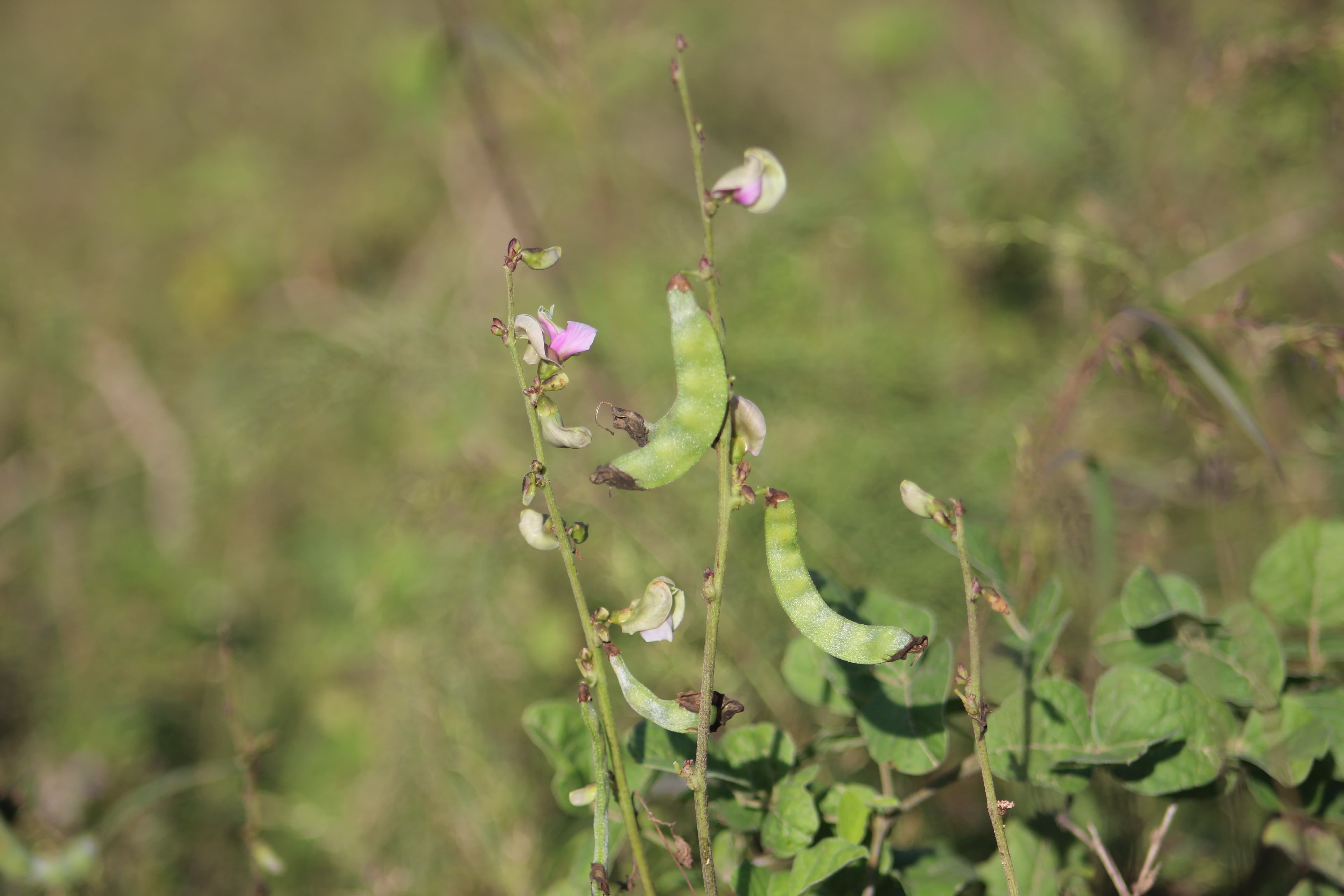
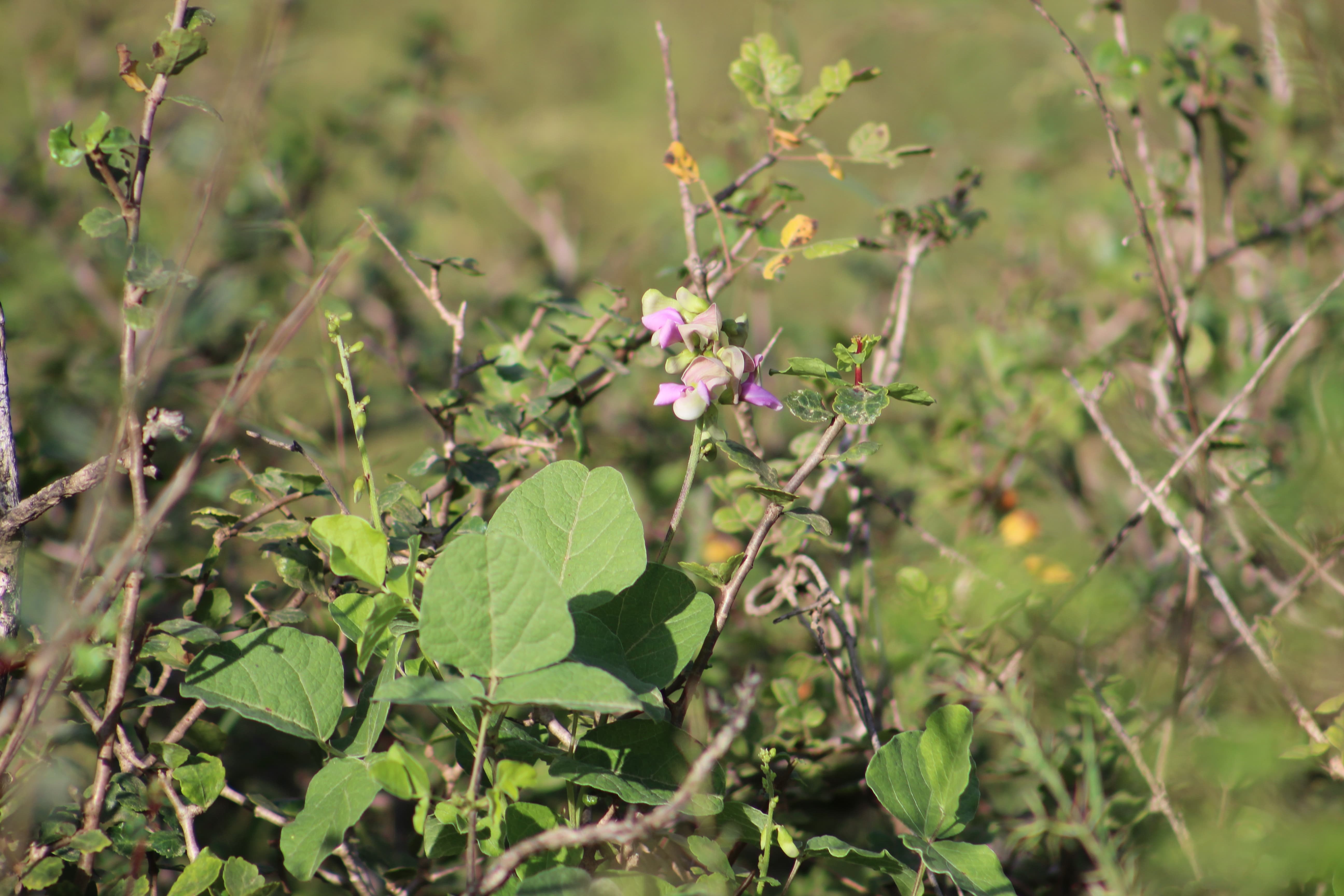
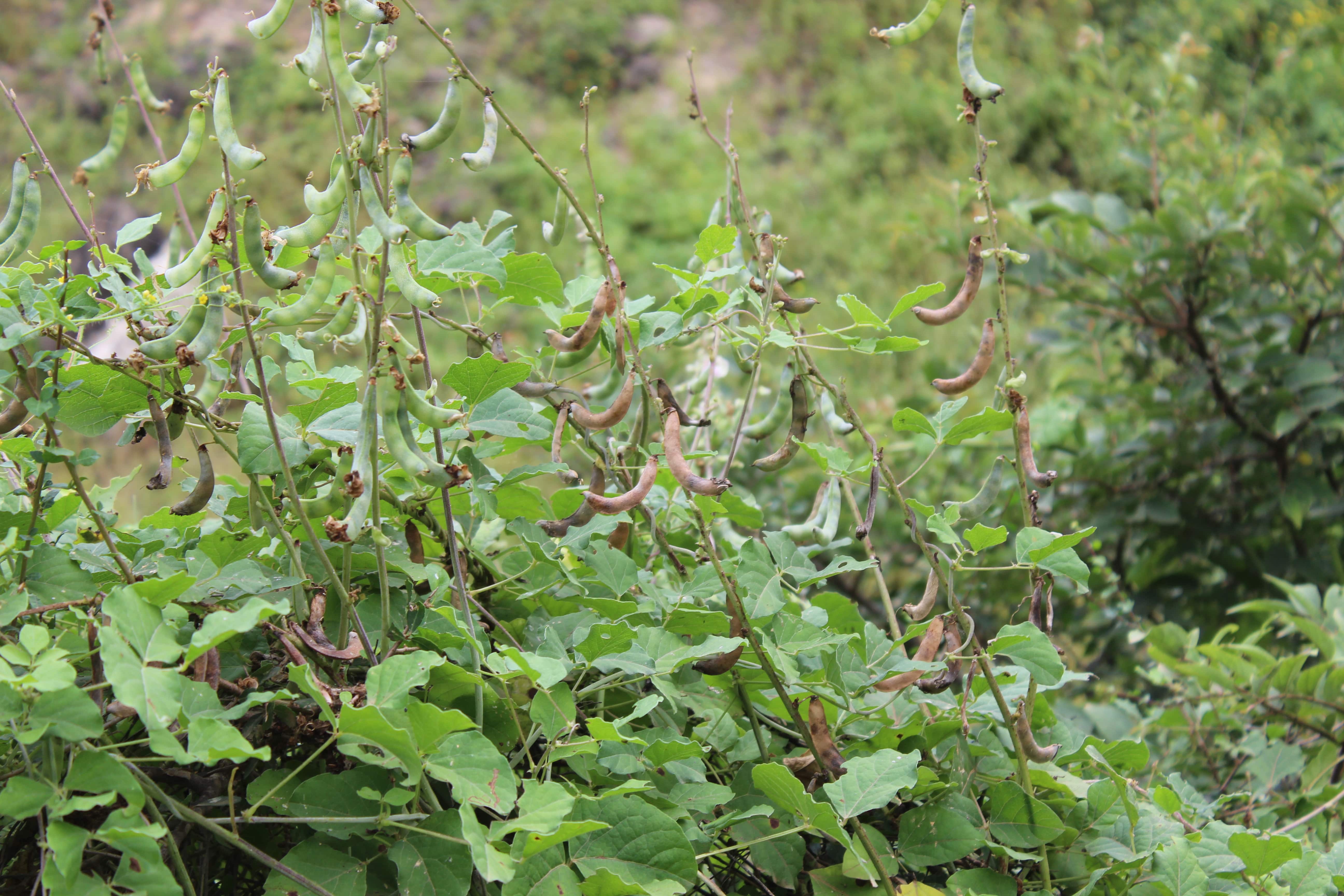
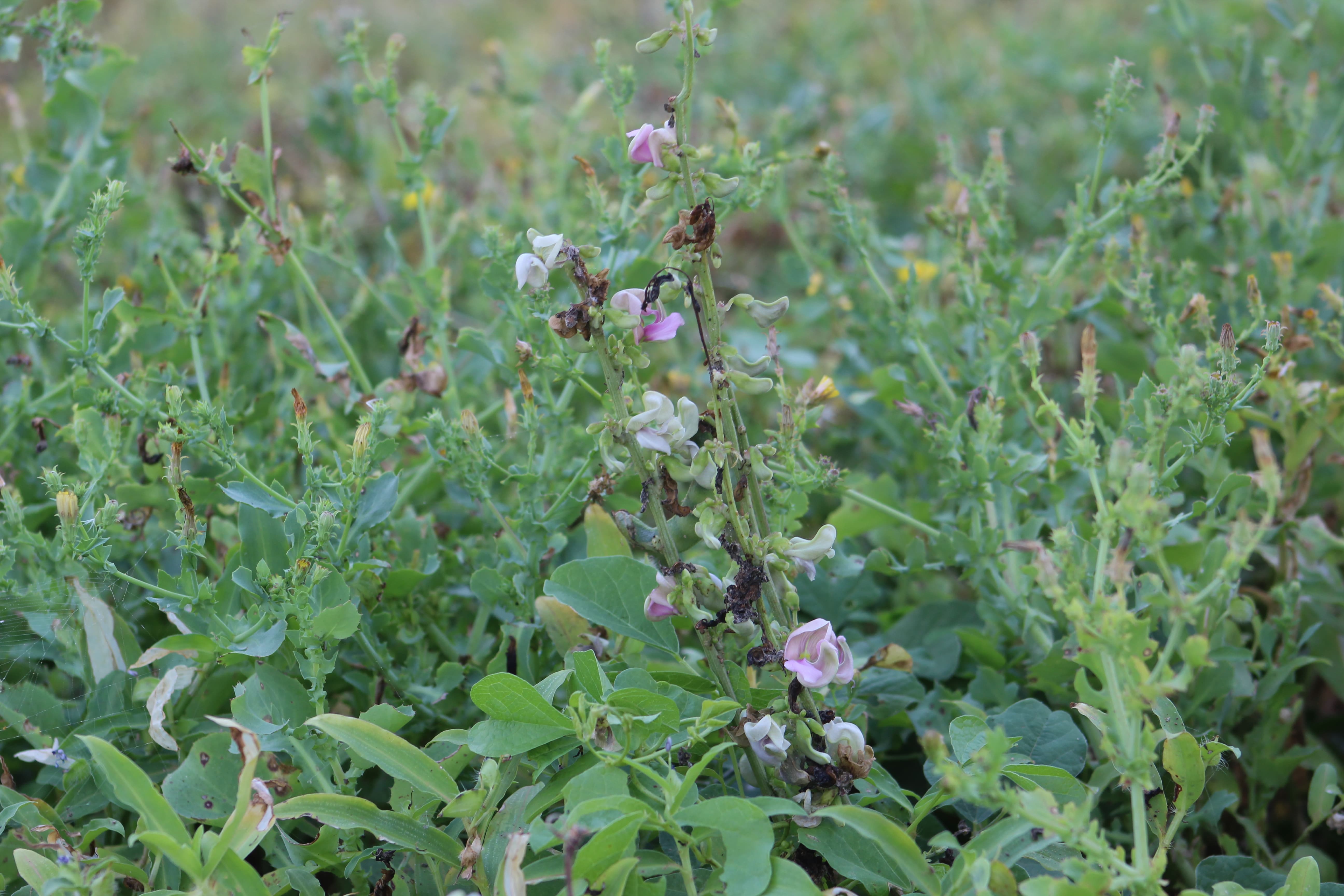
Vatovaea_pseudolablab_10 © OBG
Vatovaea_pseudolablab_2 © OBG
Vatovaea_pseudolablab_3 © OBG
Vatovaea_pseudolablab_4 © OBG
Vatovaea_pseudolablab_5 © OBG
Vatovaea_pseudolablab_6 © OBG
Vatovaea_pseudolablab_7 © OBG
Vatovaea_pseudolablab_8 © OBG
Vatovaea_pseudolablab_9 © OBG
Vatovaea_pseudolablab © OBG
Climbing perennial herb ; up to 1(-2)m long , woody below . Stems arising from a large tuber , branched , often pale reddish-brown , sparsely pubescent . Leaves 3-foliolate ; petiole up to 4 cm ; stipules ± 3 . 5 mm , oblong ; stiples minute ; leaflets up to 6 x 5 . 5 mm , ovate to ovate-rhomboid , apex rounded to acute , base oblique , sparsely appressed pubescent to glabrous . Inflorescences in erect , axillary racemes up to 30 cm long ; pedicels ± 2 mm . Flowers pale green to pink to pink-purple , twisted , c . 15 mm long ; calyx 2 . 5-3 mm , lobes ± 2 . 5 mm , upper two joined , ± emarginate , lower 3 rounded to ovate ; corolla with standard petal rotund , 18-20 mm long and broad , emarginate with 2 stiff appendages at base ; keel pale green , resupinate ; stamens 9 joined and vexillary stamen free ; style curved , hairy inside towards the apex , with a small reflexed appendage at the apex . Fruit pod , 6-7 x 1-1 . 5 mm , flattened , linear-oblong ,
...

No Data
Not Evaluated (NE)
Not Common
الوصف غير متاح حاليًا
Phaseolus cibellii Chiov.
Vatovaea biloba Chiov.
Vigna pseudolablab Harms
No data
maintenanceAr.Item1
Not known
Miller & Morris (1988) wrote that: "This plant produces abundant foliage during the monsoon season, and strangely twisted mauve flowers, which give way to large pods. The leaves are edible and were eaten raw or cooked. The pods were eaten whole as long as they remained young and tender, and once they has matured and the skin has become tough, the beans inside were gathered, and either eaten raw, or cooked in water like the cow-peas which were cultivated in the mountain seasonal garden plots. They were also roasted over a slow fire, a popular way of cooking large quantities of grains and pulses, since once cooked they kept well, which meant that more than one meals-worth could be cooked at a time, saving on fuel and labour. The root was considered to be at its best, large and succulent, once the greenery had died back. The swollen root system
...
*POWO (2022). ""Plants of the World Online. Facilitated by the Royal Botanic Gardens, Kew. Published on the Internet; http://www.plantsoftheworldonline.org *Ghazanfar, S. (2007). Flora of the Sultanate of Oman, vol.2: Crassulaceae – Apiaceae. Meise, National Botanic Garden of Belgium (Scripta Botanica Begica, Vol. 36). ISBN 9789072619747 ISSN 0779-2387. *https://en.wikipedia.org *https://en.wiktionary.org *Miller, A., Morris, M. (1988). Plants of Dhofar, the Southern Region of Oman: Traditional, Economic, and Medicinal Uses. Published by Office of the Adviser for Conservation of the Environment, Diwan of Royal Court, Sultanate of Oman; ISBN 10: 0715708082 ISSN 13: 9780715708088. *Richardson, N. Dorr, M. (2003). The Craft Heritage of Oman; vol. 1. Published by Motivate publishing. ISBN 1-86063-1576.
