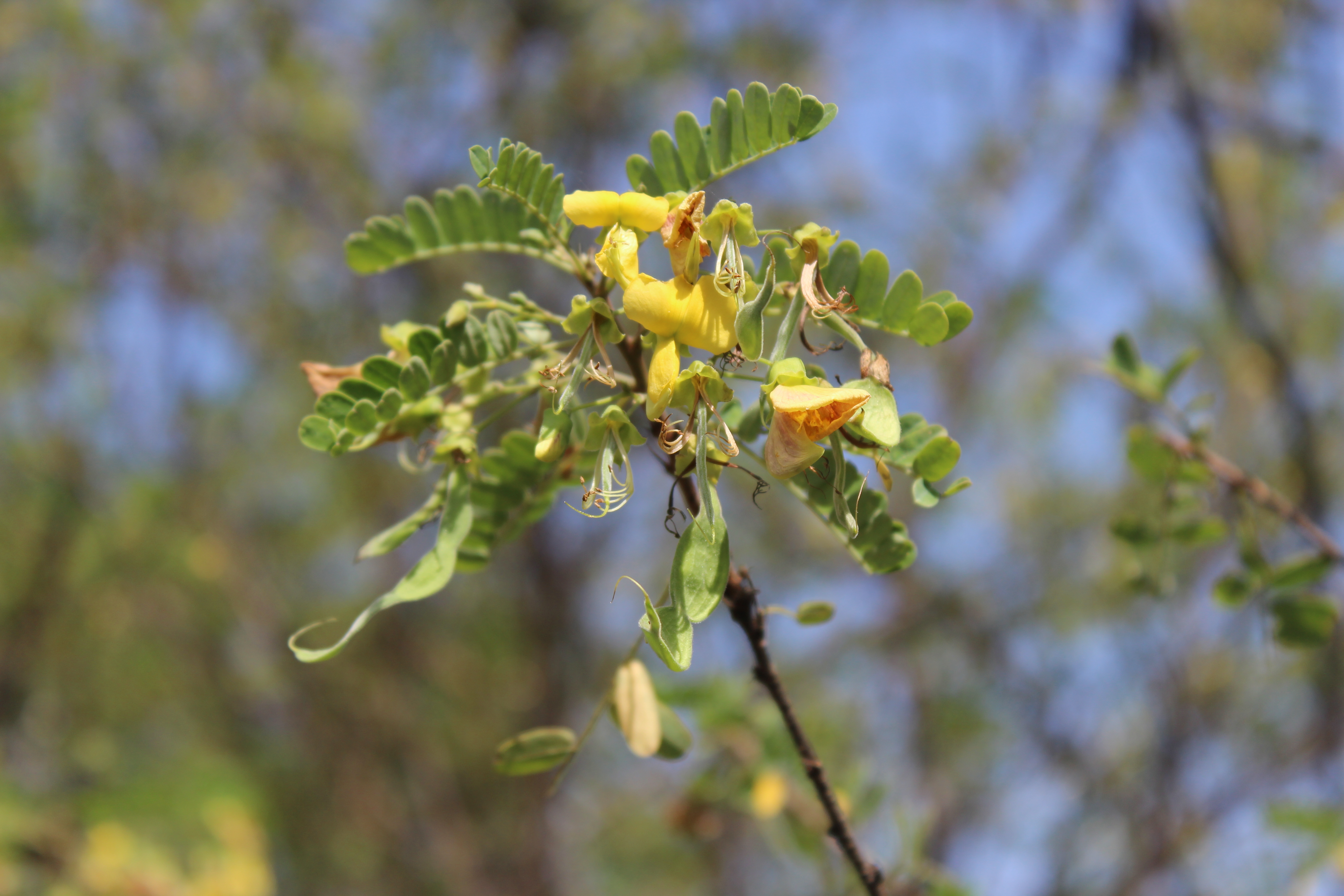
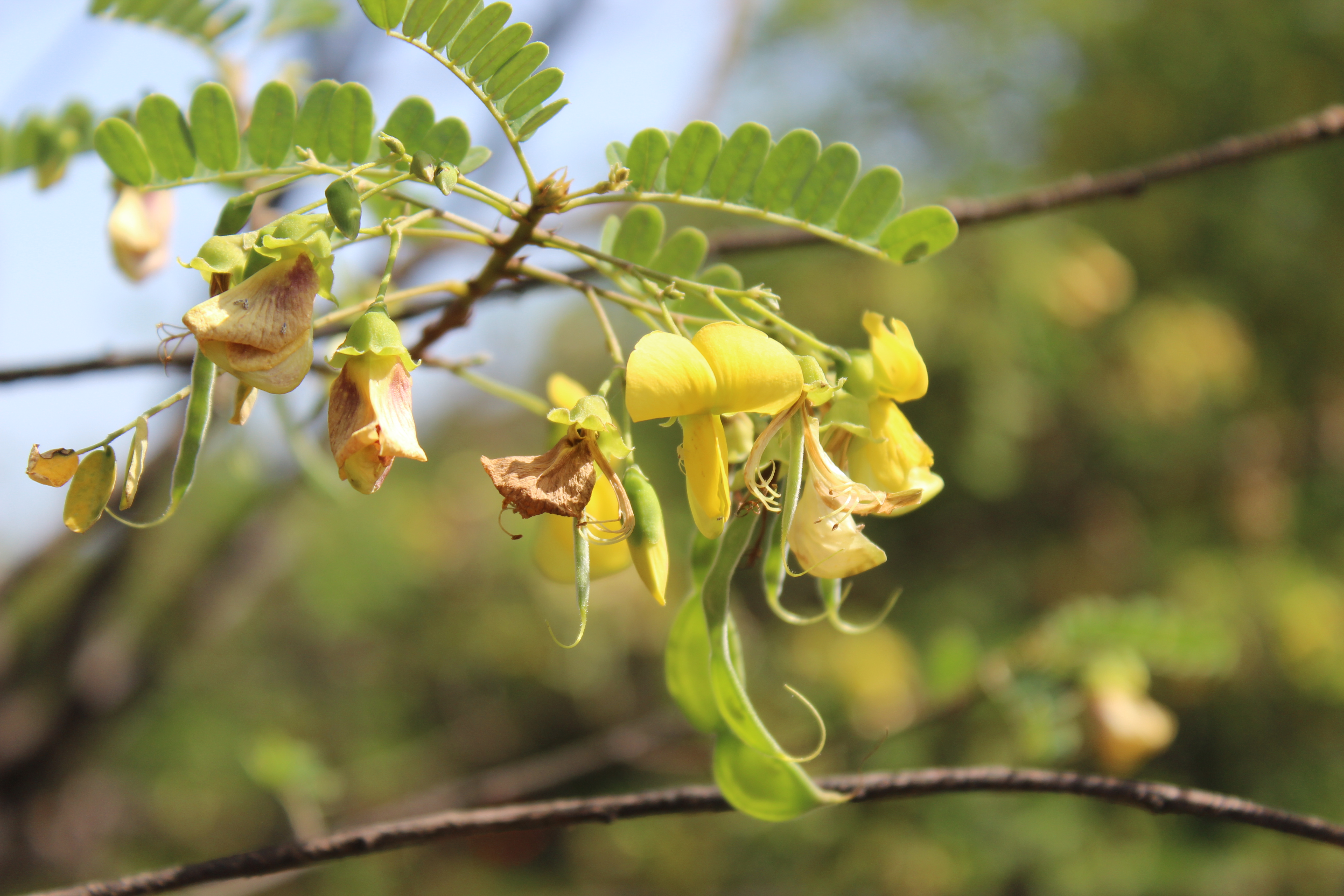
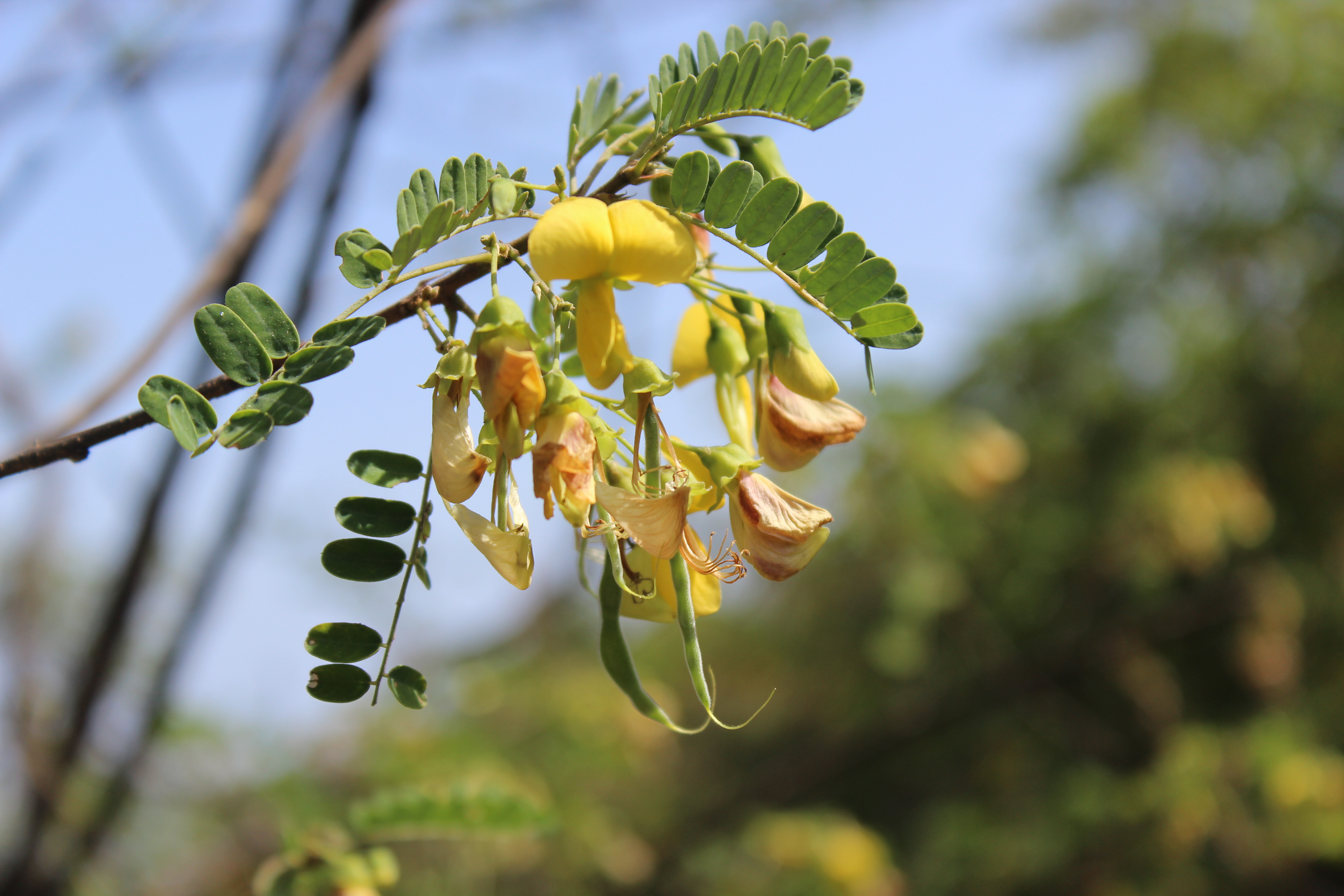
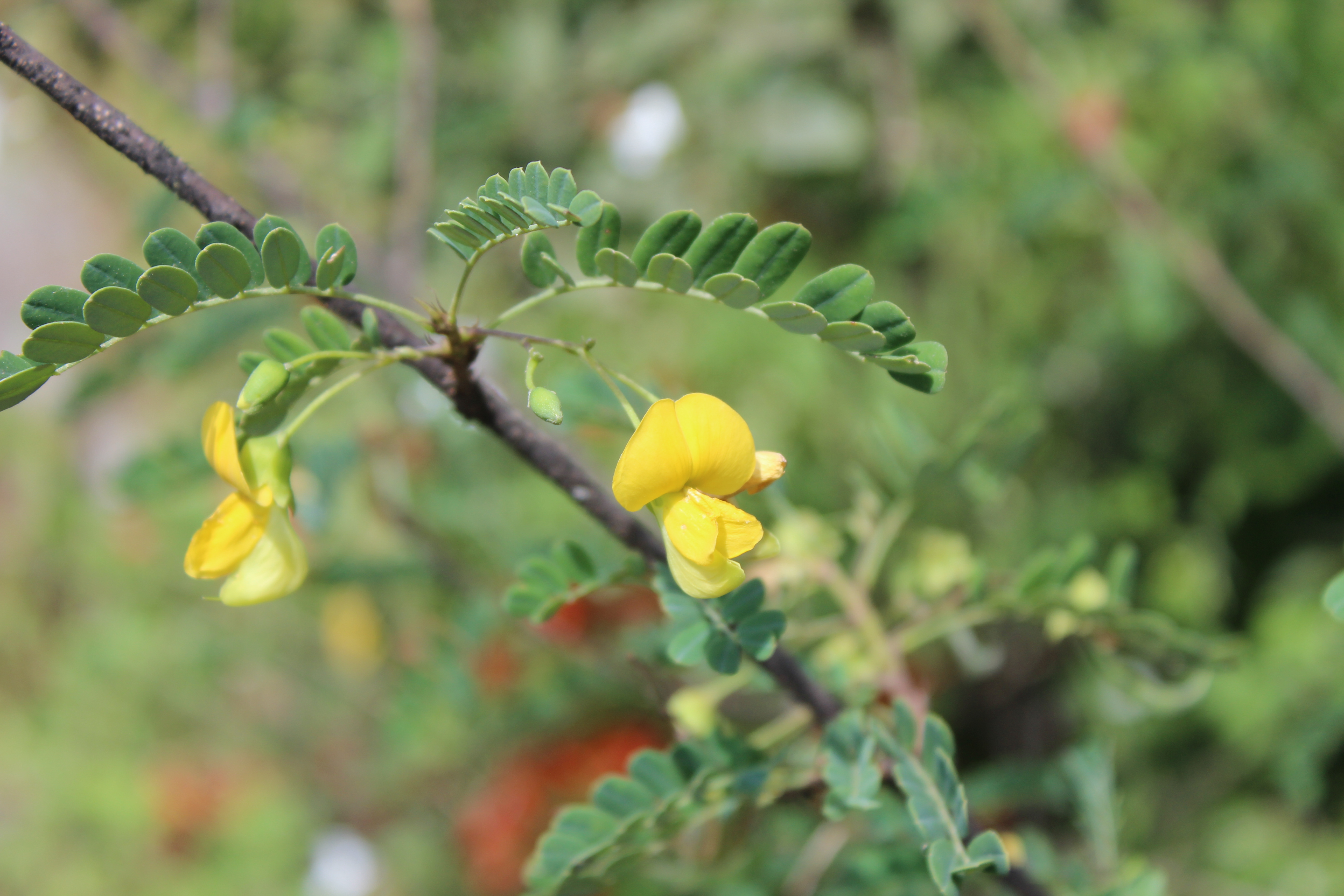
Zygocarpum_dhofarense_2-06082024 © OBG
Zygocarpum_dhofarense_3-06082024 © OBG
Zygocarpum_dhofarense_4-06082024 © OBG
Zygocarpum_dhofarense-06082024 © OBG
Perennial shrub or small tree ; up to 2 m tall , with prominent tubercles (formed from hair bases) on the trunk . Stems and branches , ± glabrous ; young branches thinly tomentose becoming glabrous , longitudinally striate with prominent leticels . Leaves simply imparipinnate , with 9-11 pairs of leaflets ; stipules linear to triangular , 4-8 mm ; rachis 3-9 cm long ; leaflets 3-15 x 1-8 mm , elliptic to oblong , entire , apex acute , glabrous or thinly pubescent on the margins , midrib purplish or yellowish beneath . Inflorescences in 3-10-flowered axillary racemes (sometimes branched) ; pedicel 10-17 mm long . Flowers yellow-red ; calyx ± 6 mm , broadly camanulate , lobed to half the length of the tube ; lobes unequal , ciliate ; corolla with standard petal 10-13 mm ; keel curving upwards . Fruit pod , 10-18 x 9-10 mm , flattened , constricted in between the 1-2 seeds , stipitate , olive-brown , prominently veined , indehiscent . (Ref . Flora of Oman ; vol . 2) .
No Data
Near Endemic (NE) - Near Threatened (NT) - Global Assessment
Frequent
الوصف غير متاح حاليًا
Ormocarpum dhofarense Hillc. & J.B.Gillett
No data
maintenanceAr.Item1
Not known
In Omani studies: Miller & Morris (1988) wrote that: "This tree, which grows on the steeper slopes of the monsoon mountains and occasionally in the vicinity of waterholes in the drier areas beyond the main monsoon zone, was a very important fodder plant for all livestock. It is probably more appreciated than any other fodder by camels and goats, which might in part explain the present comparative rarity of this plant. Of all the plants coming into leaf during and just after the rainy season, this tree was considered to provide the most nutritious fodder. Livestock browing the foliage of this tree become characteristically sleek and plump, and their milk-yield much improved. The sweetest milk in all species of livestock was believed to result from browsing this plant. The leaves also provided a sweet and nutritious mouthful for their herders. They were used medicinally too, chewed or crushed to a
...

*POWO (2023). ""Plants of the World Online. Facilitated by the Royal Botanic Gardens, Kew. Published on the Internet; http://www.plantsoftheworldonline.org *https://en.wikipedia.org *Ghazanfar, S. (2007). Flora of the Sultanate of Oman, vol.2: Crassulaceae – Apiaceae. Meise, National Botanic Garden of Belgium (Scripta Botanica Begica, Vol. 36). ISBN 9789072619747 ISSN 0779-2387. *Miller, A., Morris, M. (1988). Plants of Dhofar, the Southern Region of Oman: Traditional, Economic, and Medicinal Uses. Published by Office of the Adviser for Conservation of the Environment, Diwan of Royal Court, Sultanate of Oman; ISBN 10: 0715708082 ISSN 13: 9780715708088. *Gledhill, D. (2008). The Names of Plants. Fourth Edition. Cambridge University Press, UK. ISBN 978-0-521-86645-3 ISSN 978-0-521-68553-5. *Patzelt, A. (2015). Oman Plant Red Data Book. Published by Diwan of Royal Court, Sultanate of Oman. Oman Botanic Garden Publication No. 1. ISBN 978-99969-50-10-0.
