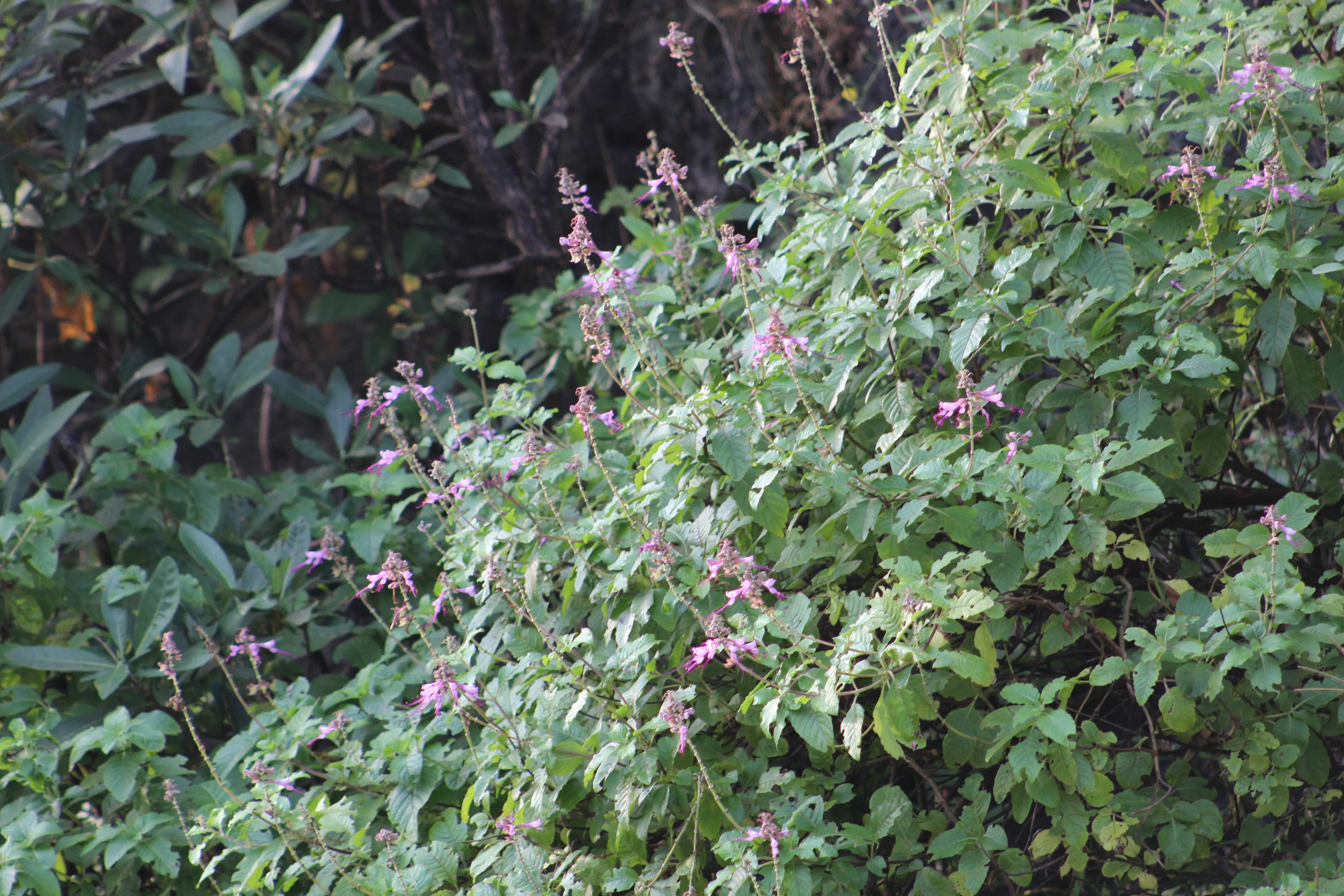
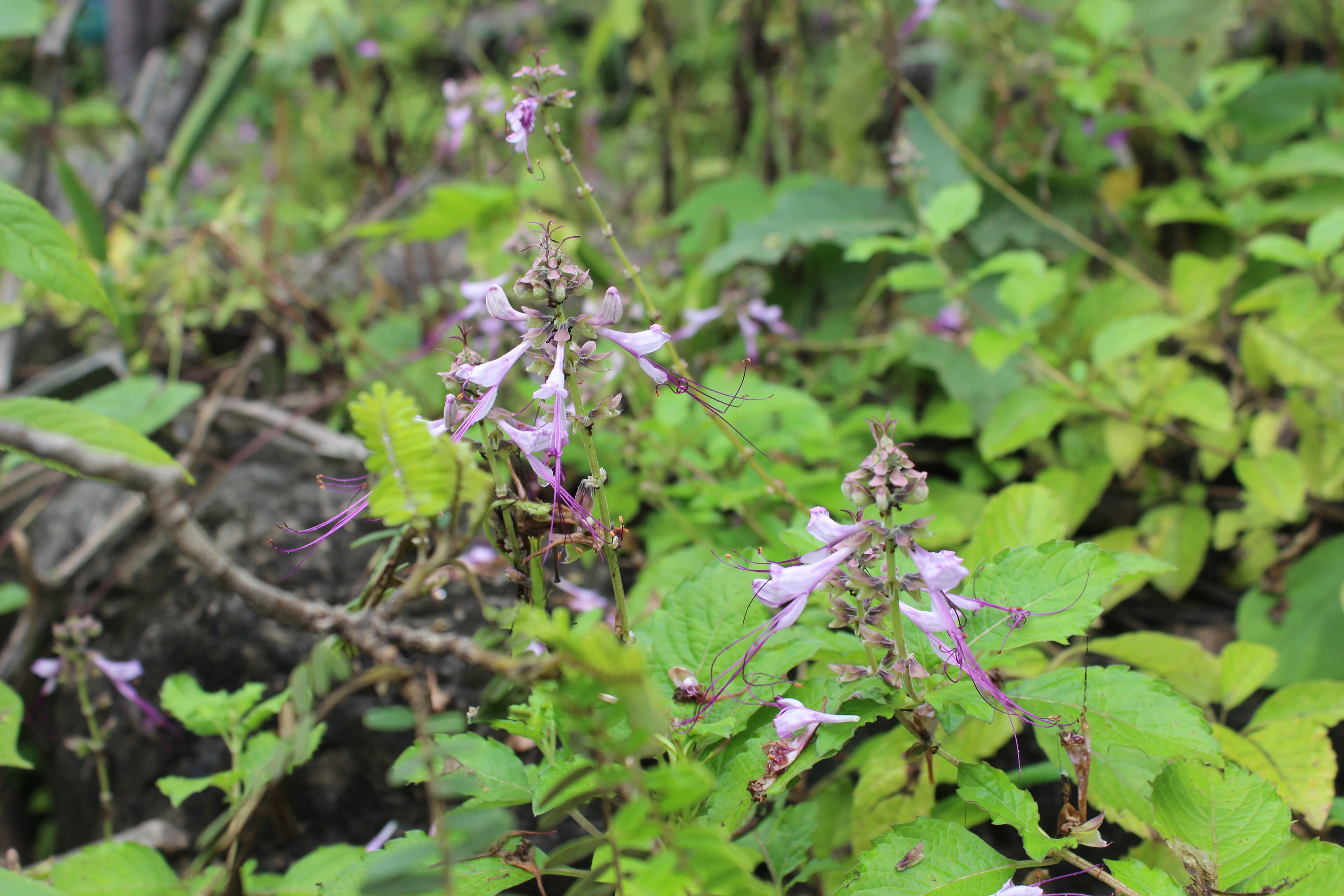
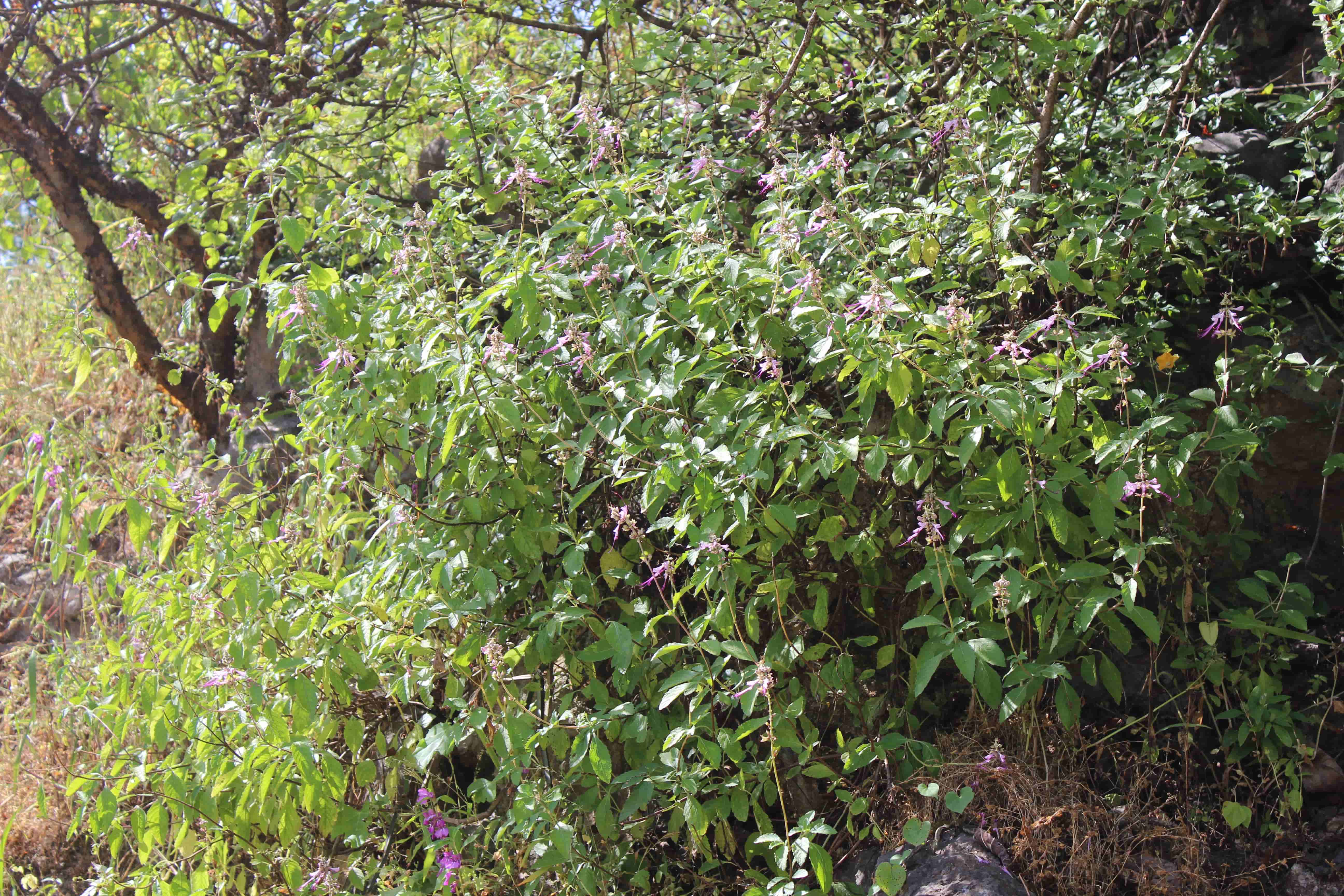
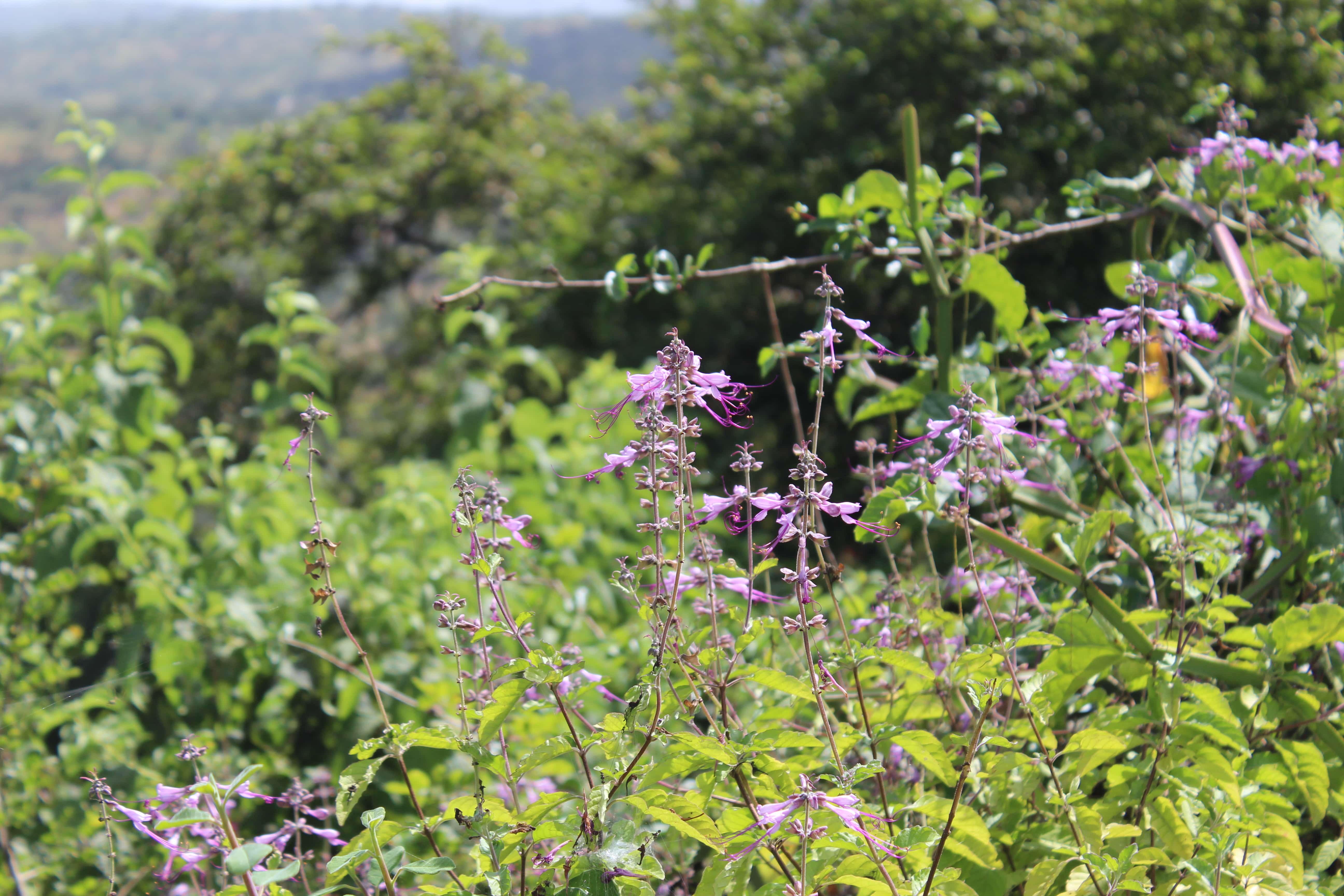
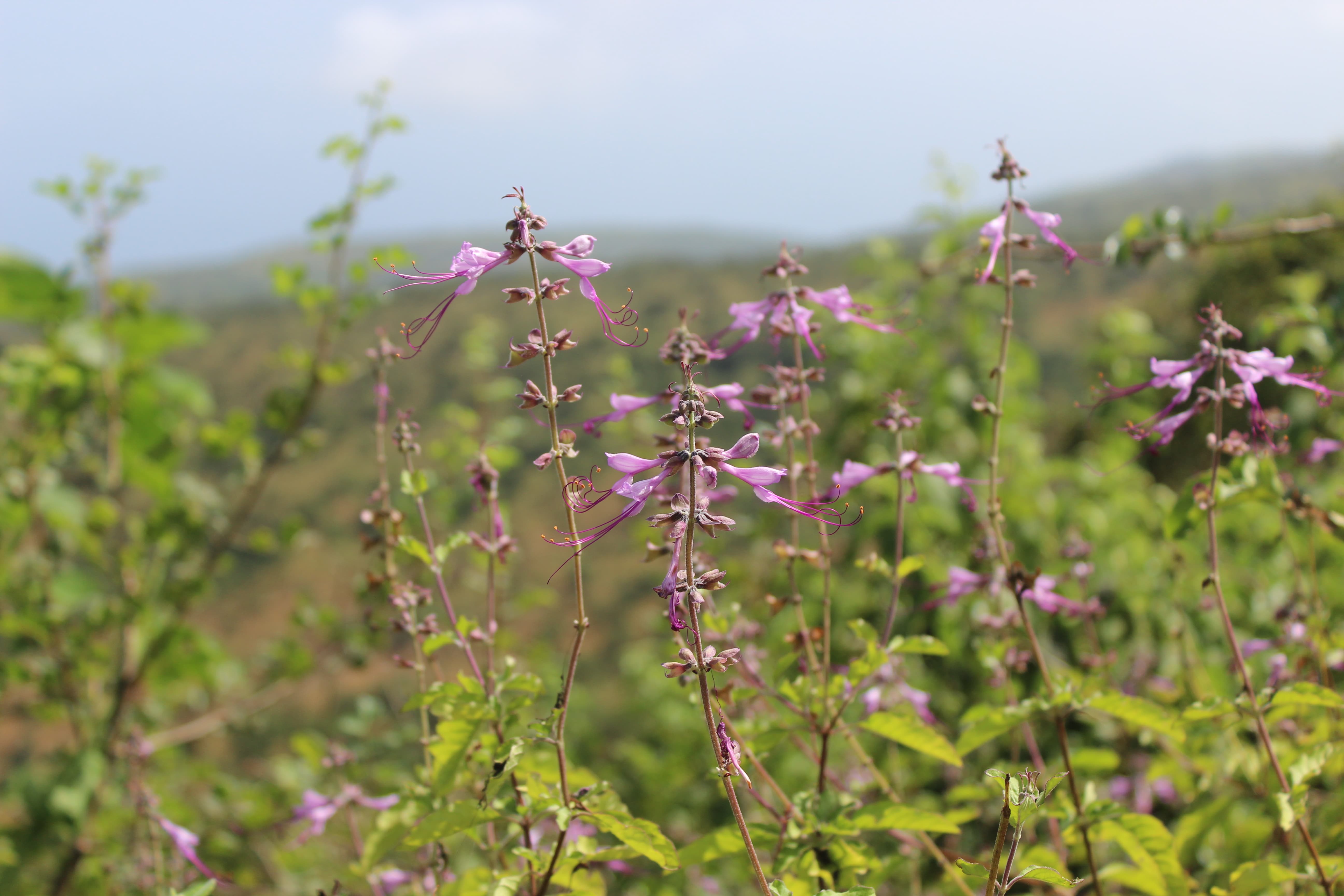
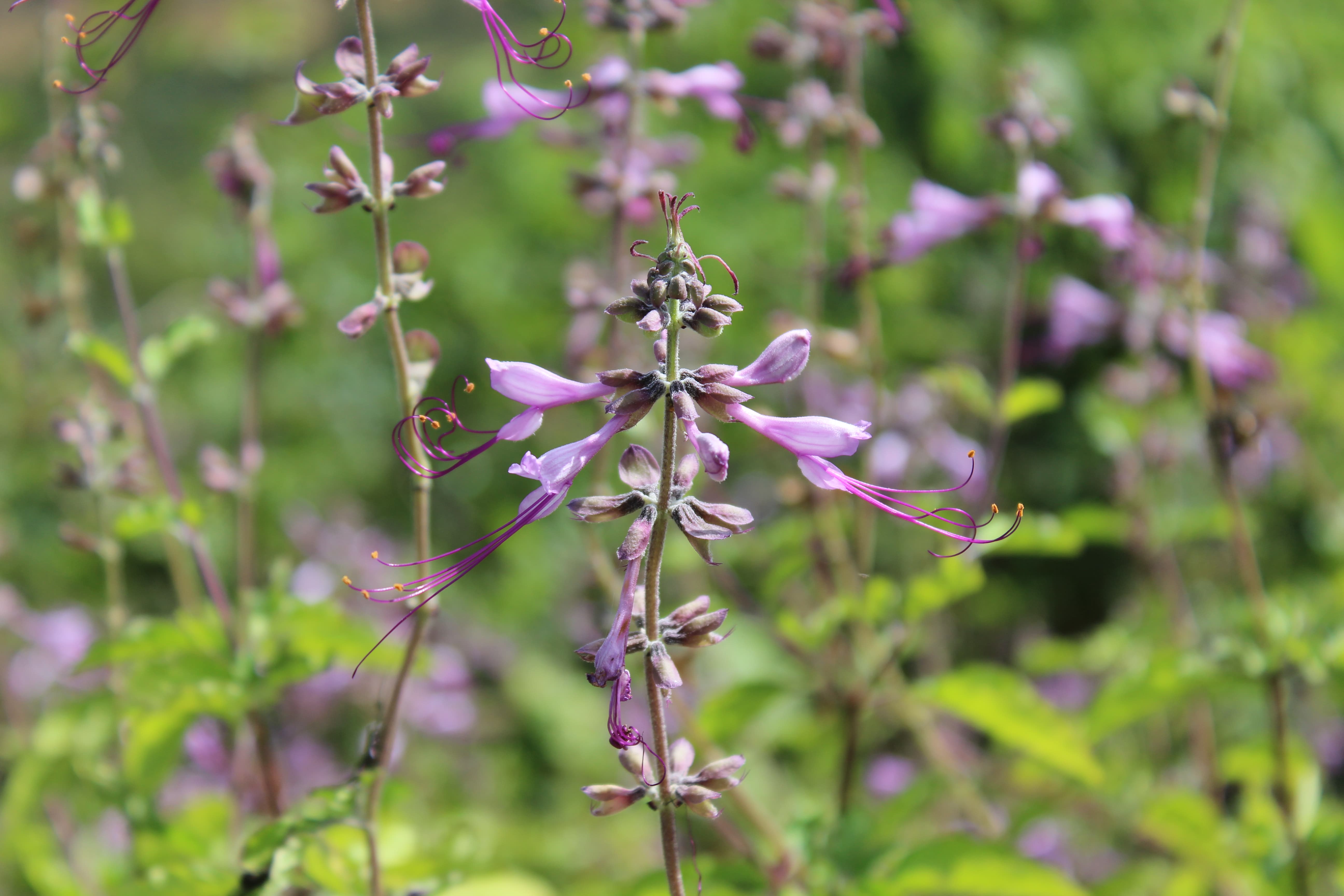
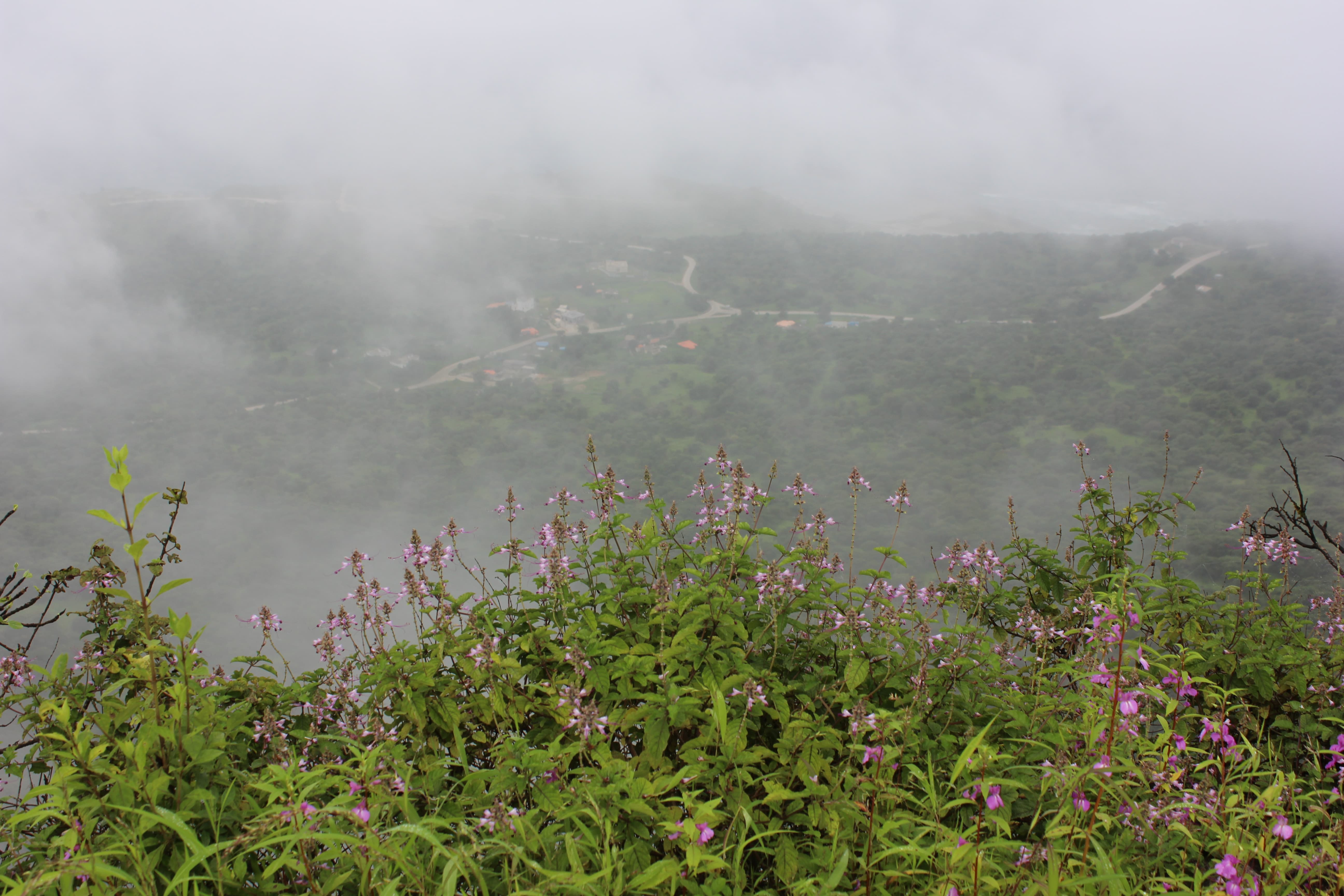
Ocimum_dhofarense_2-06082024 © OBG
Ocimum_dhofarense_3-06082024 © OBG
Ocimum_dhofarense_4-06082024 © OBG
Ocimum_dhofarense_5-06082024 © OBG
Ocimum_dhofarense_6-06082024 © OBG
Ocimum_dhofarense_7-06082024 © OBG
Ocimum_dhofarense-06082024 © OBG
Shrub ; up to 2 m tall . Stems erect , purplish-green , rounded or quadrangular , glanular-tomentose , becoming glabrous . Leaves opposite , 20-80 long x 10-50 mm across , ovate , base cuneate to obtuse , tip acute to obtuse , margins crenate-serrate , thinly hairy on veins , gland-dotted with yellow sessile glands . Inflorescences in whorls on an erect spike , lengthening and becoming lax in fruit ; spike crowned with a tuft of strile bracts ; bracts pinkish , 3-8 mm , linear ; pedicel 0 . 5-1 mm . Flowers mauve ; calyx 2-lipped , 6-8 mm , enlarging to 15 mm in fruit , white tomentose , gland-dotted ; upper lip 6 mm , ovate ; lower lip 5 mm , with 2 minute teeth at tip ; corolla pink , strongly 2-lipped , tubular below , 20-25 mm ; tube 10-18 mm , widening at mouth ; upper lip 5 mm , 4-lobed , lobes rounded ; lower lip 5-6 mm , horizontal , concave ; stamens 4 , long exserted from corolla ; filaments noticeably curling back after dehiscence . Fruit nutlets , 2 mm , globose , laterally compressed , pale brown ,
...

No Data
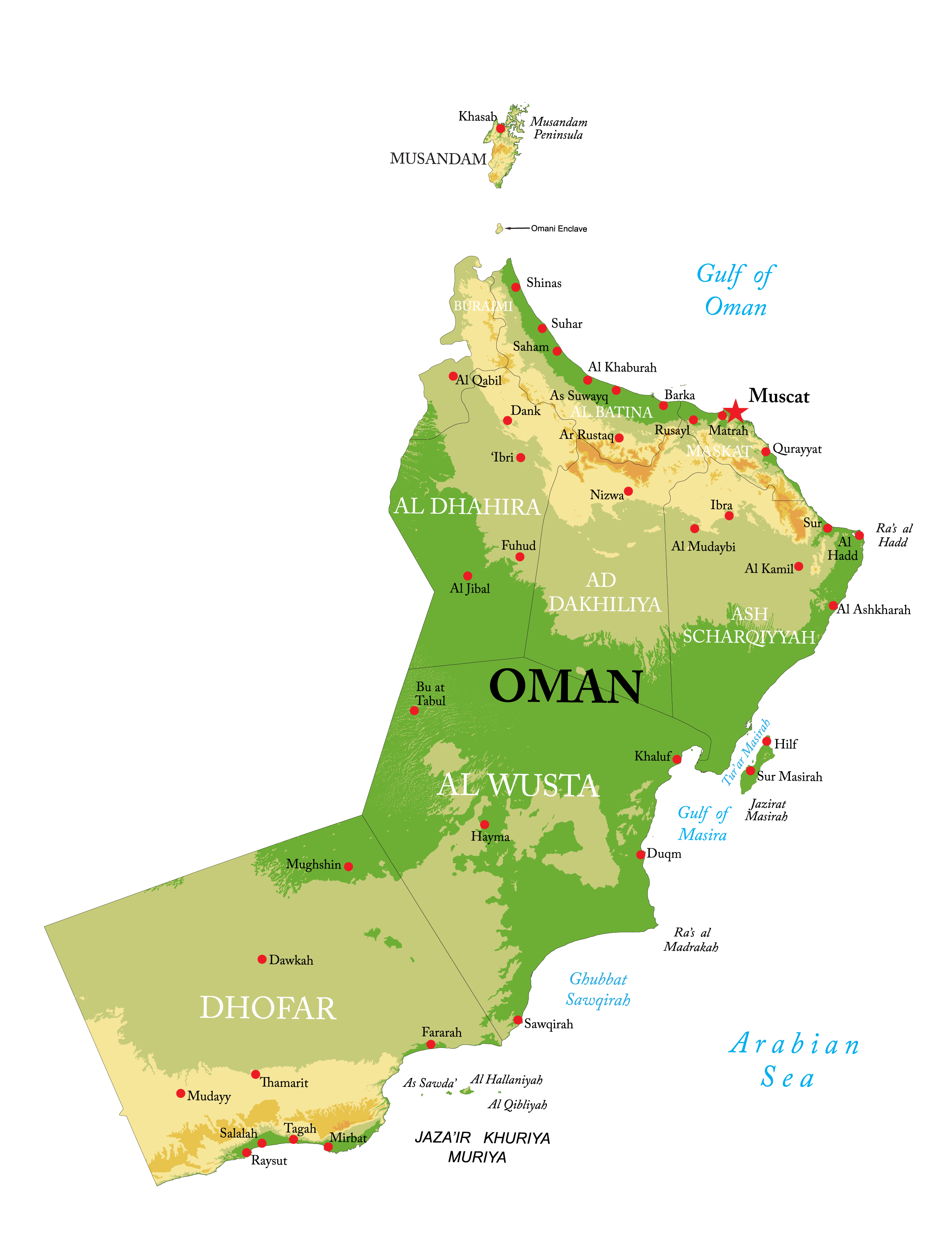
Near Endemic (NE) - Near Threatened (NT) - Global Assessment
Frequent
الوصف غير متاح حاليًا
Becium dhofarense Sebald
Orthosiphon comosus Baker
No data
maintenanceAr.Item1
Dhofari Basil
This plant flourishes during the monsoon rains in the mountains and has large broad leaves which were one of the most favoured sources of post-monsoon browse for camels. The remarkable flowers are one of the Jibbali msisi group (from the Jabbali root mss, to suck) which provide a droplet of nectar when the base of the flower is sucked hard after removal of the longest stamen. The leaves, as well as providing fodder for livestock, were gathered by women and crushed to exude a juice with which women stained their skin an orange-yellow, as women in the desert did with powdered Curcuma longa [J: kerkem, herd or with bastard saffron - Flemingia rodhocarpa (Maghania rodhocarpa) or Memecylon tinctorium [DA, J: wars]. The leaves, crushed and mixed with water, lathered up, to provide a very efficient frothy soap and shampoo. The juice from a squeezed plant was added to water, brought
...
*Ghazanfar, S. (2015). Flora of the Sultanate of Oman, vol.3: Loganiaceae – Asteraceae. Meise, National Botanic Garden of Belgium (Scripta Botanica Begica, Vol. 25). ISBN 9789082352511 ISSN 0779-2387. *https://en.wikipedia.org *Miller, A., Morris, M. (1988). Plants of Dhofar, the Southern Region of Oman: Traditional, Economic, and Medicinal Uses. Published by Office of the Adviser for Conservation of the Environment, Diwan of Royal Court, Sultanate of Oman; ISBN 10: 0715708082 ISSN 13: 9780715708088. *Pickering, H. Patzelt, A. (2008). Field Guide to the Wild Plants of Oman. Kew publishing, Royal Botanic Garden, Kew. ISBN 9781842461778. *POWO (2023). ""Plants of the World Online. Facilitated by the Royal Botanic Gardens, Kew. Published on the Internet; http://www.plantsoftheworldonline.org *Patzelt, A. (2015). Oman Plant Red Data Book. Published by Diwan of Royal Court, Sultanate of Oman. Oman Botanic Garden Publication No. 1. ISBN 978-99969-50-10-0.
