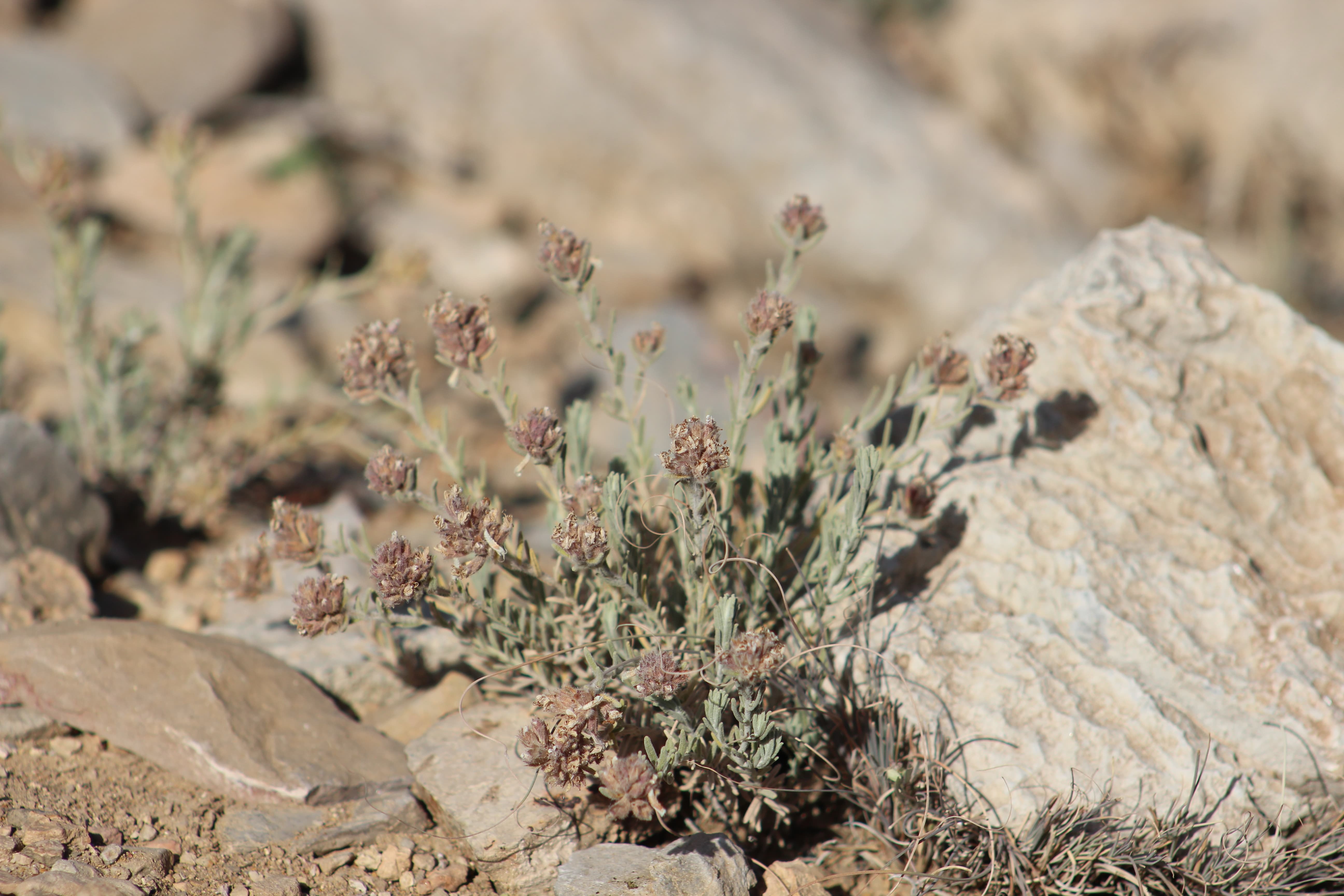
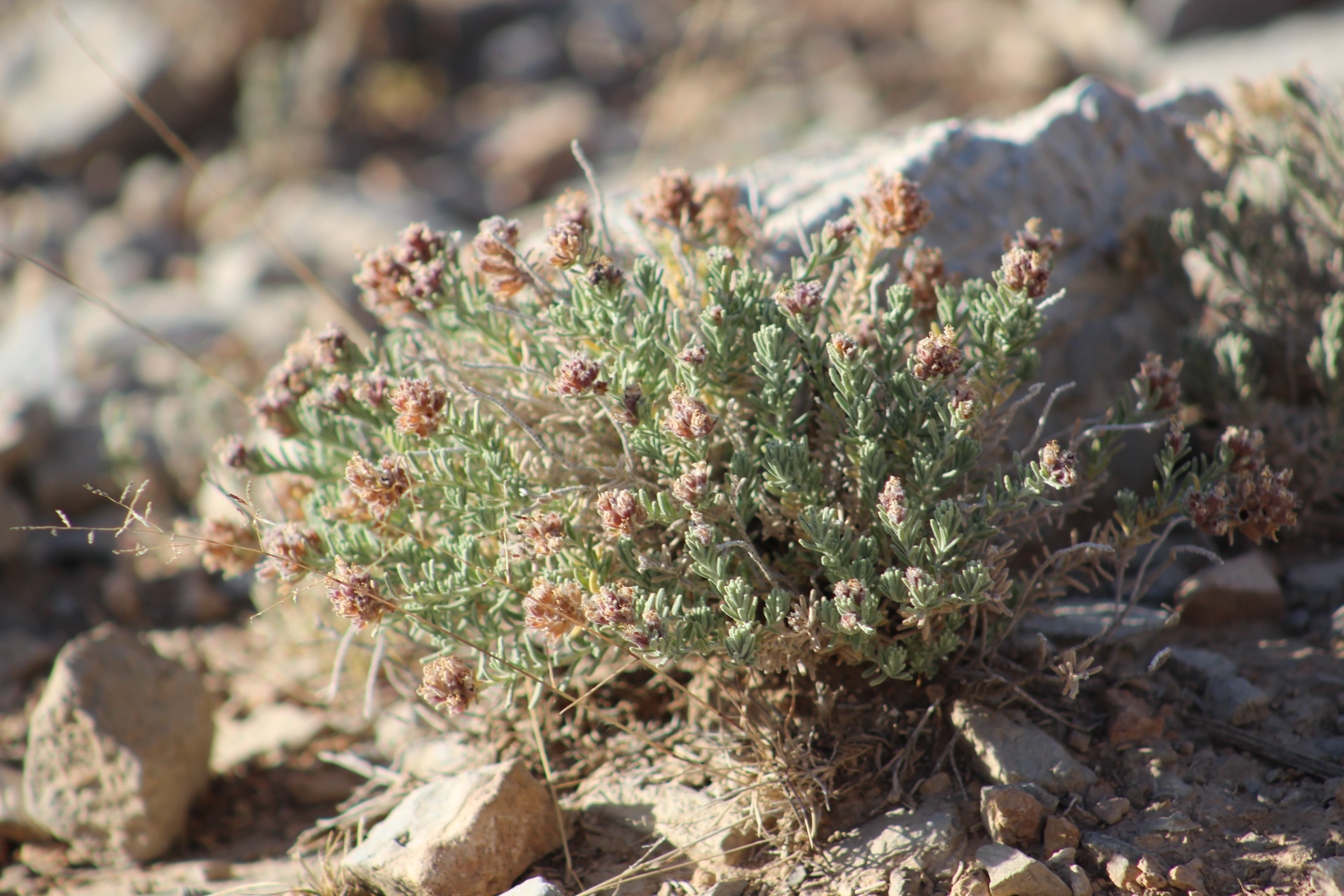
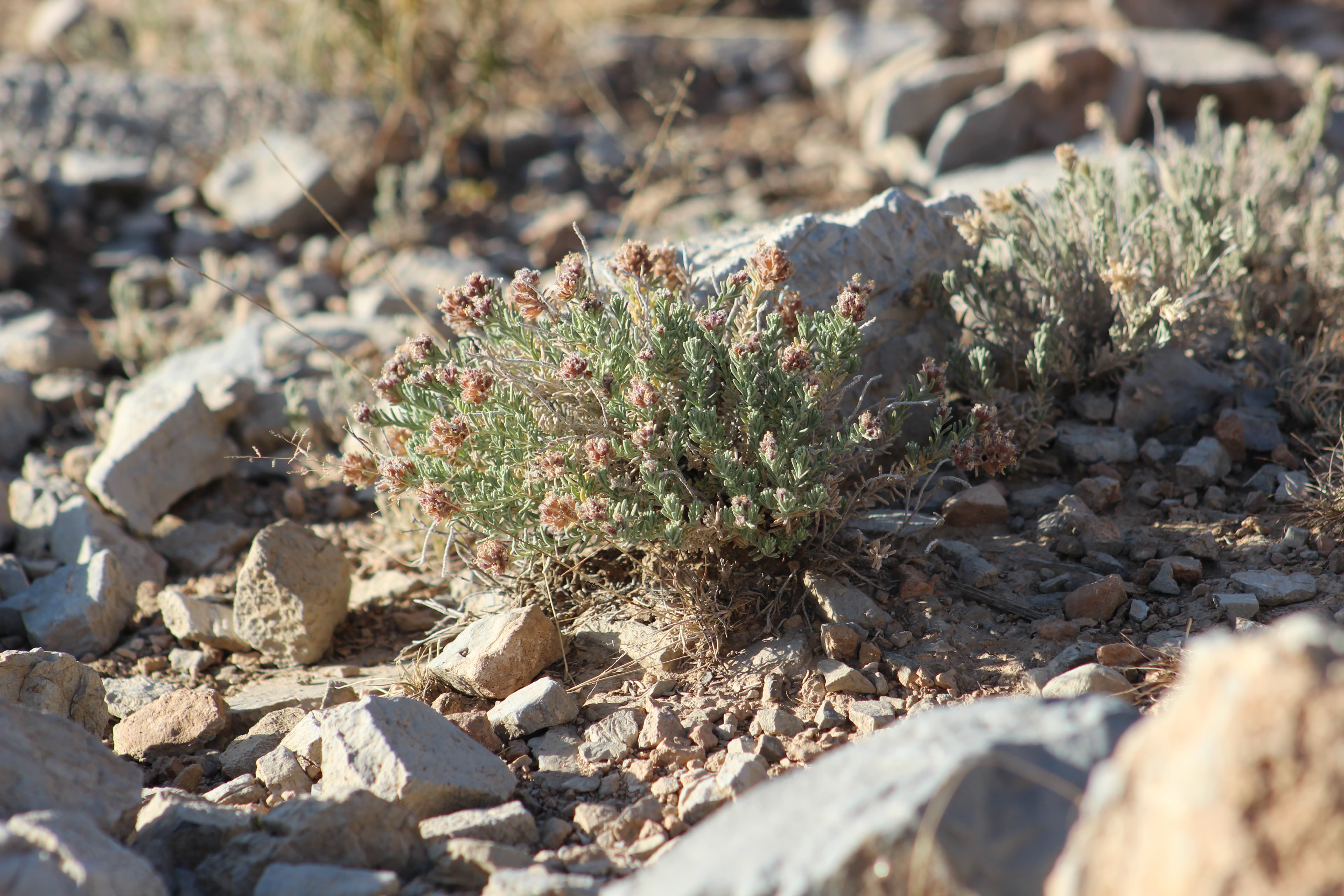
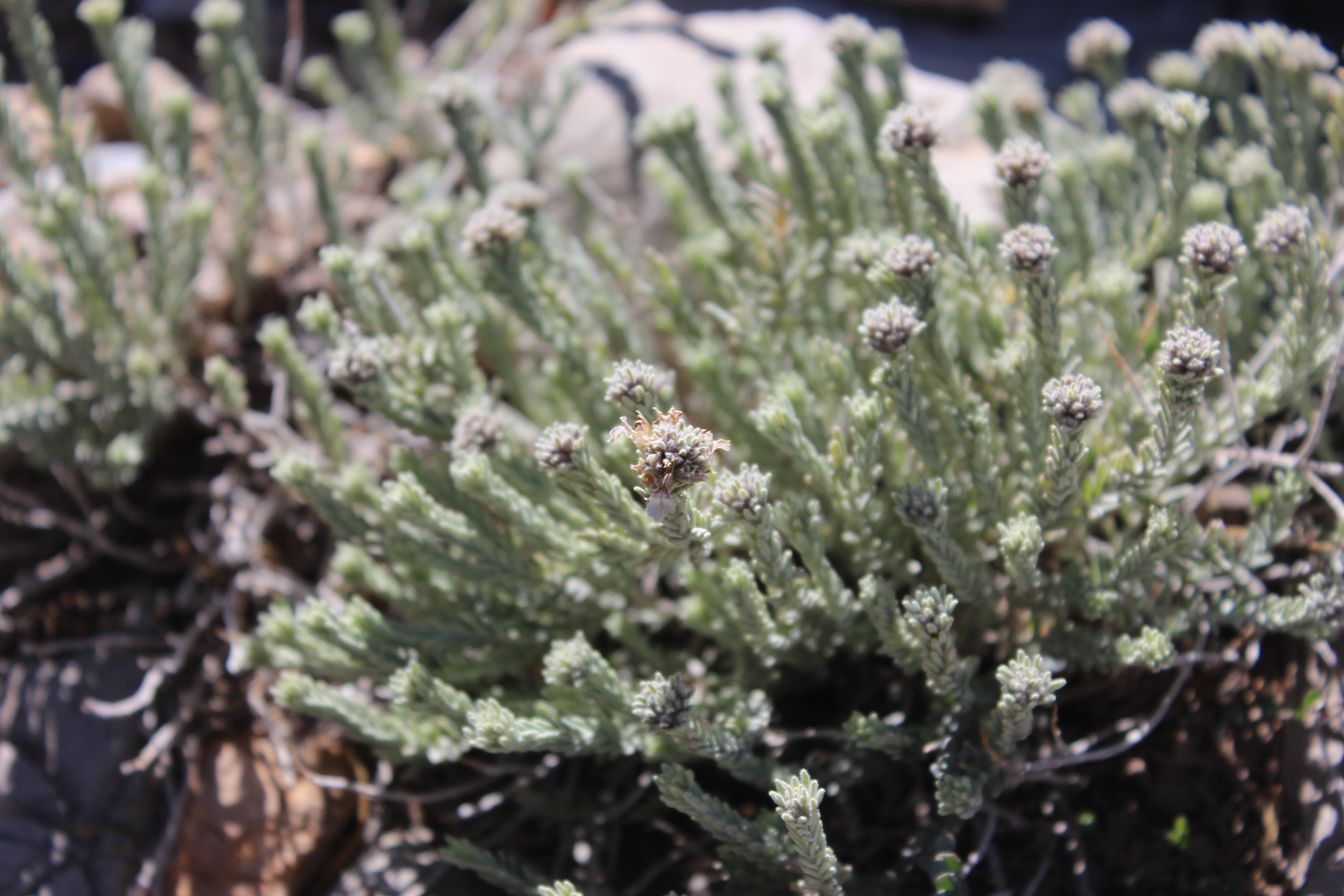
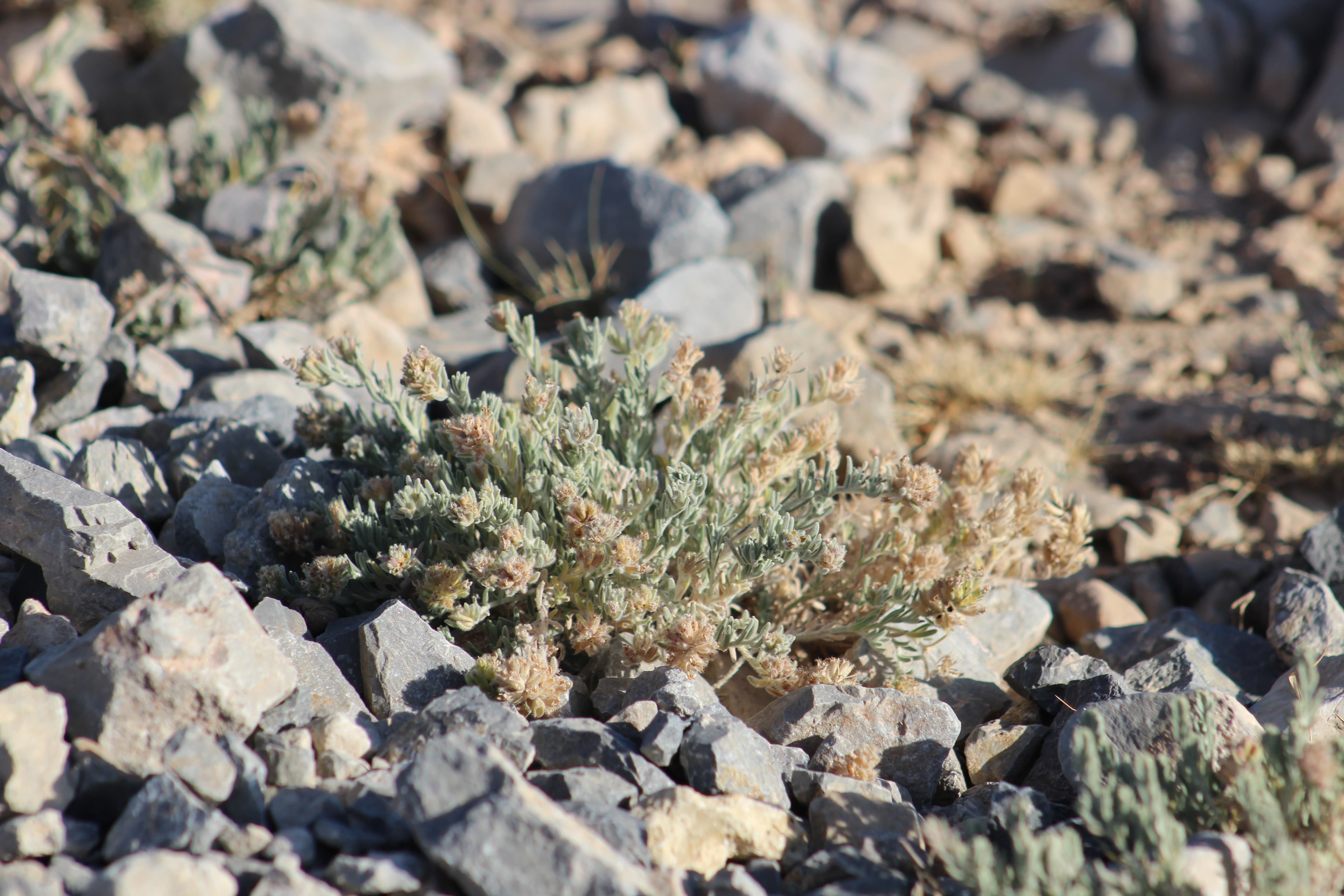
Teucrium_mascatense_2 © OBG
Teucrium_mascatense_3 © OBG
Teucrium_mascatense_4 © OBG
Teucrium_mascatense_5 © OBG
Teucrium_mascatense_6 © OBG
Teucrium_mascatense_7 © OBG
Teucrium_mascatense_8 © OBG
Teucrium_mascatense_9 © OBG
Teucrium_mascatense © OBG
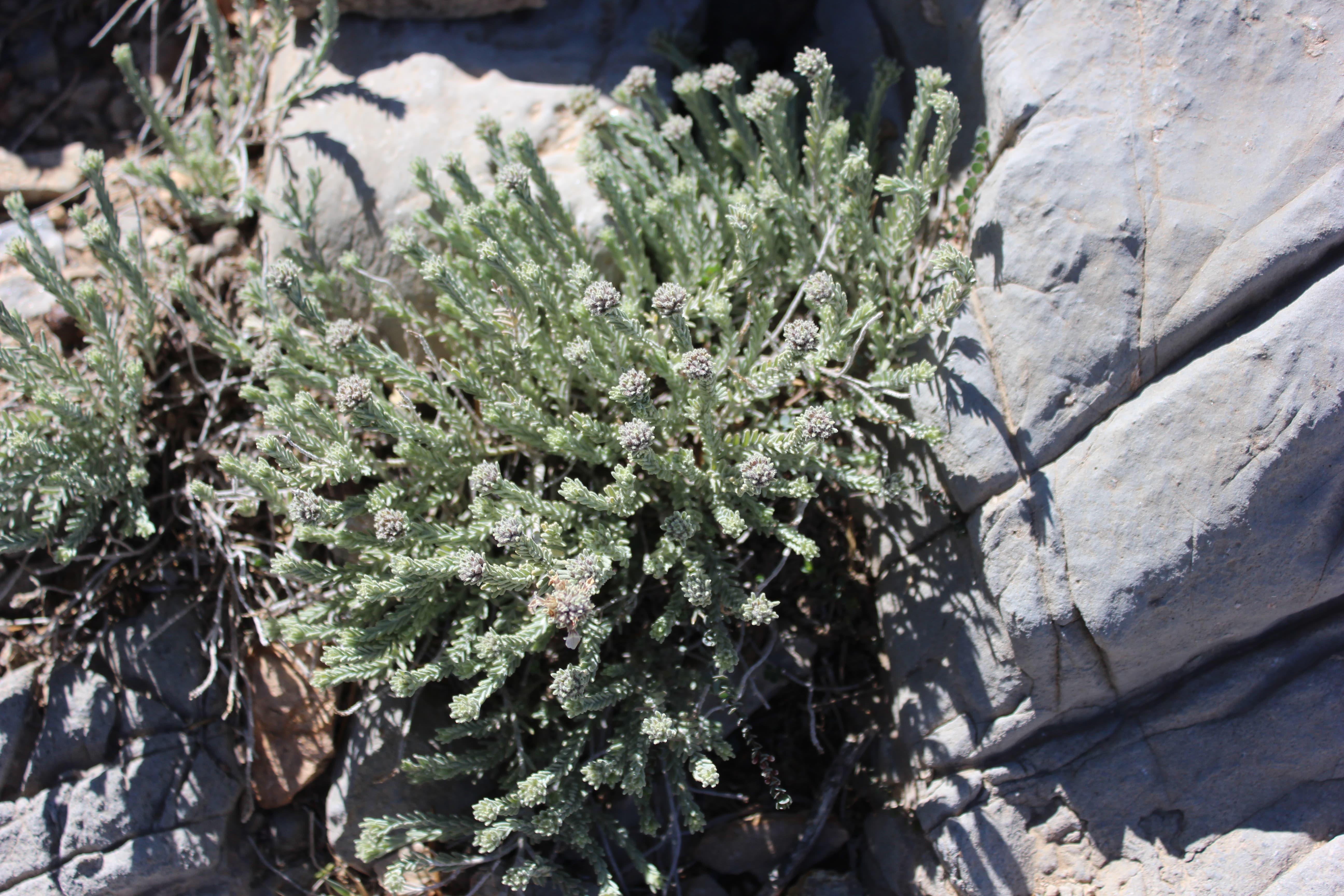
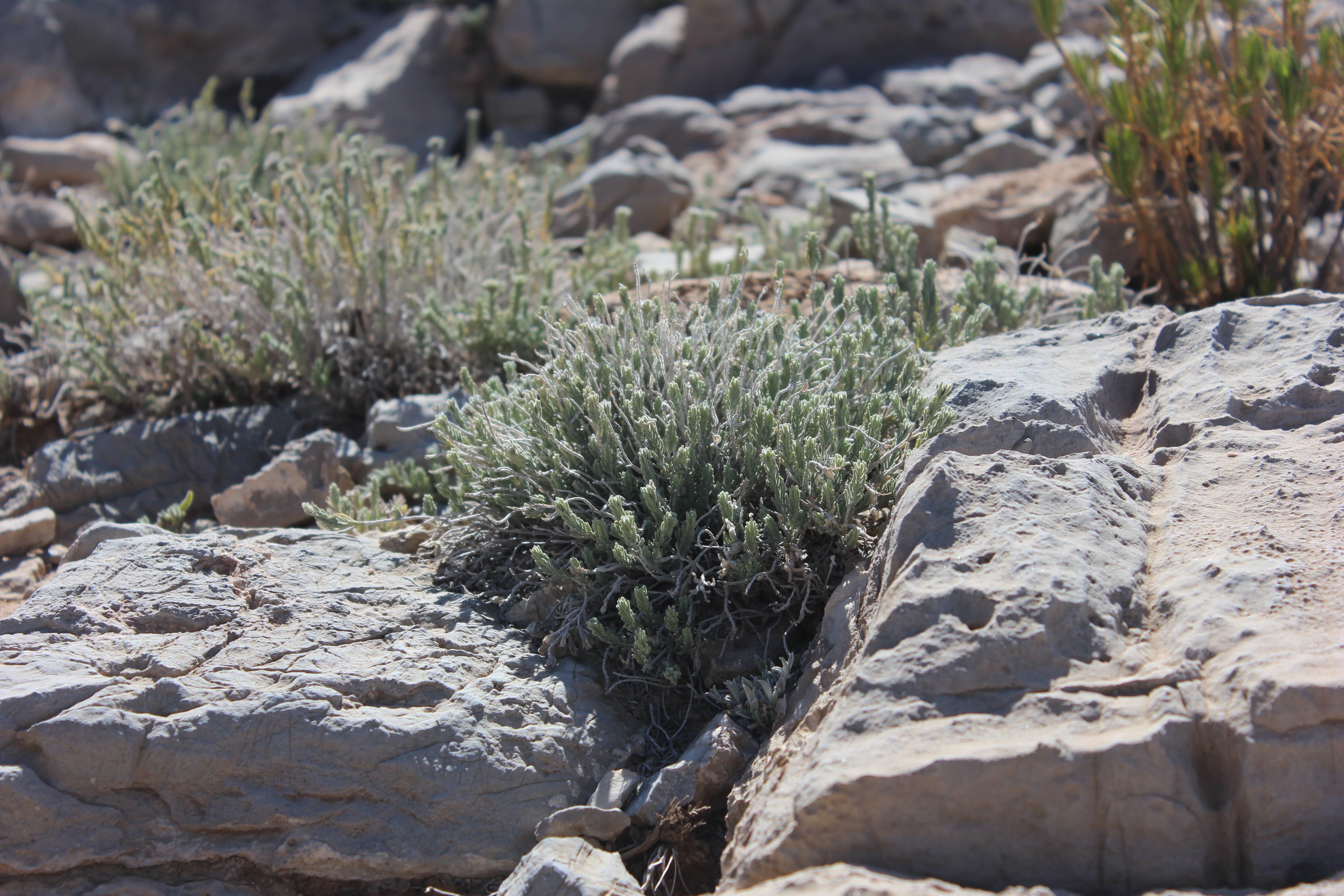
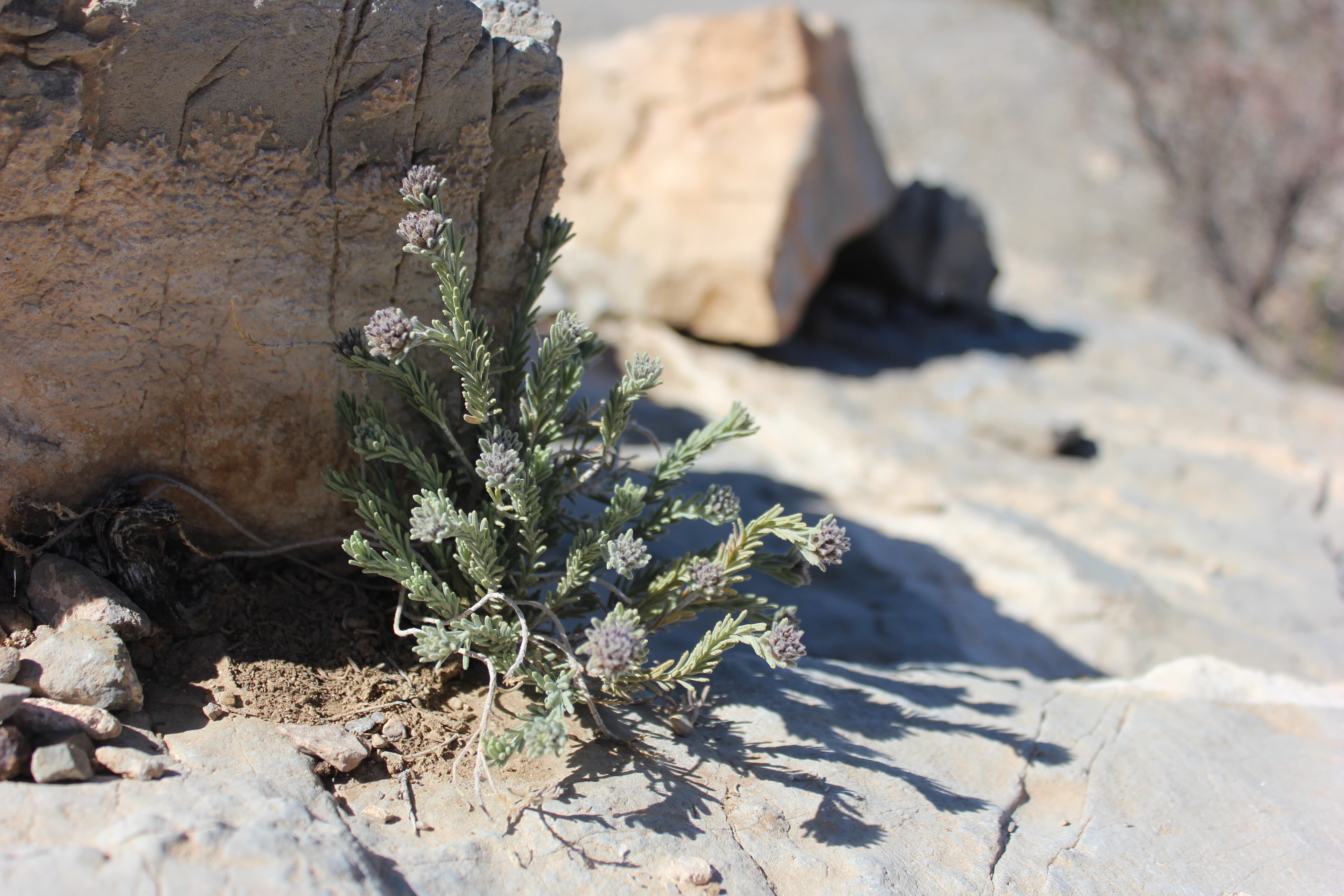
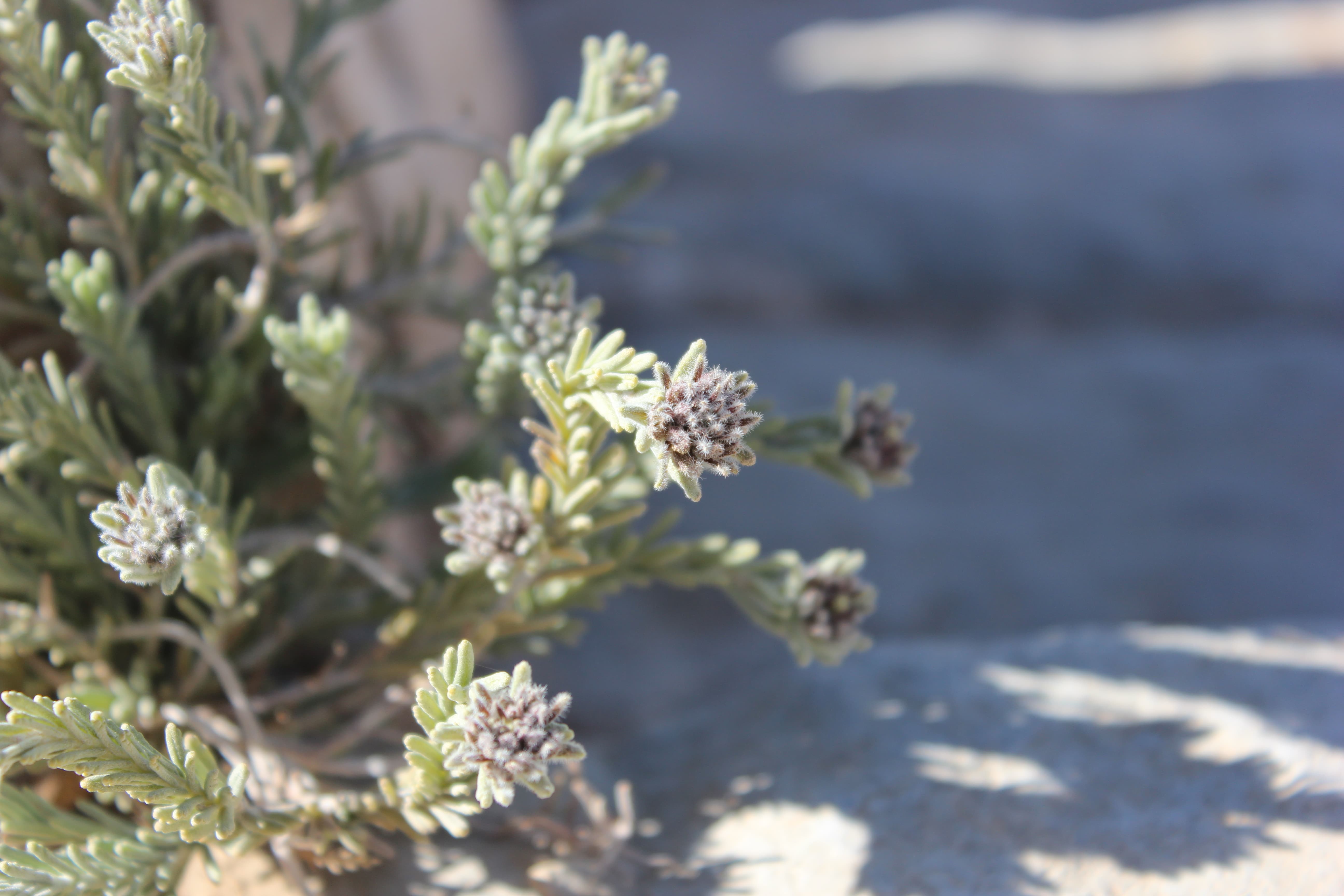
Small , dense , aromatic , clump-forming perennial herb ; up to 25 cm high , with a woody base . Stems erect or ascending , branched from base , densely white tomentose to sometimes lanate , with ± small glandular hairs , the older stems glabrescent . Leaves 4-9 x 1-3 mm , grey-green , aromatic , small , usually erect and adpressed to stem , sessile , linear-oblong , base cuneate , apex obtuse , margins often revolute , with 2-4 dentations at the apex , white hairy with long eglandular and shorter glandular hairs and sessile glands . Inflorescences congested in terminal capitate heads up to 2 cm long ; pedicels ± 1 mm ; bracts like leaves , slightly exceeding the calyx . Flowers pale pink flowers with dark pink veins ; calyx 5-8 mm long , obconical to tubular-campanulate , densely glandular with some eglandular long hairs on margins of lobes ; lobes 5 , ± equal , ± 2 mm , triangular , acute ; corolla purple to pale-violet or pink to white with darker pink veins , 9-12 mm , split
...

No Data
Endemic (EN) - Least Concern (LC) - Global Assessment
Common
الوصف غير متاح حاليًا
Not available
No data
maintenanceAr.Item1
Mascatense Teucrium Plant
The vernacular name 'jada' literally means "woolly", in referrence to the woolly texture of plant species due to presence of hair. (Ref. Oman Botanic Garden). In Oman Plant Red Data Book, Patzelt (2015) wrote that: "The plant is used as a medicine for people suffering from fits and epilepsy, also used for colic, stomach pain, diabetes and fever". (Ref. Oman Plant Red Data Book; 2015). In addition, Ghazanfar (2015) wrote that: "The leaves and flower heads have been used in traditional medicine. Not palatable to livestock". (Ref. Flora of Oman; vol.3). Furthermore, Patzelt (2015) stated that: "The leaves are boiled in water or the powder of dried leaves is mixed with water. This solution is taken to treat stomach ache, malaria and colic. Leaves are also boiled in water together with leaves of Rhazya stricta (harmal), Fagonia indica (Shuka’a) and Commiphora species (myrrh). Salt is added and the warm tea
...
*Ghazanfar, S. (2015). Flora of the Sultanate of Oman, vol.3: Loganiaceae – Asteraceae. Meise, National Botanic Garden of Belgium (Scripta Botanica Begica, Vol. 25). ISBN 9789082352511 ISSN 0779-2387. *https://en.wikipedia.org *Patzelt, A. (2015). Photographic Field Guide to the Plants of the Western Hajar Mountains, Sultanate of Oman: with a complete checklist of vascular plant species. Sultan Qaboos University – Academic Publication and Outreach Department. P.O Pox (17) Postal Code (123), Muscat, Al khoudh, Sultanate of Oman. *Patzelt, A. (2015). Oman Plant Red Data Book. Published by Diwan of Royal Court, Sultanate of Oman. Oman Botanic Garden Publication No. 1. ISBN 978-99969-50-10-0. *POWO (2023). ""Plants of the World Online. Facilitated by the Royal Botanic Gardens, Kew. Published on the Internet; http://www.plantsoftheworldonline.org
