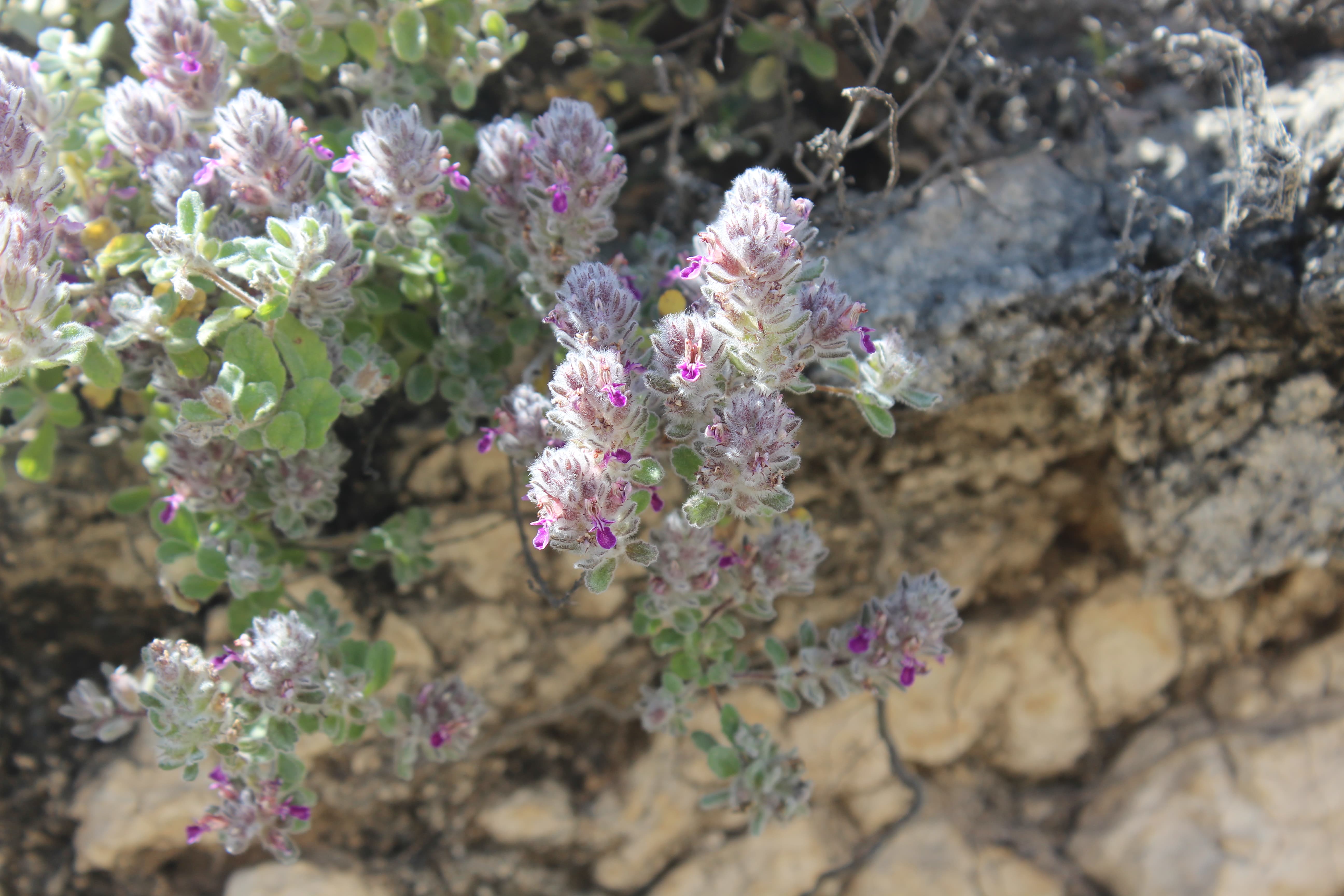
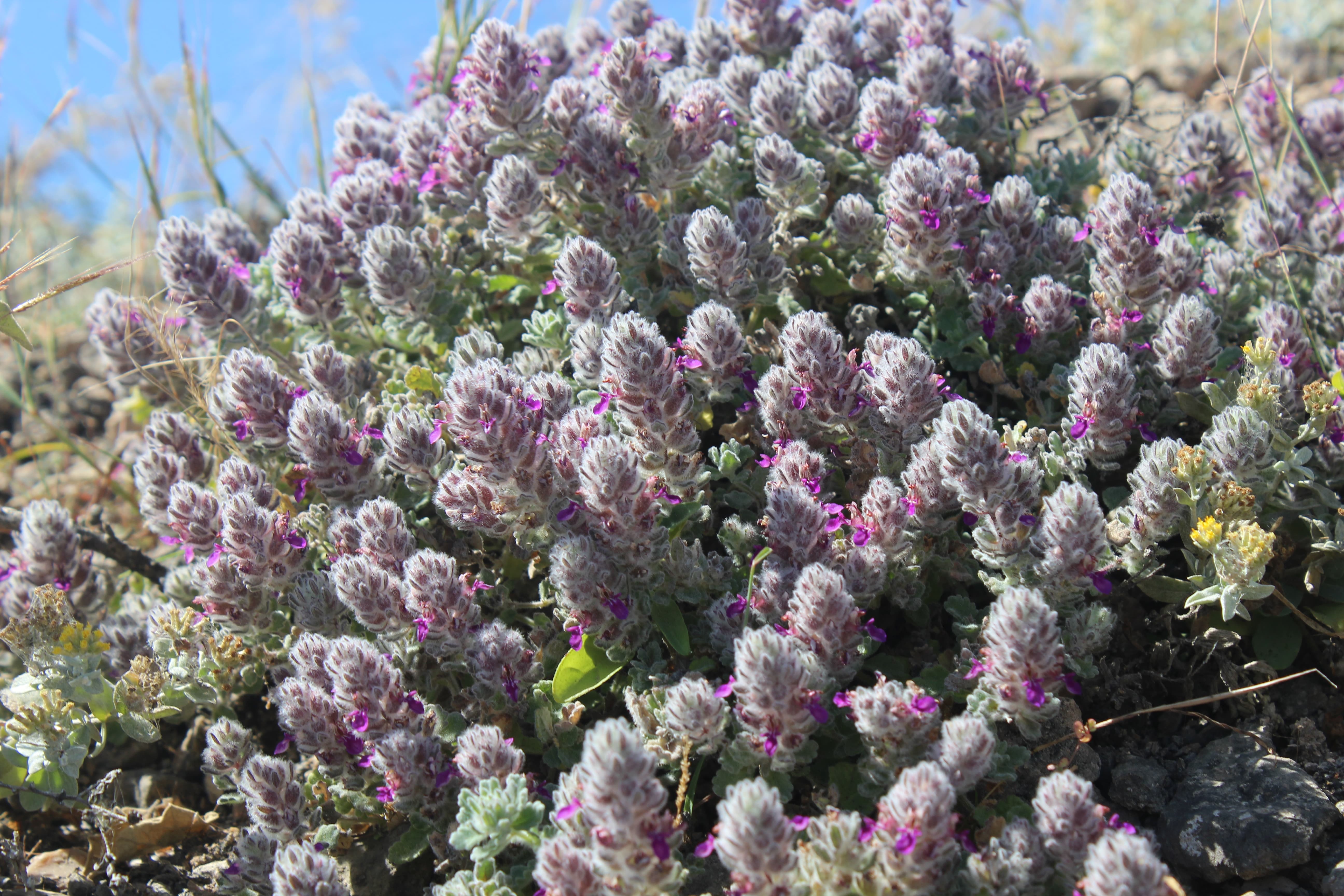
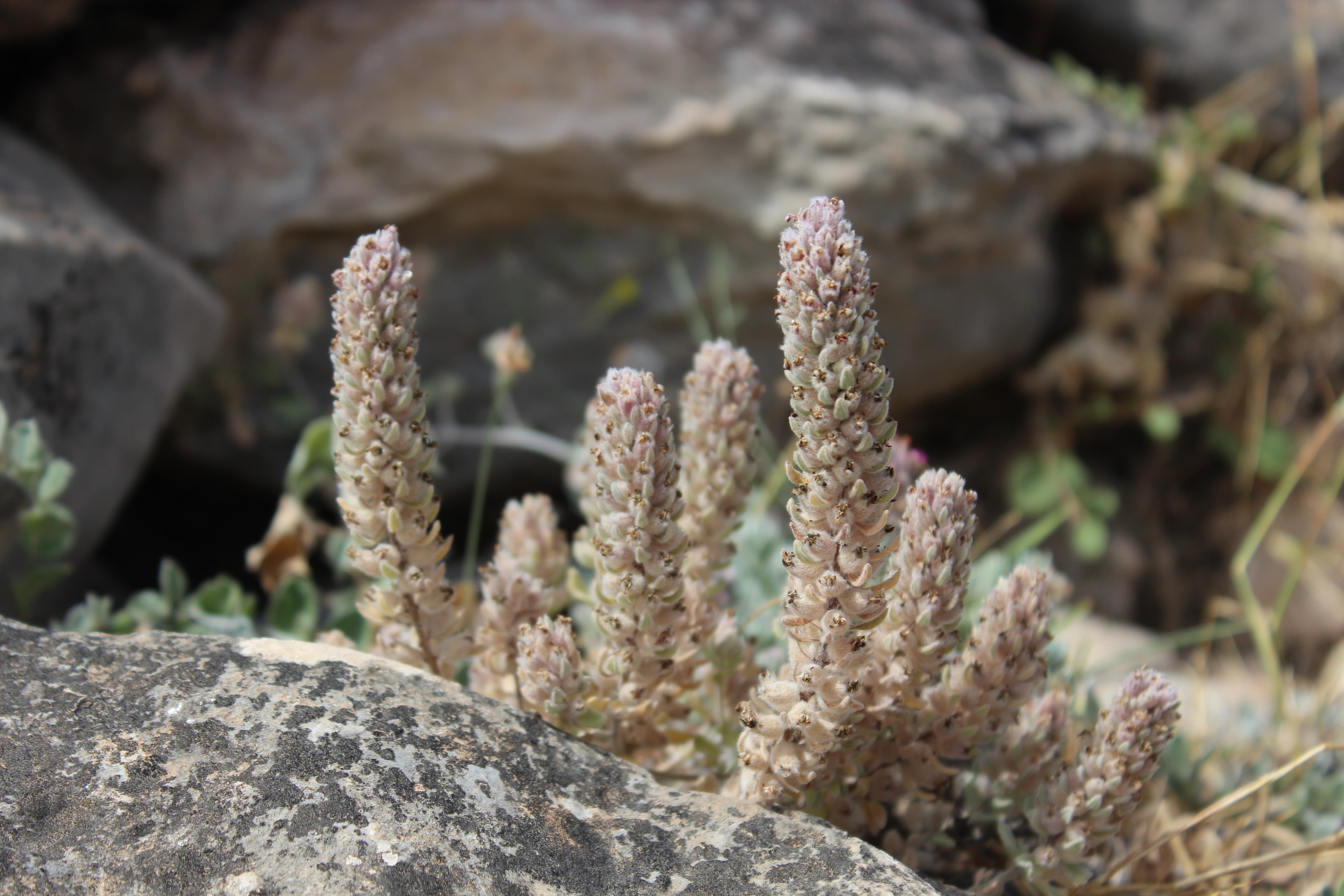
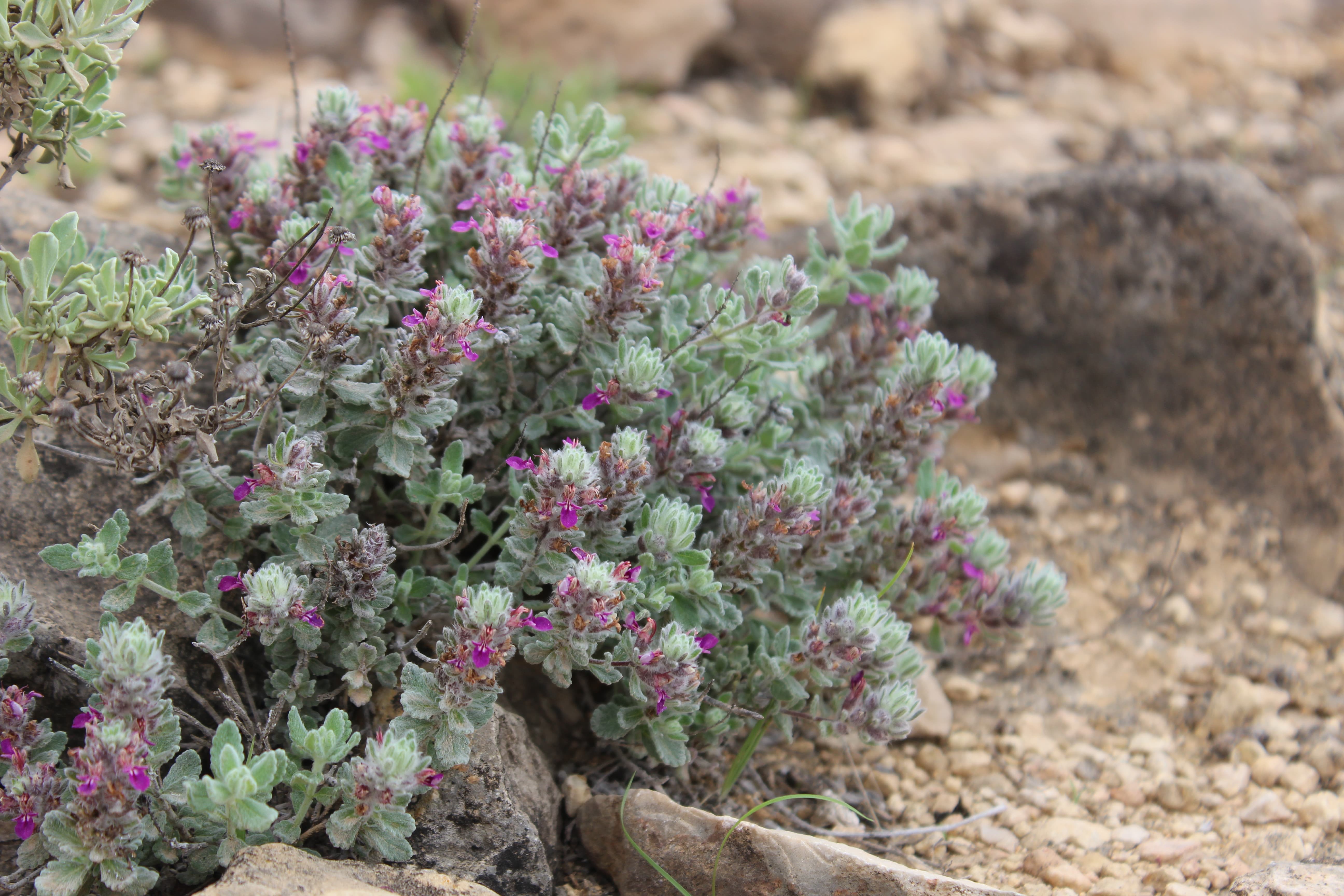
Teucrium_nummularifolium_2 © OBG
Teucrium_nummularifolium_3 © OBG
Teucrium_nummularifolium_4 © OBG
Teucrium_nummularifolium_5 © OBG
Teucrium_nummularifolium_6 © OBG
Teucrium_nummularifolium_7 © OBG
Teucrium_nummularifolium_8 © OBG
Teucrium_nummularifolium © OBG
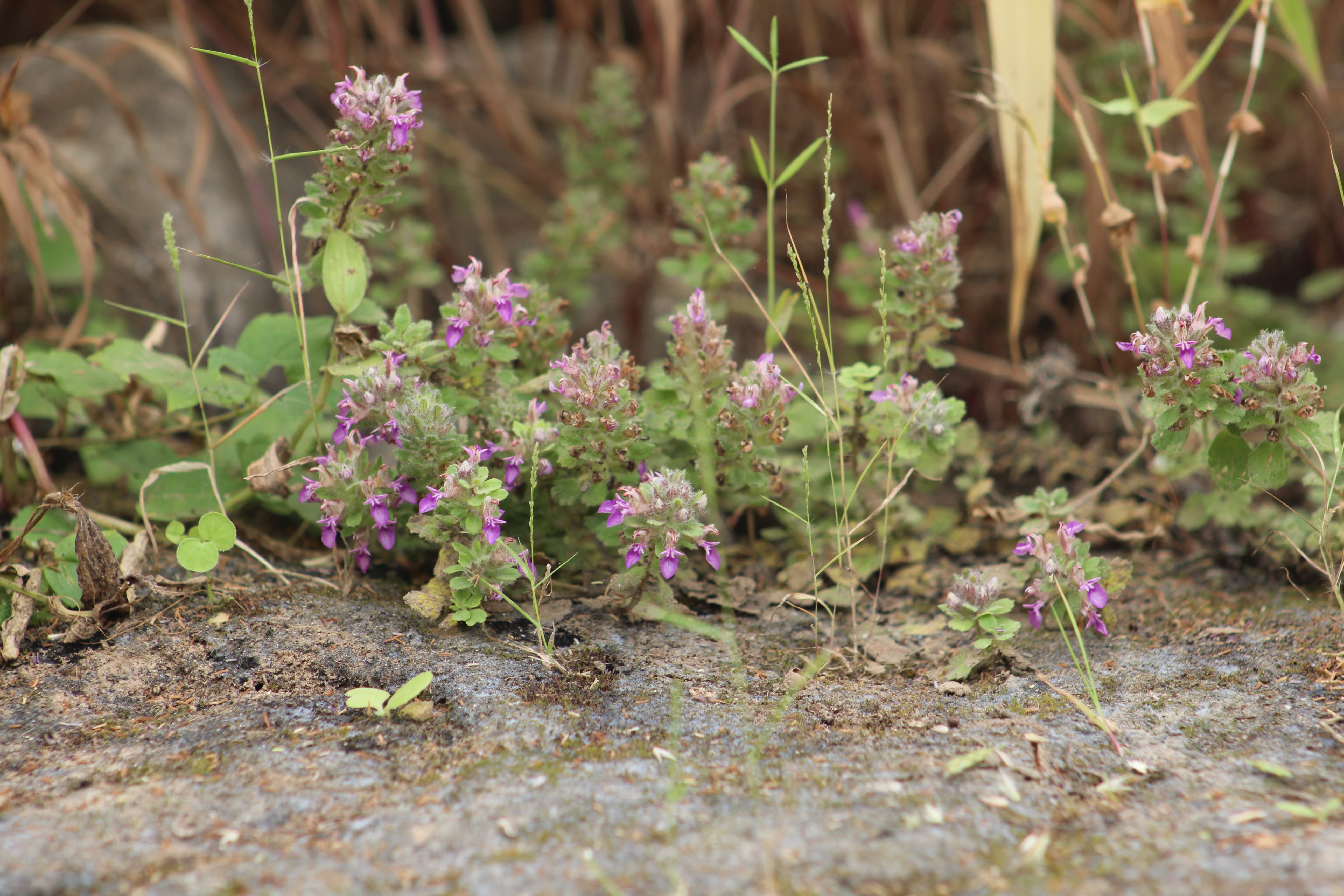
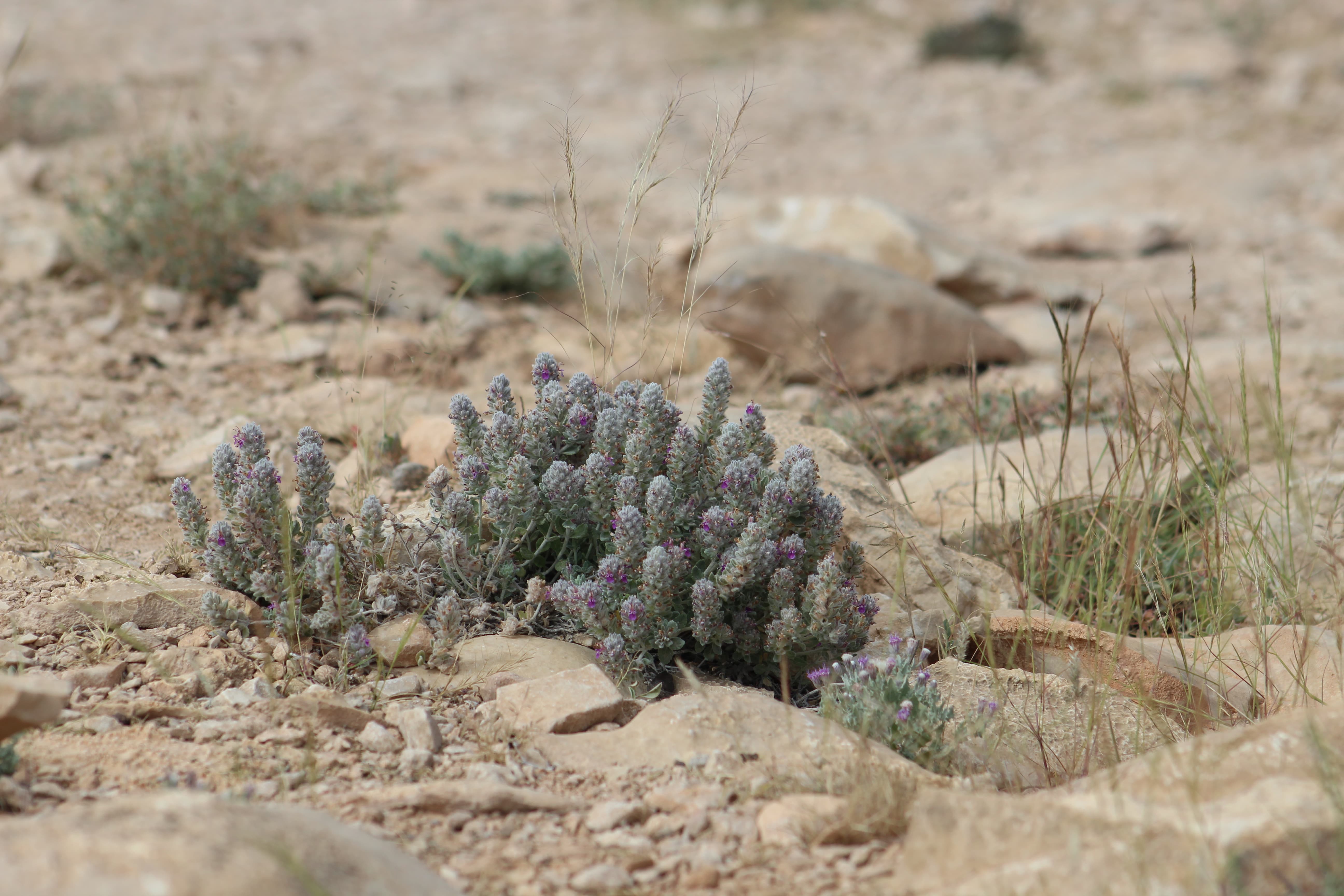
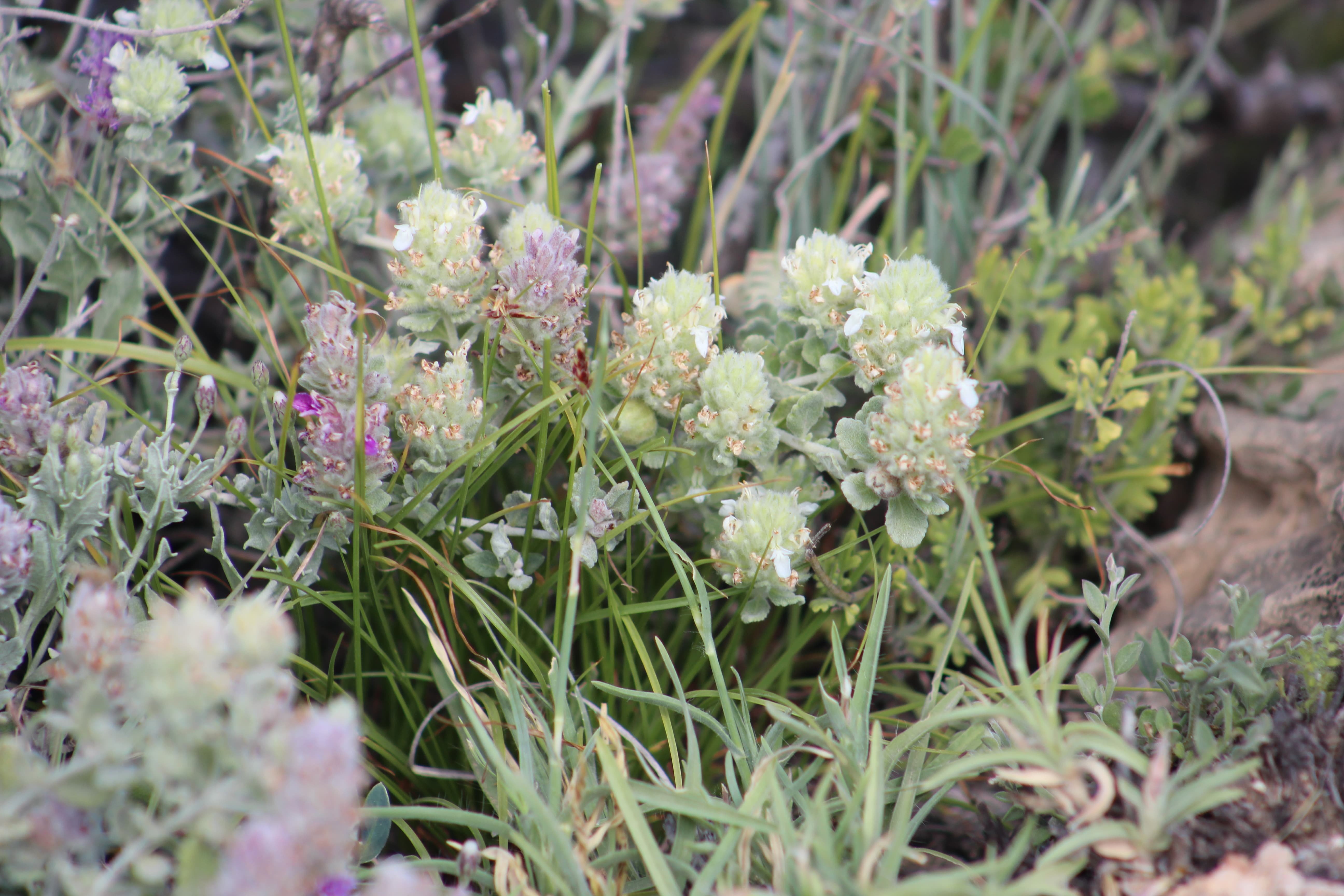
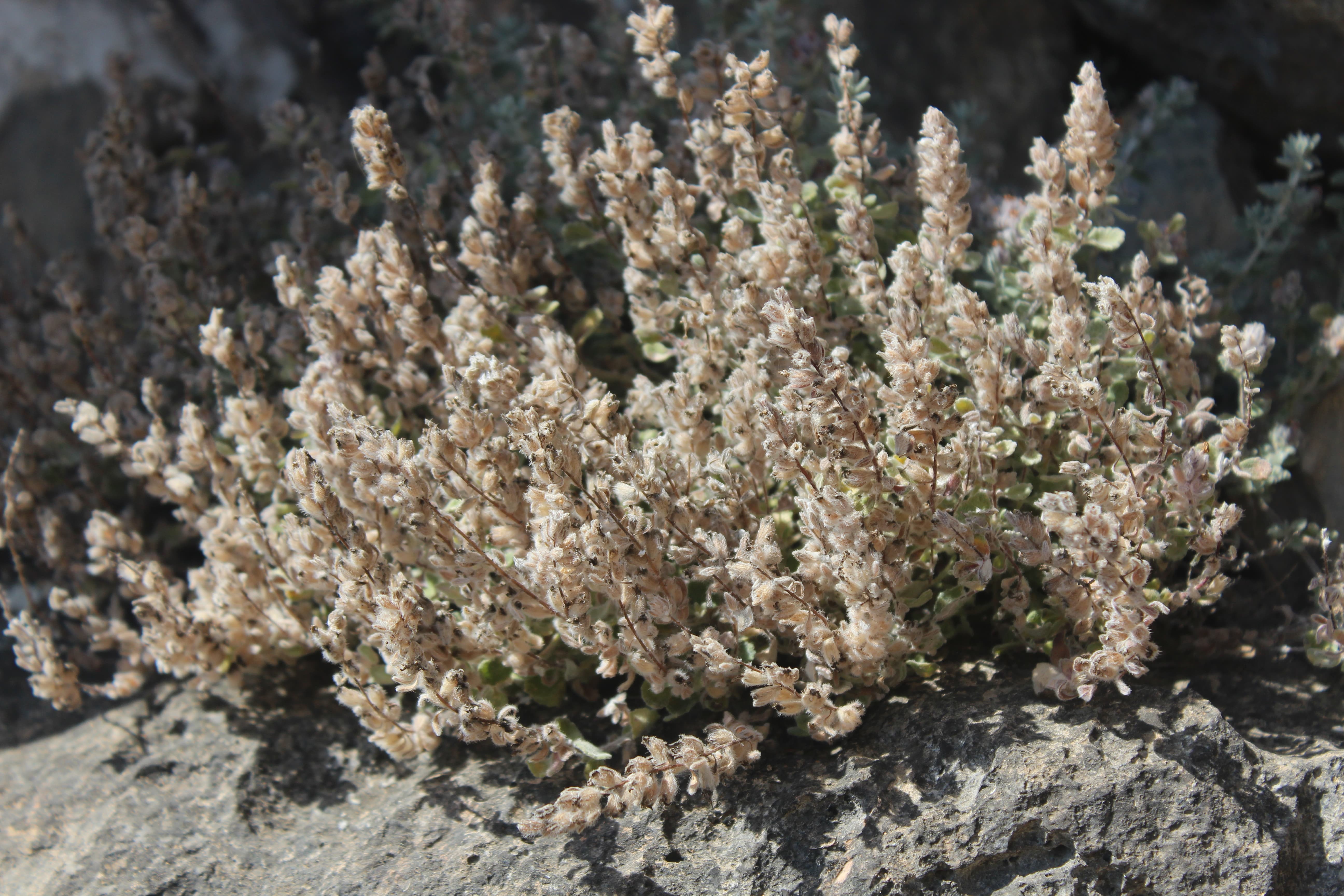
Erect or decumbent perennial herb ; up to 30 cm tall , with a woody base . Stems decumbent or ascending , branched from base , densely white tomentose to villous . Leaves 6-20(-27) x 5-20 mm , opposite , grey-green , small , sessile or with petiole up to 5 mm , obovate to suborbicular to oblong-ovate , base cuneate , apex obtuse , margins entire or sometimes revolute or with 4-5 pairs of dentaions at the apex , densely to sparsely white villous or tomentose with sessile glands , aromatic when crushed . Inflorescences forms a terminal spike , covered in hair giving a woolly appearance ; upper bracts 5-12 mm , linear-oblong to oblong , often 3-lobed , slightly exceeding the calyx ; pedicels 1 mm . Flowers purple with a larger lower lip ; calyx 6-7 mm long , campanulate to somewhat tubular , densely villous with sessile glands ; teeth ± equal , 2 mm , triangular , acute , densely ciliate ; corolla purple to pink , 8-12 mm ; tube ± 4 mm ; lip oblong-triangular with a cucullate
...

No Data
Near Endemic (NE) - Least Concern (LC) - Global Assessment
Common
الوصف غير متاح حاليًا
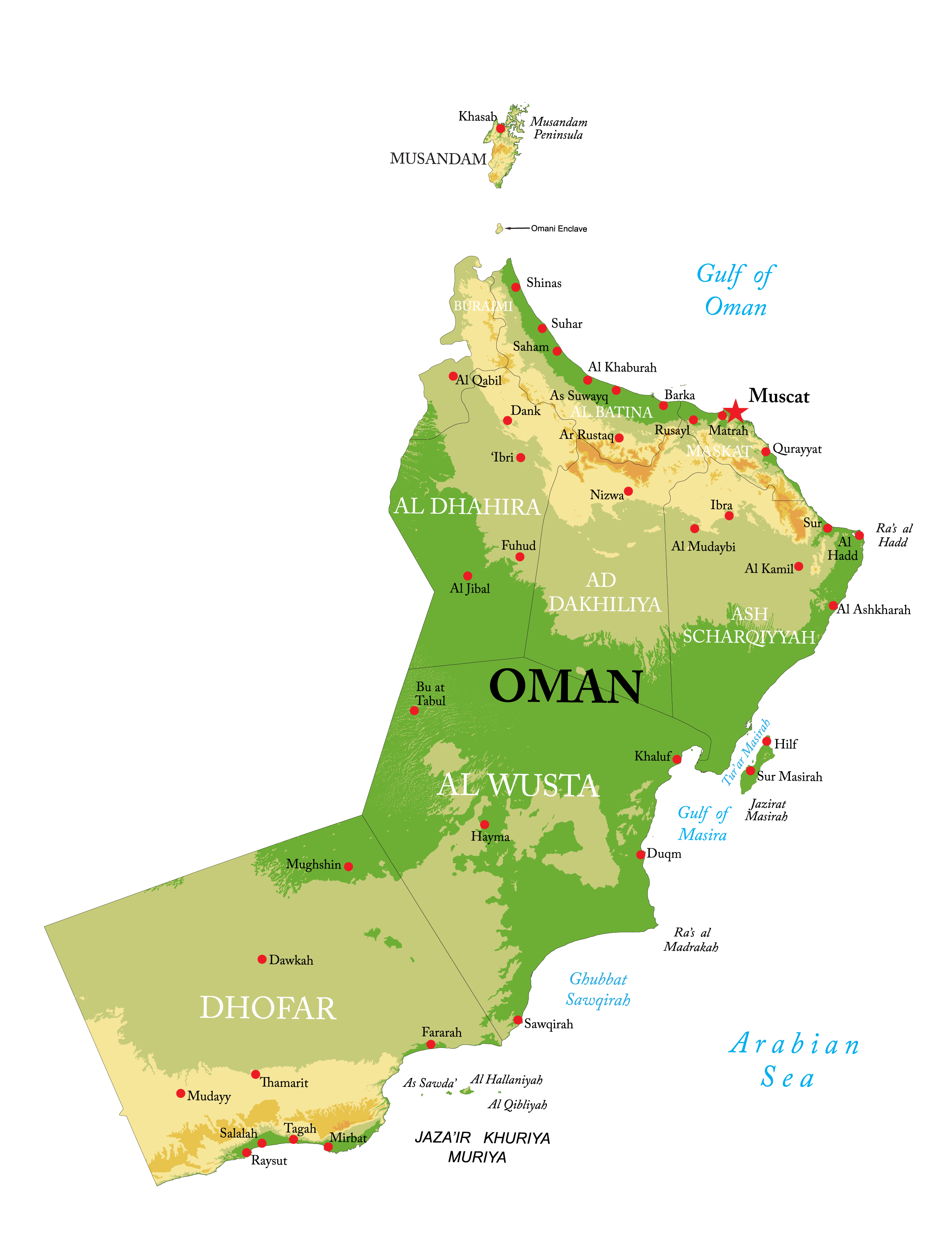
Teucrium paulayanum O.Schwartz
No data
maintenanceAr.Item1
Not known
The vernacular name 'jada' literally means "woolly", in referrence to the woolly texture of plant species due to presence of hair. (Ref. Oman Botanic Garden). Miller & Morris (1988) wrote that: "The flowers of this smaller plant are delicious smelling, and were plucked and held to the nose to ward off evil smells and malignant influences which were considered to be an important factor in causing illness and disease. The flowering parts or scented leaves of this plant are gathered and rubbed between the palms and over the body as a perfume and deodorant. Sweet fragrances helped to build up resistance to disease and infection, and acted as protection against illness caused by the evil eye, dangerous influences or wizardry". (Ref. Plants of Dhofar). Ghazanfar (2015) mentioned that: "Crushed leaves mixed with oil have been used in traditional medicine for babies with fever". (Ref. Flora of Oman; vol.3).
*Ghazanfar, S. (2015). Flora of the Sultanate of Oman, vol.3: Loganiaceae – Asteraceae. Meise, National Botanic Garden of Belgium (Scripta Botanica Begica, Vol. 25). ISBN 9789082352511 ISSN 0779-2387. *https://en.wikipedia.org *Gledhill, D. (2008). The Names of Plants. Fourth Edition. Cambridge University Press, UK. ISBN 978-0-521-86645-3 ISSN 978-0-521-68553-5. *Pickering, H. Patzelt, A. (2008). Field Guide to the Wild Plants of Oman. Kew publishing, Royal Botanic Garden, Kew. ISBN 9781842461778. *Patzelt, A. (2015). Oman Plant Red Data Book. Published by Diwan of Royal Court, Sultanate of Oman. Oman Botanic Garden Publication No. 1. ISBN 978-99969-50-10-0. *POWO (2023). ""Plants of the World Online. Facilitated by the Royal Botanic Gardens, Kew. Published on the Internet; http://www.plantsoftheworldonline.org *Miller, A., Morris, M. (1988). Plants of Dhofar, the Southern Region of Oman: Traditional, Economic, and Medicinal Uses. Published by Office of the Adviser for Conservation of the Environment, Diwan of Royal Court, Sultanate of Oman; ISBN 10: 0715708082
...
