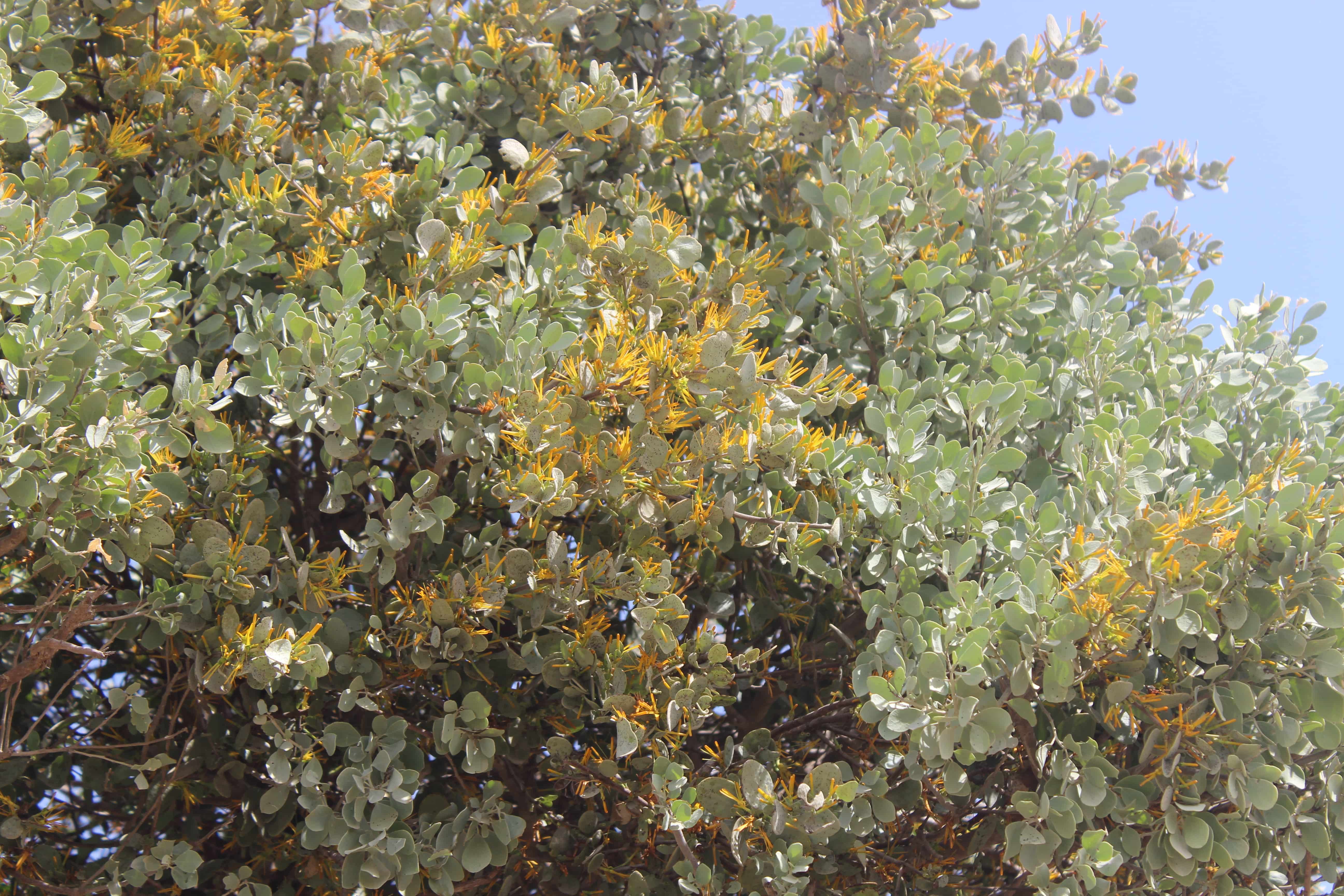
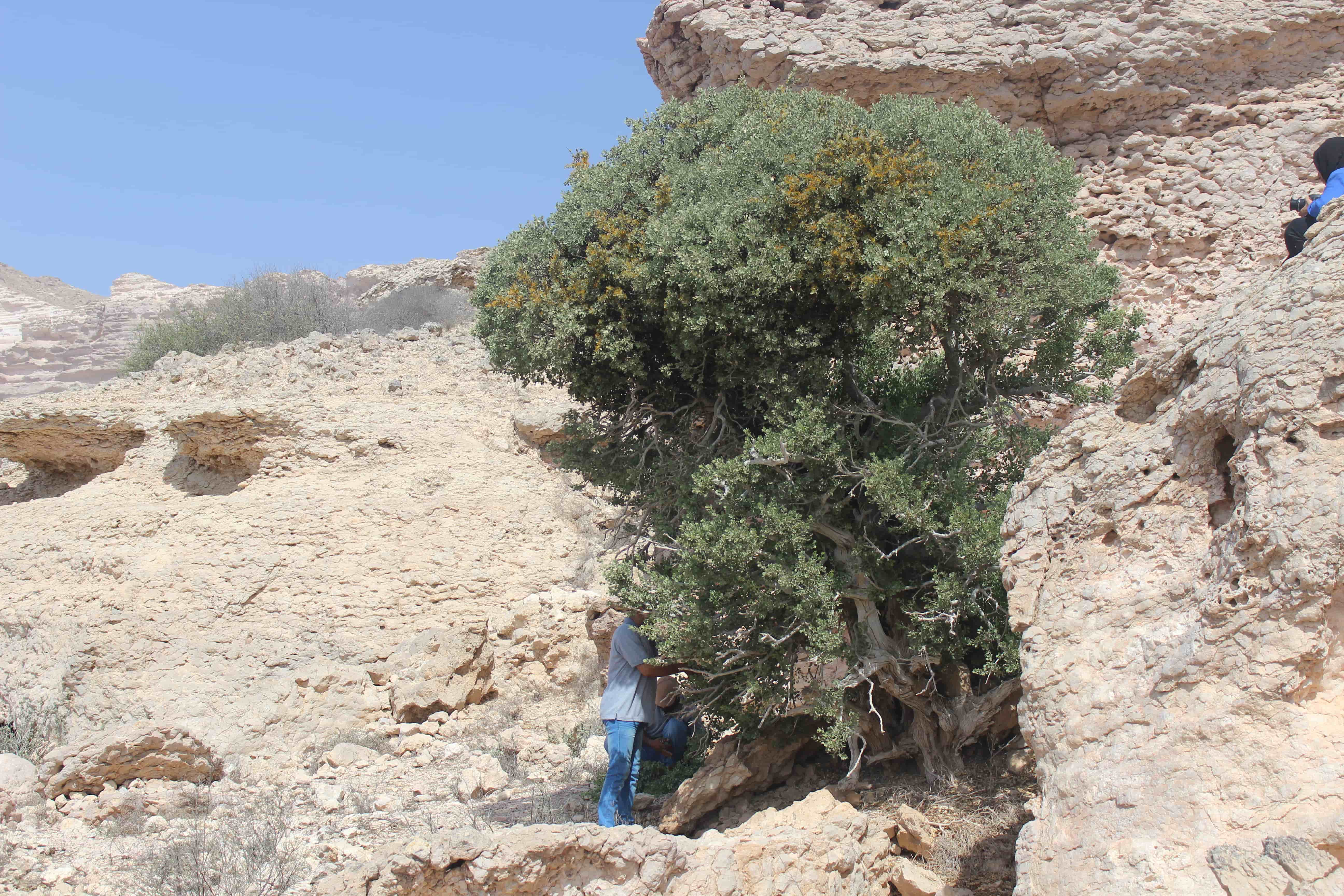
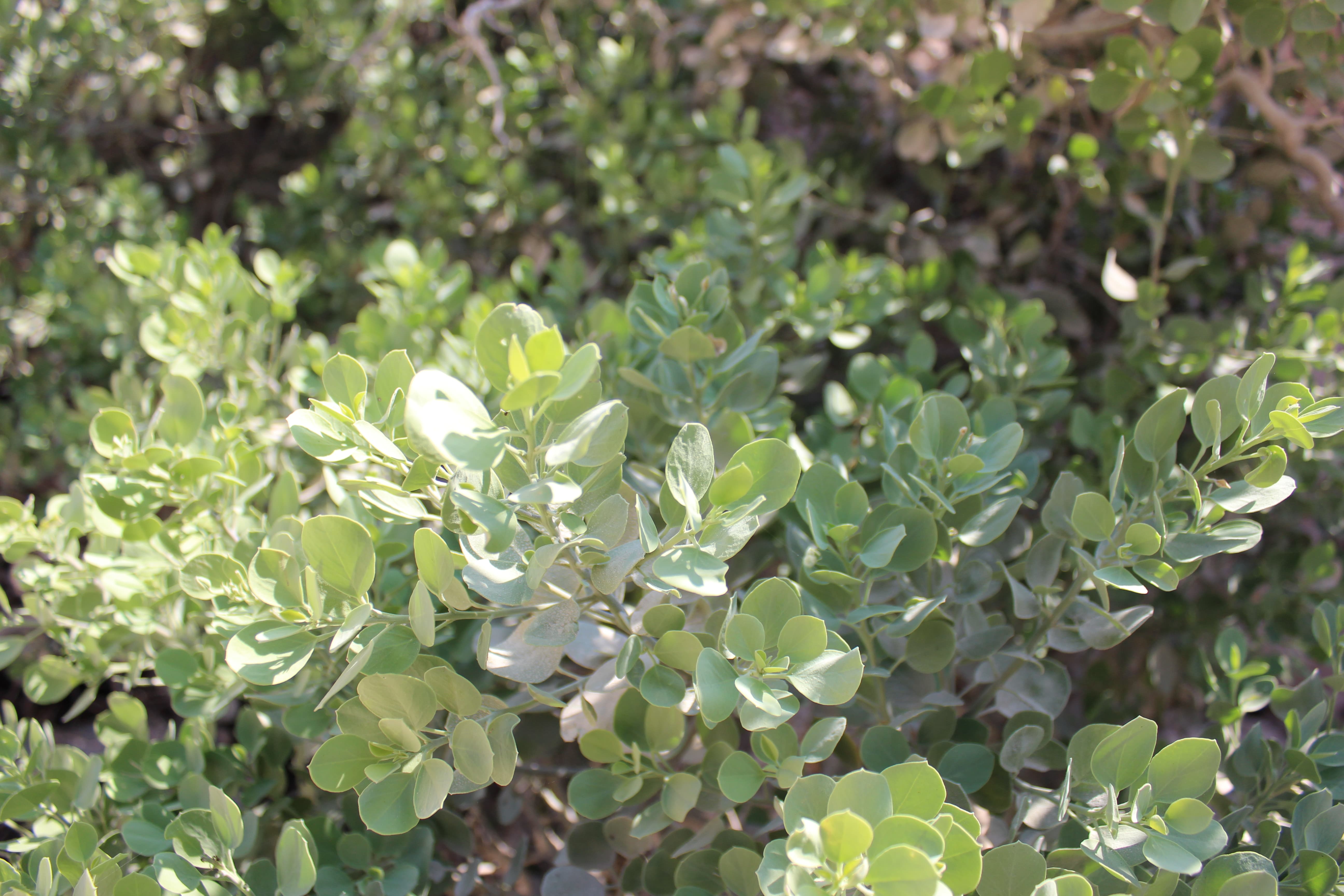
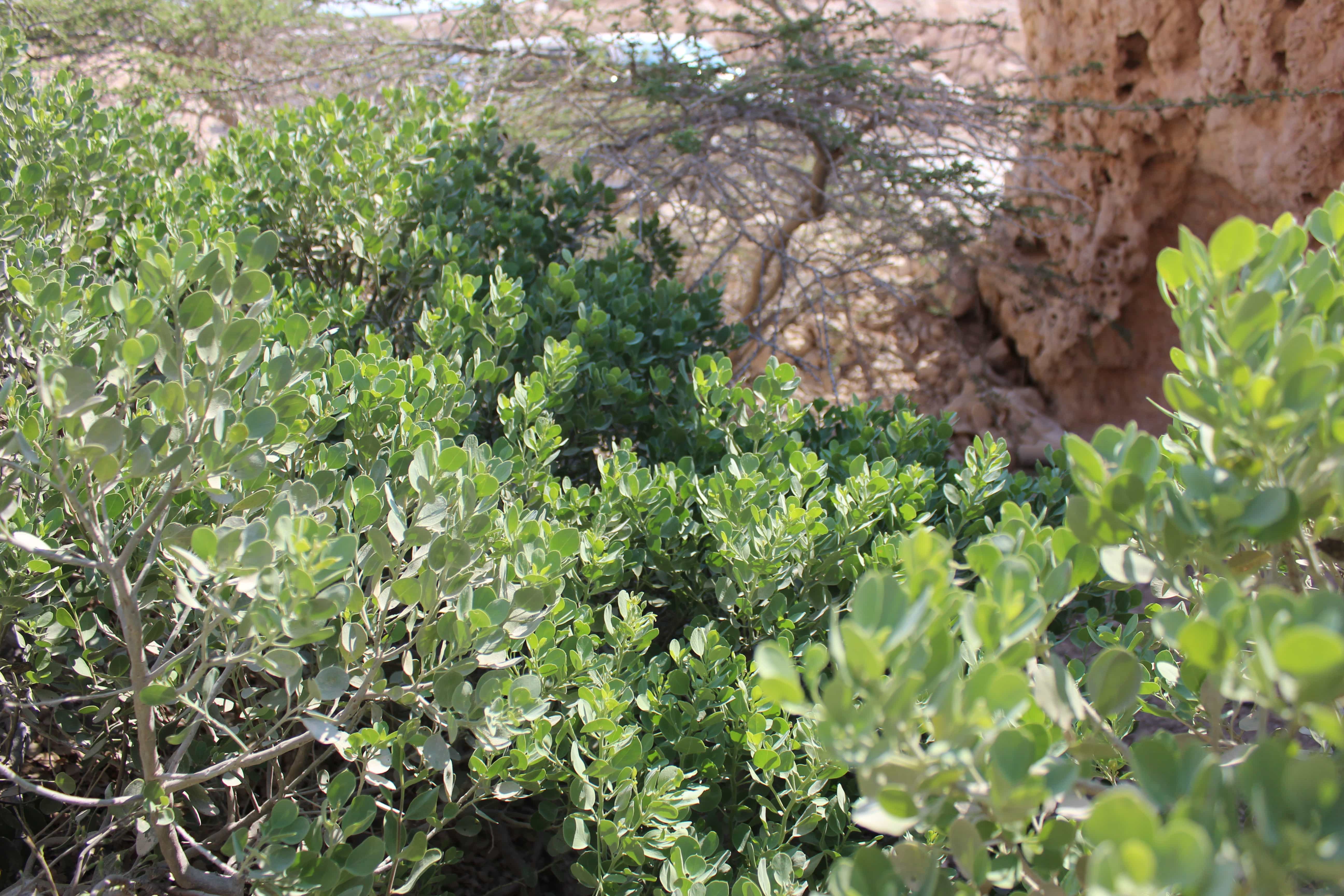
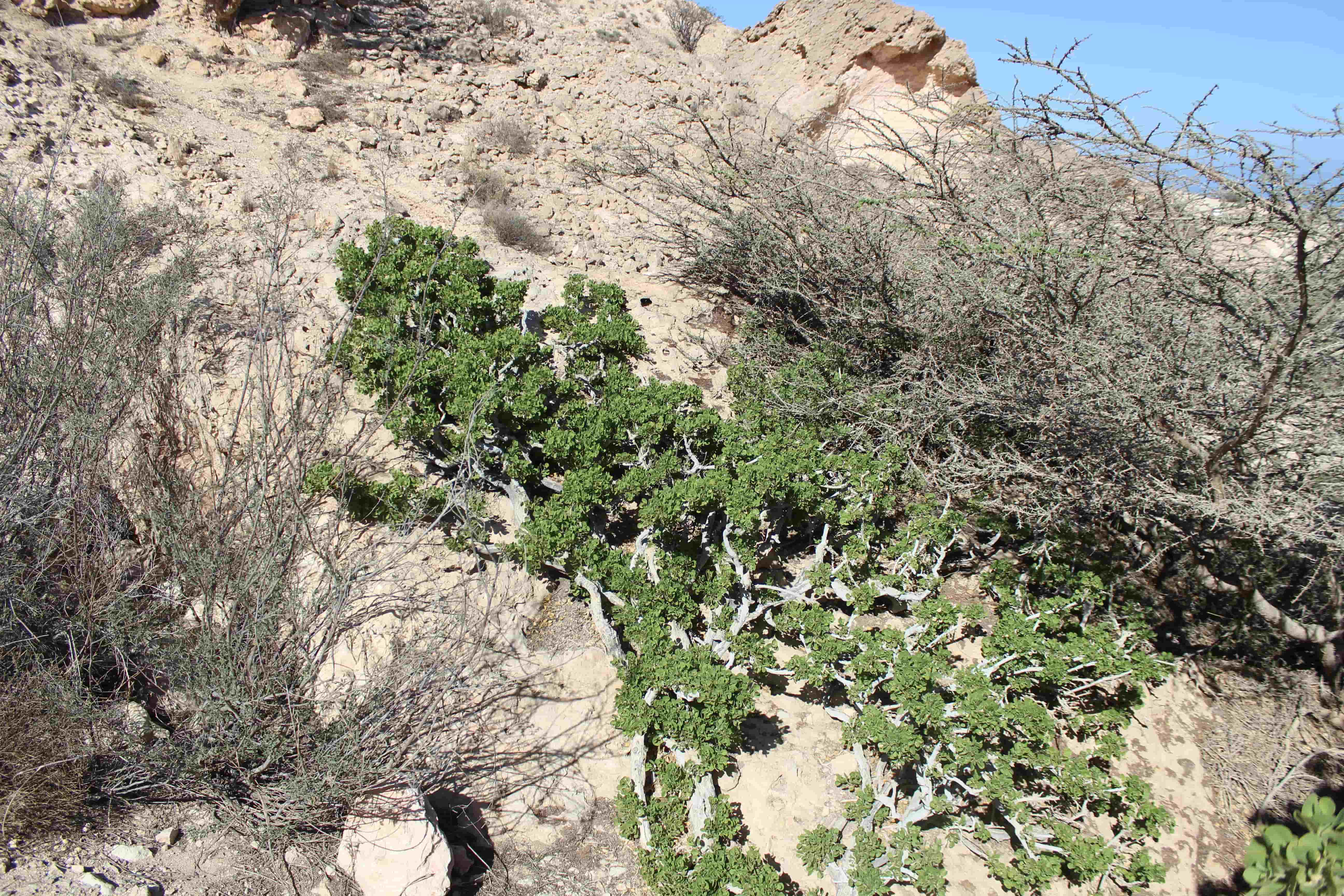
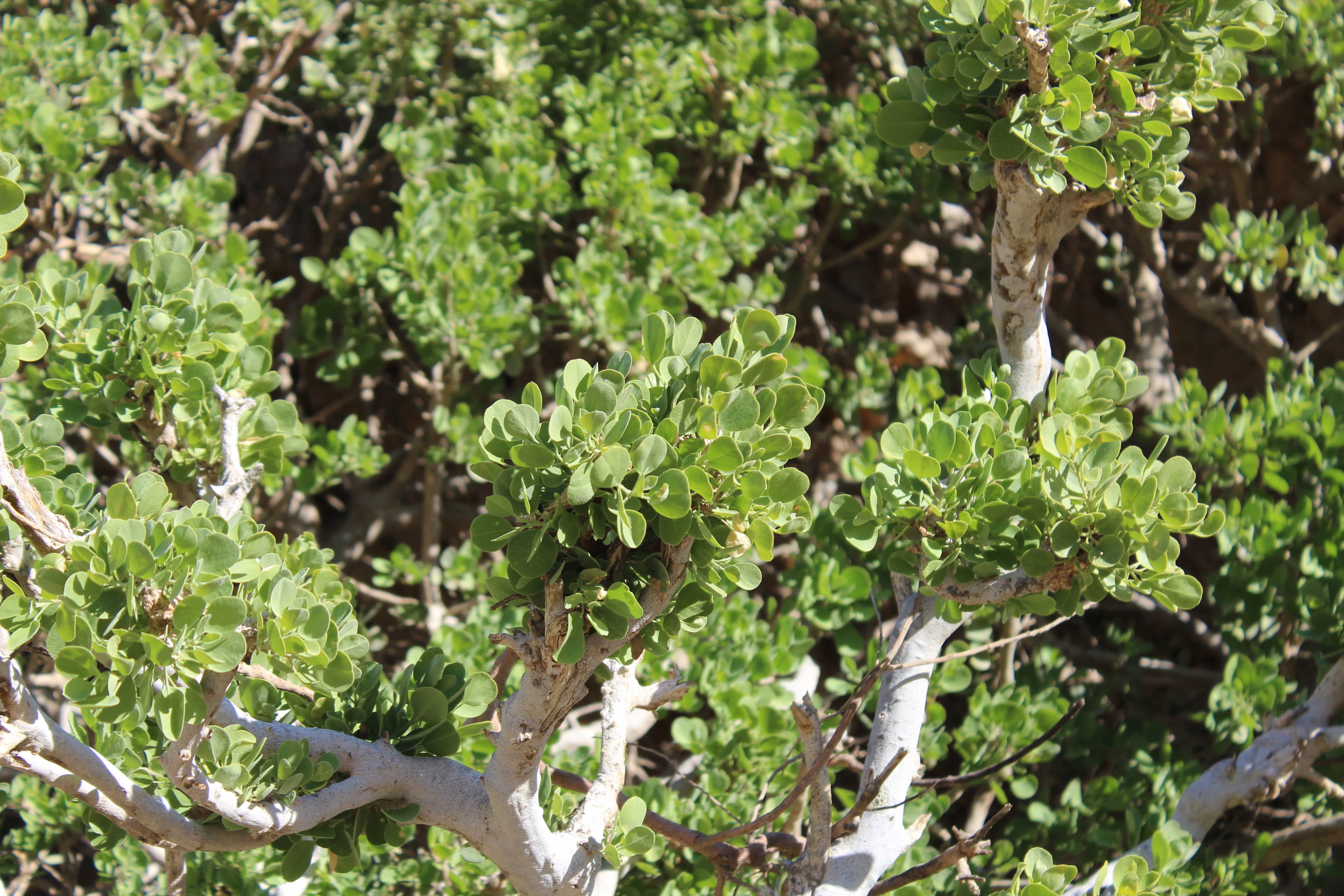
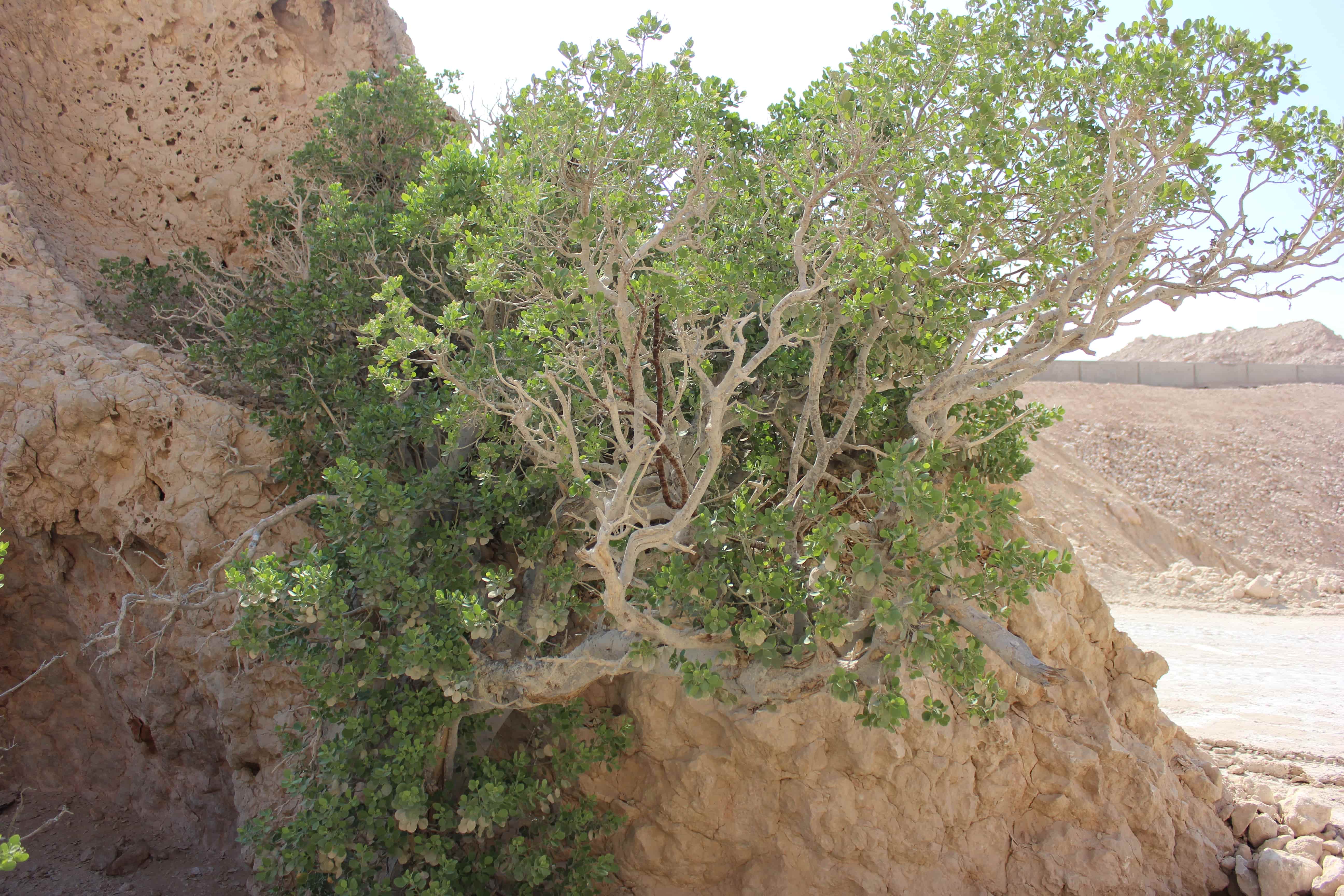
Loranthella_deflersii_2-06082024 © OBG
Loranthella_deflersii_3-06082024 © OBG
Loranthella_deflersii_4-06082024 © OBG
Loranthella_deflersii_5-06082024 © OBG
Loranthella_deflersii_6-06082024 © OBG
Loranthella_deflersii_7-06082024 © OBG
Loranthella_deflersii-06082024 © OBG
Semi-parasitic epiphytic shrub ; up to 1 m tall . Stems erect to ascending , branched . Leaves opposite to subopposite , ultimately crowded on short shoots , 15-40 x 10-25 mm , leathery , olive-green to slightly glaucous , narrow broadly-oblong to ovate or broadly elliptic to almost rounded , apex acute to rounded , base tapering into the petiole , margin entire , puberulous , becoming glabrous , 3-5-veined ; petiole ± 5 mm . Inflorescences of few-flowered axillary umbels ; pedicels 1-3 mm ; bracts tubular , 2-4 mm . Flowers yellow ; calyx tubular , 3-6 mm , truncate or slightly lobed ciliate ; corolla yellow , yellow , sometimes green or red at base , 5-lobed , opening by a slit to the calyx ; lobes 13-30 mm , linear , erect ; stamens 5 , attached to the corolla lobes , incurved at anthesis ; ovary inferior . Fruit berry , ± 7 x 4 mm , orange-red , ovoid , crowned by the calyx , sticky when mature . Seeds solitary . (Ref . Flora of Oman ; vol . 2) .
No Data
Not Evaluated (NE)
Not Common
الوصف غير متاح حاليًا
Loranthus schimperi Hochst. ex A.Rich.
Odontella deflersii Tiegh.
Oncocalyx schimperi (Hochst. ex A.Rich.) M.G.Gilbert
Tapinanthus schimperi (Hochst. ex A.Rich.) Danser
No data
maintenanceAr.Item1
Not known
Miller & Morris (1988) wrote that: "This parasite grows up and through the crown of the host tree and spreads over it a carpet of foliage and flower. The yellow-flowered and red-flowered varities are not differentiated by name in Dhofar, and both were used in the tanning of leather. The little bunches of flowering material and growing tips [J: otkenut etoob, isodot] were gathered, great care being taken not to pull out the fragile roots from the branches in the process. Then the material was spread out to dry. When needed for tanning the dried material was crushed and ground as finely as possible, then mixed with water (or oil, which was better for some skins such as the milk and butter-making skins) and kneaded to a paste. This was spread over the skin which had already been treated to remove the hair. The skin was then kneaded, pounded and
...

*Ghazanfar, S. (2007). Flora of the Sultanate of Oman, vol.2: Crassulaceae – Apiaceae. Meise, National Botanic Garden of Belgium (Scripta Botanica Begica, Vol. 36). ISBN 9789072619747 ISSN 0779-2387. *https://en.wikipedia.org *Miller, A., Morris, M. (1988). Plants of Dhofar, the Southern Region of Oman: Traditional, Economic, and Medicinal Uses. Published by Office of the Adviser for Conservation of the Environment, Diwan of Royal Court, Sultanate of Oman; ISBN 10: 0715708082 ISSN 13: 9780715708088. *POWO (2023). ""Plants of the World Online. Facilitated by the Royal Botanic Gardens, Kew. Published on the Internet; http://www.plantsoftheworldonline.org
