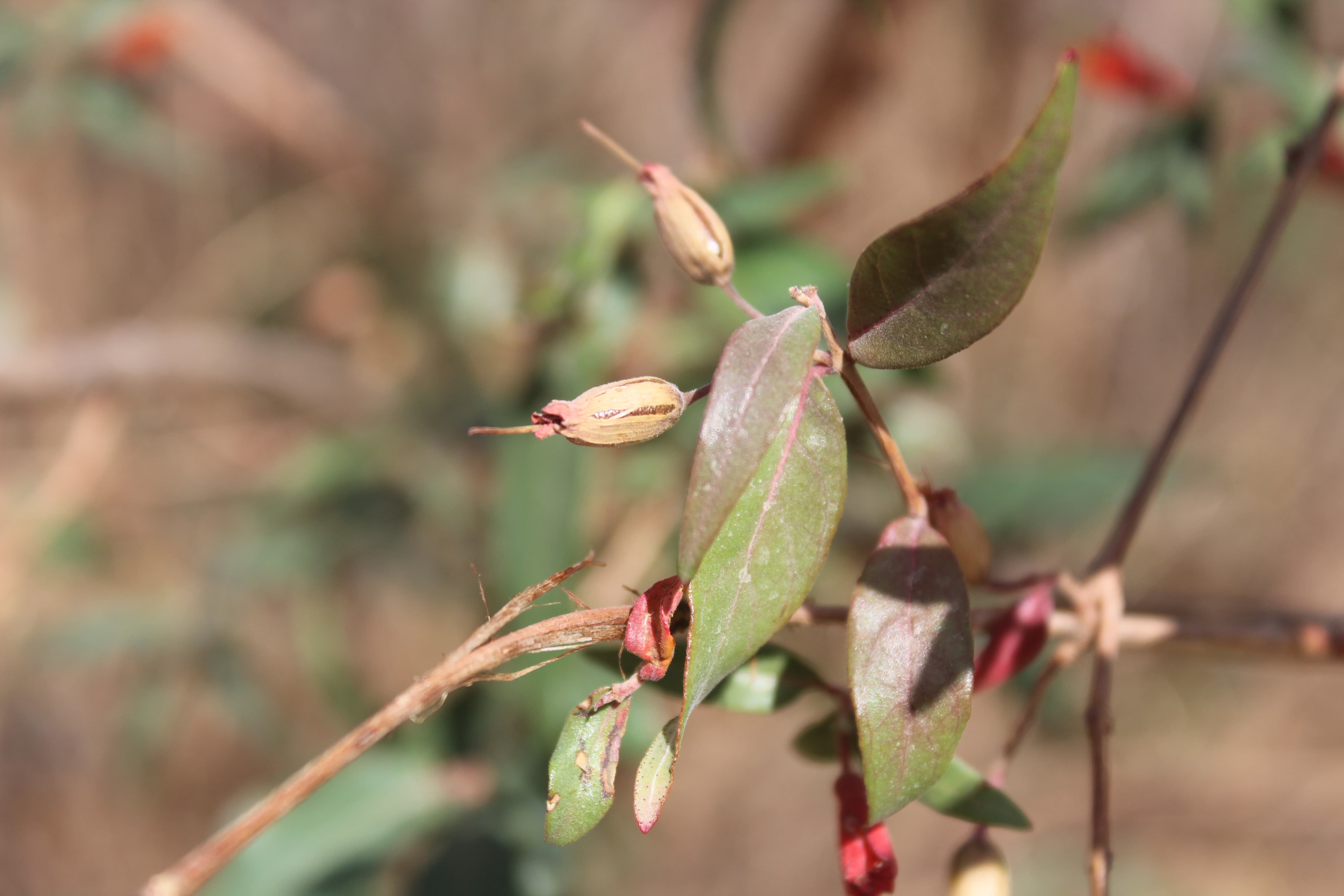
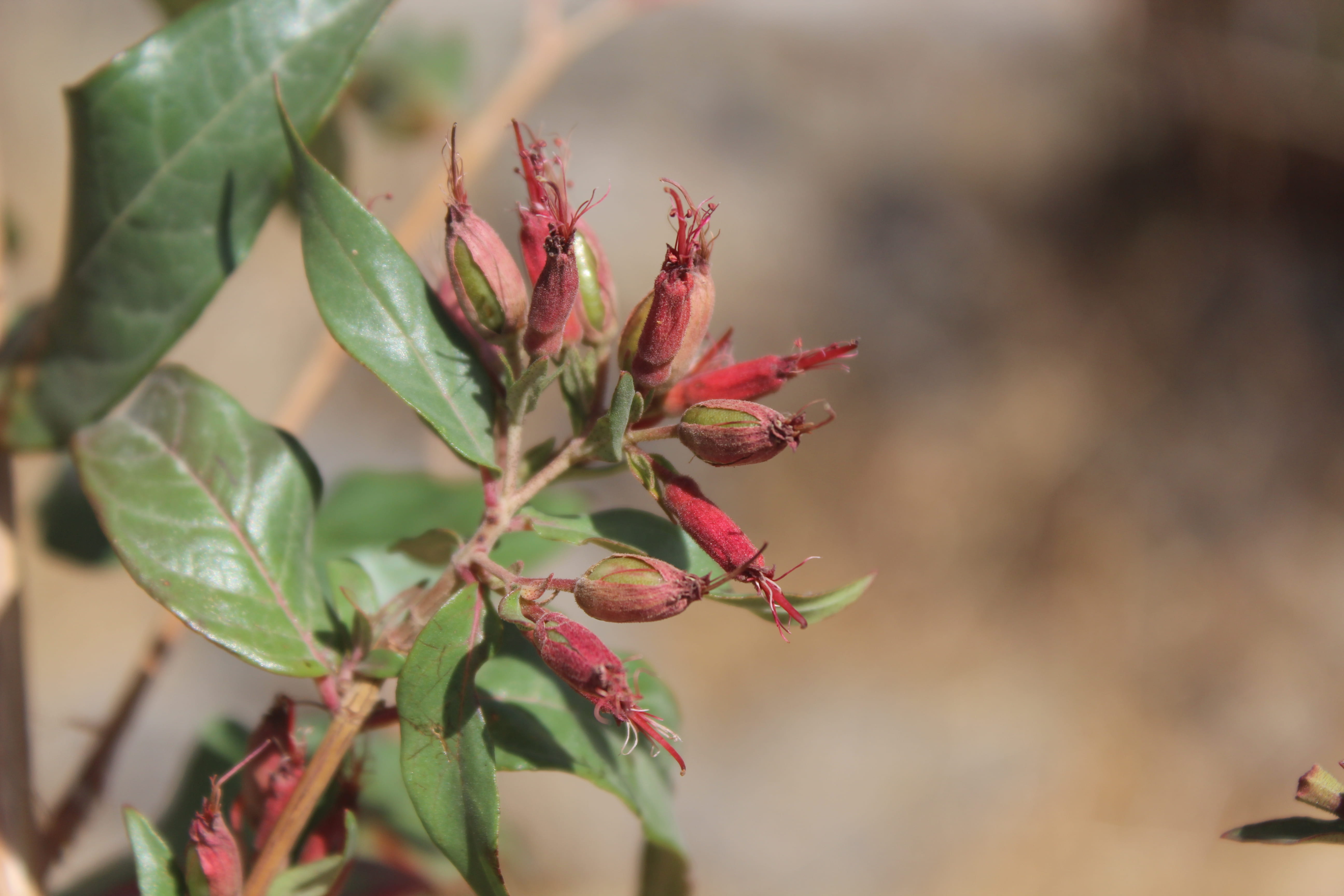
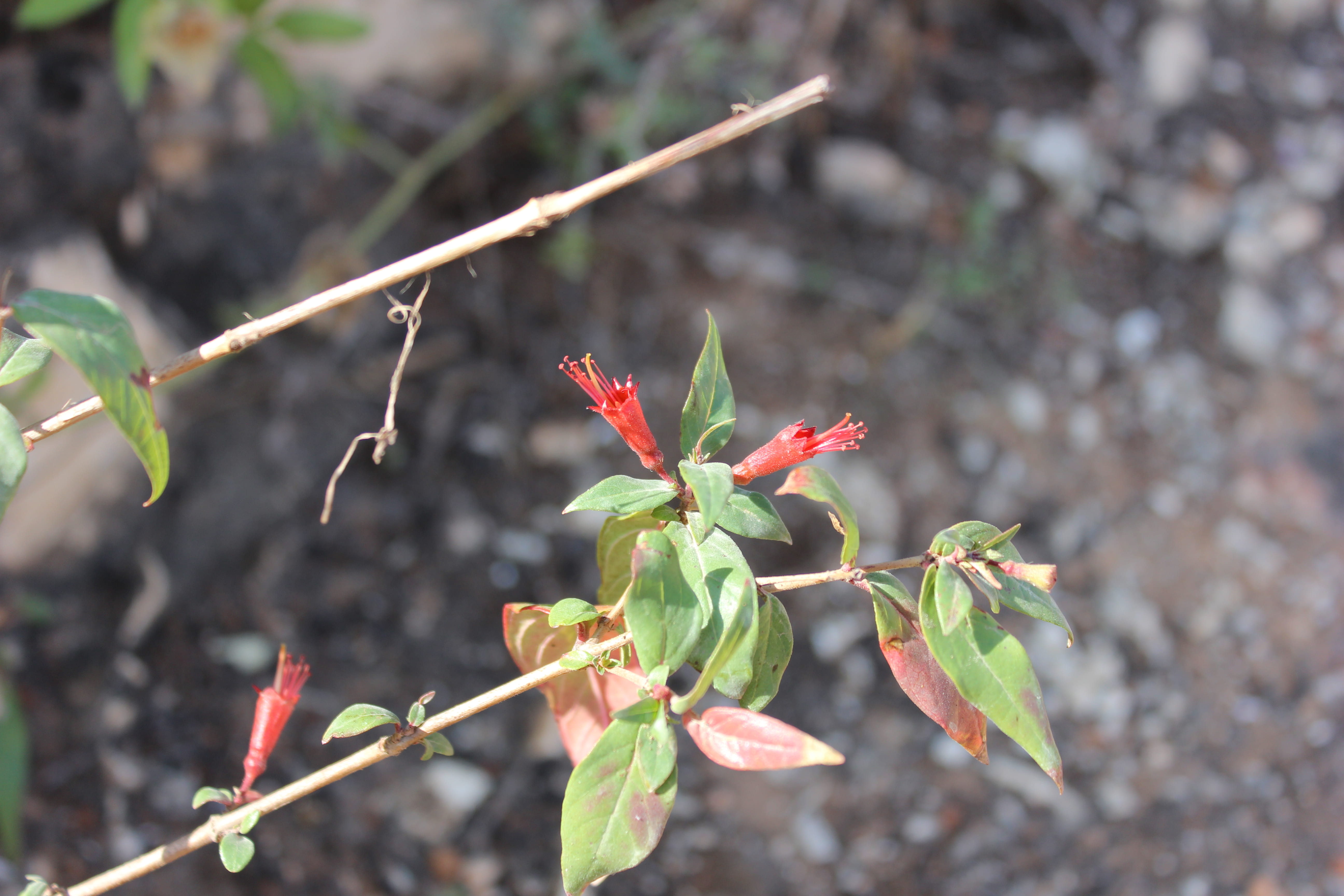
Woodfordia_uniflora_2-06082024 © OBG
Woodfordia_uniflora_3-06082024 © OBG
Woodfordia_uniflora_4-06082024 © OBG
Woodfordia_uniflora_5-06082024 © OBG
Woodfordia_uniflora_6-06082024 © OBG
Woodfordia_uniflora_7-06082024 © OBG
Woodfordia_uniflora-06082024 © OBG
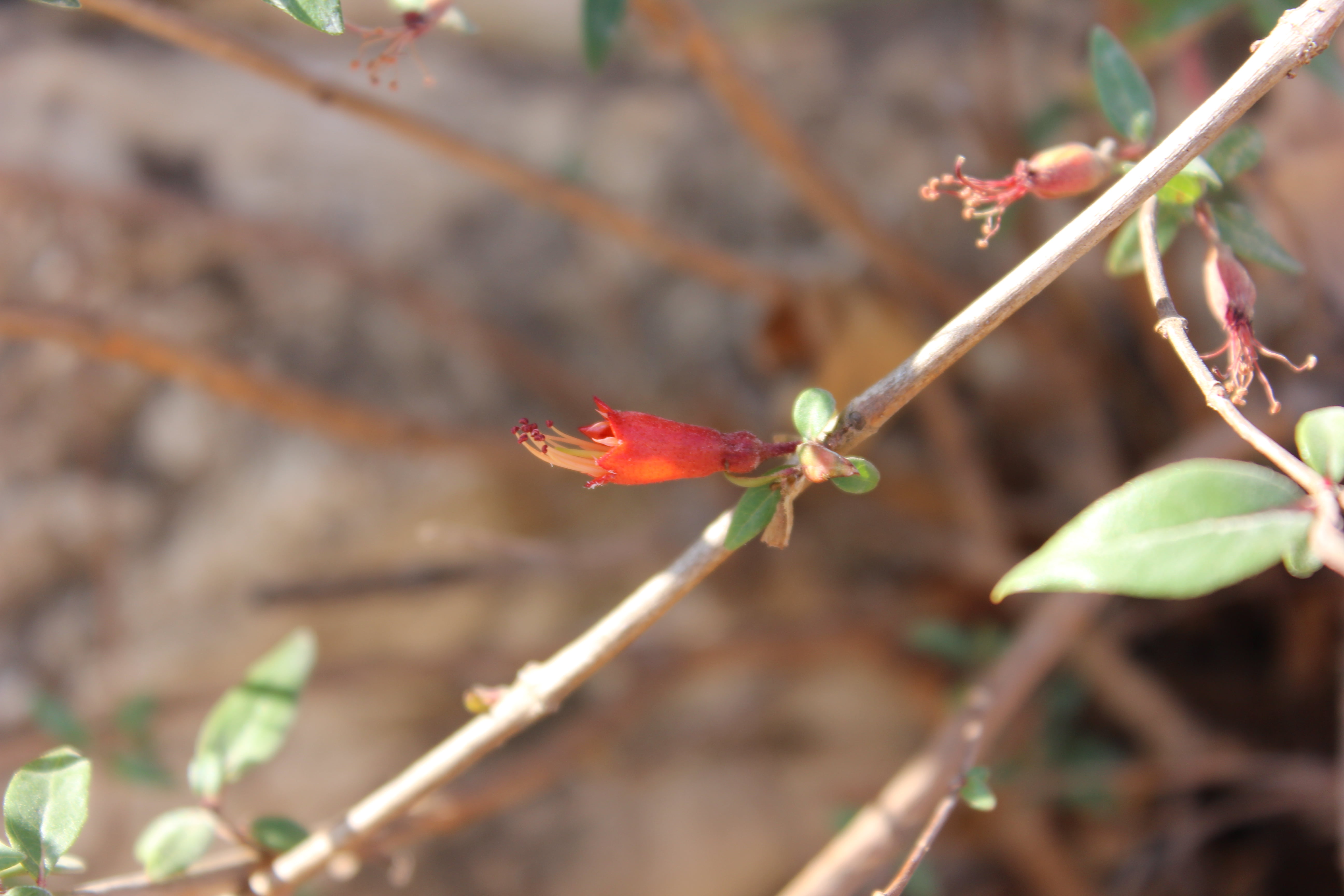
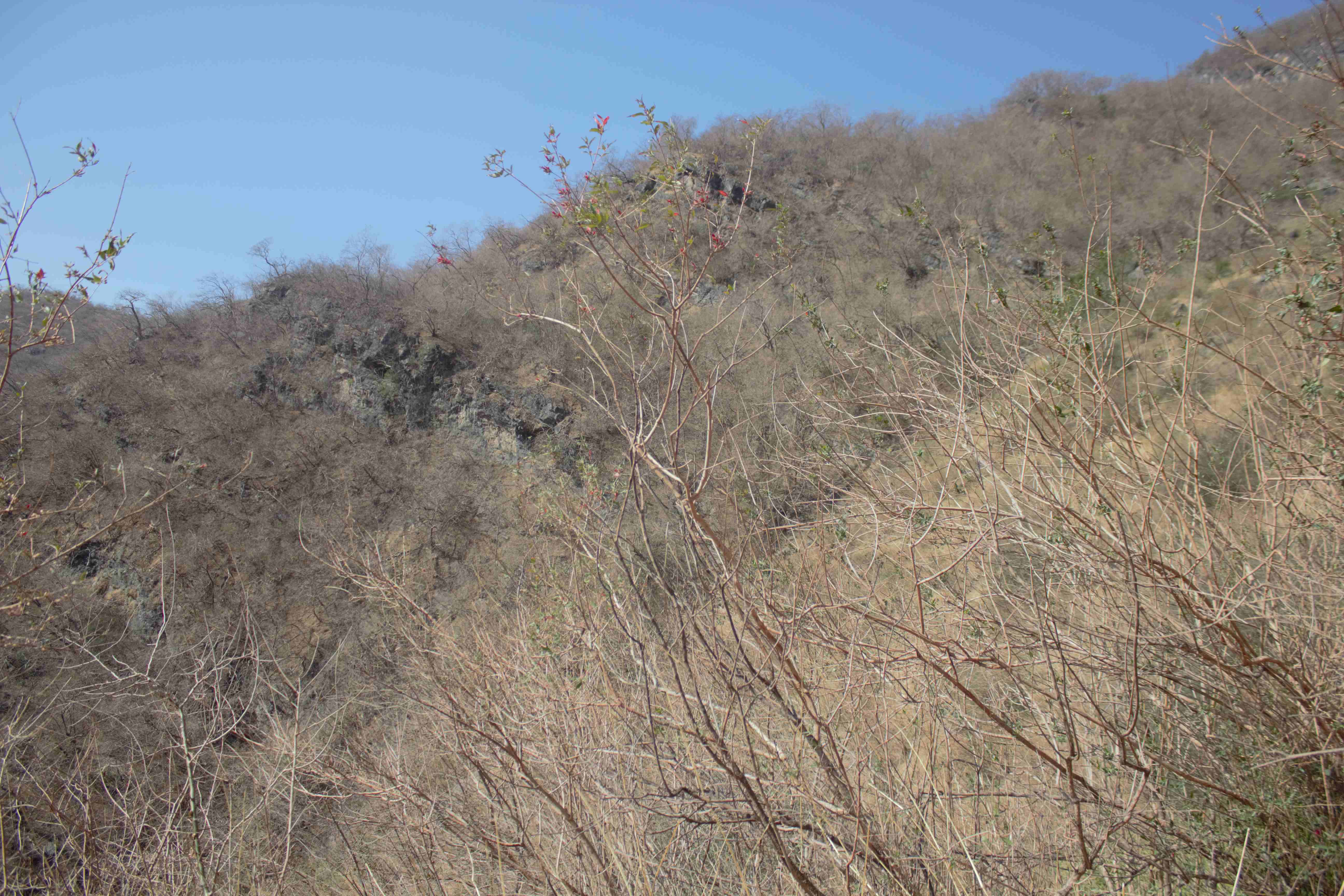
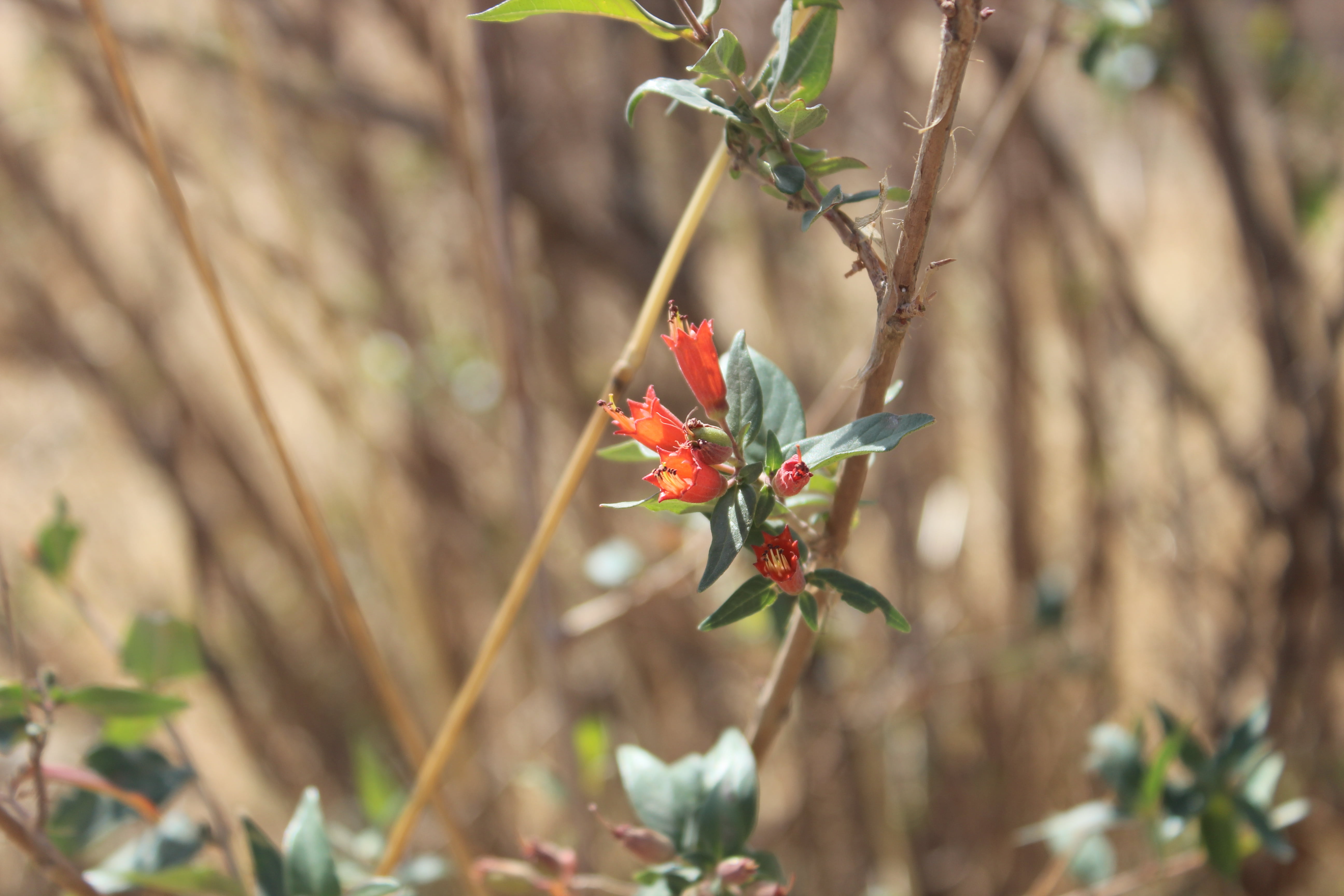
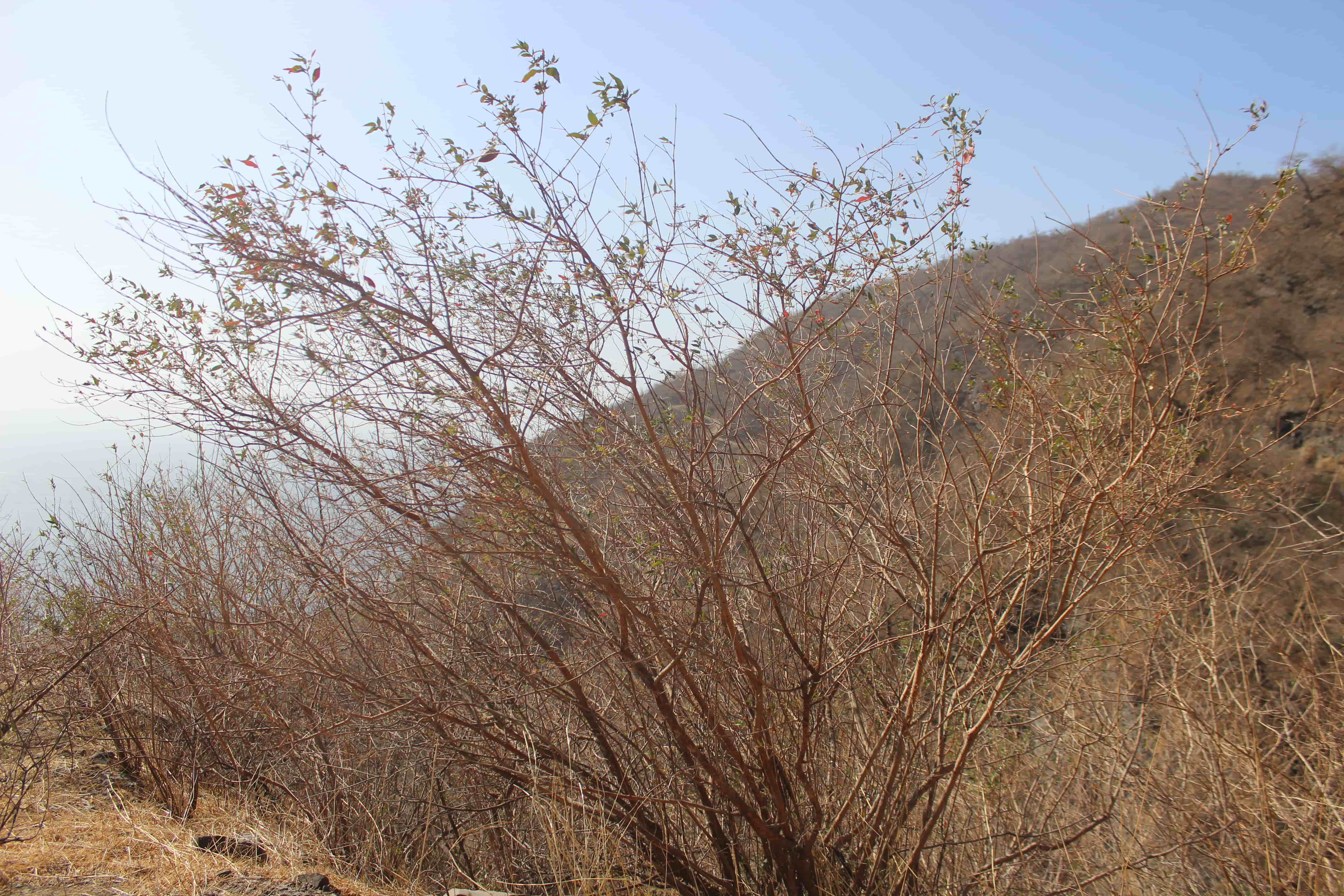
Small tree , often shrubby ; up to 2 m tall . Stems reddish to orange-brown ; bark flaky . Leaves opposite and decussate , sessile to shortly petiolate , 3-9 x 0 . 8-2 cm , ovate to elliptic-ovate , apex acute , base rounded , sparsely pubescent above , with conspicuous black to crimson glands on the undersurface . Inflorescences of short axillary cymes ; shortly pedicellate . Flowers slightly zygomorphic , red ; calyx 10-11 mm , tubular , 6-lobed , scarlet-red , pubescent on the outer surface ; petals 6 or absent , white or red , inserted in between on the calyx lobes ; stamens 12 ; filaments pinkish , inserted a third up on the calyx-tube ; anthers dark red , exserted . Fruit capsule , 12-13 mm , elliptic , pilose , many-seeded . (Ref . Flora of Oman ; vol . 2) .
No Data
Not Evaluated (NE)
Frequent
الوصف غير متاح حاليًا
Grislea micropetala Hochst. & Steud.
Grislea multiflora A.Rich.
Grislea uniflora A.Rich.
Woodfordia floribunda var. glabrata Hiern
No data
maintenanceAr.Item1
Fire Flame Bush
Red Bell Bush
Miller & Morris (1988) wrote that: "Woodfordia uniflora is very common in the foothills of the monsoon mountains, and its attractive red-tinged leaves and stems are readily recognisable in the field. As Acacia etbaica was the principal tanning agent of the drier and desert areas, so was this Woodfordia species in the wetter areas, though most would agree that the latter was inferior, especially as regards the durability of the finished leather. To tan a skin or a hide the growing shoots were gathered and dried, and when needed, sufficient were extracted from the store and pounded down to a powder. This was mixed to a paste with a little water and smeared over a skin from which the hair has already been removed. The skin was then kneaded and pounded over a hard, smooth surface until considered to be supple enough and sufficiently impregnated with the tanning agent. Making
...

*Ghazanfar, S. (2007). Flora of the Sultanate of Oman, vol.2: Crassulaceae – Apiaceae. Meise, National Botanic Garden of Belgium (Scripta Botanica Begica, Vol. 36). ISBN 9789072619747 ISSN 0779-2387. *https://en.wikipedia.org *Miller, A., Morris, M. (1988). Plants of Dhofar, the Southern Region of Oman: Traditional, Economic, and Medicinal Uses. Published by Office of the Adviser for Conservation of the Environment, Diwan of Royal Court, Sultanate of Oman; ISBN 10: 0715708082 ISSN 13: 9780715708088. *Gledhill, D. (2008). The Names of Plants. Fourth Edition. Cambridge University Press, UK. ISBN 978-0-521-86645-3 ISSN 978-0-521-68553-5. *POWO (2023). ""Plants of the World Online. Facilitated by the Royal Botanic Gardens, Kew. Published on the Internet; http://www.plantsoftheworldonline.org
