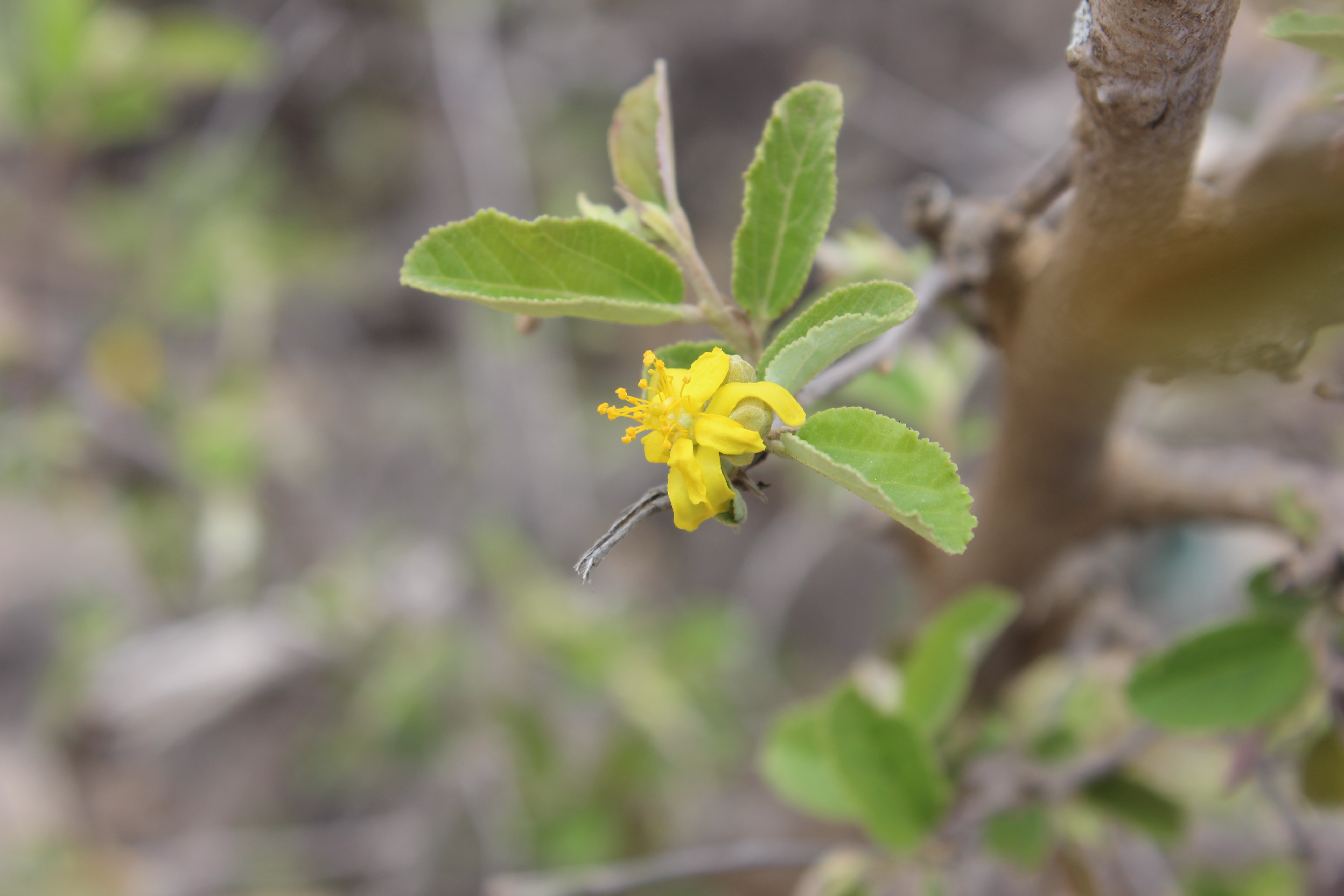
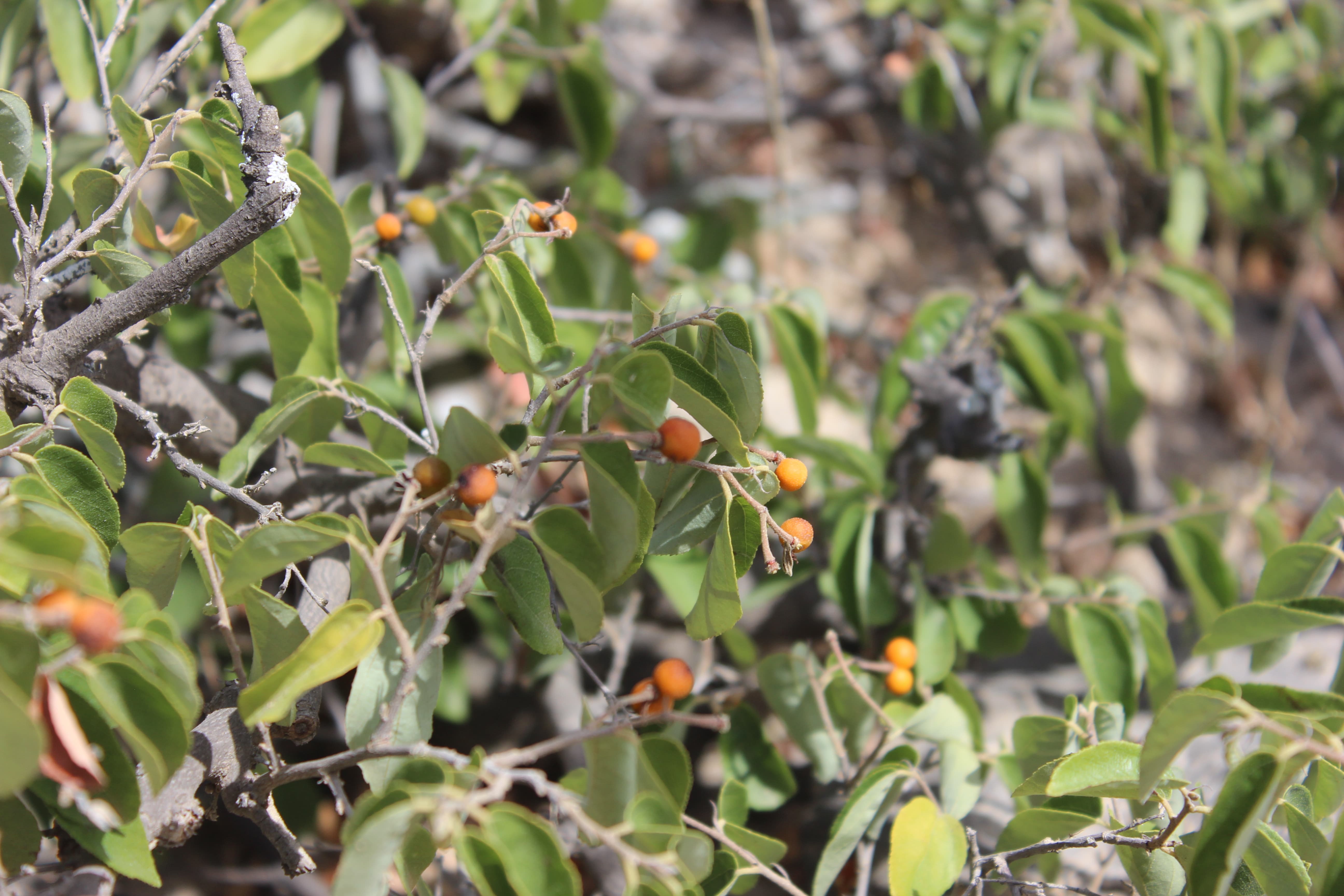
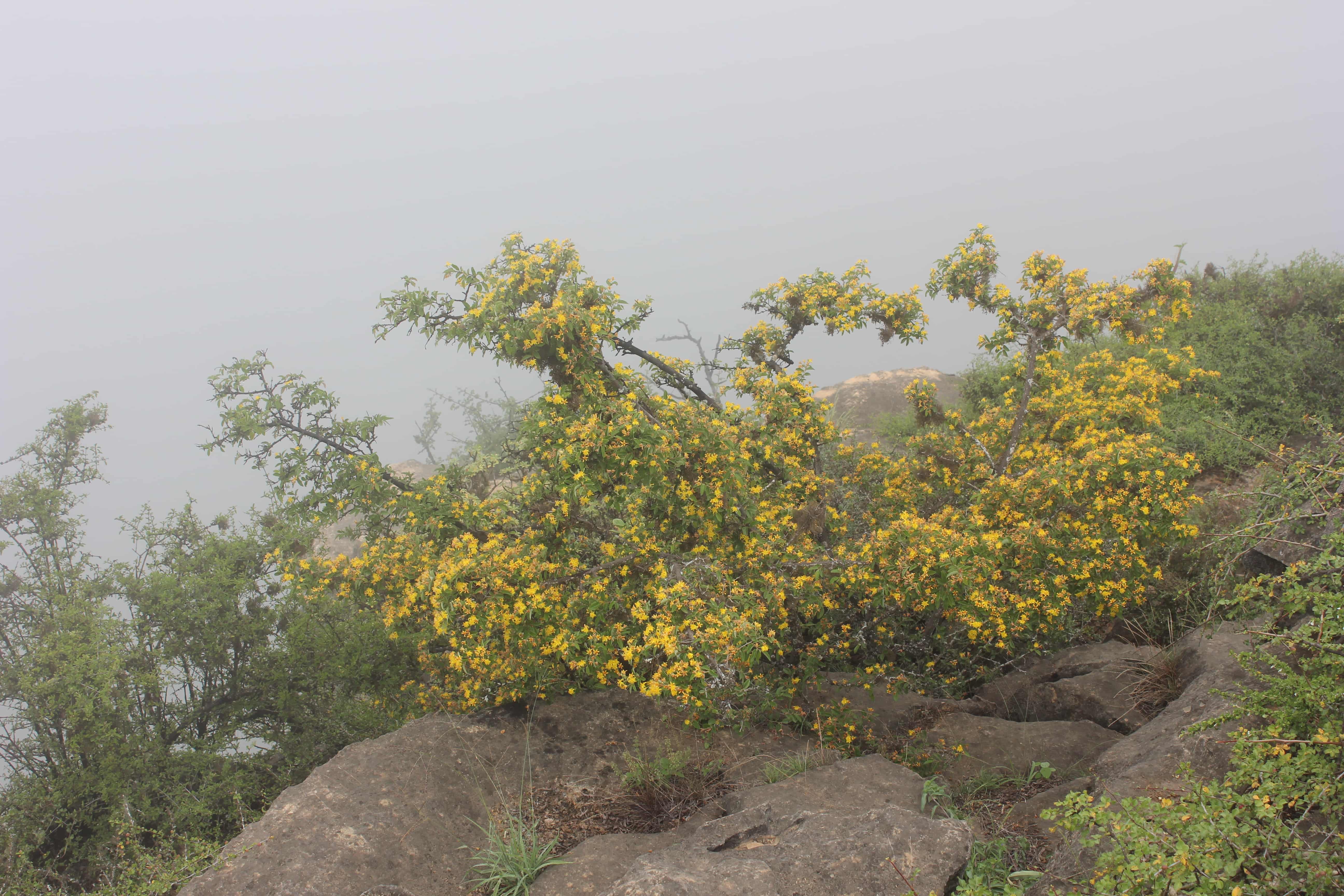
Grewia_bicolor_2-06082024 © OBG
Grewia_bicolor_3-06082024 © OBG
Grewia_bicolor_4-06082024 © OBG
Grewia_bicolor_5-06082024 © OBG
Grewia_bicolor_6-06082024 © OBG
Grewia_bicolor_7-06082024 © OBG
Grewia_bicolor-06082024 © OBG
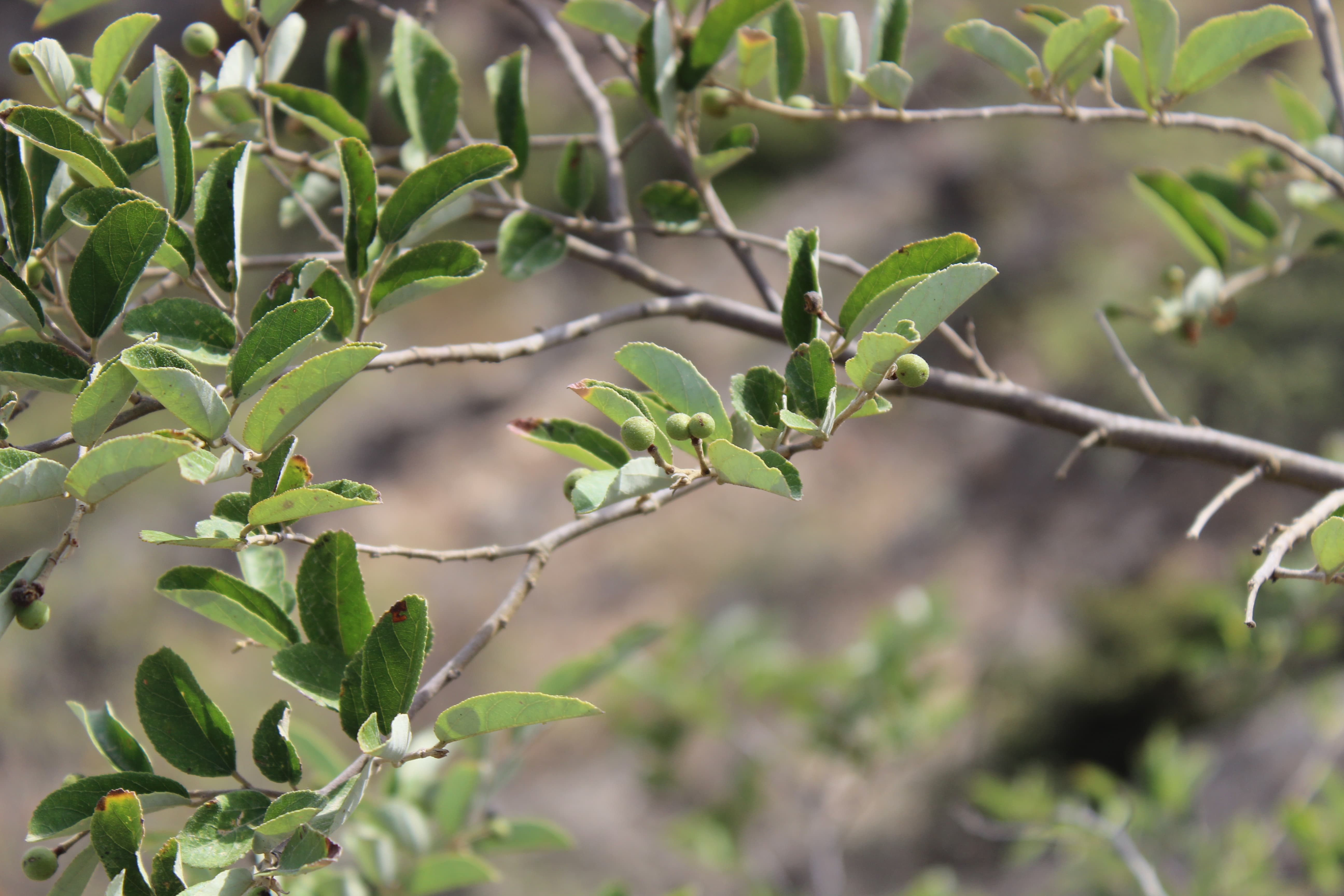
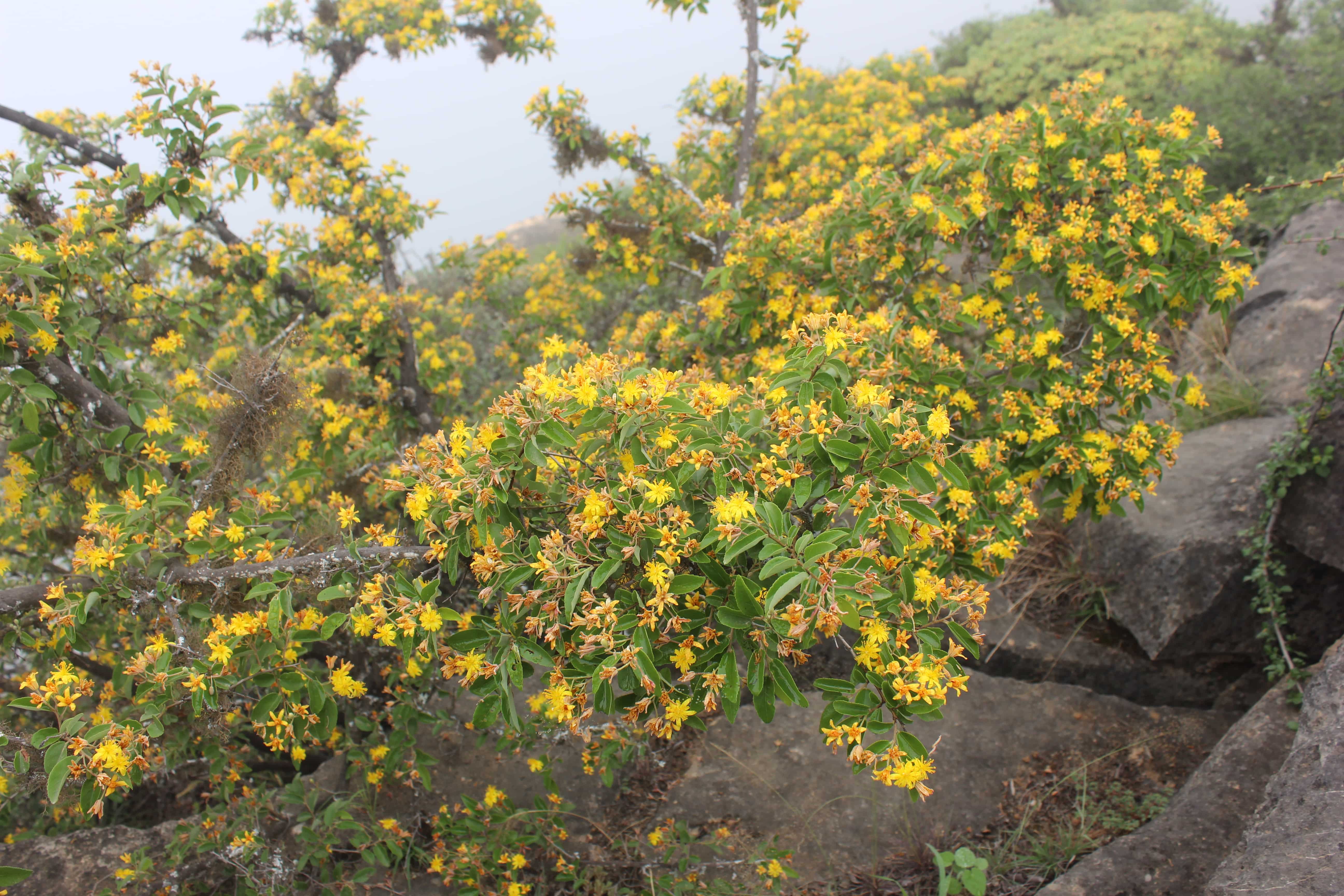
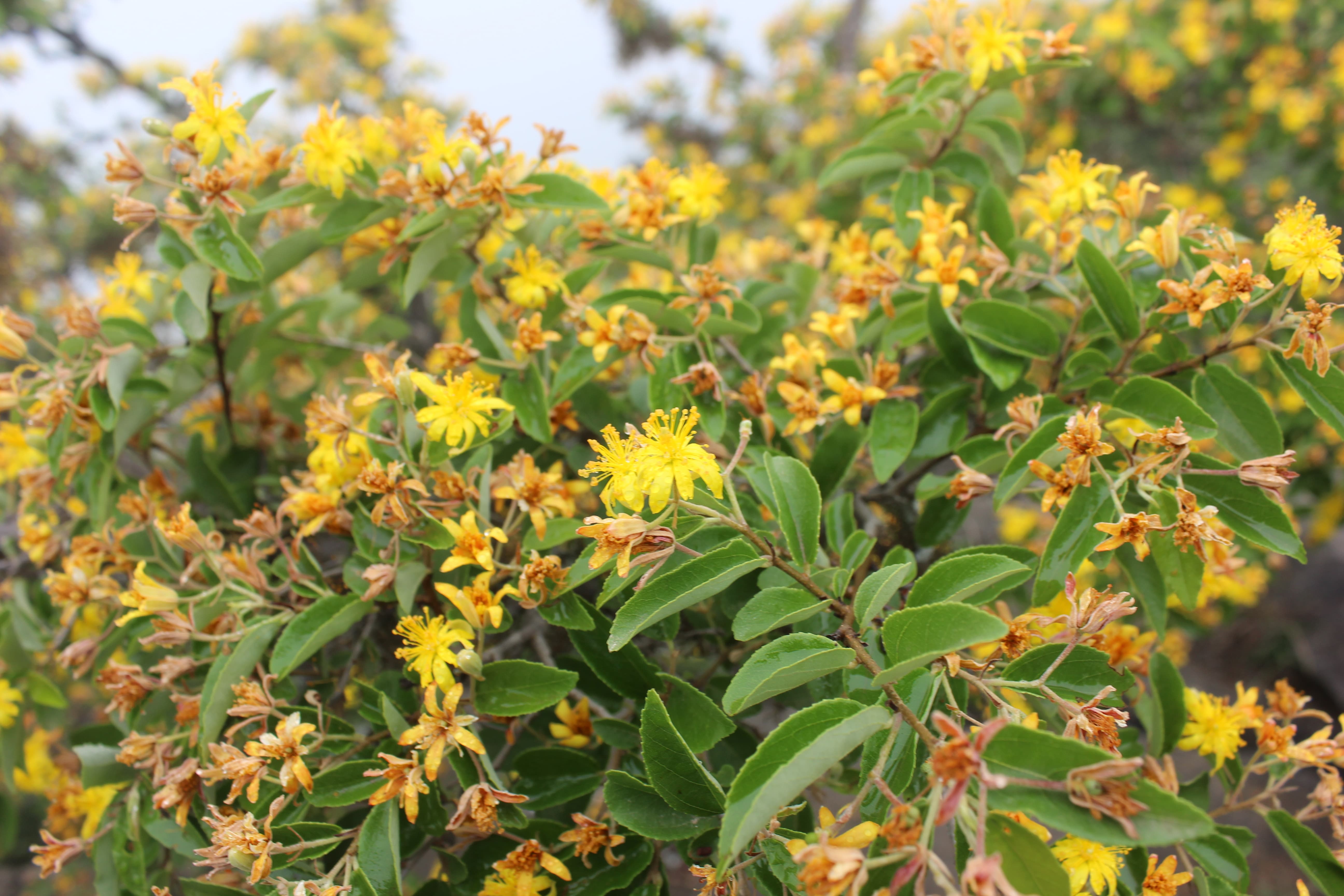
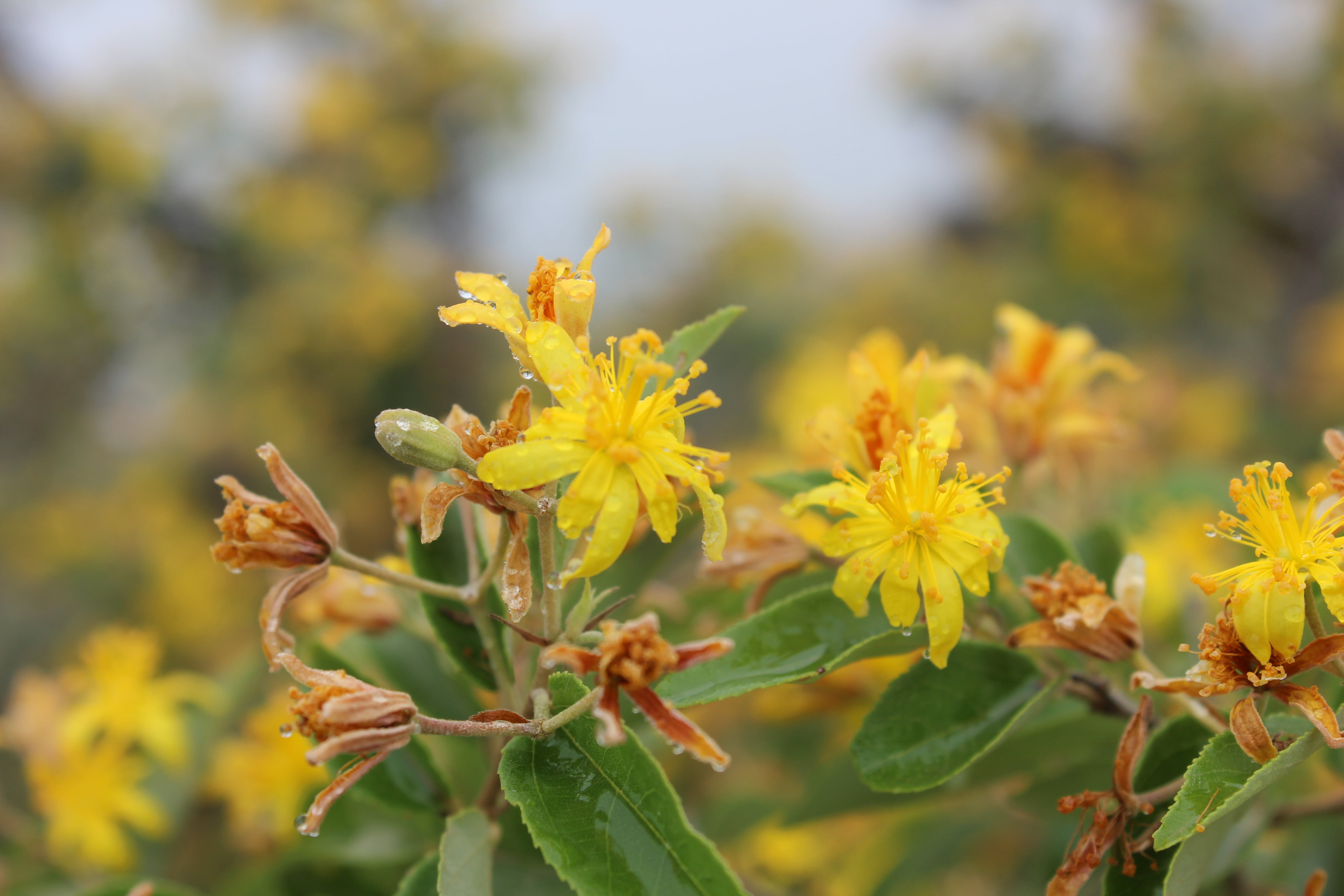
A multi-stemmed shrub or small tree ; up to 4 m tall , stellate-hairy with grey bark . Stems with young branches greyish to brownish tomentellous , rarely with slightly coarser stellate pubescence . Leaves alternate , simple , 1-5 x 0 . 6-2 cm , lanceolate to ovate-obovate , rounded to bluntly acute at the apex , cuneat to truncate at the base , margins crenate to dentate , green and ± glabrous to densely minutely pubescent above , evenly whitish tomentellous beneath , rarely slightly brownish on the veins . Inflorescence (1-)3-flowered cyme , 1-3 in a leaf-axil ; pedicel 2-3 mm , pubescent . Flowers yellow to orange ; sepals 5 , free , 12-13 mm , dull yellow-green , linear-oblong ; petals 5 , free , dull yellow , ± 6 mm , oblong , shortly clawed , notched at the apex , a white pubescent nectariferous gland present at the point of insertion ; stamens many , free , in 2 whorls . Fruit drupe , 6-8 x 9-15 mm , usually 2-lobed , or unlobed by abortion , ± glabrous or with a few scattered minute
...

No Data
Not Evaluated (NE)
Not Common
الوصف غير متاح حاليًا
Grewia arborea Roxb. ex Rottler
Grewia cinerea A.Rich.
Grewia damine Gaertn.
Grewia heterophylla A.Rich.
Grewia pallida Hochst. ex A.Rich.
No data
maintenanceAr.Item1
Bastard Brandy Bush
False Brandy Bush
White-leaved Grewia
False Brandy Bush
Two-coloured Grewia
White-leaved Raisin
White Raisin
Donkey Berry
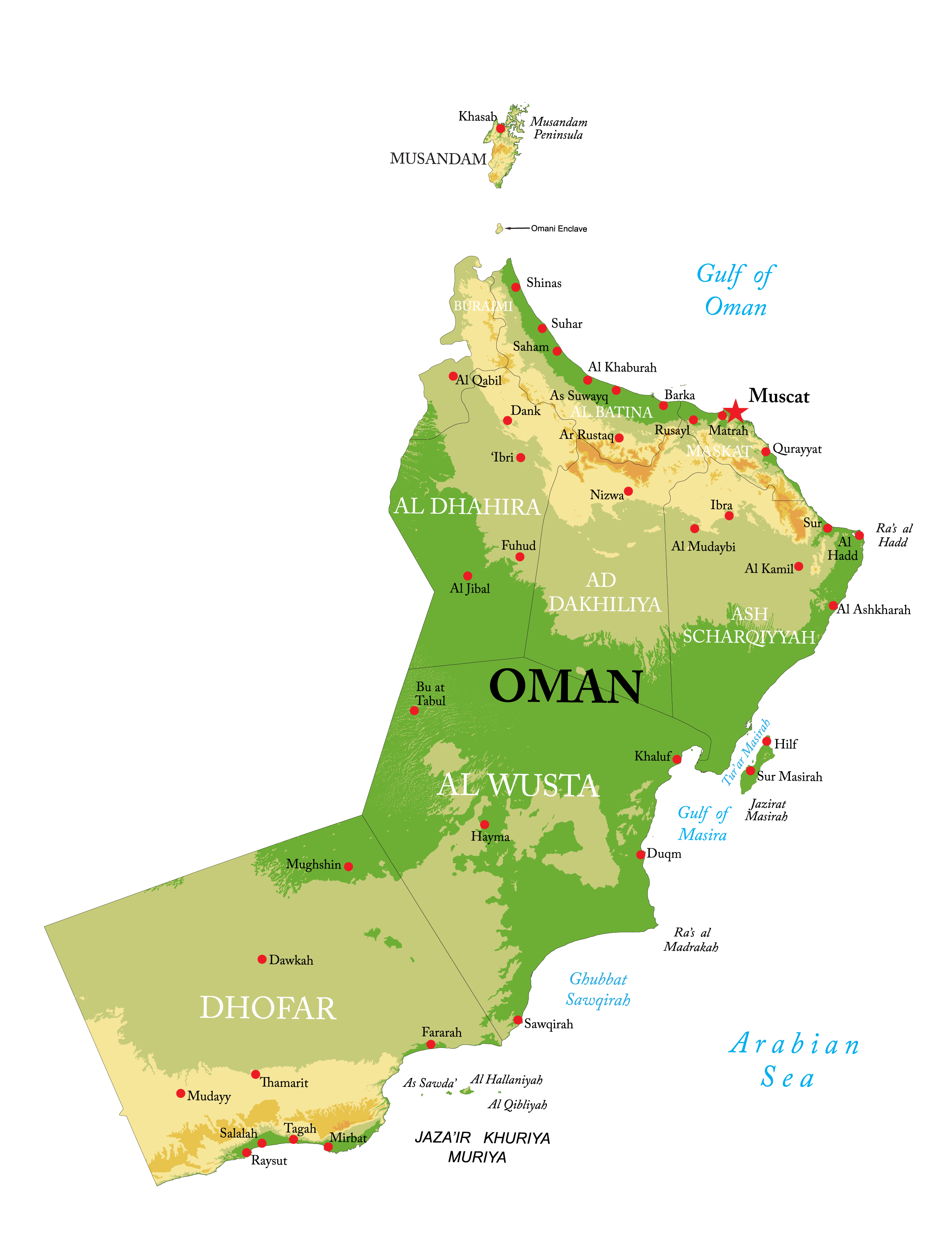
In Omani studies: Miller & Morris (1988) wrote that: "G. bicolor is the largest of the Grewia in Dhofar, growing to a good height with a single trunk. It is to be found throughout the monsoon mountains, or by permanent water sources in the drier areas. It produces striking, bright yellow-orange flowers, and its large fruit grow in clusters (called in [J: odk] a ward also used to describe a large, swollen udder). The fruit are eaten unpeeled, either while still immature and green or when ripened and orangy-red. These fruit are called [J: akimor], and were formerly a significant food source. The leaves too are edible, and provided a nutritious and thirst-quenching nibble. They are also very mucilaginous, and once laden with moisture during or just after the monsoon rains, they were plucked for use as a washing 'soap'. The foliage of this species was in earlier years collected
...
*Ghazanfar, S. (2003). Flora of the Sultanate of Oman, vol.1: Piperaceae – Primulaceae. Meise, National Botanic Garden of Belgium (Scripta Botanica Begica, Vol. 25). ISBN 90-72619-55-2 ISSN 0779-2387. *https://en.wikipedia.org * http://pza.sanbi.org *Miller, A., Morris, M. (1988). Plants of Dhofar, the Southern Region of Oman: Traditional, Economic, and Medicinal Uses. Published by Office of the Adviser for Conservation of the Environment, Diwan of Royal Court, Sultanate of Oman; ISBN 10: 0715708082 ISSN 13: 9780715708088. *Pickering, H. Patzelt, A. (2008). Field Guide to the Wild Plants of Oman. Kew publishing, Royal Botanic Garden, Kew. ISBN 9781842461778. *Pickering, H. Patzelt, A. (2008). Field Guide to the Wild Plants of Oman. Kew publishing, Royal Botanic Garden, Kew. ISBN 9781842461778.*POWO (2023). ""Plants of the World Online. Facilitated by the Royal Botanic Gardens, Kew. Published on the Internet; http://www.plantsoftheworldonline.org
