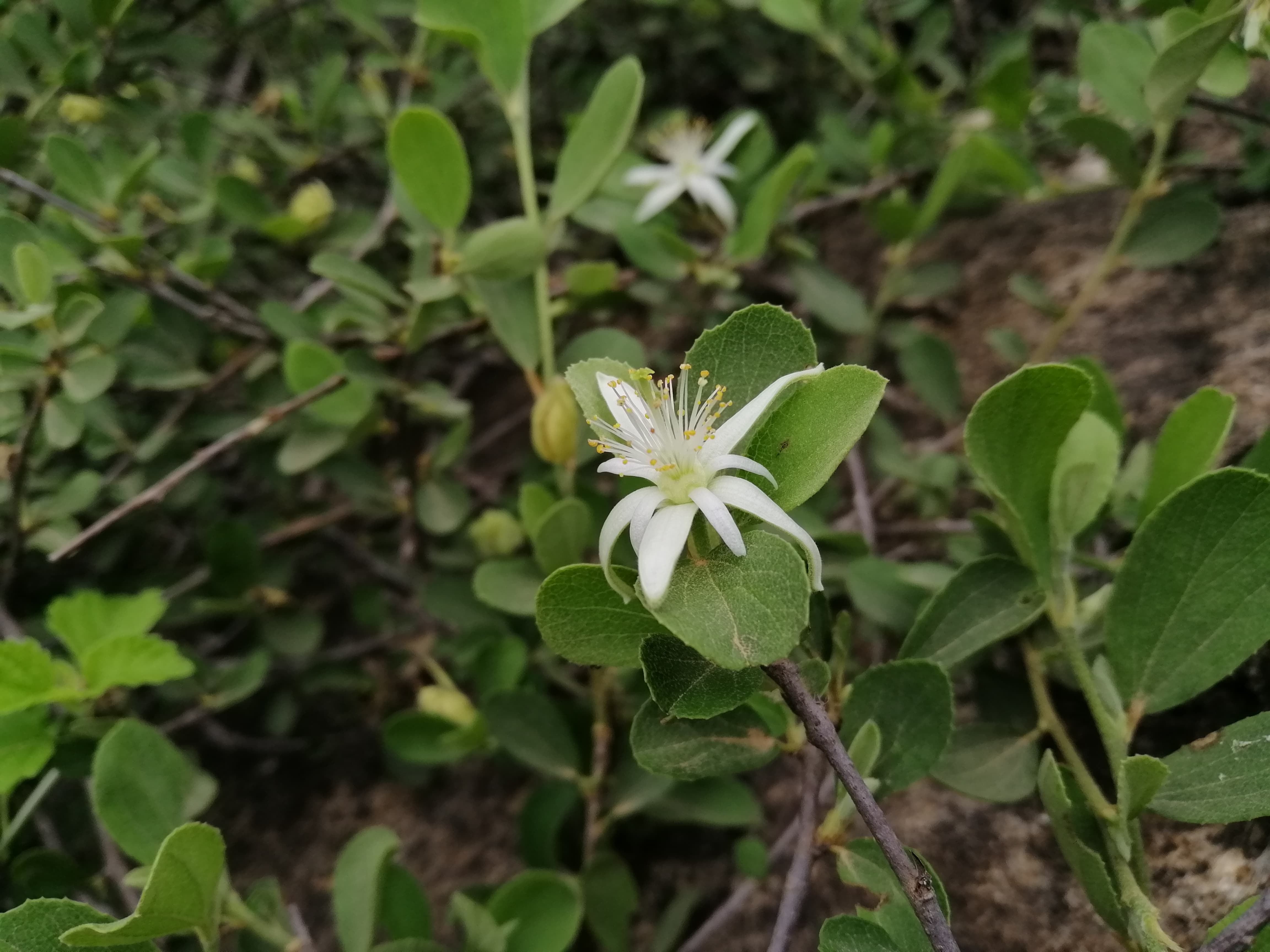
Grewia_erythraea_2-06082024 © OBG
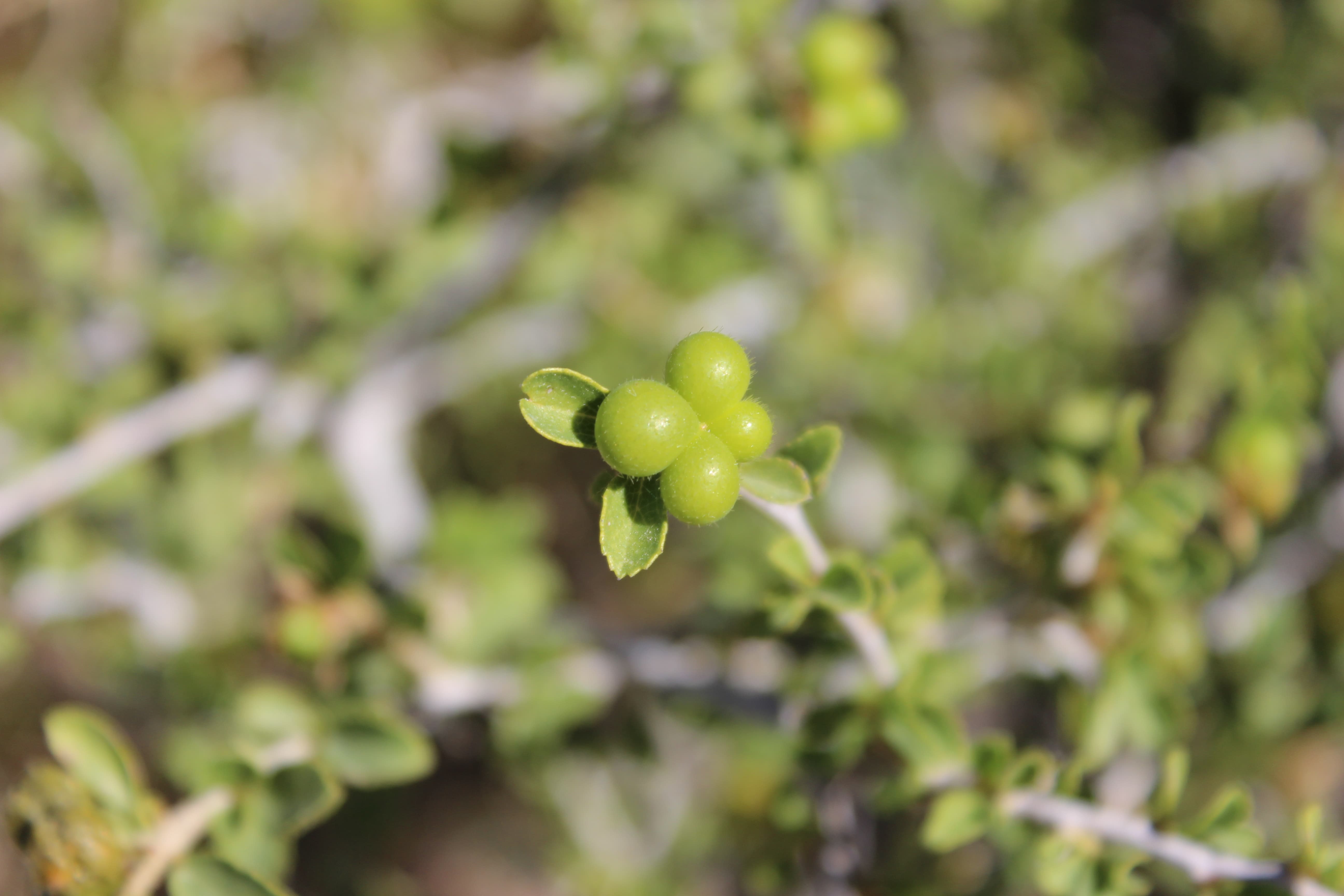
Grewia_erythraea_3-06082024 © OBG
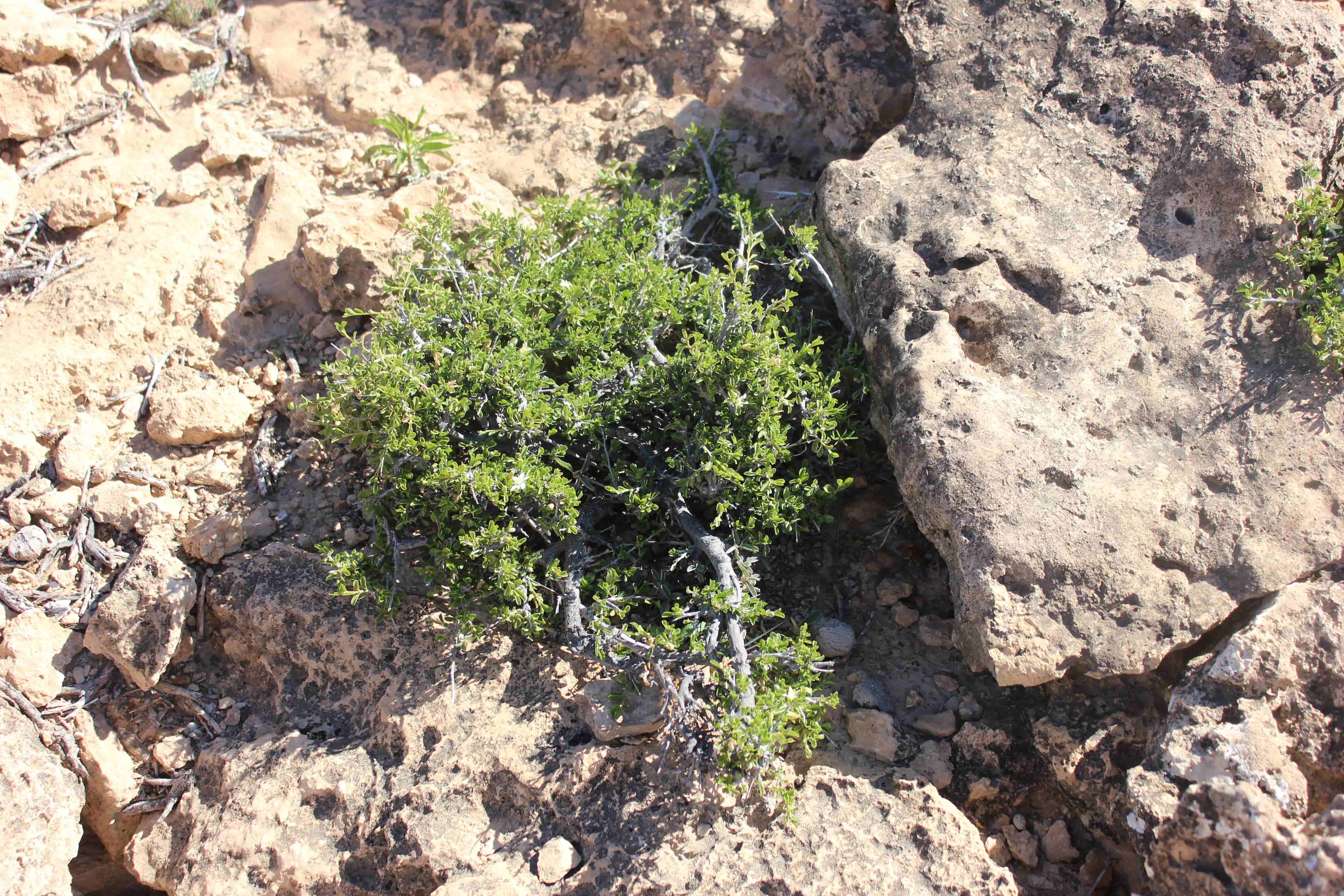
Grewia_erythraea_4-06082024 © OBG
Grewia_erythraea_5-06082024 © OBG
Grewia_erythraea_6-06082024 © OBG
Grewia_erythraea_7-06082024 © OBG
Grewia_erythraea-06082024 © OBG
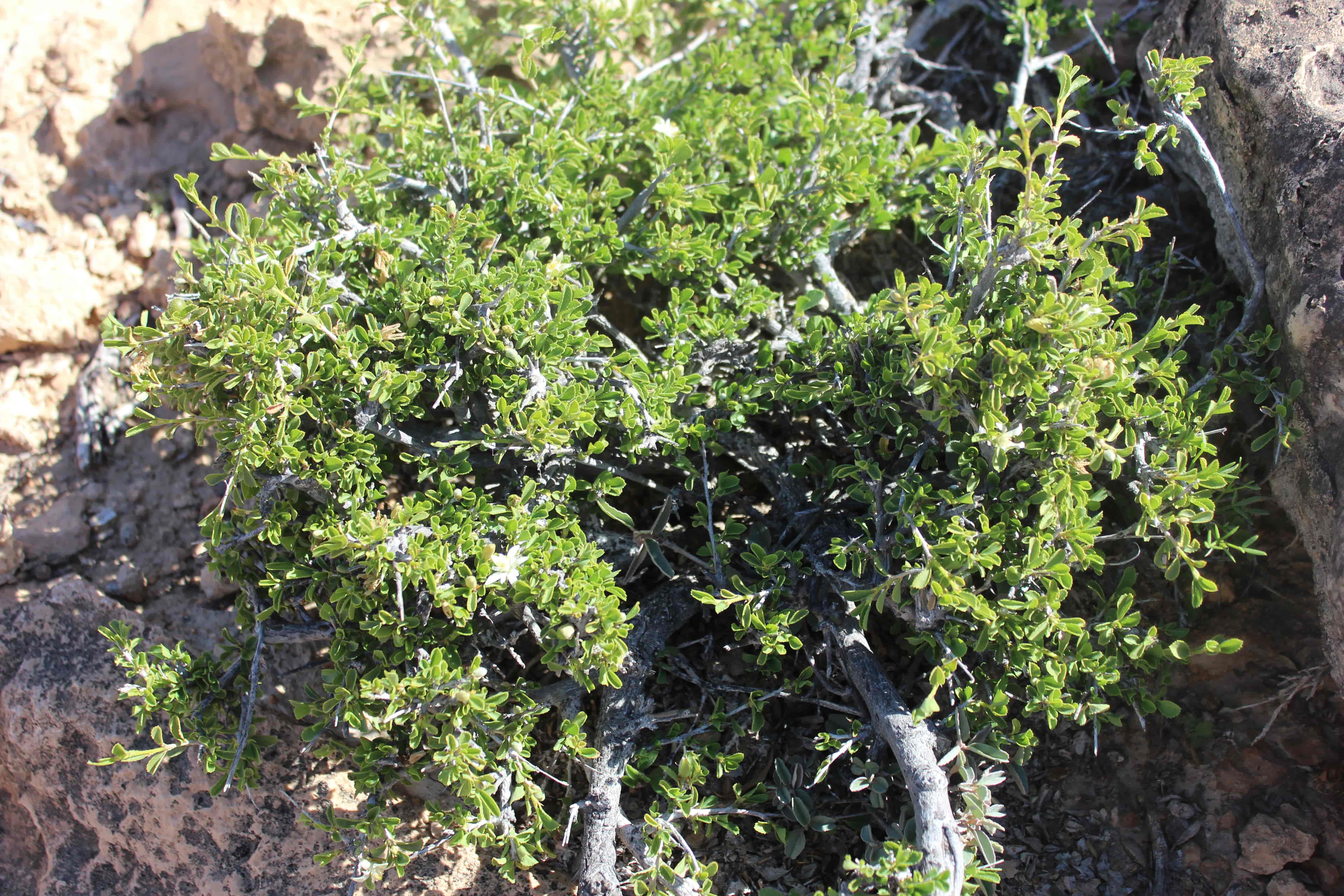
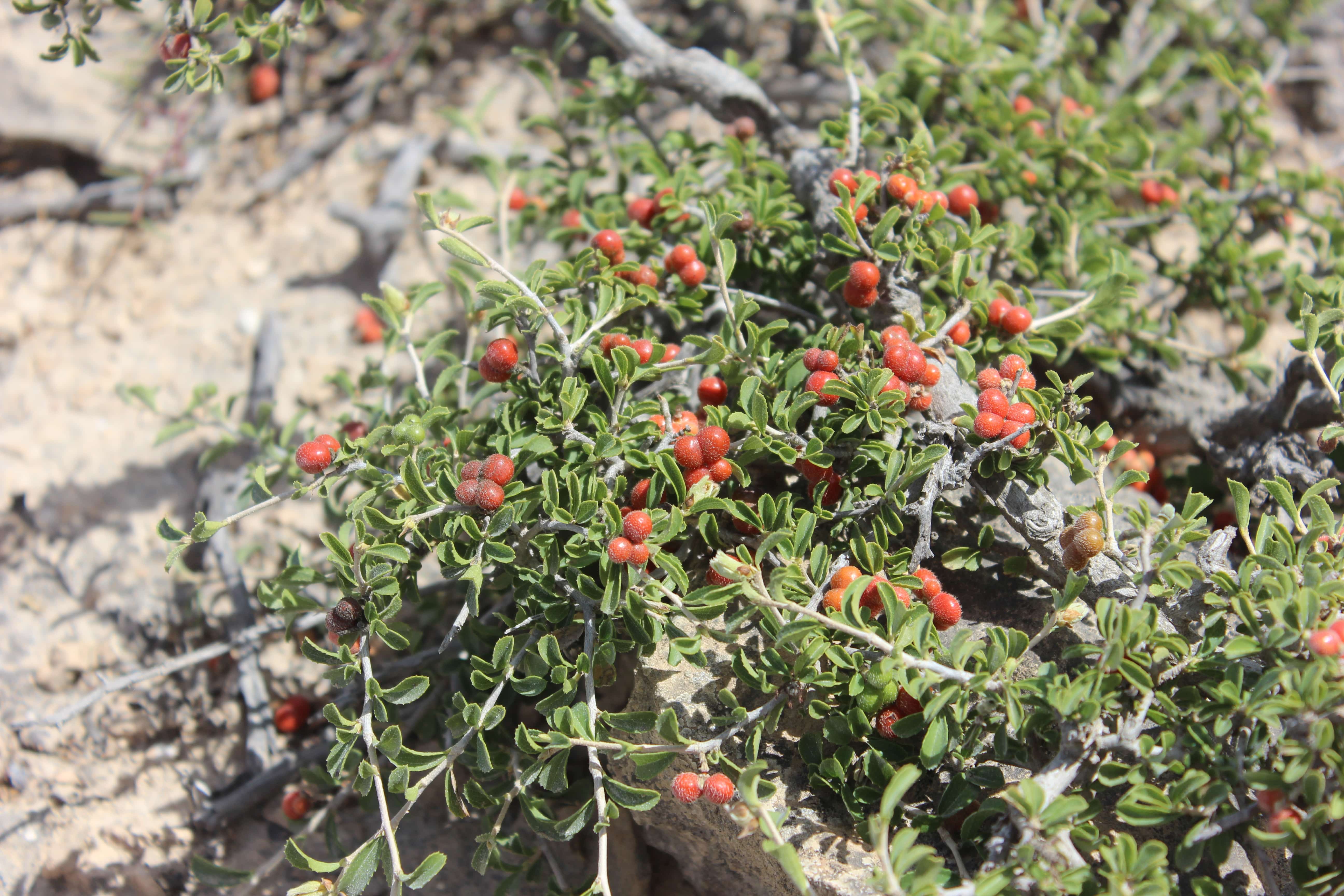
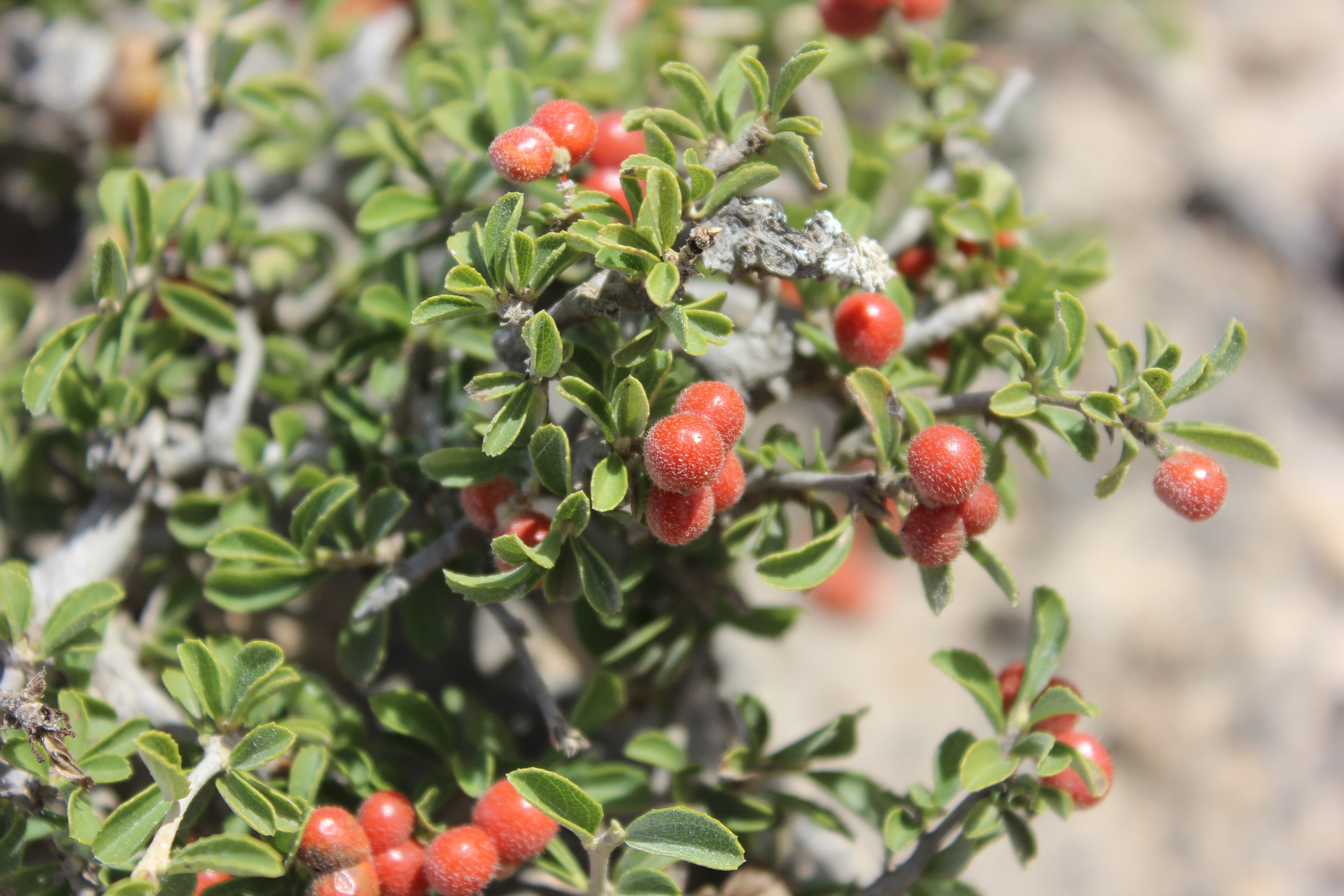
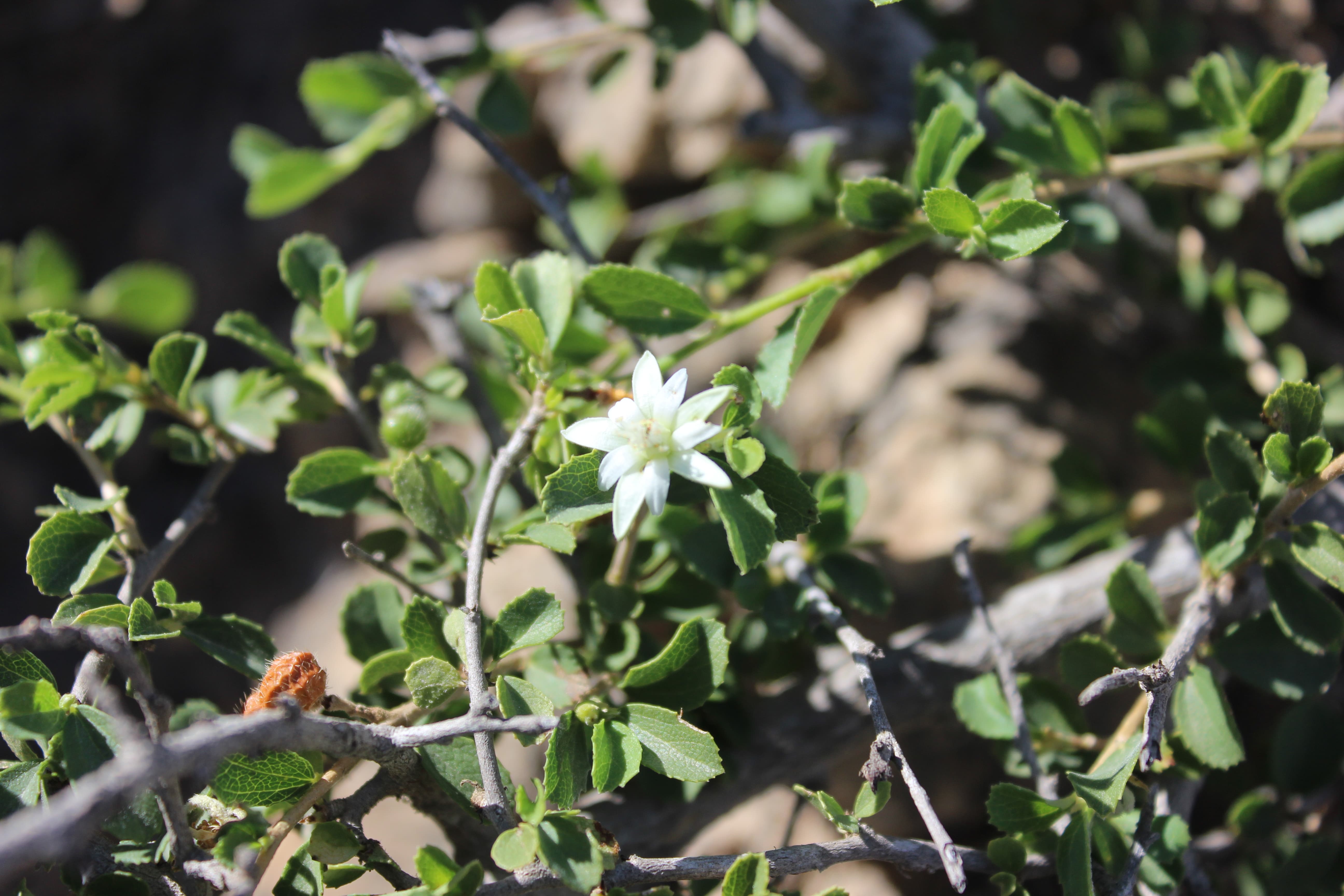
A prostrate dense , woody bush ; up to 1-2 m tall , stellate-hairy with grey bark . Stems and branches stunted , often straggling or growing prostrate . Leaves alternate , 1-2 x 0 . 4-0 . 7 mm , in fascicles , stipulate , elliptic to obovate , apex obtuse , base cuneate , serrated margins , 3-veined at the base , green on both surfaces ; petiole 2-3 mm . Inflorescences 1-2 , axillary ; pedicel 3-4 mm . Flowers white , fragrant ; sepals 9-10 mm , linear-oblong , stellate-hairy ; petals 5 , free , white , ± 6 mm , linear-oblong , shortly clawed , bent back ; stamens many , in 2 whorls , 5–6 mm long ; ovary 1-4-lobed , densely hairy , ± 1 mm long ; style 5–6 mm long . Fruit drupe , 5-8 mm , globose , (2-)4-lobed , with scattered long hairs , green turning orange as they mature . (Ref . Flora of Oman ; vol . 1) .
No Data
Not Evaluated (NE)
Common
الوصف غير متاح حاليًا
Grewia tenax var. erythraea (Schweinf.) Chiov.
No data
maintenanceAr.Item1
Not known
Known over-grazed by camels and cattle. In Omani studies: Ghazanfar (2003) wrote that: "The fruits are sweet and edible. The foliage is browsed by goats, cattle and camels". (Ref. Flora of Oman; vol.1). In addition, Patzelt (2015) mentioned that: "The seeds are edible and have a pleasant nutty taste". (Ref. Photographic Field Guide to the Plants of the Western Hajar Mountains; 2015).
*Ghazanfar, S. (2003). Flora of the Sultanate of Oman, vol.1: Piperaceae – Primulaceae. Meise, National Botanic Garden of Belgium (Scripta Botanica Begica, Vol. 25). ISBN 90-72619-55-2 ISSN 0779-2387. *https://en.wikipedia.org * http://pza.sanbi.org *Miller, A., Morris, M. (1988). Plants of Dhofar, the Southern Region of Oman: Traditional, Economic, and Medicinal Uses. Published by Office of the Adviser for Conservation of the Environment, Diwan of Royal Court, Sultanate of Oman; ISBN 10: 0715708082 ISSN 13: 9780715708088. *Pickering, H. Patzelt, A. (2008). Field Guide to the Wild Plants of Oman. Kew publishing, Royal Botanic Garden, Kew. ISBN 9781842461778. *Gledhill, D. (2008). The Names of Plants. Fourth Edition. Cambridge University Press, UK. ISBN 978-0-521-86645-3 ISSN 978-0-521-68553-5. *Pickering, H. Patzelt, A. (2008). Field Guide to the Wild Plants of Oman. Kew publishing, Royal Botanic Garden, Kew. ISBN 9781842461778. *Patzelt, A. (2015). Photographic Field Guide to the Plants of the Western Hajar Mountains, Sultanate of Oman: with
...