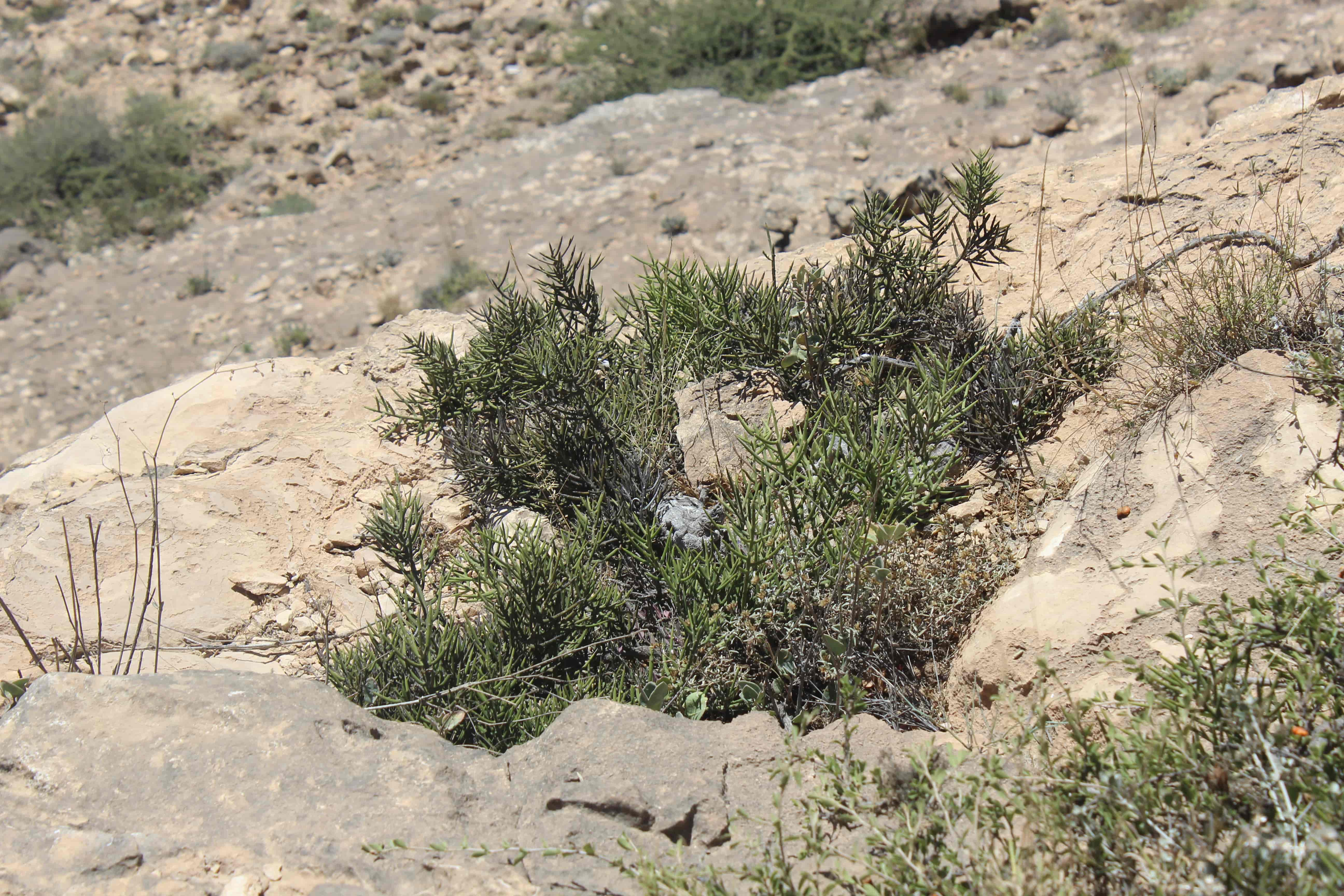
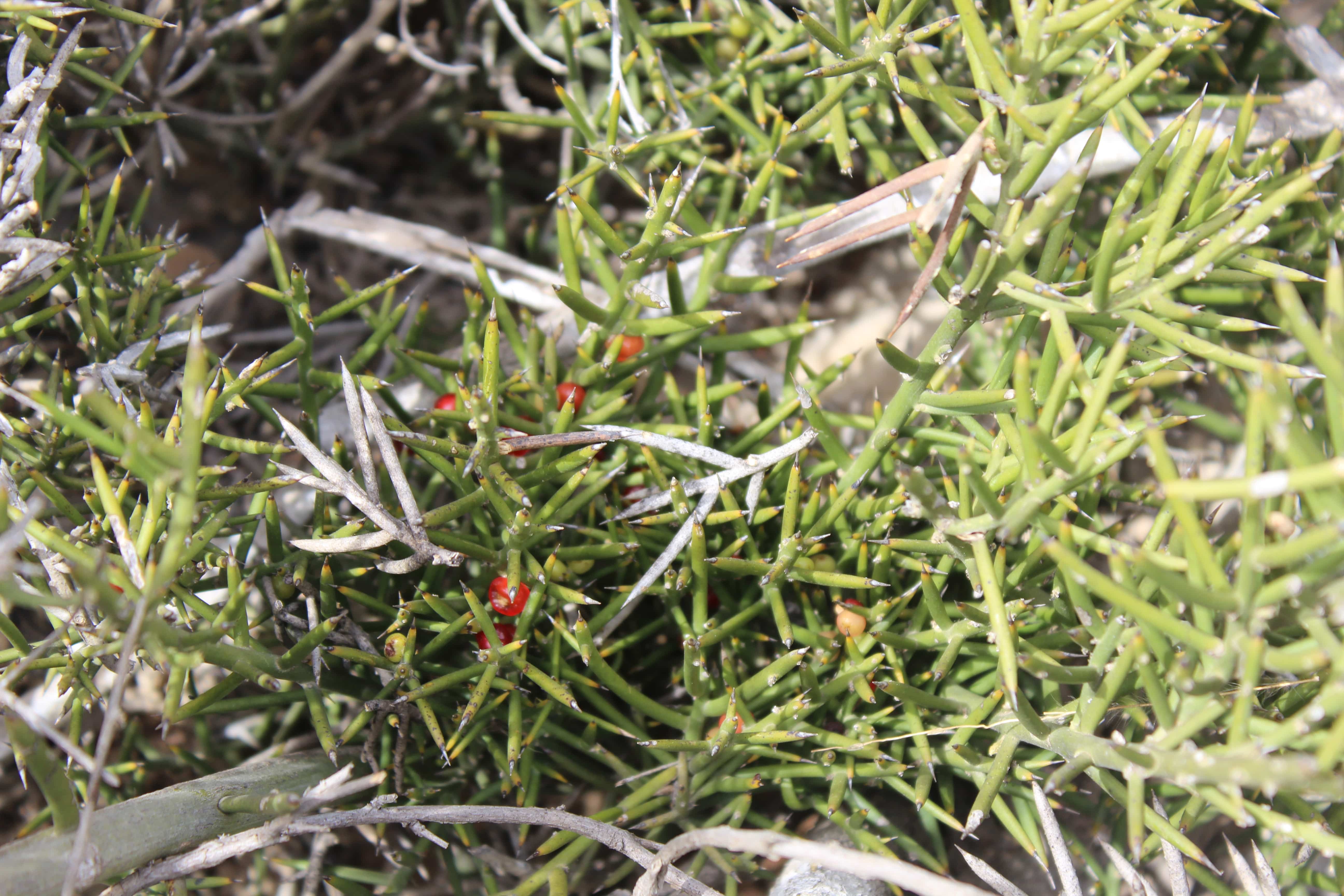
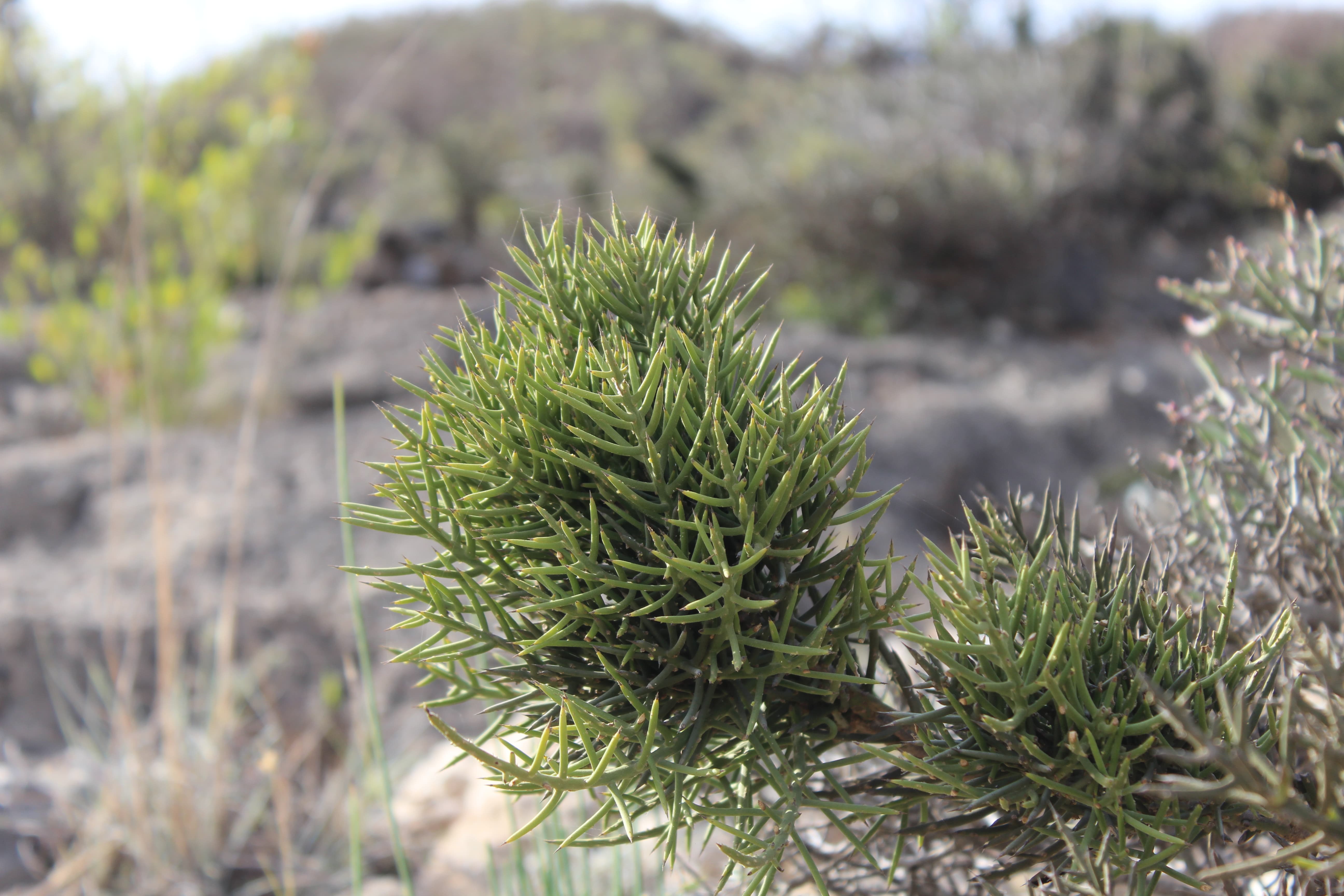
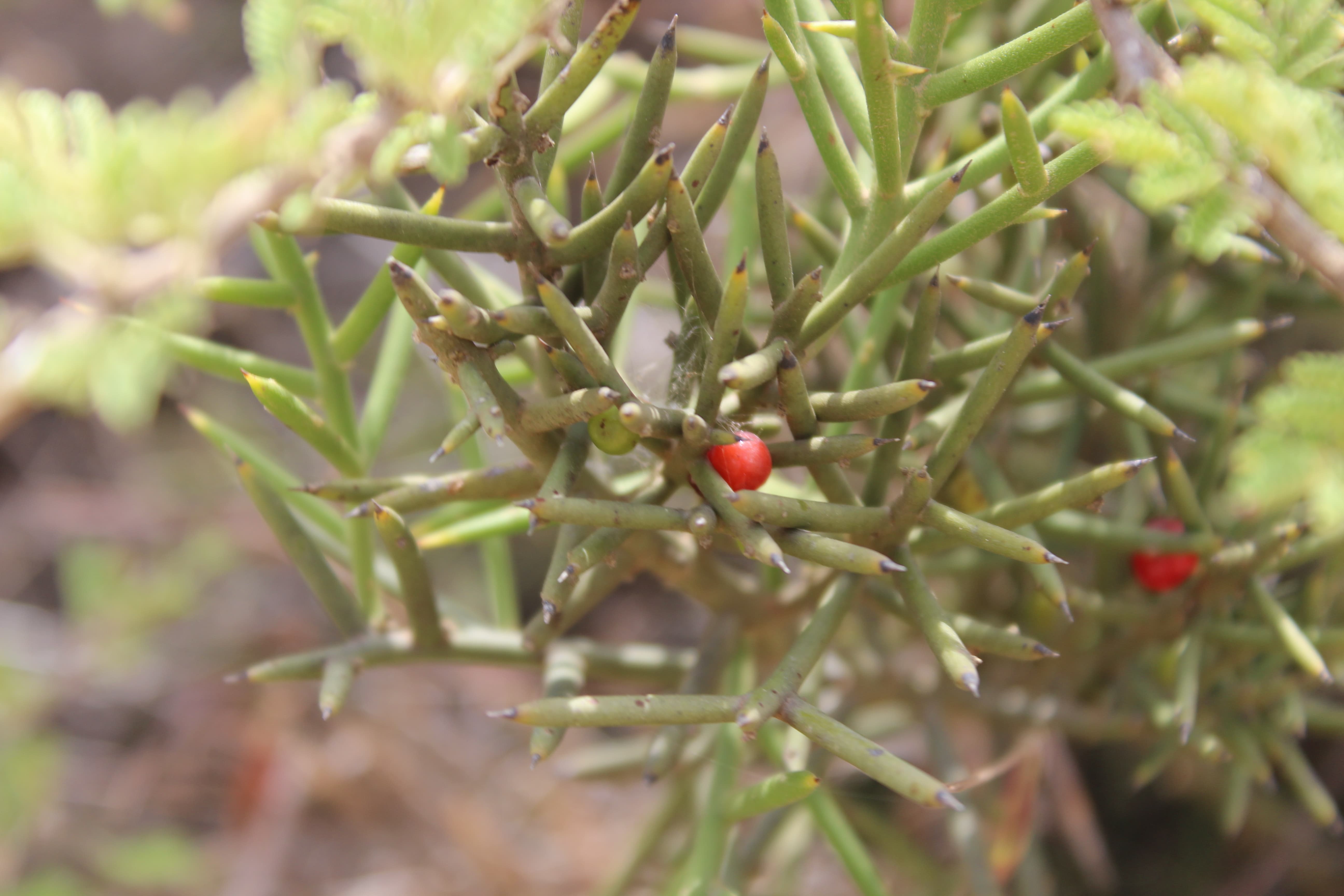
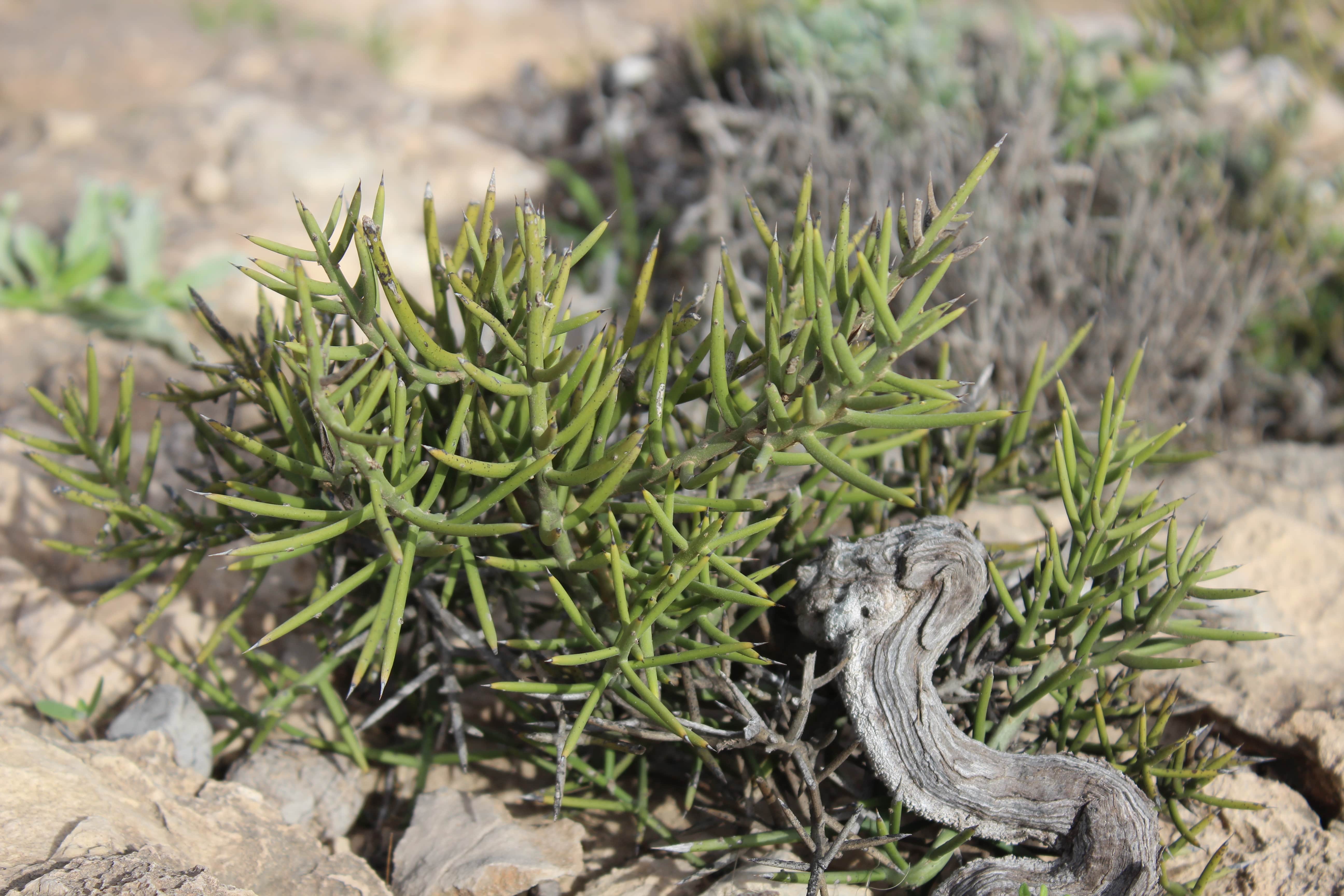
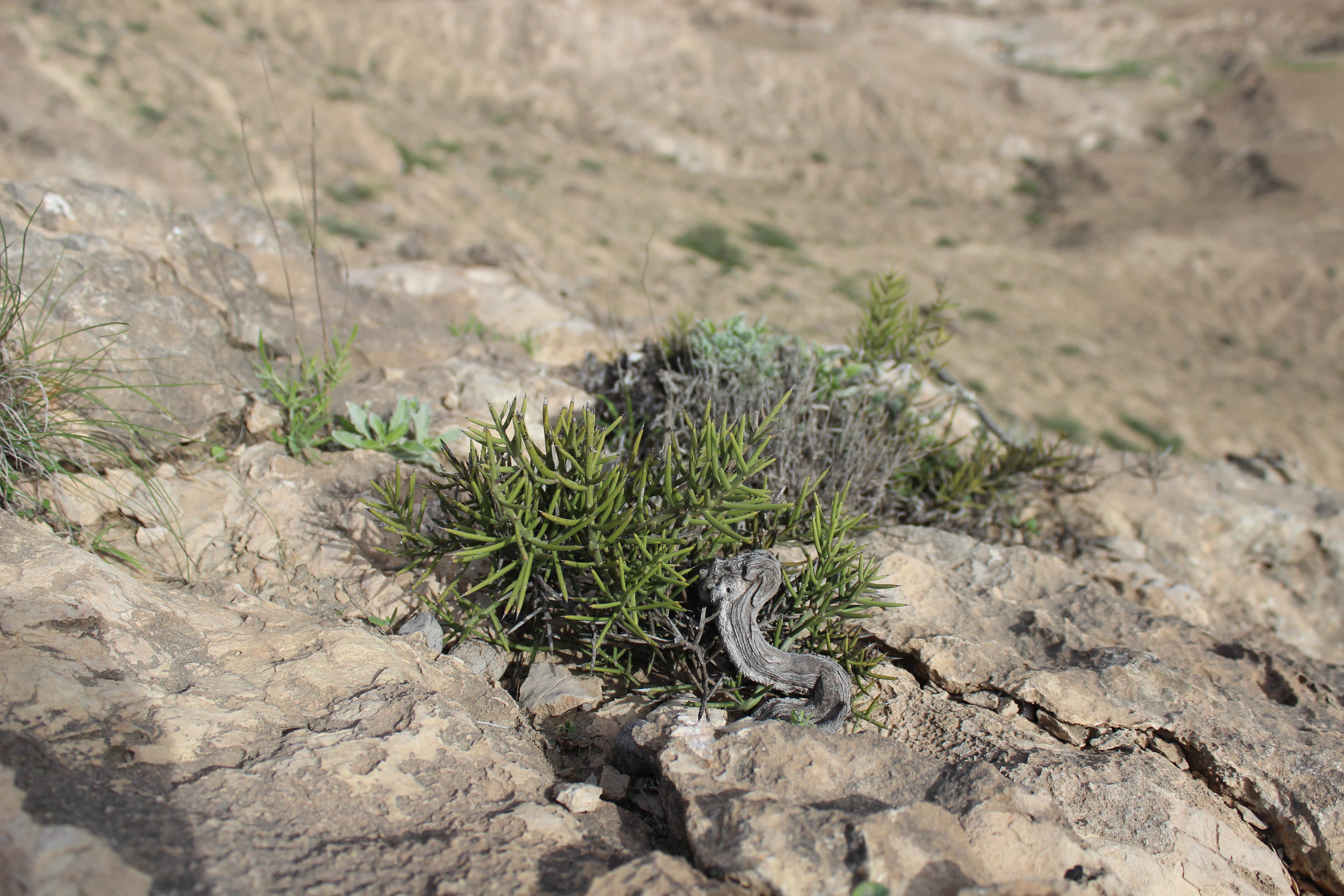
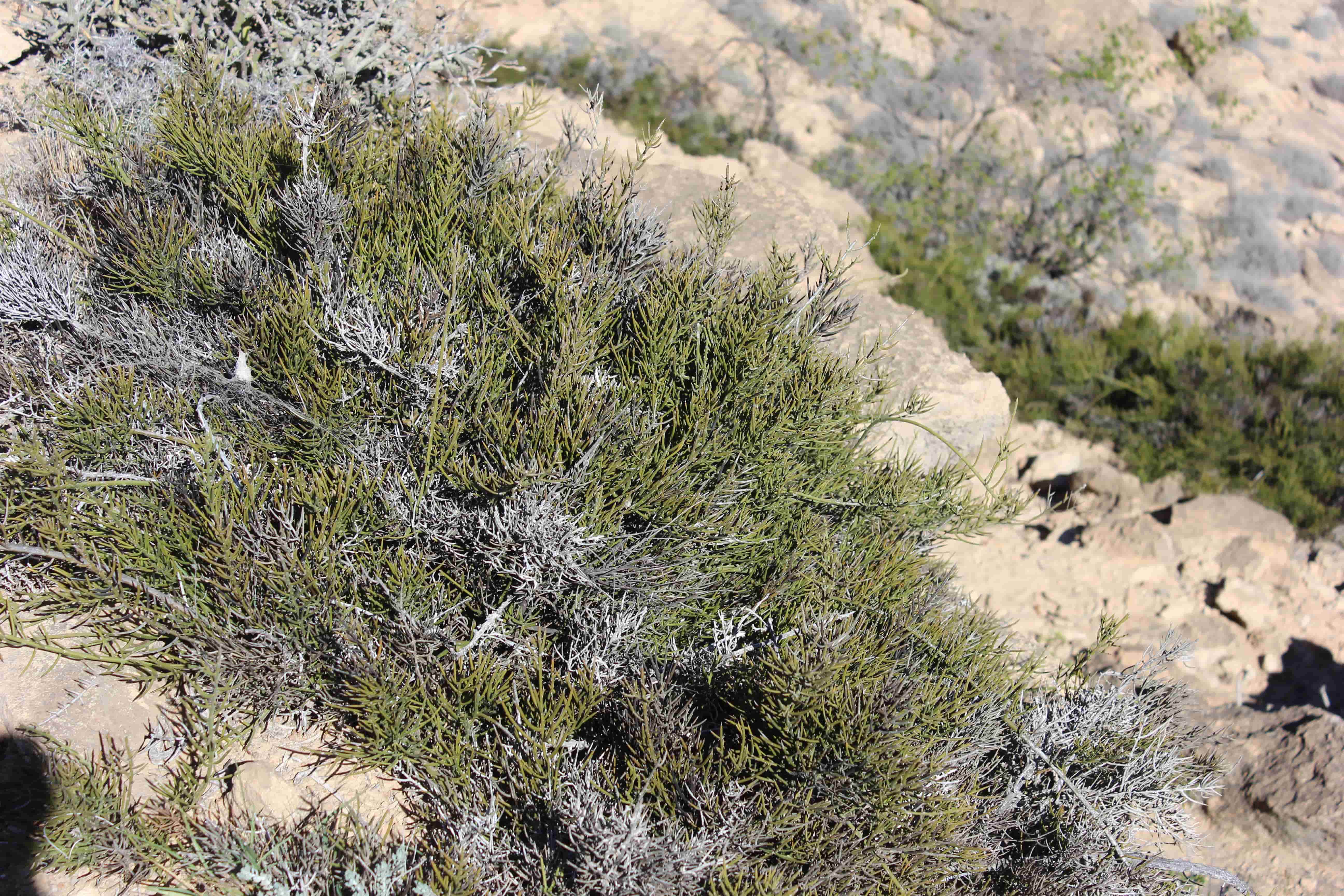
Cocculus_balfourii_2-06082024 © OBG
Cocculus_balfourii_3-06082024 © OBG
Cocculus_balfourii_4-06082024 © OBG
Cocculus_balfourii_5-06082024 © OBG
Cocculus_balfourii_6-06082024 © OBG
Cocculus_balfourii_7-06082024 © OBG
Cocculus_balfourii-06082024 © OBG
Densely branched , perennial shrub ; up to 1 m tall , leafless . Stems and branches puberulous , dark green , profusely branched , arching or creeping . Leaves falling soon on young shoots , ovate to obovate , retuse or apiculate , entire margin , base cuneate , shortly petiolate ; cladodes bilaterally flattened , spine-tipped , 25-30 mm , grey-green with a dark tip , grooved , bearing reduced bristle-like scale-leaves . Inflorescences in clusters at the edge of cladode or just beneath the cladodes . Flowers small , sessile , creamy-white ; sepals 12-15 , in 4-5 whorls , ± 1 mm , reducing in size outwards ; petals 6 , ± 2 mm , base auriculate , acute , hairy on the outside ; male flowers with 6-9 stamens ; female flowers with 3 carpels . Fruit drupe , ± 4 mm , bright red when mature . (Ref . Flora of Oman ; vol . 1) .
No Data
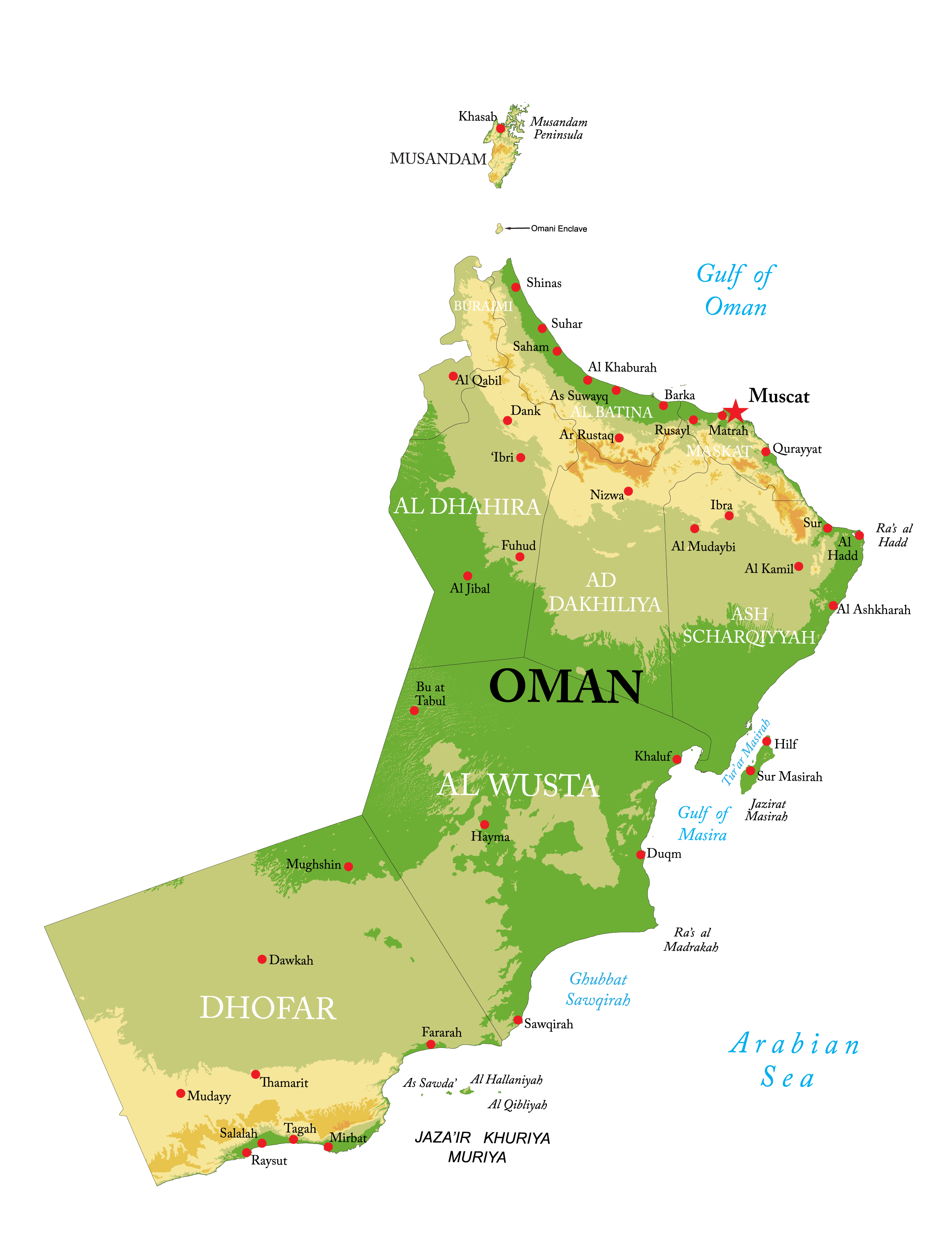
Regional Endemic (RE) - Near Threatened (NT) - National Assessment
Not Common
الوصف غير متاح حاليًا
Cebatha balfourii (Schweinf. ex Balf.f.) Kuntze
No data
maintenanceAr.Item1
Not known
In Omani studies: Miller & Morris (1988) wrote that: "Dhofaria macleishii is very similar in appearance to Cocculus balfourii, and it seems that the two plants are not differentiated locally. Both species known J: ḥerúm éderī, which means 'plant from far away, unknown plant', the word diri in Jibbali meaning 'stranger' or 'someone from far away'. C. balfourii also occurs in the coastal plains, unlike Dhofaria macleishii, but it too is not a common plant, and its fruit, like those of D. macleishii, are inedible. Although one might have expected the prickly material provided by both species to have made either bush useful as pen-building material, neither apparently apperas to have been important for this. Both provide adequate brushwood for kindling, but apart from this, and their occasional use as a fodder of drought periods, they are otherwise insignificant in local usage". (Ref. Plants of Dhofar).
*Ghazanfar, S. (2003). Flora of the Sultanate of Oman, vol.1: Piperaceae – Primulaceae. Meise, National Botanic Garden of Belgium (Scripta Botanica Begica, Vol. 25). ISBN 90-72619-55-2 ISSN 0779-2387. *Miller, A., Morris, M. (1988). Plants of Dhofar, the Southern Region of Oman: Traditional, Economic, and Medicinal Uses. Published by Office of the Adviser for Conservation of the Environment, Diwan of Royal Court, Sultanate of Oman; ISBN 10: 0715708082 ISSN 13: 9780715708088. *https://en.wikipedia.org *Gledhill, D. (2008). The Names of Plants. Fourth Edition. Cambridge University Press, UK. ISBN 978-0-521-86645-3 ISSN 978-0-521-68553-5. *https://www.monaconatureencyclopedia.com *https://vi.wikipedia.org *Miller, A.G. & Cope, T.A. (1996). Flora of the Arabian Peninsula and Socotra 1: 1-586. Edinburgh university press. ISBN 0748604758. *Patzelt, A. (2015). Oman Plant Red Data Book. Published by Diwan of Royal Court, Sultanate of Oman. Oman Botanic Garden Publication No. 1. ISBN 978-99969-50-10-0. *POWO (2023). ""Plants of the World Online. Facilitated by the Royal Botanic Gardens, Kew. Published
...