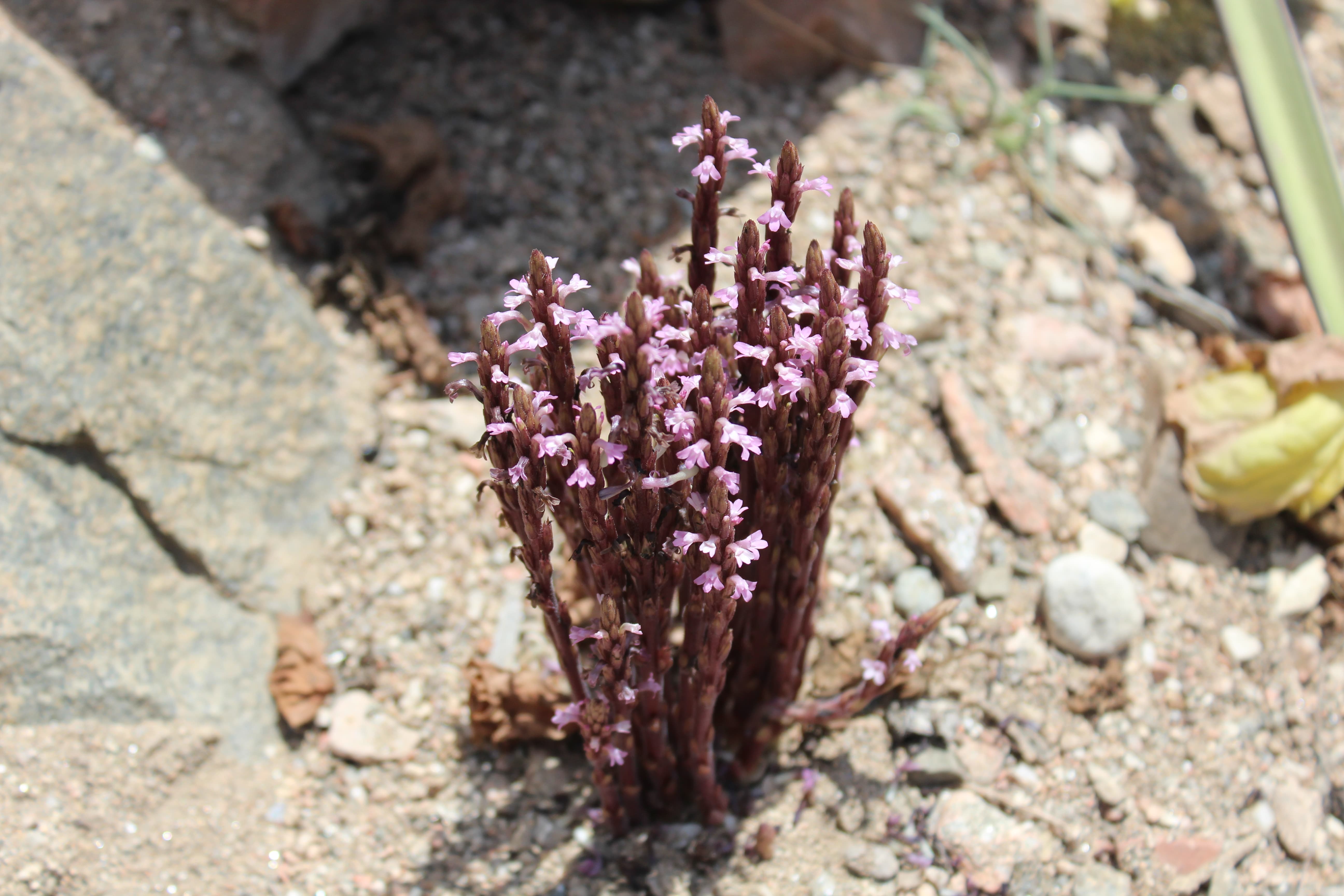
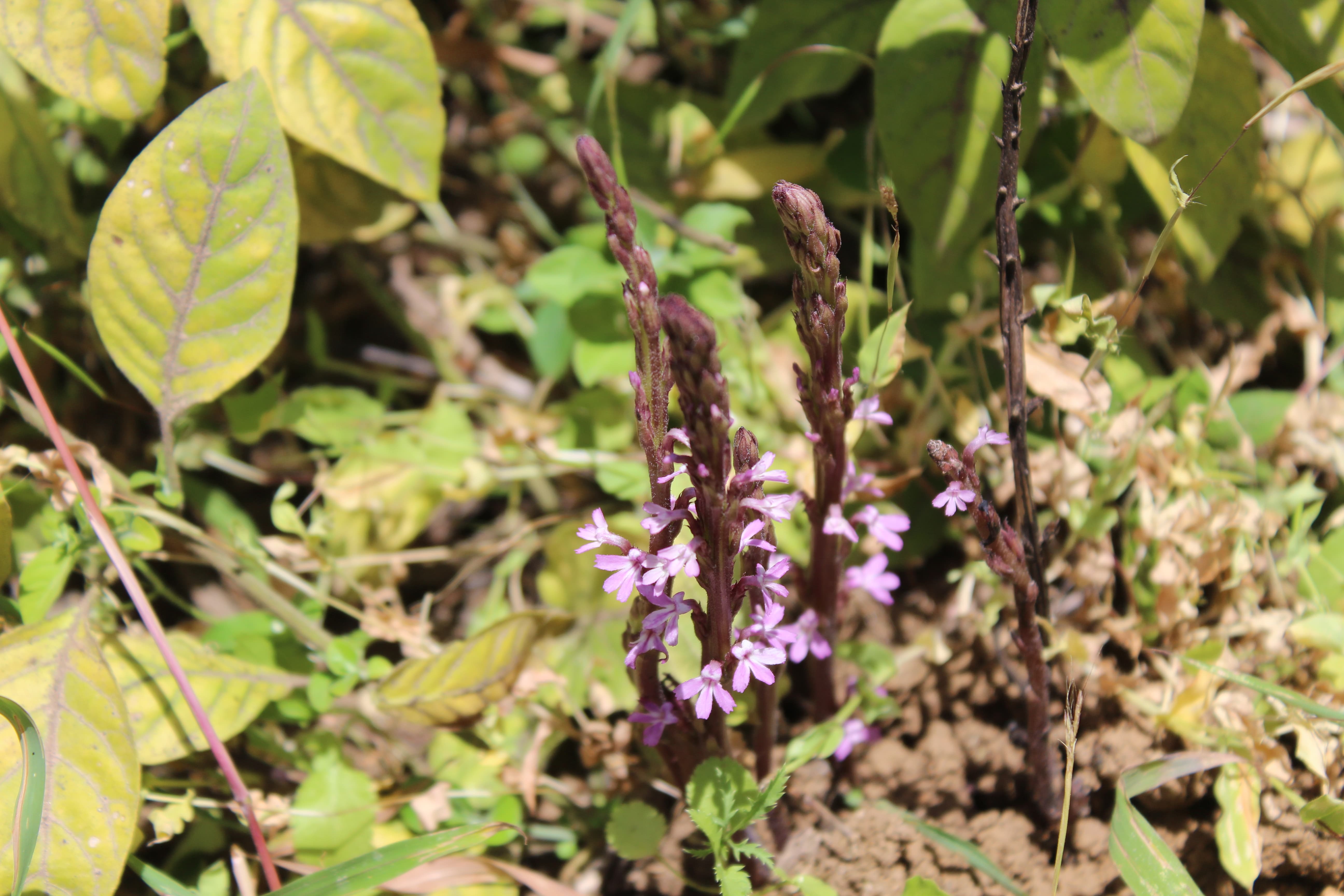
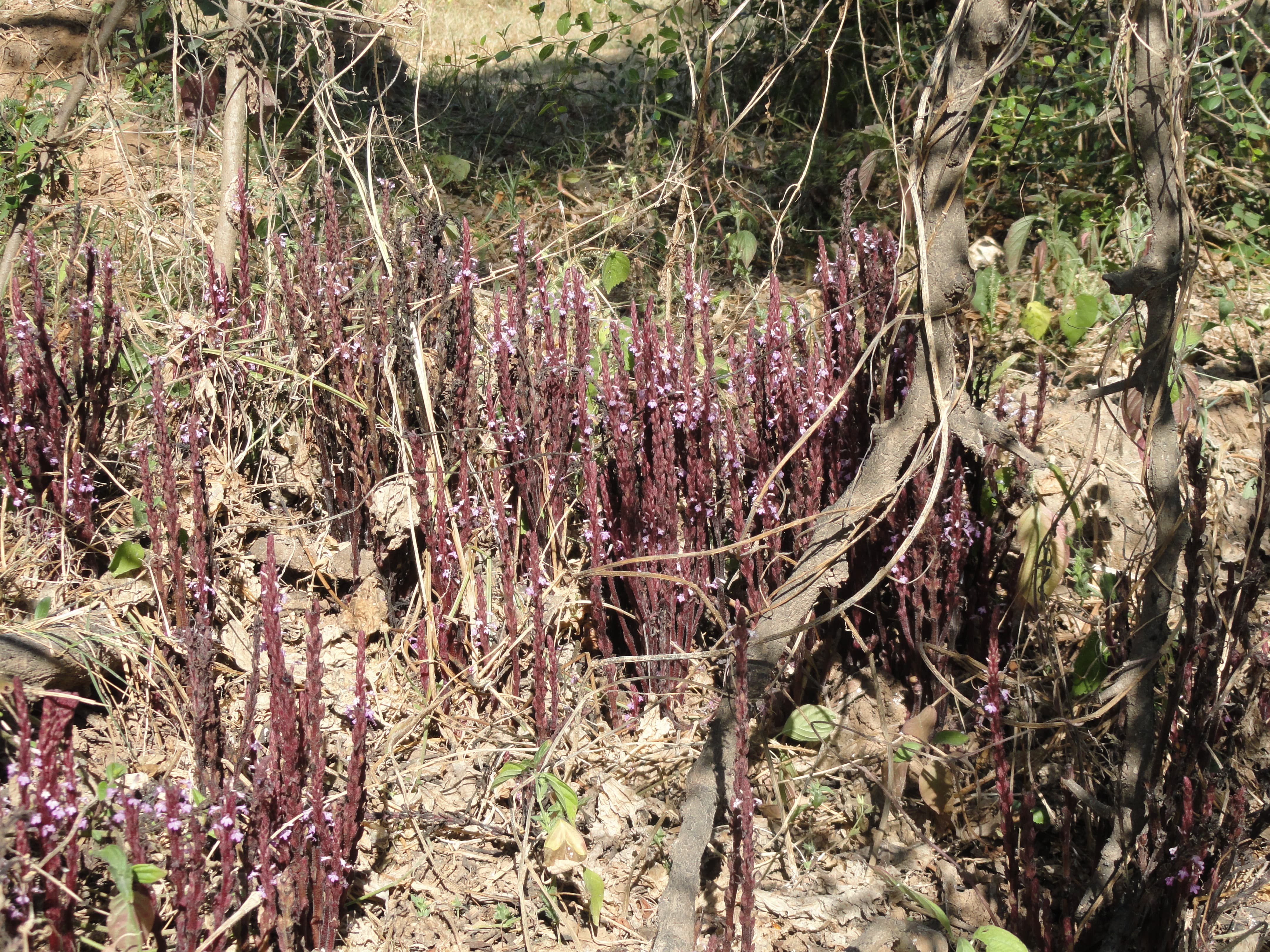
Striga_gesnerioides_10 © OBG
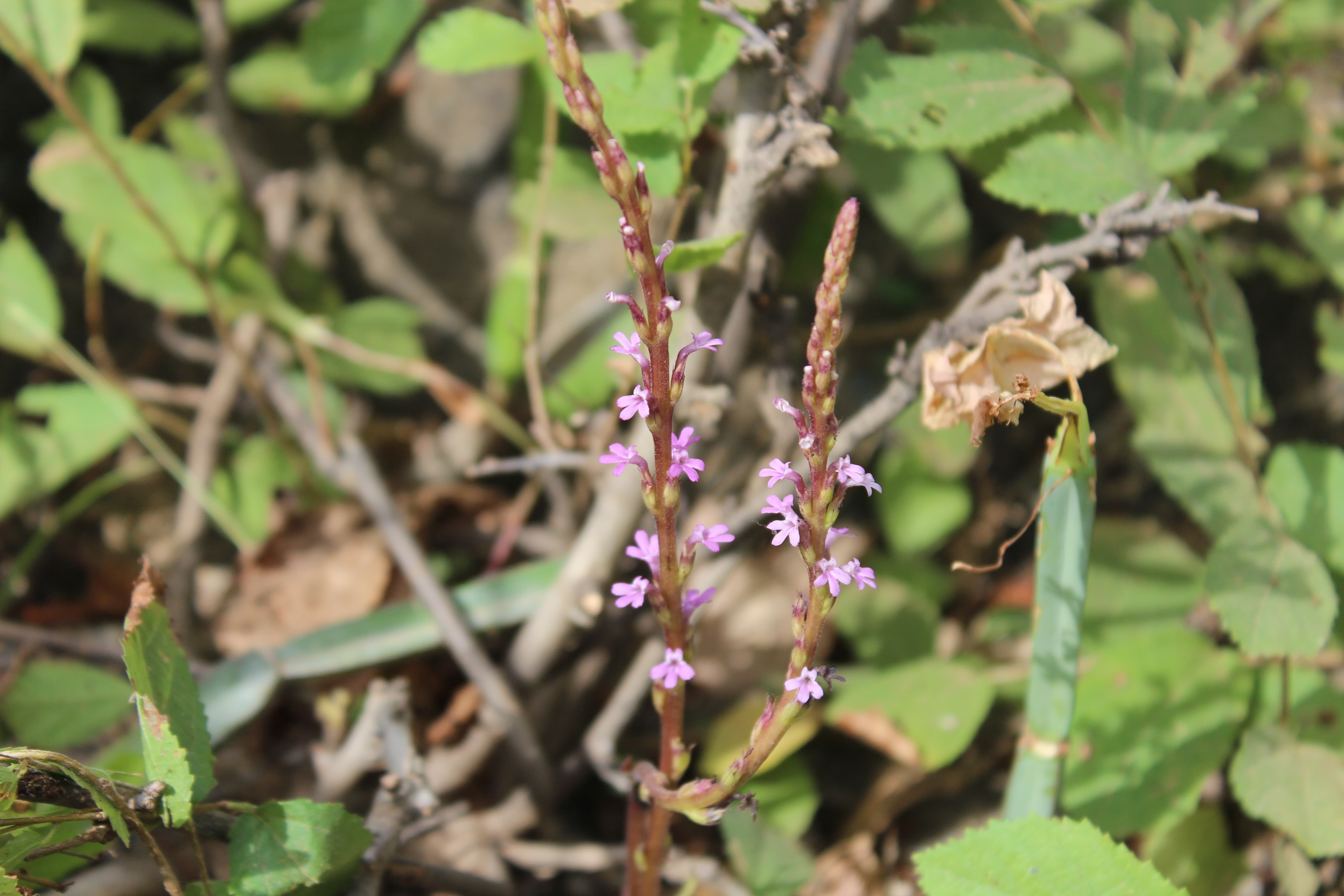
Striga_gesnerioides_2 © OBG
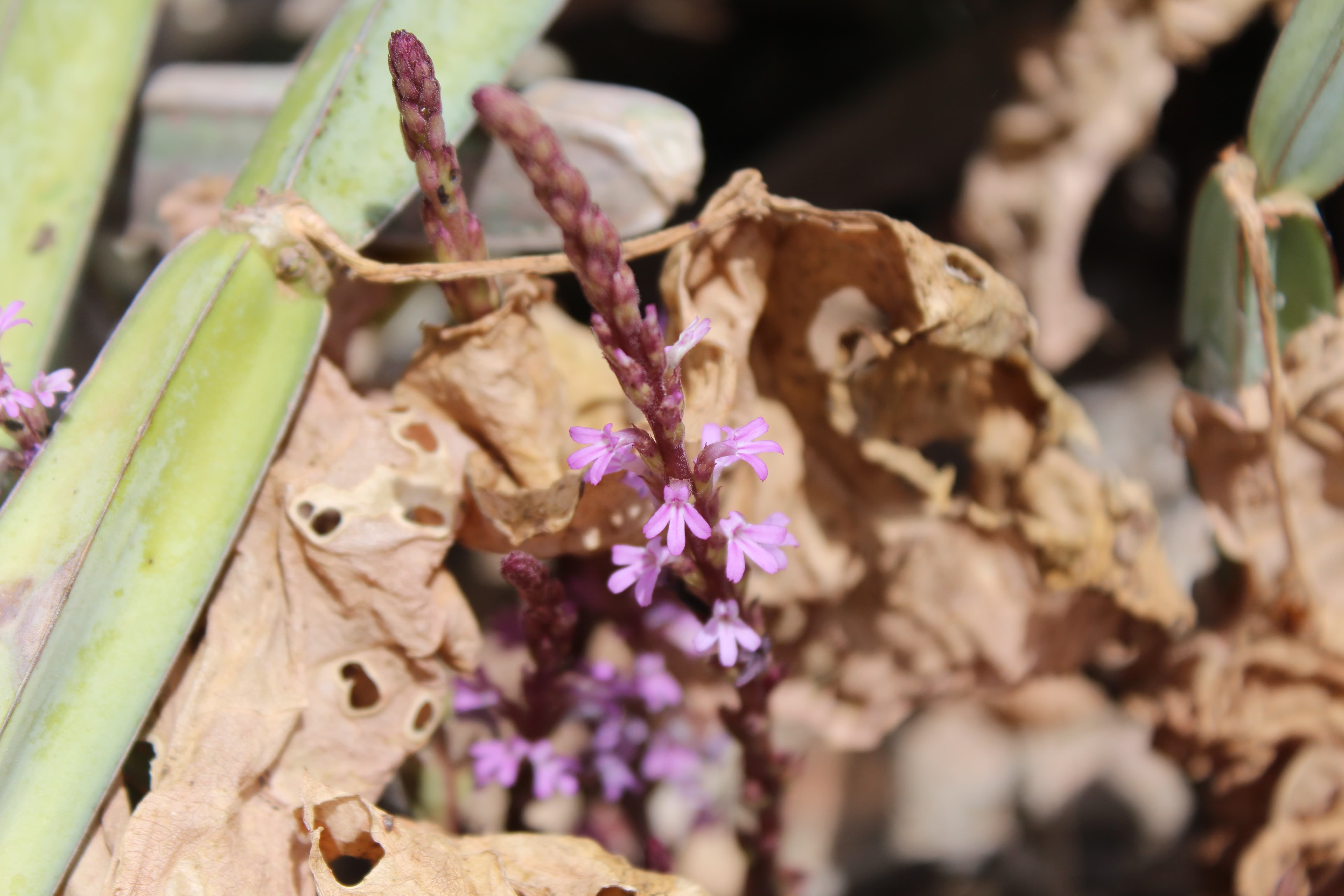
Striga_gesnerioides_3 © OBG
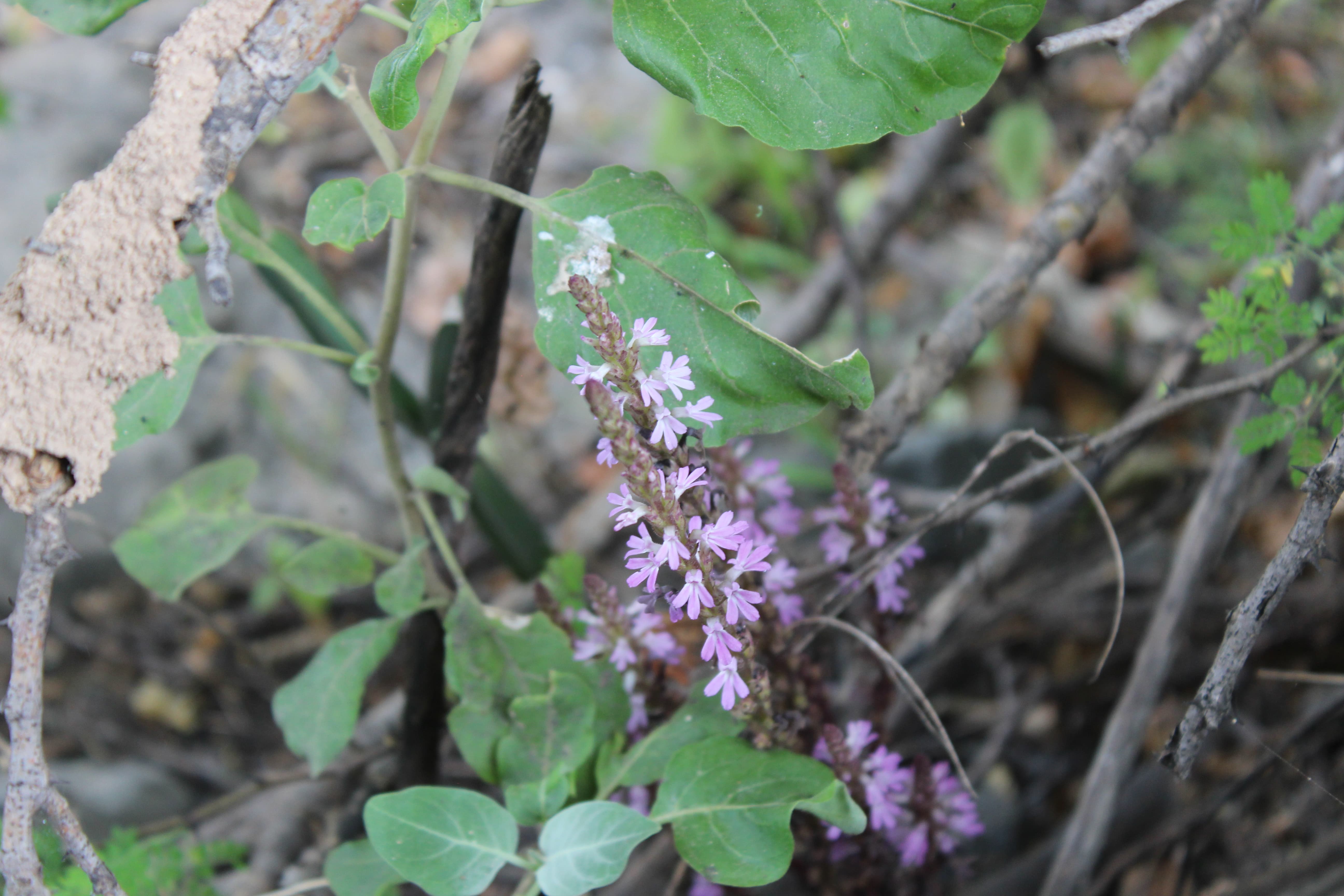
Striga_gesnerioides_4 © OBG
Striga_gesnerioides_5 © OBG
Striga_gesnerioides_6 © OBG
Striga_gesnerioides_7 © OBG
Striga_gesnerioides_8 © OBG
Striga_gesnerioides_9 © OBG
Striga_gesnerioides © OBG
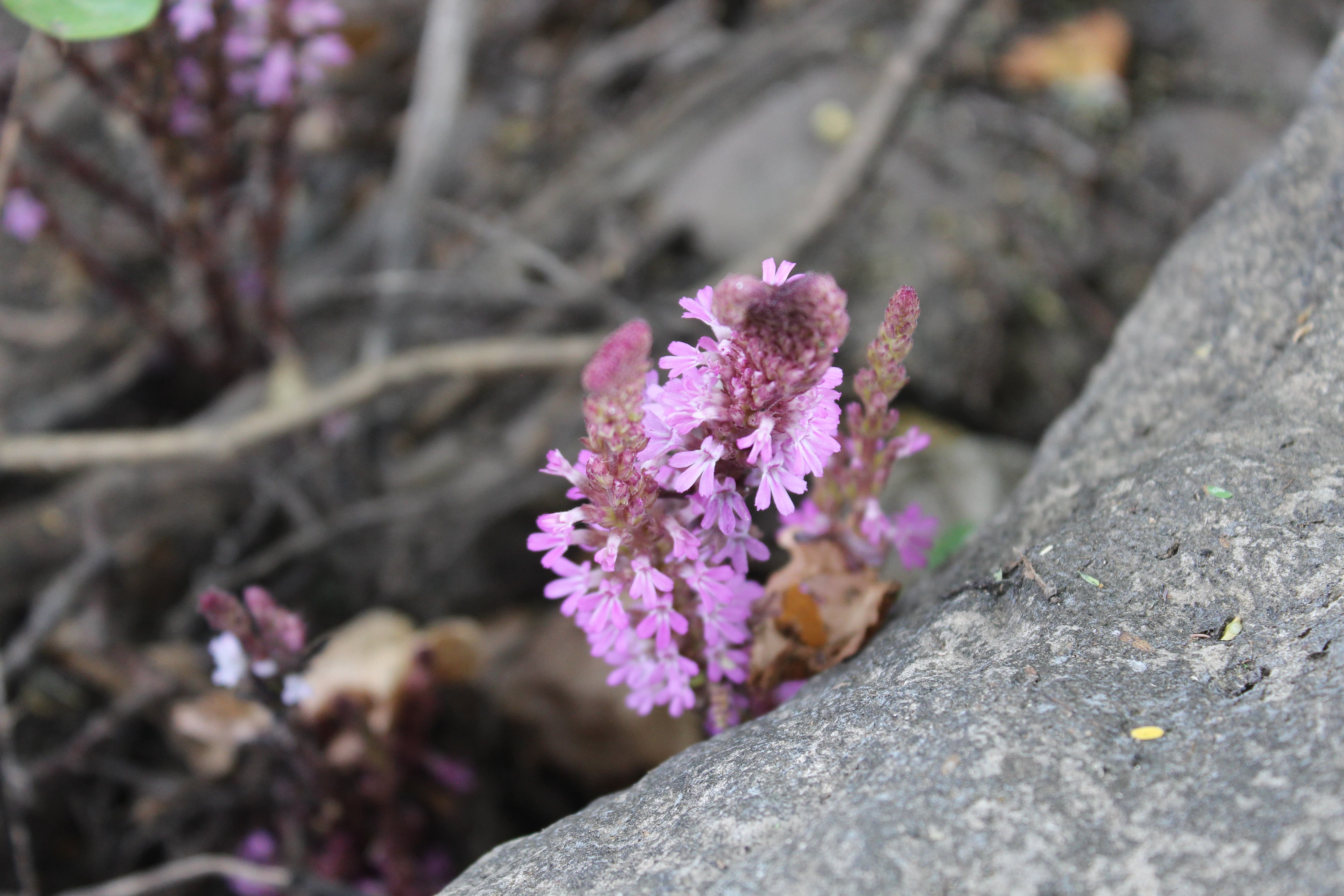
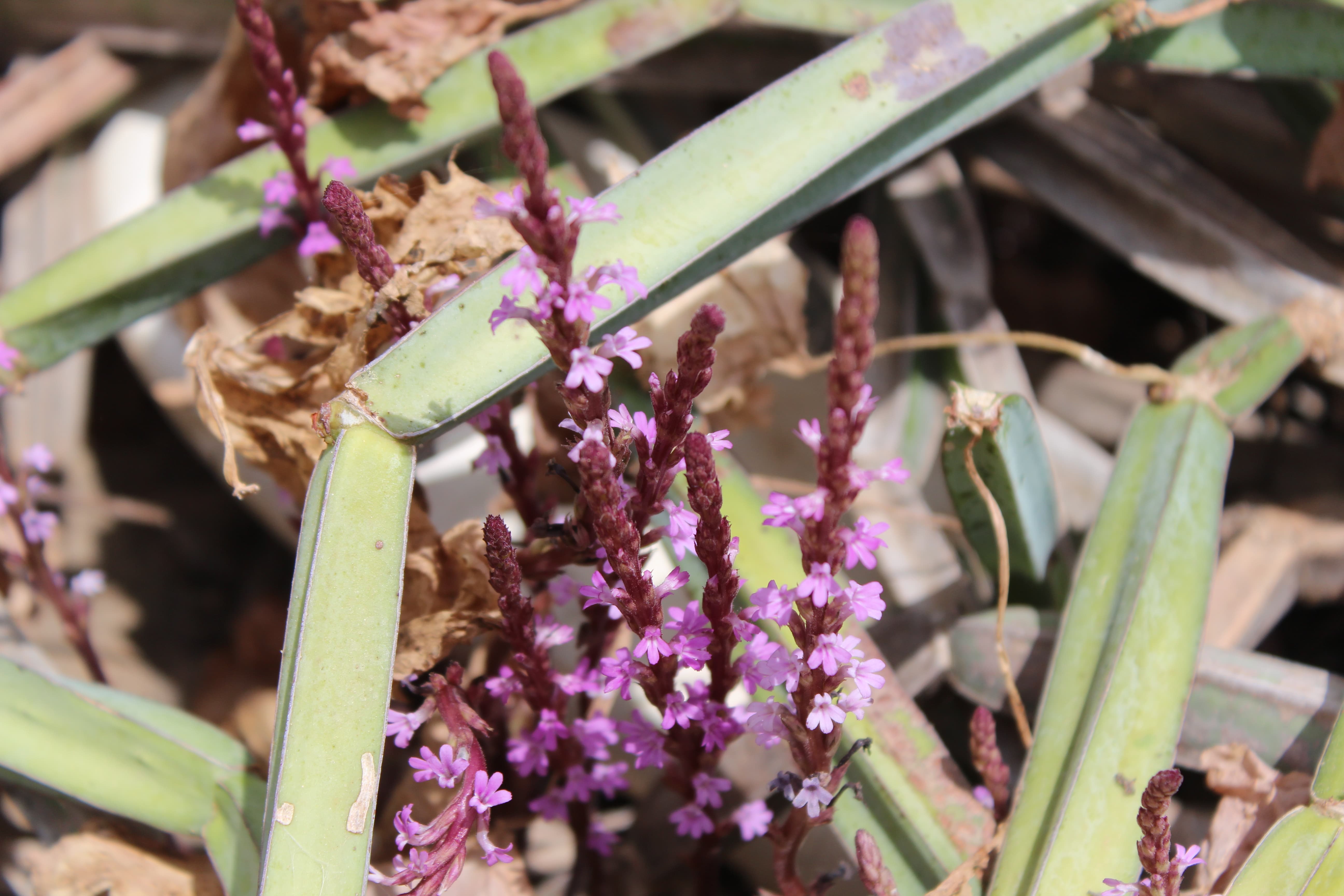
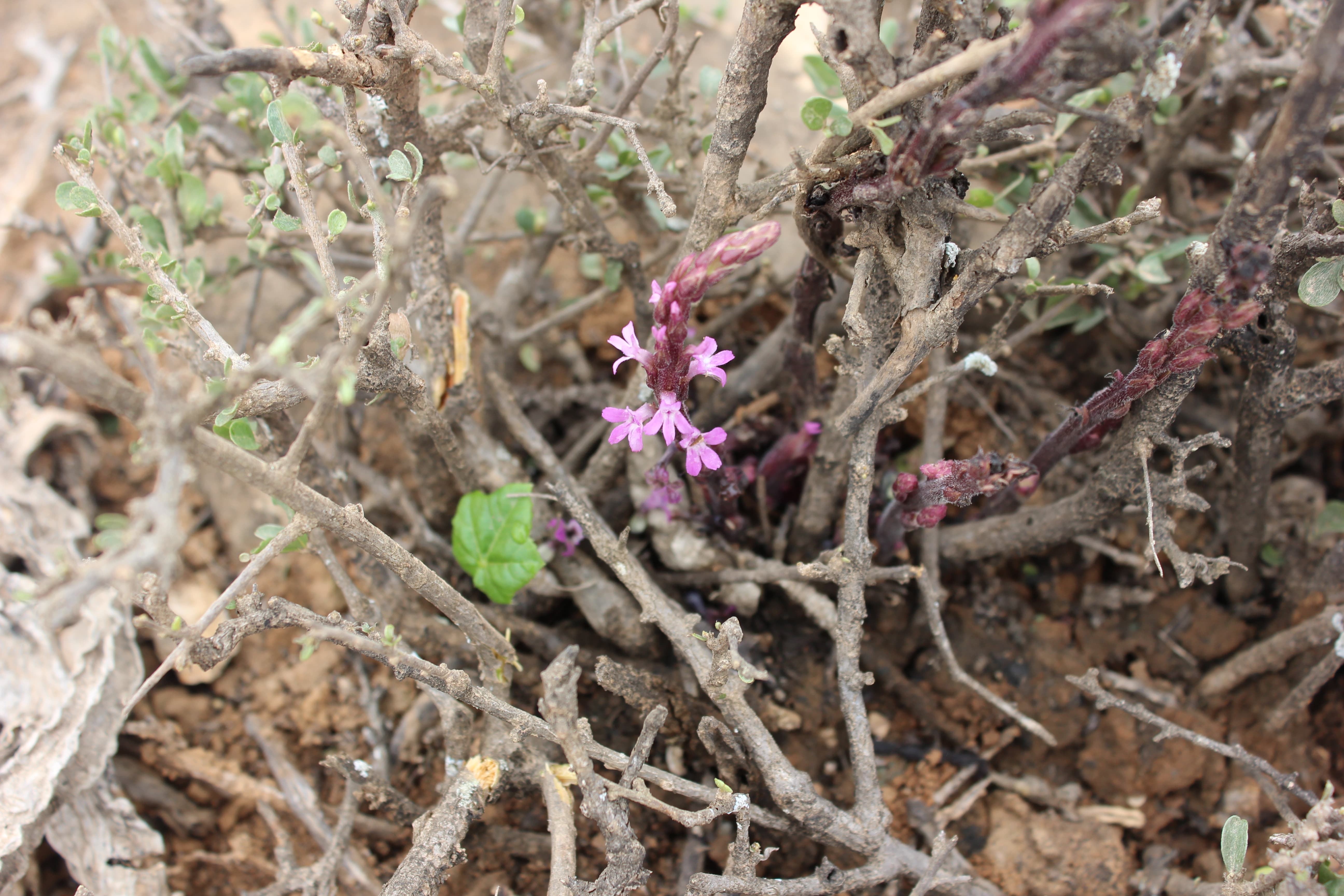
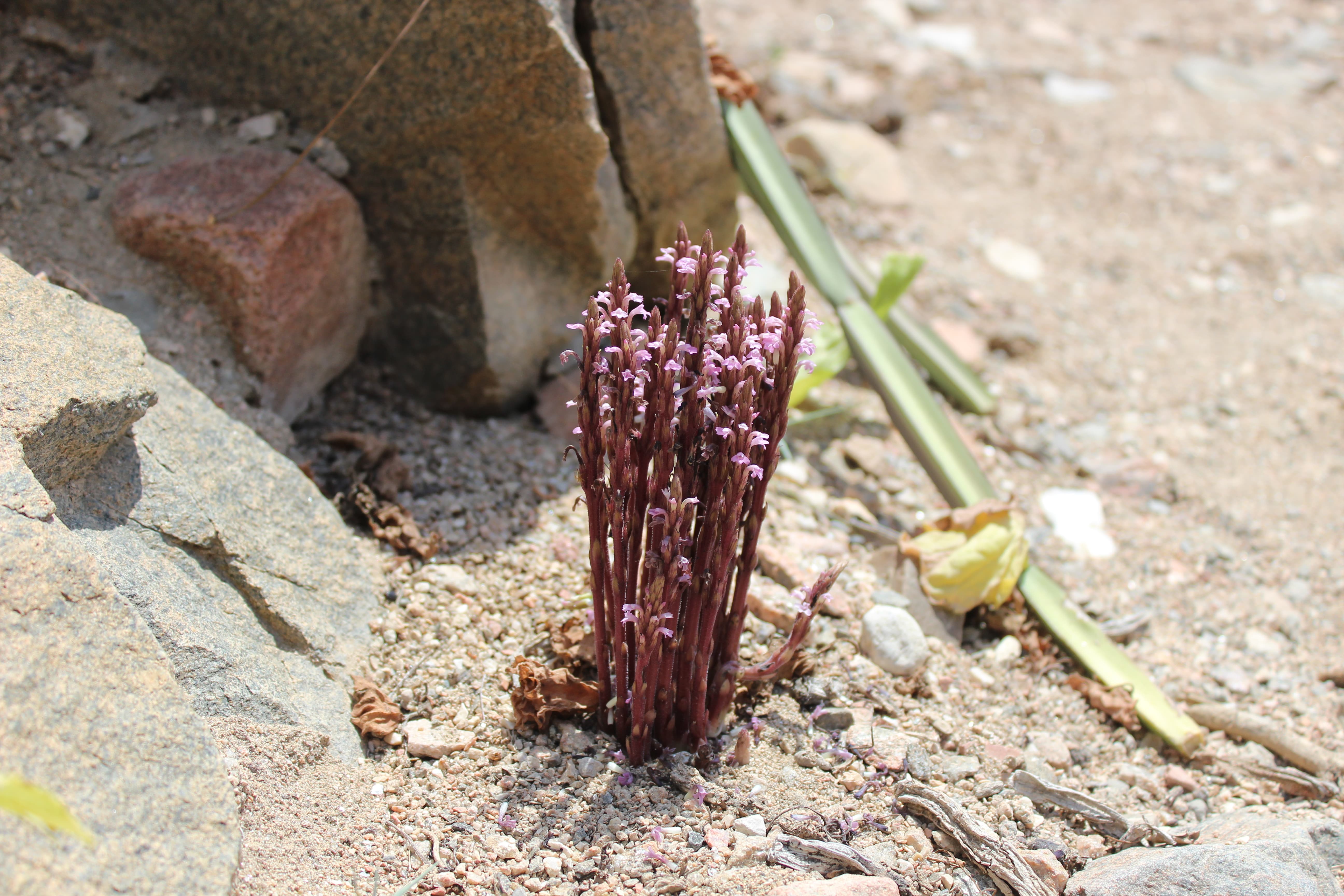
Erect annual or perennial dark reddish herb ; up to 10–45 cm tall , parasitic on the roots of other plants . Stems erect , several , succulent , square , angular , simple or branched , usually branching from base , reddish-purple , drying black . Leaves scale-like , appressed to stem , 0 . 5-1 cm long , inconspicuous , reddish like the stems . Inflorescences in clusters along the stems , sessile , 2(–3) per node ; bracts usually the same length and width as calyx , acuminate ; bracteoles minute . Flowers pink , not fragrant ; calyx 5 ribbed , narrow , 4–8 mm (including the teeth) ; teeth linear , acuminate , shorter than the calyx tube ; corolla light blue , pink or dark purple , 10–15 mm ; tube 8–11 mm , bent just below limb , glandular , and pubescent with small hairs , sometimes papillae-like ; upper lobes 2–3 mm , sharply recurved , lower ± 3 mm ; stamens 4 , included in the corolla . Fruit capsule , 1–2 mm , oblong-ellipsoid . Seeds minute , numerous . (Ref . Flora of Oman ; vol . 3) .
No Data
Not Evaluated (NE)
Not Common
الوصف غير متاح حاليًا
Buchnera gesnerioides Willd.
No data
maintenanceAr.Item1
Purple Witchweed
Tobacco Witchweed
Cowpea Witchweed
Indigo Witchweed
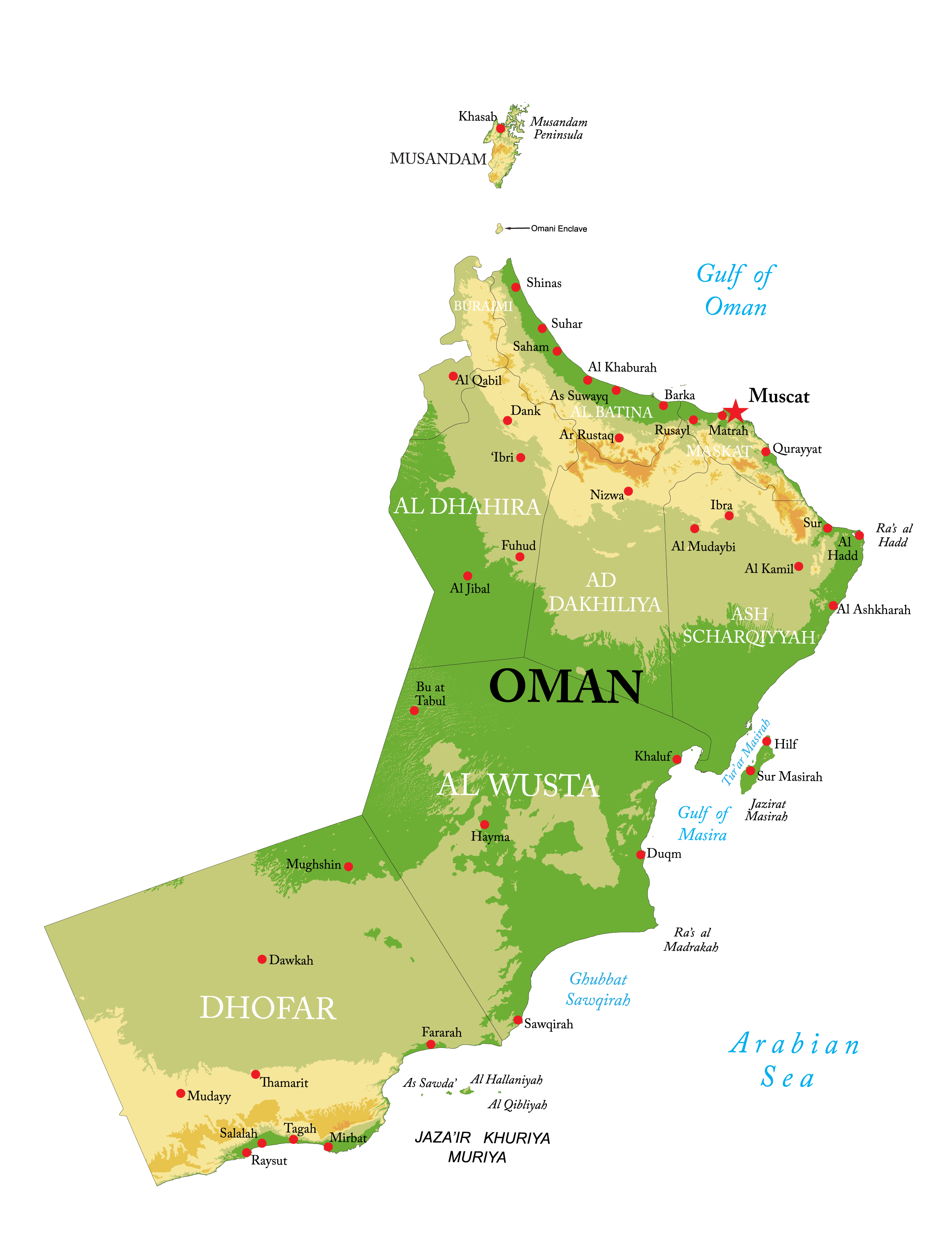
In Omani studies: Miller & Morris (1988) wrote that: "S. gesnerioides come up after the rains sporadically in all parts of monsoon Dhofar, its dark pink and purple spikes making it easily visible amongst the greenery. These mauve-pink flowering spikes were formerly chewed cosmetically to stain the mouth a dark blue-purple. Traditionally, during the rainy season and in the cooler seasons which follow, the indigo dye which leached from clothing to stain the skin was often supplemented by powdered indigo imported from the Yemen or from India (or more rarely from northern Oman where it is still cultivated), rubbed into the skin until it was sufficiently coloured and impregnated with the dye. Indigo was held to protect the whole body from illness brought on by cold or wet, to be a general preventative against disease and - very importantly - to protect the wearer from ill-wishers and witchcraft. Face painting
...

*Ghazanfar, S. (2015). Flora of the Sultanate of Oman, vol.3: Loganiaceae – Asteraceae. Meise, National Botanic Garden of Belgium (Scripta Botanica Begica, Vol. 25). ISBN 9789082352511 ISSN 0779-2387. *https://en.wikipedia.org *Gledhill, D. (2008). The Names of Plants. Fourth Edition. Cambridge University Press, UK. ISBN 978-0-521-86645-3 ISSN 978-0-521-68553-5. *Pickering, H. Patzelt, A. (2008). Field Guide to the Wild Plants of Oman. Kew publishing, Royal Botanic Garden, Kew. ISBN 9781842461778. *Miller, A., Morris, M. (1988). Plants of Dhofar, the Southern Region of Oman: Traditional, Economic, and Medicinal Uses. Published by Office of the Adviser for Conservation of the Environment, Diwan of Royal Court, Sultanate of Oman; ISBN 10: 0715708082 ISSN 13: 9780715708088. *POWO (2023). ""Plants of the World Online. Facilitated by the Royal Botanic Gardens, Kew. Published on the Internet; http://www.plantsoftheworldonline.org
