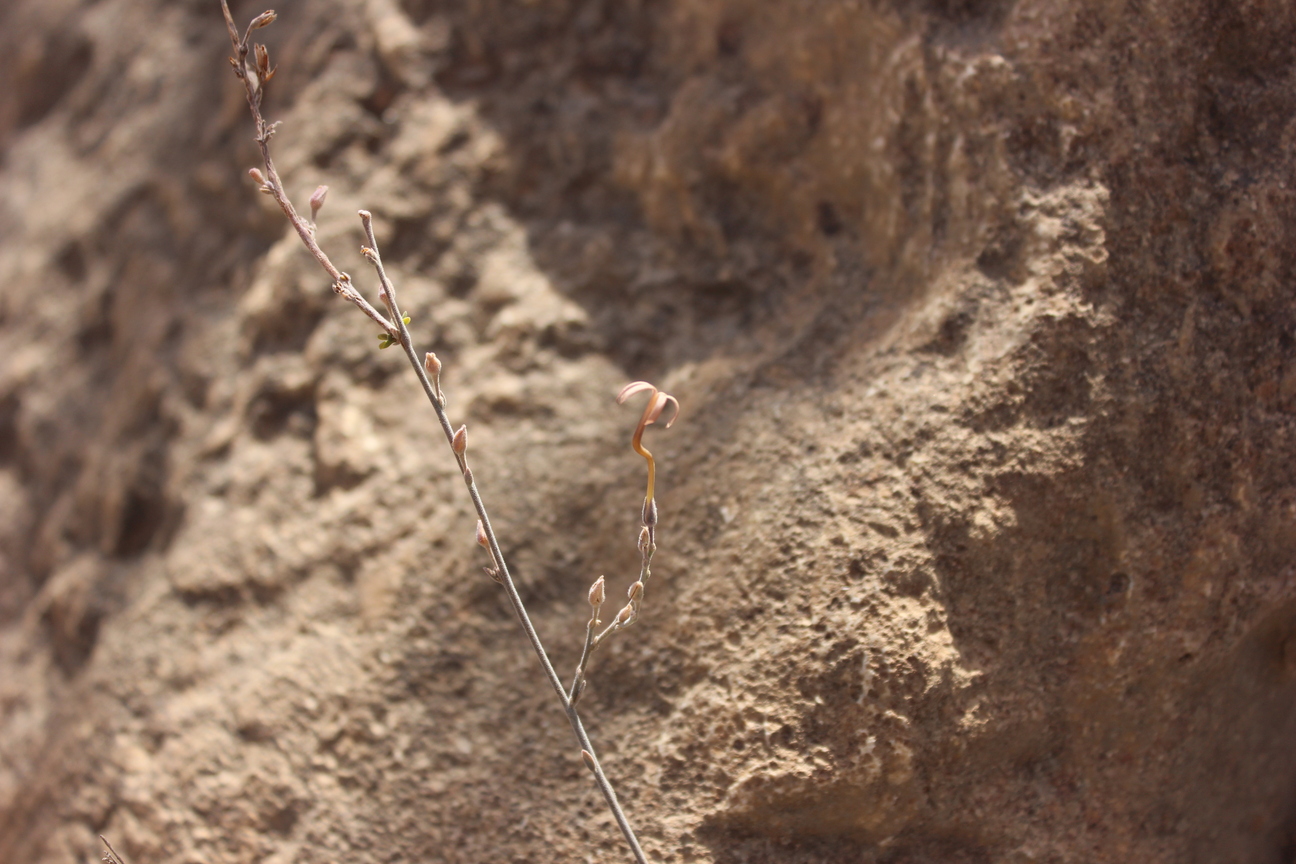
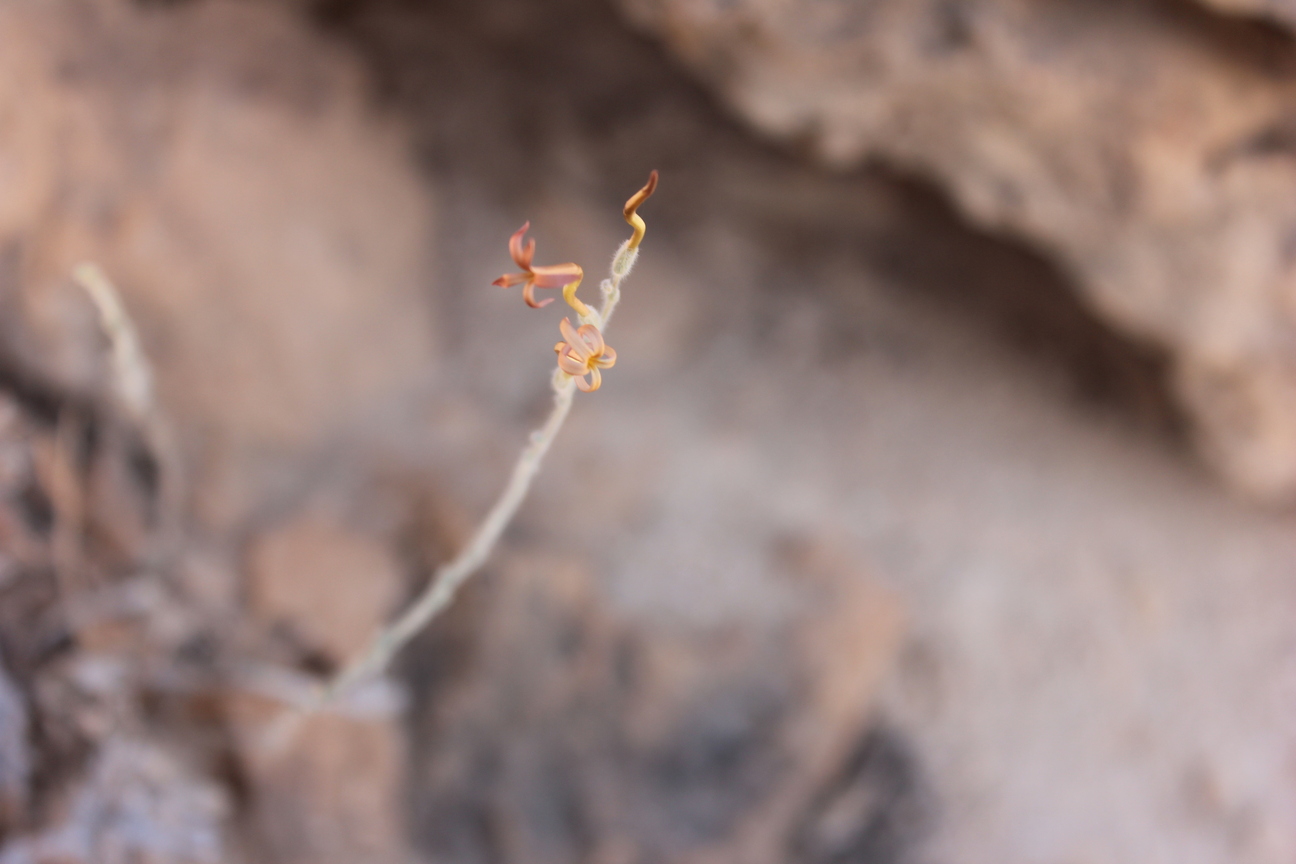
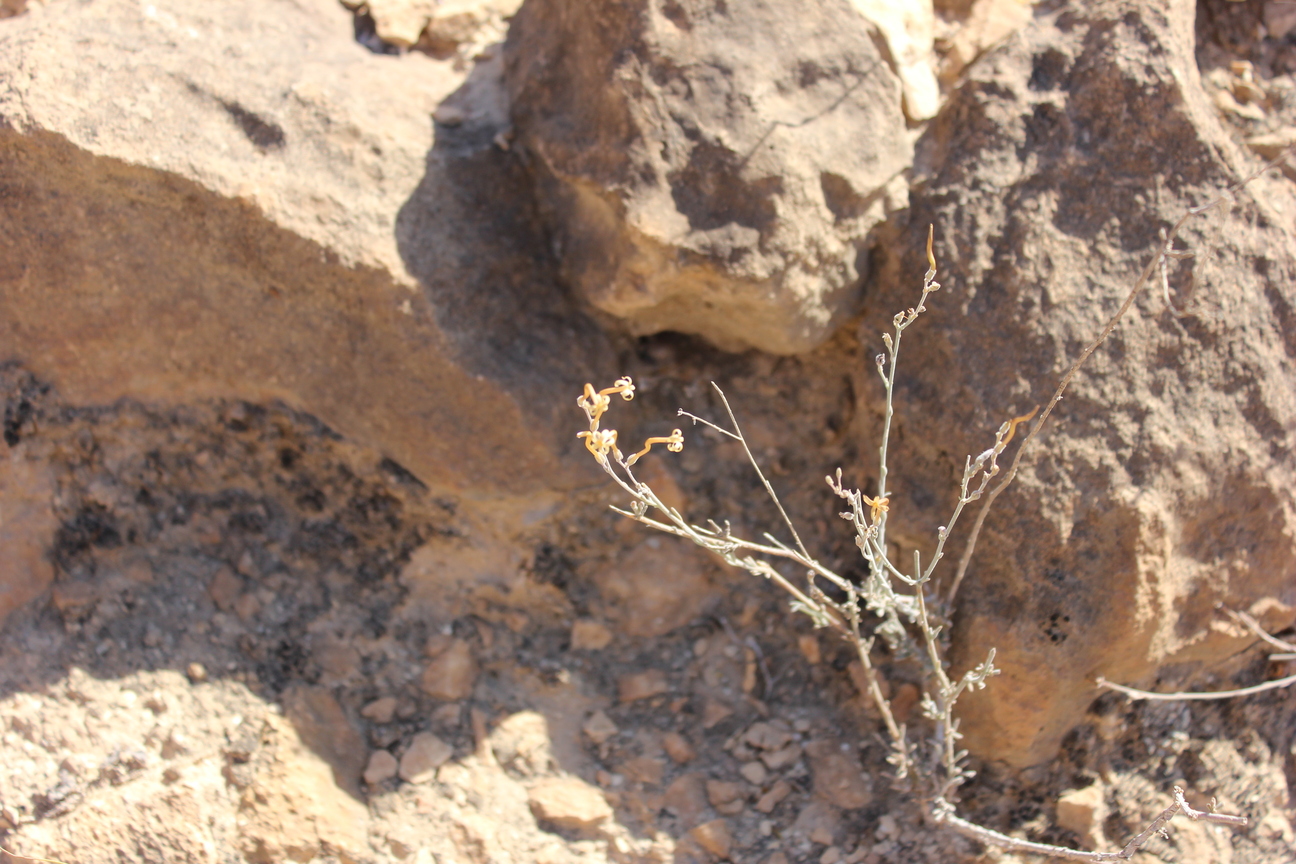
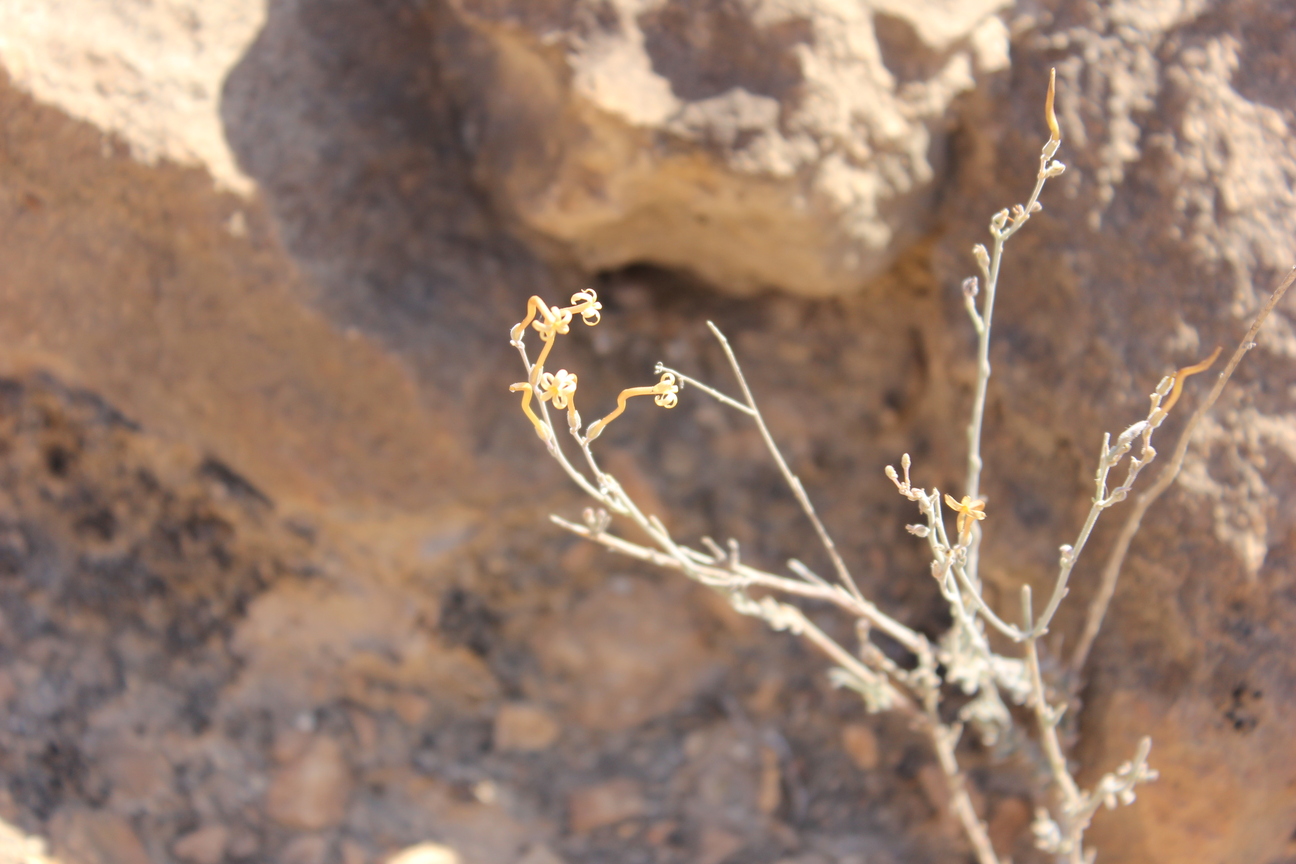
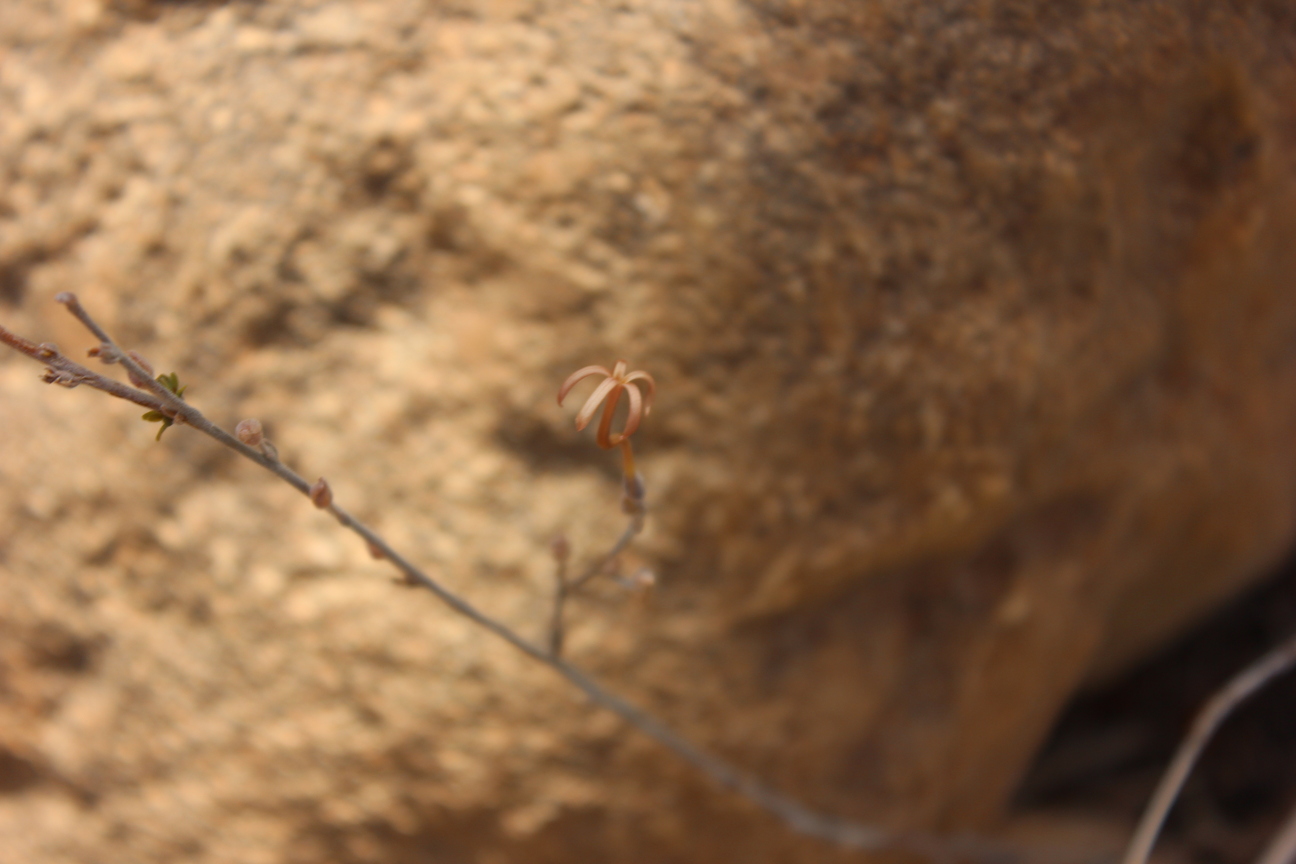
Campylanthus_antonii_2 © OBG
Campylanthus_antonii_3 © OBG
Campylanthus_antonii_4 © OBG
Campylanthus_antonii_5 © OBG
Campylanthus_antonii_6 © OBG
Campylanthus_antonii_7 © OBG
Campylanthus_antonii_8 © OBG
Campylanthus_antonii_9 © OBG
Campylanthus_antonii © OBG
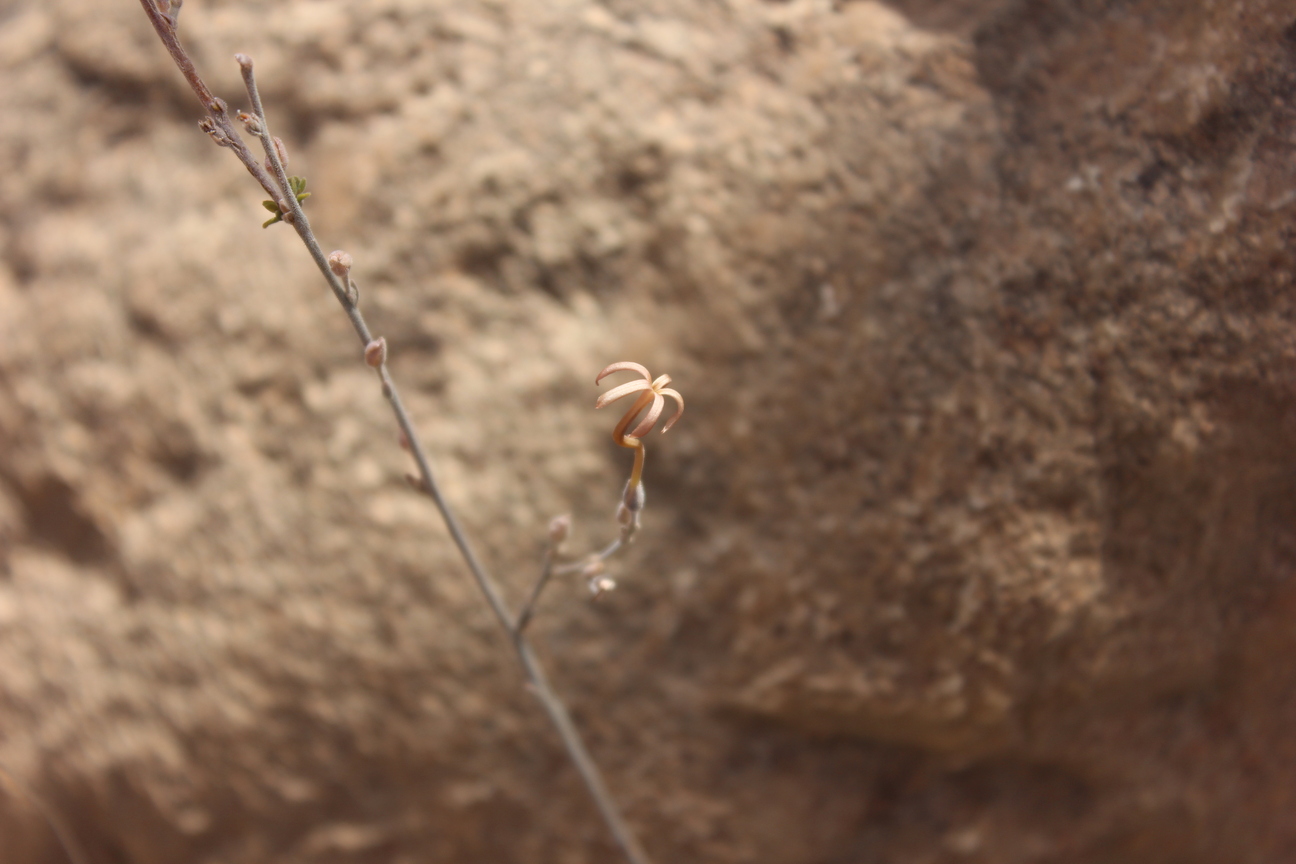
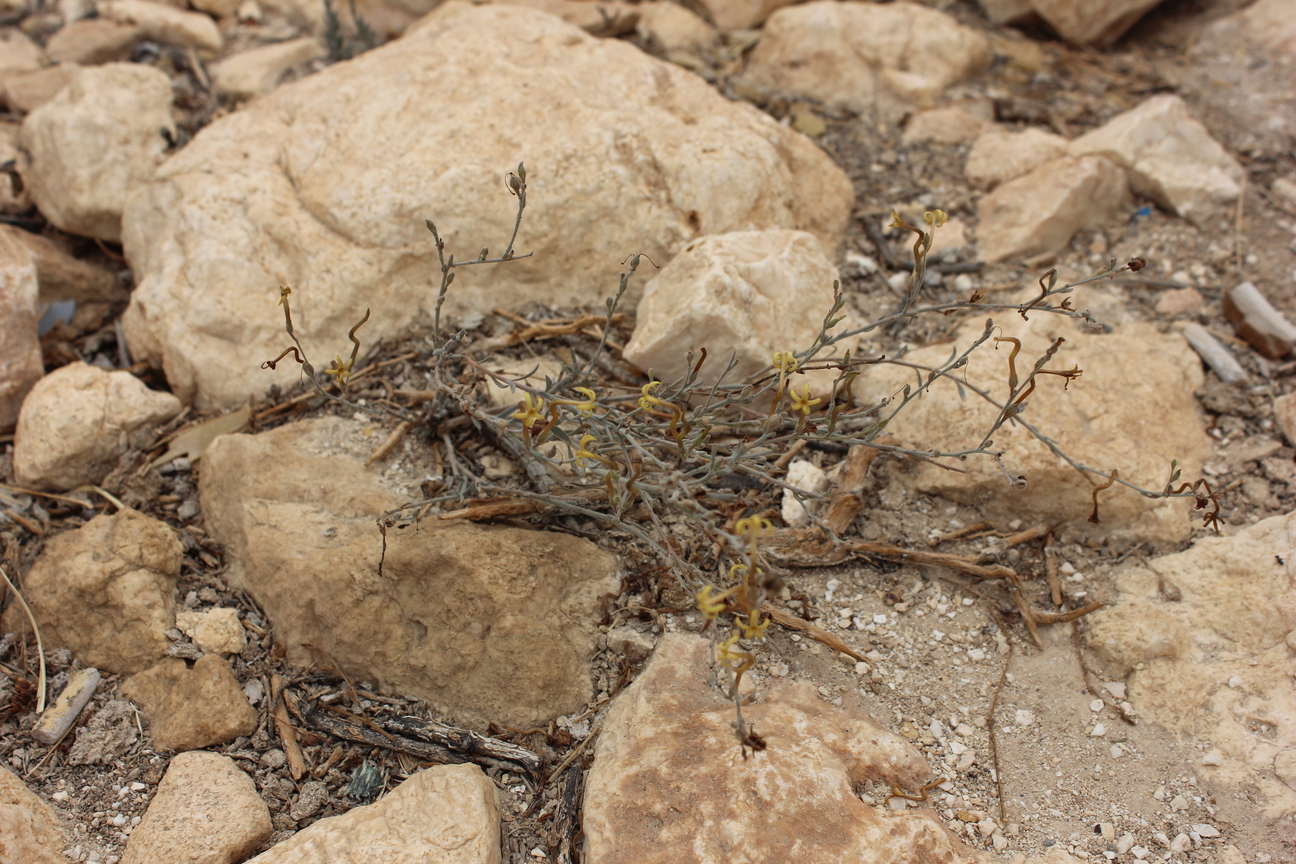
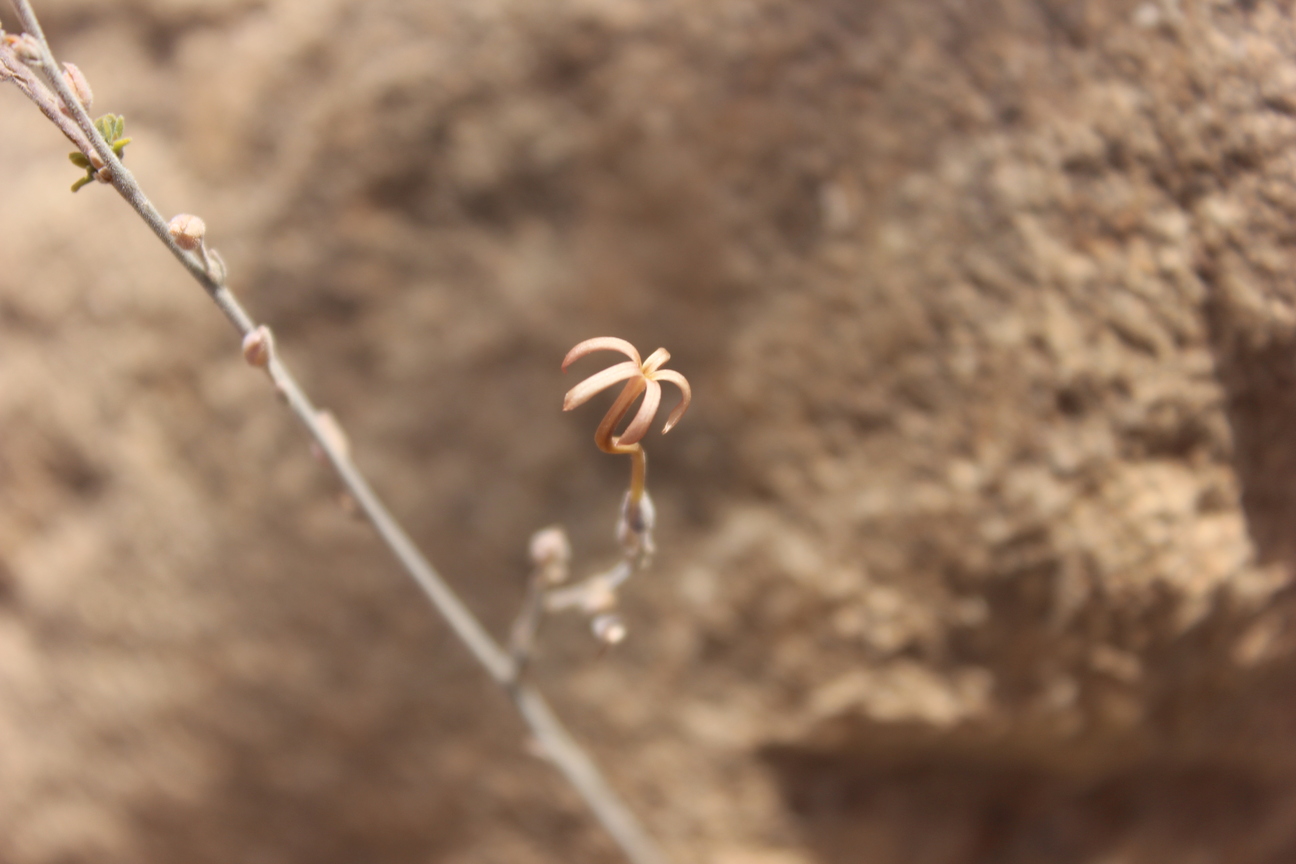
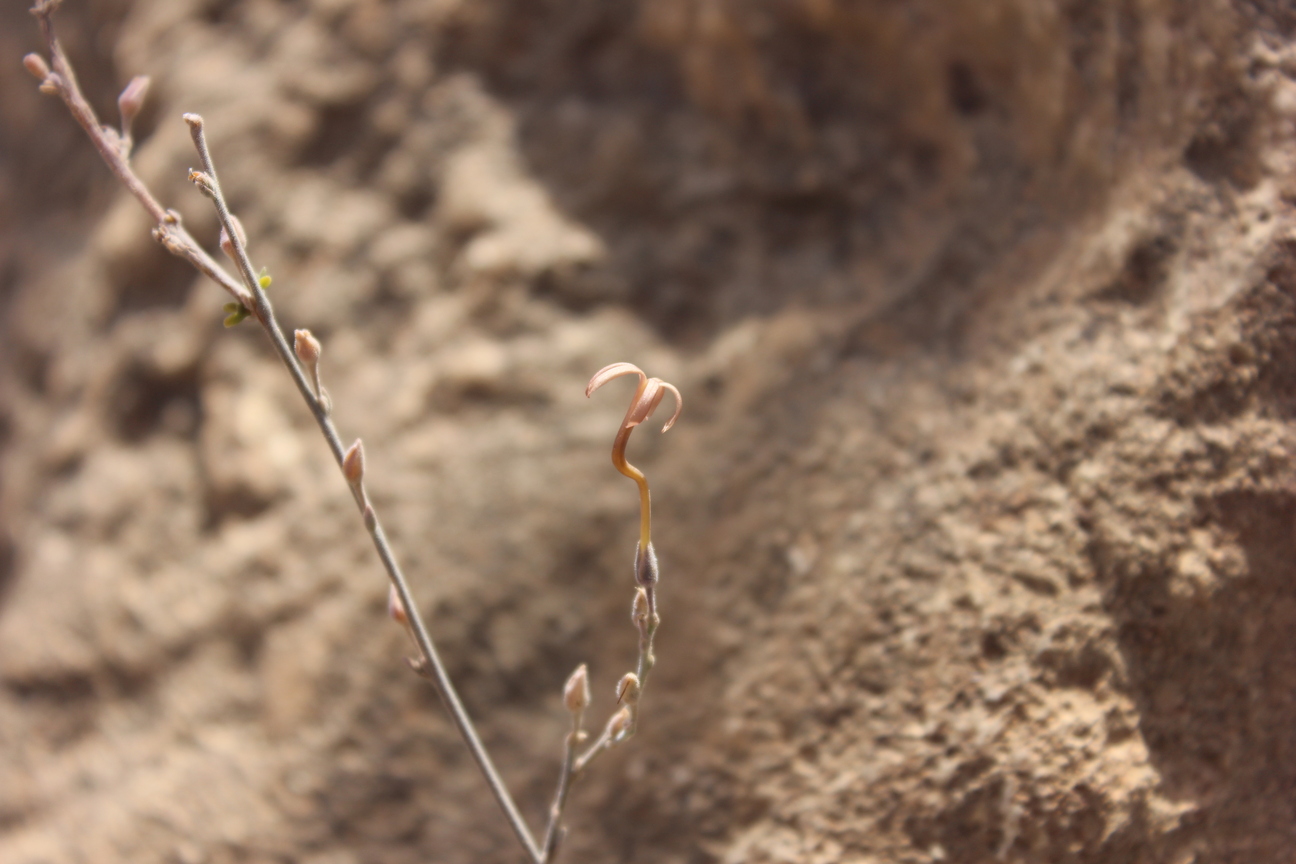
Virgate undershrub ; up to 50 cm high . Stems erect , aphyllous , obscurely ribbed , grey-green , pubescent below , glabrous above . Leaves alternate , sessile , 1 . 5–2 . 5 × 0 . 5–0 . 8 mm , linear to narrow elliptic , minutely pubescent or ciliate . Inflorescences in terminal 5−13-flowered racemes ; pedicels ± 3 mm ; bracts and bracteoles ± 1 mm , ciliate . Flowers brownish-yellow ; calyx 5-lobed , lobes ± 1 mm , narrowly ovate , acute , ciliate ; corolla brownish-yellow ; tube ±15 mm , doubly bent in the upper third , glabrous outside , hairy inside ; lobes ± 4 mm , linear , acute , glabrous , recurved ; stamens 2 ; filaments glabrous ; anthers confluent . Fruit capsule , ± 4 mm long , globose , brown . (Ref . Flora of Oman ; vol . 3) .
No Data
Near Endemic (NE) - Vulnerable (VU B2ab(ii , iii)) - National Assessment
Very Rare
الوصف غير متاح حاليًا
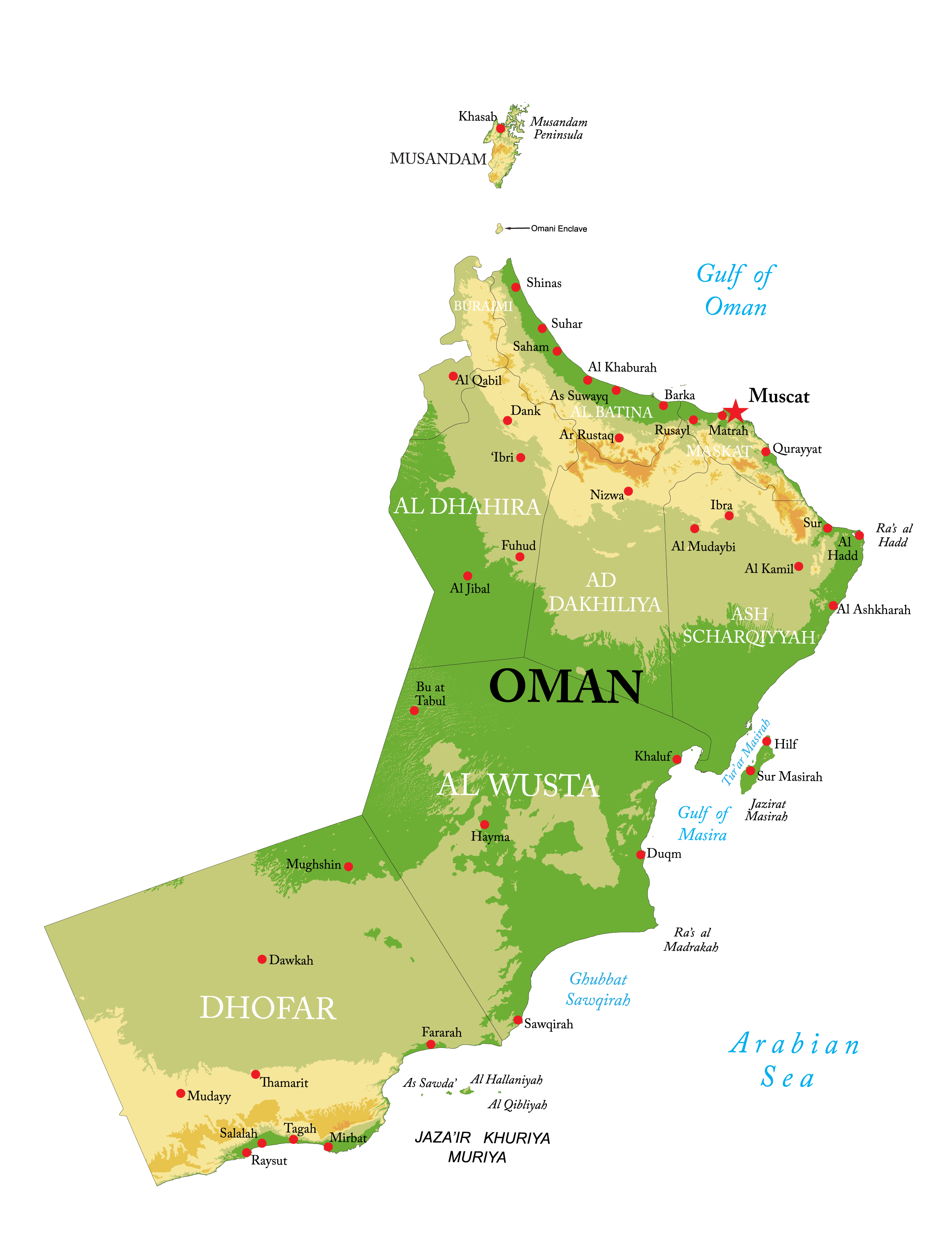
Not available
No data
maintenanceAr.Item1
Not known
In Omani studies: Miller & Morris (1988) wrote that: "These small plants have no specific medicinal value, and the names given them: [J: ḥarér and íḏerόr] are names given to a variety of small, locally insiginificant plants which are grazed by goats, but are of limited nutritional importance to livestock. Gazelle - in the days when there were enough of these animals and of skilled game hunters to make such observations - were said to be very fond of these plants. The name íḏerόr is explained as being from the root DA, J, bdr, to sow, and is said to be given to such plants because they tend to grow in patches as if cultivated. Many of these species seem to flourish where they are in a position to receive the sea mists, and are commonly found along the sea cliffs and just inland from the coast, as well as
...

*Ghazanfar, S. (2015). Flora of the Sultanate of Oman, vol.3: Loganiaceae – Asteraceae. Meise, National Botanic Garden of Belgium (Scripta Botanica Begica, Vol. 25). ISBN 9789082352511 ISSN 0779-2387. *https://en.wikipedia.org *https://species.wikimedia.org *Miller, A., Morris, M. (1988). Plants of Dhofar, the Southern Region of Oman: Traditional, Economic, and Medicinal Uses. Published by Office of the Adviser for Conservation of the Environment, Diwan of Royal Court, Sultanate of Oman; ISBN 10: 0715708082 ISSN 13: 9780715708088. *Patzelt, A., Harrison, T., Knees, S.G. & Hartley, L.A. (2014). Studies in the flora of Arabia: XXXI. New records from the Sultanate of Oman Edinburgh Journal of Botany 71: 161-180. *Patzelt, A. (2015). Oman Plant Red Data Book. Published by Diwan of Royal Court, Sultanate of Oman. Oman Botanic Garden Publication No. 1. ISBN 978-99969-50-10-0. *POWO (2023). ""Plants of the World Online. Facilitated by the Royal Botanic Gardens, Kew. Published on the Internet; http://www.plantsoftheworldonline.org
