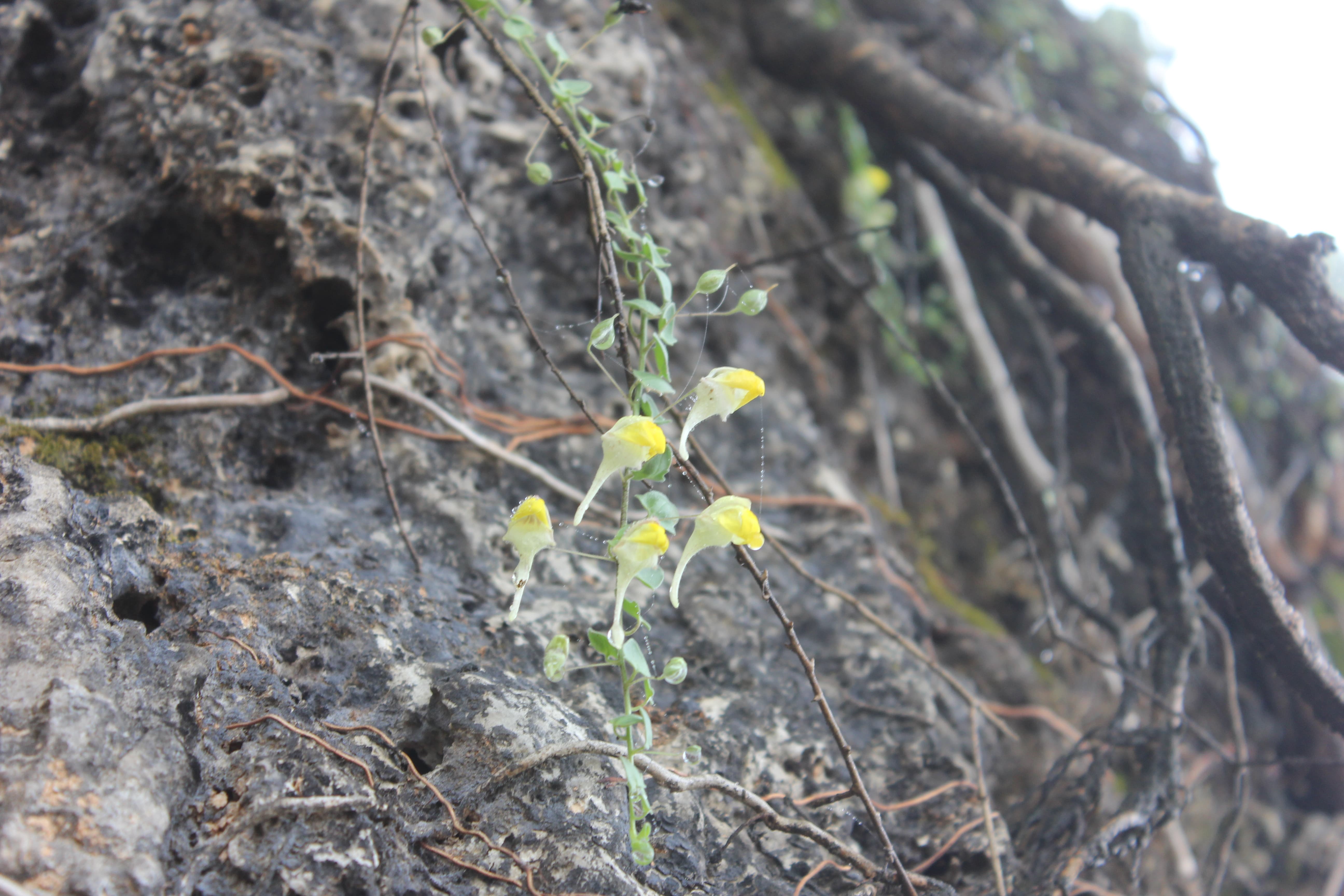
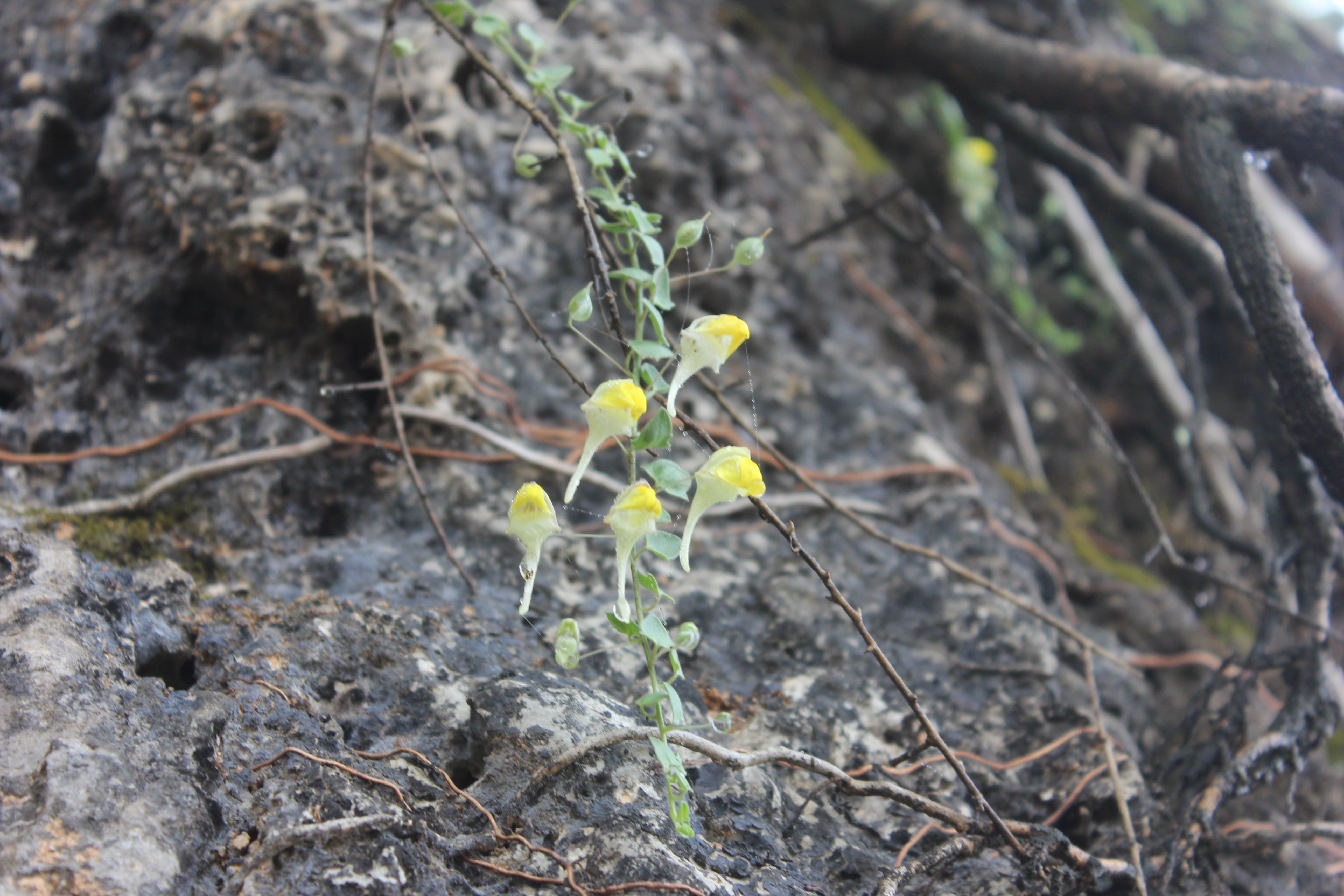
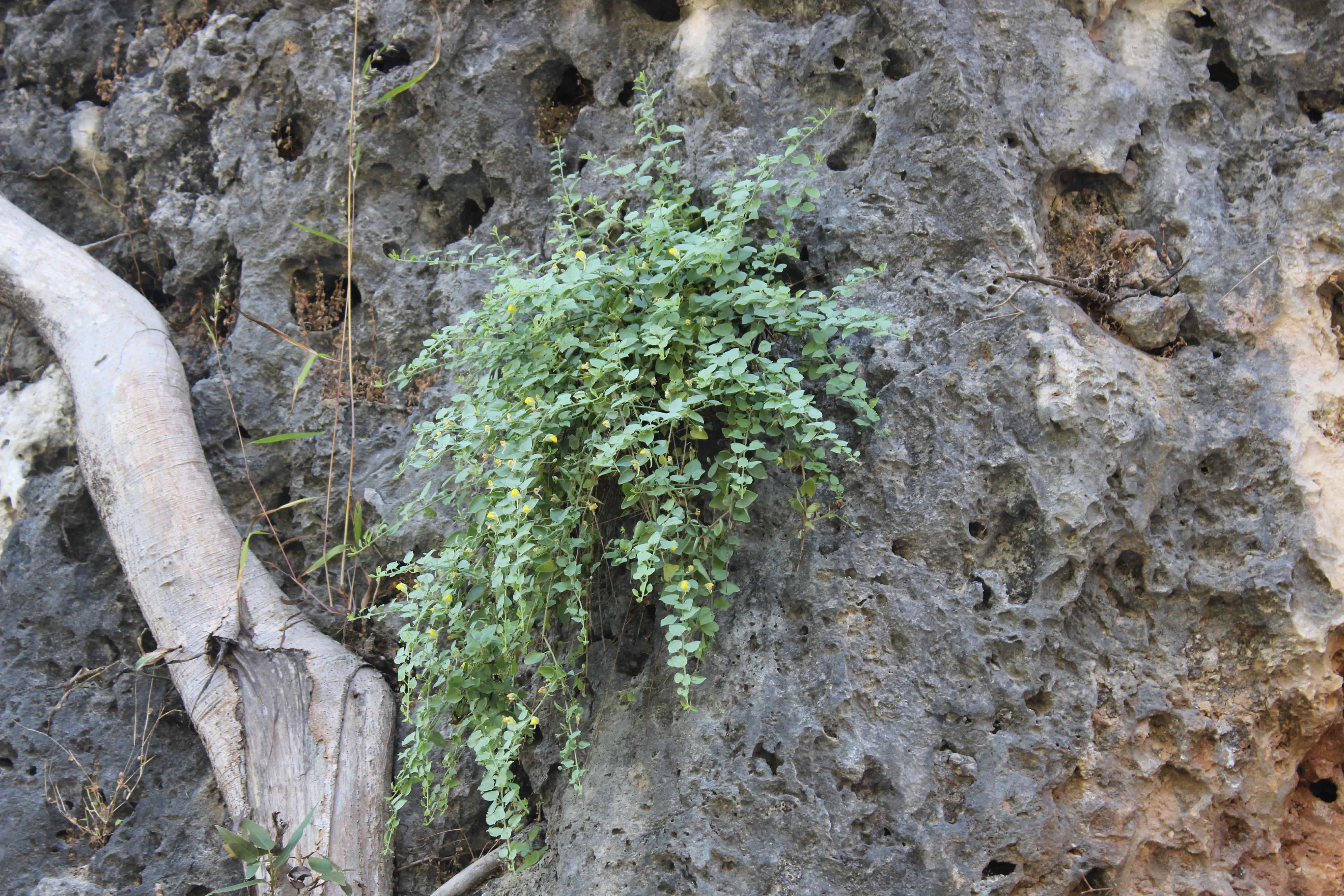
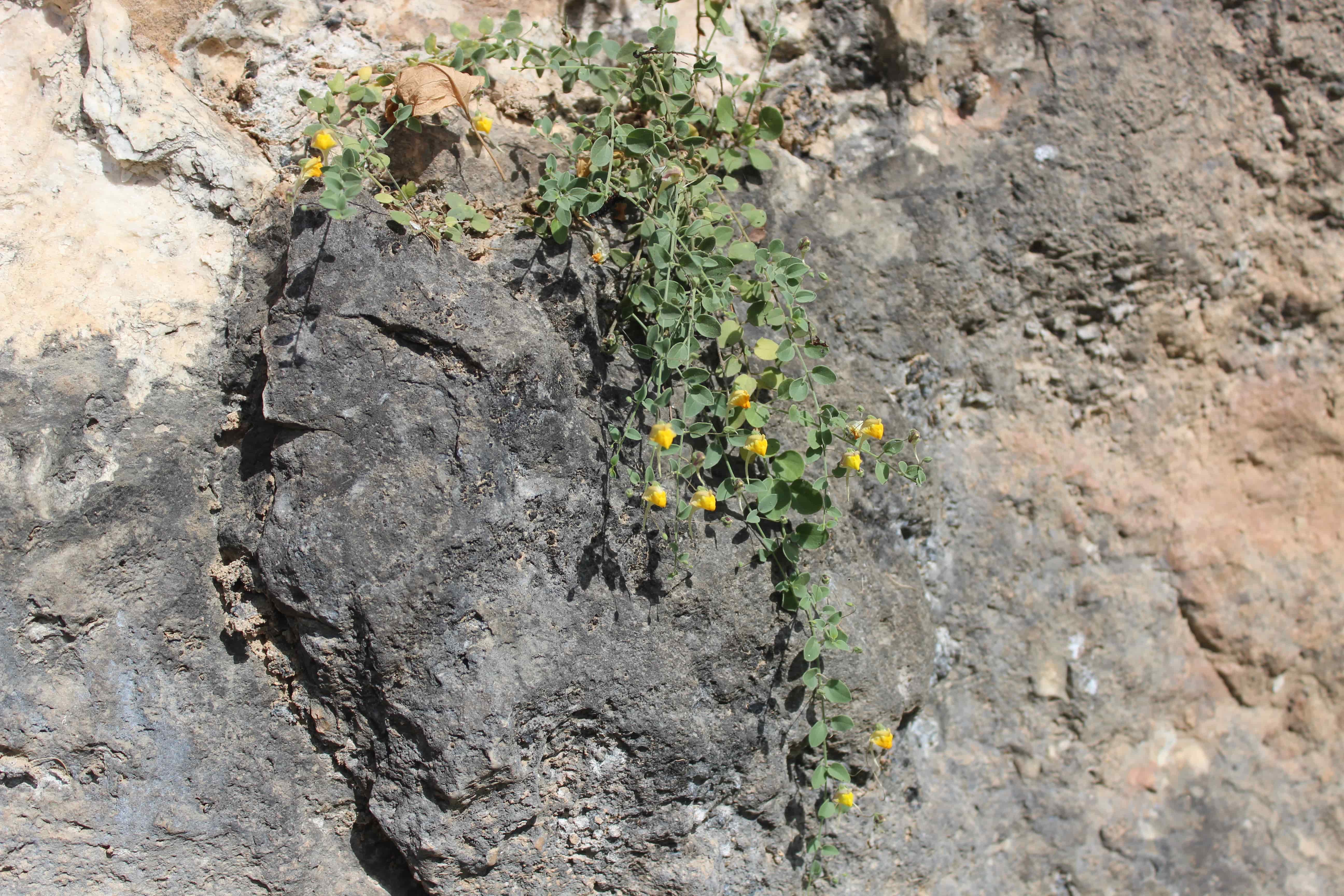
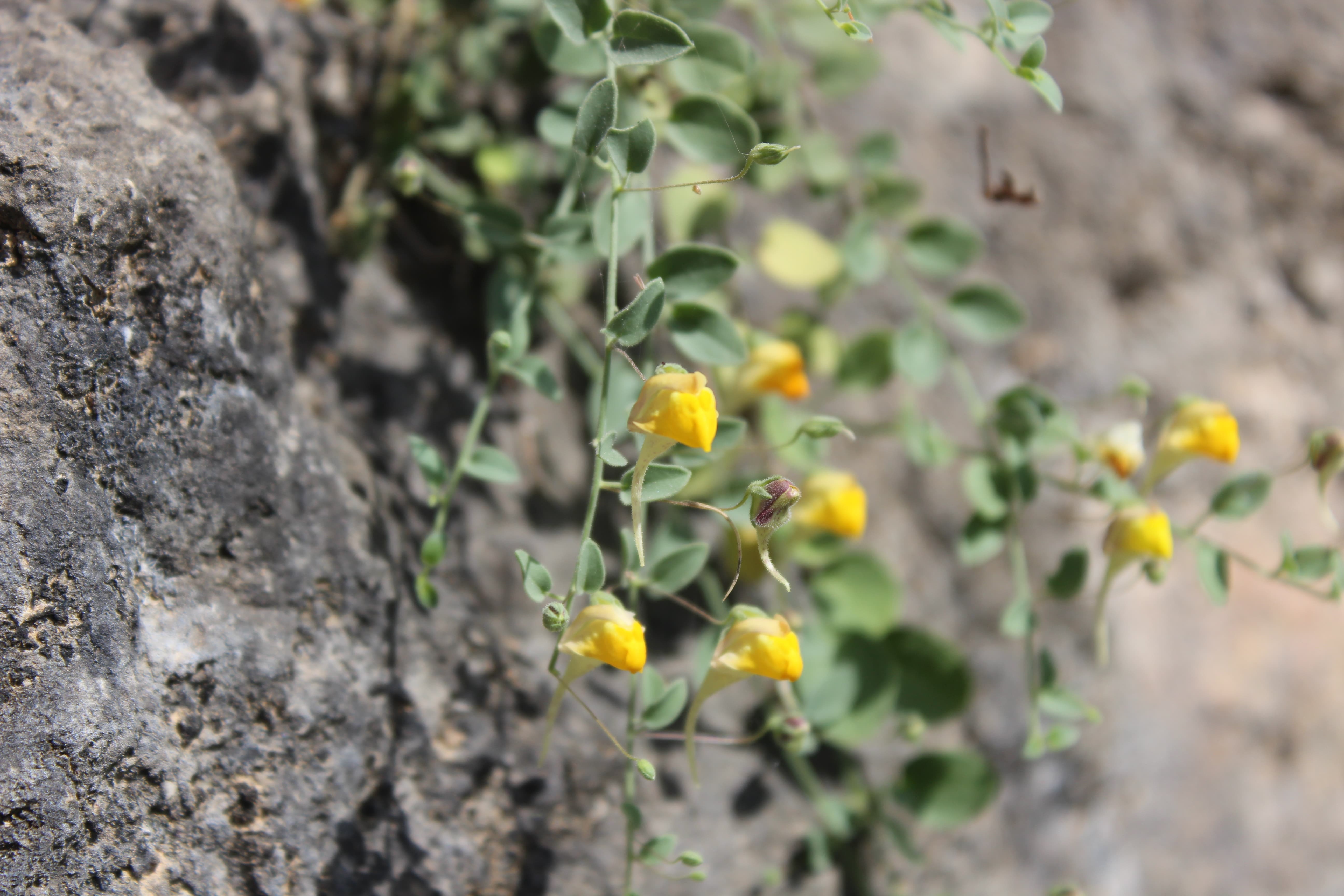
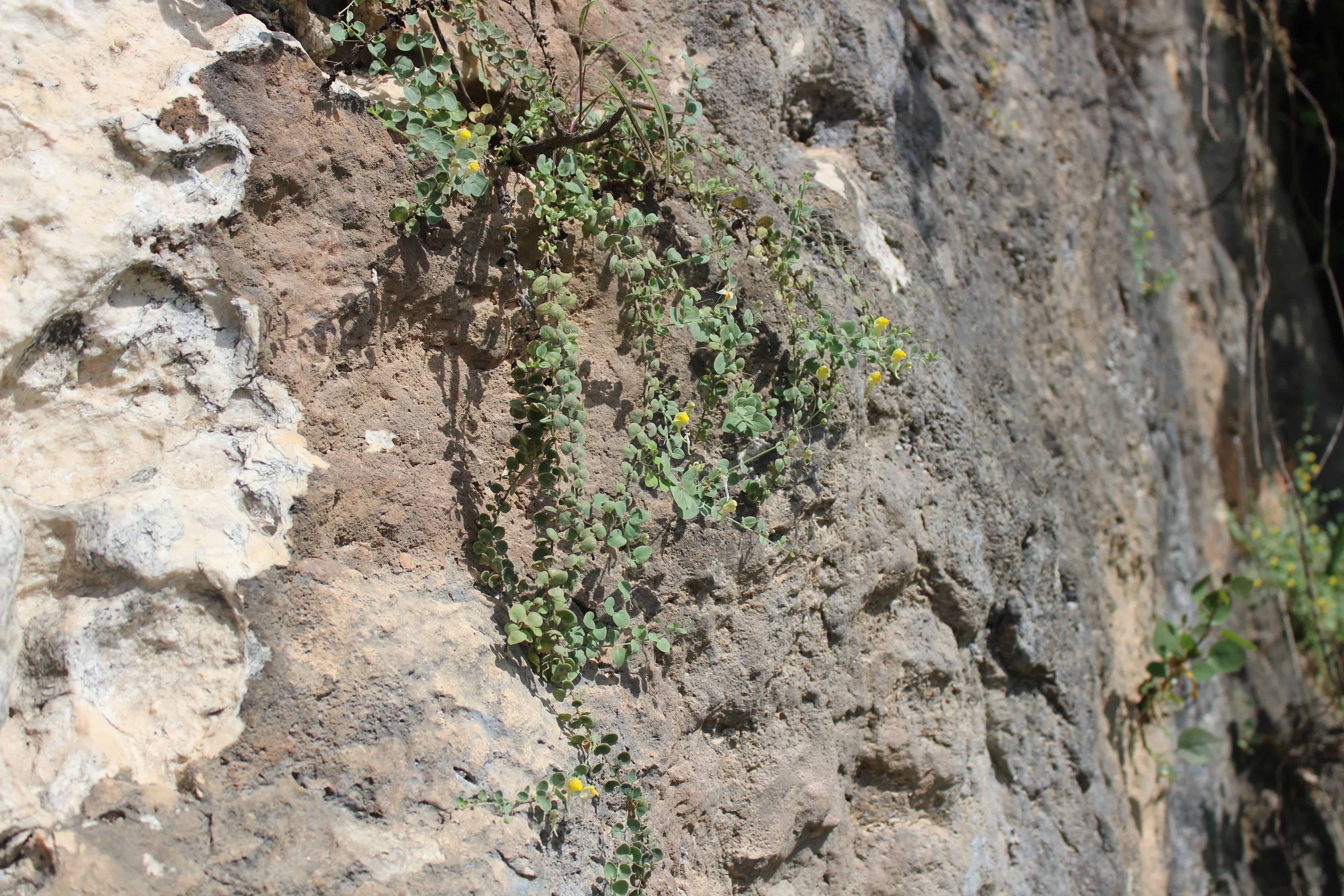
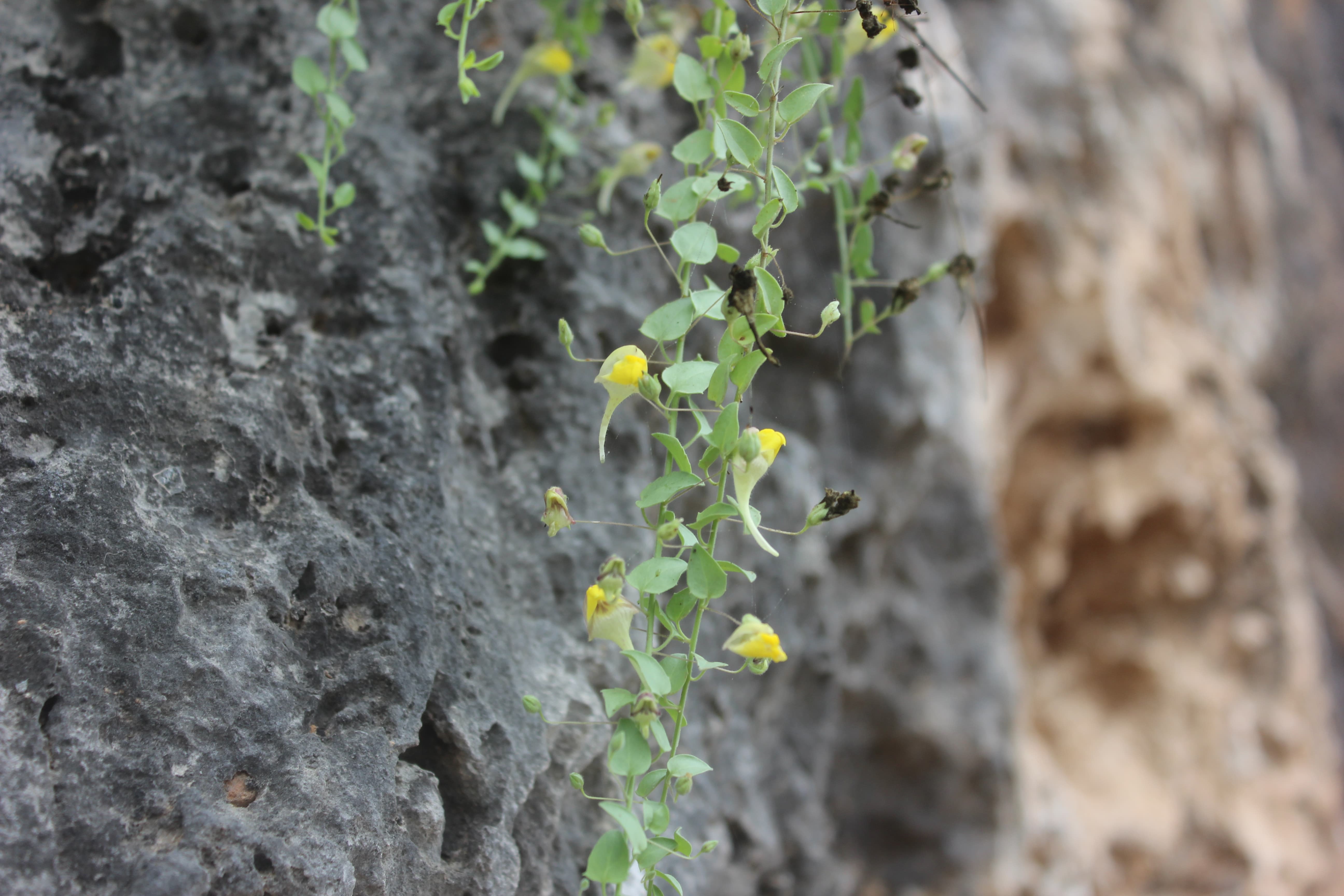
Nanorrhinum_heterophyllum_2-06082024 © OBG
Nanorrhinum_heterophyllum_3-06082024 © OBG
Nanorrhinum_heterophyllum_4-06082024 © OBG
Nanorrhinum_heterophyllum_5-06082024 © OBG
Nanorrhinum_heterophyllum_6-06082024 © OBG
Nanorrhinum_heterophyllum_7-06082024 © OBG
Nanorrhinum_heterophyllum-06082024 © OBG
Perennial herb ; up to 25 cm high , glabrous or scabrid . Stems ± woody at base , much-branched , ascending , slender and spinescent above , scabrid to velutinous , sometimes glandular below . Leaves basal and upper ; basal leaves falling soon , (2–)5–12 × (1 . 5–)2 . 5–8 mm , ovate to oblong-elliptic , entire , apex obtuse , base rounded ; upper leaves 5–12 × 2–8 mm , decreasing in size upwards , deltate to lanceolate , sometimes linear , entire to shallow dentate , acute , base sagittate to hastate ; petiole 1–8 mm . Inflorescences axillary , present all along the stem on reddish , slender , stout pedicels 10–30 mm . Flowers greenish-yellow ; calyx 5-lobed , lobes 3–5 mm , narrow ovate with scarious margins , glandular-pubescent ; corolla 2-lipped , 17–24 mm long including spur , greenish-yellow , the lower lip darker yellow , occasionally the upper lip tinged red or purplish , glandular-pubescent , lower lip white-woolly inside ; tube 5–8 mm ; spur 13–16 mm , straight , glandular ; stamens 4 ; filaments hairy . Fruit capsule , 3–4 mm , oblong-ovoid , sparsely glandular . Seeds 0 . 5–0 . 7(–1) mm long ,
...

No Data
Not Evaluated (NE)
Frequent
الوصف غير متاح حاليًا
Antirrhinum heterophyllum Schousb.
Kickxia heterophylla (Schousb.) Dandy
Linaria heterophylla (Schousb.) Spreng.
Linaria sagittata var. heterophylla (Schousb.) Maire
Pogonorrhinum heterophyllum (Schousb.) Betsche
No data
maintenanceAr.Item1
Not known
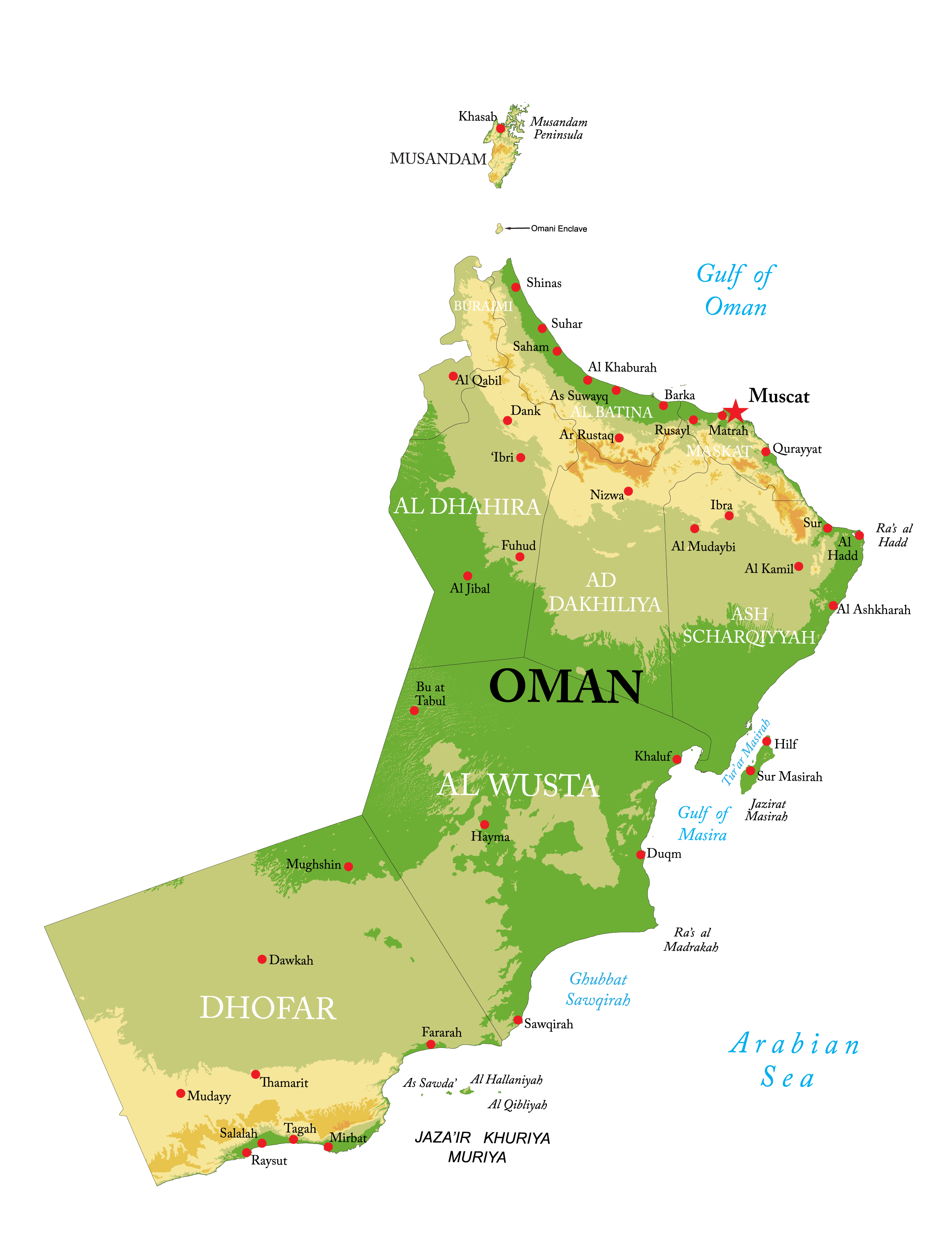
In Omani studies: Miller & Morris (1988) wrote that: "This pretty low-growing plant is found principally on the high plateaux at the back of the monsoon mountains. The plants grow in neat round clumps, their attractive and distinctively-shaped yellow or mauve flowers making a bright splash of colour in what is usually rather featureless and stony terrain. One of the names for this plant, J: tur erun, means 'dates for goats', a name given to this species, it is said, because goats are very fond of the whole plant, and especially when it is in flower after the rains (just as camels are said to be particularly fond of the plant Ruttya fruticosa, called by many tur iyyel, which means 'dates for camels')". (Ref. Plants of Dhofar).
*Ghazanfar, S. (2015). Flora of the Sultanate of Oman, vol.3: Loganiaceae – Asteraceae. Meise, National Botanic Garden of Belgium (Scripta Botanica Begica, Vol. 25). ISBN 9789082352511 ISSN 0779-2387. *https://en.wikipedia.org *https://swbiodiversity.org *Miller, A., Morris, M. (1988). Plants of Dhofar, the Southern Region of Oman: Traditional, Economic, and Medicinal Uses. Published by Office of the Adviser for Conservation of the Environment, Diwan of Royal Court, Sultanate of Oman; ISBN 10: 0715708082 ISSN 13: 9780715708088. *POWO (2023). ""Plants of the World Online. Facilitated by the Royal Botanic Gardens, Kew. Published on the Internet; http://www.plantsoftheworldonline.org
