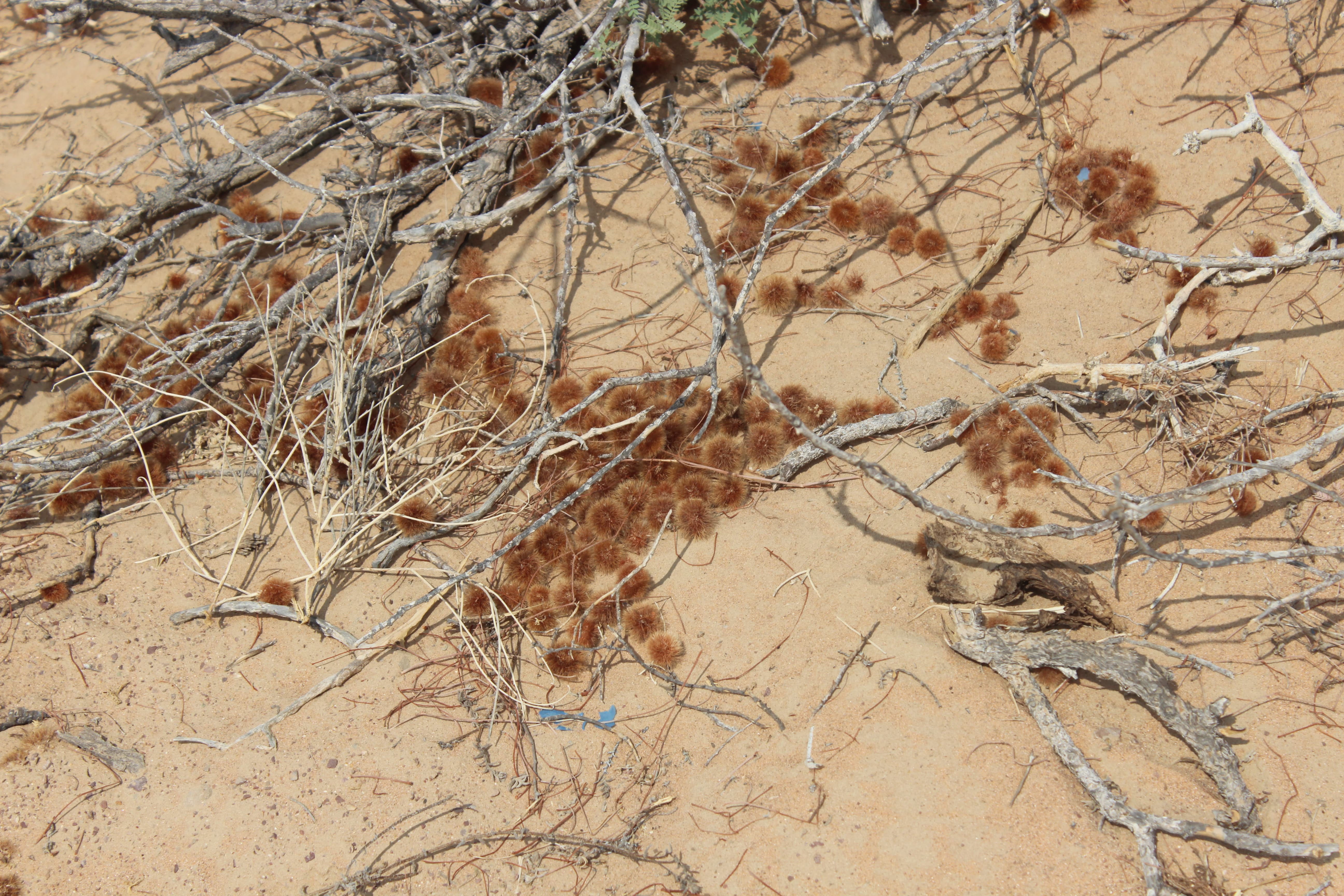
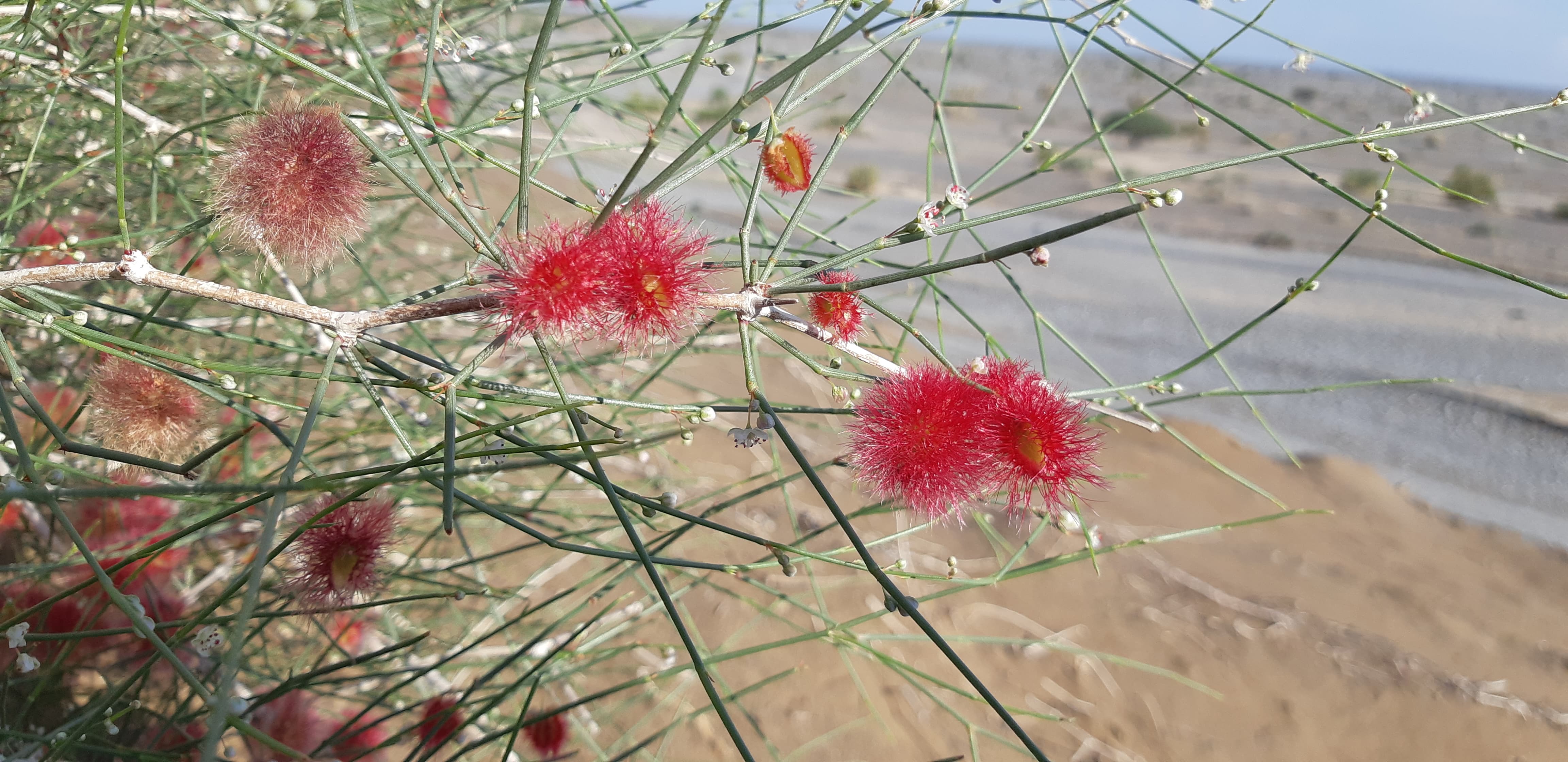
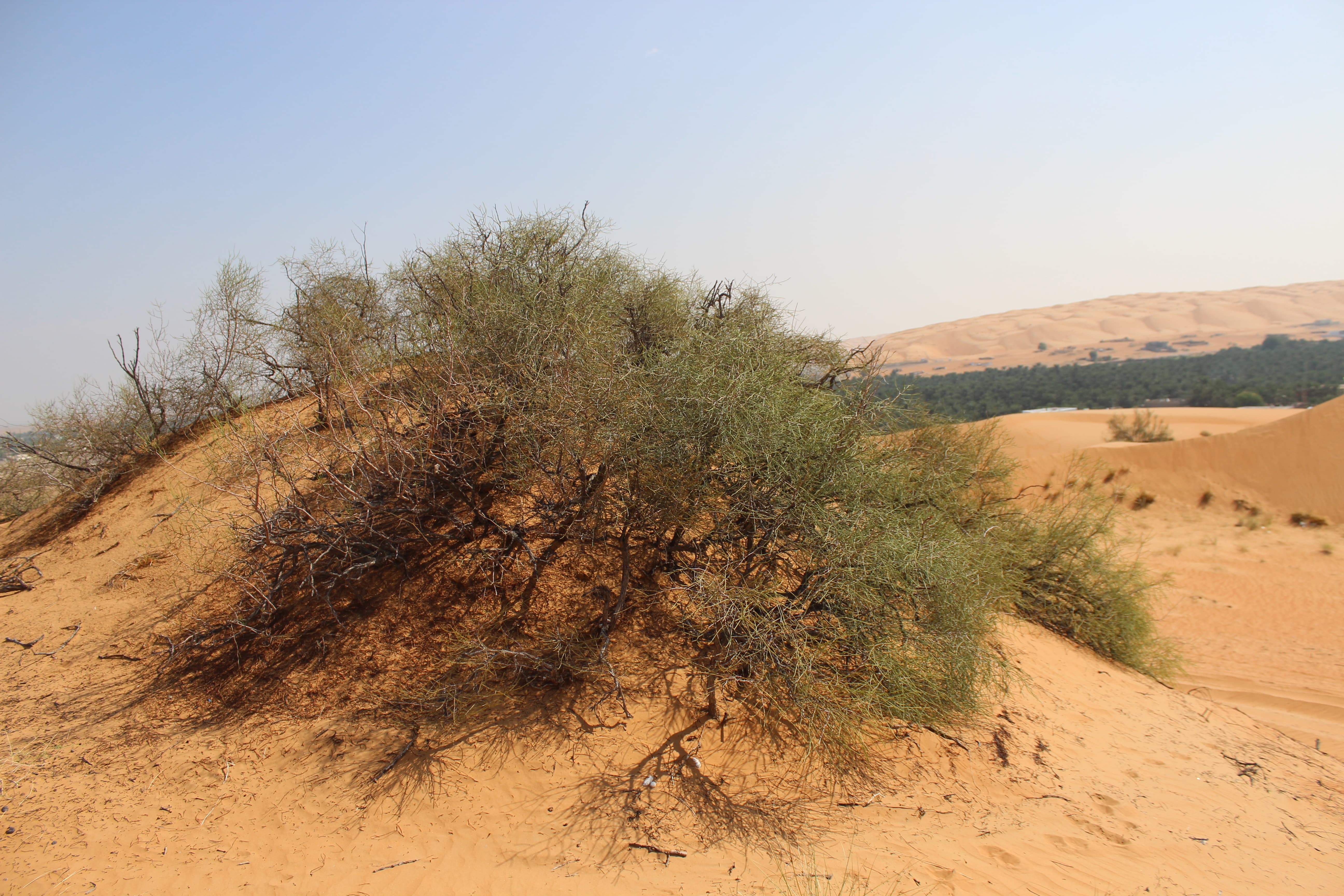
Calligonum_comosum_2 © OBG
Calligonum_comosum_3 © OBG
Calligonum_comosum_4 © OBG
Calligonum_comosum_5 © OBG
Calligonum_comosum_6 © OBG
Calligonum_comosum_7 © OBG
Calligonum_comosum © OBG
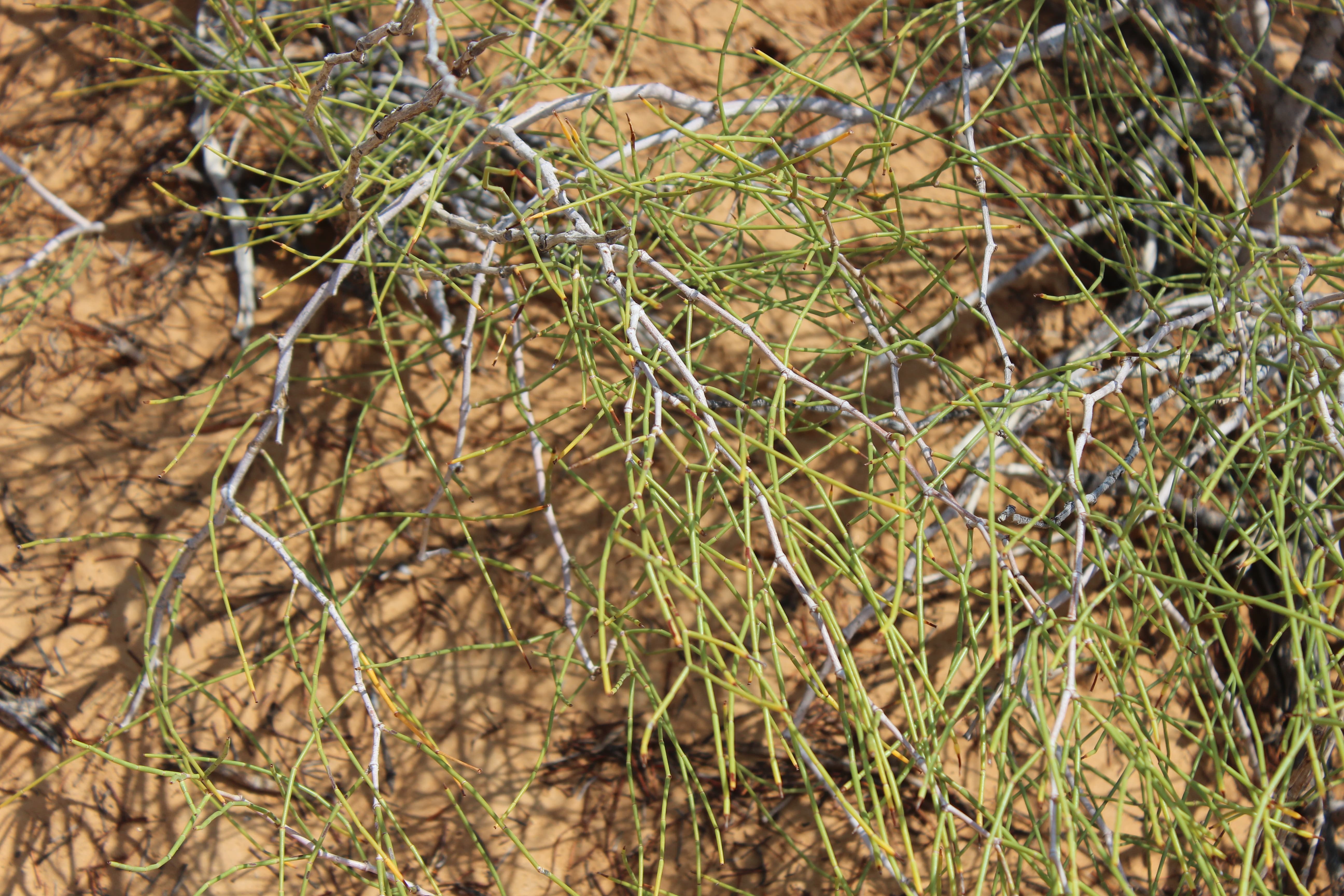
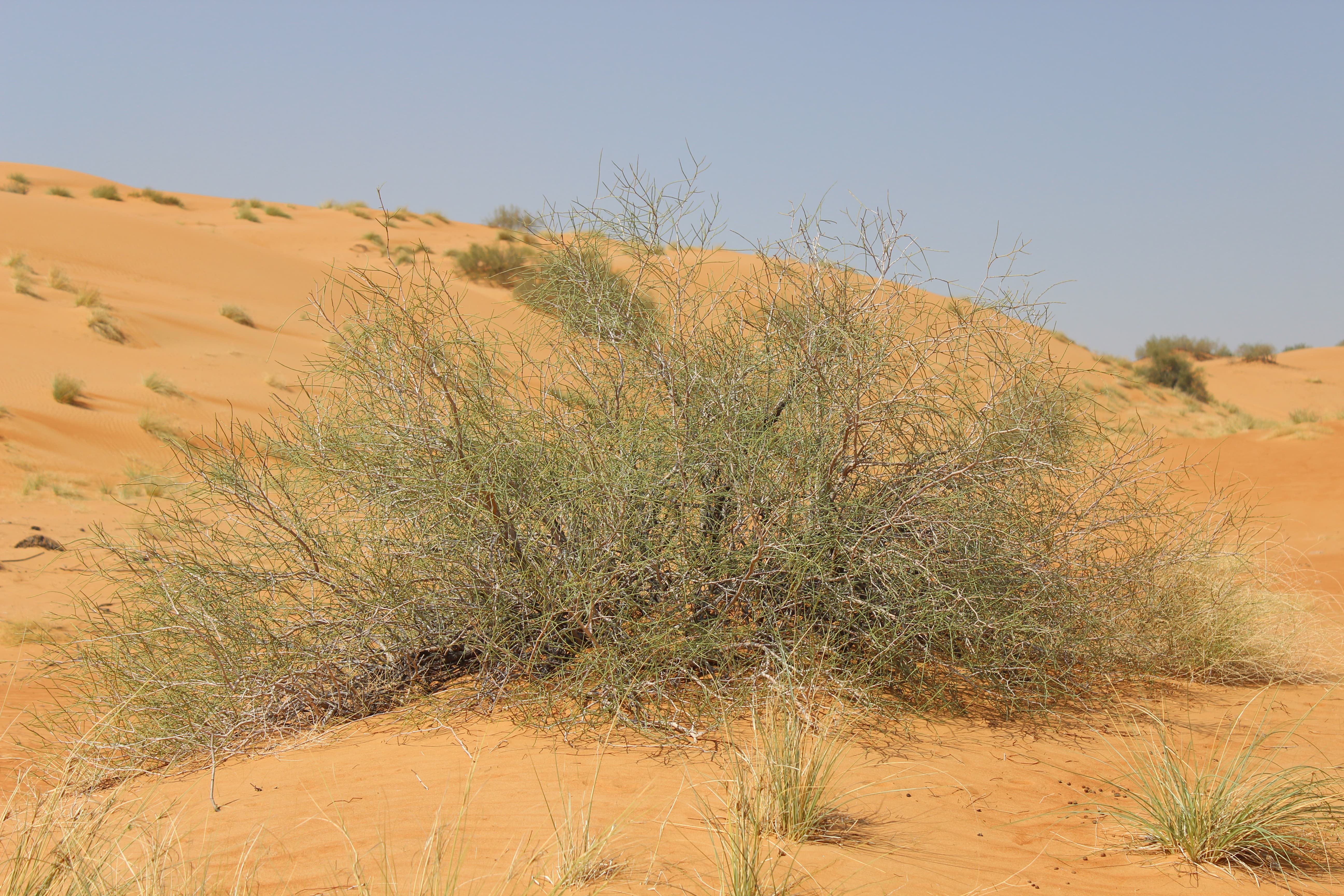
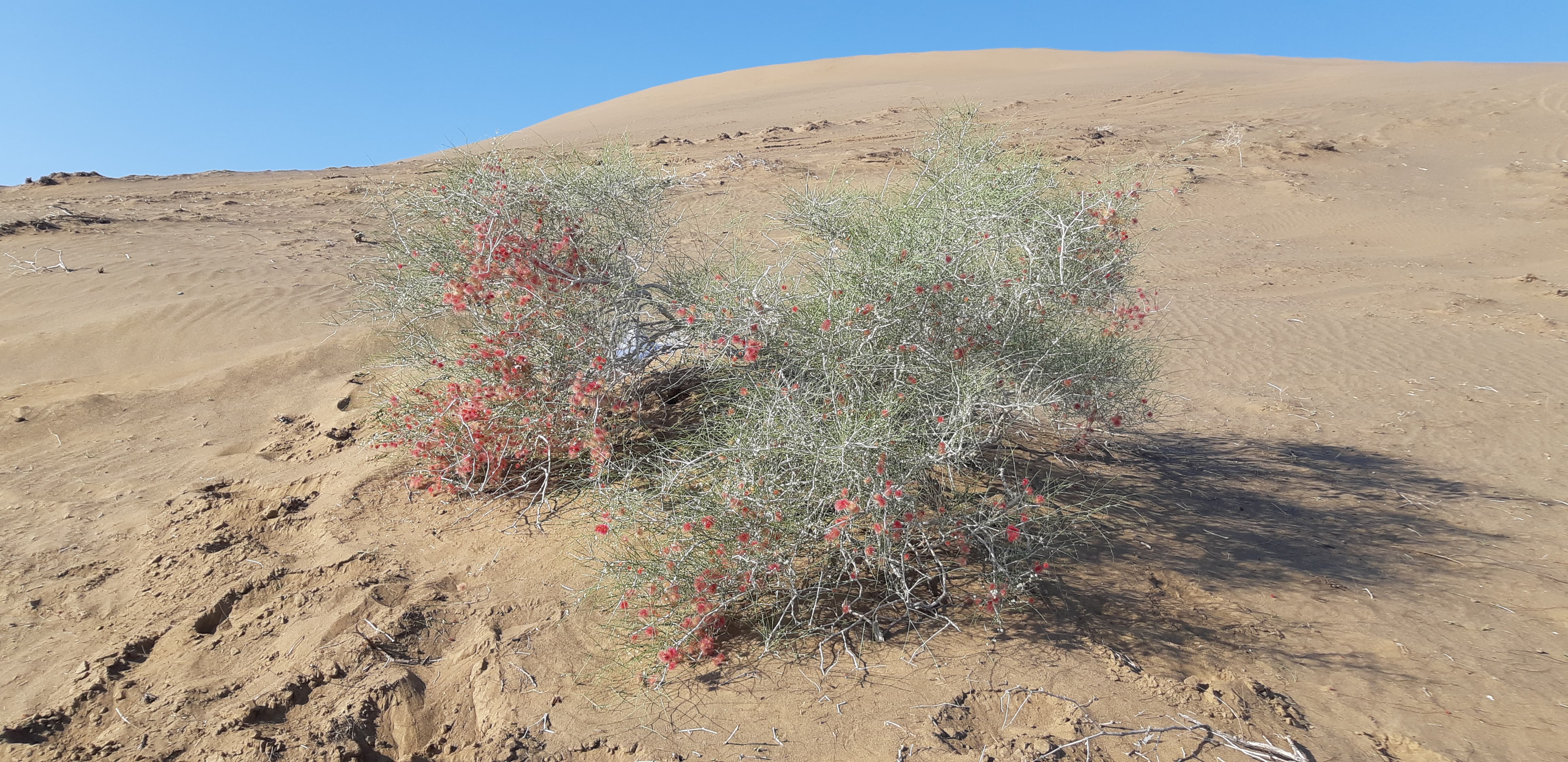
An almost leafless shrub ; up to 2 m tall , with white-grey bark . Stems erect to ascending , with pale branches and swollen nodes . Leaves minute , soon falling , branches leafless for most of the year . Inflorescences sometimes in groups , arising from the leaf axils ; pedicels equal to or slightly longer than the perianth lobes . Flowers small , white-pinkish with a green median stripe ; perianth-lobes ± 3 mm , oblong ; stamens 18-19 ; ovary 4-angled ; style 4 . Fruit achene , 1-1 . 5 cm , showy , red or pale-yellow , with four pairs of longitudinal wings covered in stiff bright red bristles . (Ref . Flora of Oman ; vol . ) .
No Data
Not Evaluated (NE)
Common
الوصف غير متاح حاليًا
Calligonum polygonoides subsp. comosus (L'Hér.) Soskov
Pallasia comosa (L'Hér.) Raeusch.
No data
maintenanceAr.Item1
Fire Bush
In Omani studies: Richardson & Dorr (2003) wrote that: "Yellow and orange dyes are obtained from the twigs or root of it. For the colouring of the cotton dishdashah, the most commonly used plant pigments are derived from waris (Flemingia rhodocarpa or Flemingia grahamiana), zi 'faran (Crocus sativus), sidr (Ziziphus spina-christi), and nabat al- 'arta (Calligonum comosum). Leather is often dyed, especially when used in conjunction with coiled basketry or for the making of personal articles such as money bags, belts and woman's headdress, the shabkah. A golden hue is obtained from the crushed root of nabat al-'arta (Calligonum comosum)". (Ref. The Craft Heritage of Oman). In addition, Pickering & Patzelt (2008) mentioned that: " Nearly smokeless and therefore valued as firewood. Used to cure leather. The fruit is edible". (Ref. Field Guide to the Wild Plants of Oman; 2008).
*Ghazanfar, S. (2003). Flora of the Sultanate of Oman, vol.1: Piperaceae – Primulaceae. Meise, National Botanic Garden of Belgium (Scripta Botanica Begica, Vol. 25). ISBN 90-72619-55-2 ISSN 0779-2387.*https://en.wikipedia.org *https://pza.sanbi.org *Gledhill, D. (2008). The Names of Plants. Fourth Edition. Cambridge University Press, UK. ISBN 978-0-521-86645-3 ISSN 978-0-521-68553-5. *Richardson, N. Dorr, M. (2003). The Craft Heritage of Oman; vol. 2. Published by Motivate publishing. ISBN 1-86063-1584. *Pickering, H. Patzelt, A. (2008). Field Guide to the Wild Plants of Oman. Kew publishing, Royal Botanic Garden, Kew. ISBN 9781842461778. *Miller, A.G. & Cope, T.A. (1996). Flora of the Arabian Peninsula and Socotra 1: 1-586. Edinburgh university press. ISBN 0748604758. *POWO (2023). ""Plants of the World Online. Facilitated by the Royal Botanic Gardens, Kew. Published on the Internet; http://www.plantsoftheworldonline.org
