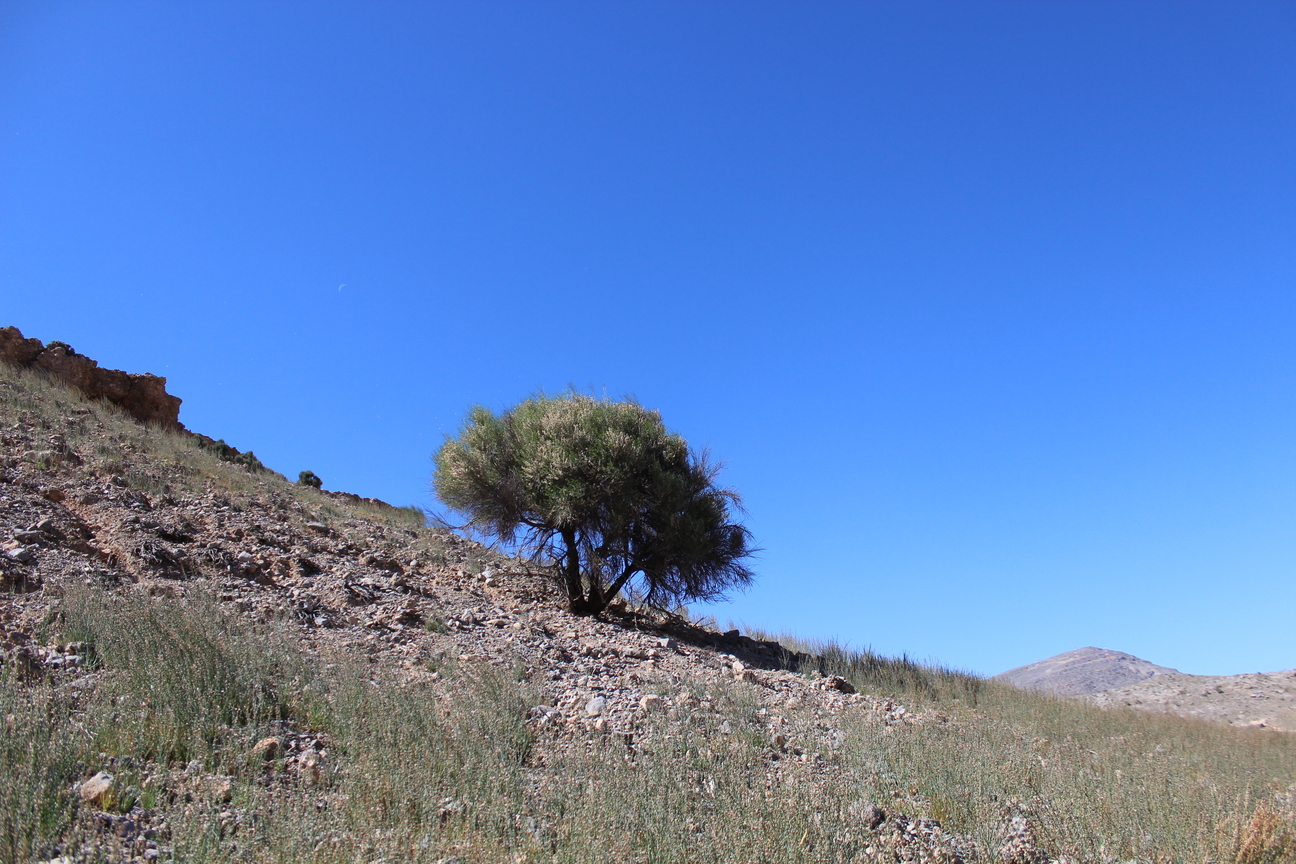
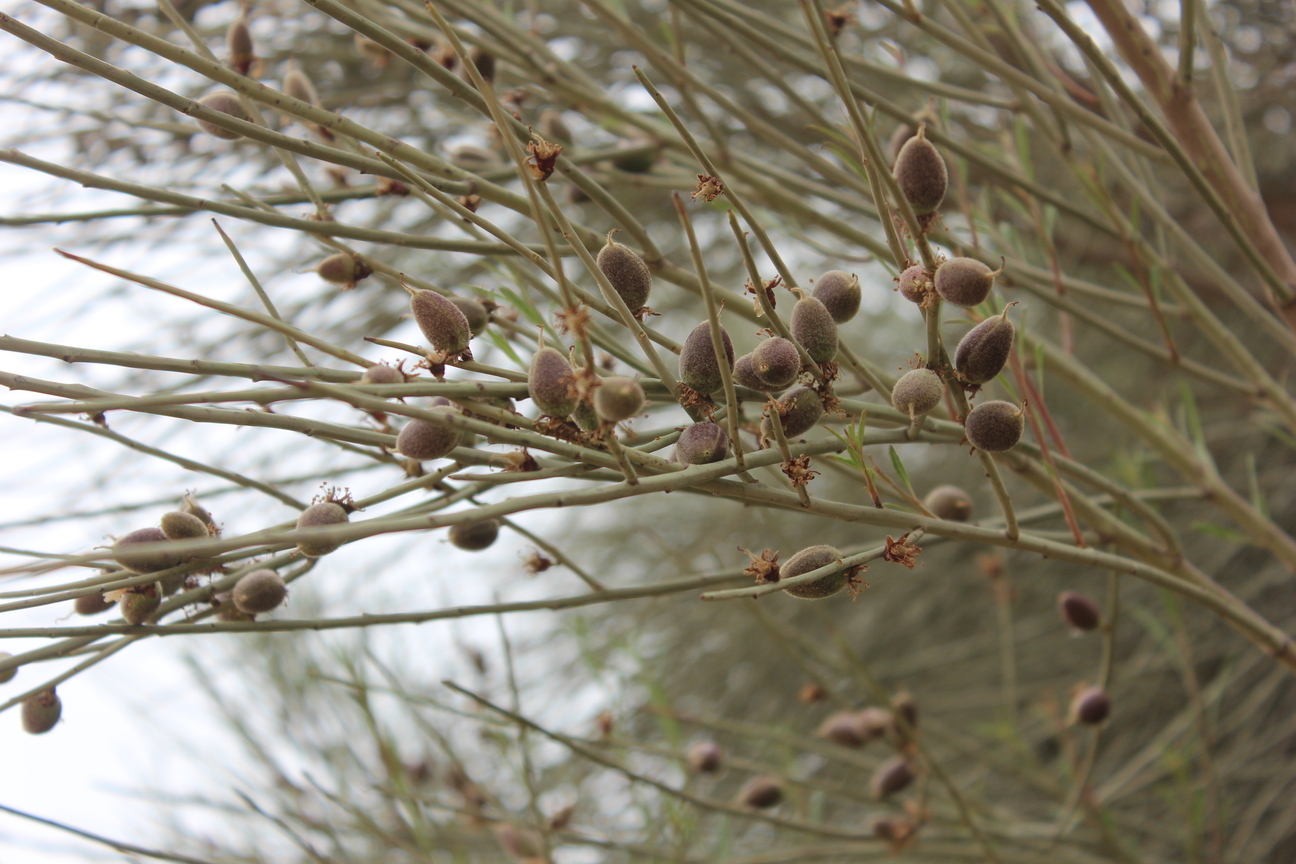
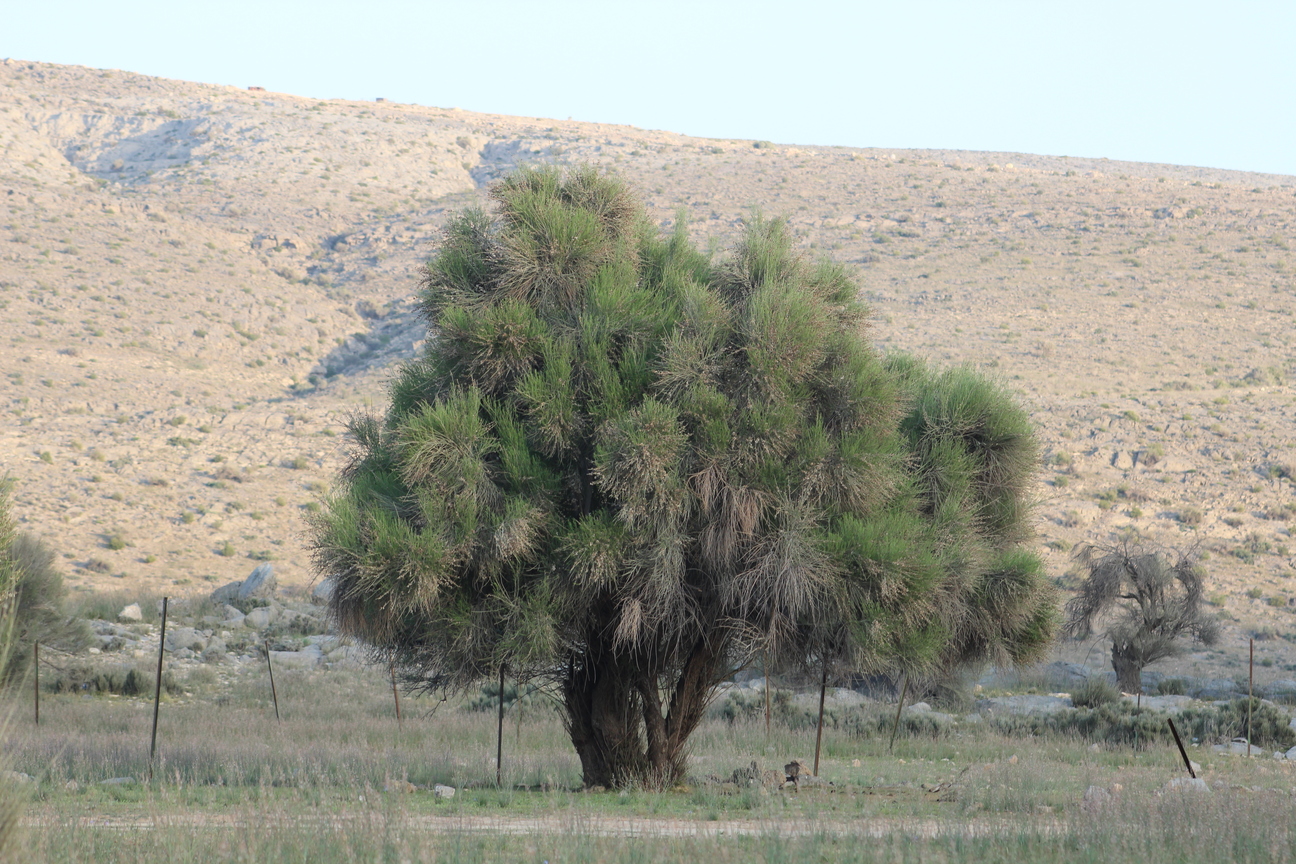
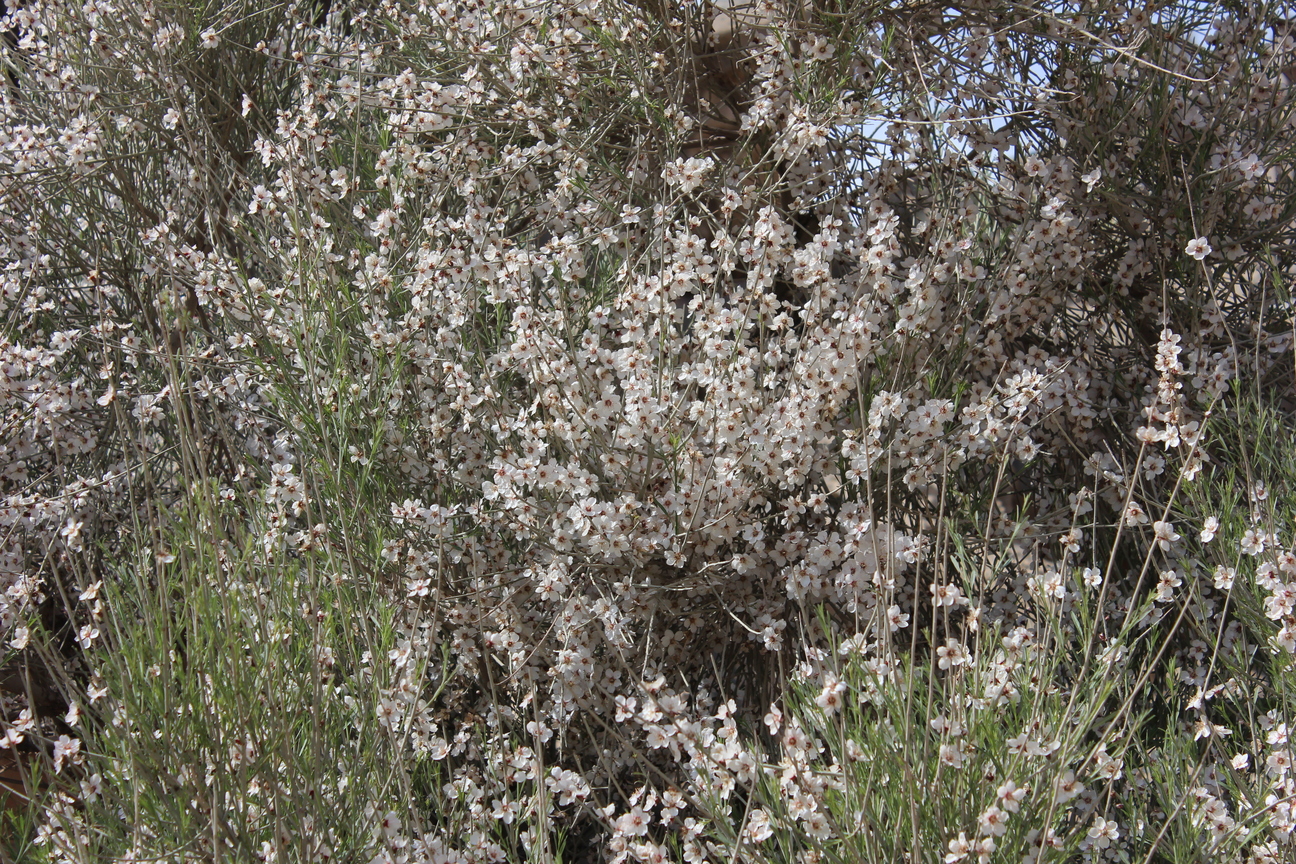
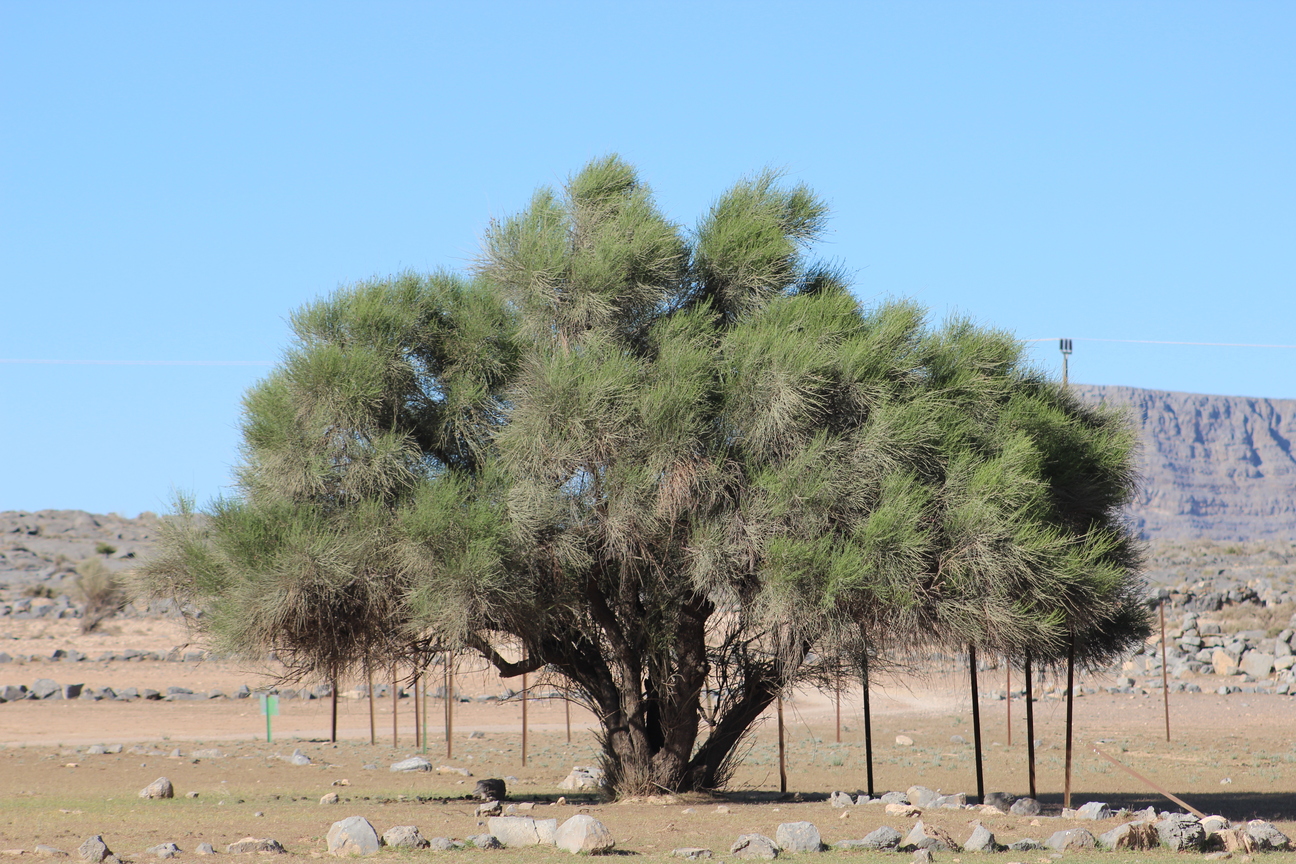
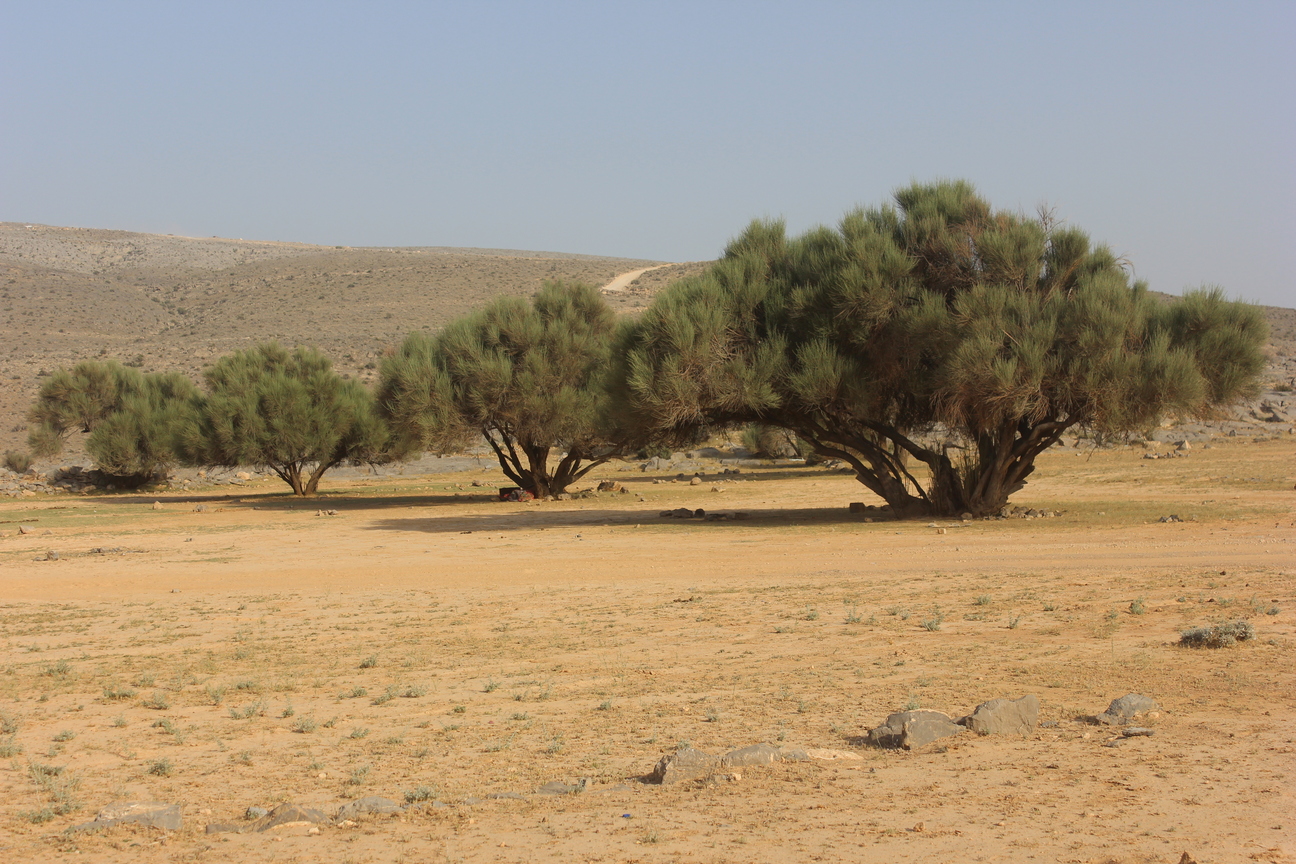
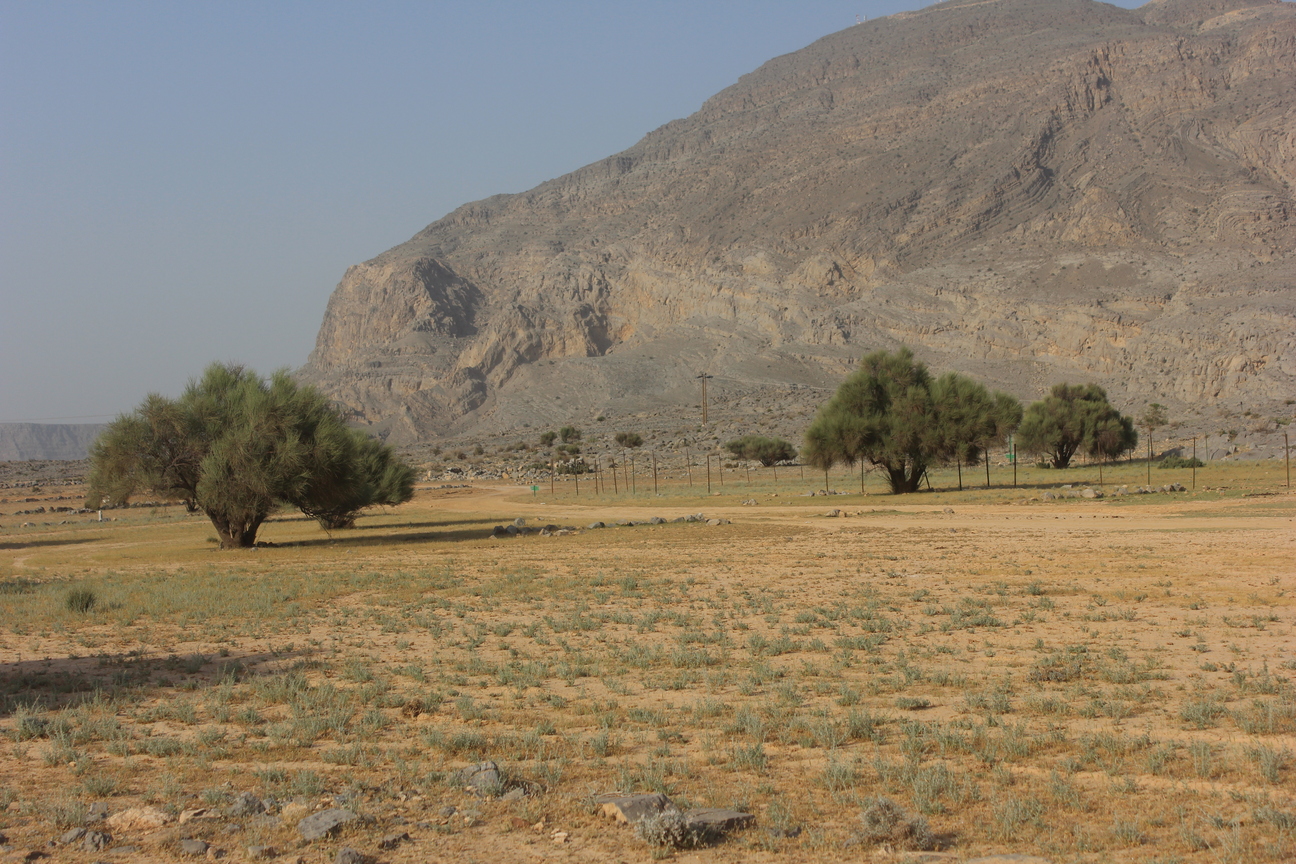
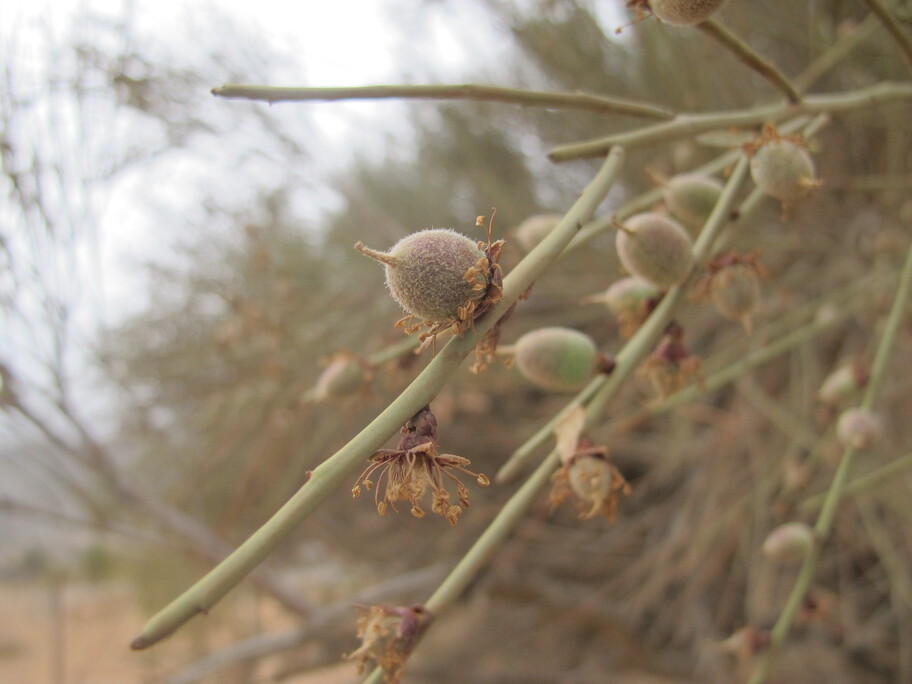
Prunus_arabica_1 © OBG
Prunus_arabica_2 © OBG
Prunus_arabica_3 © OBG
Prunus_arabica_5 © OBG
Prunus_arabica_6 © OBG
Prunus_arabica_7 © OBG
Prunus_arabica_9 © OBG
Prunus_arabica_�4� © OBG
Prunus_arabica_�8� © OBG
Prunus_arabica © OBG
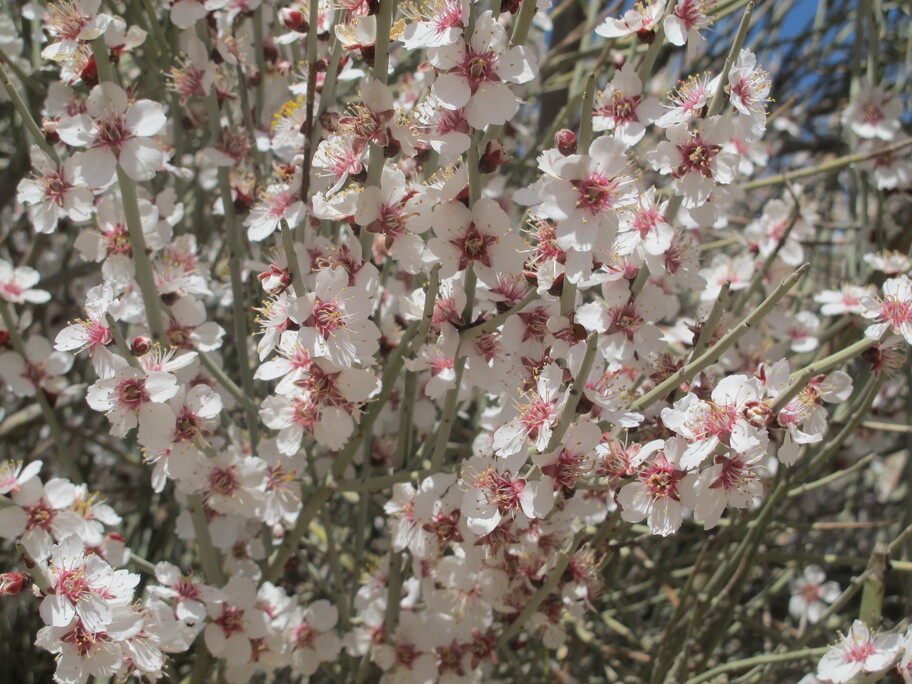
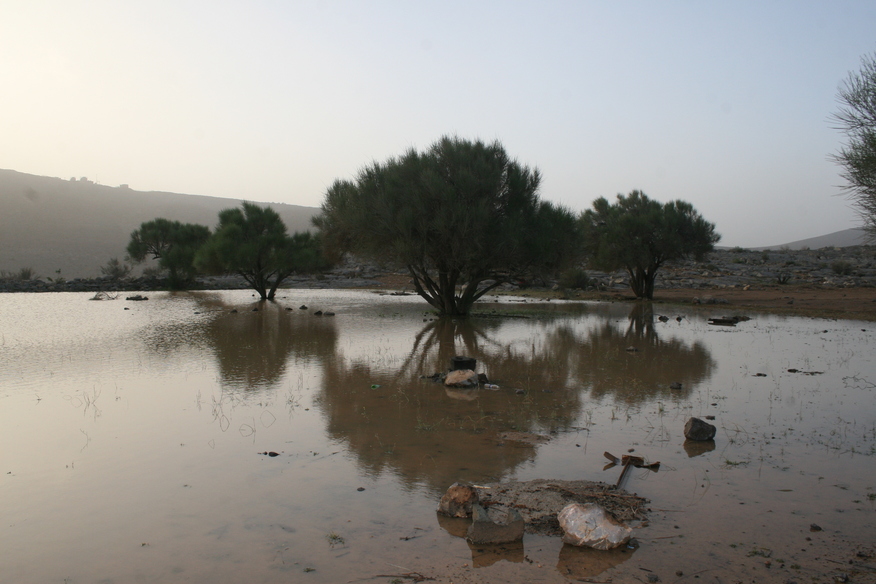
Unarmed broom-like shrub or small tree ; up to 2 . 5-4 m tall , with brown bark . Stems with green , glabrous , angled branches and ribbed twigs . Leaves falling soon , 10-30 x 1-3 mm , linear-lanceolate to linear-spathulate , tip acute , margin entire to irregularly crenate , glabrous or sparsely pubescent . Inflorescences solitary , sessile , appearing before the leaves . Flowers white or pale pink , 5-10 mm ; sepals 3-4 mm , ovate , deciduous ; petals pink to pale pink , 5-10 mm , obovate . Fruit drupe , ovoid , 1 . 5-2 . 5 cm , ovoid , apiculate , grey-green to brown-green , pubescent , leathery ; stone smooth . (Ref . Flora of Oman ; vol . 2) .
No Data
Not Evaluated (NE)
Frequent
الوصف غير متاح حاليًا
Amygdalus arabica Olivier
This tree is propagated by seeds and stem cuttings. Steps to follow: 1. Seed propagation: • Sow collected seeds in seed tray filled with a ratio of 3 peat moss: 1 compost, 5 cm apart. • Pre-treatment methods include: soaking seeds with water (normal/warm/hot) for 24 hours, scarification using sand paper, using ash on the top layer of soil and the removal of the seed coat using forceps. Soaking with water has shown the best result. • Irrigate the seed tray three times a week. • Germination commences from 1–3 weeks. Seed germination of this species is low and average germination is around 22%. 2. Cutting propagation: this has been tried a few times and the result was 0%. More trials are required.
maintenanceAr.Item1
Wild Almond
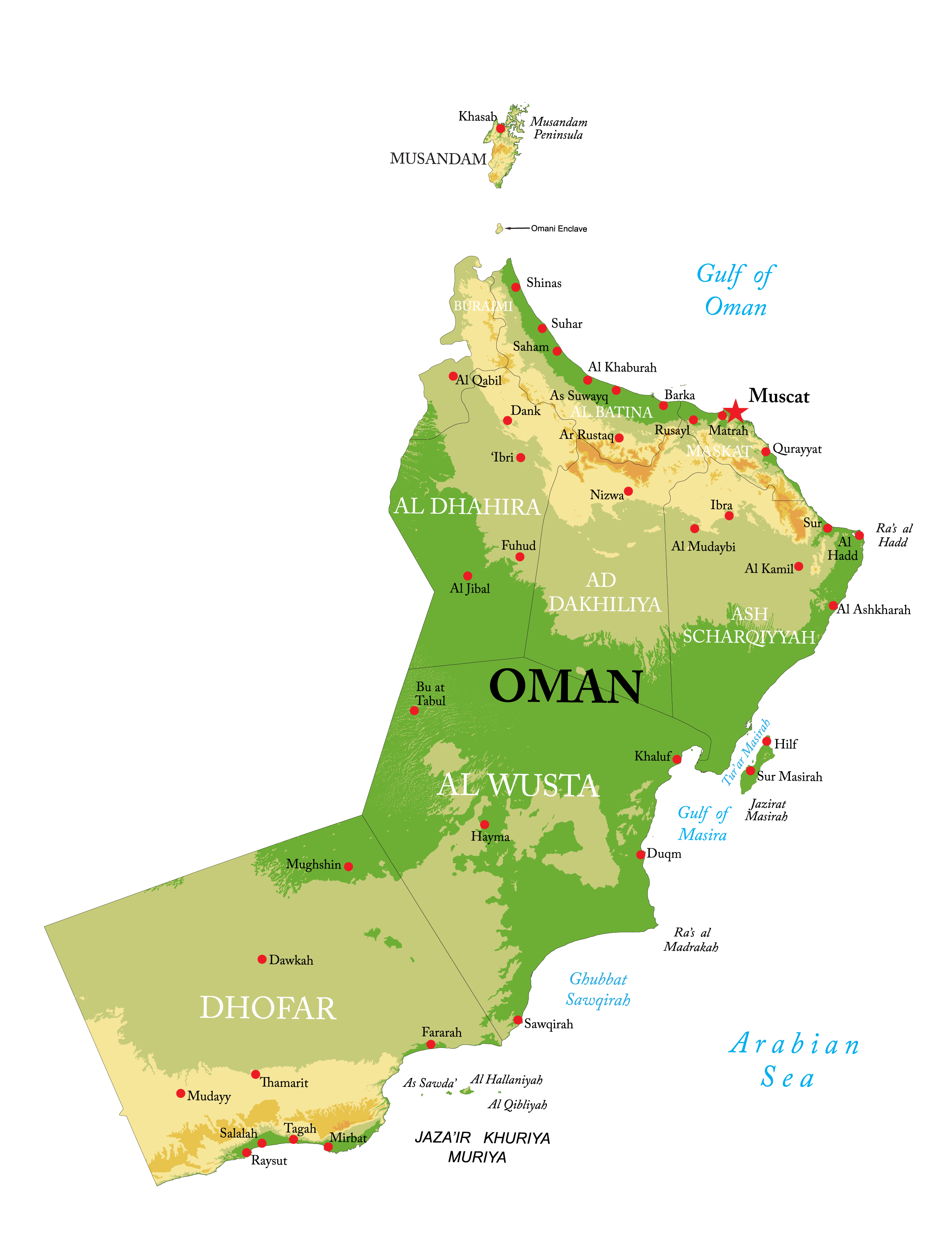
In the Eastern Hajar, the fruit is eaten either raw or roasted with ghee. It is used to treat diabetes. (Ref. Oman Botanic Garden). In Omani studies: Ghazanfar (2007) wrote that: "In Musandam the tree is sometimes planted as a windbreak at the edges of small farms on the mountains. The wood is used to make the handle of the traditional tribal axe (Arabic: Jirz) popular in Musandam. The seed kernel is usually very bitter and inedible (recorded to be edible by Jongbloed, p. 482 (2003)". (Ref. Flora of Oman, vol. 2).
*Ghazanfar, S. (2007). Flora of the Sultanate of Oman, vol.2: Crassulaceae – Apiaceae. Meise, National Botanic Garden of Belgium (Scripta Botanica Begica, Vol. 36). ISBN 9789072619747 ISSN 0779-2387. *https://en.wikipedia.org *Miller, A.G. & Cope, T.A. (1996). Flora of the Arabian Peninsula and Socotra 1: 1-586. Edinburgh university press. ISBN 0748604758. *Hammer, K. Gebauer, J. Al Khanjari, S. Buerkert, A. (2009). Oman at the cross-roads of inter-regional exchange of cultivated plants. Gene Resour Crop Evol (2009) 56:547-560. Springer Science+Business Media B.V. 2008. DOI 10.1007/s10722-008-9385-z. *POWO (2023). ""Plants of the World Online. Facilitated by the Royal Botanic Gardens, Kew. Published on the Internet; http://www.plantsoftheworldonline.org
