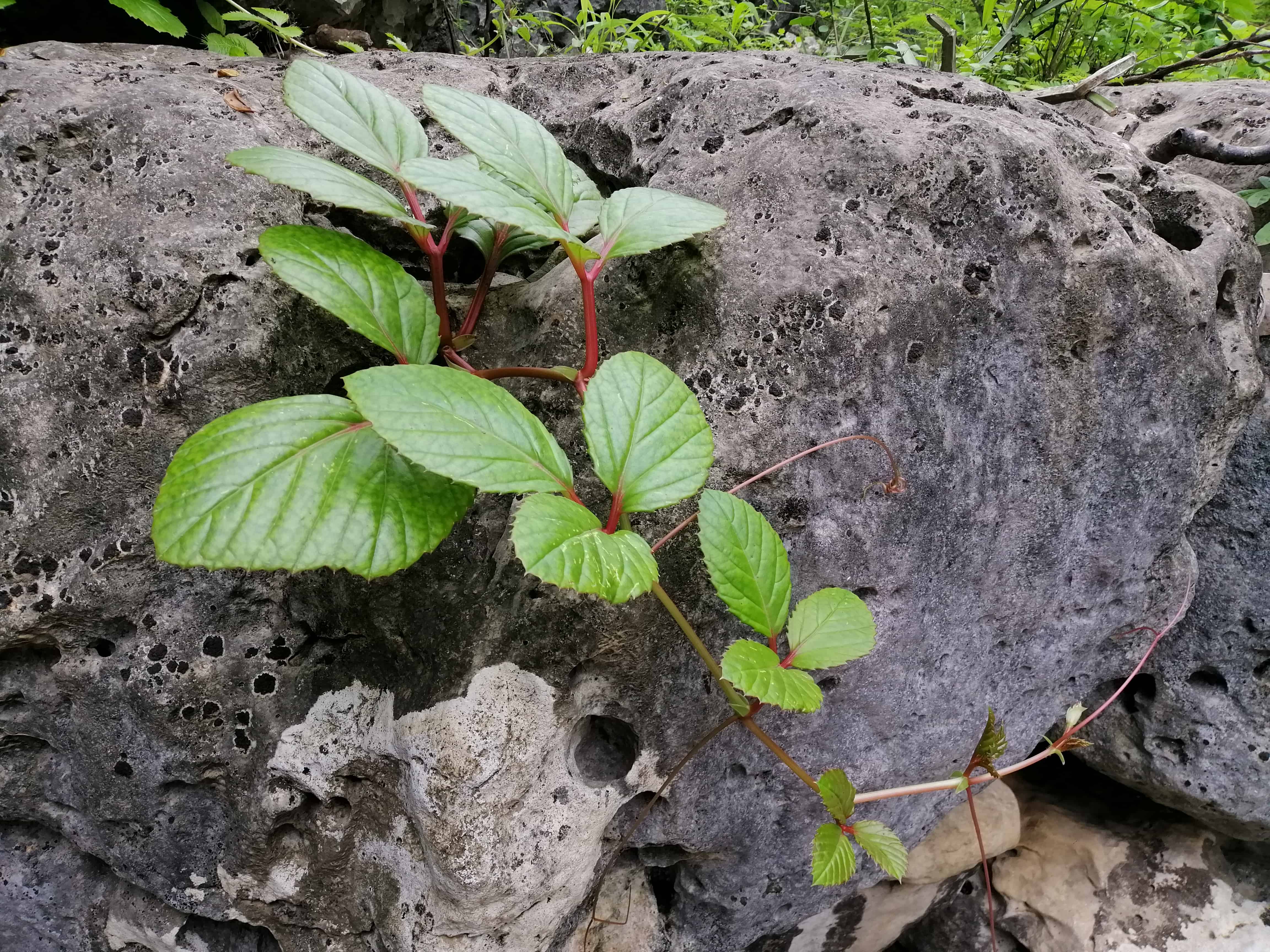
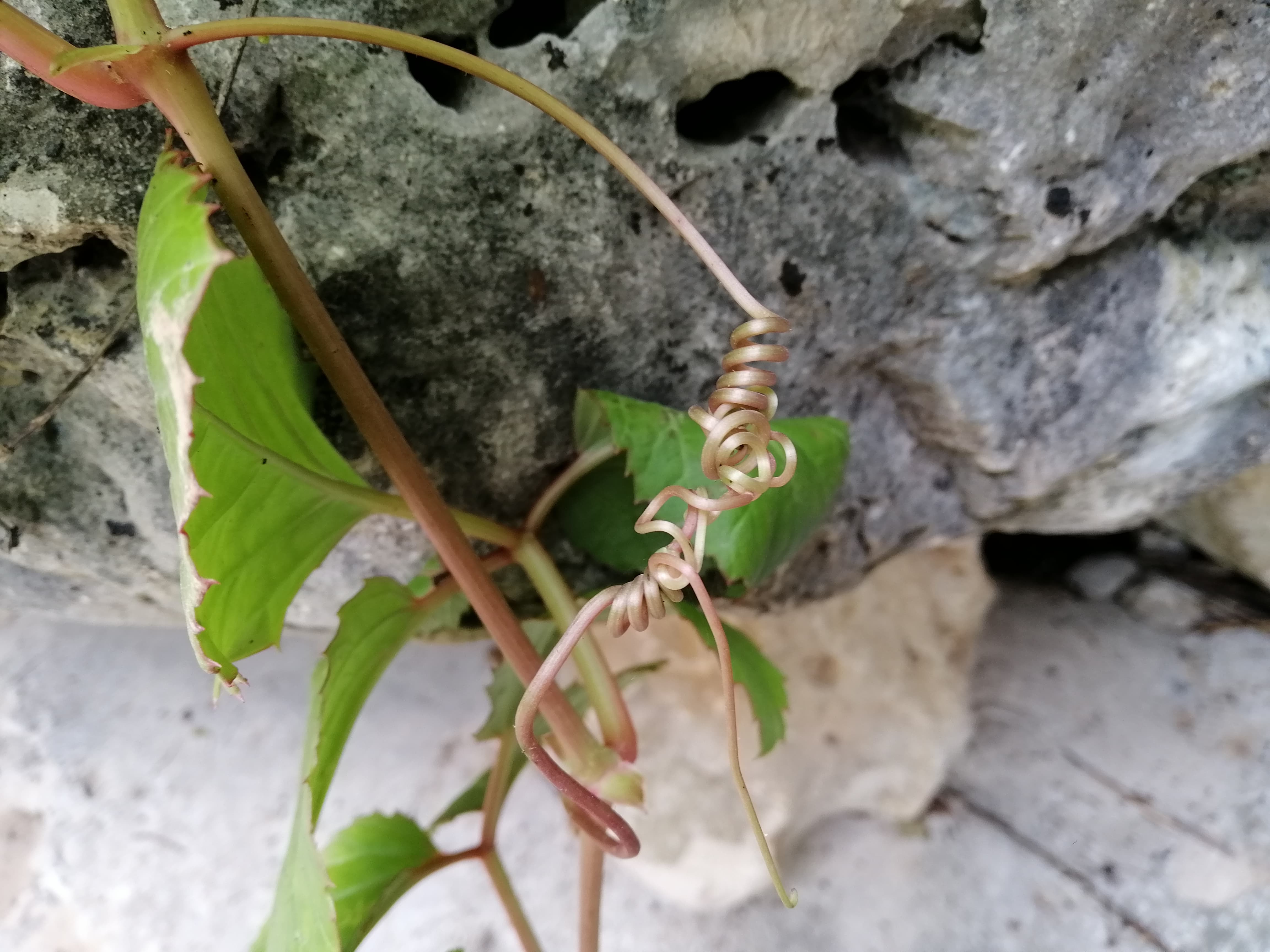
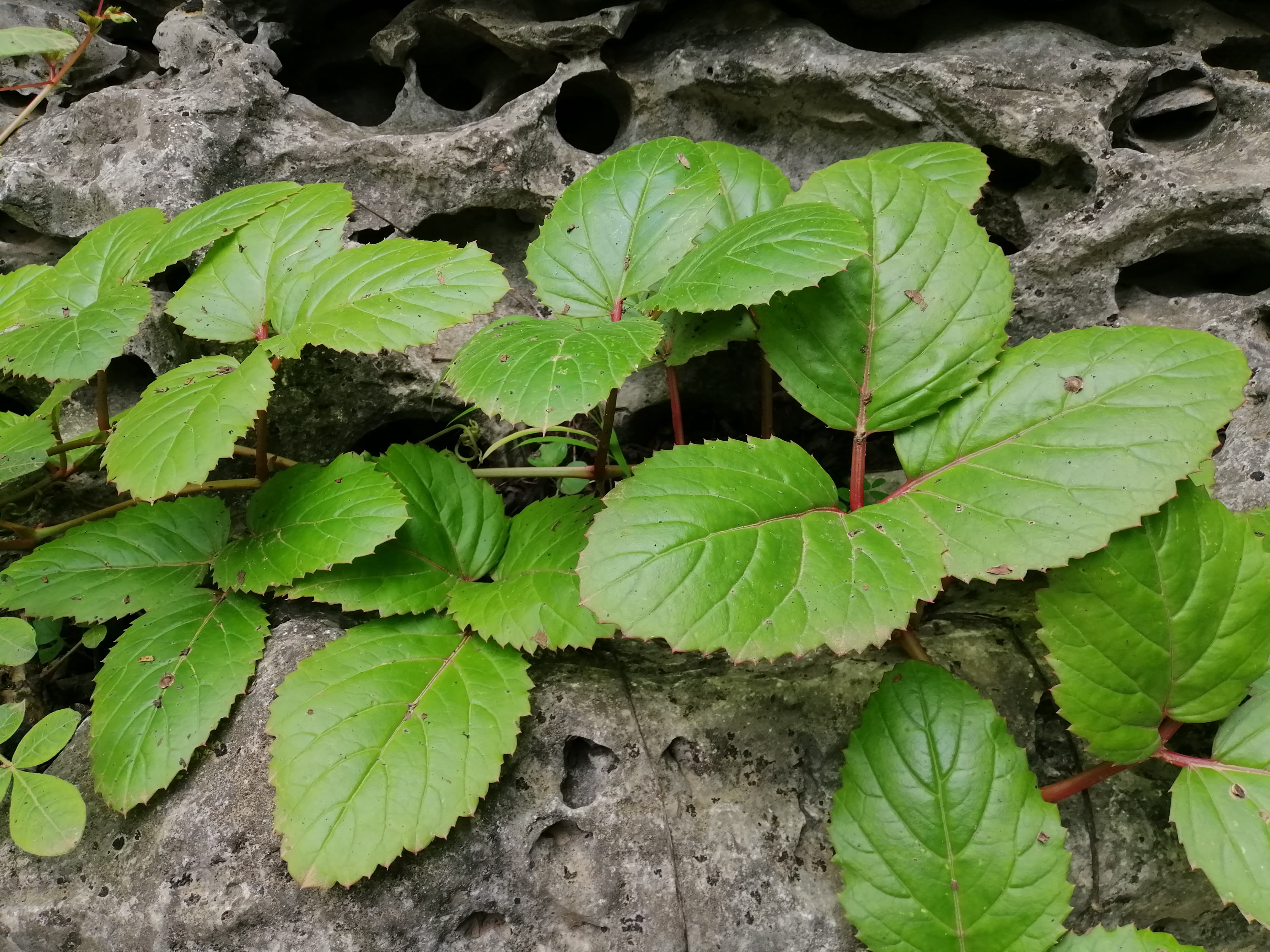
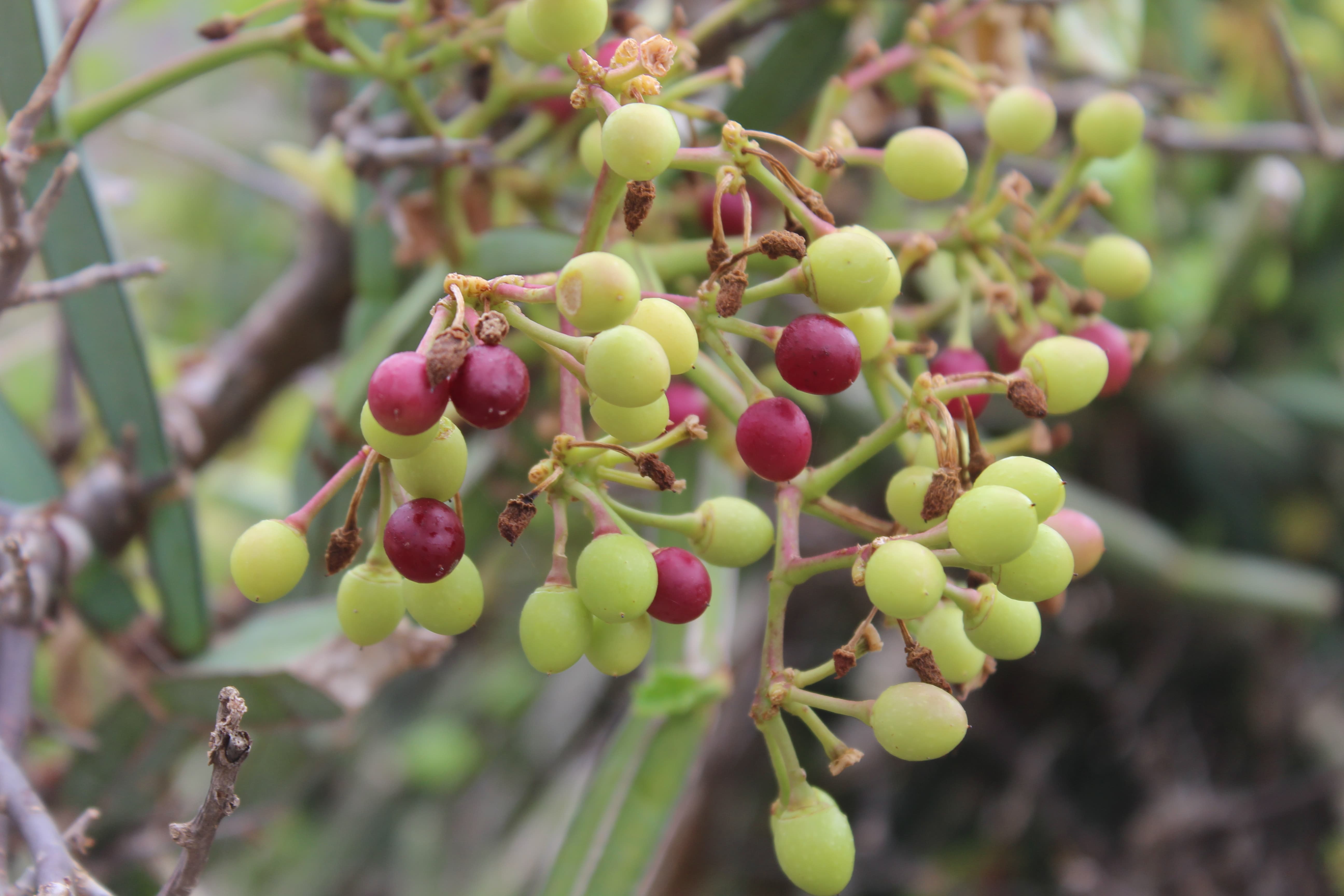
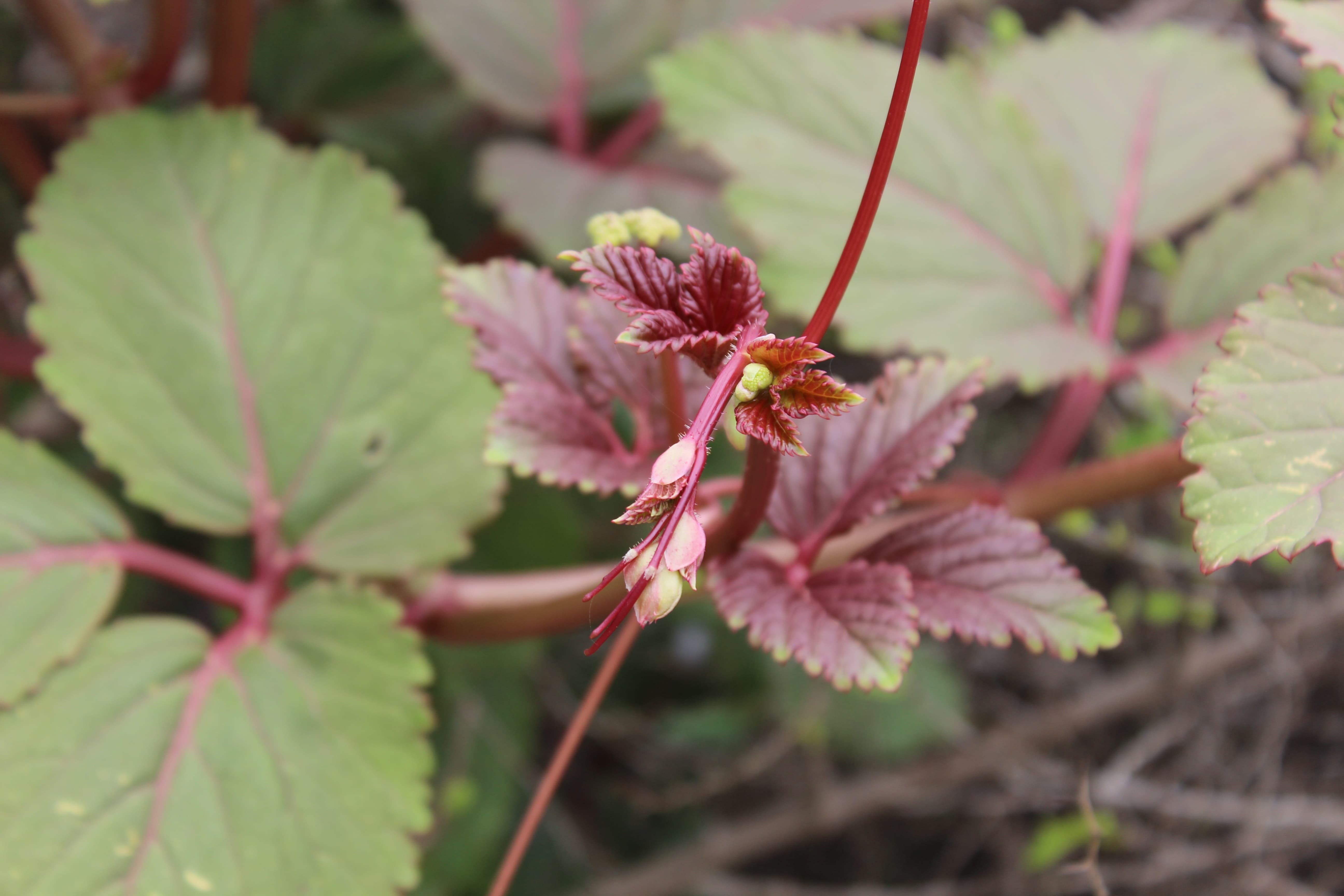
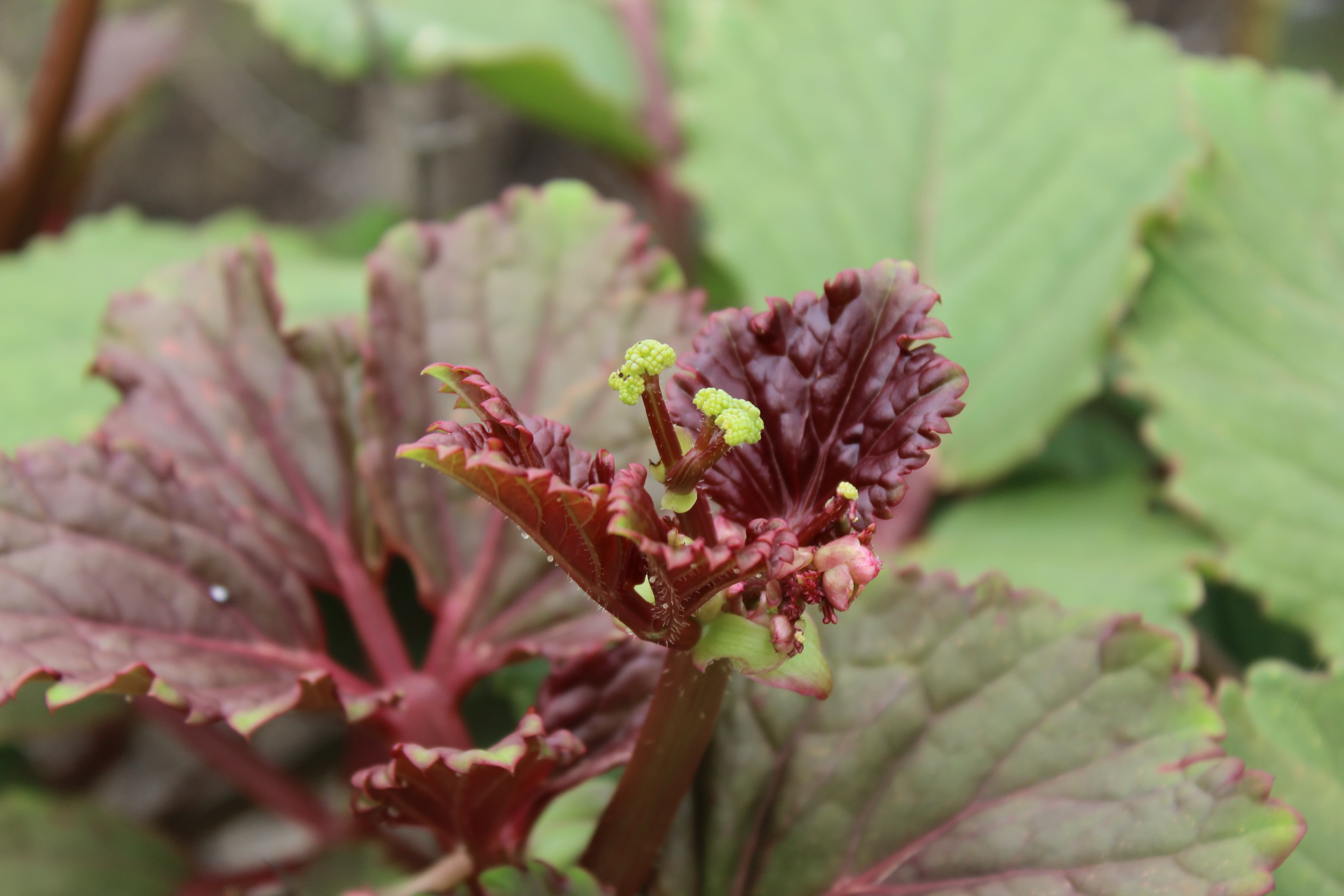
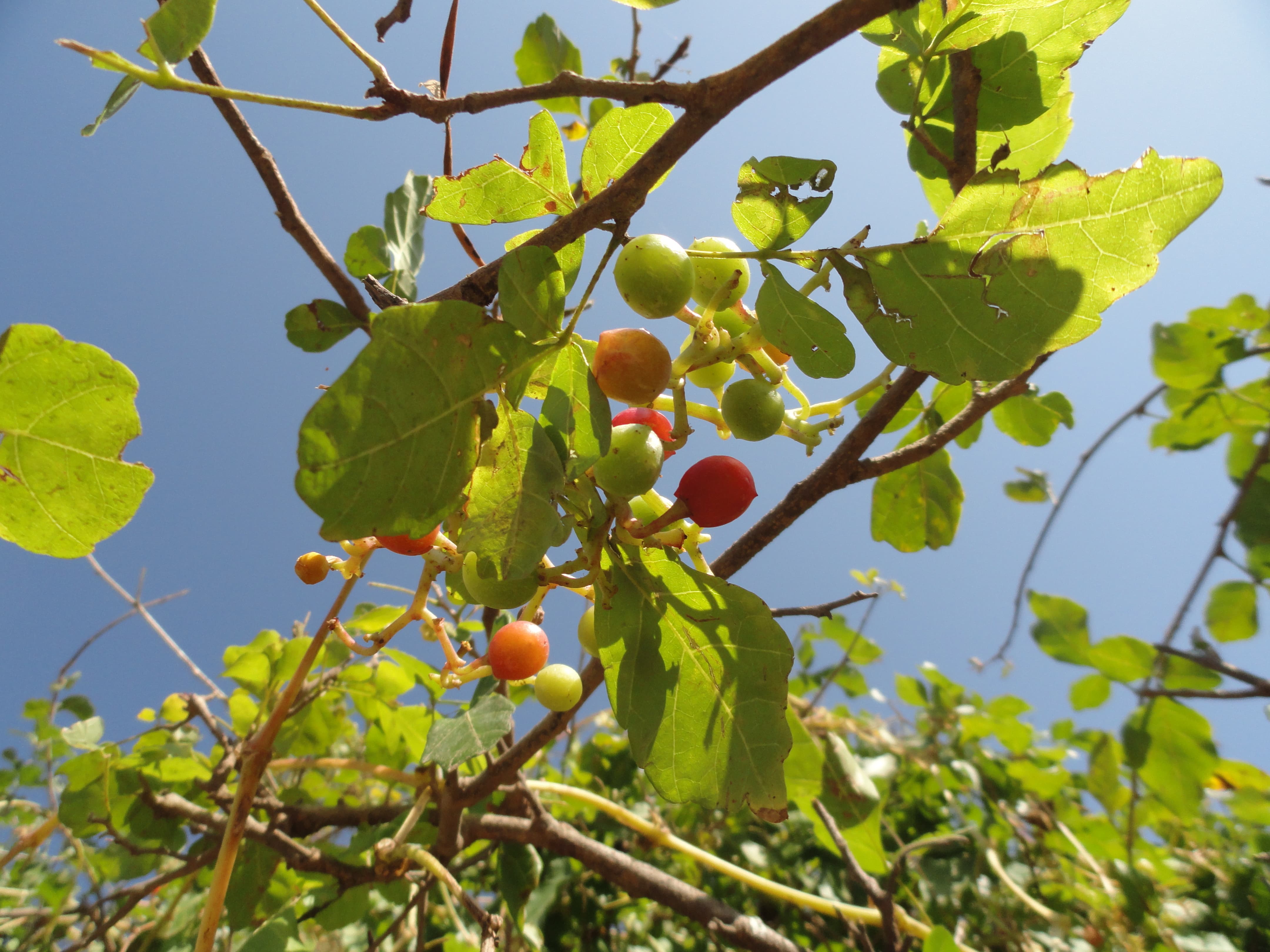
Cyphostemma_ternatum_2-06082024 © OBG
Cyphostemma_ternatum_3-06082024 © OBG
Cyphostemma_ternatum_4-06082024 © OBG
Cyphostemma_ternatum_5-06082024 © OBG
Cyphostemma_ternatum_6-06082024 © OBG
Cyphostemma_ternatum_7-06082024 © OBG
Cyphostemma_ternatum-06082024 © OBG
Perennial robust trailing or climbing herb ; up to 2m long . Stems succulent , round in section , glabrous . Leaves alternate , more/less sessile , fleshy , stipulate , 3-5-foliolate ; leaflets oblong to ovate , apex rounded or obtuse , sessile or sometimes with short petiole , margin crenate-serrate , glabrous . Flowers pale yellowish green , arranged opposite the leaves in long pedunculate axillary cymes . Fruit berry , ovoid or globose , ripening bright red , glabrous , 1-seeded .
No Data
No Data
Common
الوصف غير متاح حاليًا
Cissus gmelinii F.Dietr.
Cissus ternata J.F.Gmel.
Saelanthus ternatus (J.F.Gmel.) Forssk. ex M.J.B.Orfila
Vitis ternata (J.F.Gmel.) Blatt.
No data
maintenanceAr.Item1
Wild Grape
In earlier years it was an important food source. Armfuls of the leaves were collected and put with a little added water into a large container to cook, with added salt if to hand. The leaves were then left to simmer. They quickly grow limp and boil down to a relatively small amount of green mush. This had to be gluped hurriedly, rather than chewed and savoured at leisure, as it is peppery and acrid and burns the mouth. However, it is very filling, and eaten in any quantity is said to produce a pleasant but mild feeling of euphoria. The fruit of this vine are edible once they have ripened and turned orange. The root too is edible, and can be eaten raw, but is improved by cooking. It was considered to be most palatable when cooked with lime juice, tamarind juice, or buttermilk. This is true also of
...

*Ghazanfar, S. (2007). Flora of the Sultanate of Oman, vol.2: Crassulaceae – Apiaceae. Meise, National Botanic Garden of Belgium (Scripta Botanica Begica, Vol. 36). ISBN 9789072619747 ISSN 0779-2387. *https://en.wikipedia.org *Miller, A., Morris, M. (1988). Plants of Dhofar, the Southern Region of Oman: Traditional, Economic, and Medicinal Uses. Published by Office of the Adviser for Conservation of the Environment, Diwan of Royal Court, Sultanate of Oman; ISBN 10: 0715708082 ISSN 13: 9780715708088. *POWO (2023). ""Plants of the World Online. Facilitated by the Royal Botanic Gardens, Kew. Published on the Internet; http://www.plantsoftheworldonline.org
