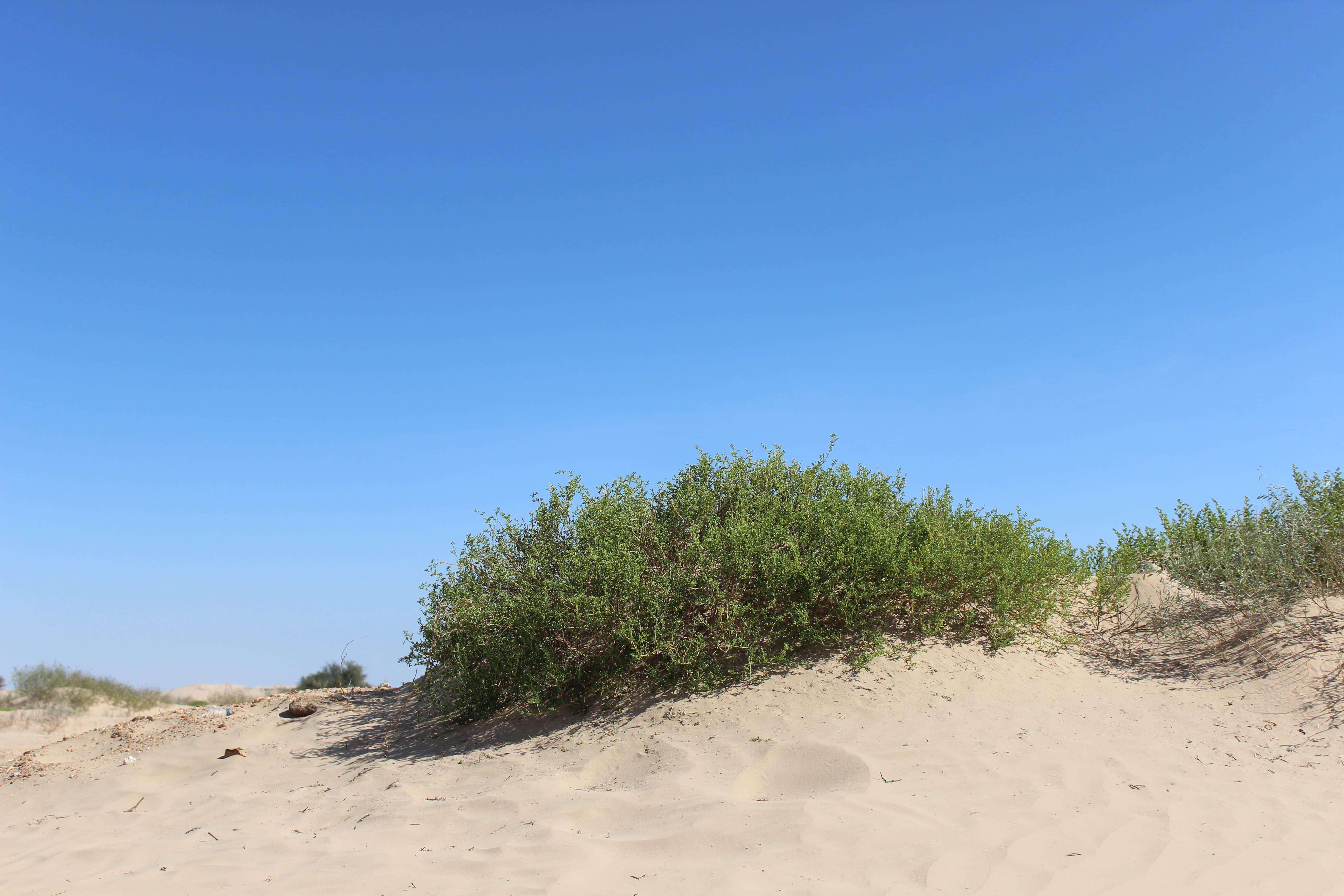
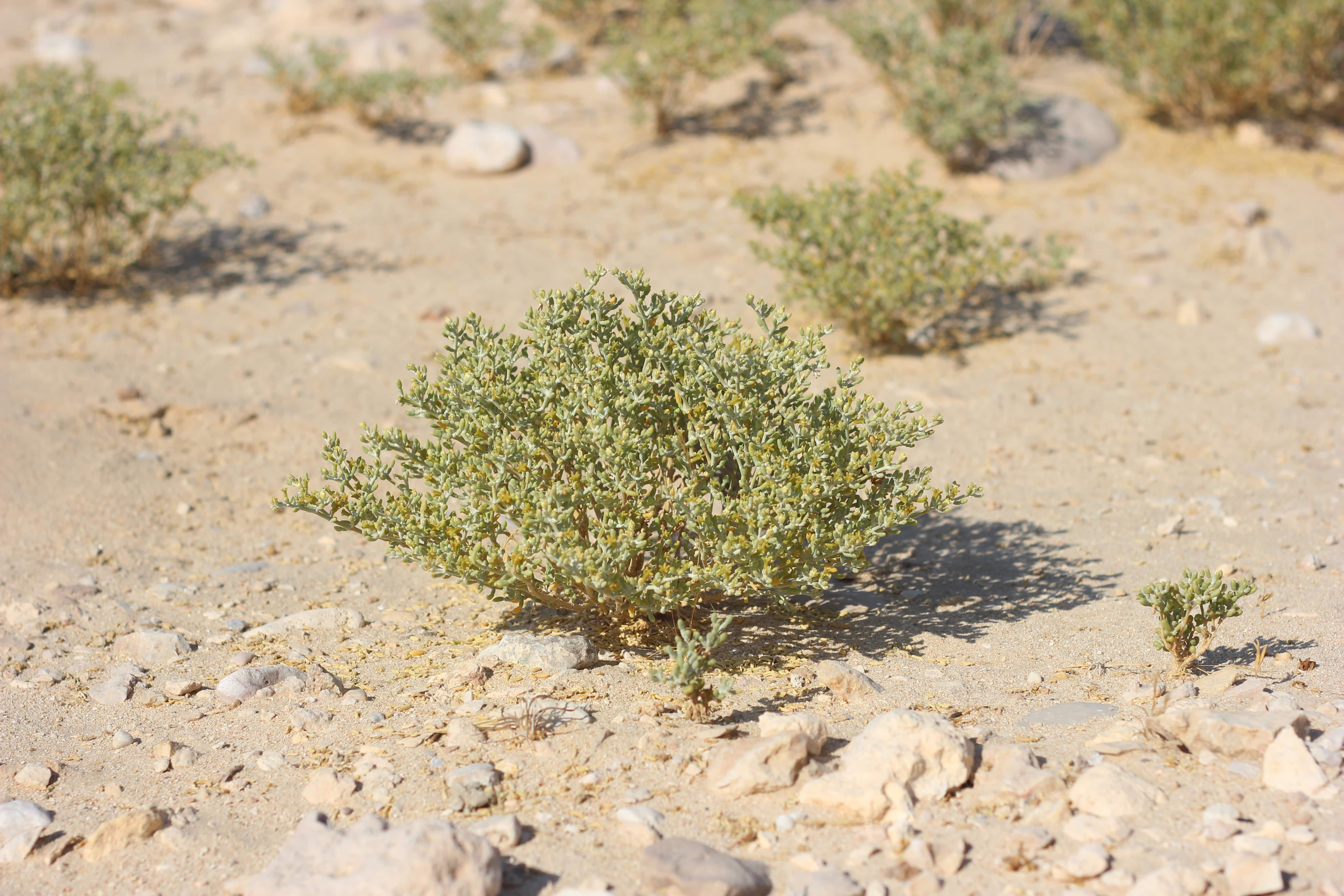
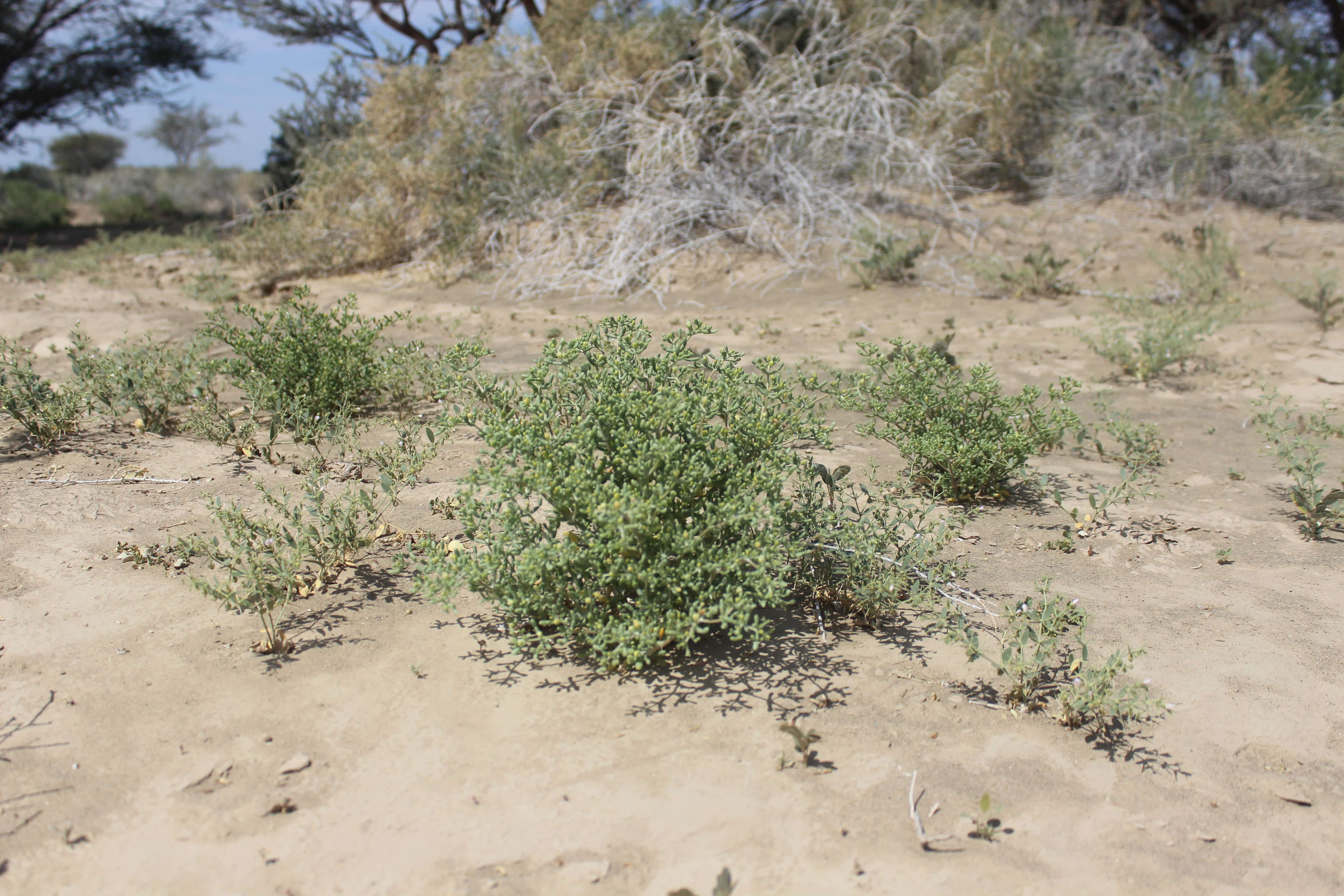
Zygophyllum_qatarense_2-06082024 © OBG
Zygophyllum_qatarense_3-06082024 © OBG
Zygophyllum_qatarense_4-06082024 © OBG
Zygophyllum_qatarense_5-06082024 © OBG
Zygophyllum_qatarense_6-06082024 © OBG
Zygophyllum_qatarense_7-06082024 © OBG
Zygophyllum_qatarense-06082024 © OBG
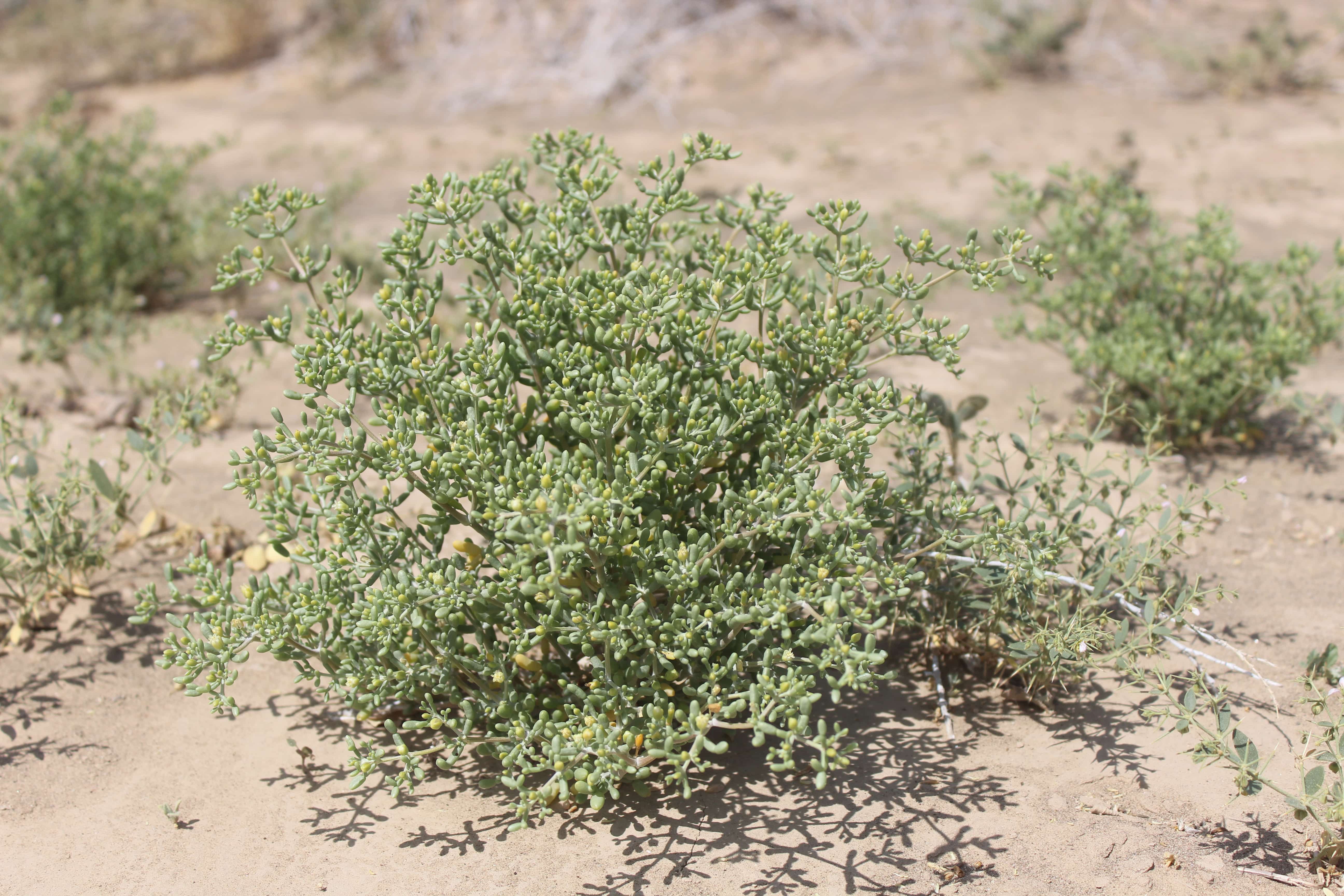
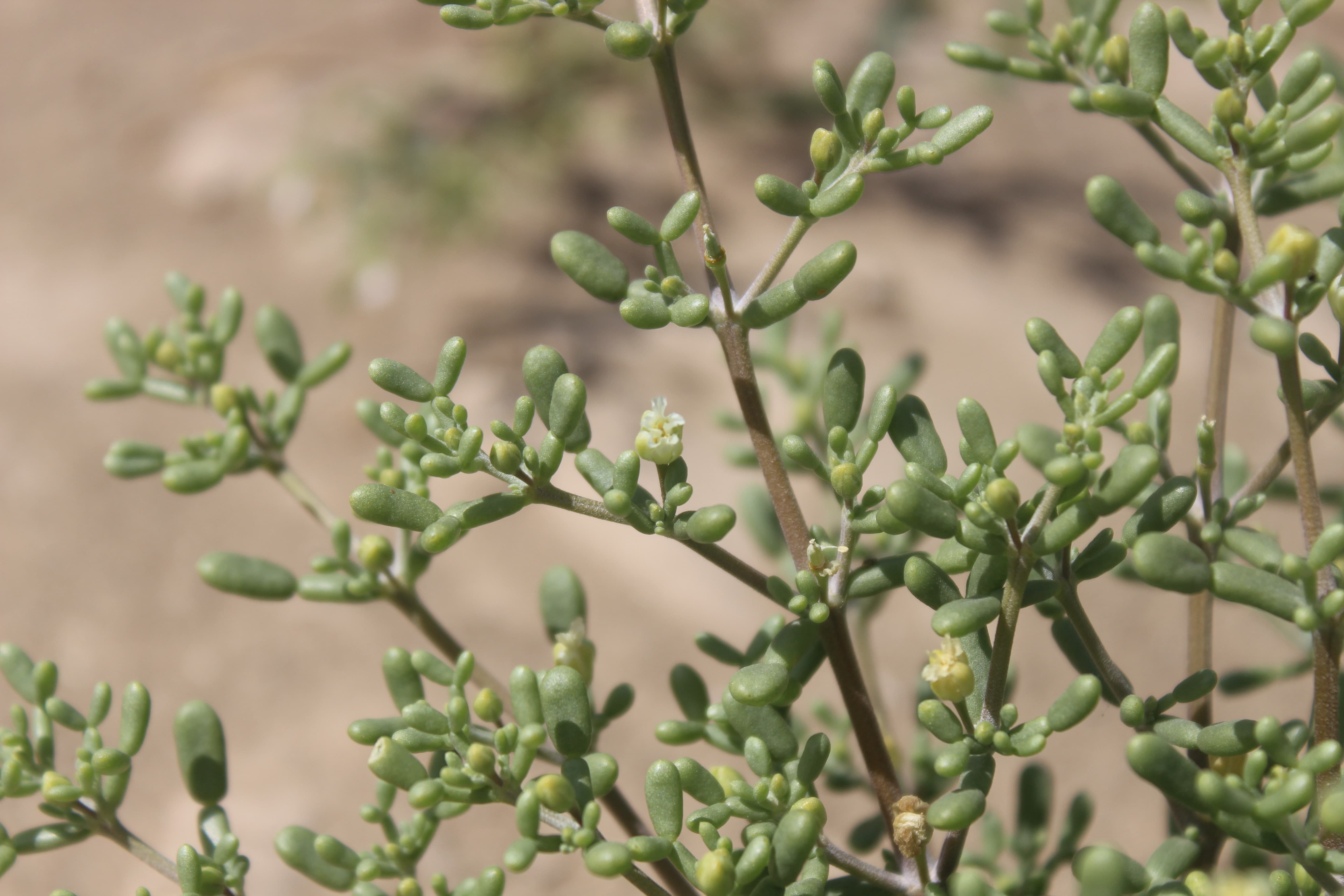
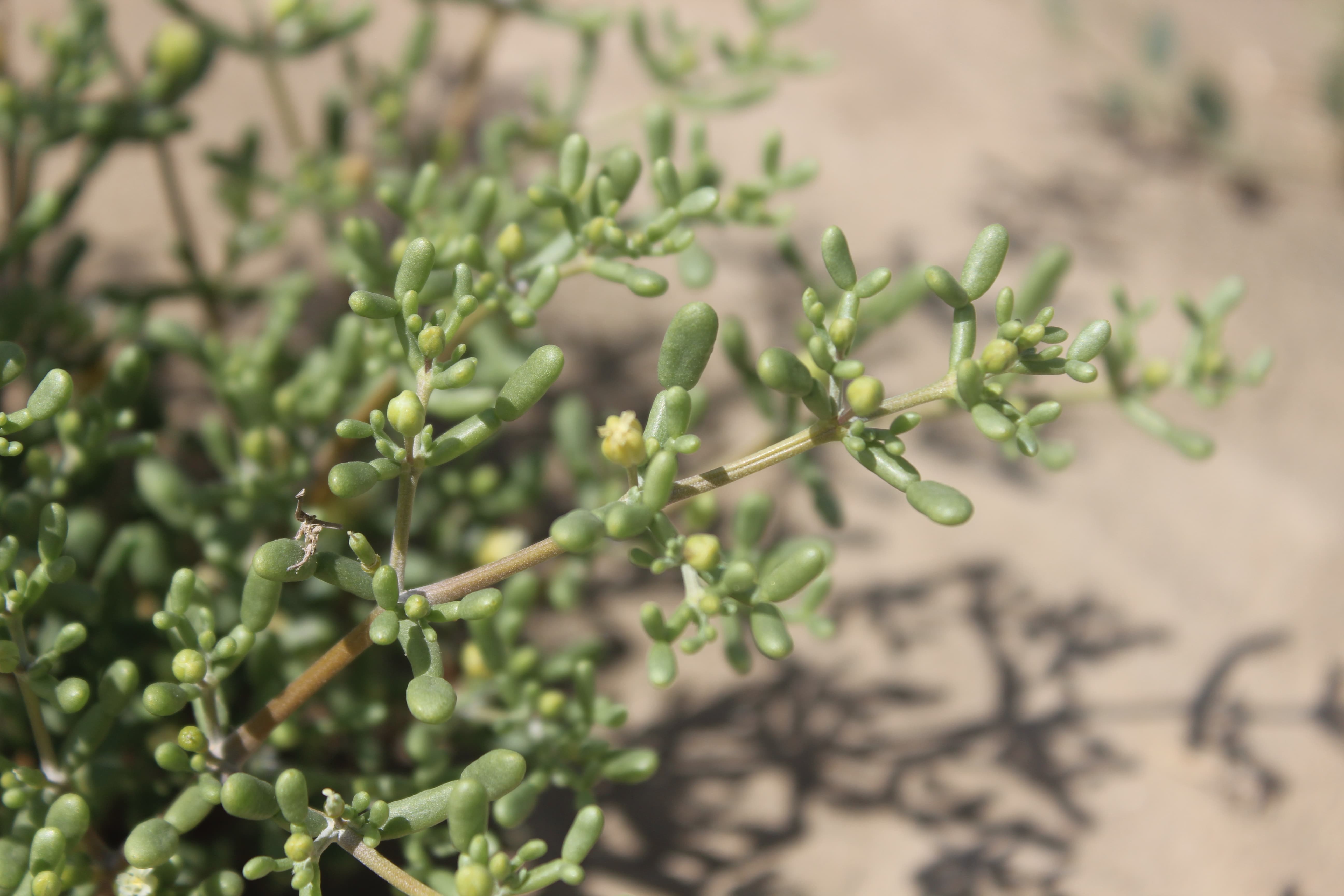
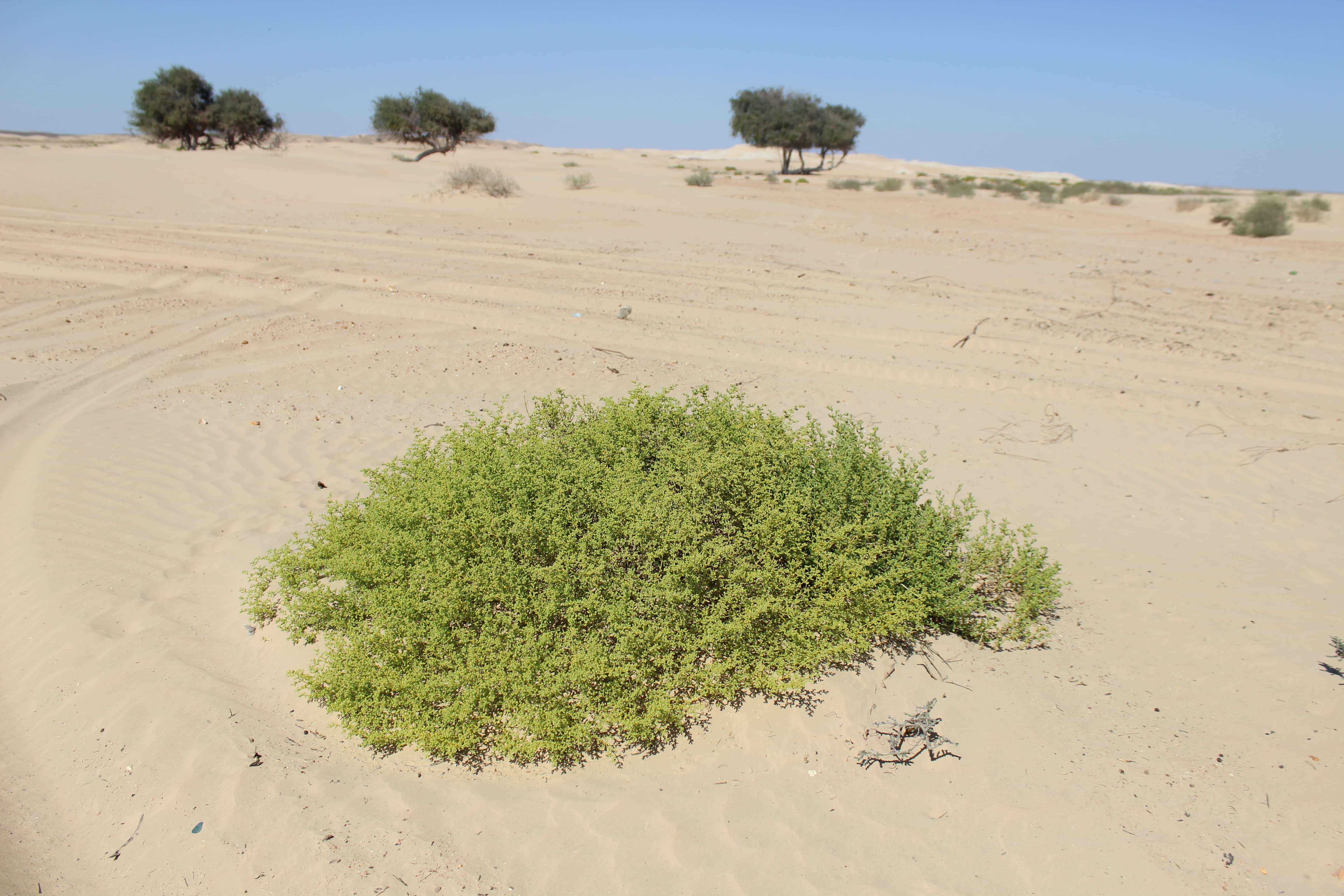
A dense , cushion-forming perennial succulent dwarf shrub ; up to 50-80 cm tall . Stems branching profusely , green , yellow-green , glaucous . Leaves opposite , 1-foliolate or sometimes 2-foliolate , glabrous to sparsely pubescent ; leaflets 4-8 mm , ± terete or cylindrical to ovoid , or globose , fleshy , shiny green or yellowish ; petiole ± equal to the leaflets , thickened . Inflorescences solitary , in the axils of leaves ; pedicel 1 . 5-2 mm . Flowers inconspicuous , white ; sepals 2-2 . 5 mm , oblong , glabrous ; petals oblong to obovate , about as long as the sepals or slightly longer ; stamens with a scale-like appendages at the base . Fruit capsule , 6-7(-12) mm , oblong to obscurely obconical , obscurely 5-angled , flattened at top , yellow to brown at maturity . (Ref . Flora of Oman ; vol . 2) .
No Data
Regional Endemic (RE) - Least Concern (LC) - National Assessment
Common
الوصف غير متاح حاليًا
Tetraena hamiensis var. qatarensis (Hadidi) Alzahrani & Albokhari
Tetraena qatarensis (Hadidi) Beier & Thulin
Zygophyllum hamiense var. qatarense (Hadidi) Jac.Thomas & Chaudhary
No data
maintenanceAr.Item1
Not known
Bedouins who inhabited the central desert used the plant as a treatment for constipation. The juice from pounded whole plant used as a drink for this purpose. This is also applied for domestic animals such as camels “bosh” (Ref. Oman Botanic Garden). In Omani studies: Ghazanfar (2007) wrote that: "It is not readily grazed by livestock, and camels graze it only when other fresh fodder is unavailable; its dominance often indicates overgrazing". (Ref. Flora of Oman; vol.2).
*Ghazanfar, S. (2007). Flora of the Sultanate of Oman, vol.2: Crassulaceae – Apiaceae. Meise, National Botanic Garden of Belgium (Scripta Botanica Begica, Vol. 36). ISBN 9789072619747 ISSN 0779-2387. *https://en.wikipedia.org *Miller, A., Morris, M. (1988). Plants of Dhofar, the Southern Region of Oman: Traditional, Economic, and Medicinal Uses. Published by Office of the Adviser for Conservation of the Environment, Diwan of Royal Court, Sultanate of Oman; ISBN 10: 0715708082 ISSN 13: 9780715708088. *Pickering, H. Patzelt, A. (2008). Field Guide to the Wild Plants of Oman. Kew publishing, Royal Botanic Garden, Kew. ISBN 9781842461778. *Patzelt, A. (2015). Oman Plant Red Data Book. Published by Diwan of Royal Court, Sultanate of Oman. Oman Botanic Garden Publication No. 1. ISBN 978-99969-50-10-0. *POWO (2023). ""Plants of the World Online. Facilitated by the Royal Botanic Gardens, Kew. Published on the Internet; http://www.plantsoftheworldonline.org
